


Search results
Search for "transition metal" in Full Text gives 728 result(s) in Beilstein Journal of Organic Chemistry. Showing first 200.
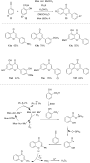
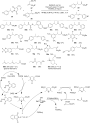
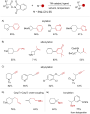
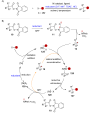
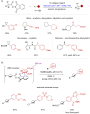
Generation of alkyl and acyl radicals by visible-light photoredox catalysis: direct activation of C–O bonds in organic transformations
Beilstein J. Org. Chem. 2024, 20, 1348–1375, doi:10.3762/bjoc.20.119
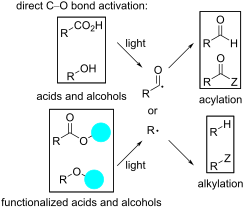
- photocatalysts, transition-metal photoredox catalysts, and metallaphotocatalysts to produce acyl and alkyl radicals driven by visible light. Keywords: acyl radical; alkyl radical; sustainable catalysis; visible light; Introduction The growing awareness of the necessity for sustainable developments has been
- . Different photocatalysts, such as transition metal complexes [23][24], organic dyes [25], and semiconductors [26], can be employed for visible-light-induced chemical processes. The choice of photocatalyst depends on the specific requirements of the catalytic process, including the type of reaction, the

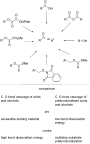


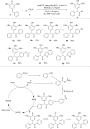
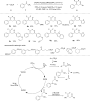

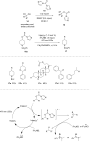




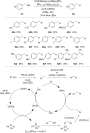
Rhodium-catalyzed homo-coupling reaction of aryl Grignard reagents and its application for the synthesis of an integrin inhibitor
Beilstein J. Org. Chem. 2024, 20, 1341–1347, doi:10.3762/bjoc.20.118
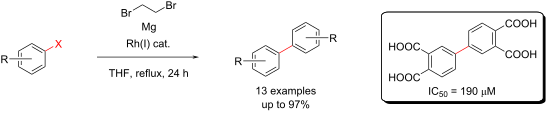
- . Therefore, alternative procedures for homo-coupling reactions using other transition-metal catalysts such as palladium, nickel, manganese, and iron have been developed [5][6][7][8][9][10][11][12][13]. In recent years, transition-metal-free coupling reactions have also been developed for environmentally


Transition-metal-catalyst-free electroreductive alkene hydroarylation with aryl halides under visible-light irradiation
Beilstein J. Org. Chem. 2024, 20, 1327–1333, doi:10.3762/bjoc.20.116
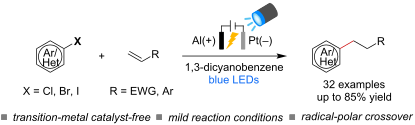
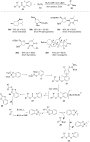
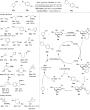
- high regioselectivity. Herein, we report the electroreductive hydroarylation of electron-deficient alkenes and styrene derivatives using (hetero)aryl halides under mild reaction conditions. Notably, the present hydroarylation proceeded with high efficiency under transition-metal-catalyst-free
- versatile building blocks in organic syntheses. To achieve this transformation with high efficiency and predictable regioselectivity, numerous efforts have been made to develop transition-metal-catalyzed reactions based on a C–H activation strategy [1][2][3][4] or the reductive coupling of aryl halides with
- by preventing overreduction [39]. While the metal-catalyst-free radical cyclization of alkene-tethered aryl halides has been well documented in the literature [40][41][42][43], the efficient intermolecular hydroarylation of alkenes still relies on the use of transition-metal catalysts, including Pd


Manganese-catalyzed C–C and C–N bond formation with alcohols via borrowing hydrogen or hydrogen auto-transfer
Beilstein J. Org. Chem. 2024, 20, 1111–1166, doi:10.3762/bjoc.20.98
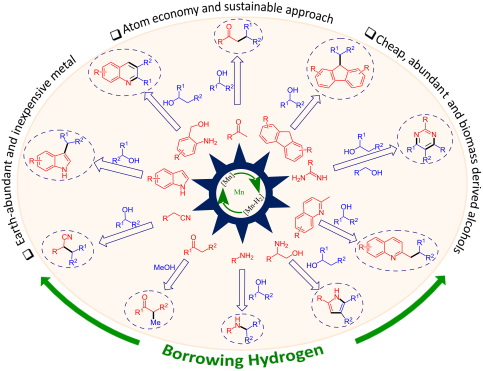
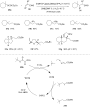
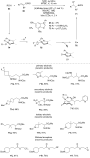
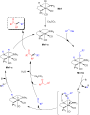
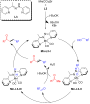
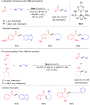
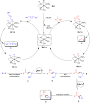
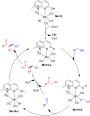
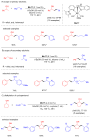
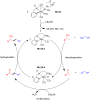
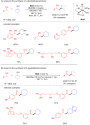
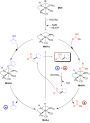
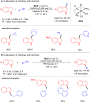
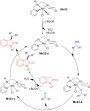
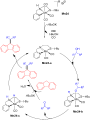
- Mohd Farhan Ansari Atul Kumar Maurya Abhishek Kumar Saravanakumar Elangovan Department of Chemistry, Indian Institute of Technology (BHU), Varanasi, Uttar Pradesh 221005, India 10.3762/bjoc.20.98 Abstract Transition-metal-mediated “borrowing hydrogen" also known as hydrogen auto-transfer
- achieving both selective dehydrogenation and hydrogenation is highly important. A typical BH process is demonstrated in Scheme 1. Several precious transition-metal catalysts have been used successfully in this area, including iridium, rhodium, ruthenium, and osmium [4]. However, these noble metals are toxic
- considerably inexpensive, eco-friendly and more abundant in the Earth’s crust. According to this viewpoint, manganese is biocompatible and less expensive than noble metals. Also, it is the third most abundant transition metal, behind titanium and iron. After the independent pioneering works of Beller [16] and























Light on the sustainable preparation of aryl-cored dibromides
Beilstein J. Org. Chem. 2024, 20, 1076–1087, doi:10.3762/bjoc.20.95
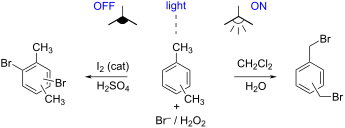
- bonds of aryl halides also exhibit high reactivity, particularly towards transition-metal-mediated cross-coupling processes or Ar-SN reactions. Benzyl and aryl halides, collectively referred to as 'aryl-cored halides', have found extensive applications across various fields, including synthesis [1


Auxiliary strategy for the general and practical synthesis of diaryliodonium(III) salts with diverse organocarboxylate counterions
Beilstein J. Org. Chem. 2024, 20, 1020–1028, doi:10.3762/bjoc.20.90
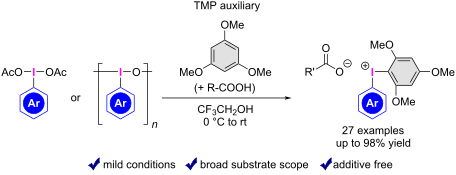
- presence or absence of transition metal catalysts under thermal or photochemical conditions [2][3][4][5]. Furthermore, these compounds have practical applications in the synthesis of radiochemicals utilized in positron emission tomography (PET) imaging [6], as well as serving as photoacid generators for
- 1,3,5-trimethoxybenzene are highly recommended for chemoselective arylation processes. Aryl(TMP)iodonium(III) salts have been successfully used as transition metal-free arylating reagents for various nucleophiles such as nitrogen- [23][24][25][26], oxygen- [13][27][28][29], sulfur- [30], and carbon- [31


Carbonylative synthesis and functionalization of indoles
Beilstein J. Org. Chem. 2024, 20, 973–1000, doi:10.3762/bjoc.20.87
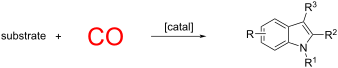
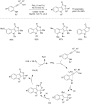
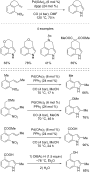
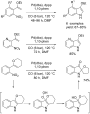
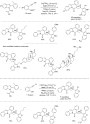
- functionalization of indoles to 3-substituted indoles Functionalization through direct C–H alkoxycarbonylation The transition-metal-catalyzed carbonylation of aryl halides, triflates, and tosylates with carbon monoxide and an alcohol was first pioneered by Heck and co-workers in 1974 [64][65]. Since then, this












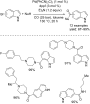
Enantioselective synthesis of β-aryl-γ-lactam derivatives via Heck–Matsuda desymmetrization of N-protected 2,5-dihydro-1H-pyrroles
Beilstein J. Org. Chem. 2024, 20, 940–949, doi:10.3762/bjoc.20.84
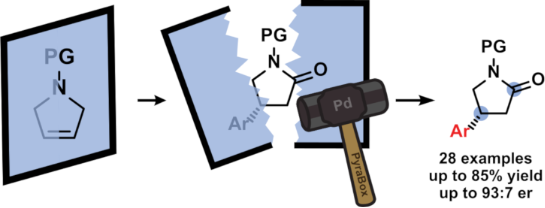
- preclude chirality as in the transformation of a prochiral molecular entity into a chiral one [1]. It is a powerful and elegant strategy in asymmetric synthesis [2], which combined with the use of chiral ligands and transition-metal catalysts enabled many valuable transformations to increase molecular


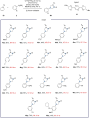


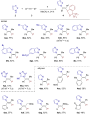
Three-component N-alkenylation of azoles with alkynes and iodine(III) electrophile: synthesis of multisubstituted N-vinylazoles
Beilstein J. Org. Chem. 2024, 20, 891–897, doi:10.3762/bjoc.20.79
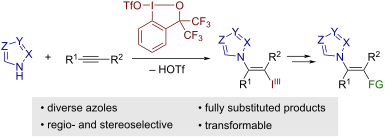
- motif in bioactive compounds and the synthetic utility of its olefinic C=C bond. The most extensively explored approach to this transformation is the transition metal-catalyzed C–N coupling between azoles and vinylating agents, including vinyl halides [4], boronates [5], sulfonium salts [6][7][8], and



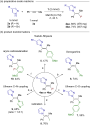
SOMOphilic alkyne vs radical-polar crossover approaches: The full story of the azido-alkynylation of alkenes
Beilstein J. Org. Chem. 2024, 20, 701–713, doi:10.3762/bjoc.20.64
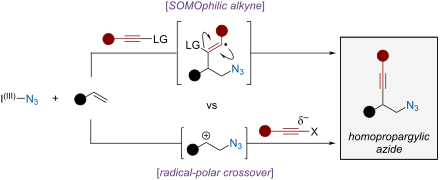
- presence of transition metal catalysts [11][12][13][14]. Currently, this motif is synthesized by sequential introduction of the two functional groups [11][12][13]. Addition of a lithium acetylide to an epoxide affords the corresponding homopropargylic alcohol which can then undergo a sequence of mesylation


Regioselective quinazoline C2 modifications through the azide–tetrazole tautomeric equilibrium
Beilstein J. Org. Chem. 2024, 20, 675–683, doi:10.3762/bjoc.20.61
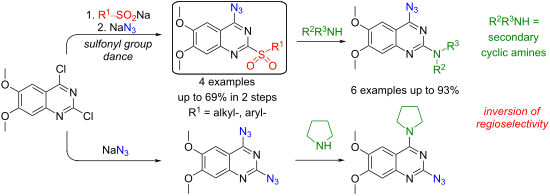
- position of quinazolines requires longer time, higher temperatures, and sometimes the use of expensive transition-metal catalysts [12]. A selective C2 modification can be achieved by using 2-chloroquinazolines IV, where the C4 position is blocked by an unreactive C–C or C–H bond (Scheme 1). Cyclization
- techniques employing transition-metal and photocatalysis [15][16]. These methods facilitate C–C bond formation, enabling the introduction of alkyl groups at the C2 position of quinazoline derivatives. While arylsulfanyl group rearrangement reactions have been documented by us for modifying 2,4-substituted


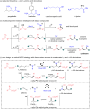
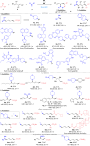
Palladium-catalyzed three-component radical-polar crossover carboamination of 1,3-dienes or allenes with diazo esters and amines
Beilstein J. Org. Chem. 2024, 20, 661–671, doi:10.3762/bjoc.20.59
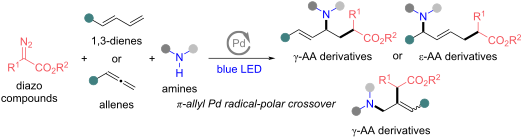
- . Multicomponent reactions (MCRs) by virtue of high efficiency for the construction of complex chemicals, have shown the superiority in high step and atom economy in organic synthesis [25][26][27]. Over the past two decades, our group and others have developed a transition-metal-catalyzed MCR strategy involving



HPW-Catalyzed environmentally benign approach to imidazo[1,2-a]pyridines
Beilstein J. Org. Chem. 2024, 20, 628–637, doi:10.3762/bjoc.20.55
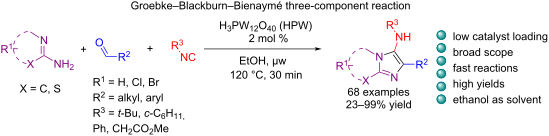
- (insomnia). Some recent synthetic approaches to imidazo[1,2-a]pyridine scaffolds include synthetic pathways of transition metal-catalyzed reactions [14], cyclization [15], condensation [16], heteroannular [17], and photocatalytic reactions [18]. These approaches usually involve non-trivial reaction




A laterally-fused N-heterocyclic carbene framework from polysubstituted aminoimidazo[5,1-b]oxazol-6-ium salts
Beilstein J. Org. Chem. 2024, 20, 621–627, doi:10.3762/bjoc.20.54
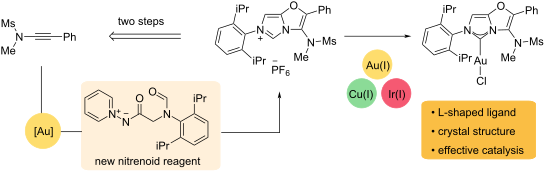
- ; imidazolium; NHC; Introduction Imidazolium-derived nucleophilic heterocyclic carbenes (NHCs) have had a sustained impact across the fields of organometallic and main group chemistry, transition-metal catalysis, materials synthesis and organocatalysis [1]. Laterally annellated polycyclic NHCs offer a useful
- aminide 7 in good yield on a gram scale (Scheme 1b). With the novel 3-aminoimidazo[5,1-b]oxazol-6-ium salt in hand, we examined its use as an NHC precursor for the preparation of late transition metal complexes. Treating compound 9a with triethylamine and either dimethyl sulfide gold(I) chloride or copper


Switchable molecular tweezers: design and applications
Beilstein J. Org. Chem. 2024, 20, 504–539, doi:10.3762/bjoc.20.45

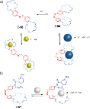
- using metal complexes as switching units (Figure 20). This concept named “weak link approach” (WLA) [78] uses square planar d8-transition metal complexes with two hemilabile bidentate ligands composed of a strong binding site (phosphorus) and a weaker one (generally sulfur, oxygen, selenium, or nitrogen




Mechanisms for radical reactions initiating from N-hydroxyphthalimide esters
Beilstein J. Org. Chem. 2024, 20, 346–378, doi:10.3762/bjoc.20.35
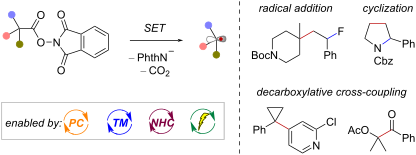
- years and in the past, they were perceived as fleeting reaction intermediates. Recent progress in photoredox catalysis [6][7][8], electrochemistry [9][10], and the use of transition-metal (TM) catalysts in radical cross-coupling reactions [11] have dramatically expanded the use of radicals in synthesis
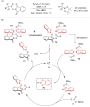
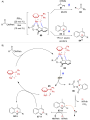
- electronically excited substrate (*S) through an energy transfer (EnT) mechanism (path c). In addition to these mechanistic blueprints, the formation of charge-transfer complexes involving NHPI esters, as well as examples of photoinduced transition metal-catalyzed activation will be discussed. Depending on the
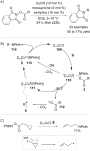
- , the aminodecarboxylation reaction proved unsuccessful when employing alternative photocatalysts such as Ru(bpy)3Cl2 or eosin Y, underscoring the distinctive ability of q-OAc to activate TCNHPI esters via EDA complex formation. Photoinduced transition metal-catalyzed mechanisms The in situ formation of








Nucleophilic functionalization of thianthrenium salts under basic conditions
Beilstein J. Org. Chem. 2024, 20, 257–263, doi:10.3762/bjoc.20.26
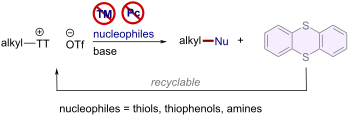
- Abstract In recent years, S-(alkyl)thianthrenium salts have become an important means of functionalizing alcohol compounds. However, additional transition metal catalysts and/or visible light are required. Herein, a direct thioetherification/amination reaction of thianthrenium salts is realized under metal
- regioselectivity. Significant advancements in the synthesis of arylthianthrenium salts have prompted a growing interest in their utilization as versatile precursors for the conversion of C–H bonds in arenes into C–C/X bonds through transition-metal-catalyzed cross-coupling processes [12][13][14][15][16][17][18][19
- generation of alkyl radicals [39]. After that, a series of methods for the modification of alkylthianthrenium salts have been developed, including the transition-metal-catalyzed cross-coupling with terminal alkynes [40], sulfonylation with DABCO·(SO2)2 [41][42][43], or alkylation of active alkenes [44][45



Catalytic multi-step domino and one-pot reactions
Beilstein J. Org. Chem. 2024, 20, 254–256, doi:10.3762/bjoc.20.25

- ; multi-step reactions; multicomponent reactions; one-pot synthesis; organocatalysis; tandem reactions; transition-metal-catalysis; The synthesis of pharmaceutical ingredients, natural products, agrochemicals, ligand systems, and building blocks for materials science has reached a high level of
- advances in the field. A Review article by Pounder, Tam, and co-authors summarizes new transition-metal-catalyzed domino reactions of strained bicyclic alkenes, including both homo- and heterobicyclic alkenes highly useful for the construction of biologically significant compounds with multiple

Visible-light-induced radical cascade cyclization: a catalyst-free synthetic approach to trifluoromethylated heterocycles
Beilstein J. Org. Chem. 2024, 20, 118–124, doi:10.3762/bjoc.20.12
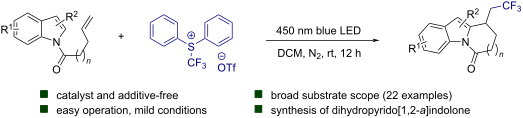
- radicals. This method allows the efficient synthesis of various indole derivatives without the need of photocatalysts or transition-metal catalysts. Mechanism experiments indicate that the process involves a radical chain process initiated by the homolysis of Umemoto's reagent. This straightforward method
- their biological activity and potential applications, continuous efforts have been dedicated to the synthesis of DHPI derivatives. Various synthetic strategies have been explored (Scheme 1), including transition-metal-catalyzed cross-coupling reactions [8][9][10], annulation reaction of carbenoids [11
- ], Friedel–Crafts acylation [12], radical cascade reactions [2][13], and photoinduced radical cyclizations [14][15][16][17]. However, these methods often suffer from drawbacks such as harsh reaction conditions and the requirement of transition-metal catalysts. Although photocatalyzed cyclization reactions




Cycloaddition reactions of heterocyclic azides with 2-cyanoacetamidines as a new route to C,N-diheteroarylcarbamidines
Beilstein J. Org. Chem. 2024, 20, 17–24, doi:10.3762/bjoc.20.3
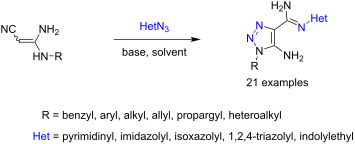
- and Molecules, Department of Chemistry, KU Leuven, Celestijnenlaan 200F, B-3001 Leuven, Belgium 10.3762/bjoc.20.3 Abstract A novel and efficient base-catalyzed, transition-metal-free method for the synthesis of diheterocyclic compounds connected by an amidine linker, including apart from the common



1-Butyl-3-methylimidazolium tetrafluoroborate as suitable solvent for BF3: the case of alkyne hydration. Chemistry vs electrochemistry
Beilstein J. Org. Chem. 2023, 19, 1966–1981, doi:10.3762/bjoc.19.147
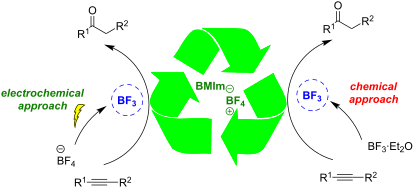
- stimulated the search for alternative catalysts and conditions for the hydration of alkynes, in order to identify safer and more sustainable methods [11][12][13]. In particular, transition-metal catalysts containing Au(I) or (III) [14][15][16][17][18][19][20][21][22][23][24], Ru(II) [25][26][27][28][29][30
- conditions, without transition metal catalysts, added oxidants, or strong acids involved, using Selectfluor (1-(chloromethyl)-4-fluoro-1,4-diazabicyclo[2.2.2]octane-1,4-diium ditetrafluoroborate) as essential additive [73]. With regard to the reaction medium, the idea of replacing classic organic solvents
- -heterocyclic carbenes (NHCs), extensively studied as organocatalysts as well as ligands for transition-metal-promoted synthetic methodologies [97][98][99]. Under anodic oxidation, the electrogeneration of boron trifluoride (BF3) from tetrafluoroborate ILs occurs [100][101]. Moreover, we have recently


Biphenylene-containing polycyclic conjugated compounds
Beilstein J. Org. Chem. 2023, 19, 1895–1911, doi:10.3762/bjoc.19.141
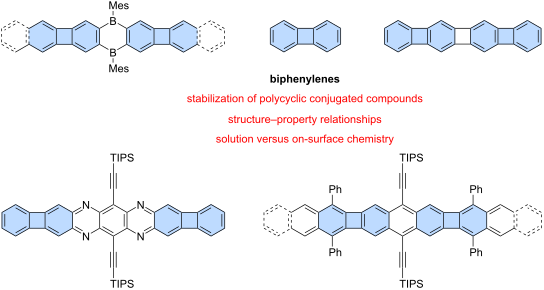
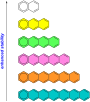
- -energy intermediates, such as benzenediazonium-2-carboxylate, and yields that are comparatively low [20]. After the Ullmann reaction was successfully employed for the first reported synthesis of biphenylene [15], subsequent studies have explored various transition-metal-mediated coupling reactions using



Recent advancements in iodide/phosphine-mediated photoredox radical reactions
Beilstein J. Org. Chem. 2023, 19, 1785–1803, doi:10.3762/bjoc.19.131
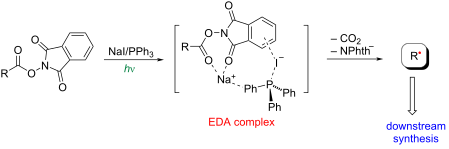
- mechanistic aspects of the reaction and highlighted the potential of the NaI/PPh3 catalytic system for achieving efficient and transition-metal-free photocatalytic transformations. Following that, Li and his research group documented similar results (Scheme 4) [10]. They extensively investigated the
- materials science. In recent years, the combination of dual photoredox with first-row transition-metal catalysis has emerged as a powerful tool for achieving various cross-coupling reactions involving C–N, C–O, C–S, and other chemical bonds [3][23]. In this context, Guan et al. theoretically designed a
- of fused ketones 34, eliminating the need for transition-metal catalysts or oxidants. The technique offered a broad substrate scope, remarkable selectivity, and simple reaction conditions. A plausible mechanism had been proposed for the photocatalytic decarboxylative [3 + 2]/[4 + 2] annulation, as




Selectivity control towards CO versus H2 for photo-driven CO2 reduction with a novel Co(II) catalyst
Beilstein J. Org. Chem. 2023, 19, 1766–1775, doi:10.3762/bjoc.19.129
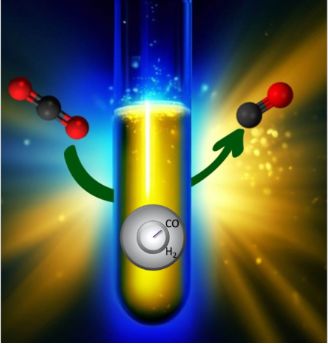
- transition-metal-based complexes, the outcomes are generally two-electron reduction products, such as carbon monoxide (CO), formic acid (HCO2H), or formate (HCO2−). To mitigate the strong energetic requirements of the reaction shown in Equation 1, the reduction of CO2 occurs in the presence of protons, so


Benzoimidazolium-derived dimeric and hydride n-dopants for organic electron-transport materials: impact of substitution on structures, electrochemistry, and reactivity
Beilstein J. Org. Chem. 2023, 19, 1651–1663, doi:10.3762/bjoc.19.121
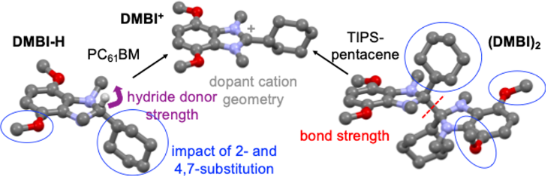
- in 1984 [12]. More recently, dimers 1b2–1f2 (Figure 1) have been used as n-dopants [13][14][15][16][17][18][19][20]. They behave similarly to the closed-shell dimers formed by certain 19-electron transition-metal sandwich compounds [21][22][23], exhibiting moderate air stability and acting as quite





