


Search results
Search for "Amino acids" in Full Text gives 550 result(s) in Beilstein Journal of Organic Chemistry. Showing first 200.
N-tert-Butanesulfinyl imines in the asymmetric synthesis of nitrogen-containing heterocycles
Beilstein J. Org. Chem. 2021, 17, 1096–1140, doi:10.3762/bjoc.17.86

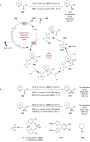
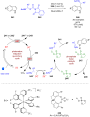
- important tool in the asymmetric synthesis of aziridines [25][26], α-amino acids [27][28], β-amino acids [23][29] and branched α-amines [30][31]. The Darzens-type asymmetric synthesis of N-(p-toluenesulfinyl)aziridine 2-carboxylate esters (7 and 8) was described through the addition of lithium α
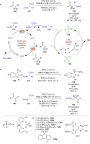
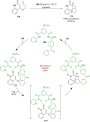
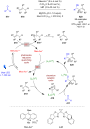
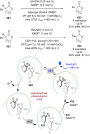
- hand, natural amino acids proline and hydroxyproline are functionalized pyrrolidines that have found great application in organic synthesis as chiral organocatalysts in stereoselective processes [93][94]. Cyclizations involving a position in the starting chiral imine Arylation of chiral sulfinyl imines
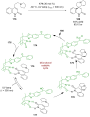
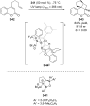
- ) [105]. Li and Xu reported a method for the enantioselective synthesis of β,γ-unsaturated α-amino acids 100, by a Lewis acid-promoted diastereoselective Petasis reaction of vinylboronic acids 98, (R)-N-tert-butanesulfinamide and glyoxylic acid (99). They found that the best results were obtained working


Synthetic accesses to biguanide compounds
Beilstein J. Org. Chem. 2021, 17, 1001–1040, doi:10.3762/bjoc.17.82
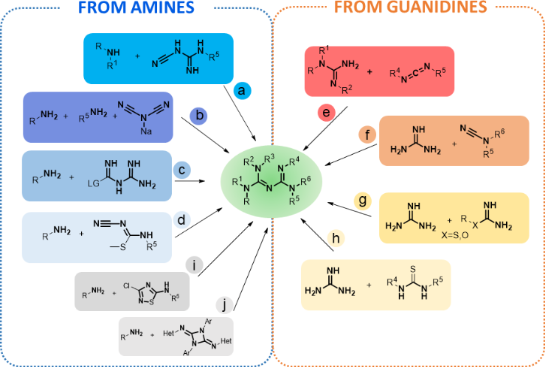
- Vaillancourt et al. in 2001 for the synthesis of different monosubstituted biguanides with potential antidiabetic properties (Scheme 34) [71]. In particular, the condensation of this reagent with different amino acids such as β-alanine, 3-aminopropionic acid, and taurine in the presence of trimethylamine in


Enhanced target cell specificity and uptake of lipid nanoparticles using RNA aptamers and peptides
Beilstein J. Org. Chem. 2021, 17, 891–907, doi:10.3762/bjoc.17.75
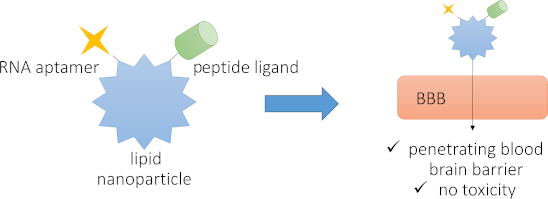
- transferrin receptor is highly expressed in brain capillaries, nucleated cells, and in rapidly dividing cells [21], and its endogenous ligand transferrin has previously been used to increase transport of small molecules and oligonucleotides across the BBB [21][22][23]. The peptide T7 consisting of seven amino
- acids (H-HAIYPRH-NH2) was identified via phage display [24] and has a high affinity (≈10 nM) for the transferrin receptor [24][25]. This peptide does not compete with endogenous transferrin binding and has been used to successfully enhance drug delivery to brain tissue [15][22][24][25][26]. Both



Microwave-assisted multicomponent reactions in heterocyclic chemistry and mechanistic aspects
Beilstein J. Org. Chem. 2021, 17, 819–865, doi:10.3762/bjoc.17.71
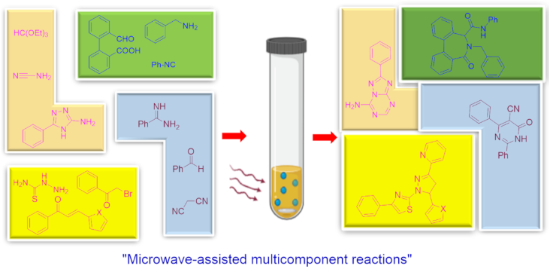
- % along with drastic reduction in side product formation and reaction time from 24 h to 50 min when compared to the conventional method. The method proved to be efficient even with chiral amino acids resulting in separable diastereomeric mixtures. The synthesized molecules manifested potent anti
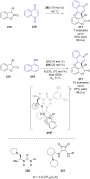
- co-workers [50] demonstrated an aqueous phase, diastereoselective, multicomponent reaction involving substituted isatins 35, β-nitrostyrene 36 and benzylamine (20) or α-amino acids 37 using microwave irradiation to afford a library of spirooxindoles 38 in good yields under catalyst-free conditions
- acids 37. Likewise, the four-component reaction comprised of isatin 35, but-2-ynedioates 39, amino acids 37 and phenacyl bromides 41 to yield the N-acylated spirooxindoles 42 in good yields (Scheme 13). The reaction effectively explored the 1,3 dipolar compound generated with isatin and amino acids




Synthetic reactions driven by electron-donor–acceptor (EDA) complexes
Beilstein J. Org. Chem. 2021, 17, 771–799, doi:10.3762/bjoc.17.67

- synthesis of unnatural α-amino acids 129 and precise alkylation modification of peptides in the later stage (Scheme 45). Even in the presence of other amino acid residues, this protocol has excellent regio- and chemoselectivity, providing a sequence of novel corresponding dipeptides with good yield. The
- construction of C–S bonds C–S bonds are commonly present in amino acids, proteins, glycosides, nucleic acids, and other biological macromolecules. In recent years, photocatalyst- and transition-metal strategies have been employed to construct C–S bonds [66][67][68][69]. The C–S bond synthesis via EDA-complex


Synthesis and physicochemical evaluation of fluorinated lipopeptide precursors of ligands for microbubble targeting
Beilstein J. Org. Chem. 2021, 17, 511–518, doi:10.3762/bjoc.17.45
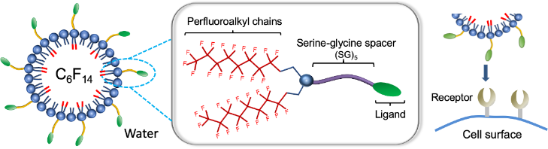
- was stepwisely elongated, and eventually conjugated with the (perfluoroalkyl)ethyl acids (Scheme 2). After the cleavage from the resin, the Fmoc groups of the amino acids were removed, and the F-lipopeptides were purified using a dialysis membrane. According to mass spectrometry, FTIR, and HPLC
- fluorine–fluorine interactions. Experimental Materials. We purchased Fmoc-protected amino acids, N,N-dimethylformamide (DMF), dichloromethane (DCM), methanol, 1-hydroxybenzotriazole (HOBT), 2-(1H-benzotriazole-1-yl)-1,1,3,3-tetramethyluronium hexafluorophosphate (HBTU), N,N-diisopropylethylamine (DIPEA
- for capping the unreacted amino acids and the mixture was shaken for 5 min. In a similar manner, each of the peptide chains was elongated by coupling Fmoc-Ser(t-Bu)-OH (3 equiv), Fmoc-Gly-OH (3 equiv) and Fmoc-Lys(Boc)-OH (3 equiv) to the Rink Amide AM resin. After introducing Fmoc-Lys(Fmoc)-OH as the


Synthetic strategies of phosphonodepsipeptides
Beilstein J. Org. Chem. 2021, 17, 461–484, doi:10.3762/bjoc.17.41
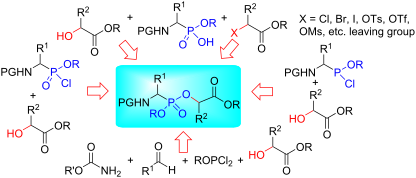
- dichlorophosphites followed by alcoholysis with hydroxy esters, the phosphinylation of hydroxy esters with phosphonochloridites followed by oxidation, and the carbene insertion of N-protected amino acids with 1-diazoalkylphosphonates. This review includes the synthesis of α-, β-, and γ-phosphonodepsipeptides and
- transpeptidase, which catalyzes the transfer of the γ-glutamyl group of glutathione and related γ-glutamyl amides to amino acids and peptides (transpeptidation) or to water (hydrolysis). For this purpose, N-Cbz-aminophosphonic acid 91 was first transformed to the corresponding dichloride 92, which underwent a
- prepared from optically pure amino acids and converted to the benzyl or methyl [2-hydroxyalkanoyl]glycinates 97. Following the similar strategy, phosphonodepsitripeptides 99 and 102 were synthesized. The phosphonodepsidipeptide 104 was prepared through the sequential coupling of N-Cbz-γ


Biochemistry of fluoroprolines: the prospect of making fluorine a bioelement
Beilstein J. Org. Chem. 2021, 17, 439–460, doi:10.3762/bjoc.17.40
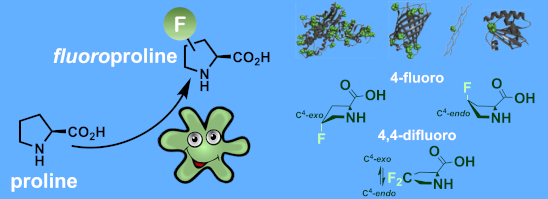
- structure and distinct conformational profile, proline is unique in the repertoire of the 20 amino acids coded into proteins. Here, we summarize the biochemical work on the replacement of proline with (4R)- and (4S)-fluoroproline as well as 4,4-difluoroproline in proteins done mainly in the last two decades
- . We first recapitulate the complex position and biochemical fate of proline in the biochemistry of a cell, discuss the physicochemical properties of fluoroprolines, and overview the attempts to use these amino acids as proline replacements in studies of protein production and folding. Fluorinated
- biodiversity, containing fluorine as a bioelement. Keywords: amino acids; evolution; fluorine; proline; proteins; Introduction Nature employs a rather small set of chemical elements for constructing the core biochemical makeup. Most elements of the periodic table are excluded from the biochemical world. Not


Coupling biocatalysis with high-energy flow reactions for the synthesis of carbamates and β-amino acid derivatives
Beilstein J. Org. Chem. 2021, 17, 379–384, doi:10.3762/bjoc.17.33
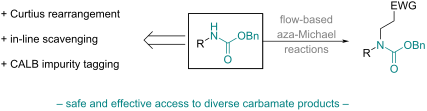
- innovative approach (85% yield, for details see [21]). To further exploit the value of this continuous flow approach the possibility of converting selected carbamate products into derivatives of β-amino acids (e.g., 8) was evaluated. Although this may be achieved by a conventional alkylation of the carbamate
- immobilized CALB enzyme is reported. This approach enabled the chemoselective derivatization of benzyl alcohol into the readily removable benzyl butyrate thus simplifying the final purification stages. The resulting Cbz-carbamates were furthermore elaborated into derivatives of β-amino acids via biphasic flow


19F NMR as a tool in chemical biology
Beilstein J. Org. Chem. 2021, 17, 293–318, doi:10.3762/bjoc.17.28
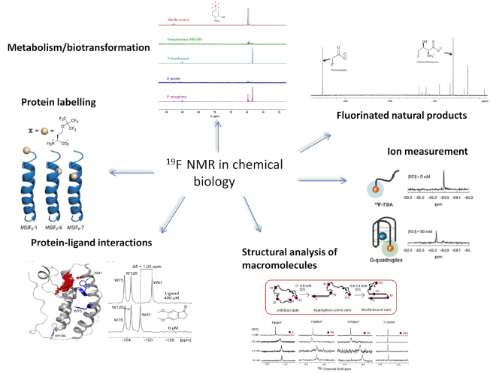
- introduction of unnatural amino acids into proteins have been reviewed extensively elsewhere [5][6][7] and here we will only discuss the most recent advances. The chemical structures of a selection of 19F-labelled amino acid analogues that have been utilized in 19F NMR studies in chemical biology are shown in
- Figure 1. In general, relatively small monofluorinated amino acids such as 1–4, can be biosynthetically incorporated directly into proteins by including the fluorinated amino acid in the growth medium of a suitable auxotrophic bacterium [8]. However, a challenge when producing 19F-labelled proteins using
- ) and for the incorporation of 5-fluorotryptophan (1) and 6-fluorotryptophan (2) in streptavidin [14]. Parallel to the development of these new strategies for recombinant fluorinated protein production, significant efforts have been made within the last decade to expand the pool of available amino acids


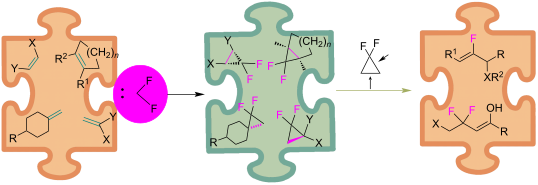
The preparation and properties of 1,1-difluorocyclopropane derivatives
Beilstein J. Org. Chem. 2021, 17, 245–272, doi:10.3762/bjoc.17.25




Molecular basis for protein–protein interactions
Beilstein J. Org. Chem. 2021, 17, 1–10, doi:10.3762/bjoc.17.1
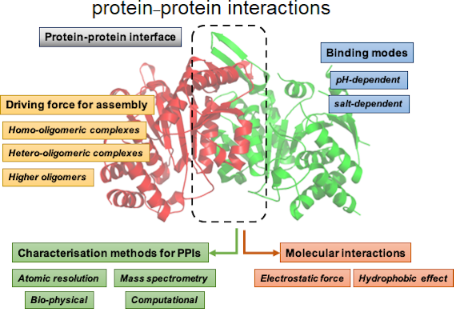
- ], producing two different modes of binding: pH-dependent and salt-dependent binding mechanisms. In a pH-dependent binding mechanism, an overall proton is either released or taken up during the protein interaction due to the binding-induced pKa shift of acidic or basic amino acids present at the complex
- interface. Due to this shift, the interface amino acids experience either a significant desolvation energy, where there is a disruption in the residue charge–water interaction, resulting in water exclusion, and thus a hydrophobic effect [50], or an interaction in the complex formation. An example of the pH
- amino acid propensities at the protein–protein interface. They discussed that a large portion of the amino acids present at the interface (as large as 75%) are involved in so-called bifurcated interactions, where residues take part in both inter- and intraprotein interactions simultaneously. Both


Semiautomated glycoproteomics data analysis workflow for maximized glycopeptide identification and reliable quantification
Beilstein J. Org. Chem. 2020, 16, 3038–3051, doi:10.3762/bjoc.16.253
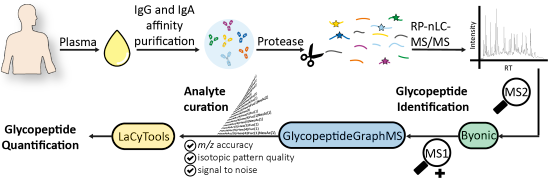
- high complexity of glycosylation itself, data analysis is further complicated by interfering background signals from biological matrices and isomeric and near-isobaric ambiguities resulting from combinations of monosaccharides, adducts, amino acids, and amino acid modifications [10][11]. Efforts have
- five technical replicates by Byonic. This IgG3 glycopeptide is an isomer of the tryptic IgG4 glycopeptide (EEQFNSTYR). However, upon manual inspection of the data, only one scan of the assigned MS/MS spectra within all five technical replicates covered the relevant amino acids (position of Phe and Tyr



Selected peptide-based fluorescent probes for biological applications
Beilstein J. Org. Chem. 2020, 16, 2971–2982, doi:10.3762/bjoc.16.247

- recognition; peptide-based; Introduction Molecular recognition involving amino acids or peptides are important factors in biochemical and medicinal processes [1][2][3]. Amino acids work as biosynthetic building blocks or as signaling molecules. For example, the well-known neurotransmitters glutamate and γ
- ]. Peptides are comparatively small and can be easily synthesized in the laboratory using standard synthetic protocols [14][15]. The peptide sequence can be manipulated with precise functional groups of amino acids for selective targeting biomolecules. Peptides are large enough to contain a significant number
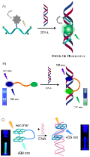
- which have affinity for the CB[8] cavity. These substrates easily displace 6 from the CB[8] cavity and release 6 which folds again to form a pyrene excimer, which allows for the ratiometric fluorescence monitoring of those substrates. Upon screening methyl ester derivatives of hydrophobic amino acids



UV resonance Raman spectroscopy of the supramolecular ligand guanidiniocarbonyl indole (GCI) with 244 nm laser excitation
Beilstein J. Org. Chem. 2020, 16, 2911–2919, doi:10.3762/bjoc.16.240
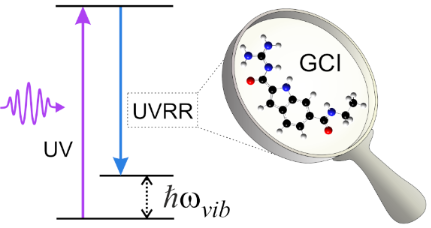
- UVRR approach from peptides to proteins as binding partners for GCPs is the UV-excited autofluorescence from aromatic amino acids observed for laser excitation wavelengths >260 nm. These excitation wavelengths are in the electronic resonance with the GCP for achieving both a signal enhancement and the
- using 275 and 266 nm laser excitation, respectively. The current challenge with UVRR spectroscopy for monitoring the recognition of supramolecular ligands to proteins is the disturbing UV-excited autofluorescence from the aromatic amino acids. This autofluorescence typically occurs in the spectral range


Optical detection of di- and triphosphate anions with mixed monolayer-protected gold nanoparticles containing zinc(II)–dipicolylamine complexes
Beilstein J. Org. Chem. 2020, 16, 2687–2700, doi:10.3762/bjoc.16.219
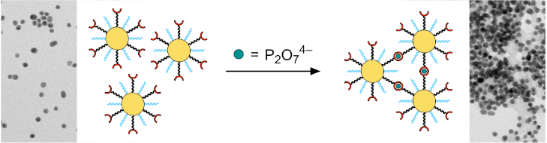
- described for analytes ranging from inorganic ions over low-molecular-weight neutral and charged organic compounds, such as carboxylic acids, amino acids, and nucleotides, to larger biomolecules such as peptides and proteins [1][2][3][4][5][6][13]. All of these systems have specific areas of application


A consensus-based and readable extension of Linear Code for Reaction Rules (LiCoRR)
Beilstein J. Org. Chem. 2020, 16, 2645–2662, doi:10.3762/bjoc.16.215

- . However, “ | ” was originally designed to separate the certain and uncertain parts in a fragmented glycan, where there is a possibility of different structures (UR6). Ambiguous symbol 3 – “ # ”. Originally, “ # ” was designated to signify the starting point of glycosides that are not amino acids or lipid
- recommended preserving this symbol use since it is human and computer-readable and does not overlap with any notation in the original Linear Code. Recommendation 3 – “Number.” “ # ” was defined to combine glycans with glycosides other than amino acids and lipids (Table 3: GR1). Krambeck et al. use it to


Comparative ligand structural analytics illustrated on variably glycosylated MUC1 antigen–antibody binding
Beilstein J. Org. Chem. 2020, 16, 2540–2550, doi:10.3762/bjoc.16.206

- sequence of 20 amino acids (–His-Gly-Val-Thr-Ser-Ala-Pro-Asp-Thr-Arg-Pro-Ala-Pro-Gly-Ser-Thr-Ala-Pro-Pro-Ala–)n, and there are five sites where O-glycosylation may occur (indicated in bold). In cancerous cells, the glycans tend to be truncated or have additional sialylation [14]. For example, in mammary
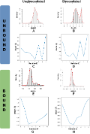
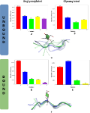
- structures, but otherwise, the end-to-end distance is very similar for both bound antigens. Ramachandran analysis The φ–ψ angles of the antigens are considered using a Ramachandran plot. Figure 4 shows a Ramachandran plot for two key amino acids, the glycosylated threonine (Thr4) and neighboring aspartate
- series and histogram for the antigen and Tn-antigen in solution (A, B) and the antibody (C, D). Plots for the antigen are in (A, C) and for the Tn-antigen in (B, D). A comparison of Ramachandran analyses for two key amino acids, Asp3 and Thr4. The first row (A–D) illustrates the φ–ψ angles for amino acid




NMR Spectroscopy of supramolecular chemistry on protein surfaces
Beilstein J. Org. Chem. 2020, 16, 2505–2522, doi:10.3762/bjoc.16.203
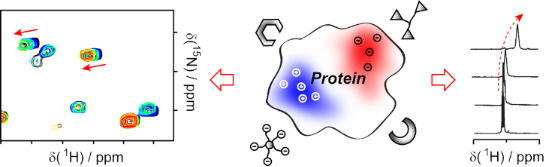
- at simple 1D proton spectra to study ligand binding to single amino acids or small peptides to introduce the basic principles and also briefly discuss ligand-detected NMR screening methods. Review One-dimensional 1H NMR spectra and basic principles to study ligand binding by NMR Simple one
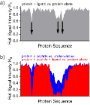
- signals from the binding partner. Therefore, this approach is only suitable to study binding of hosts to small guest molecules like amino acids and short peptides. Both a shifting of the signals (chemical shift perturbation) and line broadening are indicative of binding. The chemical shift perturbation is
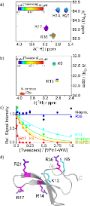
- acids was monitored by tracking the amide HN and the binding constants were obtained from the resulting binding curves [41]. The binding constants of the amino acids tested cover a ≈ 5-fold range. The differences due to the amino acid side chains were investigated by molecular modeling. Ac-Phe shows the



Recent developments in enantioselective photocatalysis
Beilstein J. Org. Chem. 2020, 16, 2363–2441, doi:10.3762/bjoc.16.197
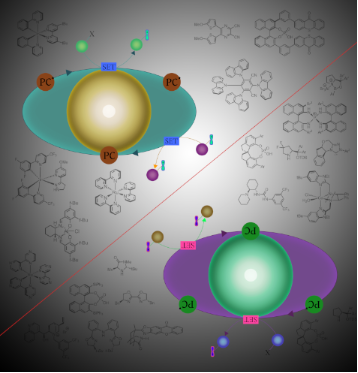
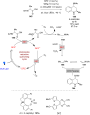
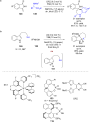
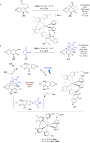
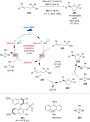
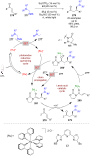
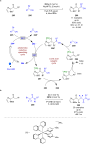
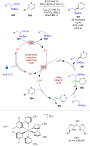
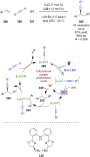
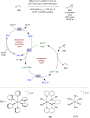
- 18b) [65]. Jiang et al. also reported a series of radical coupling reactions using different CPAs 135a–g and DPZ, with the first examples using α-bromoketones 136 and α-amino acids 137 as radical precursors (Scheme 19a) [66]. The proposed mechanism proceeds through a reductive quenching cycle to
- 139 (Scheme 19b). As previously mentioned, photoredox catalysis has been widely used for the generation of imines. The Jiang group applied this to the synthesis of substituted tetrahydroquinolines (THQs) 144 from α-amino acids 145 to give racemic products in good yields and found that the addition of



























The B & B approach: Ball-milling conjugation of dextran with phenylboronic acid (PBA)-functionalized BODIPY
Beilstein J. Org. Chem. 2020, 16, 2272–2281, doi:10.3762/bjoc.16.188
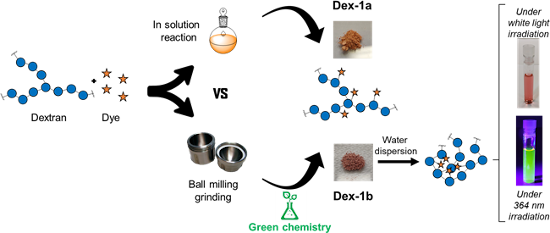
- range of biomolecules: amino acids [8], peptides [9], glycosides [10], nucleosides/nucleotides [11], and lipids [12]. Also, protein-based nano-bio-conjugates [13] have been prepared by ball milling, retaining the native properties of the proteins after mechanochemical synthesis. Boronic acids and their


Naphthalene diimide–amino acid conjugates as novel fluorimetric and CD probes for differentiation between ds-DNA and ds-RNA
Beilstein J. Org. Chem. 2020, 16, 2032–2045, doi:10.3762/bjoc.16.170
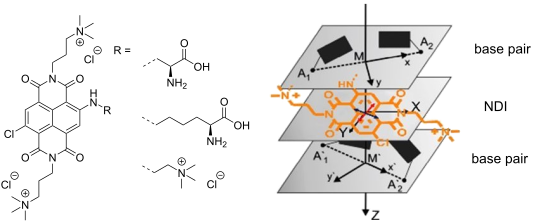
- Chemistry (CNC), Universität Würzburg, Theodor-Boveri-Weg, 97074 Würzburg, Germany 10.3762/bjoc.16.170 Abstract Two novel unnatural amino acids, prepared by linking a dicationic purple-coloured and fluorescent naphthalene diimide (NDI) at core position to amino acid side chains of variable length, strongly
- [9]). One of the approaches relies on amino acids conjugated with various DNA/RNA-binding chromophores, thereby yielding effective spectrometric sensing systems due to their interactions with DNA. In this approach, chromophores can be combined with peptide sequences in various ways, thus giving
- preparing novel fluorophore–amino acid (AA) conjugates. The amino acids (S)-2,3-diaminopropionic acid (ʟ-Dap) and (S)-2,6-diaminohexanoic acid (ʟ-Lys) were chosen to test the difference in the aliphatic linker lengths (Figure 1) on DNA/RNA binding. For comparison purposes, reference compound 5 with 2


pH- and concentration-dependent supramolecular self-assembly of a naturally occurring octapeptide
Beilstein J. Org. Chem. 2020, 16, 2017–2025, doi:10.3762/bjoc.16.168
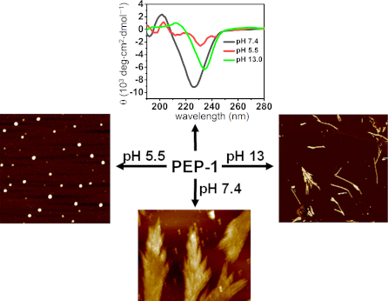
- and resulting morphologies due to electrostatic repulsion between charged amino acids. PEP-1 can also form helical or random-coil secondary structures at a relatively low concentration. The obtained pH-sensitive self-assembly behavior of the target octapeptide is expected to contribute to the
- in mind, we synthesized an octapeptide, PEP-1, which contains two valine (Val) units and one leucine (Leu) unit as the hydrophobic residues and one glutamic acid (Glu) residue, two arginine (Arg) units, and one cysteine (Cys) substituent as polar moieties (Scheme 1). This choice of amino acids
- (Glu−) amino acids [73][74]. Mechanistic insights into the observed conformational transformation via molecular dynamics simulations are underway in our laboratory. Conclusion In summary, we synthesized a naturally occurring amphiphilic peptide fragment, PEP-1, from a β-sheet lectin protein, galectin-1


Automated high-content imaging for cellular uptake, from the Schmuck cation to the latest cyclic oligochalcogenides
Beilstein J. Org. Chem. 2020, 16, 2007–2016, doi:10.3762/bjoc.16.167
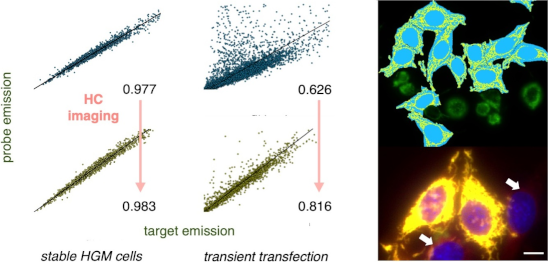
- attractive candidates for intracellular delivery. Already a small dipeptide 9 with two Schmuck amino acids shows a strong binding (KD = 100 nM) and clustering ability towards heparin due to the strong noncovalent interaction between GCP and sulfate anions, such as glycosaminoglycans (GAGs) in heparin [26
- more stable complexes 12 with the phosphodiesters in the DNA backbone, and thus making it possible to transfect cells with shorter peptides. In 2015, the Schmuck group reported the first example of a small peptide with only four amino acids for gene transfection [27]. The binding affinity of 13 to DNA



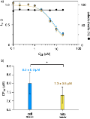

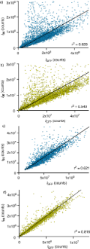
Polarity effects in 4-fluoro- and 4-(trifluoromethyl)prolines
Beilstein J. Org. Chem. 2020, 16, 1837–1852, doi:10.3762/bjoc.16.151
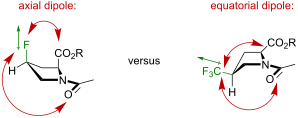
- C4-exo conformation of the pyrrolidine ring. Keywords: amino acids; cis–trans isomerism; fluorine; polarity; proline; Introduction Polarity is among the key features essential for understanding the behavior of organic molecules of biological origin. In particular, there is a set of polarity-related
- issues in the chemistry of amino acids, while the latter are key actors in multiple biochemical processes. In protein translation, for example, 20 (+2) amino acids are utilized for polymerizing them into a primary structure of a protein. Most of these structures share the same key elements with the
- hydrophobic, while the introduction of a polar or an ionizable group makes it hydrophilic. Two amino acids stand out from the dualistic hydrophilic/hydrophobic classification: glycine and proline (Figure 1A) [1]. The origin of their effect onto the structure polarity is not due to the presence of additional





