


Search results
Search for "Molecular recognition" in Full Text gives 172 result(s) in Beilstein Journal of Organic Chemistry.
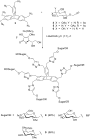
Design and synthesis of multivalent neoglycoconjugates by click conjugations
Beilstein J. Org. Chem. 2014, 10, 1325–1332, doi:10.3762/bjoc.10.134
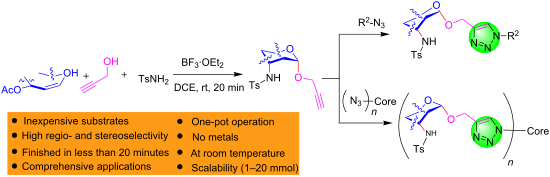
- and glycopeptides are the key constituents of the cellular membrane and extracellular matrix, and play a pivotal role in various key cellular events such as cell–cell recognition, host–pathogen or host–symbiont interactions, molecular recognition of antibodies and metastasis [1][2][3][4][5]. The


Tandem Cu-catalyzed ketenimine formation and intramolecular nucleophile capture: Synthesis of 1,2-dihydro-2-iminoquinolines from 1-(o-acetamidophenyl)propargyl alcohols
Beilstein J. Org. Chem. 2014, 10, 1255–1260, doi:10.3762/bjoc.10.125
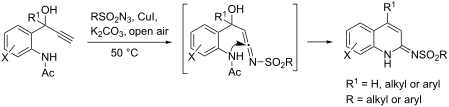
- constituents in pharmaceutical chemistry [30][31][32][33][34][35][36][37][38][39][40][41][42] and also found to play a crucial role in molecular recognition processes [43][44][45][46]. Due to its vast-spread importance, several methods have been developed to construct this useful framework. Apart from the


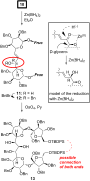
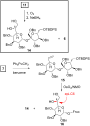
Synthesis of a sucrose dimer with enone tether; a study on its functionalization
Beilstein J. Org. Chem. 2014, 10, 1246–1254, doi:10.3762/bjoc.10.124
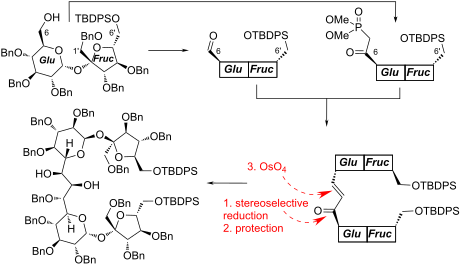
- synthesis; sucrose; Introduction Molecular recognition is one of the most important phenomena in stereoselective processes. Chiral crown ethers (or analogs) are particularly useful in enantioselective reactions [1][2] as well as differentiation of chiral guests [3][4]. From all of the chiral platforms

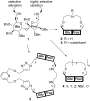



Olefin cross metathesis based de novo synthesis of a partially protected L-amicetose and a fully protected L-cinerulose derivative
Beilstein J. Org. Chem. 2014, 10, 1023–1031, doi:10.3762/bjoc.10.102
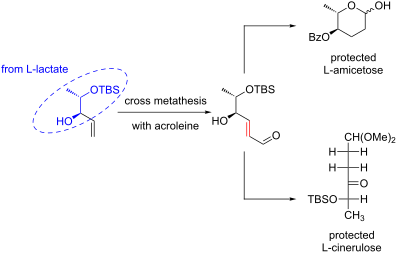
- ., through molecular recognition of a preferred binding site [2][3][4][5], thereby ensuring the selectivity of a chemotherapeutic agent. Particularly common are side chains composed of deoxygenated sugars [6]. For example, the kigamicins are bacterial secondary metabolites isolated from Amicolatopsis sp. [7


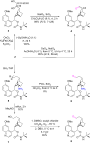
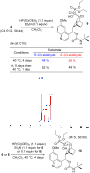
Addition of H-phosphonates to quinine-derived carbonyl compounds. An unexpected C9 phosphonate–phosphate rearrangement and tandem intramolecular piperidine elimination
Beilstein J. Org. Chem. 2014, 10, 883–889, doi:10.3762/bjoc.10.85
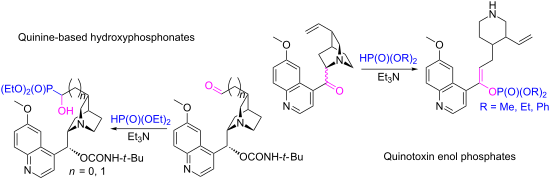
- catalysis, transition metal complexing, molecular recognition, chromatographic separation and analysis of enantiomers [2][3][4][5]. Synthetic modifications of the basic structure, motivated by an improved stereoselectivity potential of quinine, are an issue of ongoing trials [6][7][8][9]. Surprisingly




Molecular recognition of isomeric protonated amino acid esters monitored by ESI-mass spectrometry
Beilstein J. Org. Chem. 2014, 10, 825–831, doi:10.3762/bjoc.10.78
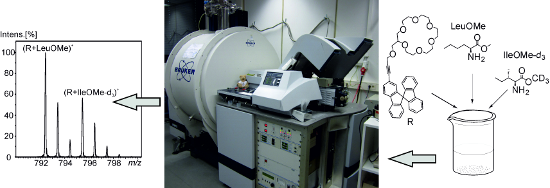
- protonated amino acid esters. Keywords: amino acids; isomer labelled guest method (ILGM); mass spectrometry; molecular recognition; 9,9’-spirobifluorenes; template; Introduction The separation of constitutionally isomeric amino acids is of practical interest. This is particularly true for leucine (Leu
- achieve amino acid recognition by an artificial host [6][7][8][9][10][11] with regard to isomer separation upon isomer-selective molecular recognition by a concave template acting as a host, thereby avoiding the necessity to establish or break additional covalent chemical bonds. Hence, we have prepared
- target compounds 1 and 2 in moderate yields (Scheme 2). Molecular recognition studies With our crown ether derivatives 1 and 2 in hands we studied their recognition behaviour towards the L-leucine isomers. Usually, spectroscopic techniques like NMR or UV–vis spectroscopy are used for this purpose


Staudinger ligation towards cyclodextrin dimers in aqueous/organic media. Synthesis, conformations and guest-encapsulation ability
Beilstein J. Org. Chem. 2014, 10, 774–783, doi:10.3762/bjoc.10.73
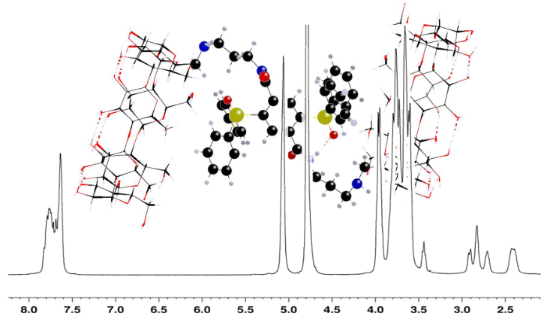
- specific guest molecules. The oligomers are reported to display improved to significantly enhanced binding capacity as well as superior molecular recognition ability [12][13][14], compared to the natural CDs. Suitable design has resulted in better hosts for applications as sensors and catalysts [15], hosts


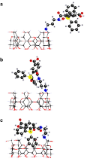

End-group-functionalized poly(N,N-diethylacrylamide) via free-radical chain transfer polymerization: Influence of sulfur oxidation and cyclodextrin on self-organization and cloud points in water
Beilstein J. Org. Chem. 2014, 10, 680–691, doi:10.3762/bjoc.10.61
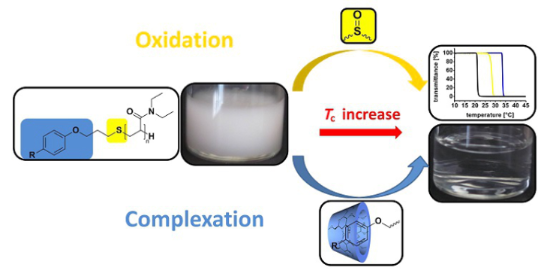
- interactions in living systems [3][4]. Since then, the field of self-assembly through molecular recognition has attracted much attention also in the design of smart materials. In this context, cyclodextrins (CD) are of interest as ring shaped host molecules, e.g., for the design of stimuli-responsive hydrogels


Novel supramolecular affinity materials based on (−)-isosteviol as molecular templates
Beilstein J. Org. Chem. 2013, 9, 2821–2833, doi:10.3762/bjoc.9.317
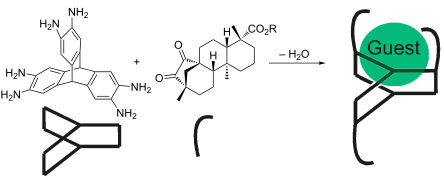
- ][6][7][8][9][10]. Particular interest was given to C3-symmetric structures, serving e.g. as templates in asymmetric catalysis or molecular recognition [11][12][13][14]. A specific but potent subclass of such C3-symmetric architectures is represented by triphenylene ketals [15]. They have found


Synthesis of enantiopure sugar-decorated six-armed triptycene derivatives
Beilstein J. Org. Chem. 2013, 9, 2410–2416, doi:10.3762/bjoc.9.278
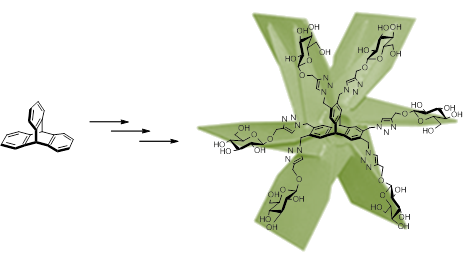
- chemistry. Moreover, they have been investigated for their potential applications in molecular recognition, showing powerful complexation abilities toward different kinds of organic guests [3][4]. Many biological processes, such as cell–cell communication, immune response and cancer metastasis, are
- cluster effect [7][8][9][10][11]. These glycoconjugates showed their potentialities not only in the interpretation of molecular recognition events but also in biotechnological, pharmaceutical and medical fields [12]. Our research interest is focused on the synthesis of new glycoconjugates and the study of
- tool for the study of molecular recognition. Experimental General methods. All commercial reagents and solvents (AR, LabScan Ltd.; SpS, Romil Ltd.) were used without further purification. All syntheses were carried out under atmospheric conditions unless otherwise noted. Analytical TLC was performed on



Structure elucidation of β-cyclodextrin–xylazine complex by a combination of quantitative 1H–1H ROESY and molecular dynamics studies
Beilstein J. Org. Chem. 2013, 9, 1917–1924, doi:10.3762/bjoc.9.226
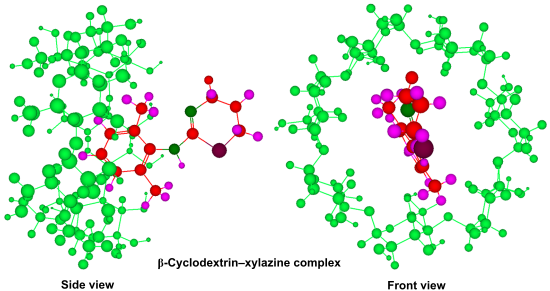
- science and is the basis for most of the vital biological processes [1]. The basis of supramolecular chemistry is molecular recognition where host and guest species interact with each other and exist as a single system. These host–guest systems symbolize simplest examples of supramolecular systems in





Molecular assembly of amino acid interlinked, topologically symmetric, π-complementary donor–acceptor–donor triads
Beilstein J. Org. Chem. 2013, 9, 1565–1571, doi:10.3762/bjoc.9.178
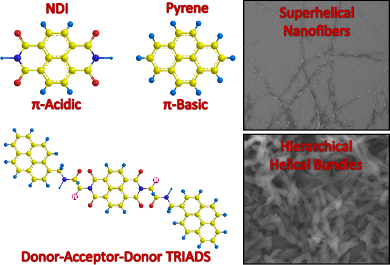
- realized by modulating the chemical functionality of interlinking amino acids. Keywords: amino acids; charge transfer; designer functional molecules; molecular assembly; molecular recognition; Findings Geometric shapes, size and patterns have attracted the inquisitive human mind since time immemorial [1
- ][2]. The significance of geometric complementarity and chemical functionality can be exemplified by the well-known “lock and key” mechanism of enzymes as well as the prototypal molecular recognition manifested in biochemical processes [1][2][3][4]. It is this elementary yet elegant design strategy
- symmetric and π-complementary pyrene and NDI. Consequently, free-floating high-aspect-ratio supercoiled nanofibres and hierarchical helical bundles of triads are realized by modulating the chemical functionality of interlinking amino acids. Such molecular-recognition processes embodied in pertinent designer


The diketopiperazine-fused tetrahydro-β-carboline scaffold as a model peptidomimetic with an unusual α-turn secondary structure
Beilstein J. Org. Chem. 2013, 9, 147–154, doi:10.3762/bjoc.9.17
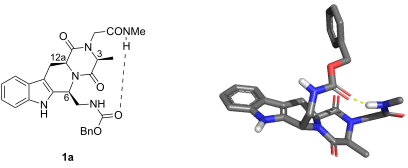
- are structural motifs commonly found in bioactive peptides, which, besides being fundamental in protein folding, play a central role as molecular-recognition elements [31][32][33][34]. In addition to the most frequently occurring β and γ-turns, reversal of the polypeptide chain direction in globular


Self-assembled organic–inorganic magnetic hybrid adsorbent ferrite based on cyclodextrin nanoparticles
Beilstein J. Org. Chem. 2012, 8, 1867–1876, doi:10.3762/bjoc.8.215
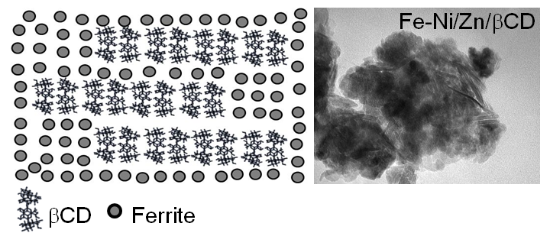
- (CDs) can be associated with the inorganic matrix as an interesting strategy, since these macromolecules have been used for several devices with different properties, from light-responsive matrices to molecular recognition materials [12][13]. CDs are oligosaccharides commonly formed by six, seven or


Mannose-decorated cyclodextrin vesicles: The interplay of multivalency and surface density in lectin–carbohydrate recognition
Beilstein J. Org. Chem. 2012, 8, 1543–1551, doi:10.3762/bjoc.8.175
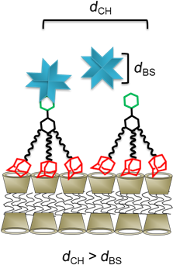
- ; cyclodextrins; lectins; molecular recognition; multivalency; vesicles; Introduction The surface modification of materials with carbohydrates has attracted much attention due to the fact that such materials can be compared to and compatible with the cell surface [1]. The “glycocalyx” is a dense layer on the


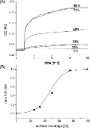
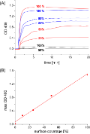


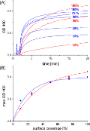

Interaction of cyclodextrins with pyrene-modified polyacrylamide in a mixed solvent of water and dimethyl sulfoxide as studied by steady-state fluorescence
Beilstein J. Org. Chem. 2012, 8, 1312–1317, doi:10.3762/bjoc.8.150
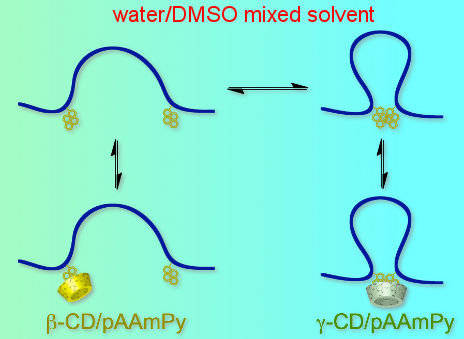
- hydrogels [22][23][24][25][26][27] and macroscopic assemblies based on molecular recognition [28][29][30][31]. Aromatic residues absorb light to become excited, and subsequently they can transfer energy and electrons. The interaction of CDs with water-soluble polymers carrying aromatic residues may allow
- one to construct functional systems that convert photo energy based on molecular recognition. Among aromatic compounds, pyrene is the most examined as a fluorescence probe or label because it shows a relatively high fluorescence quantum yield and a relatively long fluorescence lifetime in both monomer
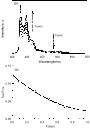
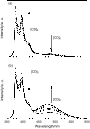
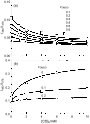
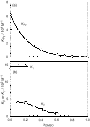
- ][36]. Recently, we have demonstrated this selectivity switching on macroscopic molecular recognition for polyacrylamide-based gels carrying pyrenyl (Py) and CD residues, by changing the composition of a mixed solvent of water and dimethyl sulfoxide (DMSO) [37]. In the present study, the interaction of



The effect of the formyl group position upon asymmetric isomeric diarylethenes bearing a naphthalene moiety
Beilstein J. Org. Chem. 2012, 8, 1018–1026, doi:10.3762/bjoc.8.114
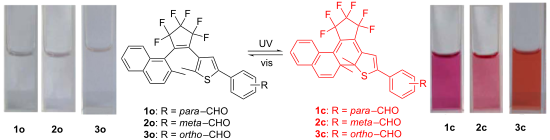
- nucleosides and molecular recognition properties of nucleic acids with the light sensitivity of diarylethenes [34]. Recently, Wu et al. designed and synthesized a novel diarylethene-containing dithiazolethene, which exhibited a gated photochromic reactivity controlled by complexation/dissociation with BF3 [35


Parallel and four-step synthesis of natural-product-inspired scaffolds through modular assembly and divergent cyclization
Beilstein J. Org. Chem. 2012, 8, 930–940, doi:10.3762/bjoc.8.105
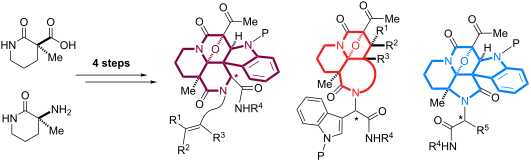
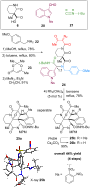
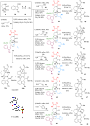
- groups and hydrogen-bond donors or acceptors. The incorporation of multiple sp3-centers on the scaffold creates a unique three-dimensional shape of the surface, which is responsible for specific molecular recognition with biomacromolecules in the cellular context [1][2][3]. To generate diverse



Investigation of the network of preferred interactions in an artificial coiled-coil association using the peptide array technique
Beilstein J. Org. Chem. 2012, 8, 640–649, doi:10.3762/bjoc.8.71
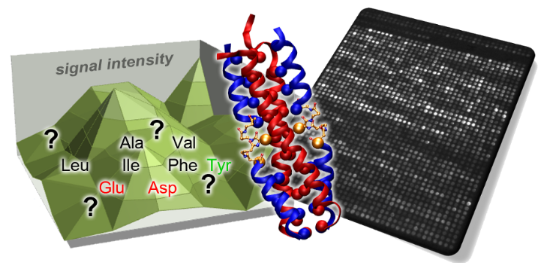
- close to and within the interhelical core (a,d,e,g), which are most important for molecular recognition, were mutated. More specifically, hydrophobic (a15,d18) and electrostatic (e19,g21) positions were mutated simultaneously (Figure 2). The 35mer mutants on the membrane only differ in the positions


Enantioselective supramolecular devices in the gas phase. Resorcin[4]arene as a model system
Beilstein J. Org. Chem. 2012, 8, 539–550, doi:10.3762/bjoc.8.62
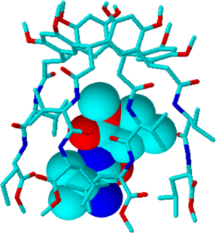
- life's supramolecular systems in which the guest molecule (e.g., amino acids, neurotransmitters, drugs) is selectively captured into the host macromolecular structure (molecular recognition) and transformed catalytically at a specific “active site” (enzyme catalysis) [1][2][3]. Furthermore, the
- the effective probability that the necessary proton transfer from T to B occurs. Rigid resorcin[4]arenes as chiral selectors of amino acids and neurotransmitters. Further insights into the molecular recognition of basket resorcin[4]arene V towards representative chiral molecules were gathered. For




Synthesis of multivalent host and guest molecules for the construction of multithreaded diamide pseudorotaxanes
Beilstein J. Org. Chem. 2012, 8, 234–245, doi:10.3762/bjoc.8.24
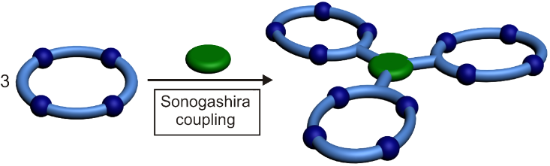
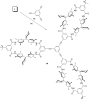
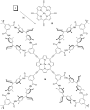
- these concepts are not only molecular recognition and the noncovalent bonds themselves, but also self-assembly, self-sorting, templation and multivalent binding [1][2][3][4][5][6][7][8]. Consequently, the reductionist investigation of synthetic supramolecules can help us to understand biological systems


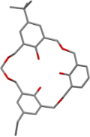
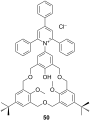
Fifty years of oxacalix[3]arenes: A review
Beilstein J. Org. Chem. 2012, 8, 201–226, doi:10.3762/bjoc.8.22
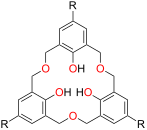
- -substituted phenol; however, in host–guest chemistry an asymmetric macrocycle can provide a site for enantioselective molecular recognition. In the case of p-tert-butylcalix[n]arenes the tert-butyl substituent can be removed, as mentioned previously, through a retro-Friedel–Crafts acylation, and replaced by
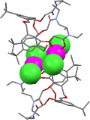
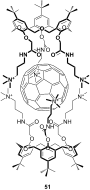
- function as a molecular recognition centre. The cavity created by the lipophilic phenolic units, particularly when held in place through allosteric effects of lower-rim substituents bound to metals, can accommodate a number of quaternary ammonium ions or buckminsterfullerene, C60. Consequently, the ability












Binding of group 15 and group 16 oxides by a concave host containing an isophthalamide unit
Beilstein J. Org. Chem. 2012, 8, 11–17, doi:10.3762/bjoc.8.2
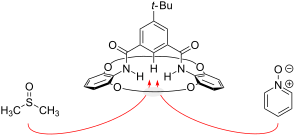
- ; macrocycle; molecular recognition; Introduction In the last decade, isophthalamide derivatives have become attractive neutral hosts as anion receptors [1][2]. Some of these derivatives show a high selectivity for one anion over others [3]. Isophthalamide units have also been incorporated into macrocycles [4


(How) does 1,3,5-triethylbenzene scaffolding work? Analyzing the abilities of 1,3,5-triethylbenzene- and 1,3,5-trimethylbenzene-based scaffolds to preorganize the binding elements of supramolecular hosts and to improve binding of targets
Beilstein J. Org. Chem. 2012, 8, 1–10, doi:10.3762/bjoc.8.1
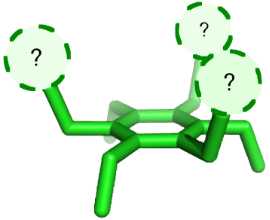
- Xing Wang Fraser Hof University of Victoria, Department of Chemistry, Victoria, BC, V8W 3V6, Canada 10.3762/bjoc.8.1 Abstract 1,3,5-triethylbenzenes have been widely used as supramolecular templates to organize molecular-recognition elements. It is believed that the steric-gearing effect of the
- methyl groups, but the size of this advantage can be small and is dependent on the groups involved. Keywords: binding affinity; entropy; molecular recognition; scaffolds; supramolecular hosts; triethylbenzene; trimethylbenzene; Introduction Supramolecular hosts use arrays of multiple weak interactions
- of preorganization [3][4]. As a nonmacrocyclic alternative, 1,3,5-triethylbenzenes are widely used as an easy-to-synthesize and general scaffold for presenting molecular-recognition elements in a convergent manner (Figure 1) [1][5]. These systems were spawned by the work of Mislow, who studied the


Supramolecular chemistry II
Beilstein J. Org. Chem. 2011, 7, 1541–1542, doi:10.3762/bjoc.7.181
- cell. But the same concepts are useful for generating materials with function, when for example the building blocks are programmed appropriately to find their places in a larger, noncovalent architecture. The basis for all these concepts is molecular recognition. Recently, many studies have been



