Search results
Search for "binding affinity" in Full Text gives 217 result(s) in Beilstein Journal of Organic Chemistry. Showing first 200.
Homologated amino acids with three vicinal fluorines positioned along the backbone: development of a stereoselective synthesis
Beilstein J. Org. Chem. 2017, 13, 2316–2325, doi:10.3762/bjoc.13.228

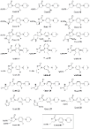
- ; Introduction The incorporation of unnatural amino acids into a peptide structure can potentially reduce conformational disorder and hence improve the binding affinity of the peptide for its biological target. For example, conformationally rigid amino acids such as 1 (Figure 1) have been shown to dramatically


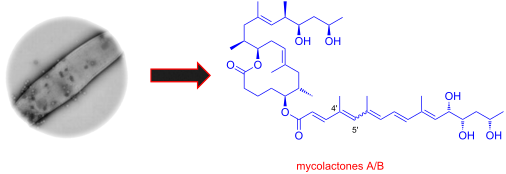
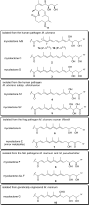
The chemistry and biology of mycolactones
Beilstein J. Org. Chem. 2017, 13, 1596–1660, doi:10.3762/bjoc.13.159









A novel approach to oxoisoaporphine alkaloids via regioselective metalation of alkoxy isoquinolines
Beilstein J. Org. Chem. 2017, 13, 1564–1571, doi:10.3762/bjoc.13.156
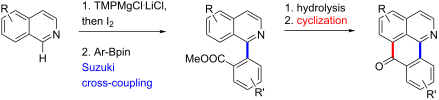
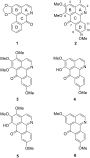
- synthetic, oxoisoaporphine-like analogues were found to have strong DNA binding affinity and therefore high cytotoxicity [5] as well as antiplasmodial activity [6]. Besides menisporphine (2), the related oxoisoaporphine alkaloids dauriporphine (3), 6-O-demethylmenisporphine (4), dauriporphinoline (5) and



Synthesis and metal binding properties of N-alkylcarboxyspiropyrans
Beilstein J. Org. Chem. 2017, 13, 1542–1550, doi:10.3762/bjoc.13.154
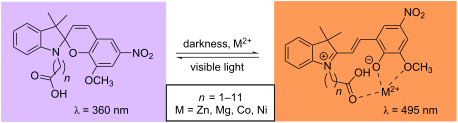
- for binding divalent metal cations and a modest increase in M2+ binding affinity correlated with increased alkycarboxylate tether length. Keywords: carboxylate ligand; merocyanine; metal binding; photochromism; spiropyran; Introduction Spiropyrans are a class of spiro-fused indolochromene (e.g
- ). The extension of this basic bidentate ligand with further substituents has been employed to generate structures with bespoke binding characteristics (e.g., metal ion specificity, control of complex stoichiometry, greater binding affinity) [17]. Typifying this approach, Natali et al. synthesised
- divalent over monovalent metal cations and a modest increase in M2+ binding affinity correlated with increasing alkycarboxylate tether length. This paper details a clear, effective protocol for the synthesis of N-alkylcarboxyspiropyrans and a thorough analysis of the effect of metal cations upon their




Synthesis of novel 13α-estrone derivatives by Sonogashira coupling as potential 17β-HSD1 inhibitors
Beilstein J. Org. Chem. 2017, 13, 1303–1309, doi:10.3762/bjoc.13.126
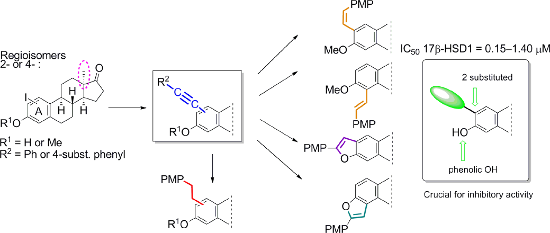
- activity was shown by Poirier et al. [5]. They demonstrated that 13 epimers exhibit no substantial binding affinity for the estrogen receptor alpha and no uterotropic activity. Accordingly, the 13α-estrane core may serve as fundamental moiety for the design of hormonally inactive estrone derivatives


Glyco-gold nanoparticles: synthesis and applications
Beilstein J. Org. Chem. 2017, 13, 1008–1021, doi:10.3762/bjoc.13.100
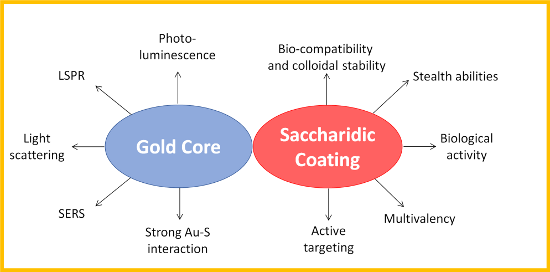
- the bacterial recognition and bacterial infection inhibition. Three different morphologies of AuNPs (sphere, rod and star-like NPs) coated with galactose and mannose derivatives were employed for the quantification of their binding affinity to E. coli, suggesting that each shape could induce a


Pd- and Cu-catalyzed approaches in the syntheses of new cholane aminoanthraquinone pincer-like ligands
Beilstein J. Org. Chem. 2017, 13, 564–570, doi:10.3762/bjoc.13.55
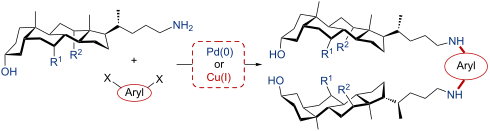
- )anthraquinones with a series of cations demonstrated their high binding affinity to Cu2+, Al3+, and Cr3+. Keywords: amination; aminocholanes; bile acids; cation complexation; Cu-catalysis; diaminoanthraquinone; Pd-catalysis; Introduction Bile acids are known to ensure vital processes in vertebrate organisms
- was shown to decrease the yield of the Pd-catalyzed amination. This effect can be partially overridden by increasing concentrations of the reagents. The obtained bis(cholanylamino)anthraquinones demonstrated a high binding affinity to Cu2+, Al3+, and Cr3+. A tripodal molecular pocket (a) [12] or


Synthesis of multi-lactose-appended β-cyclodextrin and its cholesterol-lowering effects in Niemann–Pick type C disease-like HepG2 cells
Beilstein J. Org. Chem. 2017, 13, 10–18, doi:10.3762/bjoc.13.2
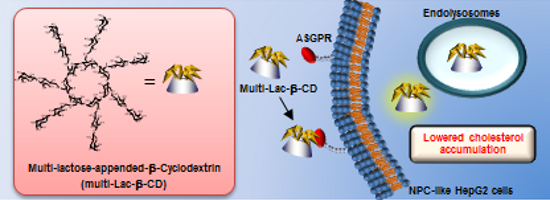
- . Stokmaier et al. revealed that the binding affinity of galactose to ASGPR elevated 100–1000 fold from mono- to triantennary galactose structures, probably due to clustering effects [22]. The dissociation constant of monosaccharide with ASGPR was 10–4 M, whereas those of triantennary and tetraantennary
- [15][16]. Therefore, the binding affinity of multi-Lac-β-CD (DSL5.6) to ASGPR is likely to be much higher than that of mono-Lac-β-CD. In fact, multi-Lac-β-CD (DSL5.6) has a quite low dissociation constant (2.6 × 10⁻⁸ M) with PNA, probably a result of its clustering effect in ASGPR recognition. The
- further elaborate studies to compare the binding affinity of multi-Lac-β-CD (DSL5.6) to PNA with mono-Lac-β-CD are necessary. In addition, to demonstrate the ASGPR-expressing cell-selective binding and cholesterol-lowering effects of multi-Lac-β-CD (DSL5.6), the comparative studies using ASGPR-negative




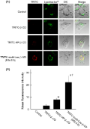

New approaches to organocatalysis based on C–H and C–X bonding for electrophilic substrate activation
Beilstein J. Org. Chem. 2016, 12, 2834–2848, doi:10.3762/bjoc.12.283
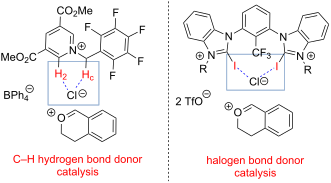
- chloride to various primary and secondary amines. The authors propose that L1 binding with chloride results in a more electrophilic tritylated DMAP cation, and the binding affinity of the catalyst was found to correlate with the N-alkylation rate. Following the aforementioned studies, the Mancheno group




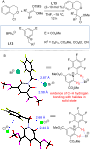
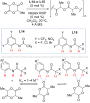


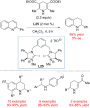


Synthesis of spiro[isoindole-1,5’-isoxazolidin]-3(2H)-ones as potential inhibitors of the MDM2-p53 interaction
Beilstein J. Org. Chem. 2016, 12, 2793–2807, doi:10.3762/bjoc.12.278
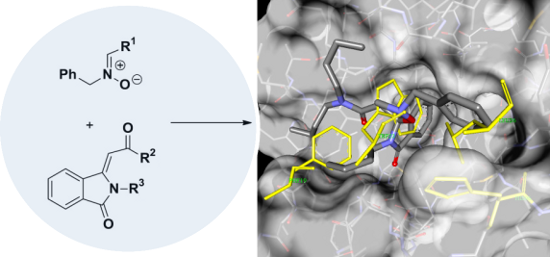
- coordinates of the complex of the MI63-analogue with MDM2 [53][54]. The protein structure PDB ID 3LBL was chosen as the reference receptor because its ligand had high binding affinity and high resolution (1.6 Å). Docking studies were performed using AutoDock4.2 and both enantiomers of compounds 6a–f were


Computational methods in drug discovery
Beilstein J. Org. Chem. 2016, 12, 2694–2718, doi:10.3762/bjoc.12.267
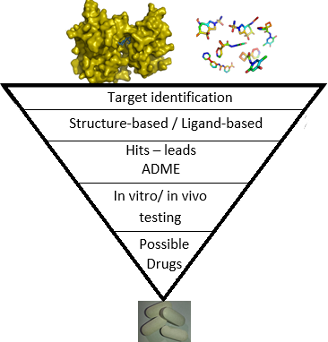
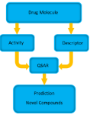
- specific biological information as well. The BIND database contains protein complex information and biomolecular interactions [85]. BindingDB contains measured binding affinity information of proteins that are considered to be targets for drugs [86]. This database contains over one million binding data
- docking In molecular docking, how well a drug binds to its target is determined by the binding affinity prediction of the pose. This is done by scoring. Scoring is used to evaluate and rank the target–ligand complexes predicted by docking algorithms. Scoring functions are used in SBDD for scoring and
- scoring functions use evaluation criteria such as binding pose, binding affinity and ranking of true binders [114]. Wang et al. evaluated the performance of fourteen different scoring functions using 800 protein–ligand complexes in the PDBbind database [113]. The performance was evaluated by the predicted



A self-assembled cyclodextrin nanocarrier for photoreactive squaraine
Beilstein J. Org. Chem. 2016, 12, 2535–2542, doi:10.3762/bjoc.12.248
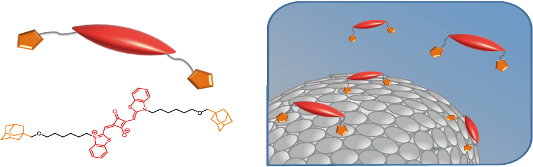
- squaraines can also be immobilized onto CDVs. For this purpose, the squaraines are equipped with two adamantane functions that bind into the cavities of cyclodextrin on the surface of the CDVs (Figure 1). The resulting divalent host–guest interaction should lead to a higher binding affinity of the squaraine




Robust C–C bonded porous networks with chemically designed functionalities for improved CO2 capture from flue gas
Beilstein J. Org. Chem. 2016, 12, 2274–2279, doi:10.3762/bjoc.12.220
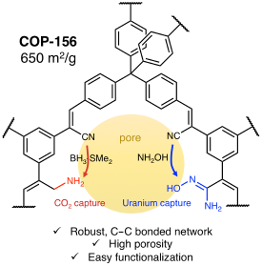
- pressure of CO2 in flue gas emission) and 273 K, the uptake is slightly higher than the starting COP-156. The chemisorptive behavior and stronger binding affinity is reflected in the higher Qst value of 49.9 kJ mol−1. The moderate binding energy is optimal for CO2 capture, as too strong binding requires


Beta-hydroxyphosphonate ribonucleoside analogues derived from 4-substituted-1,2,3-triazoles as IMP/GMP mimics: synthesis and biological evaluation
Beilstein J. Org. Chem. 2016, 12, 1476–1486, doi:10.3762/bjoc.12.144
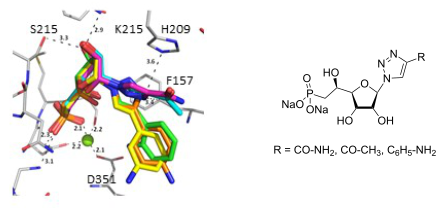
- binding affinity and not the activity. Nevertheless, we focused on the most active compounds and determined the main interactions with the target protein that will be required for lead optimization. We first analysed compounds with the smallest substituent on the triazole nucleobase (derivatives 1n–q). As


Application of Cu(I)-catalyzed azide–alkyne cycloaddition for the design and synthesis of sequence specific probes targeting double-stranded DNA
Beilstein J. Org. Chem. 2016, 12, 1348–1360, doi:10.3762/bjoc.12.128
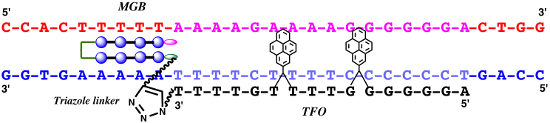
- helices by TFO-MGB conjugates was evaluated by gel-shift experiments. The presence of MGB in these conjugates did not affect the binding parameters (affinity and triplex stability) of the parent TFOs. Keywords: binding affinity; click chemistry; Cu(I)-catalyzed azide–alkyne cycloaddition; pyrrole


Creating molecular macrocycles for anion recognition
Beilstein J. Org. Chem. 2016, 12, 611–627, doi:10.3762/bjoc.12.60
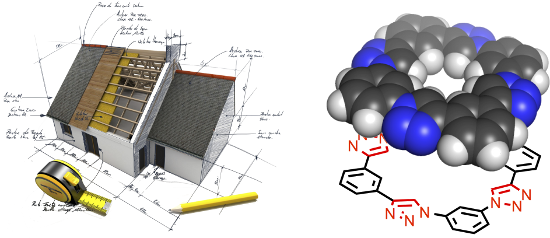
- triazolophane’s rigidity and that preorganization may be crucial for the large binding affinity. To test this idea, we examined the macrocyclic effect using an oligomer (Figure 8a) that folds up around chloride [17]. The affinity decreased by four orders of magnitude to ≈100 M−1, perfectly consistent with
- upon the correct estimate of the binding affinity. We originally missed a few features that impacted the accuracy of the binding constants. While these issues are quite common, their impact can be huge: our affinities had to be modified twice from Ka = 130,000 M−1 to 11,000,000 M−1 to 4,700,000 M−1 [6
- /acetonitrile). The aryl-triazole foldamer 24 formed a double helix with overall stability of β2 = 1012 M−2 [48]. Importantly, while we observed clear penalties to the binding affinity when we added extra water, we also saw that extra water increases the stability of the duplex. The analogy to hydrophobic




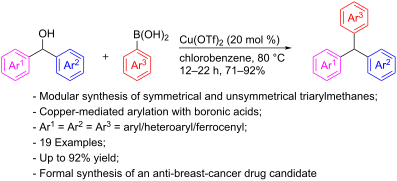
Copper-mediated arylation with arylboronic acids: Facile and modular synthesis of triarylmethanes
Beilstein J. Org. Chem. 2016, 12, 496–504, doi:10.3762/bjoc.12.49
- binding affinity [21], inhibition of hepatic cholesterol [22], inhibition of aldose reductase [23], antiproliferative [24], antiviral, cytotoxic [25], antifungal [26], anti-HIV [27][28][29] and antibacterial activity [30]. Although rare, there are a few natural products, for example, melanervin (5), a


Effective in silico prediction of new oxazolidinone antibiotics: force field simulations of the antibiotic–ribosome complex supervised by experiment and electronic structure methods
Beilstein J. Org. Chem. 2016, 12, 415–428, doi:10.3762/bjoc.12.45
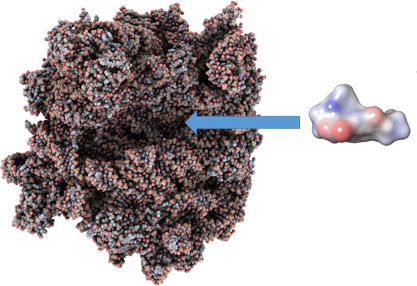
- group and the morpholine nitrogen. Though not observable in the solid state, this movement increases the binding affinity of linezolid under biological conditions. Due to our simulation this low energy minimum is populated 83% of the time at 310 K, dominating the recognition process. We repeated our
- contains a NH2 group that is able to form a weak H-bond, its amidic character and the lack of a chiral center leads to a side chain orientation parallel to the 1,2,4-oxadiazole ring, changing the overall binding mode in comparison with linezolid, and by this decreasing the overall binding affinity. Our
- the acetamidic arm and the G2540 phosphate group. Table 2 summarizes the results for the calculated relative binding energies. Due to our simulation, three among the 20 new linezolid analogues show a higher binding affinity in comparison with linezolid, which is not too bad for a first hit rate. In


A journey in bioinspired supramolecular chemistry: from molecular tweezers to small molecules that target myotonic dystrophy
Beilstein J. Org. Chem. 2016, 12, 125–138, doi:10.3762/bjoc.12.14
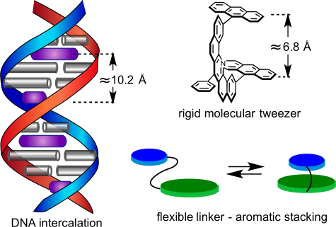
- interested in bisintercalators and the question of rigid vs flexible linkers? The triaminotriazine unit was designed to provide selective recognition of U–U or T–T mismatches, but on its own was viewed as unlikely to provide significant binding affinity because the hydrogen bonding simply involves replacing


Exploring architectures displaying multimeric presentations of a trihydroxypiperidine iminosugar
Beilstein J. Org. Chem. 2015, 11, 2631–2640, doi:10.3762/bjoc.11.282

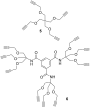
- nonavalent (86%) one. For this latter compound (11·HCl), IC50 = 179 μM was calculated [36]. This outcome is particularly desirable with multimeric iminosugars for increasing the overall binding affinity of weak inhibitors, as recently pointed out by Winum and Ulrich in a recent review [37]. It should also be




Size-controlled and redox-responsive supramolecular nanoparticles
Beilstein J. Org. Chem. 2015, 11, 2388–2399, doi:10.3762/bjoc.11.260
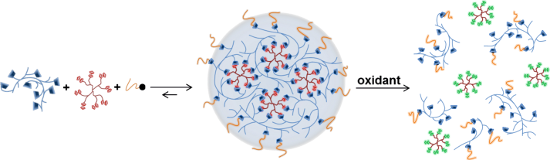
- binding affinity. The positively charged Fc8-PAMAM multivalent guest was prepared according to a procedure developed in our group [27]. The positively charged Ad-terminated PAMAM (Ad8-PAMAM), used as a control, was prepared according to a literature procedure [11]. The neutral Fc-PEG stabilizer was
- of Ad is efficiently blocked by CD, which is in line with the approx. 30 times higher binding affinity of Ad (see above). Most importantly, this graph (Figure 5) confirms a 1:1 binding stoichiometry of the system. These results demonstrate that SNPs form optimally at a 1:1 stoichiometry at which all
- host–guest ratio at 1:1 and a high ionic strength of 0.2 M NaCl. Two different parameters were considered to study the effect of a stopper: length and binding affinity. The formation of SNPs was studied using constant concentrations of [CD] = 100 µM (CD is the number of moieties from CD-PEI) and [Fc


Co-solvation effect on the binding mode of the α-mangostin/β-cyclodextrin inclusion complex
Beilstein J. Org. Chem. 2015, 11, 2306–2317, doi:10.3762/bjoc.11.251
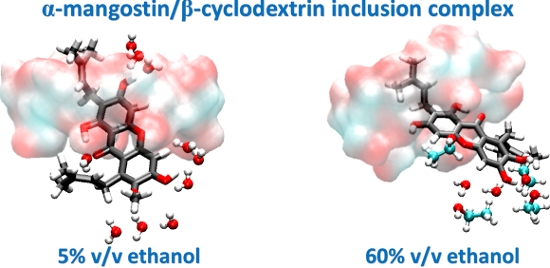
- -solvent enhances the solubility of α-MGS with some effects on the binding affinity with β-CD, depending on the concentration employed. Keywords: α-mangostin; β-cyclodextrin; binary complex; inclusion complex; Introduction Solubilization of otherwise poorly soluble drugs under physiological conditions to
- additive contributions has potential to provide relationship between structure and binding affinity as well as the solvation effects. Theoretical basis of solvation free energy decomposition and the Free Energy Perturbation (FEP) formalism allowing additive for free-energy contributions arising from
- inclusion complex, as seen by a reduction in ΔGsolv at high ethanol percentages. In contrast, the entropies of all systems were likely similar (−T∆S of ≈13 kcal/mol). After combining the interaction energy (1), solvation (2) and entropy (3) terms, the binding affinity of the α-MGS/β-CD complexation at 0–60



Cholesterol lowering effects of mono-lactose-appended β-cyclodextrin in Niemann–Pick type C disease-like HepG2 cells
Beilstein J. Org. Chem. 2015, 11, 2079–2086, doi:10.3762/bjoc.11.224
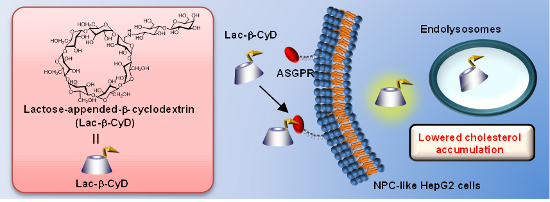
- levels in NPC1 fibroblasts, indicating the improvement of impaired autophagy by HP-β-CyD [28]. Therefore, it is necessary to investigate whether Lac-β-CyD can improve an autophagy function in NPC-like cells. Galactose density is one of the critical parameters of affinity to ASGPR. The binding affinity of




Supramolecular chemistry: from aromatic foldamers to solution-phase supramolecular organic frameworks
Beilstein J. Org. Chem. 2015, 11, 2057–2071, doi:10.3762/bjoc.11.222
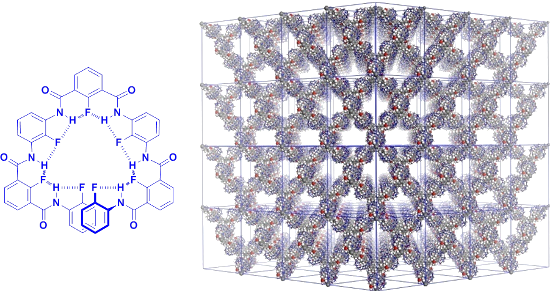
- approximately 1.8 nm in diameter [69]. At first we expected that this series of triazole foldamers would be good hydrogen bonding acceptors. Intriguingly, the foldamers did not exhibit observable binding affinity to saccharides or amide derivatives even in less polar chloroform. Liyan designed different


![[Graphic 1]](/bjoc/content/inline/1860-5397-11-222-i19.png?max-width=637&scale=1.18182) 16 and dynamic [2]catenane formed by compounds 17–19.
16 and dynamic [2]catenane formed by compounds 17–19.


Selected synthetic strategies to cyclophanes
Beilstein J. Org. Chem. 2015, 11, 1274–1331, doi:10.3762/bjoc.11.142
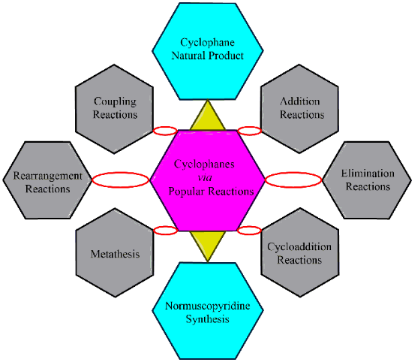
- cyclized product. The cleavage of the acetate groups with sodium methoxide in methanol gave the glycophane (a glycophane is a hybrid of carbohydrate and cyclophane) 143 (27%, Scheme 21). The synthesis of fullerene-related molecules with high binding affinity and/or high selectivity is an active research