


Search results
Search for "binding site" in Full Text gives 186 result(s) in Beilstein Journal of Organic Chemistry.
From steroids to aqueous supramolecular chemistry: an autobiographical career review
Beilstein J. Org. Chem. 2016, 12, 684–701, doi:10.3762/bjoc.12.69
- zinc complexes (Figure 3) as mimics of the enzyme Carbonic Anhydrase. The ligands for these complexes are notoriously difficult to work with chromatographically, but I managed to synthesize a few derivatives that not only replicated the zinc binding site, but also some of the functionality that
- competition gives the computationalists a unique opportunity to try and hone their skills, which in return provides feedback to those interested in the a priori prediction of the thermodynamics of binding. For example, being able to predict ahead of time which ligands binds best to a protein binding-site has




Effective in silico prediction of new oxazolidinone antibiotics: force field simulations of the antibiotic–ribosome complex supervised by experiment and electronic structure methods
Beilstein J. Org. Chem. 2016, 12, 415–428, doi:10.3762/bjoc.12.45
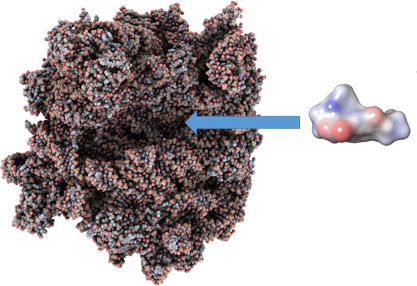
- , the remaining pharmacophore part fits perfectly into the binding site. What makes the difference in the relative binding energies between those two compounds seems to be the steric repulsion exerted by the methyl group of 6. This repulsion causes a twisting of the G2540 nucleobase and hence the
- importance for the overall binding process: in fact, if G2540 is interacting with the morpholine ring, the drug is “clamped” in the binding site, because its side chain is stabilized by stacking interactions. While our model recognize different enantiomers (guest 13 and 16 are stabilized in comparison with
- destabilized by nearly 70 kJ/mol in comparison with the guest 20. The increased steric effect is once again rising the energy of the complex and pushing the ligand outside the binding site. Conclusion The proposed combination of computational power and chemical intuition led to the prediction of several new


Learning from the unexpected in life and DNA self-assembly
Beilstein J. Org. Chem. 2015, 11, 2713–2720, doi:10.3762/bjoc.11.292
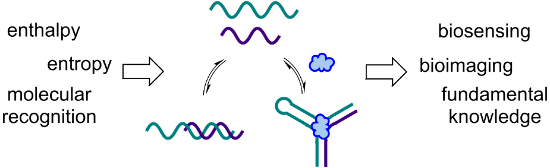
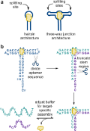
- be a privileged structure for the engineering of aptamers into split aptamers, as it offers two putative splitting sites that are distant from the typical target binding site (Figure 4a). Excitingly, Stojanovic and co-workers had recently demonstrated that SELEX could be carried out using a




Syntheses of 2-substituted 1-amino-4-bromoanthraquinones (bromaminic acid analogues) – precursors for dyes and drugs
Beilstein J. Org. Chem. 2015, 11, 2326–2333, doi:10.3762/bjoc.11.253
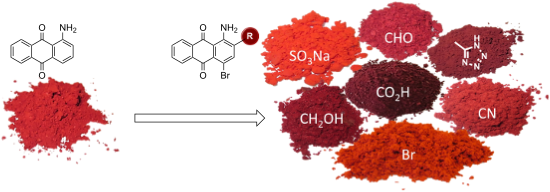
- potential as drug targets. In this context, a library of AQ derivatives, structurally related to RB-2, has been synthesized and evaluated at a variety of purinergic targets; all of which are characterized by a nucleotide binding site [28][42][43][44][45][46][47][48]. The nature of the substituent at


Are D-manno-configured Amadori products ligands of the bacterial lectin FimH?
Beilstein J. Org. Chem. 2015, 11, 1096–1104, doi:10.3762/bjoc.11.123
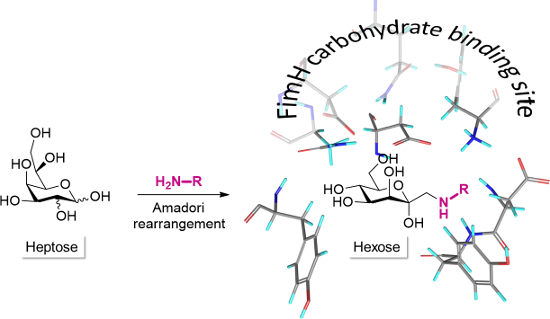
- aromatic moiety with the so-called tyrosine gate at the entrance of the carbohydrate binding site, formed by Y48 and Y137. Additional interactions exerted by extended aglycone portions can further improve ligand affinity for FimH; for example ortho-chloro substitution of the phenyl ring (compounds 2 and 5
- consideration of Amadori products 9 and 10 as FimH ligands The complexation of MeMan (1, cf. Figure 1) as the most simple FimH ligand in the carbohydrate binding site of FimH has been described in detail [10]. It is depicted in a simplified cartoon fashion in Figure 2. The α-configured aglycone moiety (OCH3 in
- green) of the glycoside is pointing out of the binding site, whereas the axial 2-OH group as well as all other hydroxy groups of the sugar ring are complexed within the FimH carbohydrate binding site. Complexation of mannoside ligands is further supported by a conserved water molecule inside the


Peptide–polymer ligands for a tandem WW-domain, an adaptive multivalent protein–protein interaction: lessons on the thermodynamic fitness of flexible ligands
Beilstein J. Org. Chem. 2015, 11, 837–847, doi:10.3762/bjoc.11.93
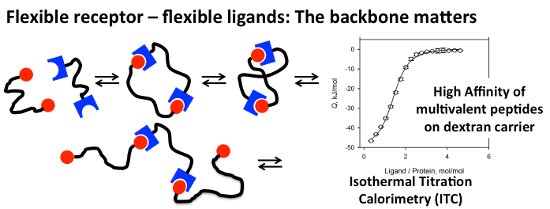
- . In addition, concise differences were observed, pHPMA and hPG carriers showed moderate affinity and bound 2.3–2.8 peptides per protein binding site resulting in the formation of aggregates. Dextran-based conjugates displayed affinities down to 1.2 µM, forming complexes with low stoichiometry, and no
- energy of binding from the enthalpic and entropic contributions. In addition, the method can be used to determine the stoichiometry of the formed protein–ligand complex indicating the ratio of peptide ligand molecules relative to each protein binding site thereby giving valuable insights into the
- , soluble complexes with a stoichiometry of <2 peptide ligands per protein binding site, while pHPMA and hPG formed colloidal suspensions/dispersions with stoichiometries >2 ligands per binding site. Molecular dynamics calculations suggested that conjugates with multivalently presented peptides on dextran





Impact of multivalent charge presentation on peptide–nanoparticle aggregation
Beilstein J. Org. Chem. 2015, 11, 792–803, doi:10.3762/bjoc.11.89
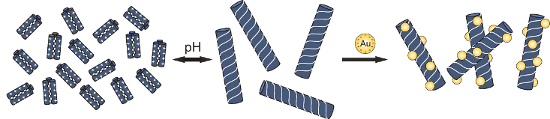
- with peptide concentration. Isothermal titration calorimetry (ITC) was used to determine the thermodynamic parameters as well as the binding constant for the assembly of Au/MUA nanoparticles (Table 1). By fitting with a one set of binding site mode the binding stoichiometry N, the binding constant KB


Glycodendrimers: tools to explore multivalent galectin-1 interactions
Beilstein J. Org. Chem. 2015, 11, 739–747, doi:10.3762/bjoc.11.84
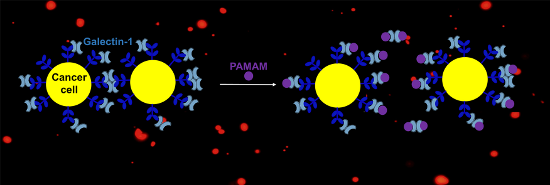
- these aggregates. This indicates that nanoparticles formed using the mannose-functionalized dendrimer do not rely on interactions in the β-galactoside binding site on galectin-1 and that non-specific glycodendrimer/galectin-1 interactions are responsible for the formation of these small aggregates




DNA display of glycoconjugates to emulate oligomeric interactions of glycans
Beilstein J. Org. Chem. 2015, 11, 707–719, doi:10.3762/bjoc.11.81
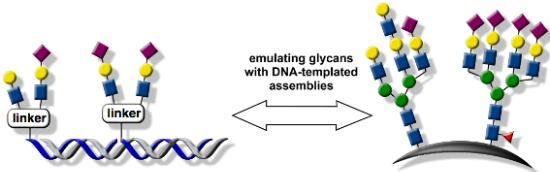
- binding sites for glucosides and mannosides (preferred) spaced by 72 Å. Titration studies showed a clear dependence on the functionalization of each arm in the 3-way junction consistent with a synergistic interaction of each arm with a binding site. However, the number of glycan units (on each arm 3, 6 or
- 12) had marginal impact on the binding suggesting a saturation of binding site occupancy. For the structure with 6 units of maltose on each arm, a KD of 1 μM was measured which is 700-fold more potent (40-fold per sugar) than monovalent maltose. The advent of the copper-catalyzed azide–alkyne


Potential of acylated peptides to target the influenza A virus
Beilstein J. Org. Chem. 2015, 11, 589–595, doi:10.3762/bjoc.11.65
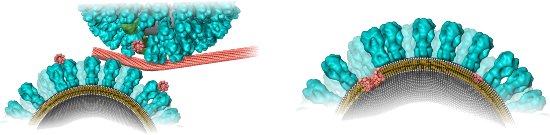
- virus to the host cell proved to be potent drug candidates [4][5][6][7][8][9]. Those inhibitors bind to the virus envelope spike protein hemagglutinin (HA) which is organized as a homotrimer. In particular, inhibitors competing for the highly conserved binding site for sialic acid, which is the natural


Photocatalytic nucleophilic addition of alcohols to styrenes in Markovnikov and anti-Markovnikov orientation
Beilstein J. Org. Chem. 2015, 11, 568–575, doi:10.3762/bjoc.11.62
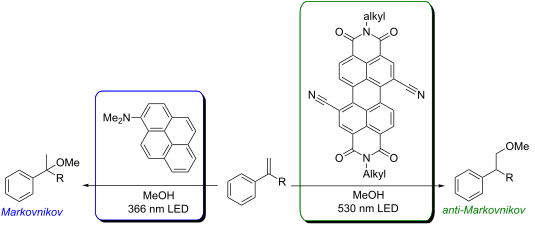
- distance dependant process, the photocatalyst might not be regenerated and hence removed from the catalytic cycle. This scenario could potentially be improved by a substrate binding site on the photocatalyst that keeps the substrate in the vicinity of Py as long as it is required for forward and back


3-Glucosylated 5-amino-1,2,4-oxadiazoles: synthesis and evaluation as glycogen phosphorylase inhibitors
Beilstein J. Org. Chem. 2015, 11, 499–503, doi:10.3762/bjoc.11.56
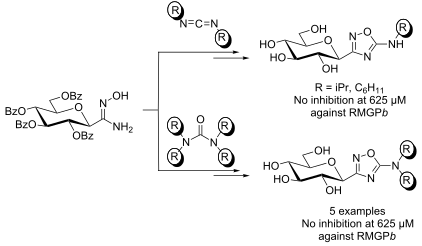
- as aryl moieties, with 2-naphthyl identified as the best pharmacophore for the series discussed above (Figure 1, D–I). Nevertheless, hydrogen bonds might also be created in this secondary binding site with other residues. The introduction of hydrogen bond donors and/or acceptors at the 5-position of


Synthesis of divalent ligands of β-thio- and β-N-galactopyranosides and related lactosides and their evaluation as substrates and inhibitors of Trypanosoma cruzi trans-sialidase
Beilstein J. Org. Chem. 2014, 10, 3073–3086, doi:10.3762/bjoc.10.324
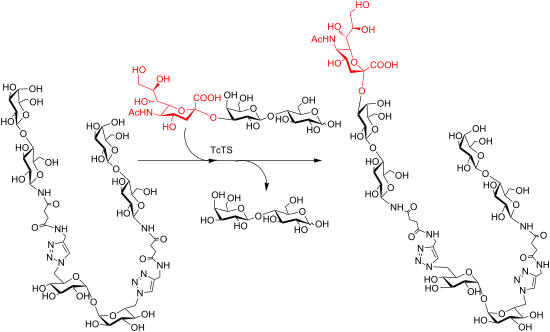
- binding site or to the galactose acceptor site. Inhibitors of TcTS binding to the βGalp acceptor site would be highly selective, as other sialidases lack this interaction. In this direction, a group of octyl β-galactopyranosides and octyl N-acetyllactosaminides were described as substrates as well as




Come-back of phenanthridine and phenanthridinium derivatives in the 21st century
Beilstein J. Org. Chem. 2014, 10, 2930–2954, doi:10.3762/bjoc.10.312

- cases a switch of the binding site to the minor groove was reported. In an effort to influence DNA sequence-selective recognition by small molecules (MW <1000), our group prepared a series of phenanthridine derivatives with one or two nucleobases covalently attached at the 3 and/or 8 positions of the
- aromatic stacking and hydrogen-bonding interactions [73][74]. At variance to phenanthridinium–nucleobase conjugates (Scheme 23), which were not able to differentiate among mononucleotides, some bis-phenanthridinium–nucleobase conjugates provided a more convenient binding site for the nucleobase. For
- within the polynucleotide binding site. All 4,9-DAP derivatives also showed considerable antiproliferative activity, interestingly only 19 having strong, micromolar activity in vitro but negligible in vivo toxic effects in mice [97]. Strong fluorescence of 19 allowed monitoring of the very efficient


Synthesis and characterization of a new photoinduced switchable β-cyclodextrin dimer
Beilstein J. Org. Chem. 2014, 10, 2874–2885, doi:10.3762/bjoc.10.304
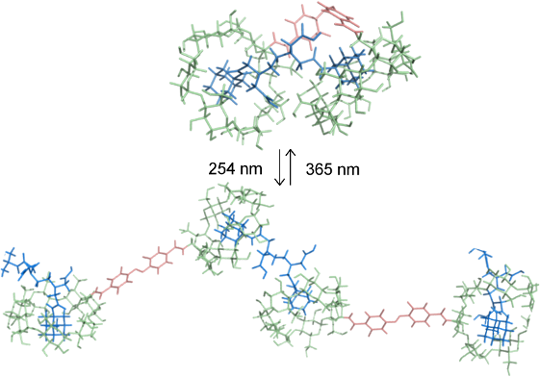
- binding site of the ditopic guest ADAdim 4 and one binding site of a particular β-CD dimer, bearing a terephthalic acid linker, was independent of the number of binding sites, that is, no cooperative effect was observed and a supramolecular polymer was formed. ITC is one of the most interesting methods to



Encapsulation of biocides by cyclodextrins: toward synergistic effects against pathogens
Beilstein J. Org. Chem. 2014, 10, 2603–2622, doi:10.3762/bjoc.10.273
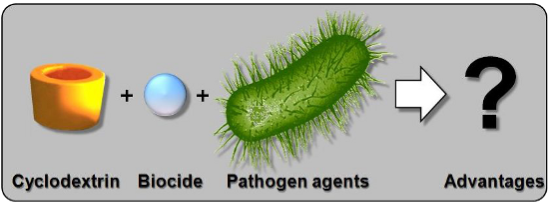
- the methyl carbamate residue is the binding site. Despite the weak binding constants, the carbendazim water-solubility is increased but the effect remains low (1.9-fold compared to free carbendazim in the presence of 15 mM of β-CD). In 2012, Ge et al. proposed to use the HP-β-CD to enhance the


Synthesis and biological evaluation of novel N-α-haloacylated homoserine lactones as quorum sensing modulators
Beilstein J. Org. Chem. 2014, 10, 2539–2549, doi:10.3762/bjoc.10.265
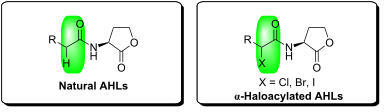
- 6, 8 and 11 originates from a covalent binding of the halogenated analogues in the binding site of the target receptor [15]. The absence of antagonistic activity of these molecules in this biosensor however indicates that the reduction in QS activity results from the presence of the larger electron



Reversibly locked thionucleobase pairs in DNA to study base flipping enzymes
Beilstein J. Org. Chem. 2014, 10, 2293–2306, doi:10.3762/bjoc.10.239
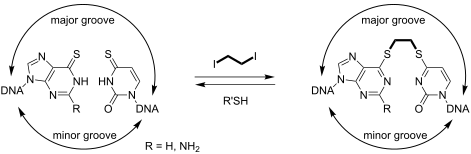
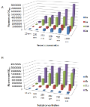
- -Et-S4U2) were added stepwise increasing amounts of a solution containing M.TaqI (10 µM), 36mer duplex with 2AP (200 nM) and a duplex 1I6S·2U4S or 1I6S-Et-S4U2 (400 nM) in the same buffers. The relative fluorescence intensity was determined after each addition. A model with one binding site and two


Molecular recognition of AT-DNA sequences by the induced CD pattern of dibenzotetraaza[14]annulene (DBTAA)–adenine derivatives
Beilstein J. Org. Chem. 2014, 10, 2175–2185, doi:10.3762/bjoc.10.225
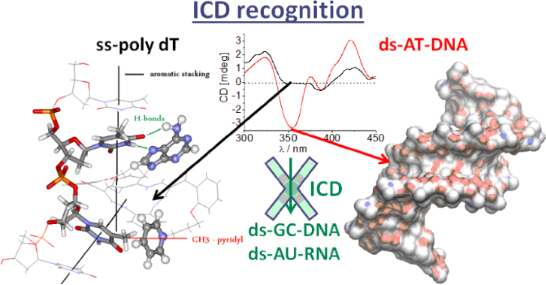
- of Chemistry, Jagiellonian University, Ingardena 3, 30-060 Kraków, Poland 10.3762/bjoc.10.225 Abstract An investigation of the interactions of two novel and several known DBTAA–adenine conjugates with double-stranded DNA and RNA has revealed the DNA/RNA groove as the dominant binding site, which is
- this study are long (<100 base pairs) synthetic polynucleotides poly dG–poly dC, poly dA–poly dT, poly dAdT–poly dAdT and poly rA–poly rU, each associated with specific structural properties of the minor/major groove as the anticipated binding site (APH, AP3, AP6 didn’t intercalate into ct-DNA [11
- intercalator). There are several possible explanations for the observed hypochromic effect, including the intramolecular stacking of DBTAA with adenine or the intermolecular stacking of two DBTAA chromophores within DNA/RNA grooves, a solvatochromic effect in the DNA/RNA binding site, and even a weak partial


Multivalent scaffolds induce galectin-3 aggregation into nanoparticles
Beilstein J. Org. Chem. 2014, 10, 1570–1577, doi:10.3762/bjoc.10.162
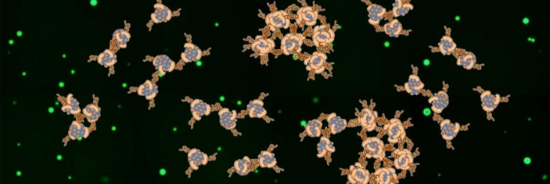
- formation of large, monodisperse nanoparticle aggregates from galectin-3/glycodendrimer solutions is as follows. The glycodendrimer serves to nucleate the aggregation process through the specific binding of lactose into the carbohydrate binding site on galectin-3. Binding of the carbohydrate into the
- galectin-3 binding site must then be enabling protein–protein interactions. Some of these protein–protein interactions may occur because of intertwining of the N-terminal domains that are now in close proximity. However, protein–protein interactions using the carbohydrate recognition domains of galectin-3


Substitution effect and effect of axle’s flexibility at (pseudo-)rotaxanes
Beilstein J. Org. Chem. 2014, 10, 1299–1307, doi:10.3762/bjoc.10.131
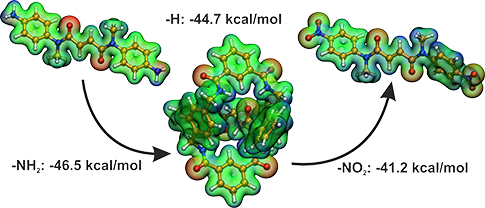
- symmetric, and there are two recognition sites between axle and wheel, the latter sites strongly resemble each other in geometrical parameters. Thus, we only consider one binding site (isophtalic unit) with its hydrogen bonds. Note, that the hydrogen bond in the DB systems are more symmetrical than in SB
- systems. As the choice of the binding site is sort of arbitrary, we always choose the one with the shortest N–H···O distance. The full data can be found in the Supporting Information File 1. The hydrogen bonds listed in Table 3 fall in the range of 2.1 to 2.4 Å, and their angles range from 150 to 180


Olefin cross metathesis based de novo synthesis of a partially protected L-amicetose and a fully protected L-cinerulose derivative
Beilstein J. Org. Chem. 2014, 10, 1023–1031, doi:10.3762/bjoc.10.102
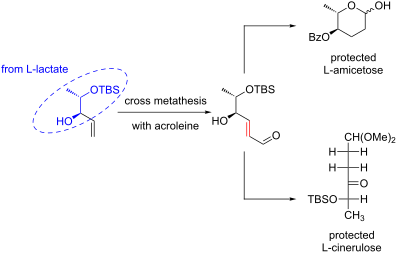
- ., through molecular recognition of a preferred binding site [2][3][4][5], thereby ensuring the selectivity of a chemotherapeutic agent. Particularly common are side chains composed of deoxygenated sugars [6]. For example, the kigamicins are bacterial secondary metabolites isolated from Amicolatopsis sp. [7


Molecular recognition of isomeric protonated amino acid esters monitored by ESI-mass spectrometry
Beilstein J. Org. Chem. 2014, 10, 825–831, doi:10.3762/bjoc.10.78
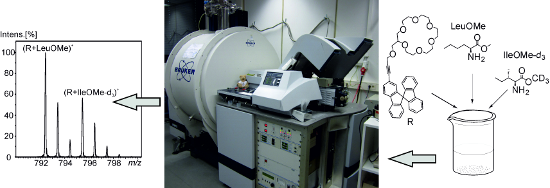
- non-polar parts of the substrates, e.g., via attractive dispersive interactions, or provide steric hindrance that prevents substrates of a certain shape to be accommodated in the concave binding site of the templates. Since the 9,9’-spirobifluorene moiety provides such a rigid concave, non-polar


Towards allosteric receptors – synthesis of β-cyclodextrin-functionalised 2,2’-bipyridines and their metal complexes
Beilstein J. Org. Chem. 2014, 10, 814–824, doi:10.3762/bjoc.10.77
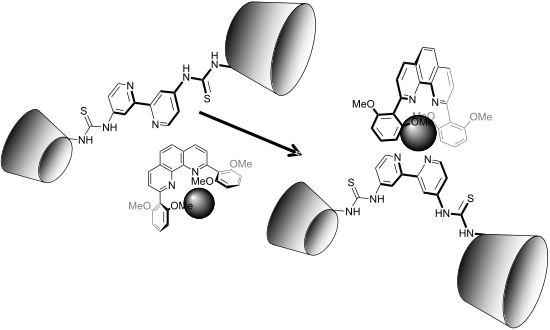
- ) or hampering (negative allosteric cooperativity) the binding of another substrate at a second binding site. This powerful regulatory concept has become quite interesting in supramolecular chemistry, and the development of artificial receptor systems which can be controlled by allosteric effects comes
- well defined [Zn(1)2] complexes which, together with the NMR data, proof that zinc(II) ions are suitable to act as an effector for 1. Changing the substitution pattern to 6,6’ like in ligand 2, however, makes it impossible to form a 1:2 complex due to the steric crowding around the metal binding site
- sterically congested metal binding site of 3. Hence, we have to conclude that, unfortunately, we have not succeeded in finding a suitable effector for this ligand yet. Mixing of preformed complexes [Zn(22)]2+ and [Cu(22)]+ with 1 in a 1:1 ratio, however, afforded the desired heteroleptic complexes [Cu(22)(1




Physalin H from Solanum nigrum as an Hh signaling inhibitor blocks GLI1–DNA-complex formation
Beilstein J. Org. Chem. 2014, 10, 134–140, doi:10.3762/bjoc.10.10
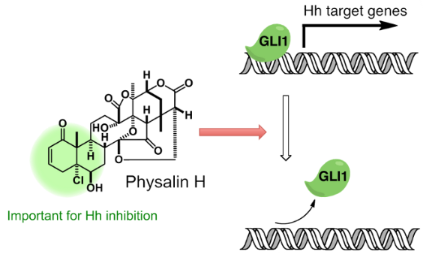
- interacts with the Shh protein [12], and JK184 induces Hh inhibition through class IV alcohol dehydrogenase [13]. GANT-61 is an inhibitor, which disturbs GLIs binding to their binding site (GACCACCCA) in the promoter region of the target genes [14]. The AAA+ ATPase motor cytoplasmic dynein has been found to
- –515 amino chain, including the five Zn finger regions. Horseradish peroxidase (HRP)-conjugated streptavidin detected free “biotin-labeled GLI1-BS” (DNA containing GLI1 binding site; biotin-AGCTACCTGGGTGGTCTCTTCGA; the underlined 9 bps are a consensus sequence [30]; Figure 5, lane 1). After mixing with
- -CN-MS, 10 × 250 mm; MeCN/H2O 37:63, flow rate 2.0 mL/min, UV detection at 254 nm) to give compound 3 (1.7 mg, tR 24 min) and compound 1 (3.3 mg, tR 30 min). Electrophoretic mobility shift assay (EMSA) The double-stranded (ds) DNA fragments containing a GLI1 binding site (GLI1–BS) were prepared by





