


Search results
Search for "cyclizations" in Full Text gives 218 result(s) in Beilstein Journal of Organic Chemistry. Showing first 200.
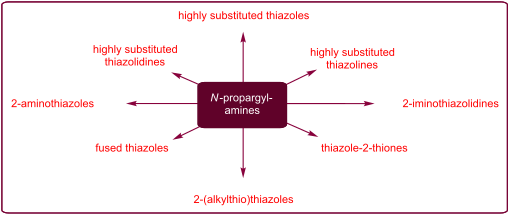
N-Propargylamines: versatile building blocks in the construction of thiazole cores
Beilstein J. Org. Chem. 2017, 13, 625–638, doi:10.3762/bjoc.13.61
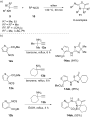
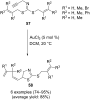
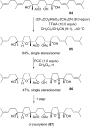
- (Table 2). Some important information of the reactions are listed below: (1) iodine-mediated cyclizations of terminal N-propargylthioureas 55 gave exclusively 4,5-dihydrothiazoles 57 through a 5-exo-dig cyclization, whereas internal N-propargylthioureas 55 under the same reaction conditions gave a
- 4,5-dihydrothiazoles and the competing 6-endo-dig ring-closing process affords 4H-1,3-thiazines after conversion of the charge-transfer complex into the ring-opened iodovinyl B or bridged iodirenium C ions; (2) bromine-mediated cyclizations of both electron-poor and electron-rich N-propargylthioureas
- 55 gave exclusively 4,5-dihydrothiazoles 57 in moderate to good yields; (3) phenyl hypochloroselenoite-mediated cyclizations of terminal N-propargylthioureas 55 underwent a regioselective 5-exo-dig cyclization giving the corresponding 4,5-dihydrothiazoles 57 in moderate yields. On the other hand




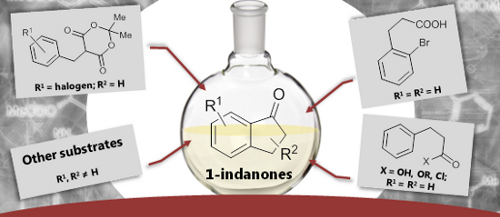
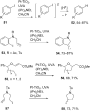
Synthesis of 1-indanones with a broad range of biological activity
Beilstein J. Org. Chem. 2017, 13, 451–494, doi:10.3762/bjoc.13.48
- demonstrated the greatest resemblance to combretastatin A-4. In 2008, Frontier et al. have examinated the impact of the dienone substitution in Nazarov cyclizations [69]. They synthesized a series of the Nazarov substrates 133 with electron-donating substituents at C-2 and electron-withdrawing substituents at


Facile synthesis of indolo[3,2-a]carbazoles via Pd-catalyzed twofold oxidative cyclization
Beilstein J. Org. Chem. 2016, 12, 2490–2494, doi:10.3762/bjoc.12.243
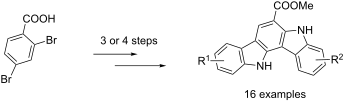
- indicated that the two cyclizations of 1a did not happen simultaneously but followed a particular sequence. Further attempts to shorten the reaction time by enhancing the temperature from 120 °C to 140 °C significantly decreased the yield (Table 1, entry 8), on account of decomposition of both the starting


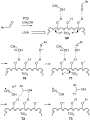
The direct oxidative diene cyclization and related reactions in natural product synthesis
Beilstein J. Org. Chem. 2016, 12, 2104–2123, doi:10.3762/bjoc.12.200
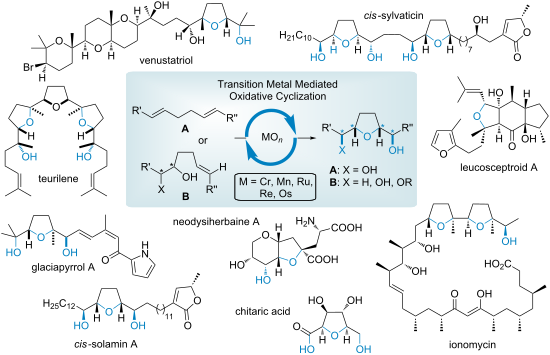
- reaction; cf. Scheme 3). In this case the diol and the metal oxide form a glycol ester intermediate which then undergoes an intramolecular oxidative addition to a remote double bond. Thereby, type B oxidative cyclizations converge to the same (or very similar) reactive intermediate as is passed through in
- in Scheme 3). The key intermediate and cyclization precursor may then involve a coordinative bond of that ether oxygen to the strongly Lewis acidic metal center. Due to the close relation to type B cyclizations, they can be classified as type B’ (Scheme 3). Reagents that mediate this type of reaction
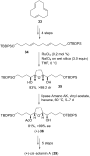
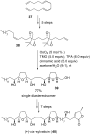
- of the present review is to assemble key results of these applications and illustrate scope and limitations. Review Oxidative cyclizations in the synthesis of carbohydrates, amino acids and polyketide natural products (+)-Anhydro-D-glucitol and (+)-D-chitaric acid (+)-Anhydro-D-glucitol (6) was






Application of heterocyclic aldehydes as components in Ugi–Smiles couplings
Beilstein J. Org. Chem. 2016, 12, 2032–2037, doi:10.3762/bjoc.12.191
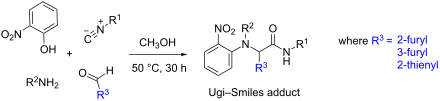
- components. In the presence of these heterocyclic aldehydes, reactions tolerated variations in amine components and led to either isolated N-arylamide Ugi–Smiles adducts or N-arylepoxyisoindolines, products of tandem Ugi–Smiles Diels–Alder cyclizations, in moderate yields. A thienyl-substituted aldehyde was


Microwave-assisted cyclizations promoted by polyphosphoric acid esters: a general method for 1-aryl-2-iminoazacycloalkanes
Beilstein J. Org. Chem. 2016, 12, 2026–2031, doi:10.3762/bjoc.12.190
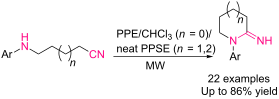
- synthetic methods can be attributed to the intrinsic difficulty of cyclizations leading to seven membered heterocycles. This is a consequence of the high activation energies involved in these reactions, which are also hindered by entropic factors [17][18][19][20][21][22]. In addition to this, due to the


Multicomponent reactions: A simple and efficient route to heterocyclic phosphonates
Beilstein J. Org. Chem. 2016, 12, 1269–1301, doi:10.3762/bjoc.12.121
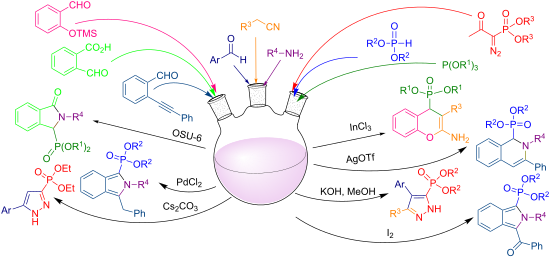
- and 1,5-benzodiazepine 95, respectively (Scheme 21). 2.2.7 Isoquinolone-1-phosphonates: From Lewis acid catalyzed 6-endo-dig cyclizations of acetylenic Kabachnik–Fields adducts: A modified Kabachnik–Fields reaction for the synthesis of isoquinoline-1-phosphonate derivatives is the three-component
- reaction of acetylenic aldehydes with various amines and dialkyl phosphonates followed by Lewis acid catalyzed 6-endo-dig cyclizations. Wu et al. reported the one-pot reaction of 2-alkynylbenzaldehydes 96, amines 97, and diethyl phosphonate to afford (2,3-disubstituted-1,2-dihydroisoquinolin-1-yl
- acetylenic aldehydes 102. The Kabachnik–Fields adducts of various carbocyclic acetylenic aldehydes 104 and 105 in the presence of AuBr3, PdCl2, AgOTf, AgNO3 or I+ underwent a 5-exo-dig cyclization to give dialkyl 1H-pyrrol-2-ylphosphonates 106. However, iodine-mediated cyclizations lead to pyrrol-1


Stereoselective synthesis of tricyclic compounds by intramolecular palladium-catalyzed addition of aryl iodides to carbonyl groups
Beilstein J. Org. Chem. 2016, 12, 1236–1242, doi:10.3762/bjoc.12.118
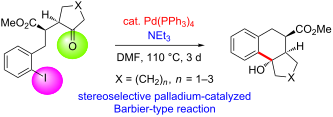
- reaction requires a reduction of palladium(II) back to palladium(0) which is apparently achieved by the present triethylamine. Keywords: 1,2-addition; aryl iodides; ketones; nucleophilic addition; palladium catalysis; Introduction For our systematic studies on samarium diiodide promoted cyclizations
- lower and higher homologs. With cycloheptanone derivatives 5a/b less efficient cyclizations were observed. The mixture of diastereomers 5a/5b (ca. 1:1) provided a mixture of compounds containing the two isomers 15a and 15b, from which pure 15a could be isolated (Scheme 6). A diastereomerically enriched
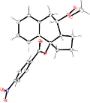
- -substituted ketone 2 to compounds 8, 9 and 10. Palladium-catalyzed cyclization of diastereomeric cyclopentanone derivatives 3a/3b to products 11a and 11b and synthesis of p-nitrobenzoate 12a. Palladium-catalyzed cyclizations of diastereomeric cyclohexanone derivatives 4a and 4b leading stereoselectively to




Synthesis of highly functionalized 2,2'-bipyridines by cyclocondensation of β-ketoenamides – scope and limitations
Beilstein J. Org. Chem. 2016, 12, 1170–1177, doi:10.3762/bjoc.12.112
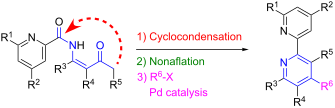
- formed. Instead, we isolated the trisubstituted oxazole derivative 6 in 55% yield. The scope of this reaction has not been studied by us, however it is known in the literature that enamides can undergo related oxidative cyclizations to oxazoles in the presence of the reagent cocktail employed or under
- -ketoenamines 2c–e and of β-ketoenamides 3c–h. Synthesis of α-methoxy-β-ketoenamine 2i, its N-acylation to 3i and the reaction of β-ketoenamide 3a with iodosylbenzene to 5-acetyloxazole 6. Cyclizations of β-ketoenamide 3i leading to 2,2´-bipyridine derivative 4i or to the related 2-(2-pyridyl)pyrimidine 7 or




Opportunities and challenges for direct C–H functionalization of piperazines
Beilstein J. Org. Chem. 2016, 12, 702–715, doi:10.3762/bjoc.12.70
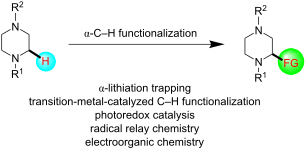
- ]. Carreira et al. have developed a ring expansion of 3-oxetanone to synthesize substituted piperazines [18]. Transition metal (such as Ti, Au, and Pd) catalyzed cyclizations of linear starting materials have been used by several groups including the Schafer, Nelson, Huang, and Wolfe groups to synthesize




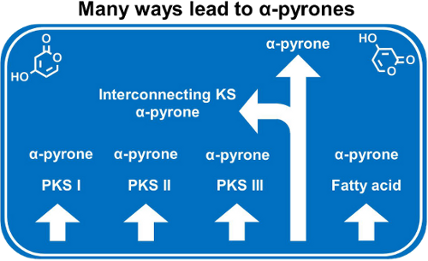
Biosynthesis of α-pyrones
Beilstein J. Org. Chem. 2016, 12, 571–588, doi:10.3762/bjoc.12.56
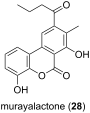
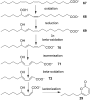
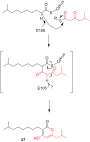
- ), and of derivatives (by post-PKS reactions) is shown in Figure 18. The authors suggested that seven malonyl-CoA building blocks are connected via Claisen-condensation reactions, followed by aldol-type cyclizations between C-2 and C-7, as well as between C-8 and C-13. The subsequent lactonization yields






Study on the synthesis of the cyclopenta[f]indole core of raputindole A
Beilstein J. Org. Chem. 2016, 12, 334–342, doi:10.3762/bjoc.12.36

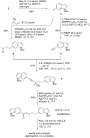
- were 6-hydroxyallylated indolines which gave good yields of cyclopenta[f]indolines after treatment with SnCl4, as soon as sterically demanding β-cyclocitral adducts were reacted. Most successful were Pt(II) and Au(I)-catalyzed cyclizations of N-TIPS-protected indolin-6-yl-substituted propargylacetates
- reaction [34]. By installation of a triflyloxy group in the indole 5-position, Pd-catalyzed cyclization also would become possible. As an alternative to the cyclization of enones, Lewis acid-induced cyclizations of allylic alcohols could afford the desired cyclopenta[f]indole system (C, D). Here, it was
- ketone 26 proceeded in the highest yield of all our Meyer–Schuster rearrangements. With triflated α,β-unsaturated ketone 26 in hand, we attempted reductive Heck cyclizations to the raputindole core structure. For instance, we employed Pd(dba)2 (12 mol %), QPhos (24 mol %), and NEt3 (1.20 equiv) in DMF at




Solving the puzzling competition of the thermal C2–C6 vs Myers–Saito cyclization of enyne-carbodiimides
Beilstein J. Org. Chem. 2016, 12, 43–49, doi:10.3762/bjoc.12.6
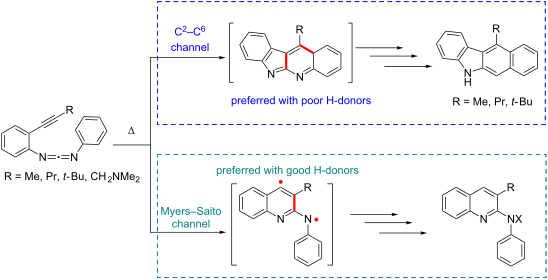
- pathway if the trapping reaction by hydrogen transfer is no more rate determining. Keywords: DFT computation; diradical; enyne-carbodiimides; hydrogen transfer; thermal cyclization; Introduction The thermal cyclizations of enediynes [1][2][3][4][5][6], enediallenes [7][8][9][10], bisallenes [11], enyne


Facile synthesis of 4H-chromene derivatives via base-mediated annulation of ortho-hydroxychalcones and 2-bromoallyl sulfones
Beilstein J. Org. Chem. 2016, 12, 16–21, doi:10.3762/bjoc.12.3
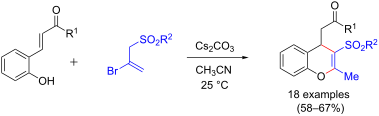
- cell death [4]. The natural chromene rhodomyrtone (Figure 1) is known to exhibit potent antibacterial activity [5]. As a consequence, a number of methods have been developed for the synthesis of substituted 4H-chromenes [6]. This includes, inter alia, transition metal-mediated cyclizations [7



Synthesis of cyclic N1-pentylinosine phosphate, a new structurally reduced cADPR analogue with calcium-mobilizing activity on PC12 cells
Beilstein J. Org. Chem. 2015, 11, 2689–2695, doi:10.3762/bjoc.11.289
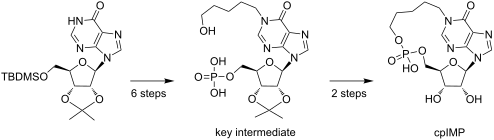
- diluted conditions. In our opinion, the target intramolecular cyclizations failed because of the poor mobility of the 5’-OH ribose function, as well as because of the unfavourable anti conformation of the N-glycosidic bond induced by the presence at the N1 position of the purine base of the bulky ω


Recent highlights in biosynthesis research using stable isotopes
Beilstein J. Org. Chem. 2015, 11, 2493–2508, doi:10.3762/bjoc.11.271
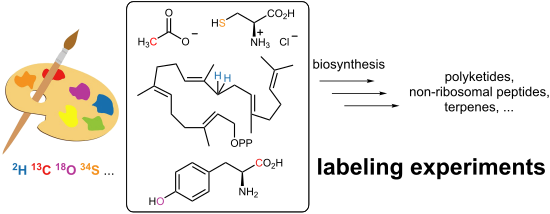
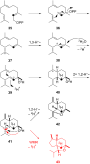
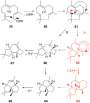
- rearrangements and cyclizations experimentally. The structure elucidation of terpenoids can be challenging because of the multicyclic carbon skeletons with several contiguous stereocenters. The assistance of 13C labels can in such cases be especially helpful, and if completely 13C-labeled carbon backbones can be
- interesting insights into terpene synthase catalyzed cyclizations. Labeled oligoprenyl diphosphates, the substrates for these enzymes, can be made available by synthesis and provide an excellent tool for such investigations, as recently demonstrated for sesquiterpenes by the synthesis of all 15 singly 13C
- are in line with the proposed cyclization mechanism starting from geranylfarnesyl diphosphate (GFPP, 53), which undergoes two cyclizations yielding cation 54. A 1,5-hydride shift at C-12 to C-19 leads to the allylic cation 55. Additional ring closure fuses the tricyclic system 56, which rearranges to











Fates of imine intermediates in radical cyclizations of N-sulfonylindoles and ene-sulfonamides
Beilstein J. Org. Chem. 2015, 11, 1649–1655, doi:10.3762/bjoc.11.181
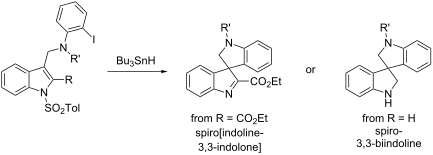
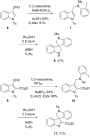
- Hanmo Zhang E. Ben Hay Stephen J. Geib Dennis P. Curran Department of Chemistry, University of Pittsburgh, Pittsburgh, PA 15260, USA 10.3762/bjoc.11.181 Abstract Two new fates of imine intermediates formed on radical cyclizations of ene-sulfonamides have been identified, reduction and hydration
- /fragmentation. Tin hydride-mediated cyclizations of 2-halo-N-(3-methyl-N-sulfonylindole)anilines provide spiro[indoline-3,3'-indolones] or spiro-3,3'-biindolines (derived from imine reduction), depending on the indole C2 substituent. Cyclizations of 2-haloanilide derivatives of 3-carboxy-N-sulfonyl-2,3
- ; radical cyclization; radical fragmentation; spiro-indoles; Introduction Radical additions and cyclizations of ene-sulfonamides are useful reactions in a number of settings. The primary products of these reactions, α-sulfonamidoyl radicals, are often thought to undergo elimination reactions of sulfonyl





Preparative semiconductor photoredox catalysis: An emerging theme in organic synthesis
Beilstein J. Org. Chem. 2015, 11, 1570–1582, doi:10.3762/bjoc.11.173
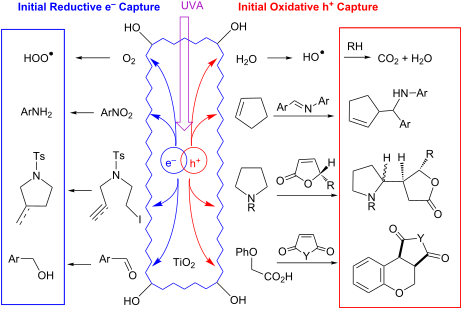
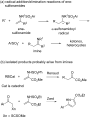
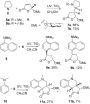
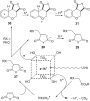
- , cyclic amines were produced. Carboxylic acids were particularly fruitful affording C-centered radicals that alkylated alkenes and took part in tandem addition cyclizations producing chromenopyrroles; decarboxylative homo-dimerizations were also observed. Acceptors initially yielding radical anions
- included nitroaromatics and aromatic iodides. The latter led to hydrodehalogenations and cyclizations with suitable precursors. Reductive SCPC also enabled electron-deficient alkenes and aromatic aldehydes to be hydrogenated without the need for hydrogen gas. Keywords: carboxylic acids; free radicals
- methods could be enlisted in constructive molecular assembly applications. Our study of SCPC processes revealed that a wide range of carboxylic acids could be deployed in preparatively useful ways. Radical additions to alkenes, cyclizations and tandem addition–cyclizations, as well as homo-couplings, were







Tandem cross enyne metathesis (CEYM)–intramolecular Diels–Alder reaction (IMDAR). An easy entry to linear bicyclic scaffolds
Beilstein J. Org. Chem. 2015, 11, 1486–1493, doi:10.3762/bjoc.11.161
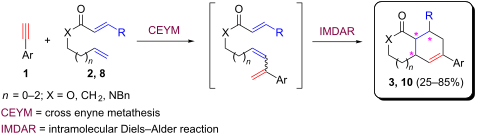
- also that boat-like conformations are preferred over chair-like ones. These studies accurately correlated with the experimental results observed in these types of cyclizations [32][33][34]. The preference of the boat-like transition state was ascribed to the co-planarity of the carbonyl group during


Azirinium ylides from α-diazoketones and 2H-azirines on the route to 2H-1,4-oxazines: three-membered ring opening vs 1,5-cyclization
Beilstein J. Org. Chem. 2015, 11, 302–312, doi:10.3762/bjoc.11.35
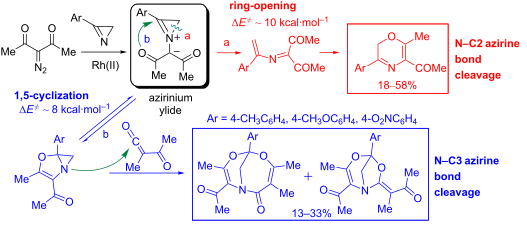
- derivatives were reported [27][28][29]. As also known, the azomethine ylide derived from N-benzylideneanisidine and diazoacetylacetone under Rh2(OAc)4-catalysis undergoes 1,3-cyclization to an aziridine derivative in high yield, rather than 1,5-cyclization [22]. However, no cyclizations of azirinium ylides
- azirenooxazole 10j to azirinium ylide 9j. The cyclizations of betaines 14j,14′j into bicycles 6j,7j proceed with extremely low activation barriers (1.1 and 4.7 kcal/mol). The alternative pathway to compounds 6j,7j, involving reversible formation of carbonyl ylide 15j, can result in exclusive formation of [3.2.1


A one-pot multistep cyclization yielding thiadiazoloimidazole derivatives
Beilstein J. Org. Chem. 2014, 10, 2989–2996, doi:10.3762/bjoc.10.317
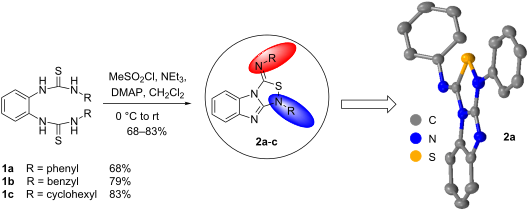
- chloride via the intermediate formation of a methanesulfonothioate unit in 7a or 7b, from which the methylsulfonyl group departs after a nucleophilic attack from the adjacent N-center (cyclization-IIa) or S-center (cyclization-IIb). While in such multistep cyclizations the elucidation of the full mechanism


Recent advances in the electrochemical construction of heterocycles
Beilstein J. Org. Chem. 2014, 10, 2858–2873, doi:10.3762/bjoc.10.303
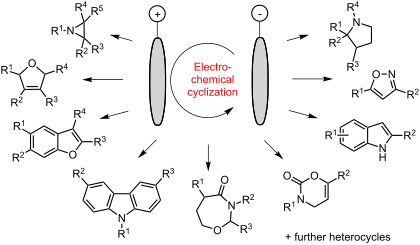
- hypervalent iodine reagents [9][10][11][12], and homogeneously or heterogeneously catalyzed multicomponent reactions [13][14]. Moreover, radical cyclizations predominantly conducted using Bu3SnH in the presence of azobisisobutyronitrile (AIBN) play a crucial role [15][16]. However, all these methods require
- . Intermolecular cyclizations generally fall into two further categories. In the first scenario, an anodically generated nucleophile (cathodically generated electrophile) reacts with an electrophile (nucleophile) present in solution. Consequently, an intermediate is formed, which undergoes ring-closure reaction
- Michael addition/ring closure with in situ generated quinones (section 2.2) and sequential cyclizations involving acyliminium species and alkoxycarbenium ions (section 2.3) represent the majority of recently reported intermolecular electrochemical cyclizations. Cases which do not fall into any of these




Preparation of neuroprotective condensed 1,4-benzoxazepines by regio- and diastereoselective domino Knoevenagel–[1,5]-hydride shift cyclization reaction
Beilstein J. Org. Chem. 2014, 10, 2594–2602, doi:10.3762/bjoc.10.272
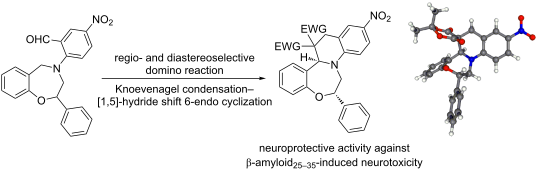
- derivative afforded three condensed O,N-heterocycles containing tetrahydro-1,4-benzoxazepine and tetrahydroquinoline moieties. trans-Diastereoselectivity of the cyclizations was determined by the correlation of 3JH,H coupling constants with the geometry of the computed conformers, while (2R,15aR) absolute


Selenium halide-induced bridge formation in [2.2]paracyclophanes
Beilstein J. Org. Chem. 2014, 10, 2550–2555, doi:10.3762/bjoc.10.266
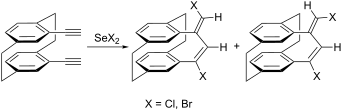
- synthetic procedure involves an addition/elimination protocol of selenium derivatives, the formation of isomeric endo-exo-dienes 2, 3 and 5, 6 resembles the zig-zag cyclizations of nonconjugated cyclic diynes of medium ring size reported by Gleiter [31][32]. In order to check the limits of these selenium


Chiral phosphines in nucleophilic organocatalysis
Beilstein J. Org. Chem. 2014, 10, 2089–2121, doi:10.3762/bjoc.10.218
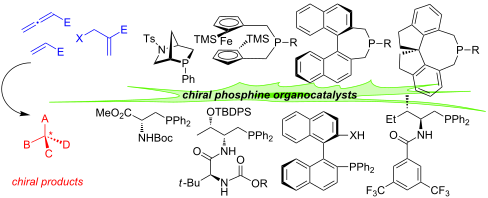
- range of N-diphenylphosphinoyl aromatic imines underwent cyclizations (Scheme 33) with an allenoate in toluene at −25 °C for 48 h, affording dihydropyrrole derivatives in 68–90% yield and excellent ee (94–98%). The catalytic amounts of triethylamine and water significantly increased the reaction rates





