Search results
Search for "monomer" in Full Text gives 364 result(s) in Beilstein Journal of Organic Chemistry. Showing first 200.
Aqueous olefin metathesis: recent developments and applications
Beilstein J. Org. Chem. 2019, 15, 445–468, doi:10.3762/bjoc.15.39
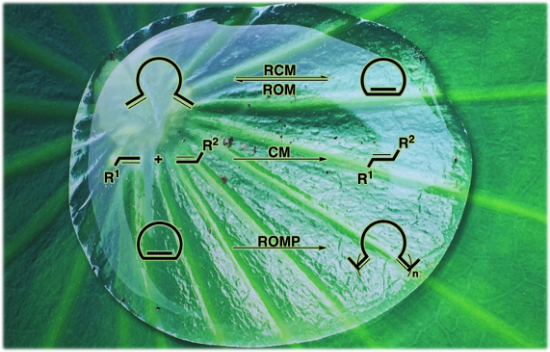
- publication, catalyst 9 was used for an aqueous living ring-opening metathesis polymerization-induced self-assembly (ROMPISA). The authors demonstrated the possibility of performing living ROMP in water selecting a quaternary ammonium-based phenyl norbornene carboximide as core-forming monomer [60]. This




Application of olefin metathesis in the synthesis of functionalized polyhedral oligomeric silsesquioxanes (POSS) and POSS-containing polymeric materials
Beilstein J. Org. Chem. 2019, 15, 310–332, doi:10.3762/bjoc.15.28
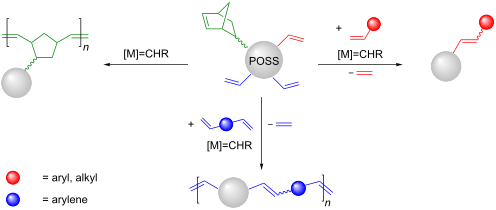
- the type of olefin metathesis chain-growth polymerization that uses metathesis catalysts to generate polymers from cyclic olefins [38][39][40][41]. To obtain polymers functionalized with POSS in the side chain, a susceptible to the ROMP monomer connected via a suitable linker to the silsesquioxane
- dispersed over all loadings. No improvements in thermal properties were observed in the copolymers obtained. Another POSS-containing monomer – N-(propyl-POSS)-7-oxanorbornene-5,6-dicarboximide was tested in ring-opening metathesis copolymerization with 3-(trifluoromethyl)phenyl-7-oxanorbornene-5,6
- relatively controlled molecular weights (Mn = 17,900–26,300 Da) and narrow molecular weight distributions (in the range Mn/Mw = 1.19–1.29). Copolymerization was employed by a sequential monomer addition. At first, the POSS-NBE was introduced into the reaction system containing the catalyst and after its


Olefin metathesis in multiblock copolymer synthesis
Beilstein J. Org. Chem. 2019, 15, 218–235, doi:10.3762/bjoc.15.21

- monomers to living polymer chains after full consumption of a previous monomer [48][49]. This technique was effectively applied for the synthesis of di-, tri- and tetrablock carbohydrate copolymers mediated by Schrock’ and Grubbs’ catalysts of the 1st (Gr1) and 2nd (Gr2) generations (Scheme 1, Figure 1
- to copolymers with a limited number of blocks, such as tetrablocks or pentablocks [52], because each time a new monomer is added some of the living chains cannot initiate polymerization being terminated with trace impurities. Besides, in the course of ROMP main-chain double bonds are prone to
- secondary metathesis in a chain-transfer process that leads to reshuffling of the monomer unit sequences. Since less sterically encumbered groups are more easily involved into the secondary metathesis, this effect can be minimized by first polymerizing a more bulky monomer and then conducting a fast




Computational characterization of enzyme-bound thiamin diphosphate reveals a surprisingly stable tricyclic state: implications for catalysis
Beilstein J. Org. Chem. 2019, 15, 145–159, doi:10.3762/bjoc.15.15
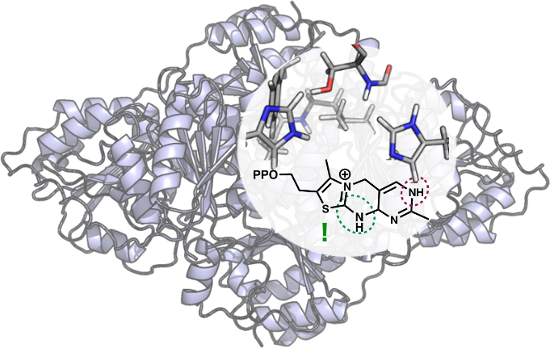
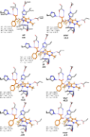
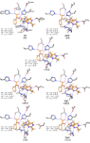
- atoms that were kept fixed to their crystallographic positions during the geometry optimization. The BFDC active site has contributions from two monomers and primes re-used to indicate residues from the second monomer. For clarity, the non-polar hydrogens of the residues are not included. Optimized




Adhesion, forces and the stability of interfaces
Beilstein J. Org. Chem. 2019, 15, 106–129, doi:10.3762/bjoc.15.12


Fabrication of supramolecular cyclodextrin–fullerene nonwovens by electrospinning
Beilstein J. Org. Chem. 2019, 15, 89–95, doi:10.3762/bjoc.15.10
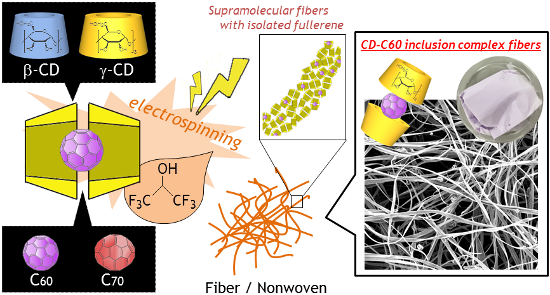
- ) inclusion complex, γ-CD dimer, and γ-CD monomer in HFIP. Interestingly the γ-CD–C60 (1:1) inclusion complex, which is the supposed intermediate, is not detected (Figure 2c in Supporting Information File 1). Therefore, we considered that all C60 molecules in the solution should be present as the 2:1 complex


Selective ring-opening metathesis polymerization (ROMP) of cyclobutenes. Unsymmetrical ladderphane containing polycyclobutene and polynorbornene strands
Beilstein J. Org. Chem. 2019, 15, 44–51, doi:10.3762/bjoc.15.4
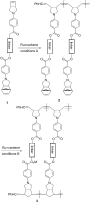
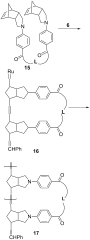
- ]. Unsymmetrical polynorbornene-based ladderphane is obtained by a replication protocol from a single stranded polynorbornene [19][20]. Alternatively, sequential polymerization of a monomer containing a norbornene moiety and other polymerizable group furnishes an unsymmetrical ladderphane having two structurally
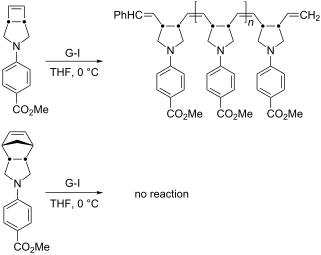
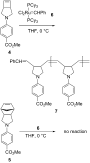
- norbornene under certain ROMP conditions. As such, when monomer 1 containing a cyclobutene moiety and a norbornene moiety connected by a bridge are subjected to ROMP, it would be feasible that the cyclobutene moiety would react preferentially giving the corresponding norbornene-appended polycyclobutene 2
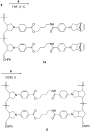
- (Scheme 2). This promising observation prompted us to pursue the synthesis of unsymmetrical double-stranded ladderphane 8 by sequential ROMPs of 9 (Scheme 3). Synthesis of monomer 9 4-Aminobutanol (11) was used to link norbornene and cyclobutene moieties via amide and ester groups. The use of such a




Ruthenium-based olefin metathesis catalysts with monodentate unsymmetrical NHC ligands
Beilstein J. Org. Chem. 2018, 14, 3122–3149, doi:10.3762/bjoc.14.292
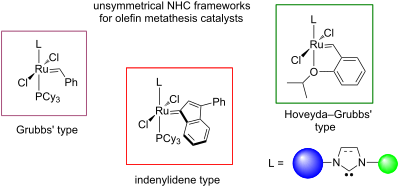
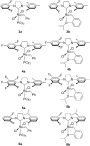
- group resulted in a lower catalyst activity. Indeed, complex 24a bearing the small methyl moiety on the nitrogen, revealed as the best performing catalyst, even surpassing the parent complex GII-SIMes. In the ROMP reaction (Scheme 5), carried out in different solvents and monomer/catalyst ratios, the
- pentiptycenyl side of the NHC ligand compared to the other less hindered side determines two differently accessible active sites around the metal and different rates of monomer incorporation, thus dominating the selectivity in the formation of alternating copolymers. The nature of the alkyl group also plays a
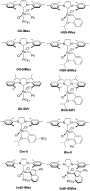
- (101 and 102, Figure 19). The basic idea was that these catalysts might be able to regenerate themselves upon consumption of the monomer in the reaction media. Variants of these complexes with a silyl ether or a perfluoroalkyl chain on one of the nitrogens of the NHC were also presented (103 and 104











Degenerative xanthate transfer to olefins under visible-light photocatalysis
Beilstein J. Org. Chem. 2018, 14, 3047–3058, doi:10.3762/bjoc.14.283

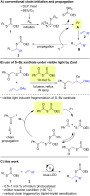
- absorption [28][29][30][31][32][33][34][35][36][37]. In the area of polymer synthesis, visible-light-induced RAFT polymerization of xanthates with vinyl monomers under blue LED (light-emitting diode) irradiation has been reported [38][39][40][41]. Visible-light-induced single unit monomer insertion of the



Organometallic vs organic photoredox catalysts for photocuring reactions in the visible region
Beilstein J. Org. Chem. 2018, 14, 3025–3046, doi:10.3762/bjoc.14.282
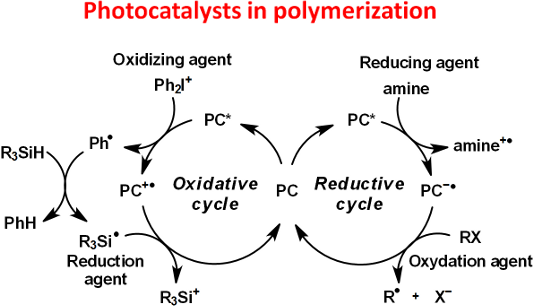
- in a monomer blend. In the case of photopolymerization, a photoinitiating system (PIs) is required to convert light in initiating species. Many factors affect the photopolymerization kinetics. However, the PIs is the most important key factor and that’s why enhancing its properties have drawn many
- with the monomer or a monomer blend. The PI is a component which absorbs light and initiates polymerization alone whereas a photoinitiating system comprises different compounds [8][9][10]. Under irradiation, PI or PIs generate active species: free radicals and/or ions and/or acid. When the active
- polymerization reactions Polymerization reactions whose initiation is induced by photoredox catalysts has been detailed in part 1.4. Representative monomer conversions with different photoredox catalysts and upon different irradiation light for free radical polymerization and for cationic polymerization are



The influence of the cationic carbenes on the initiation kinetics of ruthenium-based metathesis catalysts; a DFT study
Beilstein J. Org. Chem. 2018, 14, 2872–2880, doi:10.3762/bjoc.14.266
- interesting phenomenon, despite its very limited impact on their propensity to form transition metal complexes (Scheme 2) [50]. Many works have been devoted to the study of carbene dimerization and present evidence that mechanism of monomer–dimer equilibrium depends on the balance between the electronic and
- Gibbs free energy difference for the symmetric dimer A. In the case of carbene 3, the Gibbs free energy of dimerization could not be estimated due to instability of the monomer during geometry optimization. Thus, the results indicate higher stability of dimers for all examined NHC, which are in



Copolymerization of epoxides with cyclic anhydrides catalyzed by dinuclear cobalt complexes
Beilstein J. Org. Chem. 2018, 14, 2779–2788, doi:10.3762/bjoc.14.255
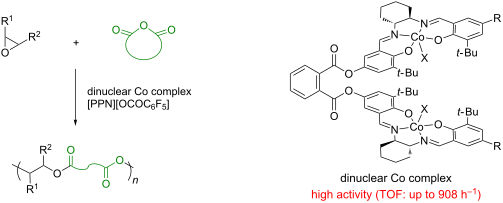
- monomer conversion. A variety of lactones and cyclic diesters, such as ε-caprolactone, β-propiolactone, lactic acid (LA), and glycolide have been used for the ROP. However, the employable monomers are rather limited, which restricts the range of polymer properties. In view of the aforementioned, the
- ). Monomer scope In order to evaluate the copolymerization scope, the dinuclear cobalt–salen complex (R,R,R,R)-1 and co-catalyst [PPN][OCOC6F5] were employed for the copolymerization of other epoxides with PA (Table 2). 1-Hexene oxide (HO), a terminal epoxide with an expanded alkyl chain, can be


Synergistic approach to polycycles through Suzuki–Miyaura cross coupling and metathesis as key steps
Beilstein J. Org. Chem. 2018, 14, 2468–2481, doi:10.3762/bjoc.14.223
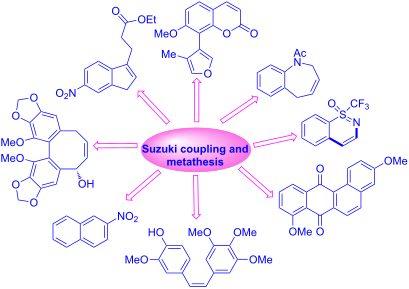
- SM cross coupling followed by RCM as key steps [50]. To this end, dibromo compound 123 was subjected to diallylation by using allylboronate ester 12 to form the diallyl derivative 124 (73%). Treatment of compound 124 with G-I catalyst 1 gave unsaturated dimer 126 (30%) and monomer 125 (15


Synergistic electrodeposition of bilayer films and analysis by Raman spectroscopy
Beilstein J. Org. Chem. 2018, 14, 2186–2189, doi:10.3762/bjoc.14.191
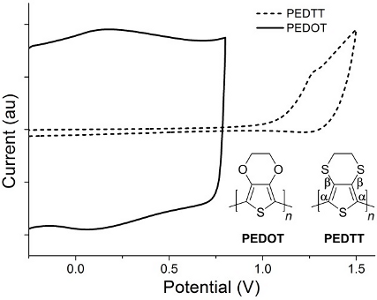
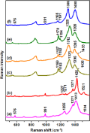
- PEDOT layer remains predominantly doped. In order to support the formation of a PEDOT/PEDTT bilayer using this technique and to clarify the nature of doping in the two layers, freshly fabricated bilayers (using 10−4 M monomer solution) were grown on ITO and analysed by Raman spectroscopy, alongside


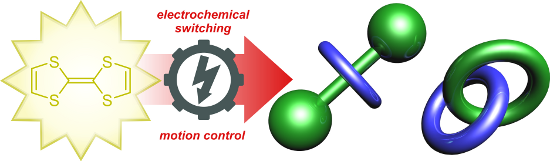
Tetrathiafulvalene – a redox-switchable building block to control motion in mechanically interlocked molecules
Beilstein J. Org. Chem. 2018, 14, 2163–2185, doi:10.3762/bjoc.14.190
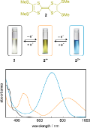
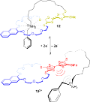
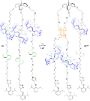
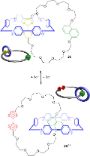
- -type arrangement in the dimer [34]. Furthermore, the equilibrium between a paramagnetic monomer and a diamagnetic dimer makes the use of electron paramagnetic resonance (EPR) spectroscopy ideal to follow the dimerization process [36]. Mixed-valence and radical-cation interactions in the solid state are











Evaluation of dispersion type metal···π arene interaction in arylbismuth compounds – an experimental and theoretical study
Beilstein J. Org. Chem. 2018, 14, 2125–2145, doi:10.3762/bjoc.14.187
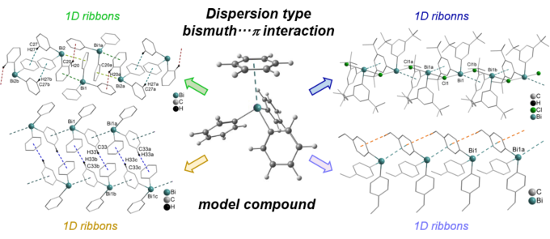
- state can be studied based on monomer distortion, intermolecular interactions of representative dimers and the interaction of one molecule with several of its neighbors. Distance scan for the idealized BiPh3···benzene complex In a previous study on the nature of Bi···π arene interactions in various
- in the solid state of BiPh3. The structures of the studied tetramers are shown in Figures 11, 13, and 15. Subsequently, tetramers were divided into dimeric units that represent specific intermonomer interactions, and can be considered as building blocks of the bulk. Monomer distortion energies
- geometry. Important information on the intermolecular interaction strength within the tetramer is obtained when one monomer is removed from the system. This energy (depicted as Eremove in Figures 11, 13, and 15) contains the interactions with neighboring molecules and also possible long-range interactions


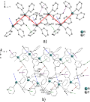



A self-assembled photoresponsive gel consisting of chiral nanofibers
Beilstein J. Org. Chem. 2018, 14, 1994–2001, doi:10.3762/bjoc.14.174
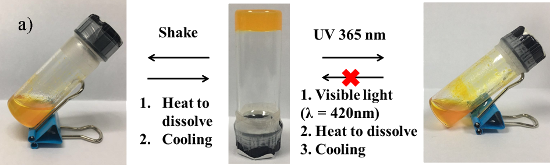
- glutamic acid skeleton, containing azobenzene as a photoresponsive group and ureidopyrimidinone (UPy) as a connection site, was designed and synthesized. The monomer is capable of forming an organogel in nonpolar organic solvents and different types of nanostructures in other solvents. The state of the gel
- of compound 3 in benzene that was investigated previously. Conclusion We have synthesized a novel chiral compound containing azobenzene as the photoresponsive group and UPy as the connection site. The monomer was capable of forming chiral nanostructures and a low-molecular-weight organogel in
- nonpolar organic solvents. The monomer also can form different types of nanostructures in different solvents, and the kind of solvent was found to be crucial for the chirality of the assembled structure. The gel-to-sol process could also be modified by shaking and UV light. The rheological behavior of the


The phenyl vinyl ether–methanol complex: a model system for quantum chemistry benchmarking
Beilstein J. Org. Chem. 2018, 14, 1642–1654, doi:10.3762/bjoc.14.140
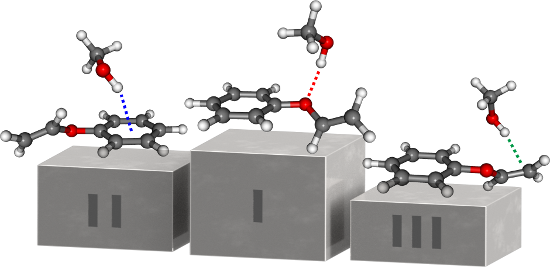
- are shown in Figure 3. Besides methanol monomer, methanol dimer and a signal clearly attributed to a larger cluster, only a single, reasonably narrow absorption at 3625 cm−1 is observed. It can be attributed to mixed dimers of MeOH with PVE and allows for a single rigorous conclusion, due to the
- , one-color R2PI spectra were recorded in the range of 36100–37600 cm−1 (cf. Figure S1 in Supporting Information File 1). While the R2PI spectrum of the PVE monomer shows well-resolved vibrational progressions (cf. Figure S1a, Supporting Information File 1), the spectrum of the solvent aggregate is
- –alcohol clusters before [20][21][22]. Comparing the vertical excitation energies for the different isomers with the experimental excitation energy of 36885 cm–1 yields the best agreement for the OH–O or OH–O’ isomer, which also show a significantly blue-shifted S1←S0 transition compared to the PVE monomer


Glycosylation reactions mediated by hypervalent iodine: application to the synthesis of nucleosides and carbohydrates
Beilstein J. Org. Chem. 2018, 14, 1595–1618, doi:10.3762/bjoc.14.137
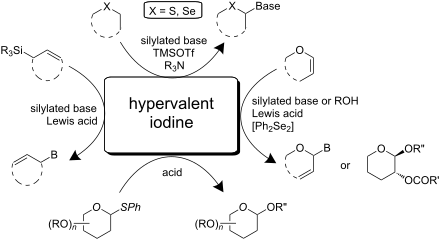
- cell viability, their biological synthesis, including the synthesis of their monomer units, e.g., nucleotides, is highly regulated. Damage to these vital molecules often results in congenital disease with ultimately fatal consequences [2][3]. Accordingly, the study of polymers and their biosynthesis is


Drug targeting to decrease cardiotoxicity – determination of the cytotoxic effect of GnRH-based conjugates containing doxorubicin, daunorubicin and methotrexate on human cardiomyocytes and endothelial cells
Beilstein J. Org. Chem. 2018, 14, 1583–1594, doi:10.3762/bjoc.14.136
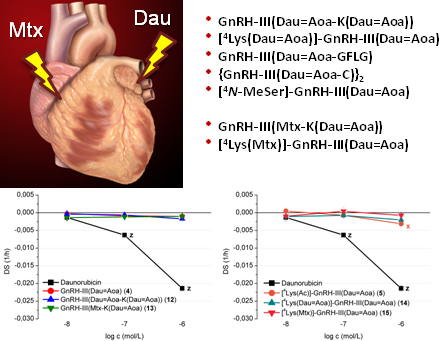
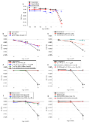
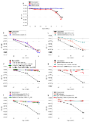
- bifunctional daunorubicin-GnRH-III conjugates without spacer and modified in position 4 with Lys; (e) {GnRH-III(Dau=Aoa-C)}2 dimer and conjugates modified in position 4 with N-MeSer; (f) GFLG or YRRL spacer containing monomer and dimer conjugates (g) GnRH-III conjugates containing methotrexate and daunorubicin
- ) GFLG or YRRL spacer containing monomer and dimer conjugates; (g) GnRH-III conjugates containing methotrexate and daunorubicin. Comparative study of cytotoxic effects and cardiotoxicity elicited by GnRH-based antitumor compounds (1–15) and reference substances (AN-152, Dox, Dau, Mtx). IC50 values show


Hyper-reticulated calixarene polymers: a new example of entirely synthetic nanosponge materials
Beilstein J. Org. Chem. 2018, 14, 1498–1507, doi:10.3762/bjoc.14.127
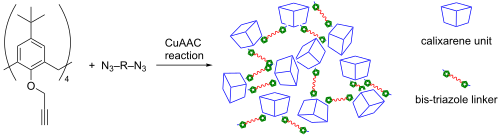
- , V.le delle Scienze ed. 17, 90128 Palermo, Italy 10.3762/bjoc.14.127 Abstract New calixarene-based nanosponges (CaNSs), i.e., hyper-reticulated polymers constituted by calixarene monomer units joined by means of bis(1,2,3-trialzolyl)alkyl linkers, were synthesized, characterized and subjected to
- ]) between a heptakis(6-azido-6-deoxy)-β-cyclodextrin and a tetrakis(propargyloxy)calix[4]arene [11][31][32]. In this way, a random disposition of the co-monomer units linked by 1,2,3-triazole units is achieved. The obtained CyCaNSs benefit from several advantages. First, the properties of the material can
- models. Results and Discussion Synthesis and FTIR characterization The synthesis of materials CaNS1-CaNS4 was first attempted according to the procedure already optimized for the synthesis of CyCaNS co-polymers [11], i.e., by reacting the monomer precursor Ca-OP with an equivalent amount of each alkyl


Steric “attraction”: not by dispersion alone
Beilstein J. Org. Chem. 2018, 14, 1482–1490, doi:10.3762/bjoc.14.125
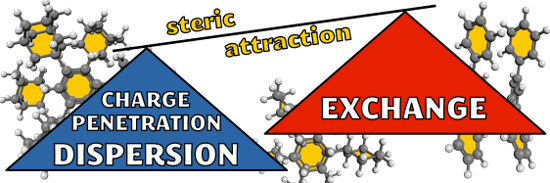
- functional theory [39], post-Hartree–Fock [40][41], symmetry adapted perturbation theory (SAPT) [42][43][44][45][46] data or to a combination of the latter two (e.g., the monomer electron density force field, MEDFF) [47]. The latter approach has been subsequently exploited in the machine learning
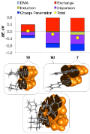
- representative class (II) and class (III) systems: tetracene (7) and its fully saturated analogue, perhydrotetracene (10, Figure 5A and B). For each monomer, four types of dimers were compared – perfectly stacked (i.e., the frozen dimer) and shifted transversally, laterally and in both directions by approx. half
- these effects even when modeling saturated hydrocarbons and provides the context for the underperformance of the molecular mechanics force fields, commonly applied to aliphatics. Computational Details Geometries of the isolated monomer cores were optimized at the M06-2X/def2-SVP level using Gaussian 09



Spectroelectrochemical studies on the effect of cations in the alkaline glycerol oxidation reaction over carbon nanotube-supported Pd nanoparticles
Beilstein J. Org. Chem. 2018, 14, 1428–1435, doi:10.3762/bjoc.14.120
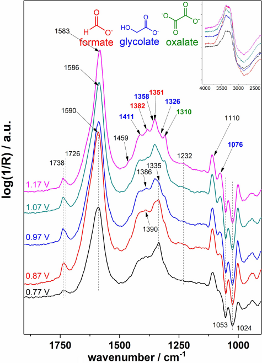
- acid, mesoxalic acid and 1,3-dihydroxyacetone (DHA). These products are conventionally obtained by oxidation using rather unselective oxidants. Especially DHA is of great interest due to its use in the cosmetic industry, as a precursor for further value-added fine chemicals [9] and as a monomer for


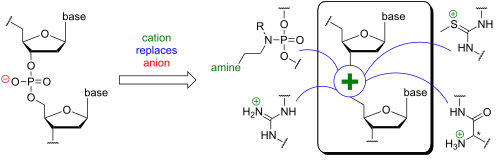
Oligonucleotide analogues with cationic backbone linkages
Beilstein J. Org. Chem. 2018, 14, 1293–1308, doi:10.3762/bjoc.14.111
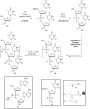
- of DNG oligomers were introduced. They enabled chain elongation either in the 5'→3' [52] or 3'→5' [53] direction, respectively. Starting from protected 3',5'-dideoxy-5'-amino-3'-azidothymidine 21, the 5'→3' route was based on the synthesis of the diamino intermediate 22 and thiourea monomer 23, which
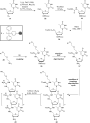
- monomer 30 to the corresponding carbodiimide 31 (Scheme 3). Using long-chain alkylamine controlled pore glass (CPG) loaded with 5′-amino-5′-deoxythymidine (32) as solid phase, the reaction cycle started with the guanidine-forming coupling of 31 and 32 to give 33, followed by acidic cleavage of the MMTr





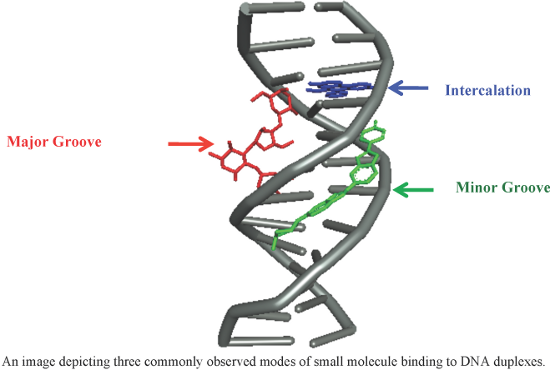
An overview of recent advances in duplex DNA recognition by small molecules
Beilstein J. Org. Chem. 2018, 14, 1051–1086, doi:10.3762/bjoc.14.93