Search results
Search for "oligomers" in Full Text gives 218 result(s) in Beilstein Journal of Organic Chemistry. Showing first 200.
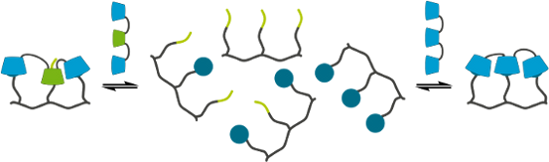
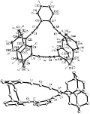
Self-assembly of heteroleptic dinuclear metallosupramolecular kites from multivalent ligands via social self-sorting
Beilstein J. Org. Chem. 2015, 11, 693–700, doi:10.3762/bjoc.11.79
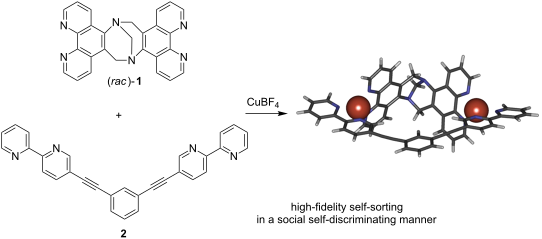
- signals (e.g., around 9.8, 7.5, and 5.3 ppm) which might indicate that some minor amounts of oligomers/polymers are still existing. However, the intensity of these signals was so low, that we could not assign a diffusion coefficient to them in a 2D-DOSY experiment to corroborate this assumption


Synthesis of a hexasaccharide partial sequence of hyaluronan for click chemistry and more
Beilstein J. Org. Chem. 2015, 11, 604–607, doi:10.3762/bjoc.11.67
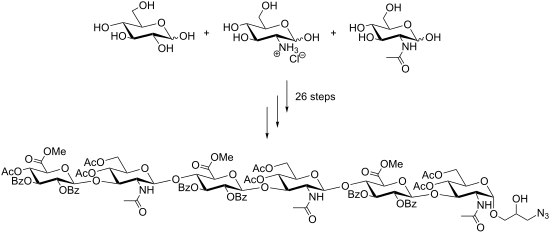
- oligomers related to HA are highly desired as novel pharmacotherapy targets. Syntheses of HA disaccharides appear for the first time in literature in 1962 from Jeanloz et al. [14] and Takanashi et al. [15]. Since then, many efforts have been done in this field resulting in the synthesis of longer HA

Sequence-specific RNA cleavage by PNA conjugates of the metal-free artificial ribonuclease tris(2-aminobenzimidazole)
Beilstein J. Org. Chem. 2015, 11, 493–498, doi:10.3762/bjoc.11.55
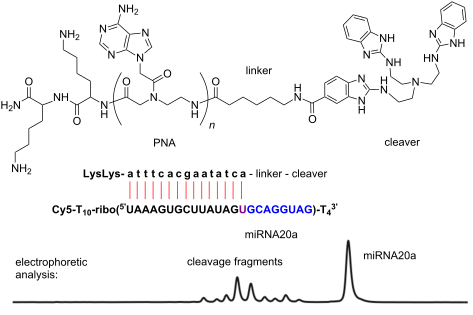
- . Here we report a new and mercury-free synthesis of tris(2-aminobenzimidazole) and its conjugation to PNA oligomers. In addition, the results of cleaving experiments with three different RNA substrates are presented. Results and Discussion Alternative reagents to convert thioureas into guanidines
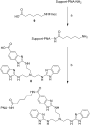
- carboxylic acid 8, which after removal of the solvent was used for conjugation to PNA without further purification (Scheme 3). Conjugation of tris(2-aminobenzimidazole) 8 was performed with fully protected PNA-oligomers still bound to the solid support. To increase the solubility of the final product, 10mers
- yields). Conjugation to PNA oligomers can be readily achieved in high yields, providing an easy way to synthesize sequence specific metal-free artificial nucleases for a wide range of RNA substrates. Due to the tendency of PNA conjugates to form aggregates, a phenomenon not seen with their DNA analogs




Synthesis and chemosensing properties of cinnoline-containing poly(arylene ethynylene)s
Beilstein J. Org. Chem. 2015, 11, 373–384, doi:10.3762/bjoc.11.43
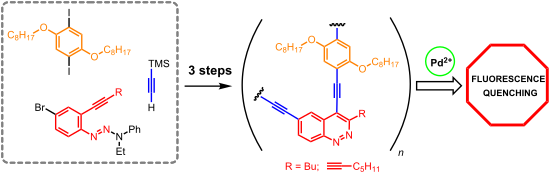
- dispersity (ĐM = ) of 2.5 for both compounds. In accordance with this data, compounds 10a and 10b should be defined as oligomers. However the common accepted abbreviation for this class of compounds is PAEs (poly(arylene ethynylene)s). This name has also been applied before to compounds with a similar range
- of mass-average molecular weights () [17][19][25]. Therefore in order to avoid using of new unusual terms the oligomers obtained were named PAEs. The structure of oligomers 10a,b was confirmed by 1H and 13C NMR spectroscopy, FTIR spectra and CHN-elemental analysis. In FTIR spectra of compounds 10a,b
- oligomer structures possessing alkylated iodohydroquinone units as the end groups. The presence of iodine in oligomers was also confirmed by the Beilstein test [62]. Regarding the NMR data, the chemical shift values of H and C atoms in both PAEs synthesized do not significantly differ from the chemical


IR and electrochemical synthesis and characterization of thin films of PEDOT grown on platinum single crystal electrodes in [EMMIM]Tf2N ionic liquid
Beilstein J. Org. Chem. 2015, 11, 348–357, doi:10.3762/bjoc.11.40
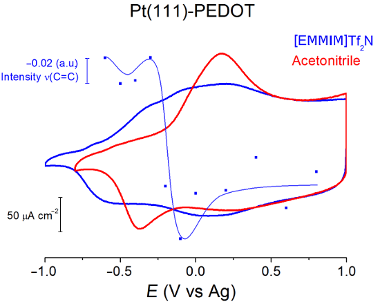
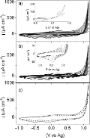
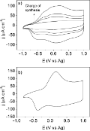
- al. [18]. They associated the loop with an autocatalytic mechanism in which the oligomers formed during the first oxidation cycle react as redox mediators with the monomer, but this kind of loops is also characteristic of a nucleation and growth mechanism. The continuous increase of the current




Anionic sigmatropic-electrocyclic-Chugaev cascades: accessing 12-aryl-5-(methylthiocarbonylthio)tetracenes and a related anthra[2,3-b]thiophene
Beilstein J. Org. Chem. 2015, 11, 273–279, doi:10.3762/bjoc.11.31
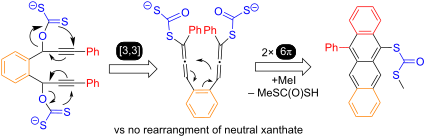
- extensive decomposition prevented other characterisation. Based on this model system, it is proposed that intermolecular [2 + 2] reactions of bis-allenes, similar to results in other reported allenic rearrangements to rubrene [27][28], 2c,d result in the formation of numereous stereoisomeric oligomers


Conjugates of methylated cyclodextrin derivatives and hydroxyethyl starch (HES): Synthesis, cytotoxicity and inclusion of anaesthetic actives
Beilstein J. Org. Chem. 2014, 10, 3087–3096, doi:10.3762/bjoc.10.325
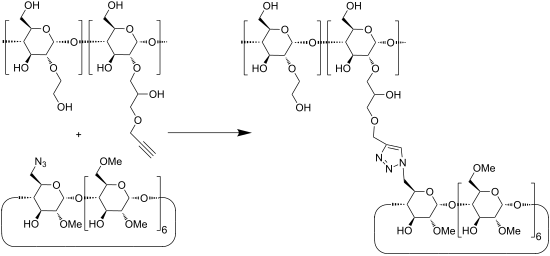
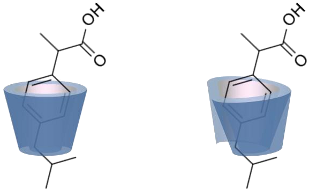
- ; occupancy; polymer; sevoflurane; solubility; starch; Introduction Cyclodextrins (CDs), α(1→4) linked cyclic oligomers of anhydroglucose, are produced nowadays in industrial scale [1]. CDs are able to complex hydrophobic or amphiphilic guest molecules in aqueous phase [2]. β-CD, the seven membered ring




Synthesis of uniform cyclodextrin thioethers to transport hydrophobic drugs
Beilstein J. Org. Chem. 2014, 10, 2920–2927, doi:10.3762/bjoc.10.310
- anaesthesia. Keywords: active pharmaceutical ingredient; binding constant; cyclodextrin; derivatization; gas chromatography; sevoflurane; substitution pattern; Introduction Cyclodextrins (CDs) are cyclic oligomers of α-1,4-linked glucose units. Those CDs consisting of 6, 7, and 8 glucose units are called α




Synthesis of modified cyclic and acyclic dextrins and comparison of their complexation ability
Beilstein J. Org. Chem. 2014, 10, 2836–2843, doi:10.3762/bjoc.10.301
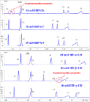
- , HP-maltotetraoses in the corresponding HP-oligomers was not successful. The chromatogram in Figure S14 (Supporting Information File 1) shows HP-maltohexaose compared to maltohexaose and O-benzylmaltohexaose. We assumed that the 2-hydroxypropylated derivatives have the same purity as the intermediary


Mono- and multilayers of molecular spoked carbazole wheels on graphite
Beilstein J. Org. Chem. 2014, 10, 2783–2788, doi:10.3762/bjoc.10.295
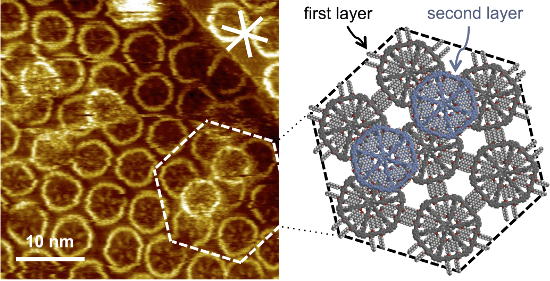
- might form cocrystals with other polygons, thus patterns of increased complexity and larger lattice constants become feasible. Our MSW 2 and its precursor 1 were recently investigated by means of single-molecule photoluminescence spectroscopy as model compounds for conjugated oligomers commonly used in


Synthesis and properties of novel star-shaped oligofluorene conjugated systems with BODIPY cores
Beilstein J. Org. Chem. 2014, 10, 2704–2714, doi:10.3762/bjoc.10.285
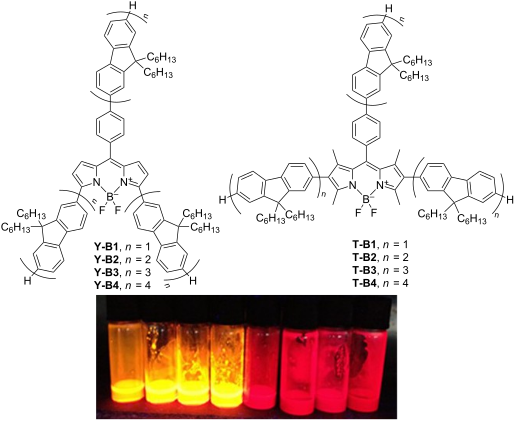
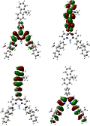
- . All the oligomers of the Y-Bn (n = 1−4) series feature a reduction wave corresponding to the formation of a radical anion in the BODIPY core [36], but its position and reversibility varies for the different members of the family, being reversible and at a less negative potential for Y-B1 (E1/2 = −1.14
- one is irreversible for all the compounds. The second reduction wave corresponds to the formation of a dianion, most likely localised on the BODIPY core and partially delocalised on the arms. In contrast to the Y-Bn (n = 1–4) series, the reduction of oligomers from the T-Bn (n = 1–4) family exhibits
- levels for both families are similar, whereas, in general, the LUMO levels of the Y-Bn family are lower, leading to narrower electrochemical HOMO–LUMO gaps. Optical properties The optical properties of the oligomers were studied in dichloromethane solutions. An image of toluene solutions of both families



Galactan synthesis in a single step via oligomerization of monosaccharides
Beilstein J. Org. Chem. 2014, 10, 2658–2663, doi:10.3762/bjoc.10.279
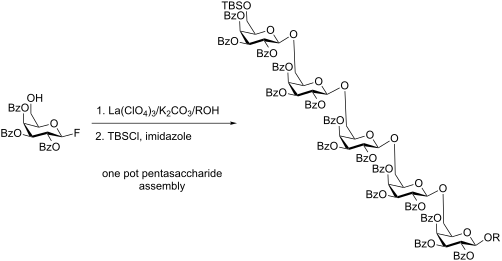
- observations suggest that desilylation is most likely the result of transient Brønsted acid formation during the reaction and not due to fluoride ion generation. In an attempt to tune silyl ether deprotection rates and promote formation of longer oligomers, we examined the glycosylation of a bulkier TBDPS
- the donor to a solution of 3 and La(ClO4)3 might reduce self-oligomerization. However, addition of 2 via a syringe pump did not significantly improve the yields, nor did it shift the product distribution to longer oligomers. The use of La(ClO4)3 as the promoter appears to be critical in this reaction
- shifted the product distribution towards longer oligomers (Table 1, entry 9). Somewhat surprisingly, the addition of another 0.5 equivalent of 2 after 120 minutes of reaction did not appear to significantly perturb either the overall yields or product distributions (Table 1, entry 10). We found that


Towards the sequence-specific multivalent molecular recognition of cyclodextrin oligomers
Beilstein J. Org. Chem. 2014, 10, 2428–2440, doi:10.3762/bjoc.10.253


Synthesis and immunological evaluation of protein conjugates of Neisseria meningitidis X capsular polysaccharide fragments
Beilstein J. Org. Chem. 2014, 10, 2367–2376, doi:10.3762/bjoc.10.247
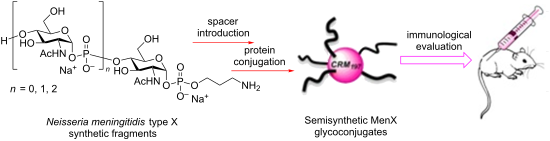
- promising candidates for vaccine development. However, more insights about the minimal epitope required for the immunological activity of MenX CPS are needed. We report herein the chemical conjugation of fully synthetic MenX CPS oligomers (monomer, dimer, and trimer) to CRM197. Moreover, improvements in
- the native polymer and conjugated to the same protein. This finding suggests that oligomers longer than three repeating units are possibly needed to mimic the activity of the native polysaccharide. Keywords: carbohydrates; glycoconjugates; immunology; multivalent glycosystems Neisseria meningitidis
- ]. This could be a crucial feature to improve batch-to-batch consistency in vaccine manufacturing and to confer a better safety profile. Some of us have recently achieved the first synthesis of short-chain MenX CPS oligomers (compounds 1–3, Figure 1) provided with a phosphodiester-linked aminopropyl


Oligomerization of optically active N-(4-hydroxyphenyl)mandelamide in the presence of β-cyclodextrin and the minor role of chirality
Beilstein J. Org. Chem. 2014, 10, 2361–2366, doi:10.3762/bjoc.10.246
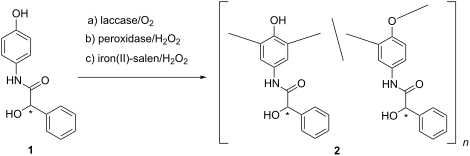
- from horseradish or iron(II)-salen were used as catalysts. The obtained yellow powdery oligomers 2 show high solubility in many commonly used organic solvents like acetone, THF, ethanol, methanol, acetonitrile and 1,4-dioxan. Because of the broad signals of the oligomers 2 in the 1H NMR spectra the
- measurements indicate the formation of oligomers 2 from the monomer 1 as shown in Figure 2. As expected the repetitive unit has a molecular mass of 241 g/mol, which confirms the linkage of the monomers via a formal abstraction of two hydrogen atoms. The highest molecular weight oligomers 2 obtained through
- enzymatic oligomerization consists of up to 10 repetitive units which could be detected by MALDI–TOF MS measurements. Furthermore comparable molecular weights are accessible through oligomerization of 1 with iron(II)-salen as catalyst. Here oligomers 2 with up to 8 repetitive units are detectable. The


Synthesis of phosphoramidites of isoGNA, an isomer of glycerol nucleic acid
Beilstein J. Org. Chem. 2014, 10, 2131–2138, doi:10.3762/bjoc.10.220
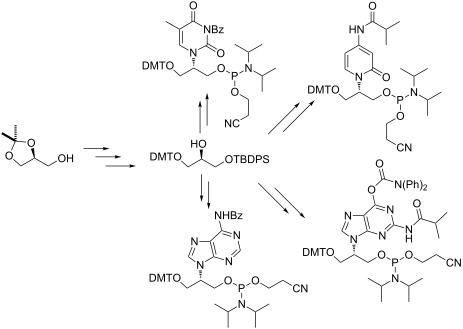
- were achieved with N4-isobutyrylcytosine as the nucleophile [19][20][21]. In the guanine series, the N2-isobutyryl, O6-diphenylcarbamoyl protected guanine worked well (Scheme 3) [22]. With all the four phosphoramidites in hand we proceeded to the automated synthesis of the oligomers, which proceeded
- prepare the phosphoramidite 28, and proceeded with the oligomer synthesis for our studies. However, this was far from satisfactory, and the continued demand for isoGNA oligomers within our group and our collaborative work prompted us to look for an improvement of the preparation of the adenine building




Building complex carbon skeletons with ethynyl[2.2]paracyclophanes
Beilstein J. Org. Chem. 2014, 10, 2013–2020, doi:10.3762/bjoc.10.209

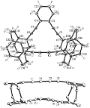
- Sonogashira coupling) [7]. For the smaller oligomers (dimers, trimers) the ortho-isomer with its opening angle of 60° between the ethynyl functions leads preferentially to (mono)cyclic hydrocarbons. For the meta-compound 3 we can expect both cyclic and acyclic (linear) products, and when the two ethynyl
- moieties are anchored in para-position, 5, the lower oligomers can no longer be cyclic because they would be too highly strained. When two ethynyl groups are placed into the benzene rings of [2.2]paracyclophane, the situation changes. In a strict sense the analog of 1,2-diethynylbenzene (1) is 4,5




Synthesis of 2-substituted tryptophans via a C3- to C2-alkyl migration
Beilstein J. Org. Chem. 2014, 10, 1991–1998, doi:10.3762/bjoc.10.207
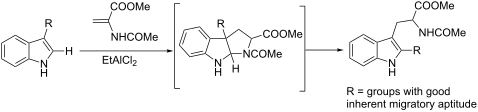
- et al. [45][46][47][48][49][50] showing an intramolecular rearrangement to yield 2,3-disubstituted indoles using TFA or diluted HCl, our synthetic procedure did not work with the addition of these acids, and only some indole oligomers were obtained. The best yield and reactivity were obtained by


Synthesis of rigid p-terphenyl-linked carbohydrate mimetics
Beilstein J. Org. Chem. 2014, 10, 1749–1758, doi:10.3762/bjoc.10.182
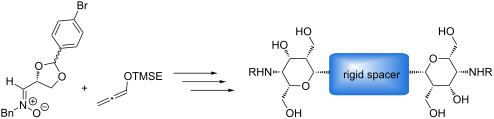
- are among the best methods to prepare C-arylglycosides, C-nucleosides and C-glycosidic oligomers when new artificial pharmacophores are approached [17]. With Suzuki cross-couplings C-glycoside analogues of phloriain with antidiabetic properties [18] or aryl-scaffolded dimers and trimers were


Photoswitchable precision glycooligomers and their lectin binding
Beilstein J. Org. Chem. 2014, 10, 1603–1612, doi:10.3762/bjoc.10.166
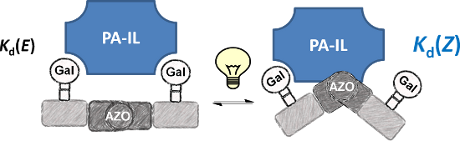
- the EDS based di- and trivalent glycooligomers giving the highest binding affinity with IC50 values of 2.0 and 3.2 µM, respectively. The corresponding di- and trivalent oligomers containing the AZO spacer instead of the EDS unit show higher IC50 values for both E- and Z-isomers, i.e., a slightly less


Influence of perylenediimide–pyrene supramolecular interactions on the stability of DNA-based hybrids: Importance of electrostatic complementarity
Beilstein J. Org. Chem. 2014, 10, 1589–1595, doi:10.3762/bjoc.10.164
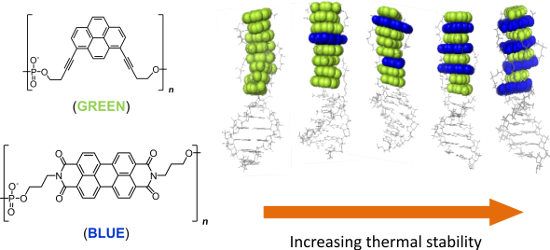
- aedamers (aromatic electron donor acceptor oligomers) pioneered by Iverson and coworkers [18][36][37]. They consist of face-to-face stacked electron-rich naphthalene and electron-poor naphthalenediimide (NDI) chromophores and belong to the broader area of foldamers [38]. DNA has been described as a
- molecular scaffold for arranging various types of chromophores [39][40][41][42][43][44]. Recently, we reported that oligoarenotides (oligomers with an alternating phosphodiester-aromatic hydrocarbon motif) exhibit similar structural properties as nucleic acids, and although the aromatic hydrocarbons cannot
- strands proceeds in a selective manner, the chromophores on opposite strands interdigitate and stack face-to-face in an organised controlled assembly. Results and Discussion The principle of the system is illustrated in Figure 1. All oligomers are composed of a DNA part and a modified section containing a



Pyrene-modified PNAs: Stacking interactions and selective excimer emission in PNA2DNA triplexes
Beilstein J. Org. Chem. 2014, 10, 1495–1503, doi:10.3762/bjoc.10.154
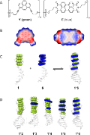
- click chemistry or as a masked amino group both in a PNA monomer and in PNA oligomers, allowing to produce a variety of modified PNAs from a single precursor [35]. This chemistry introduces a moderate degree of flexibility which can be useful for allowing interactions with other groups to occur within
- -azidomethyluracil precursor, as described previously [35], whereas a pyrene-containing modified monomer 1 (Scheme 1), more suitable for automated synthesis, was designed for the realization of all the other oligomers (PNA2–6, Figure 1c). For the synthesis of the modified monomer bearing the pyrene moiety, we
- ), then linear gradient to 50% MeCN 0.2% FA in 30 minutes at a flow rate of 1 mL/min). PNA oligomers were purified with RP-HPLC using a XTerra Prep RP18 column (7.8 × 300 mm, 10 μm) (method B, linear gradient from H2O 0.1% TFA to 50% MeCN 0.1% TFA in 30 minutes at a flow rate of 4.0 mL/min). HRMS were


Synthesis of the first examples of iminosugar clusters based on cyclopeptoid cores
Beilstein J. Org. Chem. 2014, 10, 1406–1412, doi:10.3762/bjoc.10.144
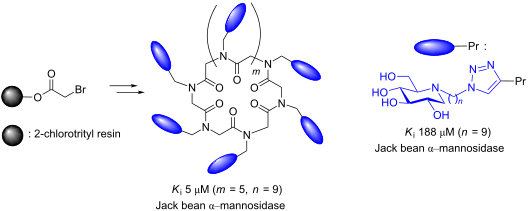
- scaffold is crucial as it defines the valency, the size and the shape of the multivalent architectures. Due to their broad chemical diversity, rapid and convenient synthetic access, improved proteolytic stability and cell permeability over peptides, N-substituted glycine oligomers, called peptoids [14][15
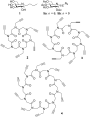
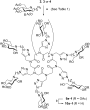
- scaffolds (2–4, Figure 1) were prepared using the sub-monomer approach developed by Zuckerman et al. [44] through a two-step sequence, repeated iteratively, to obtain the desired oligomers (Scheme 1). Each monomer is constructed on the 2-chlorotrityl resin from C- to N-terminus using N,N
- ’-diisopropylcarbodiimide (DIC)-mediated acylation with bromoacetic acid, followed by amination with the propargyl amine. After the completion of synthesis, the oligomers were cleaved from the resin using a 4:1 solution of CH2Cl2/hexafluoroisopropanol (HFIP). Macrocyclizations of the linear N-substituted oligoglycines 6–8




Molecular recognition of surface-immobilized carbohydrates by a synthetic lectin
Beilstein J. Org. Chem. 2014, 10, 1354–1364, doi:10.3762/bjoc.10.138
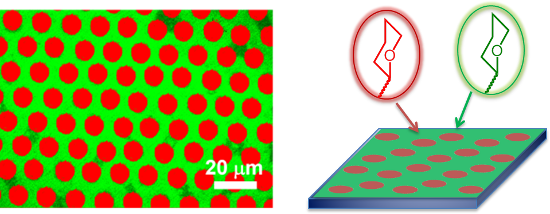
- processes and offer an enormous potential to encrypt biological information [1][2][3][4]. In contrast to the linear nucleic acids and proteins, carbohydrates usually form branched oligomers or polymers which are joined together by a variety of linkages. The vast amount of resulting carbohydrate oligomers


Homochiral BINOL-based macrocycles with π-electron-rich, electron-withdrawing or extended spacing units as receptors for C60
Beilstein J. Org. Chem. 2014, 10, 1308–1316, doi:10.3762/bjoc.10.132
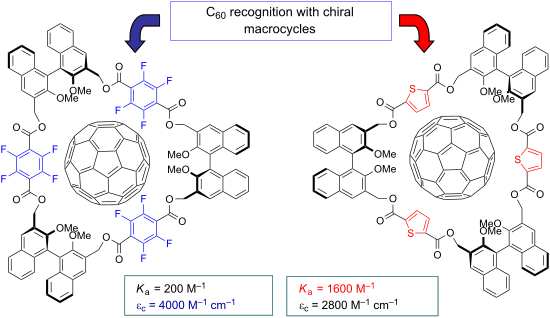
- remove by flash column chromatography. These byproducts were tentatively characterized as higher oligomers from their NMR pattern. The UV–vis absorption spectra in EtOH of a selection of macrocyclic compounds (3b, 3d, 4b and 4d with π-electron rich and π-electron deficient spacing units, Figure S1