Search results
Search for "derivatization" in Full Text gives 254 result(s) in Beilstein Journal of Organic Chemistry. Showing first 200.
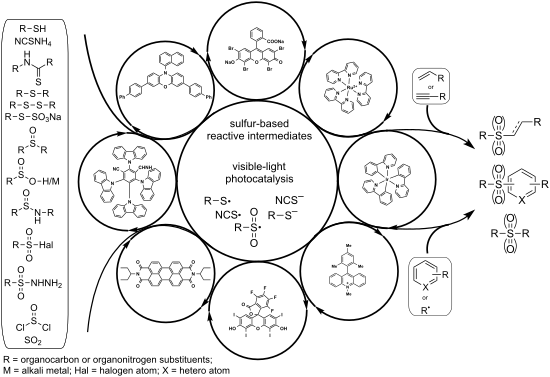
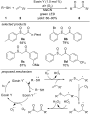
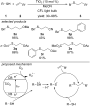
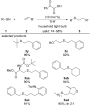
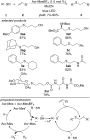
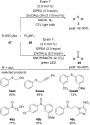
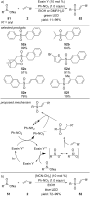
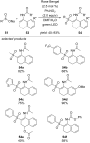
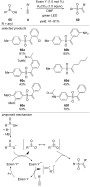
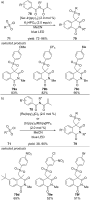
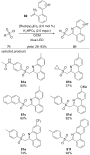
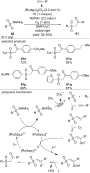
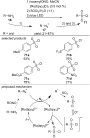
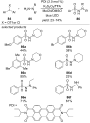
Photocatalytic formation of carbon–sulfur bonds
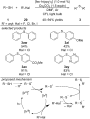
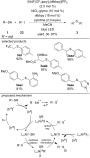
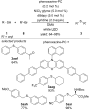
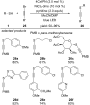
Beilstein J. Org. Chem. 2018, 14, 54–83, doi:10.3762/bjoc.14.4













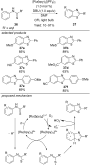
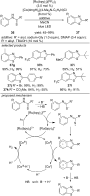


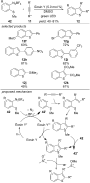

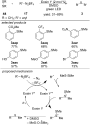






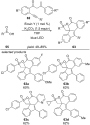

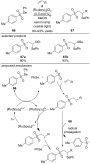

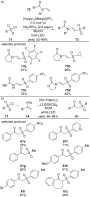

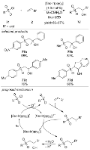




Development of a fluorogenic small substrate for dipeptidyl peptidase-4
Beilstein J. Org. Chem. 2017, 13, 2690–2697, doi:10.3762/bjoc.13.267
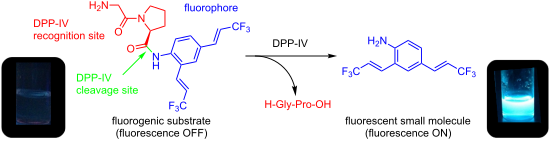
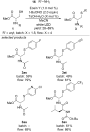
- different, ideally, non-fluorescence and intensive fluorescence, respectively. On the basis of the structural features of 1, we expected that its fluorescence would disappear as a result of peptide derivatization of the amino group, because electron donation by the amino group would be attenuated and the


Synthesis and supramolecular properties of regioisomers of mononaphthylallyl derivatives of γ-cyclodextrin
Beilstein J. Org. Chem. 2017, 13, 2509–2520, doi:10.3762/bjoc.13.248
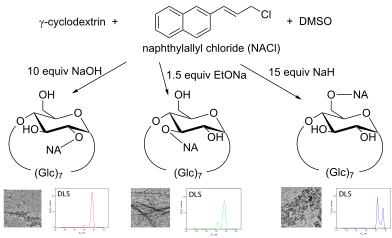
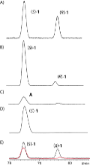
- CDs are attractive building blocks for various types of supramolecular structures [6][7]. Necessary non-covalent interactions depend on the type and derivatization of CD, on lipophilicity, shape, and size of the guest molecule, and on conditions such as temperature, pH, or solvent used [8]. In


One-pot three-component route for the synthesis of S-trifluoromethyl dithiocarbamates using Togni’s reagent
Beilstein J. Org. Chem. 2017, 13, 2502–2508, doi:10.3762/bjoc.13.247
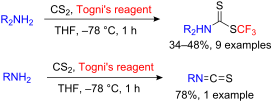
- °C, addition of 3 (1 equiv) and additional stirring for one hour at −78 °C were considered as optimal reaction conditions for further derivatization. In order to explore the scope of the reaction under the optimized reaction conditions, various commercially available secondary amines were


Solvent-free copper-catalyzed click chemistry for the synthesis of N-heterocyclic hybrids based on quinoline and 1,2,3-triazole
Beilstein J. Org. Chem. 2017, 13, 2352–2363, doi:10.3762/bjoc.13.232
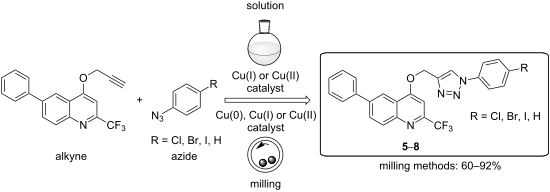
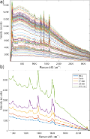
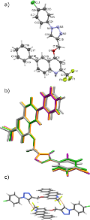
- synthesis of 5–8 Based on the recently obtained 1,2,3-triazole-appended N-heterocycles, as promising lead compounds with efficient and selective cytostatic activities [8][9], our research groups share an interest in derivatization of target compounds by a triazole bridge [33]. Quinoline is an important



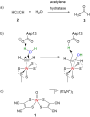
Is the tungsten(IV) complex (NEt4)2[WO(mnt)2] a functional analogue of acetylene hydratase?
Beilstein J. Org. Chem. 2017, 13, 2332–2339, doi:10.3762/bjoc.13.230
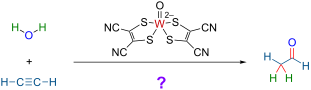
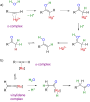
- reaction mixture incubated at room temperature. Derivatization of the reaction solution with 2,4-dinitrophenylhydrazine (DNPH) precipitated a yellow substance. The original report had identified the precipitate as acetaldehyde 2,4-dinitrophenylhydrazone (9) by recording a melting point (147 °C) and
- generation of 10, and the source and purification method for substrate 2 were not indicated [13]. Derivatization to 2,4-dinitrophenylhydrazones is a well-established identification method for carbonyl compounds that recommends itself for small amounts of volatile products [38][39]. However, aldehyde



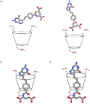
Structural diversity in the host–guest complexes of the antifolate pemetrexed with native cyclodextrins: gas phase, solution and solid state studies
Beilstein J. Org. Chem. 2017, 13, 2252–2263, doi:10.3762/bjoc.13.222
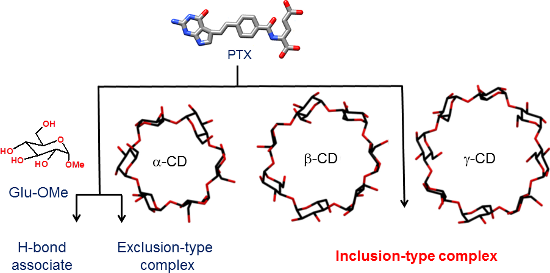
- pharmacokinetic properties of the guest molecule, such as water solubility, bioavailability and stability [6][7]. In particular, many important drugs in cancer treatment are often toxic and/or sparingly soluble or even insoluble in water. Among other methods, reversible derivatization of these drugs into CD




Solid-state mechanochemical ω-functionalization of poly(ethylene glycol)
Beilstein J. Org. Chem. 2017, 13, 1963–1968, doi:10.3762/bjoc.13.191
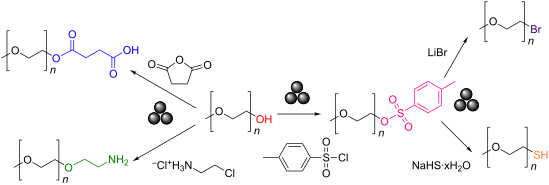
- present the development of mechanochemical procedures for PEG functionalization without the need for bulk solvents, offering a cleaner and more sustainable alternative to existing solution-based PEG procedures. The herein presented mechanochemical procedures enable rapid and solvent-free derivatization of
- ; tosylation; Introduction Poly(ethylene glycol) (PEG) is a linear polyether polymer with highly hydrophilic properties. Whereas PEG functionalization is restricted to its terminal functionalities, derivatization of these sites is essential for its use in pharmaceutical and material design. Specifically
- typically require dilute conditions under inert atmosphere, warranting large amounts of solvents and time [1][19][20]. High dilution during derivatization is a requirement of solvent-based syntheses to avoid unwanted chain lengthening caused by intermolecular reactions [21]. Having in mind the vocal demands


Influence of the milling parameters on the nucleophilic substitution reaction of activated β-cyclodextrins
Beilstein J. Org. Chem. 2017, 13, 1893–1899, doi:10.3762/bjoc.13.184
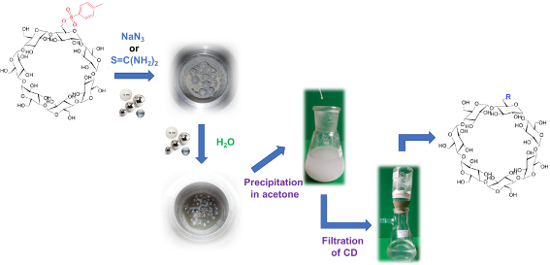
- derivatization [8]. Although the preparation of carbohydrate-based complexes in a ball mill has been already reported [9][10][11], the use of mechanical activation for the chemical derivatization of CDs has been rather sporadic [12][13][14][15]. In this respect, it is worth noting that CDs exhibit a
- characteristic reactivity profile. Neither traditional synthetic routes nor a conventional carbohydrate activation methodology allow for CD derivatization. The major issues stem from the differing solubility of the reagents in organic solvents, meaning that high boiling polar solvents, such as DMF or DMSO, need
- the hydrolysis of the starting material. Moreover, mechanochemical activation allowed solve one of the major problems for cyclodextrin derivatization in solution. This is usually related to the very different solubilities of the reagents, thus requiring energy transfer by heating to induce reactions


Mechanochemical synthesis of thioureas, ureas and guanidines
Beilstein J. Org. Chem. 2017, 13, 1828–1849, doi:10.3762/bjoc.13.178
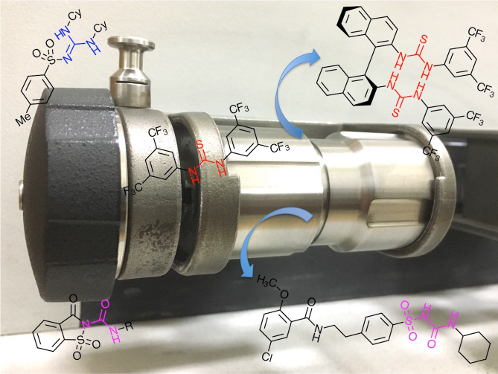
- ) Mechanochemical synthesis of the anti-epileptic drug phenytoin (41). a) K2CO3-assisted synthesis of sulfonyl (thio)ureas. b) CuCl-catalyzed solid-state synthesis of sulfonyl ureas. Two-step mechanochemical synthesis of the antidiabetic drug glibenclamide (2). Derivatization of saccharin by mechanochemical CuCl




Selective enzymatic esterification of lignin model compounds in the ball mill
Beilstein J. Org. Chem. 2017, 13, 1788–1795, doi:10.3762/bjoc.13.173
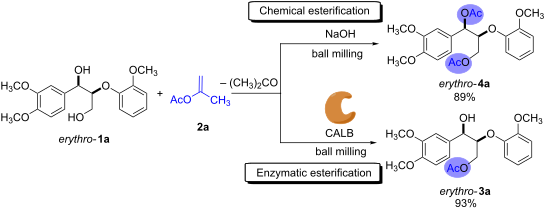
- biocatalyst for these transformations. Noteworthy, various acyl donors of different chain lengths were tolerated under the mechanochemical conditions. Keywords: ball milling; enzymes; esterification; lignin derivatization; mechanochemistry; Introduction Mechanochemical reactions, particularly those carried



The chemistry and biology of mycolactones
Beilstein J. Org. Chem. 2017, 13, 1596–1660, doi:10.3762/bjoc.13.159
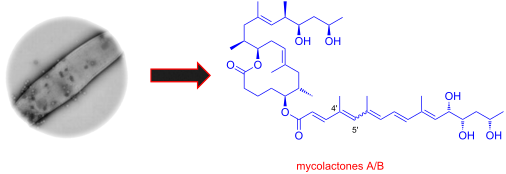
- derivatization of mycolactone A/B (1a,b) with a 2-naphthylboronate-based fluorogenic chemosensor (Figure 4). The latter complexes the 1,3-diol moiety proximal to the pentaene motif of the lower side chain, thus resulting in enhanced fluorescence emission intensity of the mycolactone band upon irradiation with









Chemical systems, chemical contiguity and the emergence of life
Beilstein J. Org. Chem. 2017, 13, 1551–1563, doi:10.3762/bjoc.13.155
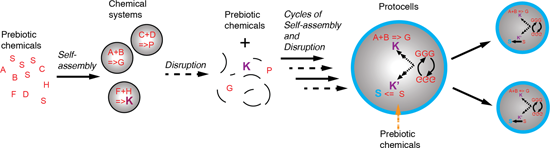
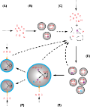
- . The correct orientation of the various compounds was easily determined chemically, e.g., by derivatization of the triad photo-sensitizer with a charged group that defined which side of the molecule could insert into the hydrophobic core of the membranes [92]. However, a correct addition sequence


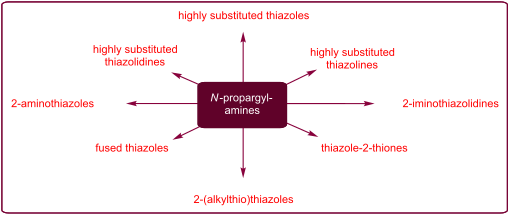
N-Propargylamines: versatile building blocks in the construction of thiazole cores
Beilstein J. Org. Chem. 2017, 13, 625–638, doi:10.3762/bjoc.13.61
- conditions (Scheme 8). The reaction tolerated a variety of functional groups such as fluoro, cyano, hydroxy, and methoxy, allowing a further derivatization of the products [90]. 3 From N-propargyl thioamides The first example of a thiazole synthesis from N-propargyl thioamides has been reported by Short and




Solid-phase enrichment and analysis of electrophilic natural products
Beilstein J. Org. Chem. 2017, 13, 405–409, doi:10.3762/bjoc.13.43
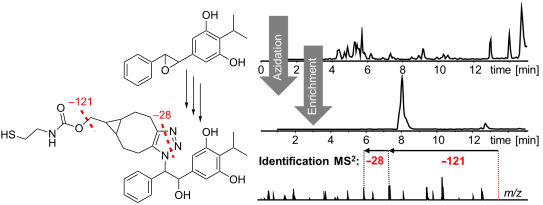
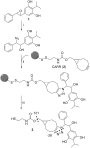
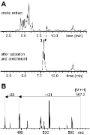
- calculated mass of 3 (Figure 1) derived from the derivatization of epoxystilbene 1, an oxidized isopropylstilbene derivative from this strain. Since only a single peak could be seen within the chromatogram, we assume that the conjugate addition took place only on the less hindered position in epoxide 1


Phosphated cyclodextrins as water-soluble chiral NMR solvating agents for cationic compounds
Beilstein J. Org. Chem. 2017, 13, 43–53, doi:10.3762/bjoc.13.6
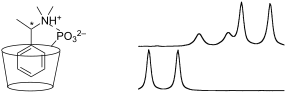
- derivatization can be used to alter the solubility, binding properties of substrates, and ultimately enantioselectivity properties of the CDs. The cavity of CDs has the secondary hydroxy groups at one opening and the primary ones at the other and the opening to the cavity at the secondary side is larger than




Synthesis and evaluation of anti-oxidant and cytotoxic activities of novel 10-undecenoic acid methyl ester based lipoconjugates of phenolic acids
Beilstein J. Org. Chem. 2017, 13, 26–32, doi:10.3762/bjoc.13.4
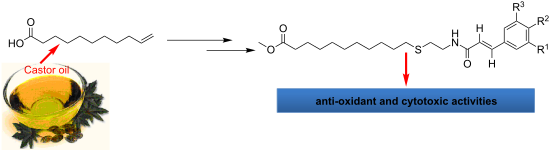
- vitro anti-oxidant activity against many reactive oxygen species and to protect neuronal cells against various types of oxidative damage [2][3]. To increase the effectiveness of phenolic compounds, their lipophilization has been the choice of derivatization as it provides beneficial effects of both the
- compounds [12][13]. Additionally the terminal double bond of undecenoic acid provides a reactive group for further derivatization for producing potential functional derivatives. The synthetic route followed for the synthesis of the phenolipids is shown in Scheme 1. Initially, undecenoic acid was treated


Identification, synthesis and mass spectrometry of a macrolide from the African reed frog Hyperolius cinnamomeoventris
Beilstein J. Org. Chem. 2016, 12, 2731–2738, doi:10.3762/bjoc.12.269
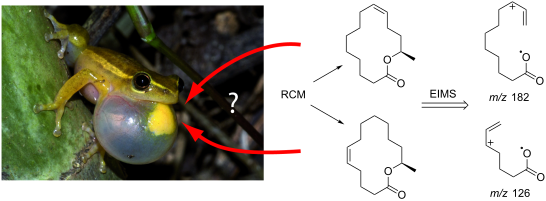
- double bond can usually not be determined by analysis of their mass spectra. Positional isomers often exhibit almost identical spectra [6] and derivatization or special mass spectrometric techniques are needed to localize double bonds [7][8][9]. Because this might also be the case for macrolides [10], it



Efficient mechanochemical synthesis of regioselective persubstituted cyclodextrins
Beilstein J. Org. Chem. 2016, 12, 2364–2371, doi:10.3762/bjoc.12.230
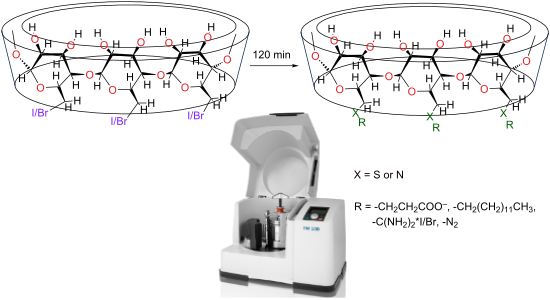
- success that CD derivatization has had, but its use in the removal of muscle relaxants may revolutionize surgery. It has very high affinity with curare analogues, especially rucoronium (K11 ≈ 1.8 × 10⁷ M−1) [7], which are widely used in surgery [6]. Its everyday use has led to increasing demand and ever
- simplicity and flexibility [18][19][20][21]. While the mechanochemical manipulation of covalent bonds is hardly a brand new concept, its diffusion into carbohydrate chemistry, and particularly into CD derivatization, has been rather slow [22][23]. The ability of HEBM to favour the nucleophilic substitution


Stereo- and regioselectivity of the hetero-Diels–Alder reaction of nitroso derivatives with conjugated dienes
Beilstein J. Org. Chem. 2016, 12, 1949–1980, doi:10.3762/bjoc.12.184
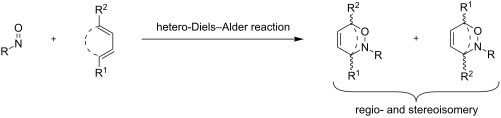
- and natural products as well as for the mild functionalization and derivatization of diene-containing natural products [1][2][3][4][5][6][7][8][9][10]. The reversibility of this reaction plays a considerable role in both the observed regio- and stereocontrol of the nitroso Diels–Alder reaction




Potent triazine-based dehydrocondensing reagents substituted by an amido group
Beilstein J. Org. Chem. 2016, 12, 1897–1903, doi:10.3762/bjoc.12.179
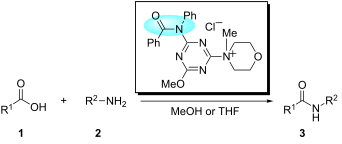
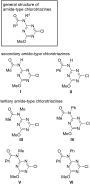
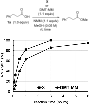
- intermediate 7 (Scheme 2). Single-crystal X-ray structure analysis, two-dimensional NMR spectroscopy, or derivatization of I–VI was performed to unambiguously determine their structures, i.e., whether the N- or O-substituted derivative was prepared from the amido anion (Supporting Information File 1). To




Stereodynamic tetrahydrobiisoindole “NU-BIPHEP(O)”s: functionalization, rotational barriers and non-covalent interactions
Beilstein J. Org. Chem. 2016, 12, 1453–1458, doi:10.3762/bjoc.12.141
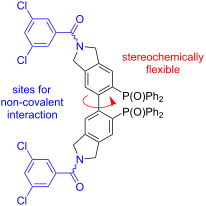
- phases [22]. However, introduction of functional groups which enable a modular derivatization approach is often hampered by long and tedious synthetic procedures. Doherty et al. reported a rhodium catalyzed double [2 + 2 + 2] cycloaddition strategy for a convergent synthesis of “NU-BIPHEP”s [23]. In this


Synthesis of 2-substituted tetraphenylenes via transition-metal-catalyzed derivatization of tetraphenylene
Beilstein J. Org. Chem. 2016, 12, 1302–1308, doi:10.3762/bjoc.12.122
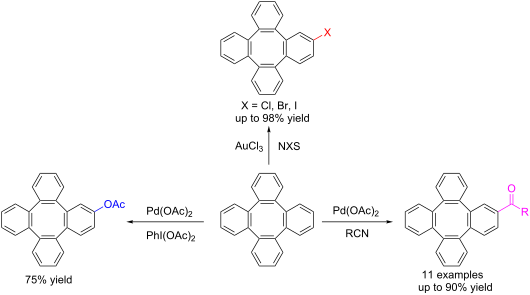
- tetraphenylenes through a transition-metal-catalyzed derivatization has been developed. Three types of functionalities, including OAc, X (Cl, Br, I) and carbonyl, were introduced onto tetraphenylene, which allows the easy access to a variety of monosubstituted tetraphenylenes. These reactions could accelerate
- skeleton, the methods for the synthesis of tetraphenylene derivatives via the direct derivatization of tetraphenylene are rare. More importantly, the direct derivatization of tetraphenylene would provide an efficient method for the synthesis of tetraphenylene derivatives, in particular for unsymmetrically
- substituted ones. Although direct bromination [22], nitration [22], and acetylation [45] of tetraphenylene via electrophilic aromatic substitution have been reported, it is still desirable to develop new methods for the derivatization of tetraphenylenes. Herein we report several synthetic protocols for the


NeoPHOX – a structurally tunable ligand system for asymmetric catalysis
Beilstein J. Org. Chem. 2016, 12, 1185–1195, doi:10.3762/bjoc.12.114
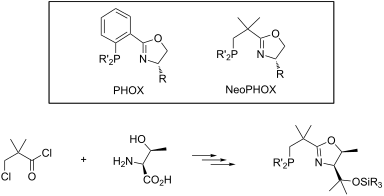
- . Synthetic strategy for the synthesis of the serine-derived NeoPHOX ligand. Derivatization of the 2nd generation NeoPHOX ligands and formation of their iridium complexes. Asymmetric palladium-catalyzed allylic substitution with rac-(E)-1,3-diphenylallyl acetate. Asymmetric palladium-catalyzed allylic


Modular synthesis of the pyrimidine core of the manzacidins by divergent Tsuji–Trost coupling
Beilstein J. Org. Chem. 2016, 12, 1111–1121, doi:10.3762/bjoc.12.107
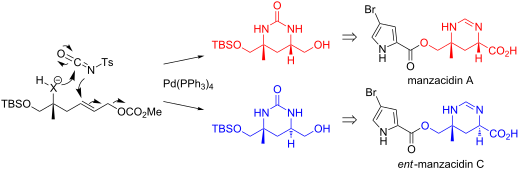
- ) [45]. Unfortunately, this route was found to be less effective in terms of isolated yields and scalability. Thus, the iron-catalyzed procedure was applied and multigram quantities of 12 were readily obtained. As shown in Scheme 3, we next focused on the further derivatization of amine 12 towards