


Search results
Search for "imidazole" in Full Text gives 354 result(s) in Beilstein Journal of Organic Chemistry. Showing first 200.
Chiral bisoxazoline ligands designed to stabilize bimetallic complexes
Beilstein J. Org. Chem. 2018, 14, 2002–2011, doi:10.3762/bjoc.14.175

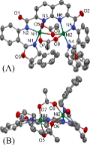
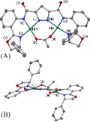
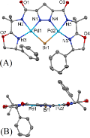
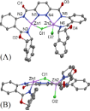
- instance, treatment of 6 with two equivalents of copper perchlorate hexahydrate led to the formation of a bis-copper complex [49][50]. The two Cu(ΙΙ) ions, which have a Cu∙∙∙Cu distance of 2.947 Å, are coordinated to the pentadentate bisoxazoline-imidazole moiety and are bridged by the central phenoxy







β-Hydroxy sulfides and their syntheses
Beilstein J. Org. Chem. 2018, 14, 1668–1692, doi:10.3762/bjoc.14.143
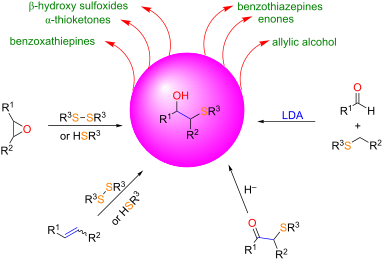
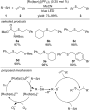
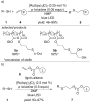
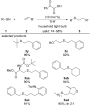
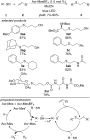
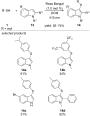
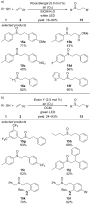
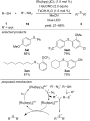
- -introduced into the catalytic cycle. Several copper salts (CuCl, CuCl2, CuOAc and Cu(OAc)2) were evaluated as part of optimizing the reaction conditions and they all provided poor yields. 3.3.3 Acetoxysulfenylation of Baylis–Hillman alcohols. Yadav and Aswathi reported a regioselective CuI-imidazole


Phosphoramidite building blocks with protected nitroxides for the synthesis of spin-labeled DNA and RNA
Beilstein J. Org. Chem. 2018, 14, 1563–1569, doi:10.3762/bjoc.14.133
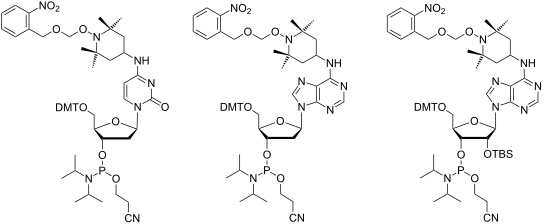
- , Et3N, CH2Cl2, rt, 4.5 h. Synthesis of phosphoramidite 8. Reagents and conditions: (a) Addition of 10, diisopropylethylamine, 1-propanol, 75 °C, 7 h, rt, 14 h; (b) 7 N NH3 in MeOH, 0 °C → rt, 3 h; (c) dimethoxytrityl chloride, pyridine, rt, 20 h; (d) tert-butyldimethylsilyl chloride, imidazole, DMF, rt



An overview of recent advances in duplex DNA recognition by small molecules
Beilstein J. Org. Chem. 2018, 14, 1051–1086, doi:10.3762/bjoc.14.93
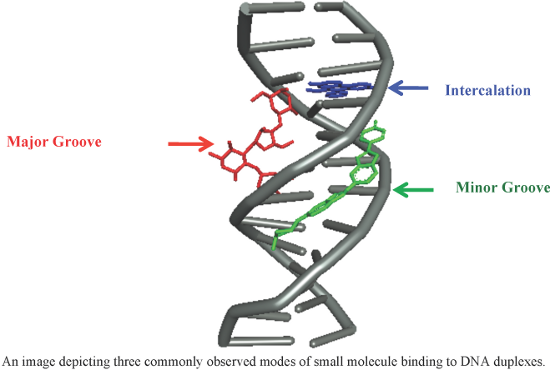
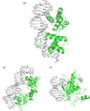
- significant antibacterial activity against Gram-positive bacterial strains [50]. Several other distamycin analogs were synthesized by replacing one or more pyrrole rings with other heterocycles such as pyrazoles [51], benzofurans [52], thiazoles, thiophenes, imidazole and oxazoles [53] in order to establish a
- possess the ideal crescent shape required to wrap around the minor groove of DNA, which limit their efficacy to recognize longer stretches of DNA sequence. In order to achieve better sequence specificity, a series of oligomeric “hairpin (HP)” polyamides containing pyrrole and imidazole ring systems (Py/Im
- ) were designed and synthesized by Dervan et al. and followed by other groups. It was observed that pyrrole/imidazole polyamides were able to bind side-by-side in the minor groove of DNA with high affinity and in a sequence-specific manner. Crystal structure studies confirmed the existence of a hydrogen




On the design principles of peptide–drug conjugates for targeted drug delivery to the malignant tumor site
Beilstein J. Org. Chem. 2018, 14, 930–954, doi:10.3762/bjoc.14.80
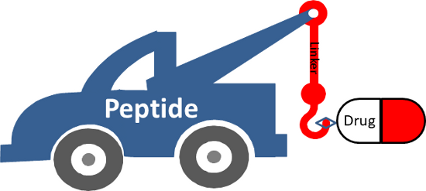
- respect to the parent drug, e.g., temozolomide converted to 5-(3-methyltriazen-1-yl)imidazole-4-carboxamide (MTIC) [9]. 4) Excretion is the final step and is responsible for the removal of the parent drug and/or its metabolites from the human body. Renal excretion is the predominant route of elimination


Phosphodiester models for cleavage of nucleic acids
Beilstein J. Org. Chem. 2018, 14, 803–837, doi:10.3762/bjoc.14.68
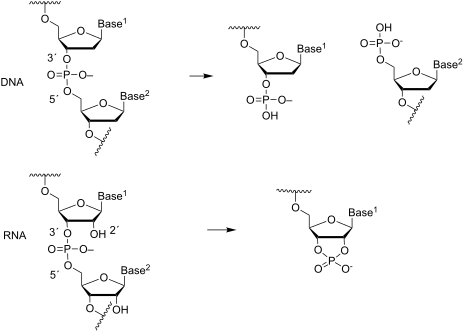
- rate. High buffer concentration has to be used and this makes elimination of salt and co-solute effects difficult. Since histidine residues are known to play a central role in the catalytic center of RNase A [58], one of the most extensively studied protein nucleases, catalysis by imidazole/imidazolium
- interesting feature of the mechanism is that both the formation and breakdown of the phosphorane intermediate proceed through a minor ionic form in a pre-equilibrium mixture. The mole fraction of neutral phosphodiester, for example, is in imidazole buffers of the order of 10−6 (pKa of phosphodiester ≈ 1
- departure of the 5´-linked nucleoside by a factor of 107. The mechanistic proposal has partly been based on Breslow’s studies on hydrolysis of 4-tert-butylcatechol cyclic phosphate by regioisomers of β-cyclodextrins bearing two imidazole groups [60]. This reverse reaction of the cyclization of 4-tert



Enzyme-free genetic copying of DNA and RNA sequences
Beilstein J. Org. Chem. 2018, 14, 603–617, doi:10.3762/bjoc.14.47
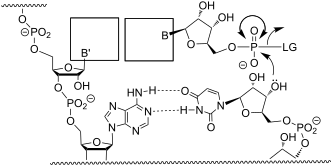
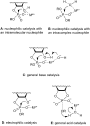
- neutral pH, i.e., conditions favoring longevity for this type of activated monomer, which requires protonation of the imidazole ring to be turned it into a good leaving group. Binding equilibria As mentioned above, primer extension involves the binding of the incoming nucleotide to the primer–template


Latest development in the synthesis of ursodeoxycholic acid (UDCA): a critical review
Beilstein J. Org. Chem. 2018, 14, 470–483, doi:10.3762/bjoc.14.33
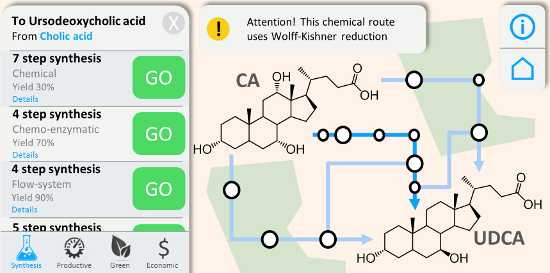
- ] (yield 90%) and subsequently reduced with metallic sodium in presence of imidazole and 1-propanol (yield 80%) yielding the 7β-OH epimer (UDCA) as imidazole salt. Notably, the regiospecific oxidoreduction of the 7α-OH group is achieved using weak oxidants: this behavior can be explained by the peculiar


Recent advances on organic blue thermally activated delayed fluorescence (TADF) emitters for organic light-emitting diodes (OLEDs)
Beilstein J. Org. Chem. 2018, 14, 282–308, doi:10.3762/bjoc.14.18
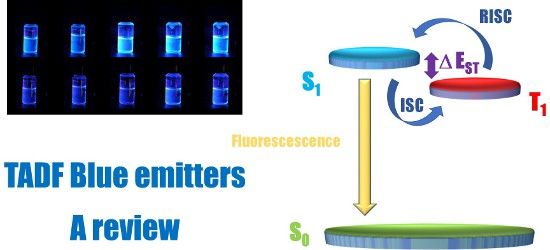
- 5 hours for T13-based OLEDs. A comparison established with an iridium complex, i.e., tris[1-(2,4-diisopropyldibenzo[b,d]furan-3-yl)-2-phenyl-1H-imidazole]iridium(III) (Ir(dbi)3) evidenced the relevance of the TADF approach, as a device lifetime of only 18 hours was found while operating OLEDs in the


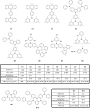


One-pot sequential synthesis of tetrasubstituted thiophenes via sulfur ylide-like intermediates
Beilstein J. Org. Chem. 2018, 14, 243–252, doi:10.3762/bjoc.14.16
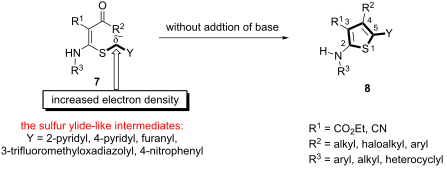
- -trifluoromethyloxadiazole substituent was not a viable substrate (Table 1, entry 10). Because of a similar result obtained with the N-methylimidazole substituted compound 7k, the difference between 7i and 7j could be explained by the imidazole-like structure of the 5-trifluoromethyloxadiazole moiety. The reduced inductive
- effect of the amine might be attributed to the resonance structures of imidazole (Table 1, entry 11) [72]. To determine the influence of substituents on the phenyl group, various arene(methyl)sulfanes 7l–p were tested (Table 1, entries 12–16,). Simple phenyl and electron-donating compounds 7l and 7m did


Photocatalytic formation of carbon–sulfur bonds
Beilstein J. Org. Chem. 2018, 14, 54–83, doi:10.3762/bjoc.14.4
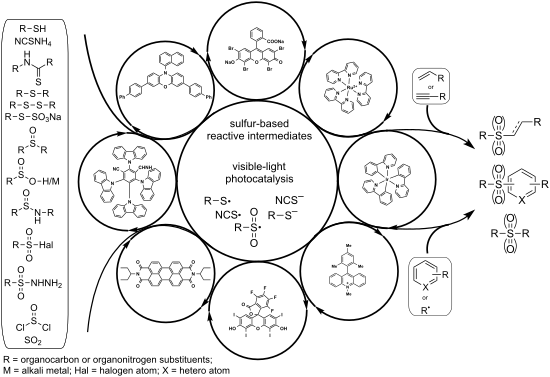
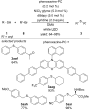
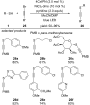
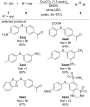
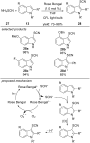
- photoredox-generated thiocyanate radical can add to the heteroaromatic system, which subsequently rearomatizes via deprotonation. This method was suitable for substituted imidazoheterocycles, bearing electron-donating and withdrawing groups. Other imidazole derivatives were unreactive under the reported









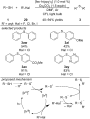

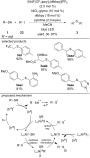
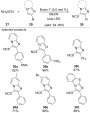

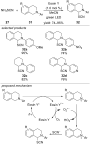


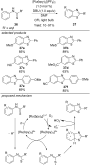
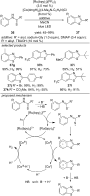














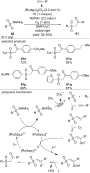

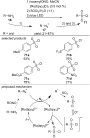
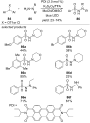

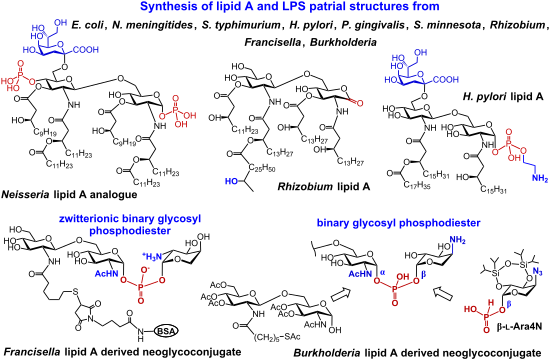
Aminosugar-based immunomodulator lipid A: synthetic approaches
Beilstein J. Org. Chem. 2018, 14, 25–53, doi:10.3762/bjoc.14.3




Reactivity of bromoselenophenes in palladium-catalyzed direct arylations
Beilstein J. Org. Chem. 2017, 13, 2862–2868, doi:10.3762/bjoc.13.278
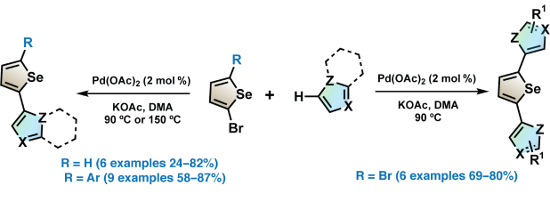
- allowed the coupling of several heteroaromatics such as thiazole, pyrrole, furan or imidazole derivatives with aryl bromides [36]. 2-Bromoselenophene, which was easily prepared by reaction of selenophene with N-bromosuccinimide [37], and 2-ethyl-4-methylthiazole were employed as model substrates for our



Nucleophilic dearomatization of 4-aza-6-nitrobenzofuroxan by CH acids in the synthesis of pharmacology-oriented compounds
Beilstein J. Org. Chem. 2017, 13, 2854–2861, doi:10.3762/bjoc.13.277
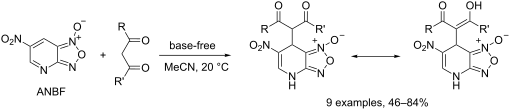
- to proceed depending on the structure of the substrate and the nucleophile. The first, Beirut reaction [1][2][3][4][5][6][7][8][9][10], allowing to transform the furoxan ring to pyrazine or imidazole N-oxides as well as N-hydroxyimidazole occurs under the action of α-unsubstituted aldehydes, ketones


Synthetic mRNA capping
Beilstein J. Org. Chem. 2017, 13, 2819–2832, doi:10.3762/bjoc.13.274
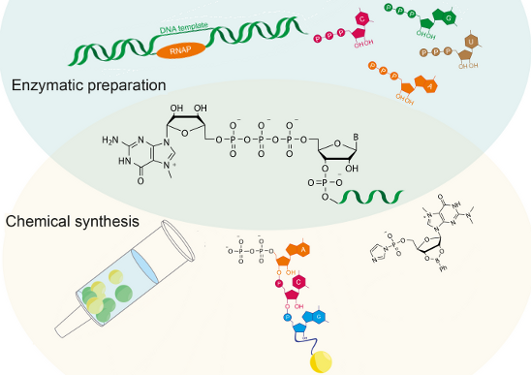
- , comprising phenylthio [56], 5-chloro-8-quinolyl [57], morpholidate [48] and imidazolide moieties [58][59]. Imidazole activation in DMF with ZnCl2 was first reported by Sekine et al. [60] and is the most often used method for the formation of triphosphates. P-Imidazoles are known to react with numerous
- hydrolytically less stable than other purine nucleosides. Under basic conditions which are commonly used for RNA deprotection and cleavage from the solid support, opening of the imidazole ring of the 7-methylguanine would occur [111]. Thus, for synthesis of the cap structure on the solid support, standard
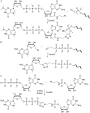
- trypanosomatid cap4 structure, characterized by 2′-O-methylation of the first four nucleotides and additional methylation at the first adenosine and the fourth uridine, was reported in 2004 by the group of Darzynkiewicz. The preparation was achieved by reacting an imidazole activated m7GDP with the 5



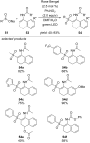
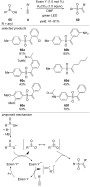
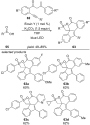
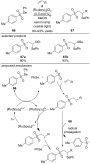
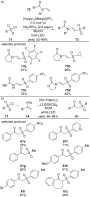
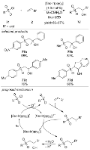
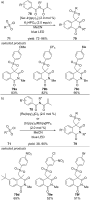
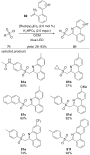
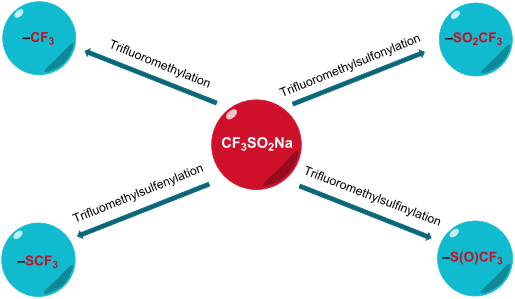
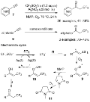
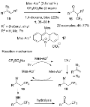
CF3SO2X (X = Na, Cl) as reagents for trifluoromethylation, trifluoromethylsulfenyl-, -sulfinyl- and -sulfonylation. Part 1: Use of CF3SO2Na
Beilstein J. Org. Chem. 2017, 13, 2764–2799, doi:10.3762/bjoc.13.272












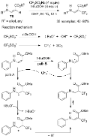


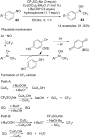


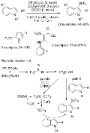

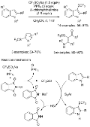


A novel synthetic approach to hydroimidazo[1,5-b]pyridazines by the recyclization of itaconimides and HPLC–HRMS monitoring of the reaction pathway
Beilstein J. Org. Chem. 2017, 13, 2561–2568, doi:10.3762/bjoc.13.252
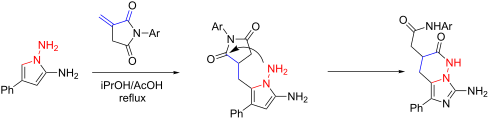
- -addition by the activated C=C double bond and subsequent intramolecular recyclization of the intermediate with the amino group involved. Keywords: cascade reaction; diaminoimidazoles; HPLC–HRESIMS; imidazo[1,5-b]pyridazines; itaconimides; Introduction Among the numerous bicyclic fused imidazole
- ], antitumor agents [9], and are stimulators of guanylate cyclase [10], whereas imidazo[1,5-c]pyrimidines demonstrate anti-infectious effects in the treatment of brucellosis [11], etc. However, the chemistry, medicinal chemistry and pharmacology of imidazo[1,5-b]pyridazines, with the imidazole ring connected
- to search for new reagents for the synthesis of their imidazo[1,5-b]-annelated analogues. There are two general approaches to the construction of an imidazo[1,5-b]pyridazine scaffold: the annulation of the imidazole ring to the b-bond of the pyridazine (route A, Scheme 1) and the heterocyclization of


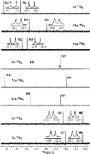
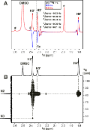
15N-Labelling and structure determination of adamantylated azolo-azines in solution
Beilstein J. Org. Chem. 2017, 13, 2535–2548, doi:10.3762/bjoc.13.250
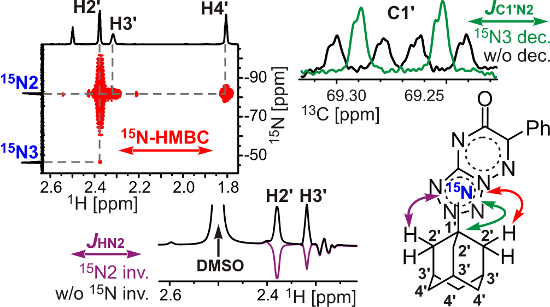
- against influenza A virus compared with the currently used antiviral drug rimantadine (1-(1-adamantyl)ethanamine) [3]. More recently, Roberge et al. described new inhibitors of the influenza A virus M2 proton channel. Among the studied compounds, adamantyl imidazole 3 showed good activity [4]. An azolo





Exploring mechanochemistry to turn organic bio-relevant molecules into metal-organic frameworks: a short review
Beilstein J. Org. Chem. 2017, 13, 2416–2427, doi:10.3762/bjoc.13.239
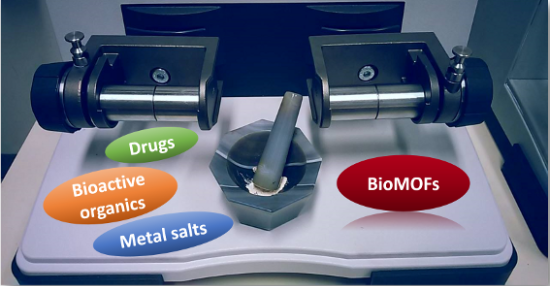
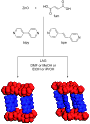
- framework and have simultaneously the characteristics of MOFs and zeolites, making them very promising for biomedical applications [90][91]. In their work, Beldon et al. explored the synthesis of new ZIFs using imidazole (HIm), 2-methylimidazole (HMeIm) and 2-ethylimidazole (HEtIm) as ligands. Initially
- , they used LAG with ZnO and the previous imidazole ligands in the presence of DMF as a space-filling liquid. However, this method only partially succeeded: with HIm the quantitative formation of ZIF-4 was obtained after 60 min, whereas with HMeIm only partial formation of ZIF-8 was achieved and with




The effect of milling frequency on a mechanochemical organic reaction monitored by in situ Raman spectroscopy
Beilstein J. Org. Chem. 2017, 13, 2160–2168, doi:10.3762/bjoc.13.216
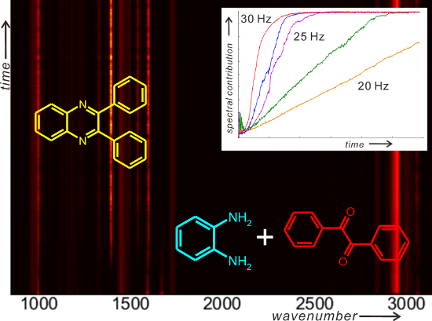
- mechanochemical synthesis of a MOF from ZnO and imidazole in the presence of a small amount of N,N-dimethylformamide [41]. This study revealed reaction kinetics consistent with a 2nd order reaction rate law, rationalized through a “pseudo-fluid” reaction model in which the rate-determining factor is the frequency


An efficient synthesis of a C12-higher sugar aminoalditol
Beilstein J. Org. Chem. 2017, 13, 2146–2152, doi:10.3762/bjoc.13.213
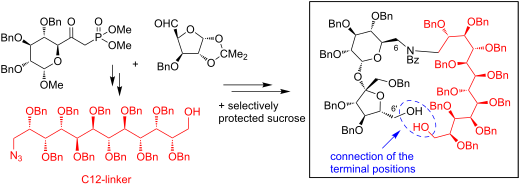
- , 6.72; N, 0.88. To a stirred solution of 8 (0.35 g, 0.21 mmol) in DMF (20 mL) containing imidazole (1.5 mg), sodium hydride (60% dispersion in mineral oil, 80.6 mg, 2.1 mmol) was added, and the mixture was stirred at 20 °C for 30 min. Benzyl bromide (0.2 mL, 1.68 mmol) was added dropwise and the mixture


NHC-catalyzed cleavage of vicinal diketones and triketones followed by insertion of enones and ynones
Beilstein J. Org. Chem. 2017, 13, 1816–1822, doi:10.3762/bjoc.13.176
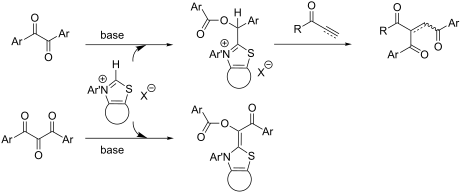
- regeneration of C and its reaction with 6a took place predominantly. It seems surprising that compound 12 could be quantitatively generated from C and HClO4 regardless of equimolar amounts of DIPEA, while analogous intermediates derived from imidazole NHC were protonated by the acid alone [23]. Conclusion We




Chiral phase-transfer catalysis in the asymmetric α-heterofunctionalization of prochiral nucleophiles
Beilstein J. Org. Chem. 2017, 13, 1753–1769, doi:10.3762/bjoc.13.170
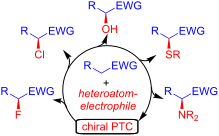
- facilitates the asymmetric intramolecular cycloetherification of starting materials 27 (Scheme 13). One of the important observations in this impressive report was the necessity of the imidazole moiety to achieve high selectivities [125]. In a subsequent study, the same group also expanded this concept to 6


An efficient Pd–NHC catalyst system in situ generated from Na2PdCl4 and PEG-functionalized imidazolium salts for Mizoroki–Heck reactions in water
Beilstein J. Org. Chem. 2017, 13, 1735–1744, doi:10.3762/bjoc.13.168
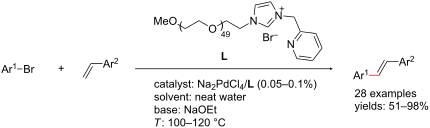
- salt L1, bearing a pyridine-2-methyl substituent at the N3 atom of the imidazole ring, showed the best catalytic activity. Under the optimal conditions, a wide range of substituted alkenes were achieved in good to excellent yields from various aryl bromides and alkenes with the catalyst TON of up to
- reaction sequence as depicted in Scheme 1. Firstly, the commercially available MeO-PEG1900-OH was reacted with MsCl using pyridine as base in CH2Cl2 to form MeO-PEG1900-OMs, which was then treated with sodium imidazole in THF to form the imidazole-functionalized PEG (MeO-PEG1900-Im). The resulted MeO
- –L3 from commercially available MeO-PEG1900-OH, imidazole, and various arylmethyl bromides (2-bromomethylpyridine for L1, benzyl bromide for L2 and 1-bromomethylnaphthalene for L3). It was shown that these imidazolium salts L1–L3 could be utilized as water soluble NHC ligand precursors in combination


Block copolymers from ionic liquids for the preparation of thin carbonaceous shells
Beilstein J. Org. Chem. 2017, 13, 1693–1701, doi:10.3762/bjoc.13.163
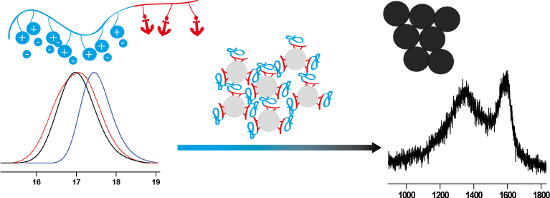
- . In a first step the PIL block is synthesized using 1-vinyl-3-cyanomethylimidazolium bromide (1) as an IL monomer, which was prepared following a literature procedure [16]. During this process the nitrogen atom in the imidazole ring in position 3 is quaternized. Monomer 1 was polymerized with 2





