


Search results
Search for "mechanical" in Full Text gives 260 result(s) in Beilstein Journal of Organic Chemistry. Showing first 200.
A new class of organogelators based on triphenylmethyl derivatives of primary alcohols: hydrophobic interactions alone can mediate gelation
Beilstein J. Org. Chem. 2017, 13, 138–149, doi:10.3762/bjoc.13.17
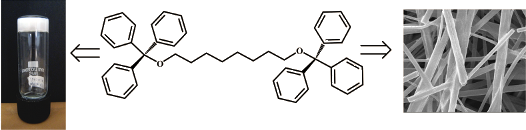
- interactions, they can be assembled or disassembled in response to appropriate external stimuli. Functional gels have been reported that are sensitive to physical stimuli like UV–vis light [14], ultrasound [15], and mechanical forces [16]. On the other hand, chemical stimuli-sensitive gels respond to stimuli


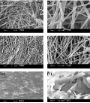



3D printed fluidics with embedded analytic functionality for automated reaction optimisation
Beilstein J. Org. Chem. 2017, 13, 111–119, doi:10.3762/bjoc.13.14
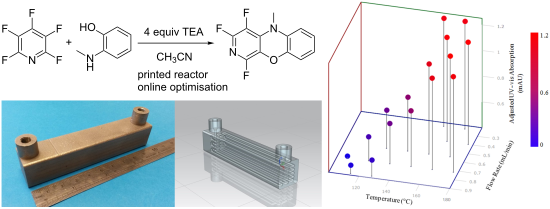
- Andrew J. Capel Andrew Wright Matthew J. Harding George W. Weaver Yuqi Li Russell A. Harris Steve Edmondson Ruth D. Goodridge Steven D. R. Christie Department of Chemistry, Loughborough University, Loughborough, LE11 3TU, UK School of Mechanical Engineering, University of Leeds, Leeds, LS2 9JT, UK
- and urethanes [4], whose poor mechanical and chemical properties can limit the application of SL manufactured parts. However, well maintained machines are capable of reproducibly producing parts at a layer thickness as low as 25 µm, making SL one of the most accurate and reproducible AM processes [4


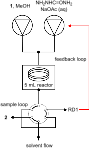


Solution-phase automated synthesis of an α-amino aldehyde as a versatile intermediate
Beilstein J. Org. Chem. 2017, 13, 106–110, doi:10.3762/bjoc.13.13
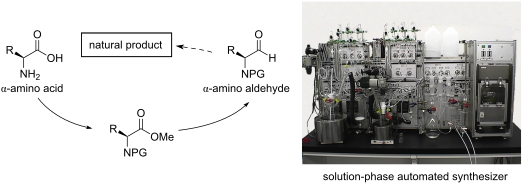
- photosensor that detects the difference in reflective index between gas and liquid. All the gas/liquid flows are controlled by solenoid valves and/or rotary valves. This transfer system avoids direct contacts of pumps with compounds that frequently cause mechanical troubles of pumps. Formation of emulsions


Extrusion – back to the future: Using an established technique to reform automated chemical synthesis
Beilstein J. Org. Chem. 2017, 13, 65–75, doi:10.3762/bjoc.13.9
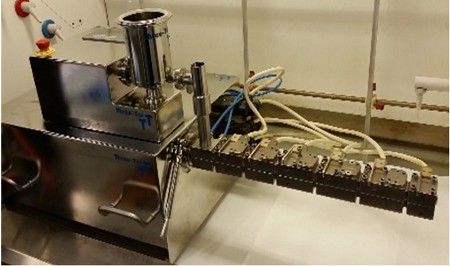
- , whereas TSE, which is more frequently employed, involves the movement of material by two, i.e., the material is conveyed from one screw to the other as it makes its way along the extruder barrel [4]. Both techniques process materials by mixing, heating and also by applying mechanical energy. The main
- just mixing, but also the grinding of the material, which resultantly leads to changes in the material properties, most commonly its rheology [3]. Furthermore, the mechanical energy applied to the system can be controlled by the screw profile, as well as the residence time which is not only dependent
- greater mechanical energy may result in a greater amount of frictional heat being produced, particularly in comparison to those segments which provide less vigorous kneading. Both single and twin screw extruders range from 10–443 mm in screw diameter [6] and extrusion processes are scalable to produce


Poly(ethylene glycol)s as grinding additives in the mechanochemical preparation of highly functionalized 3,5-disubstituted hydantoins
Beilstein J. Org. Chem. 2017, 13, 19–25, doi:10.3762/bjoc.13.3

- (POLAG) [8]. However, to the best of our knowledge, the systematic investigation of the influence of PEG polymers has not been reported yet for organic syntheses promoted by mechanical energy. We firstly reported the positive influence of PEG solvents as grinding agents for the mechanochemical
- to the solubility of reactants, reaction intermediates and final products in PEG polymers, although the existence of specific interactions with PEG polymers cannot be excluded. Indeed, especially under mechanical stress, PEGs are known to induce changes in the physical state of the system [8]. These


Computational methods in drug discovery
Beilstein J. Org. Chem. 2016, 12, 2694–2718, doi:10.3762/bjoc.12.267
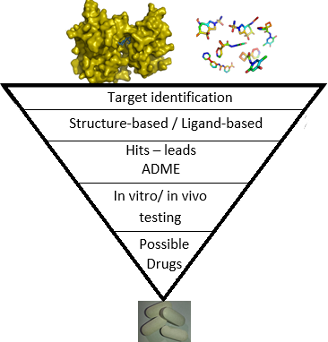
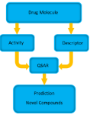
- mechanics. Electrostatic (coulombic) interactions and van der Waals interactions (Lennard-Jones potential) contribute to the interaction energy between a target–ligand complex. Two of the most widely used molecular mechanical force-fields are CHARMM [119] (Chemistry at HARvard Macromolecular Mechanics) and



Towards the development of continuous, organocatalytic, and stereoselective reactions in deep eutectic solvents
Beilstein J. Org. Chem. 2016, 12, 2620–2626, doi:10.3762/bjoc.12.258
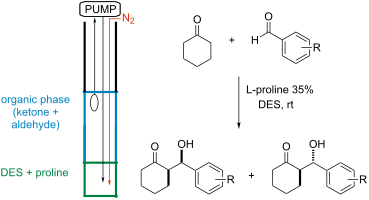
- possible interaction between the aldol product and the DES network (Figure 1). Due to its favourable physical and mechanical properties, DES A was selected for the initial screening of the different experimental conditions in continuo. The first experimental set-up that was studied (Figure 1, I) was built


Inhibition of peptide aggregation by means of enzymatic phosphorylation
Beilstein J. Org. Chem. 2016, 12, 2462–2470, doi:10.3762/bjoc.12.240
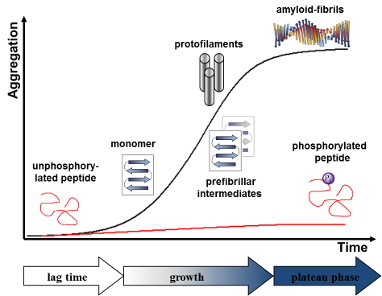
- with biological function with desirable mechanical properties. Many such peptide aggregates display exceptional stability, mechanical strength, stability at high temperatures and they are resistant towards enzymatic degradation [2]. Several studies have demonstrated the utilization of amyloids as


A direct method for the N-tetraalkylation of azamacrocycles
Beilstein J. Org. Chem. 2016, 12, 2457–2461, doi:10.3762/bjoc.12.239
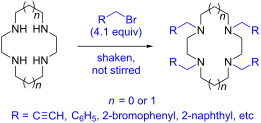
- be optimised alongside mixing performance [46], and in nanotechnology, where shaking can be used to modulate aggregation so as to favour particular nanostructures [47][48]. Otto and co-workers have investigated the influence of mechanical forces on reactivity in the context of self-replication by
- peptide-based disulfide macrocycles in a dynamic combinatorial library [49]. They observed different product distributions when reaction mixtures were shaken than when stirred, concluding that “mechanical forces can ... determine the outcome of a covalent synthesis” and that the ‘mechanosensitivity’ of
- their system is controlled by the influence of mechanical motion on nanostructure formation (the assembly of β-sheet-based fibres from the peptide building blocks in this example). Given the rapid precipitation of 3 at the phase interface observed in our N-tetrapropargylation reaction, it seems


Solvent-free, visible-light photocatalytic alcohol oxidations applying an organic photocatalyst
Beilstein J. Org. Chem. 2016, 12, 2358–2363, doi:10.3762/bjoc.12.229
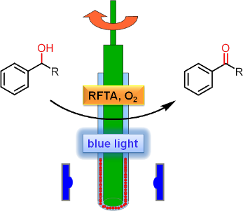
- solvent-free conversion of solid reactants. The reaction is driven by mechanical energy, which is for instance realized by grinding in ball mills or pestle and mortar. Obviously, this method possesses several advantages compared to reactions, which are performed in solution: toxic solvents and wastes are
- substrates would be grinded under visible light irradiation. In contrast to mechanochemistry, the process would be driven by light energy and not by mechanical energy, but profit from the absence of toxic solvents, high concentrations of the substrate, and easy work-up. Furthermore, undesired effects of the
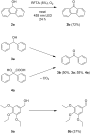
- mechanical but by electromagnetic energy input, realized by blue light irradiation. Furthermore, the heat input is not the primary cause for the reaction, but its prerequisite. Subsequently, the scope of the benzylic alcohol oxidation was investigated, applying 5% of RFTA. Four solid alcohols were oxidized




Experimental and theoretical investigations into the stability of cyclic aminals
Beilstein J. Org. Chem. 2016, 12, 2280–2292, doi:10.3762/bjoc.12.221
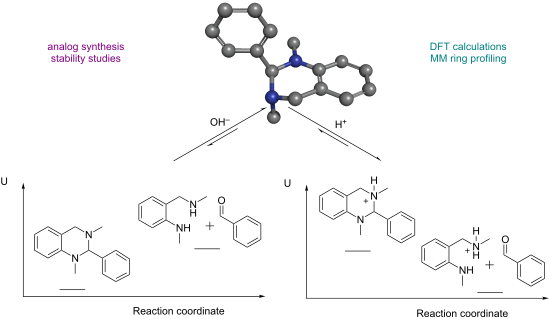
- reversed-phase HPLC. Based on these data, quantum mechanical calculations revealed that the hydrolysis of the test compounds is a thermodynamically driven process. Interestingly, we could show that this equilibrium is strongly dependent on the applied reaction conditions and that a change from an acidic to
- form is 1.61 kcal/mol, which is still a moderate value and places it well below compound 9b. Obviously, an exact correlation of this simple measure with the hydrolytic instability is not to be expected, given the limitations of the molecular mechanical approach and the fact that the hydrolysis rate of



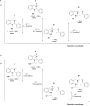


Determination of the absolute stereostructure of a cyclic azobenzene from the crystal structure of the precursor containing a heavy element
Beilstein J. Org. Chem. 2016, 12, 2211–2215, doi:10.3762/bjoc.12.212
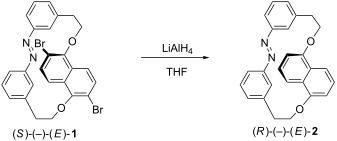
- chirality methods [28][29], NMR spectroscopy [30][31][32], X-ray diffraction [33][34][35], etc. In addition to these methods, many researchers explored a combination of vibrational circular dichroism and quantum mechanical calculations to determine the absolute stereostructures [36][37][38]. Among various


Ionic liquids as transesterification catalysts: applications for the synthesis of linear and cyclic organic carbonates
Beilstein J. Org. Chem. 2016, 12, 1911–1924, doi:10.3762/bjoc.12.181
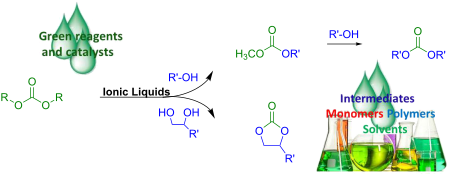
- -mechanical calculations indicated that the catalyst synergistically activated both BuOH and DMC. A wide variety of acyclic non-symmetrical organic carbonates of general formula ROC(O)OCH3 were prepared by Kumar et al. through the transesterification of DMC using the ionic liquid 1-(trimethoxysilyl)propyl-3


3,6-Carbazole vs 2,7-carbazole: A comparative study of hole-transporting polymeric materials for inorganic–organic hybrid perovskite solar cells
Beilstein J. Org. Chem. 2016, 12, 1401–1409, doi:10.3762/bjoc.12.134
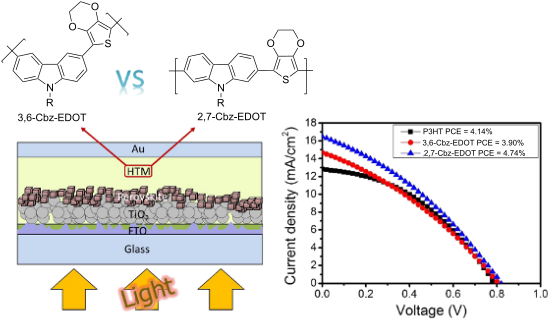
- Wei Li Munechika Otsuka Takehito Kato Yang Wang Takehiko Mori Tsuyoshi Michinobu Department of Materials Science and Engineering, Tokyo Institute of Technology, 2-12-1 Ookayama, Meguro-ku, Tokyo 152-8552, Japan and Department of Mechanical Engineering, National Institute of Technology, Oyama


Effective in silico prediction of new oxazolidinone antibiotics: force field simulations of the antibiotic–ribosome complex supervised by experiment and electronic structure methods
Beilstein J. Org. Chem. 2016, 12, 415–428, doi:10.3762/bjoc.12.45
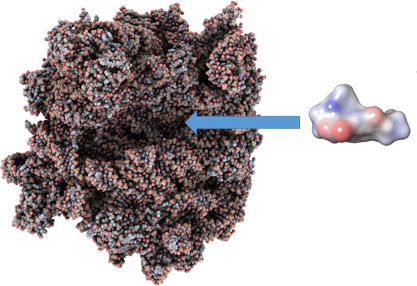
- , followed by an evaluation of their enthalpic penalties or rewards and the mechanical strengths of the relevant hydrogen bonds (relaxed force constants; compliance constants). The protocol was able to reproduce the experimentally known enantioselectivity favoring the S-enantiomer. In a second step, the


Art, auto-mechanics, and supramolecular chemistry. A merging of hobbies and career
Beilstein J. Org. Chem. 2016, 12, 362–376, doi:10.3762/bjoc.12.40
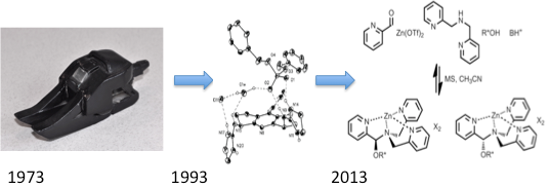
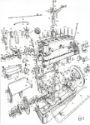
- draw for me to the fields of supramolecular chemistry and molecular orbital theory, because I grew up in a household filled with art. In addition to art, my childhood was filled with repairing and constructing mechanical entities, such as internal combustion motors, where many components work together
- . Keywords: art; assembly; complexity; function; mechanical; supramolecular; Review Introduction The field of supramolecular chemistry abounds with beautiful and aesthetically pleasing molecules. From Stoddart’s rotaxanes [1][2], Sauvage’s knots [3][4], Rebek’s capsules [5], Fujita’s 3-D MOFs [6][7], to
- Abstract Art? Maybe one can, but the similarly is striking (Figure 1). Besides having an aspect of beauty, supramolecular structures are created to achieve a chemical function or task. These functions range from imparting mechanical changes [11][12][13], to altering material properties [14][15], to




Natural products from microbes associated with insects
Beilstein J. Org. Chem. 2016, 12, 314–327, doi:10.3762/bjoc.12.34
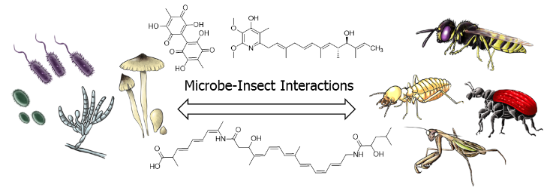
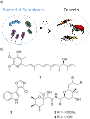
- species [12][13][14][15][16][17]. As a response to these threats, many insects have evolved defensive strategies, including mechanical and behavioral defense, complex immune systems, and the use of bioactive secondary metabolites produced by residing mutualists [12][13][14][15][16][17][24][25][26]. The
- challenged by invading fungal species such as Escovopsis, Fusarium, and Trichoderma (Ascomycota). To clean the garden, ants apply mechanical grooming [71] and secrete antimicrobial compounds, such as 3-hydroxydecanoic acid, from their metapleural glands [72]. As a second line of defense, the ants are





Enabling technologies and green processes in cyclodextrin chemistry
Beilstein J. Org. Chem. 2016, 12, 278–294, doi:10.3762/bjoc.12.30
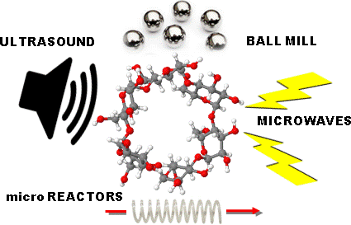
- process control. However microreactors do not tolerate mechanical inhomogeneities. To resolve the problem of microparticles, which often cause clogging, a second generation of microreactors has been developed and called microjetreactor [99]. A typical microreactor is made up of a 'sandwich' of thin metal




Recent advances in metathesis-derived polymers containing transition metals in the side chain
Beilstein J. Org. Chem. 2015, 11, 2747–2762, doi:10.3762/bjoc.11.296
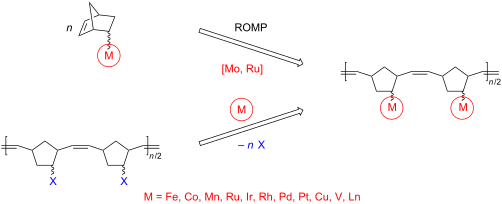
- metallopolymers so as to reach the desired physical and chemical properties suitable for progressive applications [5][6][7]. These functional hybrid materials are highly appreciated for their superior behaviour in catalysis, optics as well as for their magnetic, mechanical and thermal attributes. Structurally
- membranes provided with single cation–anion pairs. Cross-linking with dicyclopentadiene ensured a high mechanical stability of the copolymer. The film cast from 28 displayed an anion conductivity and mechanical properties similar to those of the traditional quaternary ammonium-based anion exchange membranes


Synthesis, structure, and mechanical properties of silica nanocomposite polyrotaxane gels
Beilstein J. Org. Chem. 2015, 11, 2194–2201, doi:10.3762/bjoc.11.238
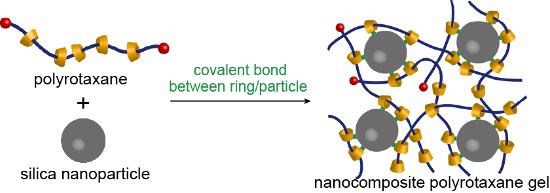
- . These toughness and softness properties are attributable to both the characteristic sliding of polymer chains through the immobilized cyclodextrins on the silica nanoparticle and the entropic contribution of the cyclic components to the elasticity of the gels. Keywords: cyclodextrin; gel; mechanical
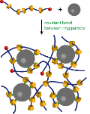
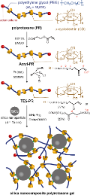
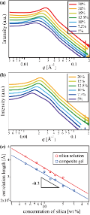
- modified to react with the surface of silica. The inner structure and the mechanical properties of the silica nanocomposite polyrotaxane gels were studied by small-angle X-ray scattering and viscoelastic measurements, respectively. Results and Discussion To achieve a covalent bond between the cyclic
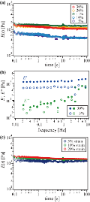
- the diffraction pattern of chicken tendon collagen. The obtained SAXS patterns were converted into 1D profiles, scattering intensity I vs scattering vector q, by circular averaging. The scattering vector is defined as: Mechanical measurements Obtained silica nanocomposite polyrotaxane gels were cut




Synthesis, antimicrobial and cytotoxicity evaluation of new cholesterol congeners
Beilstein J. Org. Chem. 2015, 11, 1922–1932, doi:10.3762/bjoc.11.208
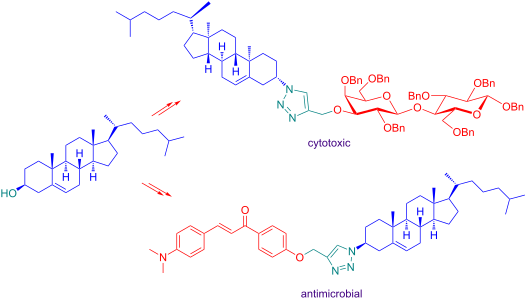
- cholesterol (oxysterol) metabolites contributes to the prognosis of major chronic diseases. Cholesterol is completely absent in prokaryotic organisms [1][2][3]. Cholesterol gives eukaryotic membranes sufficient mechanical stiffness against cationic selective antimicrobials (CSAs) such as antimicrobial




Asymmetric 1,4-bis(ethynyl)bicyclo[2.2.2]octane rotators via monocarbinol functionalization. Ready access to polyrotors
Beilstein J. Org. Chem. 2015, 11, 1881–1885, doi:10.3762/bjoc.11.202
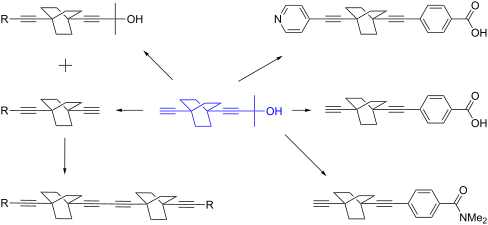
- potential in the development of molecular machines that can perform mechanical functions can now be systematically studied. Synthesis of the asymmetric rotor 1. Synthesis of dirotors 6 and 10. Synthesis of the tertiary amide 12. Synthesis of the extended alkaloid ligand 14. Supporting Information




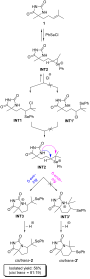
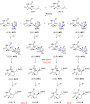
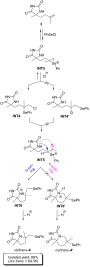
Mechanism, kinetics and selectivity of selenocyclization of 5-alkenylhydantoins: an experimental and computational study
Beilstein J. Org. Chem. 2015, 11, 1865–1875, doi:10.3762/bjoc.11.200
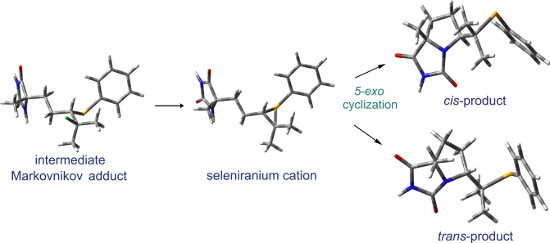
- used. Full geometry optimizations, without any symmetry constraints, and frequency calculations were performed for all species in acetonitrile as solvent (dielectric constant = 35.688) using the SMD solvation model [44]. SMD is a continuum solvation model based on the quantum mechanical charge density





Thermal properties of ruthenium alkylidene-polymerized dicyclopentadiene
Beilstein J. Org. Chem. 2015, 11, 1469–1474, doi:10.3762/bjoc.11.159
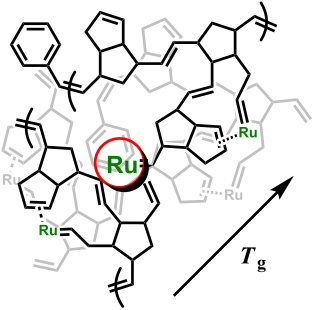
- initiators where only cross-linked polymers are obtained. This polyolefinic cross-linked thermoset material exhibits outstanding thermal stability [22], mechanical strength [23], fracture toughness [24] and dielectric characteristics [25]. Thanks to these properties PDCPD has become a very attractive polymer


Multivalency as a chemical organization and action principle
Beilstein J. Org. Chem. 2015, 11, 848–849, doi:10.3762/bjoc.11.94
- supramolecular designer systems [4][5]. The influence of spacer length and flexibility on the binding affinity of ligands [6] will be examined as well as the mechanical stability of complexes [7]. Furthermore, the Thematic Series covers the synthesis of various new glycoarchitectures for multivalent interactions




