


Search results
Search for "microwave irradiation" in Full Text gives 252 result(s) in Beilstein Journal of Organic Chemistry. Showing first 200.
The facile construction of the phthalazin-1(2H)-one scaffold via copper-mediated C–H(sp2)/C–H(sp) coupling under mild conditions
Beilstein J. Org. Chem. 2015, 11, 1624–1631, doi:10.3762/bjoc.11.177
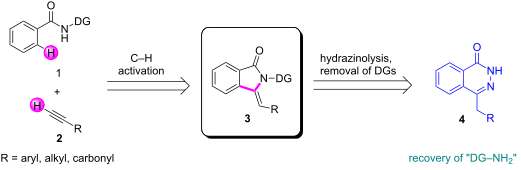
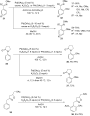
- quinolin-8-amine was easily removed and recycled by treatment of 3a with hydrazine hydrate and NaOH in EtOH at 120 °C under microwave irradiation (Scheme 4). Both electron-rich and electron-deficient 4-benzylphthalazin-1(2H)-one derivatives were obtained in good yields (4b, 4k). The halo-substituted phenyl
- mmol) and 2 mL EtOH. The resulting mixture was stirred at 120 °C for 1 h under microwave irradiation. The solution was diluted with dichloromethane (30 mL) and washed with 1 M HCl (20 mL, three times). The combined organic layer was washed with NaHCO3 aqueous solution (15 mL) and brine (15 mL). The




Cross-metathesis reaction of α- and β-vinyl C-glycosides with alkenes
Beilstein J. Org. Chem. 2015, 11, 1392–1397, doi:10.3762/bjoc.11.150

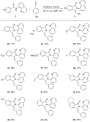
- irradiation [26][28][29][30] gave rise to α-4a in 33% isolated yield (Table 1, entry 4). A similar result (36% yield) was obtained with a 1:1 octafluorotoluene/ClCH2CH2Cl mixture (Table 1, entry 5). Although microwave irradiation had a positive effect on the cross-metathesis reaction, see examples above
- , carrying out the reaction in a mixture of 1:1 octafluorotoluene/ClCH2CH2Cl under irradiation provided α-4a in only 3% (Table 1, entry 6). Finally, carrying out the reaction in pure ClCH2CH2Cl under reflux furnished the product in a nice 70% isolated yield (Table 1, entry 7), while microwave irradiation
- resulted in decreased yield of 58% (Table 1, entry 8). According to the obtained data in some cases microwave irradiation had a positive effect on the course of the reaction (Table 1, entry 4), whereas as in some cases it had a detrimental effect (Table 1, entries 6 and 8). Currently we do not know how to


A new and efficient procedure for the synthesis of hexahydropyrimidine-fused 1,4-naphthoquinones
Beilstein J. Org. Chem. 2015, 11, 1235–1240, doi:10.3762/bjoc.11.137
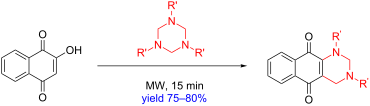
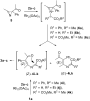
- method for the synthesis of hexahydropyrimidine-fused 1,4-naphthoquinones (13 and 21–25) in high yields, from the sequential reaction of readily available 1,3,5-triazinanes 14–19 with 2-hydroxy-1,4-naphthoquinone (20, or lawsone) under microwave irradiation (Scheme 2). The 1,3,5-triazinanes have several
- equivalents of alkyl- or aryl-formimines in situ. The latter compounds may serve as electrophilic agents for aminoalkylation reactions. Our research group also investigated the aminoalkylation of 2-amino-1,4-naphthoquinone with formaldehyde under microwave irradiation to produce two series of N,O-acetals and
- were observed. By elevating the temperature and or changing the solvent some product is formed but the yields were very low. On the other hand, when the reactions were conducted in an equimolar ratio under microwave irradiation (300 Monowave model brand Aanton Paar) in chloroform for 15 minutes at a


New palladium–oxazoline complexes: Synthesis and evaluation of the optical properties and the catalytic power during the oxidation of textile dyes
Beilstein J. Org. Chem. 2015, 11, 1175–1186, doi:10.3762/bjoc.11.132
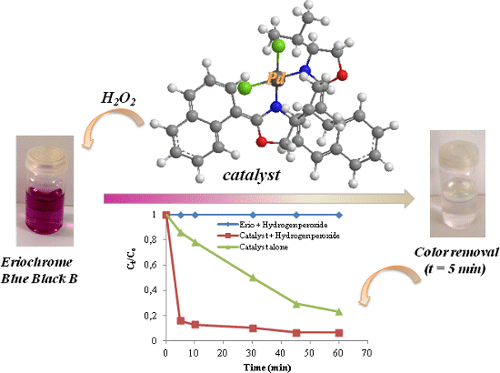
- amino acids). (S)-4-Isopropyl-2-(naphthalen-1-yl)oxazoline (2) was isolated in a moderate yield from the condensation of the L-valinol with naphthonitrile under microwave irradiation, while the second ligand 1,2-bis[(S)-4-phenyloxazoline]benzene (7) was synthesized from L-(α)-(+)-phenylglycinol under


Matsuda–Heck reaction with arenediazonium tosylates in water
Beilstein J. Org. Chem. 2015, 11, 358–362, doi:10.3762/bjoc.11.41
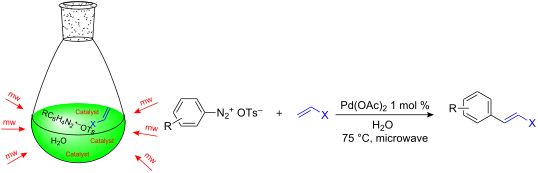
- ]. In this work, we present a fast, environmentally friendly, low palladium loading method of the Matsuda–Heck arylation of the different alkenes with ADT in water under microwave irradiation. Results and Discussion Our preliminary study was dedicated to the optimization of the alkene arylation
- increase of the reaction temperature to 75 °C (Table 1, entry 2) which gave the desired compound in comparable yield in 20 min. It is well-known that microwave irradiation can significantly reduce the reaction time for a wide range of transformations, including Heck reactions, when compared with standard
- heating [13]. Thus, the aim of our next experiment was the reduction of the reaction time by using microwave irradiation (Table 1, entry 3). By means of this protocol 3aa was obtained with an almost quantitative yield with a reaction time of only 1 min. Carrying out the reaction with 1 mol % of Pd(OAc)2


Cross-dehydrogenative coupling for the intermolecular C–O bond formation
Beilstein J. Org. Chem. 2015, 11, 92–146, doi:10.3762/bjoc.11.13
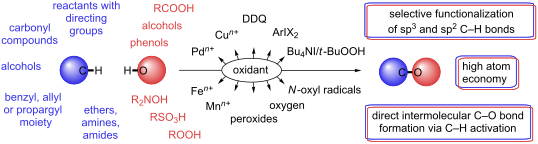
- synthesized also from aromatic aldehydes, α,β-unsaturated aldehydes, or allylic alcohols in the presence of the DDQ (2,3-dichloro-5,6-dicyanobenzoquinone)/amberlyst-15 system in a methanol/toluene mixture under microwave irradiation [171]. Methyl, ethyl, and isopropyl benzoates were prepared from benzaldehyde






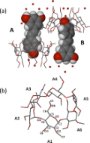
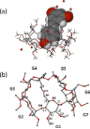
Inclusion of trans-resveratrol in methylated cyclodextrins: synthesis and solid-state structures
Beilstein J. Org. Chem. 2014, 10, 3136–3151, doi:10.3762/bjoc.10.331
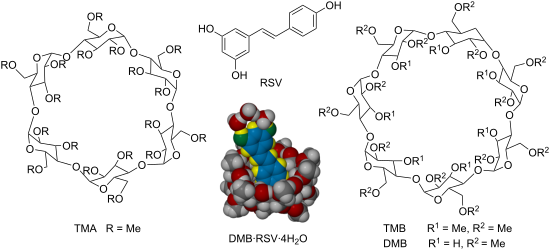
- , prepared by either the suspension method or using microwave irradiation, yielded highly amorphous products, evident from their PXRD traces [9]; in this case, the absence of characteristic peaks for RSV and the reduction in the degree of crystallinity of the product were considered as indirect proof of
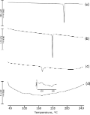
- , although cellulose acetate was not tested in the present study. Conclusion A variety of methods (physical mixing, kneading, microwave irradiation) of effecting interaction between RSV and three CD hosts (TMA, DMB and TMB) was tested and a combination of thermal analysis and FTIR spectroscopy subsequently
- irradiation products (MP) were prepared by dissolving each PM in the minimum amount of ethanol/water 4:1 (v/v) to obtain a clear solution in a glass container, followed by microwave irradiation at 425 W (Pabish CM-Aquatronic) for a time sufficient to remove the solvent. The dried residue was gently ground in







Synthesis of divalent ligands of β-thio- and β-N-galactopyranosides and related lactosides and their evaluation as substrates and inhibitors of Trypanosoma cruzi trans-sialidase
Beilstein J. Org. Chem. 2014, 10, 3073–3086, doi:10.3762/bjoc.10.324
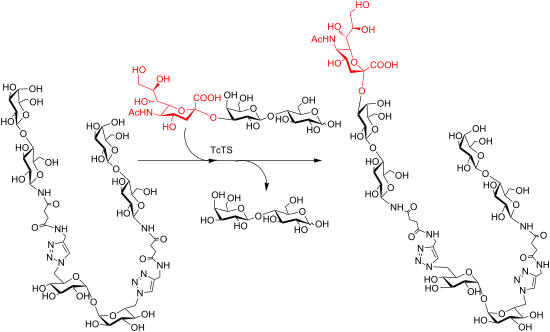
- , or S-linked lactoside 8 (0.20 mmol per mol of reacting azide) were dissolved in 2.5 mL of a dioxane/H2O mixture (8:2). Copper sulfate (0.05 mmol per mol of reacting azide) and sodium ascorbate (0.10 mmol per mol of azide reacting group) were added, and the mixture was stirred at 70 °C under microwave
- irradiation during 50 min. The mixture was then poured into a 1:1 H2O/NH4Cl solution (20 mL) and extracted with EtOAc (4 × 15 mL). The organic layer was dried (Na2SO4), filtered, and the solvent was removed under reduced pressure. The residue was purified by flash chromatography, using the solvent system


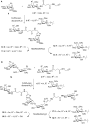

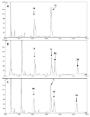

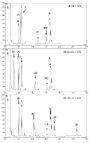
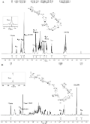
The unexpected influence of aryl substituents in N-aryl-3-oxobutanamides on the behavior of their multicomponent reactions with 5-amino-3-methylisoxazole and salicylaldehyde
Beilstein J. Org. Chem. 2014, 10, 3019–3030, doi:10.3762/bjoc.10.320
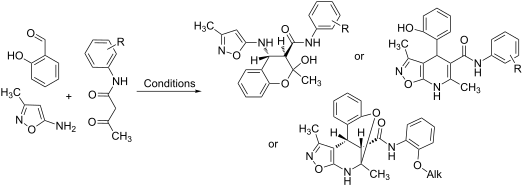
- under microwave irradiation the substituted oxygen-bridged triazolo[1,5-c][1,3,5]benzoxadiazocine was formed (Scheme 2). Interesting results were also described by Světlik and Kettmann [19]. In the case of a three-component interaction of aminoazole, salicylaldehyde, and methyl acetoacetate in refluxing
- and microwave heating did not produce any positive results. Thus, refluxing of the reactants in water, ethanol, dioxane, or application of microwave irradiation at temperatures up to 140 °C only gave rise to the formation of imine 8 (Scheme 3). The reaction time in these cases reached 3 h. On the
- other hand, refluxing in high boiling solvents (n-butanol, DMF, DMSO), as well as microwave irradiation at temperatures above 140 °C, resulted in resinification of the reaction mixture. The reaction times were varied from a minute (for microwave irradiation) to 40 min (for conventional heating). Inter


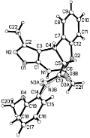
Come-back of phenanthridine and phenanthridinium derivatives in the 21st century
Beilstein J. Org. Chem. 2014, 10, 2930–2954, doi:10.3762/bjoc.10.312



Facile synthesis of 1H-imidazo[1,2-b]pyrazoles via a sequential one-pot synthetic approach
Beilstein J. Org. Chem. 2014, 10, 2338–2344, doi:10.3762/bjoc.10.243
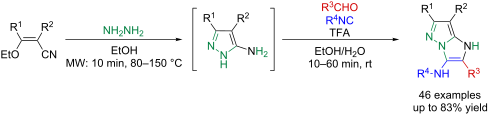
- microwave irradiation (80 °C, 150 W, 10 min, EtOH) proceeded with complete conversion (Scheme 3). It should be mentioned that the presence of water in this step resulted in a complex reaction mixture, moreover, the role of the reagent addition sequence was found to be crucial. The GBB reaction proceeded


Expeditive synthesis of trithiotriazine-cored glycoclusters and inhibition of Pseudomonas aeruginosa biofilm formation
Beilstein J. Org. Chem. 2014, 10, 1981–1990, doi:10.3762/bjoc.10.206
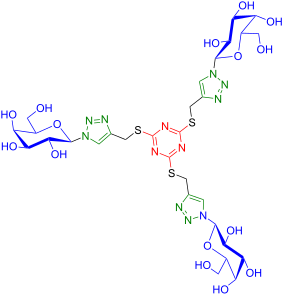
- (propargylthio)triazine 2, using CuI and diisopropylethylamine (DIPEA) in DMF under microwave irradiation at 110 °C for 15 min. It provided the peracetylated D-galactopyanosyl cluster 9 in 73% yield. The peracetyl D-glucopyranosyl cluster 10 was similarly obtained in 92% yield. The deacetylation of the
- equivalent of tris(propargylthio)triazine 2 in DMF, catalyzed by CuI and DIPEA under microwave irradiation. The incorporation of three carbohydrate residues was established unambiguously by ESIMS, 1H NMR, 13C NMR, and HMBC analysis, in particular based on the symmetry of the molecule, and on the lack of
- synthesizing mixed glycoclusters. Reducing the number of equivalents of glycosyl azide 7 to 2 equiv in the presence of CuI and DIPEA in DMF at 110 °C under microwave irradiation provided a statistical mixture with the bivalent cluster as the major product. The bis-D-galactosyl cluster 16 was thus isolated in


Isoxazolium N-ylides and 1-oxa-5-azahexa-1,3,5-trienes on the way from isoxazoles to 2H-1,3-oxazines
Beilstein J. Org. Chem. 2014, 10, 1896–1905, doi:10.3762/bjoc.10.197
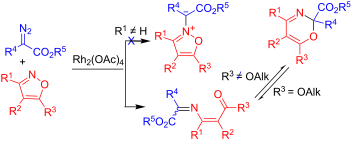
- a means to overcome the low solubility of arylisoxazoles. The formation of an oxazine occurred only with phenyl diazoacetate 2a under these conditions. To overcome the inactivity of diazo compounds 2b,c the use of higher temperature and microwave irradiation were investigated, but only traces of


Synthesis of trifluoromethyl-substituted pyrazolo[4,3-c]pyridines – sequential versus multicomponent reaction approach
Beilstein J. Org. Chem. 2014, 10, 1759–1764, doi:10.3762/bjoc.10.183

- microwave irradiation (Scheme 1). Although a number of different reaction conditions were tested, we were not able to increase the yields in excess of 30%. Thus, with respect to the overall yields the successive approach 2→4→6→7 (overall yields: 6a: 62%, 6b: 43%) here is still advantageous compared to the


Multicomponent reactions in nucleoside chemistry
Beilstein J. Org. Chem. 2014, 10, 1706–1732, doi:10.3762/bjoc.10.179
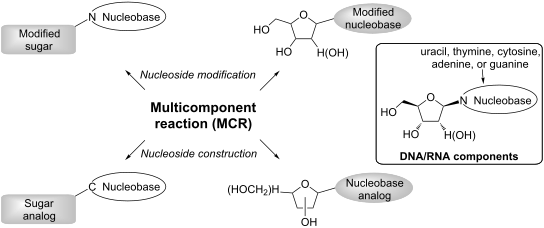
- nucleoside analog was also prepared by this method. Very recently, Figueiredo et al. synthesized C-nucleosides 83 with the C-4 substituted 3,4-dihydropyrimidin-2(1H)-thione as a nucleobase (Scheme 31) [104]. The products were obtained as the C-4-(R) single diastereoisomers. The use of microwave irradiation
- -chlorobenzoic acid), followed by cyclization of the resulting diamide intermediate. After completion of the irradiation, products 110 were extracted with dichloromethane from the clay and crystallized from ethanol. The Montmorillonite K-10 clay–microwave irradiation reaction system was also used by Yadav and
- target compounds 113 and 114 were assembled from the three-component mixture of D-ribose, a derivative of salicylic aldehyde, and thiosemicarbazide under Lewis acid-catalysis and microwave irradiation. In comparison with analogous reactions carried out with mineral support (i.e., Montmorillonite K-10


Clicked and long spaced galactosyl- and lactosylcalix[4]arenes: new multivalent galectin-3 ligands
Beilstein J. Org. Chem. 2014, 10, 1672–1680, doi:10.3762/bjoc.10.175
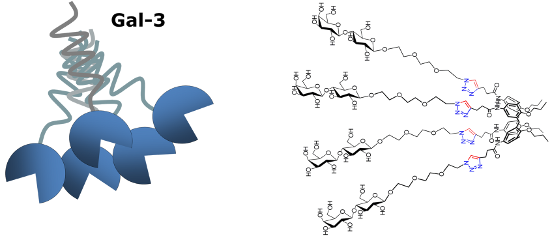
- and pyridine 7:3 as previously described for compound 8. The CuAAC “click” reaction was carried out as previously described for the galacto-clusters 9 and 13 and afforded the cone calix[4]arene 16 (Scheme 3) and 1,3-alternate calix[4]arene 19 (Scheme 4) in 46% isolated yield. Microwave irradiation


Multichromophoric sugar for fluorescence photoswitching
Beilstein J. Org. Chem. 2014, 10, 1471–1481, doi:10.3762/bjoc.10.151
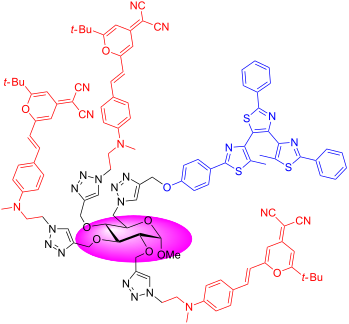
- -glucopyranoside 6 To a solution of 4 (1.01 g, 1.83 mmol) in distilled DMF (15 mL), were added the azido-DCM 5 (2.23 g, 5.57 mmol), CuSO4 (110.9 mg, 0.44 mmol) and Na ascorbate (188 mg, 0.95 mmol). The reaction mixture was stirred at 70 °C during 5 min then at 130 °C during 30 to 45 min under microwave irradiation
- stirred at 110 °C during 15 min under microwave irradiation (700 rpm, monitoring by TLC). After cooling to room temperature, the reaction mixture was poured into 20 to 25 mL of distilled water. The precipitate was then filtred through cellulose acetate filter (porosity 2 µm) under vacuum and washed with
- (62.0 mg, 0.111 mmol), CuSO4 (2.5 mg, 0.010 mmol) and Na ascorbate (6.8 mg, 0.034 mmol). The reaction mixture was stirred at 70 °C during 5 min then at 130 °C during 30 to 45 min under microwave irradiation (700 rpm, monitoring by TLC), and poured into distilled water after cooling to room temperature




Microwave-assisted Cu(I)-catalyzed, three-component synthesis of 2-(4-((1-phenyl-1H-1,2,3-triazol-4-yl)methoxy)phenyl)-1H-benzo[d]imidazoles
Beilstein J. Org. Chem. 2014, 10, 1413–1420, doi:10.3762/bjoc.10.145

- microwave irradiation resulted in the obtainment of the desired product in excellent yields of 91% and 95% in 12 h and 15 min, respectively. However, when the manufactured 4-((1-phenyl-1H-1,2,3-triazol-4-yl)methoxy)benzaldehyde was treated with 1,2-diaminobenzene, the desired product was obtained in an
- inferior yield of 59% and 42% under conventional heating and microwave irradiation in 50 and 20 min, respectively (path A). On the other hand, when 4-(prop-2-yn-1-yloxy)benzaldehyde (2a) was first treated with 1,2-diaminobenzene in the presence of copper sulfate and D-glucose in a THF/H2O (2:1) mixture
- under conventional heating as well as microwave irradiation, the desired product was obtained in a better yield (70%) under conventional heating compared to microwave irradiation (54% yield). The compound was subsequently coupled with phenylazide (1a), which afforded the desired product in 67% and 78


Synthesis of the first examples of iminosugar clusters based on cyclopeptoid cores
Beilstein J. Org. Chem. 2014, 10, 1406–1412, doi:10.3762/bjoc.10.144
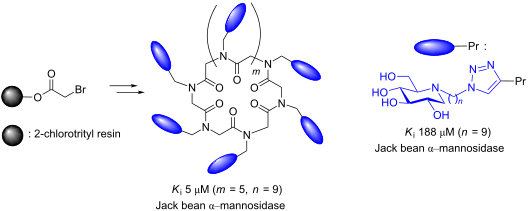
- 0.2 mL). The mixture was stirred and heated under microwave irradiation for 3 h at 80 °C. The mixture was concentrated, diluted in a 9:1:1 (v/v/v) mixture of MeCN/water/30 wt %-NH4OH and filtrated with the same eluent (25 mL) on a small pad of SiO2 (typically 1 cm thick), whose top surface became blue




Asymmetric Ugi 3CR on isatin-derived ketimine: synthesis of chiral 3,3-disubstituted 3-aminooxindole derivatives
Beilstein J. Org. Chem. 2014, 10, 1383–1389, doi:10.3762/bjoc.10.141
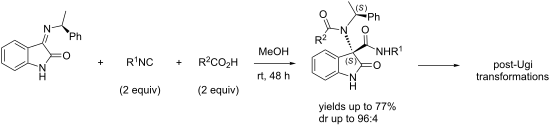
- reaction temperature (Table 1, entry 10) facilitated a slightly shorter reaction time. Based on this result, we decided to investigate the use of microwave irradiation, with the aim of further increasing the speed of the reaction. Running the reaction in methanol under microwave irradiation (300 W) at 65


Design and synthesis of multivalent neoglycoconjugates by click conjugations
Beilstein J. Org. Chem. 2014, 10, 1325–1332, doi:10.3762/bjoc.10.134
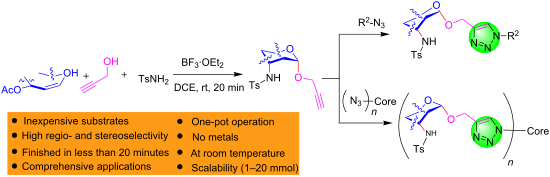
- the key reaction step. The copper-catalyzed regioselective click reaction was tremendously accelerated with assistance of microwave irradiation. Keywords: click conjugations; copper-catalyzed; microwave irradiation; multivalent glycosystems; neoglycoconjugates; one-pot; Introduction Oligosaccharides
- accelerated dramatically when microwave irradiation was used under 70 °C. To our delight under microwave conditions and in DMF with addition of 1 mol % of CuSO4·5H2O and 10 mol % of sodium ascorbate, a quantative yield of desired 3-tosylamino-2,3-dideoxyneoglycoconjugate 4a was obtained in 15 min (Table 1
- conjugations to microwave irradiation. All the reactions were completed in considerably shorter reaction times of less than 30 min for the Huisgen cycloaddition of alkenes and azides catalyzed by copper sulfate and sodium ascorbate, affording the corresponding products in good to excellent yields in each case


Automated solid-phase peptide synthesis to obtain therapeutic peptides
Beilstein J. Org. Chem. 2014, 10, 1197–1212, doi:10.3762/bjoc.10.118
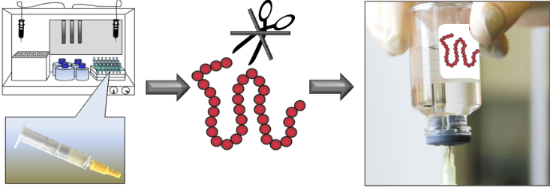
- evolved [71]. In 1992, Yu and coworkers reported for the first time that microwave irradiation in combination with SPPS leads to enhanced reaction rates and hence, to a higher quality of the crude peptides [72]. Microwave energy is capable of activating any molecule containing a dipole moment, which is


4-Hydroxy-6-alkyl-2-pyrones as nucleophilic coupling partners in Mitsunobu reactions and oxa-Michael additions
Beilstein J. Org. Chem. 2014, 10, 1159–1165, doi:10.3762/bjoc.10.116

- product 7a (Table 2, entry 1). However, raising the temperature of the reaction and increasing the reaction time led to a significant increase in the conversion to product and an isolated yield of 82% (Table 2, entry 3). Further heating under pressure with microwave irradiation led to a decrease in yield
- -solvent as the solubility of the 3a was found to be greatest at 0.66 equivalents) in THF under microwave irradiation (Scheme 3), and afforded the desired product in moderate yield after just 0.5 h (longer reaction times led to degradation of the product). Extension of the chain to an ethyl group (i.e


Preparation of phosphines through C–P bond formation
Beilstein J. Org. Chem. 2014, 10, 1064–1096, doi:10.3762/bjoc.10.106
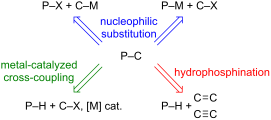
- performed with a palladium catalyst in the presence of a weak base. Sometimes microwave irradiation was used to shorten the reaction time. Gilbertson et al. have converted a series of vinyl triflates 80b into the corresponding vinyl phosphine boranes 81b through palladium catalysis with HPPh2 (Table 9) [160


Consecutive isocyanide-based multicomponent reactions: synthesis of cyclic pentadepsipeptoids
Beilstein J. Org. Chem. 2014, 10, 1017–1022, doi:10.3762/bjoc.10.101
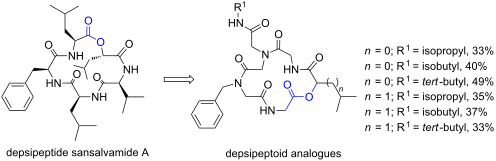
- the Ugi four-component reaction (U-4CR) [8][9][10][11][12][13][14]. It has been demonstrated that the combination of multicomponent reactions with the use of microwave irradiation is able to efficiently produce complex molecules with a reduced number of steps and short reaction times [15][16][17][18
- significantly reduced number of steps in short reaction times, and high yields in most of the steps. The strategic combination of two isocyanide-based multicomponent reactions and microwave irradiation makes this a very useful and attractive protocol. The obtained depsipeptoids will be tested for different





