


Search results
Search for "quantum yield" in Full Text gives 208 result(s) in Beilstein Journal of Organic Chemistry. Showing first 200.
Synthesis and photophysical properties of novel benzophospholo[3,2-b]indole derivatives
Beilstein J. Org. Chem. 2017, 13, 2304–2309, doi:10.3762/bjoc.13.226
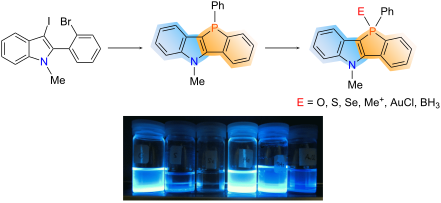
- , parent phosphole 3 showed narrow absorption peaks at 320, 343, and 357 nm. Additionally, these compounds exhibited very little solvent dependence (see Supporting Information File 1, Figure S2). Phosphine oxide 4 exhibited blue fluorescence with the maximum emission (λem) at 450 nm. The quantum yield (Ф
- fluorescence properties with respect to the intensity. Complex 9 exhibited a high quantum yield (Ф = 75%), while complex 8 exhibited a weak emission (Ф = 11%). In these fluorescence spectra of compounds 4–7, a vibronic band was detected as a shoulder peak around 530 nm. In the case of phosphonium cation 7, the


Synthesis and application of trifluoroethoxy-substituted phthalocyanines and subphthalocyanines
Beilstein J. Org. Chem. 2017, 13, 2273–2296, doi:10.3762/bjoc.13.224
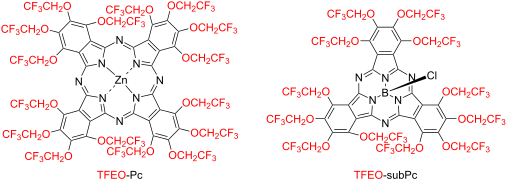
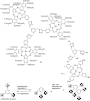
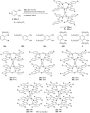
- laser only to the target tumor cells. The features of ideal PDT agents include, among others: i) strong absorption in the red wavelength region; ii) non-aggregation property; iii) high biocompatibility; iv) good selectivity to cancer cells; v) high quantum yield of singlet oxygen [96]. Since the PDT
- and H-subPc heterodimer. Since the UV–vis spectra of a heterodimer are the sum of the absorption spectra of the respective units, it is suggested that each unit has an independent π-conjugate system. On the other hand, the fluorescence quantum yield decreased as a whole and the fluorescence derived








BODIPY-based fluorescent liposomes with sesquiterpene lactone trilobolide
Beilstein J. Org. Chem. 2017, 13, 1316–1324, doi:10.3762/bjoc.13.128
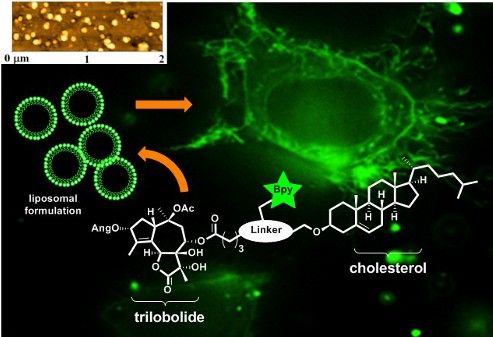
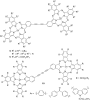
- experienced increased attention in chemistry [6][7][8][9][10] and life science applications [11][12][13]. On the grounds of high fluorescence quantum yield, narrow spectral characteristics, and sufficient chemical stability, BODIPYs have been utilized for example as laser dyes, tags of small organic molecules




Energy down converting organic fluorophore functionalized mesoporous silica hybrids for monolith-coated light emitting diodes
Beilstein J. Org. Chem. 2017, 13, 768–778, doi:10.3762/bjoc.13.76
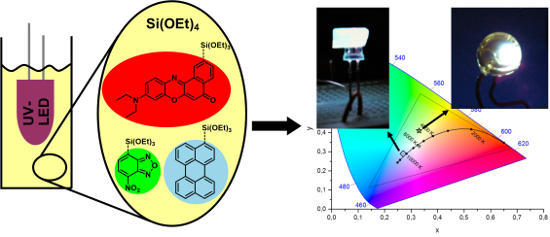
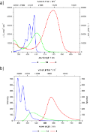
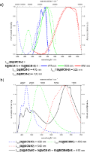
- quantum yield of 4.6% upon irradiation at 410 nm. Furthermore, as a proof of concept two different device setups of commercially available UV light emitting diodes, are coated with silica monoliths containing the three triethoxysilylpropyl-substituted fluorophore derivatives. These coatings are able to
- synthesized materials with the corresponding dye loading and solid state quantum yields are summarized in Table 1. Especially for the Nile red-functionalized hybrid materials the highest quantum yield of 23% was obtained at a low dye loading of 1.5 μmol·g−1 (8@MCM-2). A further increase of Nile red loading
- molecules to the silica matrix, intermolecular energy transfer causing losses in quantum yield can be expected at higher dye loadings. Likewise, for the perylene and benzofurazane-functionalized hybrid materials 9@MCM-3 and 10@MCM-6 similar dye loadings in the lower μmol·g−1 range were ascertained for








Novel β-cyclodextrin–eosin conjugates
Beilstein J. Org. Chem. 2017, 13, 543–551, doi:10.3762/bjoc.13.52
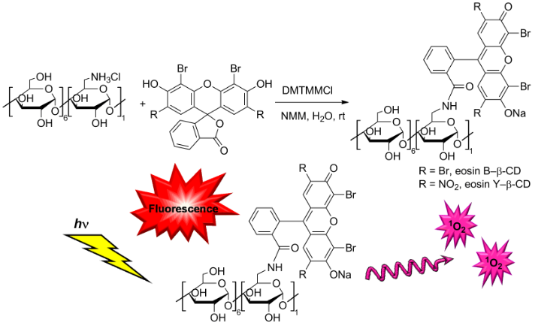
- the visible region of the conjugate is similar to that of the free dye, ruling out any relevant aggregation phenomena. This hypothesis was well confirmed by the fluorescence emission spectrum, which exhibits an intense band maximum at 550 nm. The fluorescence quantum yield was Φf = 0.20, which is very
- window [30]. As shown in Figure 8, excitation of the conjugate 2–β-CD with visible green light generates the characteristic luminescence signals with a maximum at ca. 1270 nm analogously to what observed for free dye 2. We obtained a 1O2 quantum yield ΦΔ = 0.47, that is very similar to that of the free



Interactions between photoacidic 3-hydroxynaphtho[1,2-b]quinolizinium and cucurbit[7]uril: Influence on acidity in the ground and excited state
Beilstein J. Org. Chem. 2017, 13, 203–212, doi:10.3762/bjoc.13.23
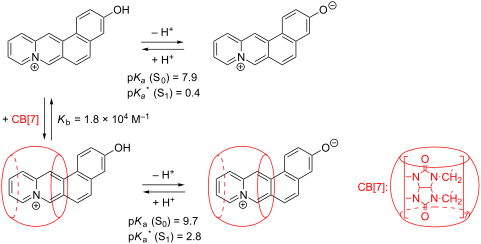
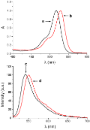
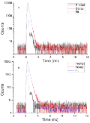
- intensity of naphthoquinolizinium 2 is weak in water, MeOH, EtOH or acetone (Φfl ≤ 0.02), whereas the emission quantum yield in acetonitrile is significantly higher (Φfl = 0.34). The positions of the emission maxima do not change largely with the solvent and lie between 450 nm (EtOH) and 459 nm (MeOH). Most


A postsynthetically 2’-“clickable” uridine with arabino configuration and its application for fluorescent labeling and imaging of DNA
Beilstein J. Org. Chem. 2017, 13, 127–137, doi:10.3762/bjoc.13.16
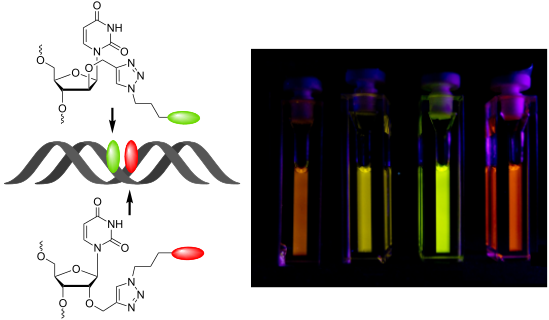
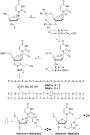
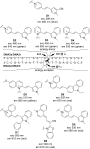
- array of doubly modified DNA duplexes was screened by their emission color contrast C = IAc/IDo (fluorescence intensity near maximum of acceptor divided by fluorescence intensity near maximum of donor) and for the fluorescence quantum yield ΦF in the range of the acceptor emission (Table 2). The
- few excemptions; especially the combination DNA2aD4–DNA3aD8 yields a red-to-green contrast of 83 compared to 45 in case of the ribo-configured DNA2rD4–DNA3rD8. Additionally, the fluorescence quantum yield was improved from 39% to 53%. The dye combination D2/D8 nicely demonstrates the effect of the
- combination DNA2aD1–DNA3rD5 revealed a yellow-to-blue contrast of 198 and a quantum yield of 61%. For the blue–red emitting dye combinations the highest red-to-blue contrast of 215 and the highest quantum yield of 71% is achieved in DNA2rD1–DNA3aD8. Finally, among the broadest array of green–red fluorophore




Benzothiadiazole oligoene fatty acids: fluorescent dyes with large Stokes shifts
Beilstein J. Org. Chem. 2016, 12, 2739–2747, doi:10.3762/bjoc.12.270
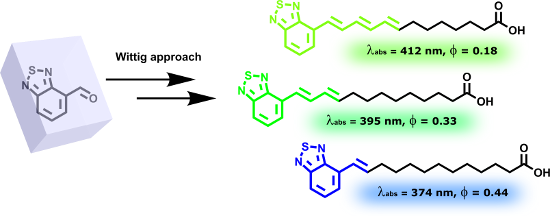
- fluorescence quantum yields are known to be quite modest. For comparison, a prototypical pentaene motif exhibits a fluorescence quantum yield of 0.06 in EtOH [23]. Our fatty acids 11c and 11d, however, which can be regarded as terminally substituted pentaene derivatives, can still reach values of 0.18 in THF


Synthesis and properties of fluorescent 4′-azulenyl-functionalized 2,2′:6′,2″-terpyridines
Beilstein J. Org. Chem. 2016, 12, 1812–1825, doi:10.3762/bjoc.12.171
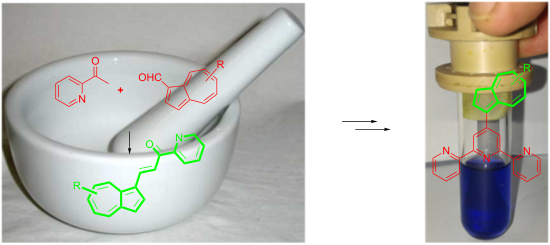
- Abstract 4′-Azulenyl-substituted terpyridines were efficiently synthesized following the Kröhnke methodology via azulenylchalcone intermediates. These azulenyl-containing terpyridines showed fluorescent emission with a fluorescence quantum yield varying from 0.14, in the case of parent terpyridine, to 0.64
- , comparably few fluorescent 4′-functionalized 2,2′:6′,2″-terpyridine derivatives have been reported [8]. It has been established that 2,2′:6′,2″-terpyridine has low quantum yield fluorescence [9] and significant emission can be achieved after specific modifications of the terpyridine core motif, especially by
- fluorescence emission (0.14), the methyl substitution markedly improved the quantum yield to 0.64 (Table 3). Because the recording of the fluorescence spectra was performed under the same conditions for both compounds, the changes in the emission efficiency can be explained by the presence of a different


Organic chemistry meets polymers, nanoscience, therapeutics and diagnostics
Beilstein J. Org. Chem. 2016, 12, 1638–1646, doi:10.3762/bjoc.12.161
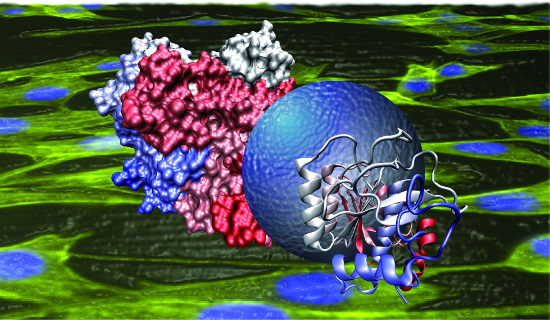
- had two limitations. The second issue we had was lack of choices in emission color – blue and green are easy, yellow is challenging, and getting a red conjugated polymer with a respectable quantum yield is nigh impossible. We had an idea, however, that we could use multi-channel sensing to increase




Application of Cu(I)-catalyzed azide–alkyne cycloaddition for the design and synthesis of sequence specific probes targeting double-stranded DNA
Beilstein J. Org. Chem. 2016, 12, 1348–1360, doi:10.3762/bjoc.12.128
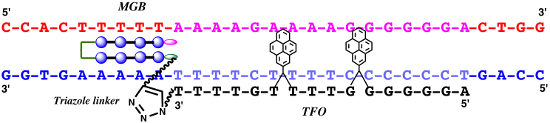
- absorption spectra in the interval 300–700 nm do not change upon DNA titration (data not shown), which means that increase in fluorescence emission is due to the increase of the quantum yield of fluorescence. Studies of interaction of the probes with fixed and live mouse cells are under investigation in the


Synthesis, fluorescence properties and the promising cytotoxicity of pyrene–derived aminophosphonates
Beilstein J. Org. Chem. 2016, 12, 1229–1235, doi:10.3762/bjoc.12.117
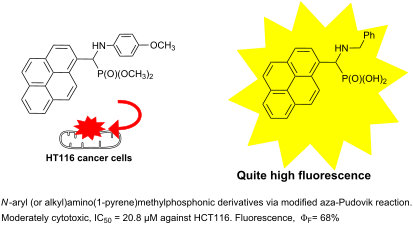
- ratio of intensities of III/I vibronic bands on the medium polarity) [26]. The highest emission quantum yield (0.68) was found for aminophosphonic acid 4a in aqueous buffer (pH 7.4). A similar phenomenon of higher emission efficiency of 1-(pyrene-1-carboxamido)methylphosphonic acid in comparison to a
- corresponding aminophosphonate was earlier reported [29]. The aforementioned data suggest possible application of compound 3Aj (and other exhibiting similar emission quantum yield) as molecular probes monitoring micropolarity of the fluorophore environment. On the other hand, water-soluble 4a might be used for
- fluorescence properties of the obtained compounds were investigated and N-benzylamino(pyren-1-yl)methylphosphonic acid showed a quantum yield of 68%, while dimethyl tert-butylamino(pyren-1-yl)methylphosphonate (3Aj) gave 11% quantum yield. The influence of a series of derivatives on two colon cancer cell lines


Biradical vs singlet oxygen photogeneration in suprofen–cholesterol systems
Beilstein J. Org. Chem. 2016, 12, 1196–1202, doi:10.3762/bjoc.12.115
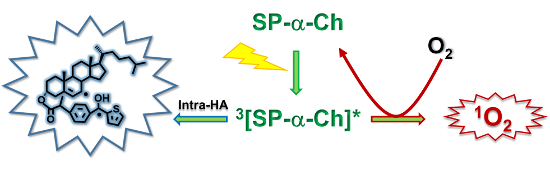
- and the cell. The photodiode output current was amplified and fed into a TDS-640A Tektronix oscilloscope via a Co-linear 150 MHz, 20 dB amplifier. The output signal from the oscilloscope was transferred to a personal computer for study. Thus, the singlet oxygen quantum yield (ΦΔ) of the dyads was
- determined in dichloromethane solutions using the same absorbance value (0.30) at 308 nm for each compound. A singlet oxygen quantum yield (ΦΔ) of 0.95 for perinaphthenone in dichloromethane was used as standard [22]. Chemical structure of the photosensitizing chromophores benzophenone (BZP) and 2
- luminescence at 1270 nm, using a germanium diode as detector. The singlet oxygen lifetime (Figure 7A) was found to be ca. 70 μs in all cases (in agreement with the1O2 lifetime reported in the literature [20] for the same solvent). The photosensitized singlet oxygen production was established with a quantum


Synthesis and fluorosolvatochromism of 3-arylnaphtho[1,2-b]quinolizinium derivatives
Beilstein J. Org. Chem. 2016, 12, 854–862, doi:10.3762/bjoc.12.84
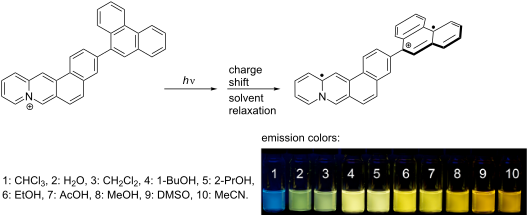
- ][7]. In this context, fluorosolvatochromic probes appear to be especially attractive as indicators for the surrounding medium, because emission spectroscopy is a highly sensitive method that allows to determine three different physical quantities, namely emission quantum yield, emission energy and


Indenopyrans – synthesis and photoluminescence properties
Beilstein J. Org. Chem. 2016, 12, 825–834, doi:10.3762/bjoc.12.81
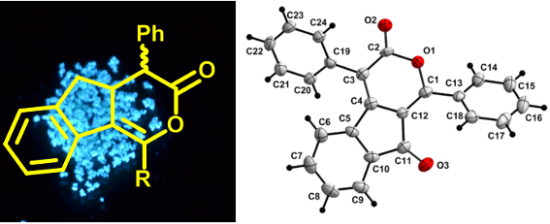
- revealed that all compounds are blue emitters. The calculated fluorescence quantum yield relative to 9,10-diphenylanthracene is significantly higher for the trans isomers when compared to the corresponding cis isomers. The solid-state fluorescence investigations revealed in the case of the regioisomers 2 a



Syntheses of dibenzo[d,d']benzo[2,1-b:3,4-b']difuran derivatives and their application to organic field-effect transistors
Beilstein J. Org. Chem. 2016, 12, 805–812, doi:10.3762/bjoc.12.79
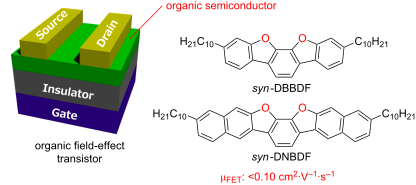
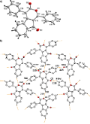
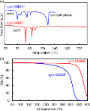
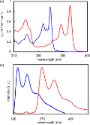
- quantum yield (Φ = 61% in CHCl3 solution). To investigate the structure–property relationship of DBBDFs and DNBDFs, the optical properties of syn-DBBDF 5 and syn-DNBDF 6 were compared with those of anti-DBBDF 3 and anti-DNBDF 4. The UV–vis spectra of anti-DBBDF 3 and anti-DNBDF 4 were reported to show




Interactions between 4-thiothymidine and water-soluble cyclodextrins: Evidence for supramolecular structures in aqueous solutions
Beilstein J. Org. Chem. 2016, 12, 549–563, doi:10.3762/bjoc.12.54
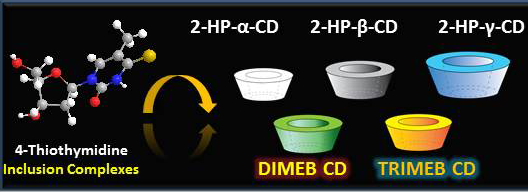
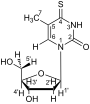
- several clinical diseases [12][21]. One of the most commonly used thiobase for PDT applications is S4TdR, whose triplet state is generated upon photoexcitation with a quantum yield of one [22][23][24][25][26]. Under these conditions the production of reactive oxygen species (ROS), well-known toxic agents



Friedel–Crafts-type reaction of pyrene with diethyl 1-(isothiocyanato)alkylphosphonates. Efficient synthesis of highly fluorescent diethyl 1-(pyrene-1-carboxamido)alkylphosphonates and 1-(pyrene-1-carboxamido)methylphosphonic acid
Beilstein J. Org. Chem. 2015, 11, 2451–2458, doi:10.3762/bjoc.11.266
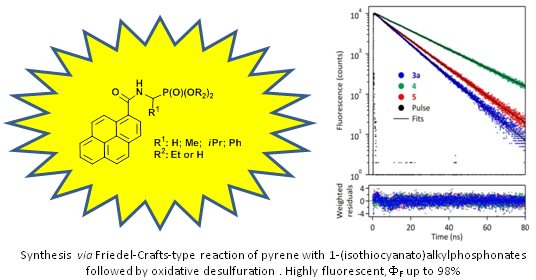
- approximately two-fold increase in solution fluorescence quantum yield in comparison with that of a model N-alkyl pyrene-1-carboxamide. This effect was tentatively explained by stiffening of the amidophosphonate lateral chain which was caused by the interaction (intramolecular hydrogen bond) of phosphonate and
- species. Table 2 shows that 3a displays a slightly shorter excited state lifetime (10.6 ns) than its alkyl analogue 5 (12.3 ns). The higher emission quantum yield of 3a results from a ≈2.3 times higher value of kr and a concomitant ca. 1.8 times lower value of knr. Notably, compound 4 displays a kr value




2-Hetaryl-1,3-tropolones based on five-membered nitrogen heterocycles: synthesis, structure and properties
Beilstein J. Org. Chem. 2015, 11, 2179–2188, doi:10.3762/bjoc.11.236
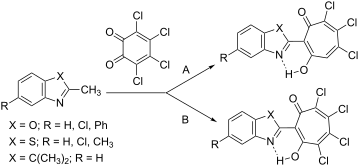
- solution at 293 K. Ф – Quantum yield of the fluorescence. Supporting Information Supporting Information File 519: Experimental section, crystallographic data for compounds 5g, 6e, 11b, 13; optimized geometries of the intermediates and transition states involved in the routes of the formation of 1,3


![[Graphic 3]](/bjoc/content/inline/1860-5397-11-236-i8.png?max-width=637&scale=1.18182) N···H–O equilibrium in solutions of 2-hetaryl-5,6,7-trichloro- and 4,...
N···H–O equilibrium in solutions of 2-hetaryl-5,6,7-trichloro- and 4,...


Effective ascorbate-free and photolatent click reactions in water using a photoreducible copper(II)-ethylenediamine precatalyst
Beilstein J. Org. Chem. 2015, 11, 1950–1959, doi:10.3762/bjoc.11.211
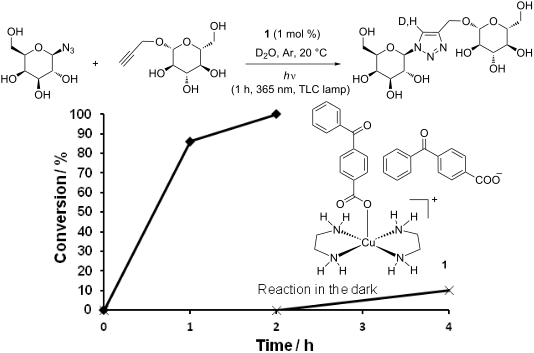
- shown by UV–vis spectroscopy (Figure 2). This rate is comparable to that observed previously with the analogous complex 2, for which a photoreduction quantum yield close to unity has been determined in THF [14]. Because of such a high efficiency, the photoreduction proceeded well under direct sunlight


Design, synthesis and photochemical properties of the first examples of iminosugar clusters based on fluorescent cores
Beilstein J. Org. Chem. 2015, 11, 659–667, doi:10.3762/bjoc.11.74
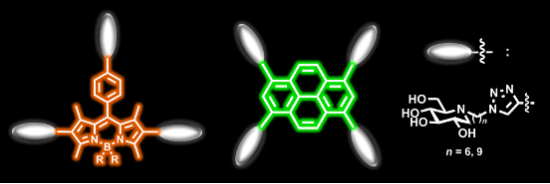
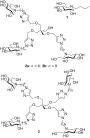
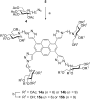
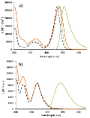
- influence of both triazole rings. The second transition at 386 nm is assigned in light of previous studies to the S0→S2 of the BODIPY subunit [39][65][66][67]. The triazole rings absorb below 250 nm for the π–π* transition [68]. Excitation at 510 nm affords a relatively intense emission with a quantum yield
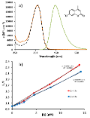
- -methylumbelliferone displays a strong absorption at 360 nm and a broad emission around 446 nm (Figure 4a). The fluorescence quantum yield is high (fluo = 81%) as previously determined under similar conditions [74]. In order to record the efficiency of the fluorescence quenching of the anion of 4-methylumbelliferone



Synthesis and chemosensing properties of cinnoline-containing poly(arylene ethynylene)s
Beilstein J. Org. Chem. 2015, 11, 373–384, doi:10.3762/bjoc.11.43
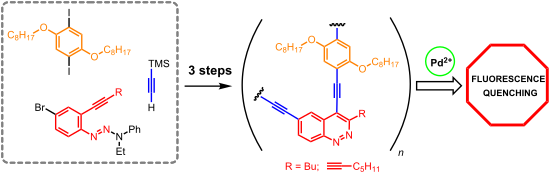
- at the optimal excitation wavelength of 425 nm which corresponds to the absorption bands at ≈425 nm in UV–vis spectra of both samples (Figure 6). An additional ethynyl moiety in the repeating unit of olygomer 10b led to the increase in quantum yield from 1% for 10a to 2% for 10b, while qualitative
- properties and Pd2+-sensing ability of PAEs obtained suggested that the incorporation of an additional triple bond into a cinnoline ring offers a more significant improvement to the fluorescence quantum yield and the Pd2+dependent quenching efficiency than increasing of the polymerization degree. Recent


Solution processable diketopyrrolopyrrole (DPP) cored small molecules with BODIPY end groups as novel donors for organic solar cells
Beilstein J. Org. Chem. 2014, 10, 2683–2695, doi:10.3762/bjoc.10.283
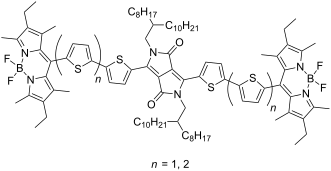
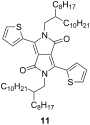
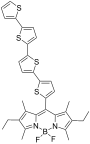
- films from a 20 mg mL−1 solution, respectively. Film thicknesses were measured using a Dektak 150 M stylus profiler. Absorption and emission spectra of compounds 9 and 10 were obtained with a Varian Cary 300 UV–visible spectrophotometer and a Photoluminescence Quantum Yield (PLQY) measurement system




A small azide-modified thiazole-based reporter molecule for fluorescence and mass spectrometric detection
Beilstein J. Org. Chem. 2014, 10, 2470–2479, doi:10.3762/bjoc.10.258
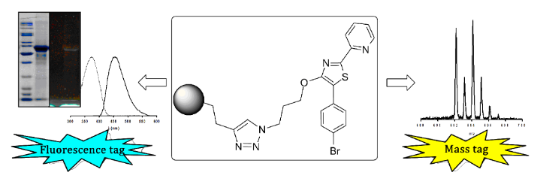
- emission maximum of 444 nm and a quantum yield of Φ = 0.96. In an aqueous solution containing 20% THF (v/v) the maximum of emission (λem,max) is shifted to 455 nm (Figure 4). The quantum yield of BPT (1) in this solution is Φ = 0.87 which makes it convenient for fluorescence detection in aqueous media, e.g
- ., for biological applications. In contrast, the quantum yield of BNS (6) in 80% water/20% THF (v/v) was below 0.03 and rendering it inappropriate for this purpose. The UV properties allow UV detection after LC separation as could be shown by ultra-performance liquid chromatography (UPLC) coupled to a
- chloride (7) and subsequently treated with 3-azidopropan-1-amine to provide the fluorescence/MS tag 6. Characterization of BPT (1) and comparison with other azide modified fluorophores We characterized the new thiazole reporter BPT (1) regarding its absorption and emission properties as well as its quantum



Synthesis and optical properties of pyrrolidinyl peptide nucleic acid carrying a clicked Nile red label
Beilstein J. Org. Chem. 2014, 10, 2166–2174, doi:10.3762/bjoc.10.224
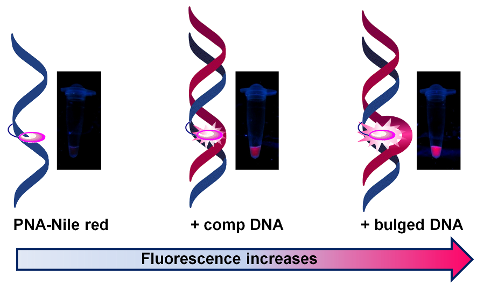
- label that can change its fluorescence in response to its altered micro-environment [7][8][9]. Nile red is a member of the benzophenoxazine dye family which exhibits several interesting features including a high photostability, high fluorescence quantum yield, broad working pH range, long excitation and
- purification. All Nile red-labeled acpcPNAs are freely soluble in water (>1 mM), providing a bright blue solution. The UV–vis spectrum of the free propargyl Nile red label 1 in acetonitrile (Figure 2a) showed absorption and fluorescence emission maxima at 538 nm and 620 nm, with a fluorescence quantum yield
- red in the acpcPNA 10mer-Nr was not quenched as indicated by the quantum yield value being similar to that of the free label (10mer-Nr: ΦF = 0.16; 1: ΦF = 0.14 in 20% MeCN). Unfortunately, the value can only be compared in an acetonitrile:water mixture as compound 1 is essentially insoluble in water





