


Search results
Search for "antibiotics" in Full Text gives 227 result(s) in Beilstein Journal of Organic Chemistry. Showing first 200.
Efficient routes toward the synthesis of the D-rhamno-trisaccharide related to the A-band polysaccharide of Pseudomonas aeruginosa
Beilstein J. Org. Chem. 2014, 10, 1488–1494, doi:10.3762/bjoc.10.153
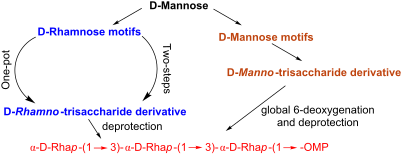
- immunity with fatal consequences in a majority of cases. Its high persistence against a wide variety of antibiotics is also well documented. It has also been observed how the colonized form of this species in cystic fibrosis lungs, through non-expression of O-antigens, offer high persistence often


Streptopyridines, volatile pyridine alkaloids produced by Streptomyces sp. FORM5
Beilstein J. Org. Chem. 2014, 10, 1421–1432, doi:10.3762/bjoc.10.146
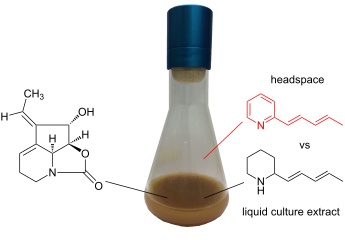
- polyketides, nonribosomal peptides, terpenoids, alkaloids, lipids and others. Such compounds became a major source of biologically active natural products as antibiotics, cytotoxic compounds, immunosuppressants etc. In addition, actinomycetes are also able to produce and release a wide variety of volatile
- . Natural products of bacteria containing a pyridine ring are rare. As an example, 1-(2-pyridinyl)ethanone was identified as a volatile of Enterobacter agglomerans [20]. Highly substituted pyridine derivatives can be found in bacterial thiopeptide antibiotics [21]. The streptopyridines of Streptomyces sp


Design and synthesis of multivalent neoglycoconjugates by click conjugations
Beilstein J. Org. Chem. 2014, 10, 1325–1332, doi:10.3762/bjoc.10.134
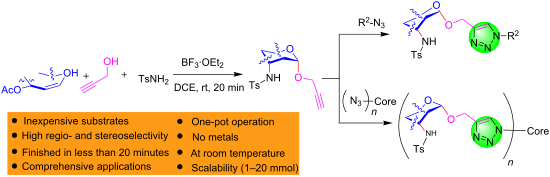
- parent precursors [33][34][35][36][37][38][39]. Over the years, many structural analogues of this class of antibiotics have been synthesized. In addition, triazoles are considered as peptidic linkage surrogates. Surprisingly, despite the enormous research interests associated with their synthesis, only a


Automated solid-phase peptide synthesis to obtain therapeutic peptides
Beilstein J. Org. Chem. 2014, 10, 1197–1212, doi:10.3762/bjoc.10.118
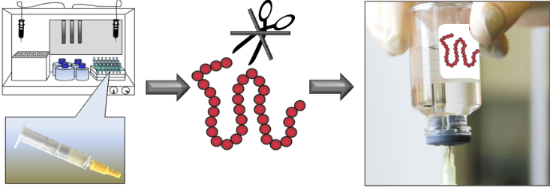
- acids vary in their side-chain functionality and possess different polarities that are important for their biological function. Peptides can be biologically active hormones, neurotransmitters and neuropeptides, growth factors, signaling molecules and antibiotics. These diverse functions make peptides an


Amino acid motifs in natural products: synthesis of O-acylated derivatives of (2S,3S)-3-hydroxyleucine
Beilstein J. Org. Chem. 2014, 10, 1135–1142, doi:10.3762/bjoc.10.113
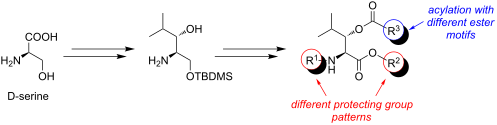
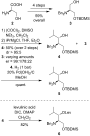
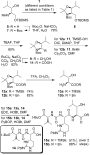
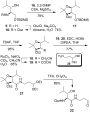
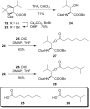
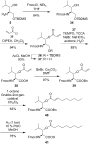
- . Within the context of our work regarding the total synthesis of muraymycin nucleoside antibiotics, we have developed a synthetic approach towards (2S,3S)-3-hydroxyleucine building blocks. Application of different protecting group patterns led to building blocks suitable for C- or N-terminal
- ], as monosulfuric acid ester [6] or as potential acylation site for fatty acid side chains such as in A- and B-series muraymycin nucleoside antibiotics (Figure 1) [7][8][9]. In the case of these muraymycin congeners, acylation of the 3-hydroxy position with fatty acid side chains, which are ω
- -phase peptide synthesis (SPPS). Furthermore, we have employed such building blocks for the synthesis of protected analogues 15a,b of the tripeptide unit of naturally occurring muraymycin nucleoside antibiotics. We have also established unprecedented protocols for early- and late-stage derivatizations of




Conformation of dehydropentapeptides containing four achiral amino acid residues – controlling the role of L-valine
Beilstein J. Org. Chem. 2014, 10, 660–666, doi:10.3762/bjoc.10.58
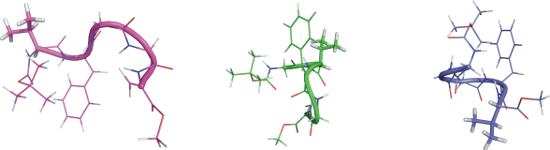
- crucial for the biological activity of various peptide antibiotics [23], e.g., nisin (used as a food preservative [24]), epidermin (active against Gram positive bacteria [25]) and viomycin (used to fight infections of Mycobacterium tuberculosis [26]). As shown by Chauhan and co-workers, structure–activity



Isocyanide-based multicomponent reactions towards cyclic constrained peptidomimetics
Beilstein J. Org. Chem. 2014, 10, 544–598, doi:10.3762/bjoc.10.50

- and triazines, whereas azepines form an important class of seven-membered cyclic peptidomimetics. Four membered ring constraints β-Lactams The smallest class of cyclic peptidomimetics is that of the β-lactams. β-lactams are effective antibiotics [30] but also show inhibitory activities against serine
- moiety attached to the scaffold. These compounds could find application as potent antibiotics, protease inhibitors or as cholesterol absorption modifiers (Scheme 37) [18]. In this particular reaction, the scaffolds were obtained by reacting the complex isocyanide 118 with different aldehydes and β-amino


Preparation of new alkyne-modified ansamitocins by mutasynthesis
Beilstein J. Org. Chem. 2014, 10, 535–543, doi:10.3762/bjoc.10.49
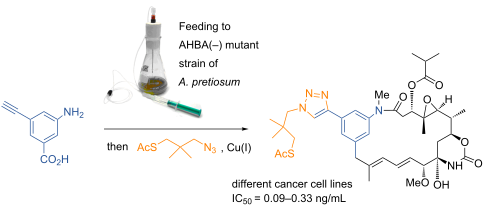
- introduce a thiol linker by Huisgen-type cycloaddition which can principally be utilized to create tumor targeting conjugates. In bioactivity tests, only those new ansamitocin derivatives showed strong antiproliferative activity that bear an ester side chain at C-3. Keywords: ansamitocins; antibiotics


Intermediates in monensin biosynthesis: A late step in biosynthesis of the polyether ionophore monensin is crucial for the integrity of cation binding
Beilstein J. Org. Chem. 2014, 10, 361–368, doi:10.3762/bjoc.10.34
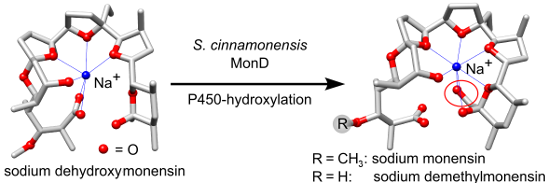
- , University of Cambridge, Lensfield Road, Cambridge CB2 1QW, UK 10.3762/bjoc.10.34 Abstract Polyether antibiotics such as monensin are biosynthesised via a cascade of directed ring expansions operating on a putative polyepoxide precursor. The resulting structures containing fused cyclic ethers and a
- tailoring step as well as polyether formation. Keywords: antibiotics; biosynthesis; natural products; polyketides; Streptomyces; synthetic biology; Introduction Monensin A (1) from Streptomyces cinnamonensis is one of the most prominent and best-studied of the polyether class of complex polyketides, an



Boron-substituted 1,3-dienes and heterodienes as key elements in multicomponent processes
Beilstein J. Org. Chem. 2014, 10, 237–250, doi:10.3762/bjoc.10.19

- vinyl ether, this approach was successfully applied in the key steps of the total synthesis of a member of the thiomarinol class of marine antibiotics (Scheme 19) [66][67]. More recently, Hall and co-workers described the total synthesis of a complex 20-membered marine macrolide, palmerolide A, a potent


Flow microreactor synthesis in organo-fluorine chemistry
Beilstein J. Org. Chem. 2013, 9, 2793–2802, doi:10.3762/bjoc.9.314
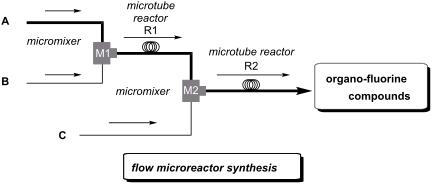
- explored a flow microreactor system for sequential transformation towards fluoroquinolone antibiotics such as ciprofloxacin via both inter- and intramolecular SNAr reactions (Scheme 10) [70]. Starting from the acylation reaction of (N-dimethylamino)acrylate with 2,4,5-trifluorobenzoic acid chloride
- [18F]-radiolabeled molecular imaging probes. Flow microreactor synthesis of dipeptides. Flow synthesis involving SNAr reactions. Flow synthesis of fluoroquinolone antibiotics. Highly controlled formation of PFPMgBr. Selective flow synthesis of photochromic diarylethenes. Flow microreactor system for


Garner’s aldehyde as a versatile intermediate in the synthesis of enantiopure natural products
Beilstein J. Org. Chem. 2013, 9, 2641–2659, doi:10.3762/bjoc.9.300
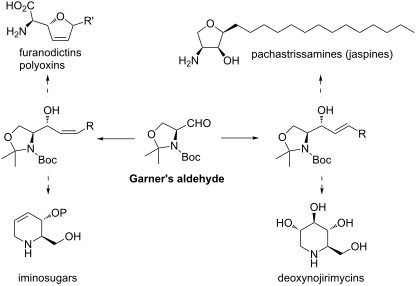
- substructures. This structural motif can be found in many natural products, such as iminosugars (7 and 9), peptide antibiotics (8), sphingosines and their derivatives (10 and 11, Figure 3). These naturally occurring polyhydroxylated compounds have attracted increasing interest from synthetic chemists, because
- of Garner’s aldehyde. Structures of some iminosugars (7, 9), peptide antibiotics (8) and sphingosine (10) and pachastrissamine (11). (a) i) Boc2O, 1.0 N NaOH (pH >10), dioxane, +5 °C → rt; ii) MeI, K2CO3, DMF, 0 °C → rt (86% over two steps); (b) Me2C(OMe)2, cat. p-TsOH, benzene, reflux (70–89%); (c




The total synthesis of D-chalcose and its C-3 epimer
Beilstein J. Org. Chem. 2013, 9, 2620–2624, doi:10.3762/bjoc.9.296
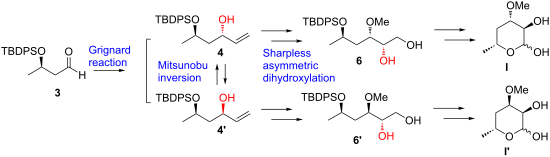
- -10-camphorsulfonic acid (CSA) in MeOH. Keywords: asymmetric dihydroxylation; chalcose; epimer; total synthesis; Introduction Chalcose (4,6-dideoxy-3-O-methyl-D-xylo-hexose, I [1][2]) is a structural component of many macrolide antibiotics, such as chalcomycin [3], neutramycin [4], and lankamycin [5
- sourced material and unsatisfactory overall yield. As part of our study concerning the structure–activity relationships and chemistry of new antibiotics, we sought to develop a reliable and efficient synthetic route starting from inexpensive, commercial sources to provide access to chalcose. We describe a


The regulation and biosynthesis of antimycins
Beilstein J. Org. Chem. 2013, 9, 2556–2563, doi:10.3762/bjoc.9.290
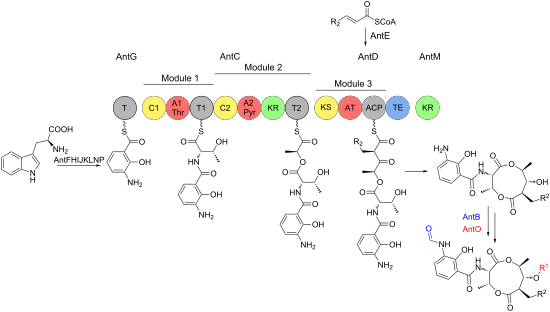
- biosynthetic pathway. Keywords: antimycins; gene regulation; genome mining; natural products; Streptomyces; Review It is estimated that around 60% of all known antibiotics are derived from secondary metabolites made by filamentous actinomycete bacteria, most notably Streptomyces species [1]. Streptomyces
- neighbouring microbes [3]. In recent years genome sequencing has revealed that each Streptomyces species encodes many more specialised metabolites than it makes in laboratory culture, leading to new efforts to activate these so-called “silent pathways.” The number of known antibiotics made by Streptomyces
- host. This approach has already been used to identify novel chemical scaffolds of antibiotics produced by well-studied Streptomyces species [4][5][6] and to identify the biosynthetic gene clusters for commercially important antibiotics [7][8][9][10][11]. The latter allows cloning, optimisation and


An overview of the synthetic routes to the best selling drugs containing 6-membered heterocycles
Beilstein J. Org. Chem. 2013, 9, 2265–2319, doi:10.3762/bjoc.9.265
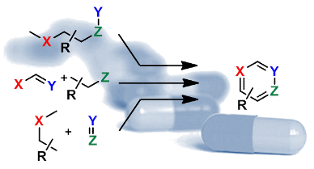
- ). Nalidixic acid is a prototype quinolone antibiotic that has been used extensively as an effective treatment against both gram positive and gram negative bacteria. In general, quinolone antibiotics act by interfering with the enzymes DNA-gyrase and/or topoisomerase of bacteria [55]. Moxifloxacin (1.102
- , Avelox) and levofloxacin (1.103, Levaquin) are two third-generation fluoroquinolone antibiotics which also appear amongst the top selling drugs. These compounds display similar SAR data [56]. For instance, in the case of moxifloxacin the fluorine atom in the C6 position enhances microbial activity while


Flexible synthesis of anthracycline aglycone mimics via domino carbopalladation reactions
Beilstein J. Org. Chem. 2013, 9, 2194–2201, doi:10.3762/bjoc.9.258
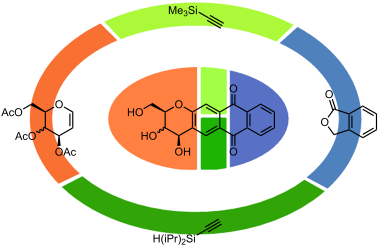
- discovery research. Several natural occurring anthracycline antibiotics. Total synthesis of daunomycinone 6 according to Hansen. Synthesis of simplified anthracycline derivatives. Retrosynthetic analysis of anthracycline aglycone mimics. Si: any silyl group. Synthetic route for the synthesis of various

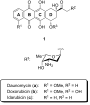


An approach towards azafuranomycin analogs by gold-catalyzed cycloisomerization of allenes: synthesis of (αS,2R)-(2,5-dihydro-1H-pyrrol-2-yl)glycine
Beilstein J. Org. Chem. 2013, 9, 1936–1942, doi:10.3762/bjoc.9.229
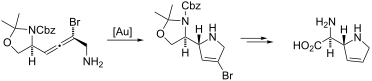
- by Joullié and co-workers [2] and the X-ray analysis of the N-acetyl derivative of the natural product by Shiro et al. [3]. (+)-Furanomycin belongs to the smallest natural antibiotics [4]. Therefore, the compound found considerable interest in synthetic chemistry. Until today, five total syntheses


Synthesis and antibacterial activity of monocyclic 3-carboxamide tetramic acids
Beilstein J. Org. Chem. 2013, 9, 1899–1906, doi:10.3762/bjoc.9.224

- reference antibiotics (Table 4). Tetramate 2b was found to be active against virulent and resistant strains, such as methicillin and fluoroquinolone-resistant S. aureus and penicillin and/or erythromycin-resistant S. pneumoniae. Remarkably, tetramate 2b maintained the activities against all the strains and


A practical synthesis of long-chain iso-fatty acids (iso-C12–C19) and related natural products
Beilstein J. Org. Chem. 2013, 9, 1807–1812, doi:10.3762/bjoc.9.210
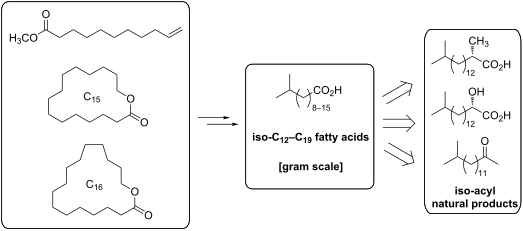
- amides in natural products including septacidin [3], teicoplanins [4], tunicaminyluracil-based antibiotics [5] (tunicamycins [6], corynetoxins [7], and streptovirudins [8]), the arylomycin glycopeptide antibiotics [9][10], maradolipids [11], plipastatin-type lipopeptides [12], Nod factors [13


A reductive coupling strategy towards ripostatin A
Beilstein J. Org. Chem. 2013, 9, 1533–1550, doi:10.3762/bjoc.9.175
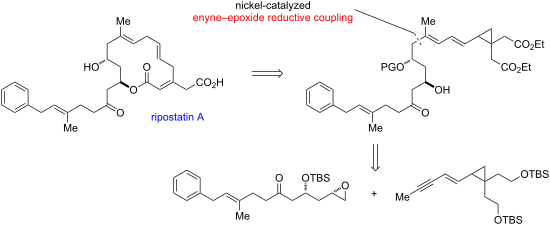
- ribonucleic acid polymerase. These compounds inhibit chain initiation of RNA synthesis in Staphylococcus aureus, a particularly infectious bacterial strain with reported drug resistance to the antibiotics vancomycin and methicillin [3]. Ripostatin A exists as an equilibrium mixture of ketone and hemiketal


α-Bromodiazoacetamides – a new class of diazo compounds for catalyst-free, ambient temperature intramolecular C–H insertion reactions
Beilstein J. Org. Chem. 2013, 9, 1407–1413, doi:10.3762/bjoc.9.157

- synthesis of β-lactam antibiotics [58][85]. In this vein, the metal-independent character of the presented thermolysis of α-bromodiazoacetamides makes the transformation compatible with late-stage synthesis in medicinal chemistry. Additionally, in a preparative context, the formation of α-bromo-β-lactams


Chemoenzymatic synthesis and biological evaluation of enantiomerically enriched 1-(β-hydroxypropyl)imidazolium- and triazolium-based ionic liquids
Beilstein J. Org. Chem. 2013, 9, 516–525, doi:10.3762/bjoc.9.56
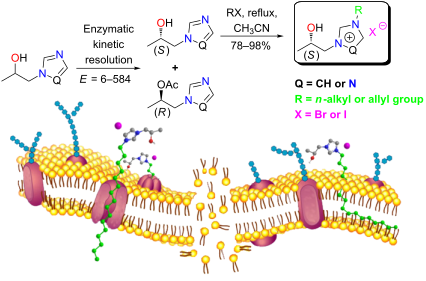
- or iodides, yielding novel optically active ionic liquids. Racemic salts were tested against a wide range of microorganisms. Keywords: antibiotics; antifungal agents; double derivatization; enzyme catalysis; ionic liquids; Introduction Aromatic heterocycles play a crucial role in medicinal


The diketopiperazine-fused tetrahydro-β-carboline scaffold as a model peptidomimetic with an unusual α-turn secondary structure
Beilstein J. Org. Chem. 2013, 9, 147–154, doi:10.3762/bjoc.9.17
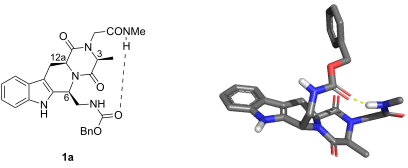
- attention in recent years because of their broad biological activities [11][12] and therapeutic applications, ranging from antibiotics [13] to anticancer agents [14]. Moreover, the DKP moiety has been exploited as a peptidomimetic scaffold [15][16][17]. Structural unification of THBC and DKP pharmacophores


Multivalent display of the antimicrobial peptides BP100 and BP143
Beilstein J. Org. Chem. 2012, 8, 2106–2117, doi:10.3762/bjoc.8.237
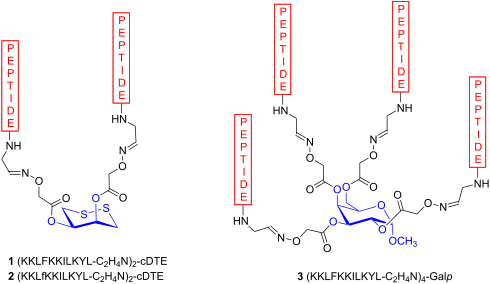
- potential alternative to traditional antibiotics. To date, a very large number of antimicrobial peptides have been produced based on naturally occurring products or by de novo design, and most of them display a broad spectrum of antimicrobial activities [3][4]. Despite their remarkable structural diversity


Modulating the activity of short arginine-tryptophan containing antibacterial peptides with N-terminal metallocenoyl groups
Beilstein J. Org. Chem. 2012, 8, 1753–1764, doi:10.3762/bjoc.8.200
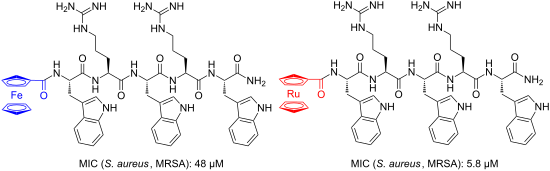
- ; medicinal organometallic chemistry; metallocenoyl; peptides; tryptophan; Introduction New antibacterial agents need to be discovered since established antibiotics are increasingly losing ground against resistant bacteria and at the same time the pipeline that is supposed to produce new antibiotics is





