Search results
Search for "energy" in Full Text gives 1405 result(s) in Beilstein Journal of Organic Chemistry. Showing first 200.
Stereoselective mechanochemical synthesis of thiomalonate Michael adducts via iminium catalysis by chiral primary amines
Beilstein J. Org. Chem. 2024, 20, 2313–2322, doi:10.3762/bjoc.20.198
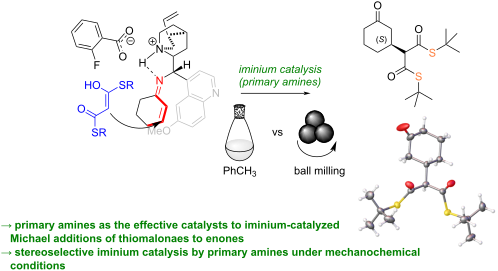
- ][5]. The transient impact of kinetic energy, channeled into the reaction, facilitates overcoming the constraints inherent in equilibrium models. Thus, employing limited substrates could potentially yield diverse products through a simple alteration of conditions, compared to solvent-based methods [6
- enhancing the reactivity of a relatively inert acceptor does not necessarily lead to increased reaction rates, involves the use of more reactive nucleophiles. In this context, varying the stabilization energy of carboxylic acid derivatives by switching from oxoesters to thioesters is the significant
- primary amines for this purpose to enable activation of the enone system. Such a method lowers the energy of the LUMO orbital and subsequently reduces the energy barrier between the nucleophile's HOMO orbital resultingly, expedites the entire transformation [38]. Moreover, the presence of the stereogenic


Catalysing (organo-)catalysis: Trends in the application of machine learning to enantioselective organocatalysis
Beilstein J. Org. Chem. 2024, 20, 2280–2304, doi:10.3762/bjoc.20.196

- by observing the influence of substituents on a reaction outcome. However, Hammett parameters have shown to not fully describe observed trends. Therefore, complementary representations capturing other properties of a molecule have been derived (vide infra) [28]. While traditional linear free energy
- Drawing inspiration from linear free energy relationships, MLR models, pioneered by Norrby and co-workers [83] and later further developed by Sigman and co-workers [69][82], are commonly used for the prediction of enantioselectivity. In such models, the substrates, catalysts, and other relevant reaction
- and type II’ β-hairpin. Even though the latter was consistently lower in ground state energy (up to 6 kcal/mol for some catalysts), predictive models for enantioselectivity were found for both catalyst conformers in separate MLR models. For organophosphorous ligands of transition metal complexes, the


Synthesis and reactivity of the di(9-anthryl)methyl radical
Beilstein J. Org. Chem. 2024, 20, 2254–2260, doi:10.3762/bjoc.20.193
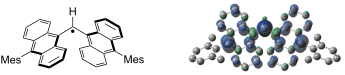
- two anthryl moieties (Figure 3b, Supporting Information File 1, Figure S1). DFT calculations for structural optimization revealed that the energy difference between two DAntM radical structures with different spin positions, spin localization at the central sp2 carbon and on the anthryl group, is
- small about 1.18 kcal mol−1 (Supporting Information File 1, Figure S2). To investigate the activation barrier of this equilibrium, potential energy curve by changing the dihedral angle θ of one anthryl group was calculated. The transition state was calculated with the dihedral angle θ = 30.6° and the
- activation barrier is only 2.94 kcal mol−1 (Supporting Information File 1, Figure S3). Thus, these two structures are likely in equilibrium and rapidly exchange with each other in solution. The energy difference between DAntM dimer (head-to-head σ-dimer) and DAntM radical monomer was also evaluated, showing


Cell-free protein synthesis with technical additives – expanding the parameter space of in vitro gene expression
Beilstein J. Org. Chem. 2024, 20, 2242–2253, doi:10.3762/bjoc.20.192
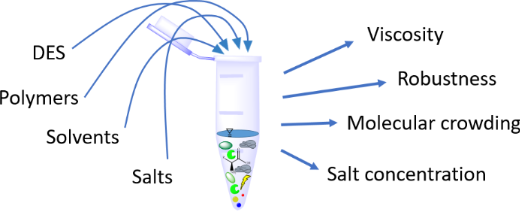
- nucleotides and amino acids, as well as energy molecules, salts, buffer, etc., are added. After successful protein synthesis, further substrates can be added for an enzyme activity assay. Although mimicking of cell-like conditions is an approach for optimization, the physical and chemical properties of CFPS
- encoding for the target protein, amino acids and nucleoside triphosphates as substrates, an energy regeneration system and other additives such as polyethylene glycol (PEG) [9]. Although CFPS has been used and improved since the 1960s, there are challenges in its application such as low production volumes
- systems has mainly focused on individual components: the energy regeneration system, the cell extract itself, or individual buffer components [13][14]. For example, the importance of optimizing the concentrations of these reaction components has been demonstrated for four different CFPS systems, in which



Metal-free double azide addition to strained alkynes of an octadehydrodibenzo[12]annulene derivative with electron-withdrawing substituents
Beilstein J. Org. Chem. 2024, 20, 2234–2241, doi:10.3762/bjoc.20.191
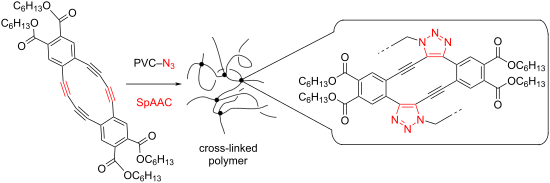
- followed a second-order reaction. Since no monoadducts were formed, the rate-determining step is the first azide addition. Based on this fact, the activation energy (Ea) of the reaction between 5 and benzyl azide in CDCl3, determined by the Arrhenius plots, was 60.9 kJ mol−1 (Figure 3). This value was
- . (a) Strain-promoted azide–alkyne cycloaddition between DBA 5 and benzyl azide and (b) 1H NMR spectral change at 30 °C in CDCl3. Arrhenius plots of the rate constants for the reaction between 5 and benzyl azide in CDCl3. Proposed reaction mechanism for the formation of compound 6a. Free energy




Novel truxene-based dipyrromethanes (DPMs): synthesis, spectroscopic characterization and photophysical properties
Beilstein J. Org. Chem. 2024, 20, 2163–2170, doi:10.3762/bjoc.20.186
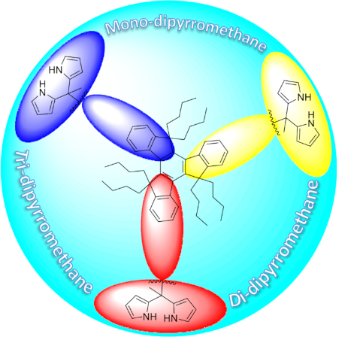
- ), organogels, molecular wires, self-assembly and so forth [14][15][16][17][18][19][20][21][22][23][24][25]. Moreover, nowadays these invaluable compounds have also received great attention of supramolecular chemists, and finds applications in sensing, catalysis, donor–acceptor systems, energy transfer and


Factors influencing the performance of organocatalysts immobilised on solid supports: A review
Beilstein J. Org. Chem. 2024, 20, 2129–2142, doi:10.3762/bjoc.20.183
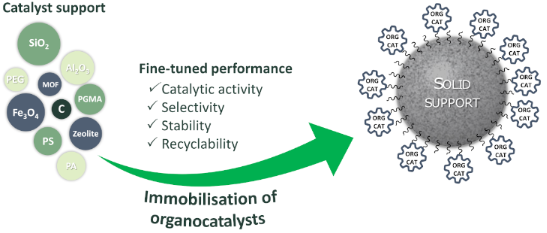
- fine chemical and pharmaceutical industries [9]. The limitation of homogeneous catalysts, however, is their complex, time-consuming and energy-intensive recovery and subsequent recycling. Therefore, synthetic modification of catalysts is a commonly used method to aid their recovery. Obstacles to the
- ] reactions. POFs [102] are hydrocarbon systems that contain pores, of which COFs are a subgroup. POFs are widely applied in the fields of gas adsorption and storage, the separation of gases, catalysis, energy storage, photocatalysis, etc., and have many different types, such as hyper-cross-linked polymers


Efficacy of radical reactions of isocyanides with heteroatom radicals in organic synthesis
Beilstein J. Org. Chem. 2024, 20, 2114–2128, doi:10.3762/bjoc.20.182
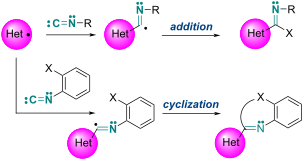
- aware of resource recycling, and promote the use of natural energy [16]. The following three methods are generally used to generate heteroatom radicals (E•) (Scheme 1). In method 1, E• is generated by hydrogen abstraction from E–H by cyanoisopropyl radicals generated by thermal decomposition of 2,2
- , when using sunlight, which is an inexhaustible natural energy, it is expected to be the most environmentally friendly method. The homolysis of E–E upon visible light irradiation is induced by exciting one electron of the isolated electron pair on E to the anti-bonding orbital of the E–E-bond (σ
- perform. In contrast, tris(trimethylsilyl)silane, (Me3Si)3SiH, has a bond dissociation energy similar to that of n-Bu3SnH (74 kcal/mol) and can be used as an efficient reducing agent/mediator. Radical addition of group 13 compounds to isocyanides Boron, a group 13 typical element, also lacks a non


Computational toolbox for the analysis of protein–glycan interactions
Beilstein J. Org. Chem. 2024, 20, 2084–2107, doi:10.3762/bjoc.20.180
- ), skew (S), and half-chair (H) conformations (Figure 1). Among them, chair’ shapes typically have the lowest energy and are thus preferred, except few cases in which different conformations can exist in a dynamic equilibrium, as for the iduronic acid that can adopt three low-energy solution conformations
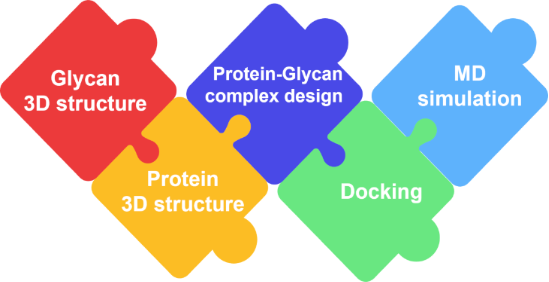
- simulations, it is fundamental not only to build their 3D structure but also to choose the appropriate force field, that is a set of empirical energy functions and parameters used to calculate the potential energy of a system as a function of the molecular coordinates. The collection of equations and
- field of computational chemistry and biochemistry: 1. AMBER [56]: AMBER (https://ambermd.org/) is the acronym for "Assisted Model Building with Energy Refinement", and it is an open-source software widely employed for molecular modelling and simulation. It is known for its stability, user-friendly



Understanding X-ray-induced isomerisation in photoswitchable surfactant assemblies
Beilstein J. Org. Chem. 2024, 20, 2005–2015, doi:10.3762/bjoc.20.176
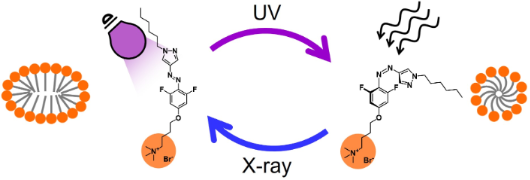
- guidelines for future X-ray experiments using photoswitchable molecules, which can aid more accurate understanding of these materials for application in solar energy storage, catalysis or controlled drug delivery. Keywords: arylazopyrazole; azobenzene; micelle; photoswitch; X-ray; Introduction The design
- of smart materials whose properties can be controlled using external stimuli is of significant interest for diverse applications spanning soft robotics [1], energy storage [2] and drug delivery [3]. Light is an ideal stimulus as it is non-invasive and can be administered selectively with high
- greater using low-energy X-rays (8 keV) due to their greater photoabsorption in water, thus leading the authors to conclude that higher energy (≈36 keV) should be used for future small-angle X-ray scattering (SAXS) experiments on photoswitchable systems. However, this may not always be achievable



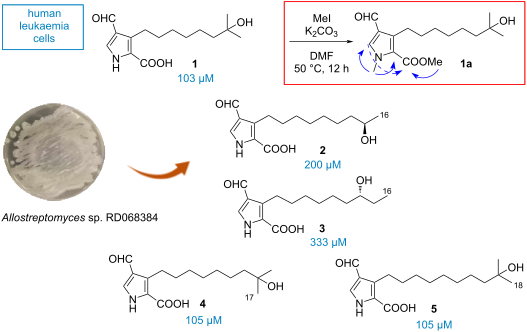
Allostreptopyrroles A–E, β-alkylpyrrole derivatives from an actinomycete Allostreptomyces sp. RD068384
Beilstein J. Org. Chem. 2024, 20, 1981–1987, doi:10.3762/bjoc.20.174
- [31]. Range-separated hybrid GGA (RSH-GGA) functional, including dispersive interaction with 6-31G* as the polarization basis set (ωB97X-D/6-31G* method), was used for energy and geometry optimization [32]. Bioactivity Cytotoxicity and tyrosinase assays were carried out according to the procedures


1,2-Difluoroethylene (HFO-1132): synthesis and chemistry
Beilstein J. Org. Chem. 2024, 20, 1955–1966, doi:10.3762/bjoc.20.171

- ]. Along with this, photoisomerization is described in patent literature [71][72][73][74]. It was shown that the experimentally observed enthalpy of isomerization (0.928 kcal/mol [47]) is in agreement with the calculated difference in the total energy of the two isomers (0.959 kcal/mol [65][75]). Cis-1,2
- -difluoroethylene was shown to have a lower energy compared to trans-1,2-difluoroethylene, which is in accordance with previously described 1,2-dihalogenated ethylene species [47]. The authors of reference [47] explained the higher stability of (Z)-HFO-1132 as follows: Within the family of 1,2-dihaloethylenes, when
- going from diiodo- and dibromo- to dichloro- and difluoroethylene, the radius of the halogen atom decreases while the electronegativity increases. As a result, the influence of halogen atom electronegativity on the double bond is more significant in 1,2-difluoroethylene, and the relative energy of the


Regioselective alkylation of a versatile indazole: Electrophile scope and mechanistic insights from density functional theory calculations
Beilstein J. Org. Chem. 2024, 20, 1940–1954, doi:10.3762/bjoc.20.170
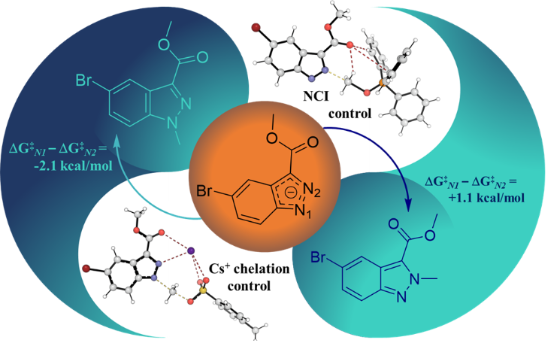
- reaction condition temperature using Gaussian 16: SMD(THF)-PBE0/def2-TZVP // SMD(THF)-PBE0/def2-SVP, def2-TZVP(Cs) at 50 °C (w/MeOPPh3+) or 90 °C (w/Cs+), utilizing Goodvibes to calculate thermochemistry. The energy of the N1- and N2-tautomers of 6 differ by 3.1 kcal/mol at 50 °C, favoring the N1-tautomer
- , presumably due to entropic penalties. Three of four computed resonance forms were all found to be of approximately equal energy. Only the E-enolate form 6 (-N1H-E) was slightly higher in energy by 0.06 kcal/mol likely due to electrostatic destabilization of the oxyanion with N2, however, this difference is
- negligible. These data suggest that deprotonation occurs prior to alkylation and that deprotonation of either indazole tautomer leads to anions of identical or highly similar energy. Furthermore, as seen in Figure 4, a total, five coordinated complexes were found to be at least 4.5 kcal/mol more stable than


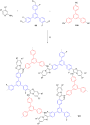
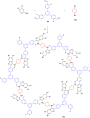
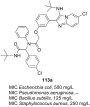
The Groebke–Blackburn–Bienaymé reaction in its maturity: innovation and improvements since its 21st birthday (2019–2023)
Beilstein J. Org. Chem. 2024, 20, 1839–1879, doi:10.3762/bjoc.20.162






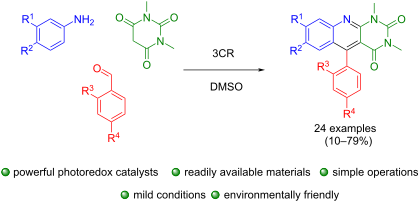
A facile three-component route to powerful 5-aryldeazaalloxazine photocatalysts
Beilstein J. Org. Chem. 2024, 20, 1831–1838, doi:10.3762/bjoc.20.161
- /alloxazine photoredox catalysis [9][14][15][16][17][18][19], 7-methoxyderivatives should also be considered due to their absorption closer to the visible light region. This allows longer wavelength LEDs with lower energy photons to be applied, potentially contributing to avoiding undesired reactions [14][15


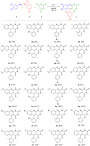


Hetero-polycyclic aromatic systems: A data-driven investigation of structure–property relationships
Beilstein J. Org. Chem. 2024, 20, 1817–1830, doi:10.3762/bjoc.20.160
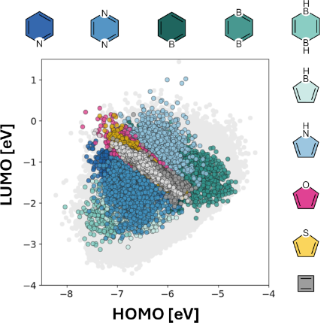
- distributions of five molecular properties: highest occupied molecular orbital (HOMO) energy, lowest unoccupied molecular orbital (LUMO) energy, HOMO–LUMO gap (Gap), adiabatic ionization potential (AIP), and adiabatic electron affinity (AEA). As shown in the violin plots in Figure 3B, for all properties, the


Discovery of antimicrobial peptides clostrisin and cellulosin from Clostridium: insights into their structures, co-localized biosynthetic gene clusters, and antibiotic activity
Beilstein J. Org. Chem. 2024, 20, 1800–1816, doi:10.3762/bjoc.20.159

- performed using AlphaFold 2.0 [52] in its CoLab online service [59], with default parameters. Each model underwent energy minimization in Chimera [60]. Subsequently, these models were analyzed in SWISS-MODEL [61] to obtain Ramachandran analysis. Finally, structural alignment was performed using PyMOL for


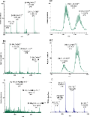


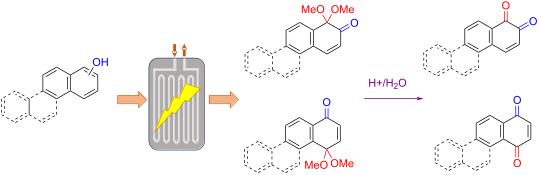
Synthesis of polycyclic aromatic quinones by continuous flow electrochemical oxidation: anodic methoxylation of polycyclic aromatic phenols (PAPs)
Beilstein J. Org. Chem. 2024, 20, 1746–1757, doi:10.3762/bjoc.20.153
- their highest occupied molecular orbital (HOMO) and lowest unoccupied molecular orbital (LUMO) energy levels can be derived via the oxidation onset potentials as shown in the literature [51]. The electrochemical properties of all products are summarized in Table 5. Individual CVs, with onset potentials
- absorption bands are associated with π–π* and n–π* electronic transitions. The optical bandgap (Eg-opt) values of the compounds determined from the absorption edge of the solution spectra are also summarized in Table 5. Although both HOMO and LUMO slightly vary between the compounds, the energy differences





Ring opening of photogenerated azetidinols as a strategy for the synthesis of aminodioxolanes
Beilstein J. Org. Chem. 2024, 20, 1671–1676, doi:10.3762/bjoc.20.148
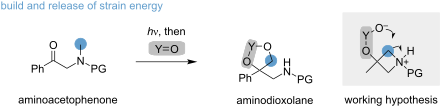
- , accessing strained molecules continues to pose a synthetic challenge because many reported methods require harsh conditions for the preparation. An attractive alternative to traditional synthesis can be found in photochemical methods, bypassing energetic constraints by the utilization of photon energy. Thus
- functionalization step such as a ring-opening event is implemented, facilitated by the pre-installed strain energy of the four-membered ring [5][6][7]. The implementation of a build and release strategy, as depicted in Scheme 1a, necessitates the full compatibility of both individual reaction steps, thus placing
- demonstrated that the build and release of strain energy can be combined in a simple reaction sequence when appropriately tuning the reaction parameters. Our system relies on a photochemical Norrish–Yang cyclization of α-aminoacetophenones, which provides a sustainable entry to highly strained azetidinols. It



Methyltransferases from RiPP pathways: shaping the landscape of natural product chemistry
Beilstein J. Org. Chem. 2024, 20, 1652–1670, doi:10.3762/bjoc.20.147
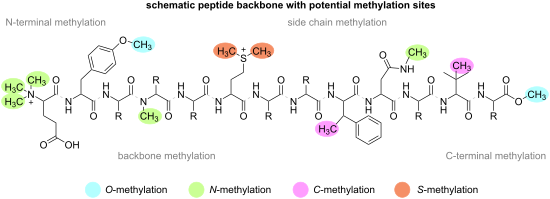
- of toxic agents such as MeI, TFA, or sodium cyanoborohydride can be harmful to both health and environment. Additionally, the need for constant protection and deprotection steps is time-consuming and results in low atomic economy, while also increasing the use of solvents, energy, and chemicals





New triazinephosphonate dopants for Nafion proton exchange membranes (PEM)
Beilstein J. Org. Chem. 2024, 20, 1623–1634, doi:10.3762/bjoc.20.145

- . Romão Ramalho, 59, 7000-671 Évora, Portugal 10.3762/bjoc.20.145 Abstract A new paradigm for energy is underway demanding decarbonized energy systems. Some of them rely on emerging electrochemical devices, crucial in hydrogen technologies, including fuel cells, CO2 and water electrolysers, whose
- Decarbonized energy sources are the new paradigm in a world with increasing energy demands, primarily powered by fossil fuels, being proposed as a key strategy for restricting the detrimental effects of climate change. Vast efforts are being made to fulfil this crucial challenge of the 21st century. Clean
- , renewable, and environmental-friendly technological processes are being considered using electrochemical devices which convert chemical to electric energy and/or vice versa that, when associated to renewable energy sources, can promote sustainable energy systems [1][2][3][4]. Among them are included proton




pKalculator: A pKa predictor for C–H bonds
Beilstein J. Org. Chem. 2024, 20, 1614–1622, doi:10.3762/bjoc.20.144
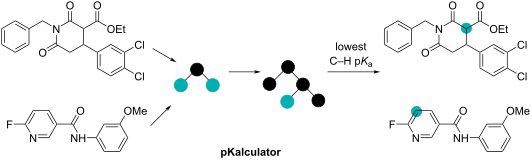
- XGBoost. They trained on experimental pKa values in 39 solvents from the “internet Bond-energy Databank” (iBonD). Thus, they could predict the lowest pKa value for a wide range of molecules that contain bonds such as N–H, O–H, C–H, S–H, and P–H. However, they reported a scarcity of non-aqueous pKa values
- identify the lowest-energy conformer. We then conduct re-optimization in ORCA (v. 5.0.4) [22][23], using the dispersion D4-corrected DFT functional CAM-B3LYP [24][25], the Karlsruhe [26][27] triple-ζ basis set, def2-TZVPPD, and the conductor-like polarizable continuum model (CPCM) [28] as the implicit
- methods are evaluated as single-point calculations or optimization and frequency calculations. For comprehensive details, refer to Supporting Information File 1, section “Benchmark study - computational methods”. Hereafter, we check the geometries for imaginary frequencies and use the total thermal energy


![[Graphic 9]](/bjoc/content/inline/1860-5397-20-144-i12.svg?max-width=637&scale=1.3000021)


Supramolecular assemblies of amphiphilic donor–acceptor Stenhouse adducts as macroscopic soft scaffolds
Beilstein J. Org. Chem. 2024, 20, 1590–1603, doi:10.3762/bjoc.20.142
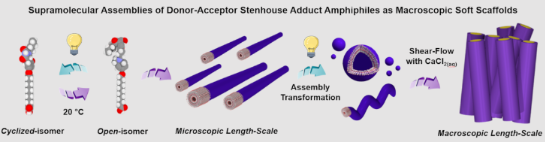
- Abstract In the design of photoharvesting and photoresponsive supramolecular systems in aqueous medium, the fabrication of amphiphilic photoswitches enables a noninvasive functional response through photoirradiation. Although most aqueous supramolecular assemblies are driven by high-energy and biodamaging
- ; visible light; Introduction Solar energy is of paramount importance to life on the earth for various reasons, such as maintenance of a stable temperature and enabling photosynthesis as the basis of the food chain. Inspired by the natural photosynthetic processes, synthetic molecules were designed and
- functionalized with photoresponsive and photoabsorbing functional motifs, serving as the counterpart of natural photosystems. This allowed to construct smart materials that harvest light energy, e.g., solar cells, photosensitizers, and photochromic materials [1][2][3][4]. Supramolecular assemblies are commonly




Divergent role of PIDA and PIFA in the AlX3 (X = Cl, Br) halogenation of 2-naphthol: a mechanistic study
Beilstein J. Org. Chem. 2024, 20, 1580–1589, doi:10.3762/bjoc.20.141
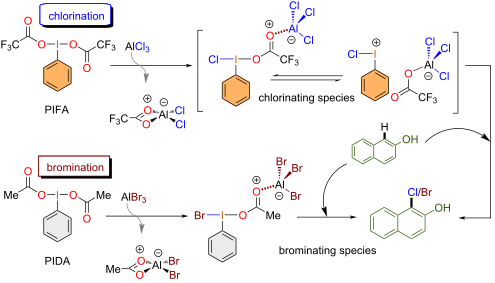
- reported by our group, was elucidated via quantum chemical calculations using density functional theory. The chlorination mechanism using PIFA and AlCl3 demonstrated a better experimental and theoretical yield compared to using PIDA. Additionally, the lowest-energy chlorinating species was characterized by
- energy than our proposed species. The reaction mechanisms are described in detail in this work and were found to be in excellent agreement with the experimental yield. These initial results confirmed that our proposed mechanism was energetically favored and therefore more plausible compared to
- points along the potential surface energy of the possible chlorination and bromination pathways studied in this work, Br and I atoms were treated with the revised version of the LANL2DZ basis set and effective core potential, referred to as LANL08(d), providing d-type polarization functions. Meanwhile


Regio- and stereochemical stability induced by anomeric and gauche effects in difluorinated pyrrolidines
Beilstein J. Org. Chem. 2024, 20, 1572–1579, doi:10.3762/bjoc.20.140
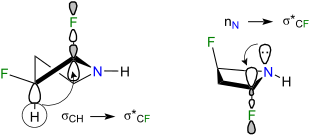
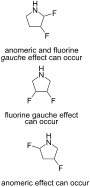
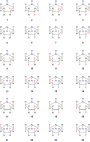
- crystallographic data using the 3-fluoropyrrolidinium cation and 3-fluoropyrrolidine. Subsequently, we explored the relative energy of all favored conformations of all different stereoisomers of 2,3-, 2,4-, and 3,4-difluoropyrrolidines at the B3LYP-D3BJ/6-311++G** level. A generalized anomeric effect, arising from
- pyrrolidinium salt [11] with the CCSD/DGTZVP geometry of the pyrrolidinium cation (with an exclusively axial C–F bond) and the energy of 3-fluoropyrrolidine conformations. Various combinations of DFT methods (B3LYP-D3BJ, ωB97XD, and PBEPBE) and basis sets (DGTZVP and 6-311++G**) were evaluated. The selection of
- these functionals was based on whether or not they included dispersion terms that could influence the absolute energy. These functionals are widely used and have demonstrated strong performance in numerous evaluations and validations across the literature. Similarly, for the basis sets, a comparison was