


Search results
Search for "host–guest" in Full Text gives 226 result(s) in Beilstein Journal of Organic Chemistry. Showing first 200.
Linkage of α-cyclodextrin-terminated poly(dimethylsiloxanes) by inclusion of quasi bifunctional ferrocene
Beilstein J. Org. Chem. 2013, 9, 1278–1284, doi:10.3762/bjoc.9.144
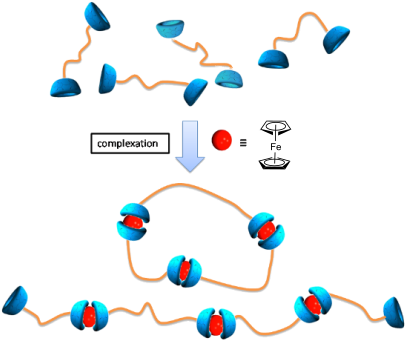
- verified by the shifts of the protons in the 1H NMR spectra and in the correlation signals of the 2D ROESY NMR spectra. Keywords: cyclodextrins; ferrocene; host–guest systems; polysiloxanes; supramolecular chemistry; Introduction Polymers containing cyclodextrins (CD) covalently or supramolecularly
- dimethylsiloxane unit. The results of the IR, 1H NMR and mass spectroscopy strongly support the existence of the described derivatives. The terminally α-CD-functionalized poly(dimethylsiloxanes) 4 and 5 were subsequently used as host molecules component for the following complexation reactions. Host–guest
- interactions of the siloxane derivatives with ferrocene Linking of the obtained polydimethyl and disiloxane derivatives through host–guest interactions with single ferrocene molecules generates supramolecular, connected siloxane chains. The guest molecule ferrocene was therefore dissolved in chloroform and


Host–guest complexes of mixed glycol-bipyridine cryptands: prediction of ion selectivity by quantum chemical calculations, part V
Beilstein J. Org. Chem. 2013, 9, 1252–1268, doi:10.3762/bjoc.9.142
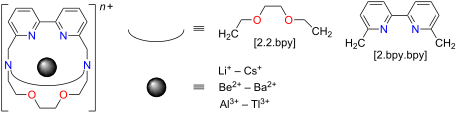
- the widest range in both host–guest systems, see Table 9. The illustrated occurrence evidences the importance of the possible alteration of the angles between the CH2 groups and the Nsp3 bridgehead for optimal matching between the host and the guest molecules. The stereochemistry of all investigated


![[Graphic 2]](/bjoc/content/inline/1860-5397-9-142-i3.png?max-width=637&scale=0.295455) 2.2.bpy]+.
2.2.bpy]+.


Space filling of β-cyclodextrin and β-cyclodextrin derivatives by volatile hydrophobic guests
Beilstein J. Org. Chem. 2013, 9, 1185–1191, doi:10.3762/bjoc.9.133
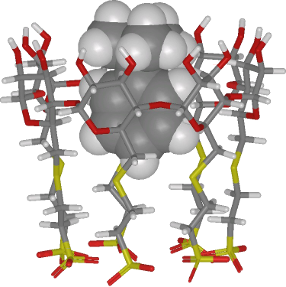
- was still inferior to unity (0.69), which indicated that the host–guest interactions were partially compensated by reduced solvation and loss of freedom of the host–guest system. One way to further improve the hydrophobic binding potential of a host in water is to add a salt such as NaCl [42]. From


Superstructures of fluorescent cyclodextrin via click-reaction
Beilstein J. Org. Chem. 2013, 9, 827–831, doi:10.3762/bjoc.9.94
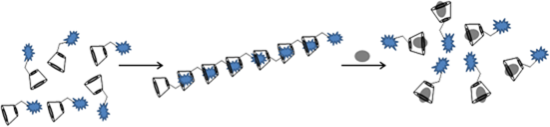
- , Humboldtstr. 10, 07743 Jena, Germany 10.3762/bjoc.9.94 Abstract Mono-(6-azido-6-deoxy)-β-cyclodextrin (CD) was covalently attached to an alkyne-modified 5-methyl-2-(pyridin-2-yl)thiazol-4-ol yielding a fluorophore containing CD in a click-type reaction. Intermolecular complexes were formed by poly(host–guest
- the elongated noncovalent polymeric structures collapse. Keywords: fluorescent dye; cyclodextrins; host–guest interaction; supramolecular polymer; Introduction Most small heterocyclic molecules show low fluorescence. However, as we reported earlier, substituted 4-hydroxythiazoles have a high
- and Discussion The water-soluble fluorescent cyclodextrin was synthesized via copper-catalyzed cycloaddition (Scheme 1). The existence of the resulting product was confirmed by MALDI–TOF spectrometry, 1H NMR and IR spectroscopy. The formation of host–guest structures between the thiazole functionality


Spin state switching in iron coordination compounds
Beilstein J. Org. Chem. 2013, 9, 342–391, doi:10.3762/bjoc.9.39
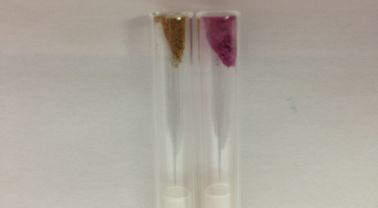


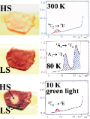
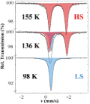


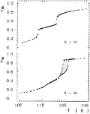

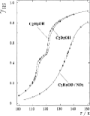


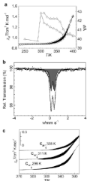
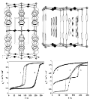
![[Graphic 1]](/bjoc/content/inline/1860-5397-9-39-i3.png?max-width=637&scale=1.18182) ) modes versus the anion volu...
) modes versus the anion volu...






Inclusion of the insecticide fenitrothion in dimethylated-β-cyclodextrin: unusual guest disorder in the solid state and efficient retardation of the hydrolysis rate of the complexed guest in alkaline solution
Beilstein J. Org. Chem. 2013, 9, 106–117, doi:10.3762/bjoc.9.14
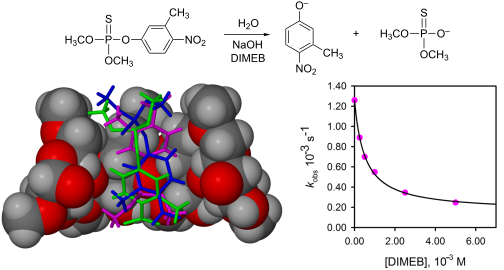
- solution containing 2% dioxane at 25 °C and in the presence of the native cyclodextrins α-CD, β-CD, γ-CD as well as the permethylated derivatives TRIMEA and TRIMEB, was performed [6]. This revealed weak host–guest association in the case of α-CD and insoluble complex formation in the case of the host
- guest from the inclusion complex resulted in an estimated 17.9 ± 0.3% (n = 2) mass loss, which is in good agreement with the theoretical value of 17.2% for a 1:1 host–guest complex. The complex stoichiometry deduced from thermal analysis was subsequently confirmed by NMR spectroscopy, as described below






Polar reactions of acyclic conjugated bisallenes
Beilstein J. Org. Chem. 2013, 9, 36–48, doi:10.3762/bjoc.9.5
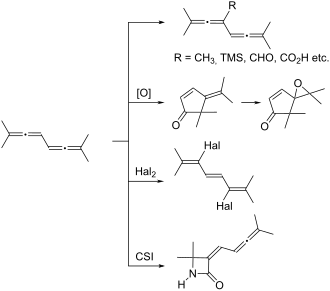
- 75.0 ppm. The symmetric diol 25 crystallizes from ethanol with one equivalent of included water. Stoichiometric host/guest associates have often been observed for this class of compounds [16]. The NMR spectra of 25 show only a small number of signals due to the symmetry of the molecule. In the 13C NMR






Influence of cyclodextrin on the solubility and the polymerization of (meth)acrylated Triton® X-100
Beilstein J. Org. Chem. 2012, 8, 2176–2183, doi:10.3762/bjoc.8.245
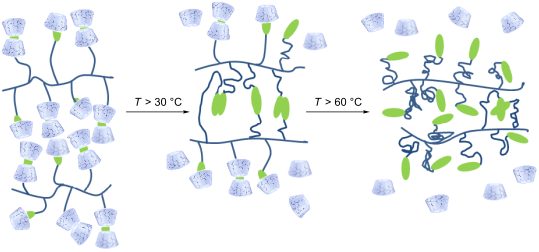
- , and fluorescence studies, were used to determine the equilibrium constant [4][5][6][7][8][9][10][11][12]. The results also differ in the stoichiometry of the formed complexes [4][7][9][10][11]. Host/guest ratios of 1:1 [4][7], 2:1 [9] and the coexistence of 1:1 and 2:1 [10][11] complexes of β-CD and
- RAMEB-CD The reaction of Triton® X-100 (1) with methacryloyl chloride and acryloyl chloride gave the corresponding methacrylic ester 2 [2] and acrylic ester 3, respectively. Both monomers 2 and 3 were insoluble in water, but readily formed water-soluble host–guest complexes with RAMEB-CD (4 to 7) within
- possible after the complexation of (meth)acrylated Triton® X-100 (2 and 3) with RAMEB-CD (Scheme 3). The polymers 10 and 12 complexed with 1 equiv of RAMEB-CD precipitated during the polymerization, whereas the double complexed polymers 11 and 13 did not precipitate, as a consequence of the stronger host


New enzymatically polymerized copolymers from 4-tert-butylphenol and 4-ferrocenylphenol and their modification and inclusion complexes with β-cyclodextrin
Beilstein J. Org. Chem. 2012, 8, 2118–2123, doi:10.3762/bjoc.8.238
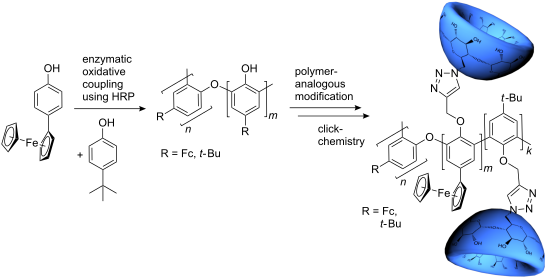
- investigated until now. Hence, in the present paper we report the HRP-catalyzed synthesis of novel copolymers from 2 and 3. Click reaction of the propargyl modified polyphenol 5 with mono-(6-azido-6-deoxy)-β-cyclodextrin (6) was also investigated. Based on former studies, host–guest structures were created [24
- subsequent click chemistry with N3-β-CD. The covalently bound cyclodextrin moiety and the covalently bound Fc or tert-butyl group form host/guest complexes as proven by DLS measurement. The cyclic voltammetry data shows that the central iron atom of the Fc moiety is present in the copolymer and can be


![[Graphic 2]](/bjoc/content/inline/1860-5397-8-238-i3.png?max-width=637&scale=0.59091) ).
).

Cyclodextrin-induced host–guest effects of classically prepared poly(NIPAM) bearing azo-dye end groups
Beilstein J. Org. Chem. 2012, 8, 1929–1935, doi:10.3762/bjoc.8.224
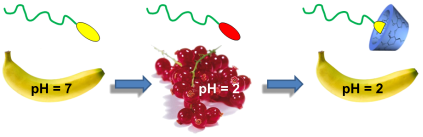
- observed. Additionally, this azo-dye-end-group-labeled polymer was complexed with hyperbranched polyglycerol (HPG) decorated with β-CD to generate hedgehog-like superstructures. Keywords: azo-dye; cyclodextrins; end-group functionalization; host–guest interaction; supramolecular aggregation; Introduction
- functionalization by condensation with an azo dye. We also investigated the host–guest interaction of the azo-dye-labeled end group with randomly methylated β-cyclodextrin (RAMEB-CD), and with HPG bearing β-CD on top. Thus, the focus of the present study was directed towards the preparation and superstructure
- predominant form in the red acidic aqueous solution [17][18][19]. Due to our general interest in the use of CD in polymer chemistry [3], the interaction of polymer 6 with RAMEB-CD was investigated. The proposed formation of the host–guest structure between the azo-dye end group and the RAMEB-CD cavity was


Influence of intramolecular hydrogen bonds on the binding potential of methylated β-cyclodextrin derivatives
Beilstein J. Org. Chem. 2012, 8, 1890–1895, doi:10.3762/bjoc.8.218
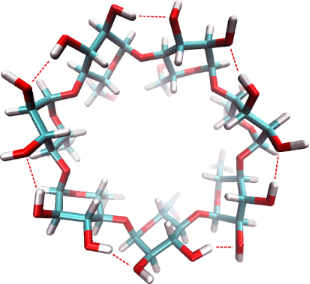
- ]. The host–guest complexes, so-called cyclodextrin inclusion compounds, find many applications such as solubilization of pharmaceutical drugs, dispersion of cosmetics, catalysis, or chromatographic separation of enantiomers [2][7][8]. Application of β-CD 1 is hampered by its low solubility of 18.8 g L−1
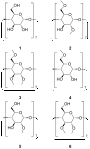
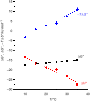
- host–guest complexes. Thermodynamic data obtained for the guests 4-tert-butylbenzoate and adamantane-1-carboxylate are listed in Table 1 and Table 2, respectively. Remarkable differences in the binding constants for 4-tert-butylbenzoate were found for the β-CD derivatives 2–7. The completely methylated


Molecular solubilization of fullerene C60 in water by γ-cyclodextrin thioethers
Beilstein J. Org. Chem. 2012, 8, 1644–1651, doi:10.3762/bjoc.8.188
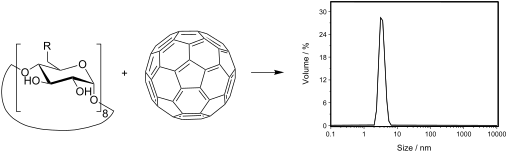
- hampered by the toxicities of the employed organic solvents or surfactants. The most successful strategy to carry the extremely hydrophobic C60 molecule into water is the use of appropriate water-soluble carriers that can form host–guest complexes, such as calixarenes [19][20] and cyclodextrins (CDs) [21


Mannose-decorated cyclodextrin vesicles: The interplay of multivalency and surface density in lectin–carbohydrate recognition
Beilstein J. Org. Chem. 2012, 8, 1543–1551, doi:10.3762/bjoc.8.175
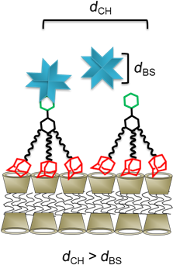
- be modified by host–guest interactions with functional guest molecules. In this article, we investigate the multivalent interaction of the lectin concanavalin A (ConA) with cyclodextrin vesicles decorated with mannose–adamantane conjugates with one, two or three adamantane units as well as one or two
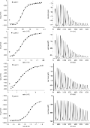
- , the stoichiometry appears to be less than 1:1, the binding constant is somewhat lower, and the thermodynamic parameters are different (notably, ΔS is negative). This observation can be explained by steric hindrance in the trivalent host–guest complex: apparently, three β-cyclodextrins are too large to
- , the guest molecules are expected to form inclusion complexes at the surface of vesicles of amphiphilic cyclodextrin 5. More importantly, guest molecules 2–4 are expected to form multivalent host–guest complexes with a much higher effective binding constant than the monovalent binding constant reported





Influence of cyclodextrin on the solubility of a classically prepared 2-vinylcyclopropane macromonomer in aqueous solution
Beilstein J. Org. Chem. 2012, 8, 1528–1535, doi:10.3762/bjoc.8.173
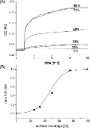
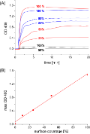
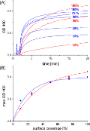
- different types of molecules with fitting size through van-der-Waals interactions. By formation of such host–guest complex properties, the dissolution behavior of the guest molecules can be changed. Based on this fact numerous applications of β-CDs are reported [17][18][19][20][21][22][23][24][25
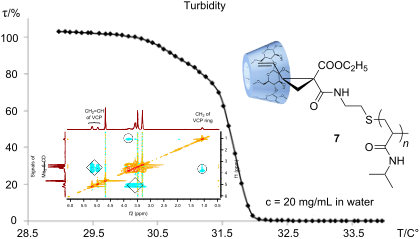
- vinylcyclopropane unit, this water insoluble macromonomer 5 is able to form a host–guest complex with Me2-β-CD, which is located at the polymerizable vinyl end group. This supramolecular complex 7 becomes completely water-soluble, so that a typical LCST effect could be observed. Since the bulky macromonomer 5


Control over molecular motion using the cis–trans photoisomerization of the azo group
Beilstein J. Org. Chem. 2012, 8, 1071–1090, doi:10.3762/bjoc.8.119
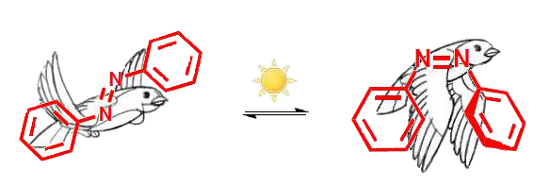
- (Figure 6) [94]. The photochromic properties of azobenzenes also find applications in “host–guest” recognition [95][96]. For example, the bis-azo compound 3 behaves as an excellent receptor of guanidinium ions by hydrogen-bonding interactions. The recognition is very effective when the azobenzene adopts


Synthesis and anion recognition properties of shape-persistent binaphthyl-containing chiral macrocyclic amides
Beilstein J. Org. Chem. 2012, 8, 967–976, doi:10.3762/bjoc.8.109
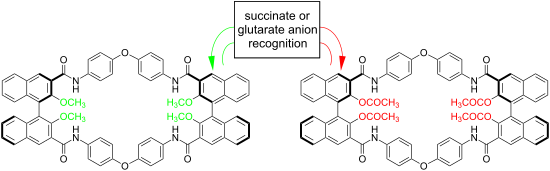
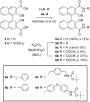
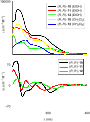
- loss of the initial symmetry. From the preliminary data in our hands, it is clear that there is a slow-exchanging equilibrium on the NMR time scale: the bulkier acetoxy group presumably inhibits a binding mechanism based on a fast host–guest exchange. A slow encapsulation mechanism, with multiple modes





Low-generation dendrimers with a calixarene core and based on a chiral C2-symmetric pyrrolidine as iminosugar mimics
Beilstein J. Org. Chem. 2012, 8, 951–957, doi:10.3762/bjoc.8.107
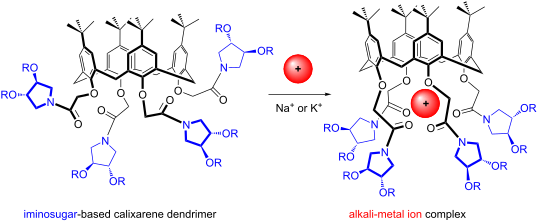
- , such as calixarenes, with the advantages of a dendrimeric presentation of iminosugar analogues. Calixarenes [11] have been widely employed in host–guest chemistry, first as ligands for small ions and neutral molecules [12][13] and, more recently, for biologically relevant molecules and macromolecules


Enantioselective supramolecular devices in the gas phase. Resorcin[4]arene as a model system
Beilstein J. Org. Chem. 2012, 8, 539–550, doi:10.3762/bjoc.8.62
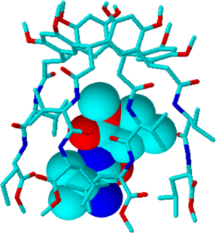
- simplified models under conditions, such as the gas phase, in which the noncovalent interactions in the guest–host complex are not perturbed by effects owing to the medium. As biological function and morphology are strongly correlated, knowledge of the supramolecular host–guest structures is expected to shed
- of tunable macrocycles largely studied in the context of host–guest chemistry, as cavitands [5] and capsules [6]. The great ability of resorcin[4]arenes to trap several classes of compounds makes them very suitable for the subtle study of the chemicophysical properties of their host–guest systems




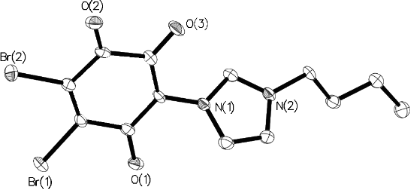
Synthesis of mesomeric betaine compounds with imidazolium-enolate structure
Beilstein J. Org. Chem. 2012, 8, 390–397, doi:10.3762/bjoc.8.42
- relatively low values of the formation constant calculated for both a 1:1 complex (K1 = 1.6 × 10² M−1) and a 1:2 complex (K2 = 0.2 × 10² M−1) indicates only weak host/guest interactions and therefore only a slight increase of solubility in water was achieved. However, the value of K1 is in good agreement


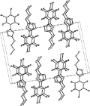


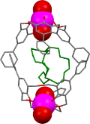
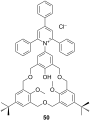
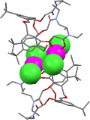
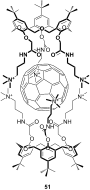
Fifty years of oxacalix[3]arenes: A review
Beilstein J. Org. Chem. 2012, 8, 201–226, doi:10.3762/bjoc.8.22
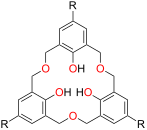
- species. Applications in fields as diverse as ion selective electrode modifiers, fluorescence sensors, fullerene separations and biomimetic chemistry are described. Keywords: calixarenes; host–guest chemistry; macrocycles; oxacalixarenes; Introduction Calixarenes, macrocycles which are widely used in
- -substituted phenol; however, in host–guest chemistry an asymmetric macrocycle can provide a site for enantioselective molecular recognition. In the case of p-tert-butylcalix[n]arenes the tert-butyl substituent can be removed, as mentioned previously, through a retro-Friedel–Crafts acylation, and replaced by
- absorption features at 425 or 430 nm in toluene. The strongest binding was observed for 3a (35.6 M−1) and the weakest for 3h (9.1 M−1). Although spectroscopic methods are widely used to determine host–guest association constants, Georghiou has argued persuasively that spectral changes in solution may be due


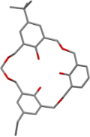


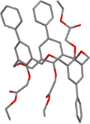








Efficient, highly diastereoselective MS 4 Å-promoted one-pot, three-component synthesis of 2,6-disubstituted-4-tosyloxytetrahydropyrans via Prins cyclization
Beilstein J. Org. Chem. 2012, 8, 177–185, doi:10.3762/bjoc.8.19
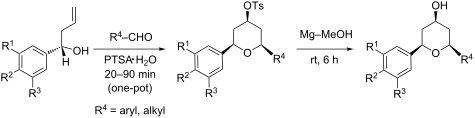
- phorboxazoles (A and B) [1], (−)-centrolobine [2], GEX1A/herboxidiene [3], bryostatins [4], and pheromones [5] (Figure 1). Tetrahydropyran derivatives are also used as materials in photographic films [6] and host–guest chemistry [7]. In particular, 2,4,6-trisubstituted tetrahydropyrans have tremendous


On the mechanism of action of gated molecular baskets: The synchronicity of the revolving motion of gates and in/out trafficking of guests
Beilstein J. Org. Chem. 2012, 8, 90–99, doi:10.3762/bjoc.8.9
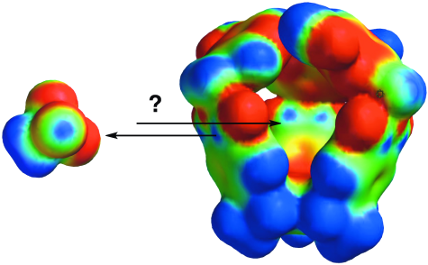
- the basket: Specifically, the greater the affinity of the guest for occupying the basket, the less effective the gates are in “sweeping” the guest as the gates undergo their revolving motion. Keywords: dynamic NMR; host–guest chemistry; linear free-energy relationships; molecular encapsulation
- proportional to the concentration of the host–guest complex, [basket–CH3CCl3], but inversely proportional to the concentration of CH3CCl3. At higher concentrations of CH3CCl3, however, there should be a negligible variation in the concentration of basket–CH3CCl3 and the magnetization rate coefficient k*in


Binding of group 15 and group 16 oxides by a concave host containing an isophthalamide unit
Beilstein J. Org. Chem. 2012, 8, 11–17, doi:10.3762/bjoc.8.2
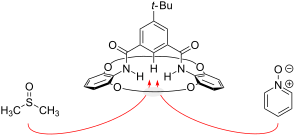
- to be obtained by curve fitting, which adds to the overall error. In our host–guest systems, saturation was not reached even when 20 equivalents of guests were used. An even larger excess of guest changed the polarity of the solvent to such an extent that all signals were affected, not only those
- involved in the binding [20]. If most guests only bind very moderately, an exact (and tedious) determination of all binding constants Kass is not interesting. It would be sufficient if a quick screening of the binding potentials of the hosts were possible and host–guest pairs with significant association
- between weak and strong binding. However, when NMR titrations of different host–guest pairs are carried out with identical concentrations, small and large association constants can be differentiated by the different curvatures of the titration graphs. In a titration curve of strong binding, the curvature


(How) does 1,3,5-triethylbenzene scaffolding work? Analyzing the abilities of 1,3,5-triethylbenzene- and 1,3,5-trimethylbenzene-based scaffolds to preorganize the binding elements of supramolecular hosts and to improve binding of targets
Beilstein J. Org. Chem. 2012, 8, 1–10, doi:10.3762/bjoc.8.1
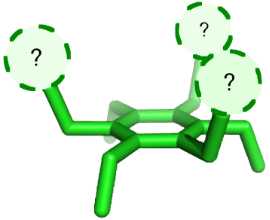
- to achieve strong and specific binding to targeted guest molecules. Many important weak interactions are directional and lead to highly ordered host–guest complexes [1][2]. The preorganization of binding elements in a competent binding geometry can have enthalpic effects on binding when considering
- the energy that must be paid to adopt a (potentially unfavorable) binding conformation, and can also have effects on binding entropy when one considers the degrees of freedom in the host, guest, and solvated host–guest complex. Rigid macrocyclic hosts are often successful because of their high degree
- (Figure 2a) [8]. The field has since exploded, with the first all-organic host–guest system of this type constructed by Anslyn [9] (Figure 2b) and over 150 papers reporting on 900 such structures for binding organic and inorganic guests having been published in the last 30 years [10]. The preorganizing


Continuous proline catalysis via leaching of solid proline
Beilstein J. Org. Chem. 2011, 7, 1671–1679, doi:10.3762/bjoc.7.197
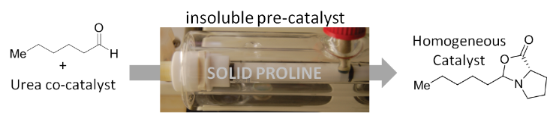
- been suggested. Initially, researchers gathered 1H NMR, UV, and fluorescence data to show that ureas enhance the solubility of proline through a host–guest interaction between the urea and proline carboxylate: A substrate-independent model [49][50]. However, it has been proposed that substrate–urea





