


Search results
Search for "intramolecular" in Full Text gives 1424 result(s) in Beilstein Journal of Organic Chemistry. Showing first 200.
Harnessing the versatility of hydrazones through electrosynthetic oxidative transformations
Beilstein J. Org. Chem. 2024, 20, 1988–2004, doi:10.3762/bjoc.20.175
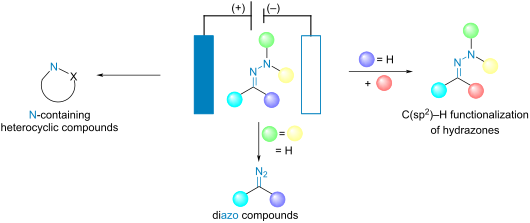
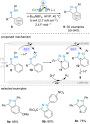
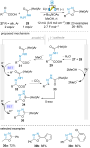
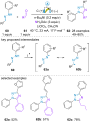
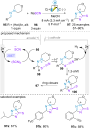
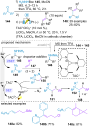
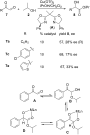
- one, which is consistent with the finding of ketone side-product. In 2018, the group of Zhang established an intramolecular C(sp2)–H functionalization of aldehyde-derived N-(2-pyridinyl)hydrazones 15 to produce 1,2,4-triazolo[4,3-a]pyridines 16 (Scheme 4) [39]. Interestingly, the hydrazone was in situ
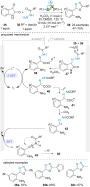
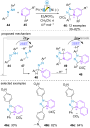
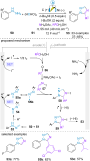
- applications in industry. Synthesis of triazolopyridinium salts [34][35][36]. Synthesis of pyrazoles [37]. Synthesis of indazoles from ketone-derived hydrazones [38]. Intramolecular C(sp2)–H functionalization of aldehyde-derived N-(2-pyridinyl)hydrazones for the synthesis of 1,2,4-triazolo[4,3-a]pyridines [39









Development of a flow photochemical process for a π-Lewis acidic metal-catalyzed cyclization/radical addition sequence: in situ-generated 2-benzopyrylium as photoredox catalyst and reactive intermediate
Beilstein J. Org. Chem. 2024, 20, 1973–1980, doi:10.3762/bjoc.20.173
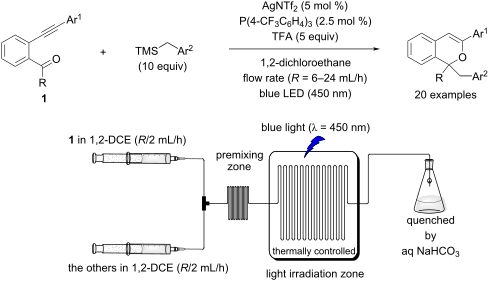
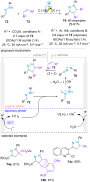
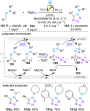
- generated in the flow reaction system through the intramolecular cyclization of ortho-carbonyl alkynylbenzene derivatives by the π-Lewis acidic metal catalyst AgNTf2 and the subsequent proto-demetalation with trifluoroacetic acid. The 2-benzopyrylium intermediates underwent further photoreactions with
- intramolecular cyclization followed by proto-demetalation with trifluoroacetic acid (TFA). In catalytic cycle II, photoexcitation of the generated 2-benzopyrylium intermediates A under light irradiation facilitates single-electron transfer (SET) from benzyltrimethylsilane derivatives 2 as the donor molecule
- intramolecular cyclization of ortho-carbonyl alkynylbenzene derivatives and subsequent proto-demetalation with TFA. Further photoreactions of 2-benzopyrylium intermediates with benzyltrimethylsilane derivatives as the donor molecule were conducted in the flow photoreactor. We confirmed that the flow reaction


Solvent-dependent chemoselective synthesis of different isoquinolinones mediated by the hypervalent iodine(III) reagent PISA
Beilstein J. Org. Chem. 2024, 20, 1914–1921, doi:10.3762/bjoc.20.167
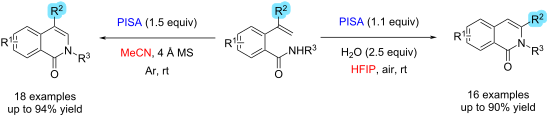
- peracetic acid as a terminal oxidant [20]. Recently, Kočovský et al. disclosed a method employing 2-methylbenzamide and benzonitrile to yield 3-aryl-substituted isoquinolinone derivatives in the presence of n-butyllithium [21]. On the other hand, the intramolecular oxidative cyclization is also a viable
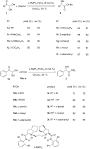
- option for the preparation of isoquinolinone derivatives. In 2020, two reports have been published on the conversion of alkyne-tethered N-alkoxybenzamides to isoquinolinones by intramolecular oxidative annulation, either electrochemically or using the hypervalent iodine reagent phenyliodine(III
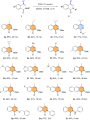
- –intramolecular cyclization cascade with excellent chemoselectivity in aqueous CH3CN [25]. Herein, as part of our continuing studies of heterocyclic scaffold synthesis mediated by hypervalent iodine reagents, we present the solvent-dependent chemoselective synthesis of a series of isoquinolinones mediated by PISA




Novel oxidative routes to N-arylpyridoindazolium salts
Beilstein J. Org. Chem. 2024, 20, 1906–1913, doi:10.3762/bjoc.20.166
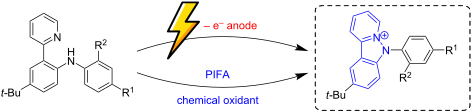
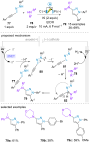
- exhibit significant bioactivity [4] and can be used as intercalating agents [7]. The very limited scope of these practically useful compounds is mainly attributed to the lack of convenient synthetic approaches to them. Thus, the only example of N-arylpyridoindazolium salts was obtained via intramolecular
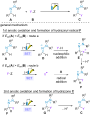
- intermediate (i.e., the diarylamines’ radical cation) and indicates the dominance of the intramolecular cyclization over the intermolecular C–N coupling process. Oxidation of diarylamines in the presence of an excess of trifluoroacetic acid gave no targeted pyridoindazolium salts, whereas the amount of
- diaryldihydrophenazine was increased (10%). Thus, protonation completely suppressed the intramolecular cyclization route. Heterocyclic salts S1–S3 were obtained as amorphous solids, soluble in polar solvents (acetonitrile, DMF, acetone) and chlorinated hydrocarbons (CHCl3, CH2Cl2). The structure of new N


Electrochemical radical cation aza-Wacker cyclizations
Beilstein J. Org. Chem. 2024, 20, 1900–1905, doi:10.3762/bjoc.20.165
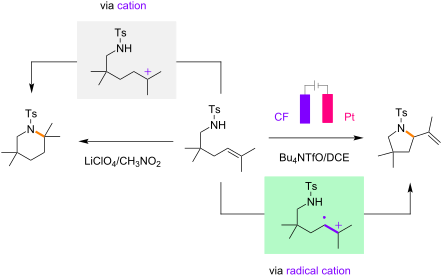
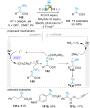
- the difference in such reactivities are intramolecular cyclizations (Scheme 1). A radical cyclization generates a five-membered ring with a less-stable primary radical, while a six-membered ring with a secondary cation is obtained through ionic cyclization. When such intramolecular cyclizations are
- the optimized conditions, unprotected amine 9 was not compatible. Although gem-dimethyl groups installed at the tether should have a positive impact on intramolecular cyclization, they were not essential for the reaction (10). In order to obtain mechanistic insight into the aza-Wacker cyclization
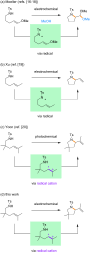
- -electron oxidation of the alkenes. Although a drop in oxidation potential for the alkene was observed when tethered to an aryl sulfonamide, as detailed by Moeller, rapid intramolecular cyclization would be the key [26][27][28]. We also measured cyclic voltammograms for aryl sulfonamides with and without




Access to 2-oxoazetidine-3-carboxylic acid derivatives via thermal microwave-assisted Wolff rearrangement of 3-diazotetramic acids in the presence of nucleophiles
Beilstein J. Org. Chem. 2024, 20, 1894–1899, doi:10.3762/bjoc.20.164

- reported in the literature are based on the construction of the β-lactam ring (Scheme 1). The main methods include the [2 + 2] cycloaddition of acyl ketenes, generated by various methods, with imines [11][12][13][14] and the Wolff rearrangement of γ-amino-α-diazo-β-ketoesters followed by intramolecular
- cyclization [15][16]. Additionally, the manganese(III)-promoted cyclization of N-alkenyl malonamides [17][18] and the Cu(I)-catalyzed reaction of propiolic acid derivatives with nitrones (Kinugasa reaction) [19][20][21] should also be mentioned, as well as intramolecular C–H insertion using


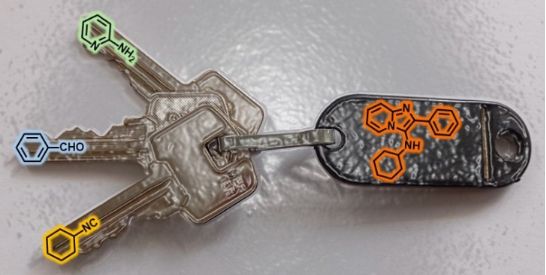
The Groebke–Blackburn–Bienaymé reaction in its maturity: innovation and improvements since its 21st birthday (2019–2023)
Beilstein J. Org. Chem. 2024, 20, 1839–1879, doi:10.3762/bjoc.20.162
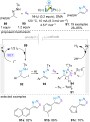
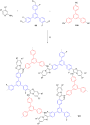
- (IPT)-mediated intramolecular oxidative annulation and a hydroxylamine-induced ring cleavage of intermediate 48. With this one-pot sequential procedure they synthesized 49 in yields up to 95% (Scheme 19). The subsequent GBB-3CR led to the unique 1H-imidazo[1,2-a]imidazole core 50 with 4 distinct
- limited to methanol due to solubility problems, and HClO4 was selected because other Brønsted acids caused amine deprotection. The GBB adducts 58 could be further elaborated through a Buchwald intramolecular nucleophilic substitution/cyclization, as it will be described in section 3.3. 3 Novel scaffolds
- -substituted products 60 underwent TFA-promoted deprotection which triggered the intramolecular cyclization to furnish the indole moiety in the desired products 61. A control experiment showed that the GBB product 60 was obtained as the sole product in the absence of acid catalyst. Another group developed the






Ugi bisamides based on pyrrolyl-β-chlorovinylaldehyde and their unusual transformations
Beilstein J. Org. Chem. 2024, 20, 1773–1784, doi:10.3762/bjoc.20.156
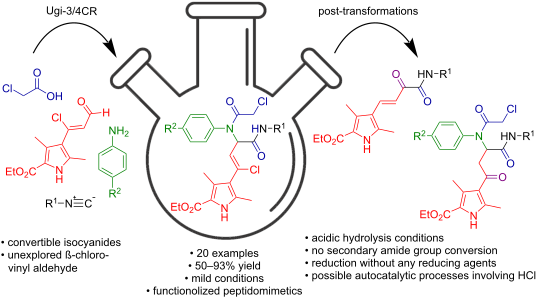
- component, after the formation of the expected Ugi bisamide products, subsequent post-transformations allow the synthesis of products of intramolecular cyclization [19][20][21][22] and/or products of a tandem combination of several reactions (Scheme 1) [22][23][24][25][26]. At the same time, the use of so




Harnessing unprotected deactivated amines and arylglyoxals in the Ugi reaction for the synthesis of fused complex nitrogen heterocycles
Beilstein J. Org. Chem. 2024, 20, 1758–1766, doi:10.3762/bjoc.20.154
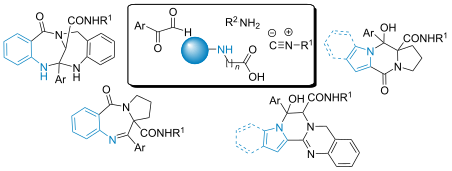
- explained by the intramolecular hydrogen bond formed between the hydroxy group and the carbamide substituent, which explains the high deshielding observed in the 1H NMR spectra for the signal of the OH group (around 8.5 ppm). As before, we also explored the stereochemical outcome in the synthesis of


Synthesis of polycyclic aromatic quinones by continuous flow electrochemical oxidation: anodic methoxylation of polycyclic aromatic phenols (PAPs)
Beilstein J. Org. Chem. 2024, 20, 1746–1757, doi:10.3762/bjoc.20.153
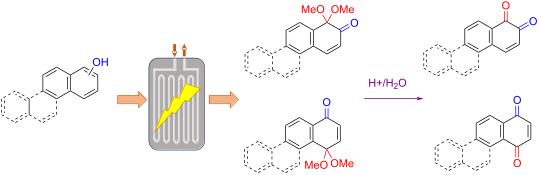
- aromatic hydrocarbons; Introduction Quinones and their derivatives are applied in various fields such as chemical, environmental, and pharmaceutical industries [1][2][3][4]. Their cyclic diketone structures can easily transform into intramolecular unsaturated structures, and their distinct physical




Syntheses and medicinal chemistry of spiro heterocyclic steroids
Beilstein J. Org. Chem. 2024, 20, 1713–1745, doi:10.3762/bjoc.20.152
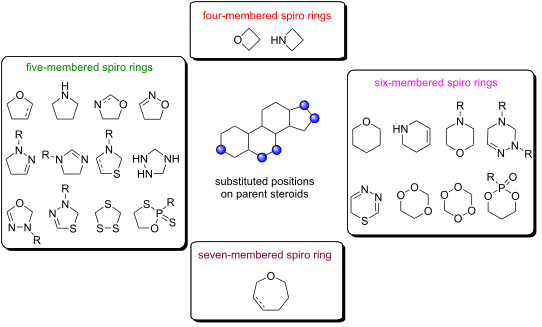
- -Spirofuran steroids Intramolecular cyclization of alcohols with allenes is a common method for obtaining 17-spirodihydro-(2H)-furan-3-ones. In 2006, Jiang et al. utilized a known reaction sequence to construct the 17-spiro heterocycle 27 from the commercially available ethylene deltenone 24 [20][21]. In this
- obtained in a 43% overall yield after acid hydrolysis (Scheme 8). Unsaturated spiro-2H-furan-3-ones have been synthesized using various procedures. In 2000, Lee et al. employed an intramolecular condensation reaction involving an α-ketoester derived from prednisolone precursors to produce the target spiro
- with similar yields. In 2006, Akita et al. used an intramolecular Knoevenagel–Claisen type condensation between a β-ketoester and an acetate residue to synthesize spiro-2H-furan-3-ones [24]. For instance, the intermediate orthoester 35 was obtained in 86% yield after a cyclization–carbonylation


Chemo-enzymatic total synthesis: current approaches toward the integration of chemical and enzymatic transformations
Beilstein J. Org. Chem. 2024, 20, 1693–1712, doi:10.3762/bjoc.20.151
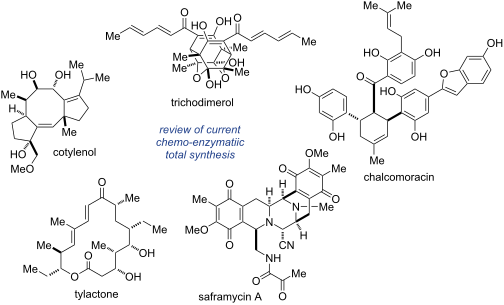
- on a decagram scale in five steps from (+)-limonene oxide (13), involving epoxide manipulation, oxidative cleavage, and intramolecular aldol condensation. Similarly, the right-half fragment, allyl chloride 16, was synthesized from limonene in five steps. Site-selective hydrogenation, oxidative
- cleavage, and intramolecular cyclization provided 15, followed by functional group manipulation to yield 16. The two segments 14 and 16 were assembled by Nozaki–Hiyama–Kishi (NHK) coupling while controlling the regio- and diastereoselectivities to afford intermediate 17 [25]. Site-selective hydroboration
- and subsequent oxidation yielded aldehyde 18, a precursor for the intramolecular ring closure of the eight-membered ring. Upon treatment of 18 with BF3·Et2O, diastereoselective Prins cyclization of 18 proceeded to generate secondary alcohol 19. Subsequent one-pot treatment with (n-Bu)4NF·HF resulted




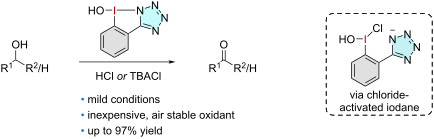
Oxidation of benzylic alcohols to carbonyls using N-heterocyclic stabilized λ3-iodanes
Beilstein J. Org. Chem. 2024, 20, 1677–1683, doi:10.3762/bjoc.20.149
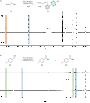
- ]. A crystal structure was additionally obtained for tetrazine 1c. Bond lengths and angles were similar to those of known five-membered NHIs [25], including a strong intramolecular interaction between the nitrogen of the tetrazine and the hypervalent iodine atom (I1–N1: 2.44(4) Å; the sum of VdW radii




Ring opening of photogenerated azetidinols as a strategy for the synthesis of aminodioxolanes
Beilstein J. Org. Chem. 2024, 20, 1671–1676, doi:10.3762/bjoc.20.148
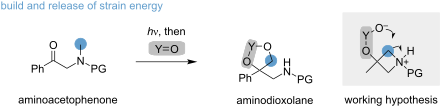
- subsequent ring-opening reactions. In this regard, we uncovered a novel entry to dioxolanes by intramolecular ring opening of azetidines using ketones and boronic acids. Results and Discussion Photocyclization We initiated our study by a systematic investigating of the Norrish–Yang cyclization for the



Methyltransferases from RiPP pathways: shaping the landscape of natural product chemistry
Beilstein J. Org. Chem. 2024, 20, 1652–1670, doi:10.3762/bjoc.20.147
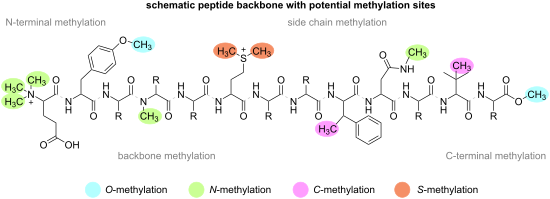
- its β-helical structure; reversion of the N-methylation led to complete conformation loss. The methylated asparagine residues at positions 16, 22, and 28 form an intramolecular chain of hydrogen bonds along the outside of the β-helix. Hydrogen atoms from the amide methyl group form hydrogen bonds with




Divergent role of PIDA and PIFA in the AlX3 (X = Cl, Br) halogenation of 2-naphthol: a mechanistic study
Beilstein J. Org. Chem. 2024, 20, 1580–1589, doi:10.3762/bjoc.20.141
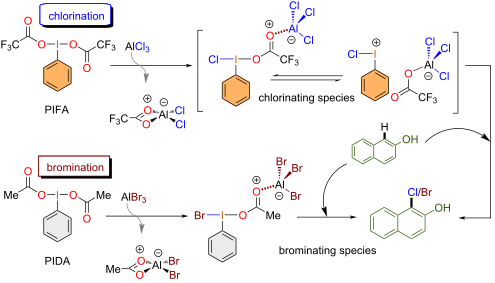
- reference. At this stage, the PIDA–AlBr3 adduct undergoes ionization, giving rise to the corresponding ion pair I-1–Br (ΔG = −31.3 kcal/mol) in a highly exergonic and energetically favorable process. Next, an intramolecular SN2 reaction of the formed aluminum anion transfers a bromine atom to the


Regio- and stereochemical stability induced by anomeric and gauche effects in difluorinated pyrrolidines
Beilstein J. Org. Chem. 2024, 20, 1572–1579, doi:10.3762/bjoc.20.140
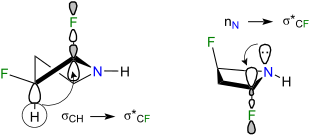
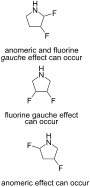
- -fluoroalkylamines and the respective cations [6]. Intramolecular hydrogen bonds involving either the carboxy or hydroxy group of 4R- and 4S-hydroxyproline have been identified as key factors in stabilizing the favored conformations in the gas phase. Therein, the contribution of a gauche effect due to electron
- delocalization is considered to be secondary [7]. However, stabilization via intramolecular hydrogen bonding does not seem to significantly impact the conformational stability of 3-fluoropiperidine. In this context, the cis-conformer, with the axial fluorine atom facing the N-hydrogen atom, is either equally or
- only slightly more stable than the other three conformers in both the gas phase and implicit water [4]. Hence, it appears that strong intramolecular interactions, and not only hydrogen bonding, govern the orientation of the fluorine atom in the F‒C‒C‒N fragment, favoring the cis-isomer of 3





Benzylic C(sp3)–H fluorination
Beilstein J. Org. Chem. 2024, 20, 1527–1547, doi:10.3762/bjoc.20.137

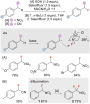
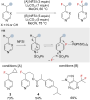
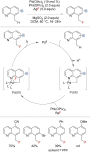
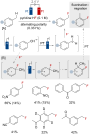
- intramolecular fluorine-atom-transfer (FAT) from an N-fluorinated amide to a pendant carbon-based radical formed from an iron catalyst (Figure 15) [55][56]. This concept of fluorine transfer through a 6-membered transition state was shown to work efficiently from primary, as well as secondary, benzylic radicals
- yields quoted vs copper catalyst. Iron-catalysed intramolecular fluorine-atom-transfer from N–F amides. Vanadium-catalysed benzylic fluorination with Selectfluor. NDHPI-catalysed radical benzylic C(sp3)–H fluorination with Selectfluor. Potassium persulfate-mediated radical benzylic C(sp3)–H fluorination








Photoswitchable glycoligands targeting Pseudomonas aeruginosa LecA
Beilstein J. Org. Chem. 2024, 20, 1486–1496, doi:10.3762/bjoc.20.132
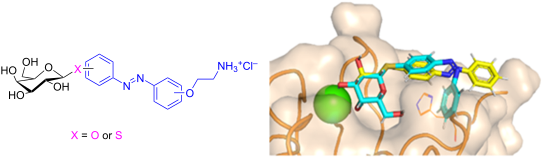
- formation of the 1,2-anhydro sugar through intramolecular attack of the 2-hydroxy group of the DMC-activated β-intermediate, followed by dihydroxyazobenzene attacking the anomeric center in an SN2 manner, or by direct nucleophilic SN2 attack on the DMC-activated α-intermediate, to produce the corresponding


Rapid construction of tricyclic tetrahydrocyclopenta[4,5]pyrrolo[2,3-b]pyridine via isocyanide-based multicomponent reaction
Beilstein J. Org. Chem. 2024, 20, 1436–1443, doi:10.3762/bjoc.20.126
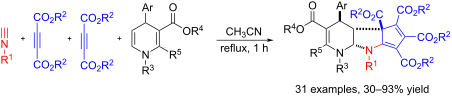
- intermediate B. Thirdly, the intramolecular coupling of the positive charge and the negative charge in intermediate B resulted in the formation of polysubstituted 5-(alkylimino)cyclopenta-1,3-diene intermediate C, which has been described in several papers about the reaction of alkyl isocyanides and electron


Synthesis of cyclic β-1,6-oligosaccharides from glucosamine monomers by electrochemical polyglycosylation
Beilstein J. Org. Chem. 2024, 20, 1421–1427, doi:10.3762/bjoc.20.124

- intramolecular glycosylation (Scheme 1a) [14]. One-pot two-step synthesis via electrochemical polyglycosylation and intramolecular glycosylation has also been achieved in order to synthesize unnatural cyclic oligosaccharides of glucosamine (Scheme 1b) [15]. Here, we report the direct synthesis of cyclic
- , entry 4). The reasons for the lower conversion and yield are unclear. However, the lower yield may stem from the lower stability of glycosylation intermediates with a benzyl protecting group at C-3. In all cases, the major product was 1,6-anhydrosugar 7, which was the intramolecular glycosylation
- DFT calculations in Supporting Information File 1). Therefore, it was proven that the 2,3-oxazolidinone protecting group was powerful enough to prevent intramolecular glycosylation of monomer 14. However, it did not prevent intramolecular glycosylation of the linear disaccharide and promote the


Challenge N- versus O-six-membered annulation: FeCl3-catalyzed synthesis of heterocyclic N,O-aminals
Beilstein J. Org. Chem. 2024, 20, 1412–1420, doi:10.3762/bjoc.20.123
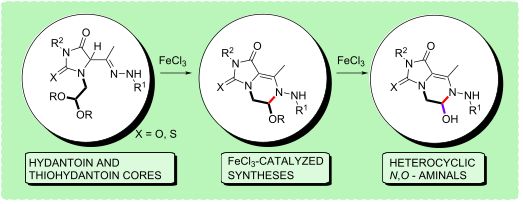
- intermediates through selective FeCl3-catalyzed intramolecular N-annulation. Keywords: α-aminoacetals; fused-ring systems; heterocyclic hemiaminals; heterocyclic N,O-aminals; multicomponent reactions; Introduction N-Fused heterocycles are ubiquitous within crucial molecules, including biologically active
- heteroring closure, positioning appropriate functions both at N-3 and C-4 of the (thio)hydantoin frameworks 4a–r (30–81%) broadening their usable decorations (Scheme 2). Recently, we reported that compounds 4a, 4f, and 4m undergo an intramolecular cyclization process through the involvement of the restored
- (entries 1–7, Table 1). Similarly to what was observed by Yu and co-workers for the intramolecular cyclization of alkynyl aldehyde acetals [28][29], it was found that the use of FeCl3 provided the better result in terms of overall yield (entry 3, Table 1). Moreover, the choice of iron(III) seemed to have




Hypervalent iodine-catalyzed amide and alkene coupling enabled by lithium salt activation
Beilstein J. Org. Chem. 2024, 20, 1405–1411, doi:10.3762/bjoc.20.122

- catalysis, which often involves the catalytic use of an iodoarene with stoichiometric oxidants such as MCPBA, Selectfluor, etc. [18][19][20]. Earlier and recent hypervalent iodine-catalyzed olefin halofunctionalizations by several groups have predicated on the use of intramolecular olefin substrates

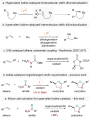


Synthetic applications of the Cannizzaro reaction
Beilstein J. Org. Chem. 2024, 20, 1376–1395, doi:10.3762/bjoc.20.120
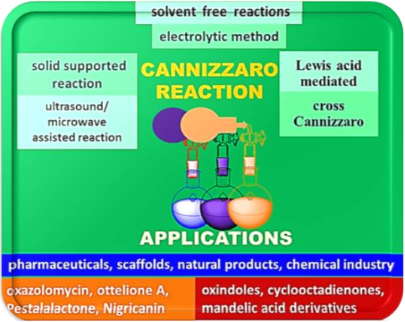
- intramolecular synthetic strategies. Immense applications in the synthesis of hydroxy acids and esters, heterocycles, fused carbocycles, natural products, and others with broad substrate scope have raised profound interest from methodological and synthetic standpoints. The ongoing development of reagents
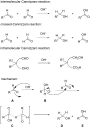
- aldehyde molecules, forming an alcohol and an acid [1][2][3][4]. Since its discovery in 1853, the Cannizzaro reaction has emerged as an important reaction in synthetic organic chemistry with intermolecular, crossed, and intramolecular versions as demonstrated by numerous applications. Notably, the
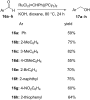
- formaldehyde is used as a reductant. This variant is known as the crossed-Cannizzaro reaction. On the other hand, an intramolecular Cannizzaro reaction occurs when both aldehyde groups are present in a single molecule. In this scenario, one aldehyde group is reduced to the corresponding alcohol, while the








Synthesis of 1,2,3-triazoles containing an allomaltol moiety from substituted pyrano[2,3-d]isoxazolones via base-promoted Boulton–Katritzky rearrangement
Beilstein J. Org. Chem. 2024, 20, 1334–1340, doi:10.3762/bjoc.20.117
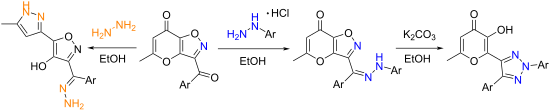
- , intramolecular recyclization accompanied by opening of the isoxazole ring and formation of the N–N bond leads to intermediate B. Finally, target 1,2,3-triazole 4 is produced via acidification of anion B. Next, we tried to expand the presented rearrangement to hydrazones derived from aliphatic hydrazines (MeNHNH2
- recyclization is depicted at Scheme 8. Initially, hydrazine molecule is added to double bond of the pyranone ring leading to zwitter-ion A. Further, cleavage of dihydropyranone fragment results in intermediate B. Next, enehydrazine C is formed from compound B through migration of a proton. Then, intramolecular





