


Search results
Search for "β-hydroxyketone" in Full Text gives 12 result(s) in Beilstein Journal of Organic Chemistry.
Bioinspired total syntheses of natural products: a personal adventure
- Zhengyi Qin,
- Yuting Yang,
- Nuran Yan,
- Xinyu Liang,
- Zhiyu Zhang,
- Yaxuan Duan,
- Huilin Li and
- Xuegong She
Beilstein J. Org. Chem. 2025, 21, 2048–2061, doi:10.3762/bjoc.21.160
- , Wittig reaction with MOMPPh3Cl and LDA gave the putative methyl enol ether, which could be directly converted into 1,3-dithiane 12 with propane-1,3-dithiol. Nucleophilic addition to chiral epoxide 13 and oxidative hydrolysis of 1,3-dithiane to ketone delivered chiral β-hydroxyketone 14. Evans−Tishchenko

Graphical Abstract

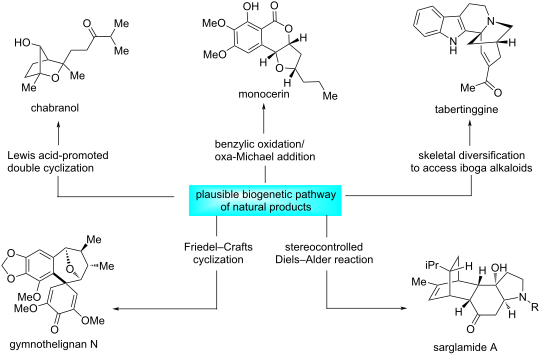
Figure 1: Representative natural products with biomimetic total synthesis.

Scheme 1: Bioinspired total synthesis of chabranol (2010).

Scheme 2: Proposed biosynthetic pathway of monocerin-family natural products.

Scheme 3: Bioinspired total synthesis of monocerin-family molecules (2013).
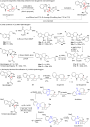
Scheme 4: Bioinspired skeletal diversification of (12-MeO-)tabertinggine (2016).

Scheme 5: Structures and our proposed biosynthetic pathway of gymnothelignans.

Scheme 6: Bioinspired total synthesis of gymnothelignans (2014–2025).
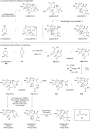
Scheme 7: Bioinspired total synthesis of sarglamides (2025).
Oxetanes: formation, reactivity and total syntheses of natural products
- Peter Gabko,
- Martin Kalník and
- Maroš Bella
Beilstein J. Org. Chem. 2025, 21, 1324–1373, doi:10.3762/bjoc.21.101
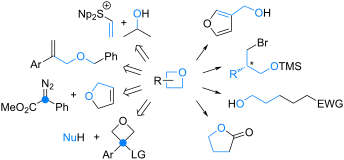

Graphical Abstract

Figure 1: Bond lengths and bond angles in oxetane at 140 K [2].

Figure 2: Analogy of 3-substituted oxetanes to carbonyl and gem-dimethyl groups [12].

Figure 3: Use of oxetanes in drug design – selected examples.

Figure 4: Examples of oxetane-containing natural products.

Scheme 1: Synthetic strategies towards construction of the oxetane ring.

Scheme 2: Overview of intramolecular Williamson etherification and competing Grob fragmentation.

Scheme 3: Synthesis of spiro-oxetanes via 1,4-C–H insertion and Williamson etherification.

Scheme 4: Use of phenyl vinyl selenone in the synthesis of spirooxindole oxetanes.

Scheme 5: Synthesis of bicyclic 3,5-anhydrofuranoses via double epoxide opening/etherification.

Scheme 6: Preparation of spirooxetanes by cycloisomerisation via MHAT/RPC.

Scheme 7: Oxetane synthesis via alcohol C–H functionalisation.

Scheme 8: Access to oxetanes 38 from α-acetyloxy iodides.

Scheme 9: The kilogram-scale synthesis of oxetane intermediate 41.

Scheme 10: Overview of the intramolecular opening of 3-membered rings.

Scheme 11: Synthesis of 4,7-dioxatricyclo[3.2.1.03,6]octane skeletons.

Scheme 12: Silicon-directed electrophilic cyclisation of homoallylic alcohols.

Scheme 13: Hydrosilylation–iodocyclisation of homopropargylic alcohols.

Scheme 14: Cu-catalysed intramolecular O-vinylation of γ-bromohomoallylic alcohols.

Scheme 15: Cu-catalysed intramolecular cross-coupling of hydroxyvinylstannanes.

Scheme 16: Isomerisation of oxiranyl ethers containing weakly carbanion-stabilising groups.

Scheme 17: Cyclisation of diethyl haloalkoxymalonates.

Scheme 18: Synthesis of oxetanes through a 1,5-HAT/radical recombination sequence.

Scheme 19: General approach to oxetanes via [2 + 2] cycloadditions.

Scheme 20: Synthesis of tricyclic 4:4:4 oxetanes through a photochemical triple cascade reaction.

Scheme 21: Iridium-catalysed Paternò–Büchi reaction between α-ketoesters and simple alkenes.

Scheme 22: Three-step synthesis of spirocyclic oxetanes 83 via Paternò–Büchi reaction, nucleophilic ring openi...

Scheme 23: Enantioselective Paternò–Büchi reaction catalysed by a chiral iridium photocatalyst.

Scheme 24: Synthesis of polysubstituted oxetanes 92 via Cu(II)-mediated formal [2 + 2] cycloadditions.

Scheme 25: Synthesis of alkylideneoxetanes via NHC- and DBU-mediated formal [2 + 2] cycloadditions.

Scheme 26: Use of sulphur-stabilised carbanions in ring expansions.

Scheme 27: Synthesis of α,α-difluoro(arylthio)methyl oxetanes.

Scheme 28: Ring expansion in an industrial synthesis of PF-06878031.

Scheme 29: Ring contraction of triflated 2-hydroxy-γ-lactones.

Scheme 30: Ring contraction in an industrial synthesis of PF-06878031.

Scheme 31: Photochemical ring contraction of 2,5-dihydrofurans by aryldiazoacetic acid esters.

Scheme 32: Synthesis of 3-oxetanones via O-H insertion of carbenes.

Scheme 33: Synthesis of phosphonate oxetanones via gold-mediated alkyne oxidation/O–H insertion.

Scheme 34: Syntheses and common derivatisations of 3-oxetanone.

Scheme 35: SN1 substitution of 3-aryloxetan-3-ols by thiols and alcohols.

Scheme 36: Fe–Ni dual-catalytic olefin hydroarylation towards 3-alkyl-3-(hetero)aryloxetanes.

Scheme 37: Synthesis of 3-aryloxetan-3-carboxylic acids.

Scheme 38: Decarboxylative alkylation of 3-aryloxetan-3-carboxylic acids.

Scheme 39: Synthesis of 3-amino-3-aryloxetanes via photoredox/nickel cross-coupling catalysis.
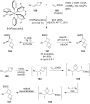
Scheme 40: Intermolecular cross-selective [2 + 2] photocycloaddition towards spirooxetanes.

Scheme 41: Synthesis of 3-aryl-3-aminooxetanes via defluorosulphonylative coupling.

Scheme 42: Two-step synthesis of amide bioisosteres via benzotriazolyl Mannich adducts 170.

Scheme 43: Functionalisation of oxetanyl trichloroacetimidates 172.

Scheme 44: Synthesis of oxetane-amino esters 176.

Scheme 45: Tandem Friedel–Crafts alkylation/intramolecular ring opening of 3-aryloxetan-3-ols.

Scheme 46: Synthesis of polysubstituted furans and pyrroles.

Scheme 47: Synthesis of oxazolines and bisoxazolines.

Scheme 48: Tandem, one-pot syntheses of various polycyclic heterocycles.

Scheme 49: Synthesis of 1,2-dihydroquinolines via skeletal reorganisation of oxetanes.

Scheme 50: Synthesis of benzoindolines and 2,3-dihydrobenzofurans and their derivatisations.

Scheme 51: Synthesis of polysubstituted 1,4-dioxanes.

Scheme 52: Preparation of various lactones via ring opening of oxetane-carboxylic acids 219.

Scheme 53: Tsuji-Trost allylation/ring opening of 3-aminooxetanes.

Scheme 54: Arylative skeletal rearrangement of 3-vinyloxetan-3-ols to 2,5-dihydrofurans.

Scheme 55: Reductive opening of oxetanes using catalytic Mg–H species.

Scheme 56: Opening of oxetanes by silyl ketene acetals.

Scheme 57: Rhodium-catalysed hydroacylation of oxetanes.

Scheme 58: Generation of radicals from oxetanes mediated by a vitamin B12-derived cobalt catalyst.

Scheme 59: Reductive opening of oxetanes by B–Si frustrated Lewis pairs.
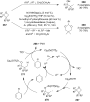
Scheme 60: Zirconocene-mediated reductive opening of oxetanes.

Scheme 61: Enantioselective syntheses of small and medium-size rings using chiral phosphoric acids.

Scheme 62: Asymmetric synthesis of 2,3-dihydrobenzo[b]oxepines catalysed by a chiral scandium complex.

Scheme 63: Enantioselective synthesis of 1,3-bromohydrins under a chiral squaramide catalysis.

Scheme 64: Enantioselective opening of 2-aryl-2-ethynyloxetanes by anilines.

Scheme 65: Ru-catalysed insertion of diazocarbonyls into oxetanes.

Scheme 66: Ring expansion of oxetanes by stabilised carbenes generated under blue light irradiation.

Scheme 67: Expansion of oxetanes via nickel-catalysed insertion of alkynyltrifluoroborates.

Scheme 68: Nickel-catalysed expansion of oxetanes into ε-caprolactones.

Scheme 69: Expansion of oxetanes via cobalt-catalysed carbonyl insertion.

Scheme 70: Gold-catalysed intramolecular 1,1-carboalkoxylation of oxetane-ynamides.

Scheme 71: Expansion of oxetanes by stabilised sulphoxonium ylides.

Scheme 72: Cu-catalysed ring expansion of 2-vinyloxetanes by diazoesters.

Scheme 73: Total synthesis of (+)-oxetin.

Scheme 74: Total synthesis of racemic oxetanocin A.

Scheme 75: Total synthesis of (−)-merrilactone A.
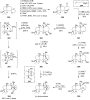
Scheme 76: Total synthesis of (+)-dictyoxetane.

Scheme 77: Total synthesis of ent-dichrocephone B.

Scheme 78: Total synthesis of (−)-mitrephorone A.
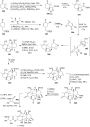
Scheme 79: Total synthesis of (−)-taxol.
Enolates ambushed – asymmetric tandem conjugate addition and subsequent enolate trapping with conventional and less traditional electrophiles
- Péter Kisszékelyi and
- Radovan Šebesta
Beilstein J. Org. Chem. 2023, 19, 593–634, doi:10.3762/bjoc.19.44
- conjugate alkynylation and consecutive aldol addition (Scheme 49) [91]. The chiral ruthenium complex C2 (Phebox-type)-catalyzed procedure delivered β-hydroxyketone derivatives 192 having α-propargyl groups in good yields, however, only with low diastereoselectivities (up to 3:1). While the syn-diastereomers

Graphical Abstract

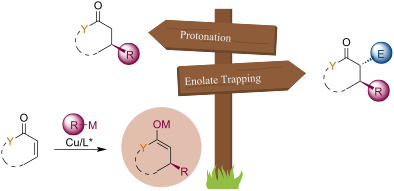
Scheme 1: General scheme depicting tandem reactions based on an asymmetric conjugate addition followed by an ...

Scheme 2: Cu-catalyzed tandem conjugate addition of R2Zn/aldol reaction with chiral acetals.

Scheme 3: Cu-catalyzed asymmetric desymmetrization of cyclopentene-1,3-diones using a tandem conjugate additi...

Scheme 4: Stereocontrolled assembly of dialkylzincs, cyclic enones, and sulfinylimines utilizing a Cu-catalyz...

Scheme 5: Cu-catalyzed tandem conjugate addition/Mannich reaction (A). Access to chiral isoindolinones and tr...

Scheme 6: Cu-catalyzed tandem conjugate addition/nitro-Mannich reaction (A) with syn–anti or syn–syn selectiv...

Figure 1: Various chiral ligands utilized for the tandem conjugate addition/Michael reaction sequences.
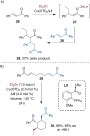
Scheme 7: Cu-catalyzed tandem conjugate addition/Michael reaction: side-product formation with chalcone (A) a...

Scheme 8: Zn enolate trapping using allyl iodides (A), Stork–Jung vinylsilane reagents (B), and allyl bromide...

Scheme 9: Cu-catalyzed tandem conjugate addition/acylation through Li R2Zn enolate (A). A four-component coup...

Scheme 10: Selected examples for the Cu-catalyzed tandem conjugate addition/trifluoromethylthiolation sequence....

Scheme 11: Zn enolates trapped by vinyloxiranes: synthesis of allylic alcohols.

Scheme 12: Stereoselective cyclopropanation of Mg enolates formed by ACA of Grignard reagents to chlorocrotona...

Scheme 13: Domino aldol reactions of Mg enolates formed from coumarin and chromone.

Scheme 14: Oxidative coupling of ACA-produced Mg enolates.

Scheme 15: Tandem ACA of Grignard reagents to enones and Mannich reaction.

Scheme 16: Diastereodivergent Mannich reaction of Mg enolates with differently N-protected imines.

Scheme 17: Tandem Grignard–ACA–Mannich using Taddol-based phosphine-phosphite ligands.

Scheme 18: Tandem reaction of Mg enolates with aminomethylating reagents.

Scheme 19: Tandem reaction composed of Grignard ACA to alkynyl enones.

Scheme 20: Rh/Cu-catalyzed tandem reaction of diazo enoates leading to cyclobutanes.

Scheme 21: Tandem Grignard-ACA of cyclopentenones and alkylation of enolates.

Scheme 22: Tandem ACA of Grignard reagents followed by enolate trapping reaction with onium compounds.

Scheme 23: Mg enolates generated from unsaturated lactones in reaction with activated alkenes.

Scheme 24: Lewis acid mediated ACA to amides and SN2 cyclization of a Br-appended enolate.

Scheme 25: Trapping reactions of aza-enolates with Michael acceptors.

Scheme 26: Si enolates generated by TMSOTf-mediated ACA of Grignard reagents and enolate trapping reaction wit...

Scheme 27: Trapping reactions of enolates generated from alkenyl heterocycles (A) and carboxylic acids (B) wit...

Scheme 28: Reactions of heterocyclic Mg enolates with onium compounds.

Scheme 29: Synthetic transformations of cycloheptatrienyl and benzodithiolyl substituents.

Scheme 30: Aminomethylation of Al enolates generated by ACA of trialkylaluminum reagents.

Scheme 31: Trapping reactions of enolates with activated alkenes.

Scheme 32: Alkynylation of racemic aluminum or magnesium enolates.

Scheme 33: Trapping reactions of Zr enolates generated by Cu-ACA of organozirconium reagents.

Scheme 34: Chloromethylation of Zr enolates using the Vilsmeier–Haack reagent.

Scheme 35: Tandem conjugate borylation with subsequent protonation or enolate trapping by an electrophile.

Scheme 36: Tandem conjugate borylation/aldol reaction of cyclohexenones.

Scheme 37: Selected examples for the tandem asymmetric borylation/intramolecular aldol reaction; synthesis of ...

Scheme 38: Cu-catalyzed tandem methylborylation of α,β-unsaturated phosphine oxide in the presence of (R,Sp)-J...

Scheme 39: Cu-catalyzed tandem transannular conjugated borylation/aldol cyclization of macrocycles containing ...

Scheme 40: Stereoselective tandem conjugate borylation/Mannich cyclization: selected examples (A) and a multi-...

Scheme 41: Some examples of Cu-catalyzed asymmetric tandem borylation/aldol cyclization (A). Application to di...

Scheme 42: Atropisomeric P,N-ligands used in tandem conjugate borylation/aldol cyclization sequence.

Scheme 43: Selected examples for the enantioselective Cu-catalyzed borylation/intramolecular Michael addition ...

Scheme 44: Selected examples for the preparation of enantioenriched spiroindanes using a Cu-catalyzed tandem c...
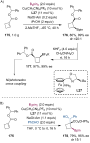
Scheme 45: Enantioselective conjugate borylation of cyclobutene-1-carboxylic acid diphenylmethyl ester 175 wit...

Scheme 46: Cu-catalyzed enantioselective tandem conjugate silylation of α,β-unsaturated ketones with subsequen...

Scheme 47: Cu-catalyzed enantioselective tandem conjugate silylation of α,β-unsaturated ketones with subsequen...
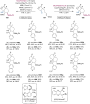
Scheme 48: Cu-catalyzed tandem conjugate silylation/aldol condensation. The diastereoselectivity is controlled...

Scheme 49: Chiral Ru-catalyzed three-component coupling reaction.

Scheme 50: Rh-Phebox complex-catalyzed reductive cyclization and subsequent reaction with Michael acceptors th...

Scheme 51: Rh-catalyzed tandem asymmetric conjugate alkynylation/aldol reaction (A) and subsequent spiro-cycli...

Scheme 52: Rh-bod complex-catalyzed tandem asymmetric conjugate arylation/intramolecular aldol addition (A). S...

Scheme 53: Co-catalyzed C–H-bond activation/asymmetric conjugate addition/aldol reaction.

Scheme 54: (Diisopinocampheyl)borane-promoted 1,4-hydroboration of α,β-unsaturated morpholine carboxamides and...

Figure 2: Some examples of total syntheses that have been recently reviewed.

Scheme 55: Stereoselective synthesis of antimalarial prodrug (+)-artemisinin utilizing a tandem conjugate addi...

Scheme 56: Amphilectane and serrulatane diterpenoids: preparation of chiral starting material via asymmetric t...

Scheme 57: Various asymmetric syntheses of pleuromutilin and related compounds based on a tandem conjugate add...
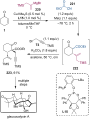
Scheme 58: Total synthesis of glaucocalyxin A utilizing a tandem conjugate addition/acylation reaction sequenc...
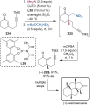
Scheme 59: Installation of the exocyclic double bond using a tandem conjugate addition/aminomethylation sequen...
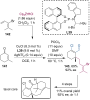
Scheme 60: Synthesis of the taxol core using a tandem conjugate addition/enolate trapping sequence with Vilsme...
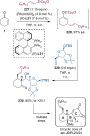
Scheme 61: Synthesis of the tricyclic core of 12-epi-JBIR-23/24 utilizing a Rh-catalyzed asymmetric conjugate ...
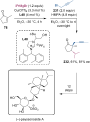
Scheme 62: Total synthesis of (−)-peyssonoside A utilizing a Cu-catalyzed enantioselective tandem conjugate ad...
Asymmetric synthesis of a stereopentade fragment toward latrunculins
- Benjamin Joyeux,
- Antoine Gamet,
- Nicolas Casaretto and
- Bastien Nay
Beilstein J. Org. Chem. 2023, 19, 428–433, doi:10.3762/bjoc.19.32
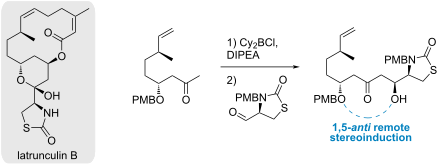
- a 1,5-anti induction of the aldol reaction [18][19][20] based on chiral alkoxy partner 9. Furthermore, it could be envisaged to reduce the resulting β-hydroxyketone 7 in a diastereoselective manner to obtain a 1,3-diol. This synthetic strategy could thus bring new stereochemical opportunities to
- thiazolidinone ring, possibly leading to a strong conformational distortion of Mosher's model. The question of the resulting stereoselectivity was thus left open for later resolution. To complete this study, the 1,3-anti-diastereoselective reduction of β-hydroxyketone 21 was undertaken through the Evans
- resulting from a 1,5-anti induction by the nucleophile leading to product 21, and excluding a Felkin–Anh control by the aldehyde. This reaction validates a unique disconnection among latrunculin synthetic strategies and avoids the construction of a 4-acetyl-1,3-thiazolidin-2-one. Finally, this β

Graphical Abstract

Figure 1: Structure of latrunculins (the red dots show the natural product stereopentade).

Figure 2: General strategy for latrunculin cycle disconnections (left), previous works towards linear precurs...

Scheme 1: Synthesis of fragment 15 from (+)-β-citronellene (10).
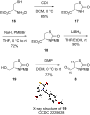
Scheme 2: Synthesis of fragment 8 from ʟ-cysteine ethyl ester hydrochloride (16).

Scheme 3: Synthesis of fragment 21 through a stereoselective aldol reaction.

Scheme 4: 1,3-Anti-diastereoselective reduction of 21 with PNBz transposition, and final determination of the...
Strategies to access the [5-8] bicyclic core encountered in the sesquiterpene, diterpene and sesterterpene series
- Cécile Alleman,
- Charlène Gadais,
- Laurent Legentil and
- François-Hugues Porée
Beilstein J. Org. Chem. 2023, 19, 245–281, doi:10.3762/bjoc.19.23
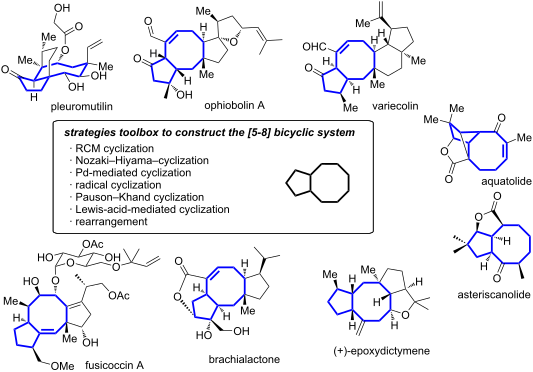
- compound 24 was rationalized by an isomerization of the double bond prior to the cyclization step. Isolated from the Ecuadorian liverwort Anastrophyllum auritum in 1994, ent-fusicoauritone (28) is a diterpene presenting a fusicoccan skeleton with a β-hydroxyketone on the A-ring and 5 stereogenic centers

Graphical Abstract

Figure 1: Examples of terpenes containing a bicyclo[3.6.0]undecane motif.

Figure 2: Commercially available first and second generation Grubbs and Hoveyda–Grubbs catalysts.

Figure 3: Examples of strategies to access the fusicoccan and ophiobolin tricyclic core structure by RCM.

Scheme 1: Synthesis of bicyclic core structure 12 of ophiobolin M (13) and cycloaraneosene (14).

Scheme 2: Synthesis of the core structure 21 of ophiobolins and fusicoccanes.

Scheme 3: Ring-closing metathesis attempts starting from thioester 22.

Scheme 4: Total synthesis of ent-fusicoauritone (28).

Figure 4: General structure of ophiobolins and congeners.

Scheme 5: Total synthesis of (+)-ophiobolin A (8).

Scheme 6: Investigation of RCM for the synthesis of ophiobolin A (8). Path A) RCM with TBDPS-protected alcoho...

Scheme 7: Synthesis of the core structure of cotylenin A aglycon, cotylenol (50).

Scheme 8: Synthesis of tricyclic core structure of fusicoccans.

Scheme 9: Total synthesis of (−)-teubrevin G (59).

Scheme 10: Synthesis of the core skeleton 63 of the basmane family.

Scheme 11: Total synthesis of (±)-schindilactone A (68).

Scheme 12: Total synthesis of dactylol (72).

Scheme 13: Ring-closing metathesis for the total synthesis of (±)-asteriscanolide (2).

Scheme 14: Synthesis of the simplified skeleton of pleuromutilin (1).

Scheme 15: Total synthesis of (−)-nitidasin (93) using a ring-closing metathesis to construct the eight-member...

Scheme 16: Total synthesis of (±)-naupliolide (97).

Scheme 17: Synthesis of the A-B ring structure of fusicoccane (101).

Scheme 18: First attempts of TRCM of dienyne substrates.

Scheme 19: TRCM on optimized substrates towards the synthesis of ophiobolin A (8).

Scheme 20: Tandem ring-closing metathesis for the synthesis of variecolin intermediates 114 and 115.

Scheme 21: Synthesis of poitediol (118) using the allylsilane ring-closing metathesis.

Scheme 22: Access to scaffold 122 by a NHK coupling reaction.

Scheme 23: Key step to construct the [5-8] bicyclooctanone core of aquatolide (4).

Scheme 24: Initial strategy to access aquatolide (4).

Scheme 25: Synthetic plan to cotylenin A (130).

Scheme 26: [5-8] Bicyclic structure of brachialactone (7) constructed by a Mizoroki–Heck reaction.

Scheme 27: Influence of the replacement of the allylic alcohol moiety.

Scheme 28: Formation of variecolin intermediate 140 through a SmI2-mediated Barbier-type reaction.

Scheme 29: SmI2-mediated ketyl addition. Pleuromutilin (1) eight-membered ring closure via C5–C14 bond formati...

Scheme 30: SmI2-mediated dialdehyde cyclization cascade of [5-8-6] pleuromutilin scaffold 149.

Scheme 31: A) Modular synthetic route to mutilin and pleuromutilin family members by Herzon’s group. B) Scaffo...

Scheme 32: Photocatalyzed oxidative ring expansion in pleuromutilin (1) total synthesis.

Scheme 33: Reductive radical cascade cyclization route towards (−)-6-epi-ophiobolin N (168).

Scheme 34: Reductive radical cascade cyclization route towards (+)-6-epi-ophiobolin A (173).

Scheme 35: Radical 8-endo-trig-cyclization of a xanthate precursor.

Figure 5: Structural representations of hypoestin A (177), albolic acid (178), and ceroplastol II (179) beari...

Scheme 36: Synthesis of the common [5-8-5] tricyclic intermediate of hypoestin A (177), albolic acid (178), an...

Scheme 37: Asymmetric synthesis of hypoestin A (177), albolic acid (178), and ceroplastol II (179).

Figure 6: Scope of the Pauson–Khand reaction.

Scheme 38: Nazarov cyclization revealing the fusicoauritone core structure 192.

Scheme 39: Synthesis of fusicoauritone (28) through Nazarov cyclization.

Scheme 40: (+)-Epoxydictymene (5) synthesis through a Nicholas cyclization followed by a Pauson–Khand reaction...

Scheme 41: Synthesis of aquatolide (4) by a Mukaiyama-type aldolisation.

Scheme 42: Tandem Wolff/Cope rearrangement furnishing the A-B bicyclic moiety 204 of variecolin.

Scheme 43: Asymmetric synthesis of the A-B bicyclic core 205 and 206 of variecolin.

Scheme 44: Formation of [5-8]-fused rings by cyclization under thermal activation.

Scheme 45: Construction of the [5-8-6] tricyclic core structure of variecolin (3) by Diels–Alder reaction.

Scheme 46: Synthesis of the [6-4-8-5]-tetracyclic skeleton by palladium-mediated cyclization.

Scheme 47: Access to the [5-8] bicyclic core structure of asteriscanolide (227) through rhodium-catalyzed cycl...

Scheme 48: Total syntheses of asterisca-3(15),6-diene (230) and asteriscanolide (2) with a Rh-catalyzed cycliz...

Scheme 49: Photocyclization of 2-pyridones to access the [5-8-5] backbone of fusicoccanes.

Scheme 50: Total synthesis of (+)-asteriscunolide D (245) and (+)-aquatolide (4) through photocyclization.

Scheme 51: Biocatalysis pathway to construct the [5-8-5] tricyclic scaffold of brassicicenes.

Scheme 52: Influence of the CotB2 mutant over the cyclization’s outcome of GGDP.
Advances in mercury(II)-salt-mediated cyclization reactions of unsaturated bonds
- Sumana Mandal,
- Raju D. Chaudhari and
- Goutam Biswas
Beilstein J. Org. Chem. 2021, 17, 2348–2376, doi:10.3762/bjoc.17.153
- efficiently utilized for the synthesis of highly strained tricyclo[5.2.1.01,6]decene intermediate 214 containing a cyclobutane ring (Scheme 64). Compound 213 is an important precursor for the asymmetric total synthesis of solanoeclepin A. The formation of β-hydroxyketone 213 was achieved by Hg(TFA)2-mediated

Graphical Abstract

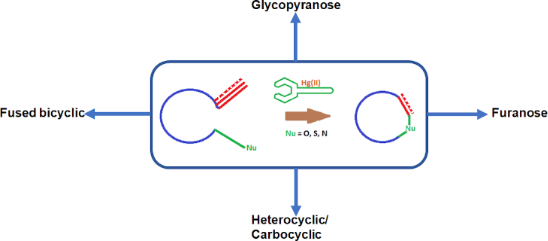
Scheme 1: Schematic representation of Hg(II)-mediated addition to an unsaturated bond.

Scheme 2: First report of Hg(II)-mediated synthesis of 2,5-dioxane derivatives from allyl alcohol.

Scheme 3: Stepwise synthesis of 2,6-distubstituted dioxane derivatives.

Scheme 4: Cyclization of carbohydrate alkene precursor.

Scheme 5: Hg(II)-mediated synthesis of C-glucopyranosyl derivatives.

Scheme 6: Synthesis of C-glycosyl amino acid derivative using Hg(TFA)2.

Scheme 7: Hg(OAc)2-mediated synthesis of α-ᴅ-ribose derivative.

Scheme 8: Synthesis of β-ᴅ-arabinose derivative 18.

Scheme 9: Hg(OAc)2-mediated synthesis of tetrahydrofuran derivatives.

Scheme 10: Synthesis of Hg(TFA)2-mediated bicyclic nucleoside derivative.

Scheme 11: Synthesis of pyrrolidine and piperidine derivatives.

Scheme 12: HgCl2-mediated synthesis of diastereomeric pyrrolidine derivatives.

Scheme 13: HgCl2-mediated cyclization of alkenyl α-aminophosphonates.

Scheme 14: Cyclization of 4-cycloocten-1-ol with Hg(OAc)2 forming fused bicyclic products.

Scheme 15: trans-Amino alcohol formation through Hg(II)-salt-mediated cyclization.

Scheme 16: Hg(OAc)2-mediated 2-aza- or 2-oxa-bicyclic ring formations.

Scheme 17: Hg(II)-salt-induced cyclic peroxide formation.

Scheme 18: Hg(OAc)2-mediated formation of 1,2,4-trioxanes.

Scheme 19: Endocyclic enol ether derivative formation through Hg(II) salts.

Scheme 20: Synthesis of optically active cyclic alanine derivatives.

Scheme 21: Hg(II)-salt-mediated formation of tetrahydropyrimidin-4(1H)-one derivatives.

Scheme 22: Cyclization of ether derivatives to form stereoselective oxazolidine derivatives.

Scheme 23: Cyclization of amide derivatives induced by Hg(OAc)2.

Scheme 24: Hg(OAc)2/Hg(TFA)2-promoted cyclization of salicylamide-derived amidal auxiliary derivatives.

Scheme 25: Hg(II)-salt-mediated cyclization to form dihydrobenzopyrans.

Scheme 26: HgCl2-induced cyclization of acetylenic silyl enol ether derivatives.

Scheme 27: Synthesis of exocyclic and endocyclic enol ether derivatives.

Scheme 28: Cyclization of trans-acetylenic alcohol by treatment with HgCl2.

Scheme 29: Synthesis of benzofuran derivatives in presence of HgCl2.

Scheme 30: a) Hg(II)-salt-mediated cyclization of 4-hydroxy-2-alkyn-1-ones to furan derivatives and b) its mec...
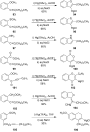
Scheme 31: Cyclization of arylacetylenes to synthesize carbocyclic and heterocyclic derivatives.

Scheme 32: Hg(II)-salt-promoted cyclization–rearrangement to form heterocyclic compounds.

Scheme 33: a) HgCl2-mediated cyclization reaction of tethered alkyne dithioacetals; and b) proposed mechanism.

Scheme 34: Cyclization of aryl allenic ethers on treatment with Hg(OTf)2.

Scheme 35: Hg(TFA)2-mediated cyclization of allene.

Scheme 36: Hg(II)-catalyzed intramolecular trans-etherification reaction of 2-hydroxy-1-(γ-methoxyallyl)tetrah...
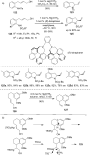
Scheme 37: a) Cyclization of alkene derivatives by catalytic Hg(OTf)2 salts and b) mechanism of cyclization.

Scheme 38: a) Synthesis of 1,4-dihydroquinoline derivatives by Hg(OTf)2 and b) plausible mechanism of formatio...

Scheme 39: Synthesis of Hg(II)-salt-catalyzed heteroaromatic derivatives.

Scheme 40: Hg(II)-salt-catalyzed synthesis of dihydropyranone derivatives.

Scheme 41: Hg(II)-salt-catalyzed cyclization of alkynoic acids.

Scheme 42: Hg(II)-salt-mediated cyclization of alkyne carboxylic acids and alcohol to furan, pyran, and spiroc...

Scheme 43: Hg(II)-salt-mediated cyclization of 1,4-dihydroxy-5-alkyne derivatives.

Scheme 44: Six-membered morpholine derivative formation by catalytic Hg(II)-salt-induced cyclization.

Scheme 45: Hg(OTf)2-catalyzed hydroxylative carbocyclization of 1,6-enyne.
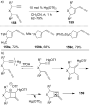
Scheme 46: a) Hg(OTf)2-catalyzed hydroxylative carbocyclization of 1,6-enyne. b) Proposed mechanism.

Scheme 47: a) Synthesis of carbocyclic derivatives using a catalytic amount of Hg(II) salt. b) Proposed mechan...

Scheme 48: Cyclization of 1-alkyn-5-ones to 2-methylfuran derivatives.

Scheme 49: Hg(NO3)2-catalyzed synthesis of 2-methylenepiperidine.

Scheme 50: a) Preparation of indole derivatives through cycloisomerization of 2-ethynylaniline and b) its mech...
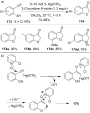
Scheme 51: a) Hg(OTf)2-catalyzed synthesis of 3-indolinones and 3-coumaranones and b) simplified mechanism.

Scheme 52: a) Hg(OTf)2-catalyzed one pot cyclization of nitroalkyne and b) its plausible mechanism.

Scheme 53: Synthesis of tricyclic heterocyclic scaffolds.

Scheme 54: HgCl2-mediated cyclization of 2-alkynylphenyl alkyl sulfoxide.

Scheme 55: a) Hg(OTf)2-catalyzed cyclization of allenes and alkynes. b) Proposed mechanism of cyclization.

Scheme 56: Stereoselective synthesis of tetrahydropyran derivatives.
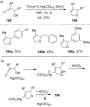
Scheme 57: a) Hg(ClO4)2-catalyzed cyclization of α-allenol derivatives. b) Simplified mechanism.

Scheme 58: Hg(TFA)2-promoted cyclization of a γ-hydroxy alkene derivative.

Scheme 59: Synthesis Hg(II)-salt-mediated cyclization of allyl alcohol for the construction of ventiloquinone ...

Scheme 60: Hg(OAc)2-mediated cyclization as a key step for the synthesis of hongconin.

Scheme 61: Examples of Hg(II)-salt-mediated cyclized ring formation in the syntheses of (±)-fastigilin C and (...

Scheme 62: Formal synthesis of (±)-thallusin.

Scheme 63: Total synthesis of hippuristanol and its analog.

Scheme 64: Total synthesis of solanoeclepin A.

Scheme 65: a) Synthesis of Hg(OTf)2-catalyzed azaspiro structure for the formation of natural products. b) Pro...
N–O Cleavage reactions of heterobicycloalkene-fused 2-isoxazolines
- Jaipal R. Nagireddy,
- Geoffrey K. Tranmer,
- Emily Carlson and
- William Tam
Beilstein J. Org. Chem. 2014, 10, 2200–2205, doi:10.3762/bjoc.10.227
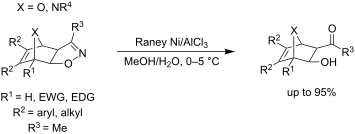
- yields (66–95%) and without the need for chromatographic purification. Keywords: azabicycloalkene; β-hydroxyketone; 2-isoxazoline; oxabicycloalkene; Raney nickel; Introduction 2-Isoxazolines 1 are practical precursors to countless structural motifs found in nature. Various carbonyl compounds 2, β
- precipitated out of solution following work-up, allowing us to bypass chromatographic purification. The product so obtained was found to be β-hydroxyketone 16a (Table 2, entry 1). Once the optimal conditions were found, various symmetrical heterobicycle-fused 2-isoxazolines were opened by Raney-Ni/AlCl3
- mediation. These results are summarized in Table 2. Compared to the parent compound 10a which gave an appreciable 93% yield of the corresponding β-hydroxyketone (Table 2, entry 1), replacement of two of the arene hydrogens for bromine atoms in 10b resulted in a lower tendency toward N–O bond cleavage (Table

Graphical Abstract

Scheme 1: Cleavage reactions of 2-isoxazoline 1.

Scheme 2: Potential modes of cleavage for heterobicycloalkene-fused isoxazolines 10 or 11.

Scheme 3: Raney Ni/AlCl3-mediated cleavage of 2-isoxazolines with various fused heterobicyclic frameworks.

Scheme 4: Proposed mechanism for Mo-mediated cleavage of carbobicycle-fused 2-isoxazoline.

Scheme 5: Proposed mechanism for Raney nickel-mediated formation of β-hydroxyketones from heterobicycloalkene...
Synthesis of the B-seco limonoid core scaffold
- Hanna Bruss,
- Hannah Schuster,
- Rémi Martinez,
- Markus Kaiser,
- Andrey P. Antonchick and
- Herbert Waldmann
Beilstein J. Org. Chem. 2014, 10, 194–208, doi:10.3762/bjoc.10.15
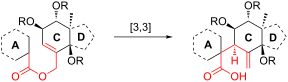
- regioselective opening [60][61] leading to the β-hydroxyketone that was temporarily masked as a TES ether. Reduction of ketone 85 with NaBH4 resulted in the formation of two diastereomeric alcohols in 2:1 ratio. To our delight flash chromatography permitted smooth separation of the two compounds. nOe studies

Graphical Abstract

Figure 1: Structures of the 4,4,8-trimethyl-17-furanylsteroid core structure I and the representative B-seco ...

Scheme 1: Retrosynthetic analysis of the B-seco limonoid framework employing a [3,3]-sigmatropic rearrangemen...

Scheme 2: Retrosynthetic analysis of the B-seco limonoid scaffold employing a Claisen rearrangement as key st...

Scheme 3: Synthesis of alcohols 19, 20 and 22. Reagents and conditions: a) CSA, 2,3-butanedione, trimethyl or...

Scheme 4: Retrosynthetic analysis of the B-seco limonoid scaffold employing an Ireland–Claisen rearrangement ...

Scheme 5: Synthesis and Ireland–Claisen rearrangement of the allyl esters 27, 28, 29 and 30. Reagents and con...

Figure 2: Conformation of rearrangement precursor 30 and possible transition state involved in the Ireland–Cl...

Scheme 6: Synthesis of model C rings 40, 41 and 42. Reagents and conditions: a) TBDPSCl, DMAP, NEt3, CH2Cl2, ...

Scheme 7: β-Substituted allyl esters tested in the Ireland–Claisen and the Carroll rearrangement.

Scheme 8: Synthesis and Ireland–Claisen rearrangement of bicyclic allyl ester precursor 66. Reagents and cond...
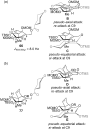
Figure 3: Conformations of rearrangement precursors 66 and 77 and possible transition states involved in the ...

Scheme 9: Synthesis and Ireland–Claisen rearrangement of allyl ester 70. Reagents and conditions: a) DIPEA, M...

Scheme 10: Synthesis and Ireland–Claisen rearrangement of allyl ester 72. Reagents and conditions: a) TIPSOTf,...

Scheme 11: Synthesis of the C14-epi and C14/C9-epi B-seco limonoid scaffolds 78 and 79. Reagents and condition...

Scheme 12: Synthesis of fully functionalized A ring 87. Reagents and conditions: a) HO(CH2)2OH, THF, Pd/C, H2,...

Scheme 13: and Attempted Ireland–Claisen rearrangement of allyl ester 88. R1 = MOM, R2 = CO2H.

Scheme 14: Synthesis and attempted Ireland–Claisen rearrangement of allyl ester 93. Reagents and conditions: a...

Scheme 15: Allyl esters tested in the Ireland–Claisen rearrangement.
A reductive coupling strategy towards ripostatin A
- Kristin D. Schleicher and
- Timothy F. Jamison
Beilstein J. Org. Chem. 2013, 9, 1533–1550, doi:10.3762/bjoc.9.175
- analogous procedure for aldol reaction and oxidation the TMSE β-ketoester was obtained (Scheme 17). Treatment with an excess of TBAF in THF at room temperature overnight resulted in formation of the β-hydroxyketone 63. Although the yield for this transformation remained moderate, it was higher than that

Graphical Abstract

Figure 1: Structures of the ripostatins.

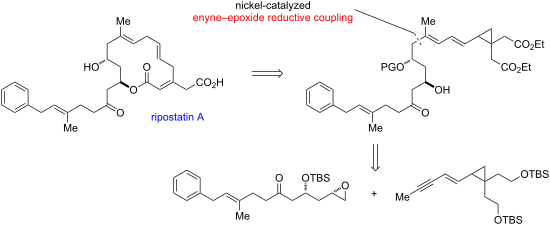
Figure 2: Retrosynthesis of ripostatin A.

Scheme 1: Nickel-catalyzed reductive coupling of alkynes and epoxides.

Figure 3: Proposed retrosynthesis of ripostatin A featuring enyne–epoxide reductive coupling and rearrangemen...

Scheme 2: Potential transition states and stereochemical outcomes for a concerted 1,5-hydrogen rearrangement.

Scheme 3: Rearrangements of vinylcyclopropanes to acylic 1,4-dienes.

Scheme 4: Synthesis of cyclopropyl enyne.

Scheme 5: Synthesis of model epoxide for investigation of the nickel-catalyzed coupling reaction.

Scheme 6: Nickel-catalyzed enyne–epoxide reductive coupling reaction.

Scheme 7: Proposed mechanism for the nickel-catalyzed coupling reaction of alkynes or enynes with epoxides.

Scheme 8: Regioselectivity changes in reductive couplings of alkynes and 3-oxygenated epoxides.

Scheme 9: Enyne reductive coupling with 1,2-epoxyoctane.

Figure 4: Initial retrosynthesis of the epoxide fragment by using dithiane coupling.

Scheme 10: Synthesis of dithiane by Claisen rearrangement.

Scheme 11: Deuterium labeling reveals that the allylic/benzylic site is most acidic.

Scheme 12: Oxy-Michael addition to δ-hydroxy-α,β-enones.

Figure 5: Revised retrosynthesis of epoxide 5.

Scheme 13: Synthesis of functionalized ketone by oxy-Michael addition.

Figure 6: Retrosynthesis by using iodocylization to introduce the epoxide.

Scheme 14: Synthesis of ketone 57 using thiazolidinethione chiral auxiliary.

Figure 7: Retrosynthesis involving decarboxylation of a β-ketoester.

Scheme 15: Synthesis of β-ketoester 61.

Scheme 16: Decarboxylation of 61 under Krapcho conditions.

Scheme 17: Improved synthesis of 63 and attempted iodocyclization.

Figure 8: Retrosynthesis utilizing Rychnovsky’s cyanohydrin acetonide methodology.

Scheme 18: Synthesis of cyanohydrin acetonide and attempted alkylation with epoxide.

Scheme 19: Allylation of acetonide and conversion to aldehyde.

Scheme 20: Synthesis of the epoxide precursor by an aldol−decarboxylation sequence.
Mechanochemistry assisted asymmetric organocatalysis: A sustainable approach
- Pankaj Chauhan and
- Swapandeep Singh Chimni
Beilstein J. Org. Chem. 2012, 8, 2132–2141, doi:10.3762/bjoc.8.240
- and 69% ee. In the previous studies by Szöllösi’s group on the dipeptide III catalysed asymmetric aldol reactions between acetone and 2-ethylbutanal in the presence of an excess of acetone (68:1) under traditional stirring affords (R)-β-hydroxyketone in moderate yield and 86% ee after 24 hours [36

Graphical Abstract

Scheme 1: Proline-catalysed aldol reaction in a ball-mill.

Scheme 2: Proline-catalysed aldol reaction between solid substrates (1b and 2a).

Scheme 3: (S)-Binam-L-prolinamide catalysed asymmetric aldol reaction by using a ball-mill. aConversion.

Scheme 4: Asymmetric aldol reaction assisted by ball-milling catalysed by dipeptides (A) with III and (B) wit...

Scheme 5: Thiodipeptide-catalysed asymmetric aldol reaction of (A) ketones with aldehydes and (B) acetone wit...

Scheme 6: Enantioselective Michael reaction of aldehydes with nitroalkenes catalysed by pyrrolidine-derived o...

Scheme 7: Chiral squaramide catalysed asymmetric Michael reaction assisted by ball-milling.

Scheme 8: Asymmetric organocatalytic Michael reaction assisted by pestle and mortar grinding.

Scheme 9: C-2 symmetric thiourea catalysed enantioselective MBH reaction.

Scheme 10: Quinine-catalysed ring opening of meso-anhydride by ball-milling.

Scheme 11: Ball-milling-assisted (A) synthesis of glycine schiff bases and (B) their organocatalytic asymmetri...

Scheme 12: Enantioselective amination of β-ketoester by using pestle and mortar.
Aldol elaboration of 4,5,6,7-tetrahydroisoxazolo[4,3-c]pyridin-4-ones, masked precursors to acylpyridones
- Raymond C. F. Jones,
- Abdul K. Choudhury,
- James N. Iley,
- Mark E. Light,
- Georgia Loizou and
- Terence A. Pillainayagam
Beilstein J. Org. Chem. 2012, 8, 308–312, doi:10.3762/bjoc.8.33
- four steps by the route shown in Scheme 3, involving palladium-catalysed decarboxylative ring opening of cyclic carbonates [23]. Thus the enolate of α-tetralone was added to propenal in an aldol addition (LDA, THF, −78 °C; 86%). The second step involved the reduction of the intermediate β-hydroxyketone

Graphical Abstract

Figure 1: The 3-acyl-4-hydroxypyridin-2-one motif, example natural products and the isoxazolopyridone scaffol...

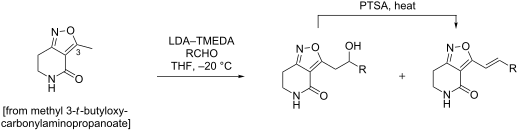
Scheme 1: Aldol reactions of tetrahydroisoxazolopyridone 6. Reagents: (i) LDA–TMEDA, RCHO, THF, −20 °C; (ii) ...

Figure 2: X-ray crystal structure of 3-(2-phenylethenyl)-4,5,6,7-tetrahydroisoxazolo[4,3-c]pyridin-4-one (8a) ...

Figure 3: Ilicicolin H as an example of a 3-decalinoyl-4-hydroxypyridin-2-one metabolite.

Scheme 2: Retrosynthetic analysis of a model 3-decalinyl-4,5,6,7-tetrahydroisoxazolopyridone 10.

Scheme 3: Synthesis of triene 11. Reagents: (i), LDA, propenal, THF, −78 °C; (ii), LiAlH4, THF, 20 °C (75%); ...
Acid- mediated reactions under microfluidic conditions: A new strategy for practical synthesis of biofunctional natural products
- Katsunori Tanaka and
- Koichi Fukase
Beilstein J. Org. Chem. 2009, 5, No. 40, doi:10.3762/bjoc.5.40
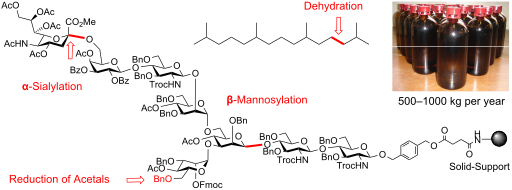
- evaluate the efficiency of dehydration under the microfluidic conditions, the reactivity of β-hydroxyketone 21 and alkanol 22 were also tested (Scheme 2) [29]. Gratifyingly, both substrates provided the corresponding dehydrated products 23 and 24 in almost quantitative yields under the conditions

Graphical Abstract

Figure 1: Synthetic strategy for asparagine-linked oligosaccharide on solid support and application of microf...

Figure 2: β-Mannosylation using an integrated microfluidic/batch system. Yield and β/α-ratio are analyzed by 1...

Scheme 1: Synthesis of pristane.

Figure 3: Process synthesis of pristane via microfluidic dehydration as a key step.

Scheme 2: Microfluidic dehydration.



