


Search results
Search for "NMR data" in Full Text gives 500 result(s) in Beilstein Journal of Organic Chemistry. Showing first 200.
Discovery of sugarnitriles A and B, and structural reassignment of SF-2140, from a sugarcane endophytic actinomycete Amycolatopsis sp. JS-O27
Beilstein J. Org. Chem. 2026, 22, 1114–1121, doi:10.3762/bjoc.22.90
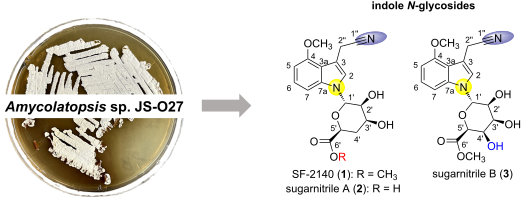
- bioactivity studies indicated that SF-2140 exhibits weak antibacterial activity against Gram-positive and Gram-negative bacteria and antiviral activity [19]. Although the chemical structure of SF-2140 has been assigned through total synthesis and X-ray crystallography [19], the lack of 13C and 2D NMR data
- anomeric carbon (C-1') was connected to the indole ring through a heteroatom, revealing that compound 1 is an indole N-glycoside (Figure 2a). Further detailed analysis of the 2D NMR data of 1 indicated that the planar structure of 1 was identical to that of SF-2140 (Tables S1 and S2, Supporting Information
- File 1, and Figure 2a). Since the 13C and 2D NMR data of SF-2140 were lacking in previous papers [19][28], the current research supplemented the missing information. The sugar moiety of SF-2140 has been determined to adopt a 1C4 conformation in the solid state and was suggested to adopt a possible


Rhodopyran, a carboxylated hexahydrocyclopenta[b]pyran from Rhodococcus
Beilstein J. Org. Chem. 2026, 22, 1107–1113, doi:10.3762/bjoc.22.89
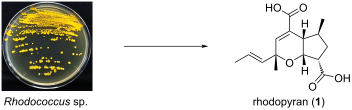
- conditions of 30% aqueous MeCN containing 0.1% HCO2H at 4 mL/min, yielding rhodopyran (1, 22.7 mg) with a retention time of 11.2 min. Rhodopyran (1): colorless amorphous powder; [α]D25 −69 (c 0.01, MeOH); UV (MeOH) λmax (log ε) 217 nm (3.93); IR (ATR) νmax 2965, 2928, 1688, 1640, 1421 cm−1; 1H and 13C NMR
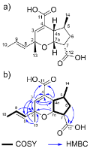
- data, Table 1 and Supporting Information File 1; HRESIQTOFMS (negative ion mode) m/z 279.1237 [M − H]− (calcd for C15H19O5−, 279.1238; Δ −0.4 ppm). Structure and selected 2D NMR correlations of rhodopyran (1). (a) Structure of 1 with relative configuration; one enantiomer is shown. (b) Selected COSY


Synthesis of novel 1,2,4-oxadiazole-isoxazoline hybrids and their in silico potential with adenosine receptors
Beilstein J. Org. Chem. 2026, 22, 1033–1047, doi:10.3762/bjoc.22.82
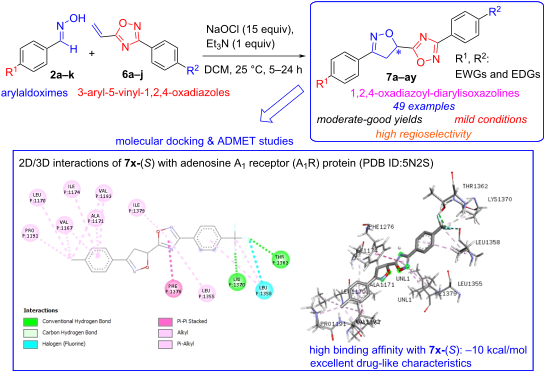
- , displaying characteristic resonances for the 1,2,4-oxadiazole and isoxazoline ring carbons at approximately 175, 167, 156, 73, and 43 ppm. Analysis of the NMR data indicated that the cycloaddition products were formed predominantly as 5-regioisomers and isolated as racemic mixtures, demonstrating the high


Semisynthesis, characterisation, and antibacterial evaluation of a novel lecanoric acid-derived amide library
Beilstein J. Org. Chem. 2026, 22, 1023–1032, doi:10.3762/bjoc.22.81
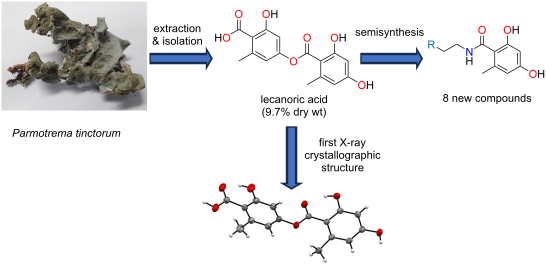
- NMR data in DMSO-d6; LRMS–ESI(+) (m/z): 319 [M + H]+, 341 [M + Na]+; LRMS–ESI(−) (m/z): 317 [M − H]−. Divaricatic acid (2): green gum [17]; see Supporting Information File 1, pp S13–S15 for 1D/2D NMR data in DMSO-d6; LRMS–ESI(−) (m/z): 387 [M −H]−. Orcinol (3): brown gum [21]; see Supporting
- Information File 1, pp S16–S18 for 1D/2D NMR data in CD3OD; LRMS–ESI(+) (m/z): 125 [M + H]+. Orsellinic acid (4): white amorphous powder [22]; see Supporting Information File 1, pp S19–S21 for 1D/2D NMR data in DMSO-d6; LRMS–ESI(+) (m/z): 169 [M + H]+. Methyl orsellinate (5): brown gum [23]; see Supporting
- Information File 1, pp S22–S24 for 1D/2D NMR data in CDCl3; LRMS–ESI(+) (m/z): 183 [M + H]+. Synthesis of the amide library Trial amidation chemistry. Isopentylamine (72 equiv, 500 µL, 4.31 mmol) was added to the depside scaffold 1 (20 mg, 0.06 mmol) and the mixture was stirred at room temperature under three


The trans-influence in gold chemistry from a catalytic perspective
Beilstein J. Org. Chem. 2026, 22, 838–856, doi:10.3762/bjoc.22.66
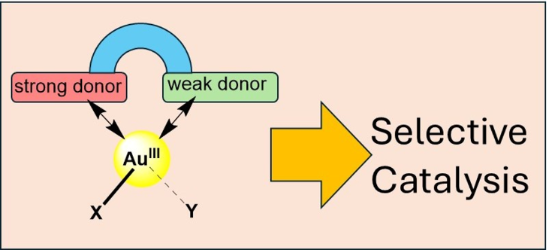
- applications based on gold(III) bidentate and tridentate cyclometallated ligands have developed into a large field which has recently been comprehensively reviewed [44][45]. Ligand effects and the route to gold hydrides Given the ease of recording 1H NMR data and the absence of steric effects on the Au–H bond
- ppm (C6D6) or +3.38 ppm (CD2Cl2). The donor ligands also influence the Au–H bond length, and there is a linear dependence between the calculated Au–H distance and the 1H NMR chemical shift, so that NMR data can be used as an experimental estimate of Au–H bonding. Since strong σ-donors destabilise the


Synthesis and biological evaluation of new brassinosteroid analogs with C-22 benzoate function
Beilstein J. Org. Chem. 2026, 22, 753–762, doi:10.3762/bjoc.22.57
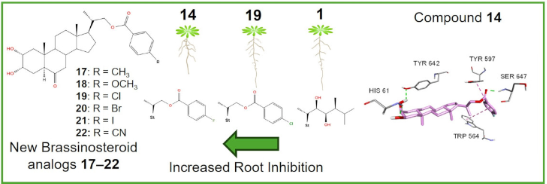
- dihydroxylation of double bond on C-2 of compounds 23–28, following a described procedure [29], leads to BR analogs 17–22 with good reaction yields (63.4–84.9%) (Scheme 1). Structural characterization of BR analogs 17–22 was accomplished by using 13C NMR data, combined with 2D NMR techniques (HSQC and HMBC). For


Anti-invasive and cytotoxic evaluation of a (+)-pinoresinol-based semisynthetic library against glioblastoma
Beilstein J. Org. Chem. 2026, 22, 691–704, doi:10.3762/bjoc.22.54
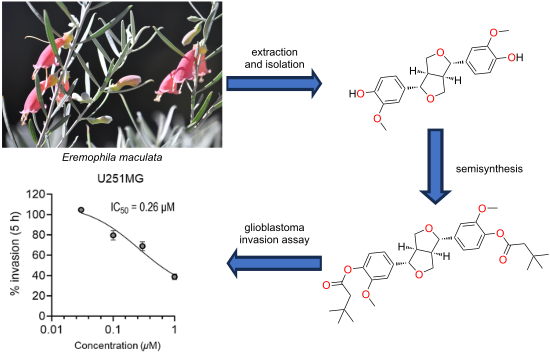
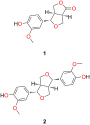
- methylene (δC 71.8, 2C), and six aromatic carbon signals (δC 147.6, 142.9, 133.3, 122.3, 108.4, 108.0, 12C). Comparison of the 1H and 13C NMR data of 5 and (+)-pinoresinol (2) showed a high degree of homology, with the major differences in NMR data associated with a chemical shift of the aryl resonances
- . Thus, NMR signals for 5 were assigned following a comparison of the chemical shift with the previously reported natural product 2 and detailed analysis of the 2D NMR data (see Table 1). Key COSY, HMBC, and ROESY correlations for 5 are shown below in Figure 3. Collectively, this data confirmed the
- 0.09, MeOH); lit. [α]D25 +56.3 (c 0.06, MeOH) [33]; see Supporting Information File 1 for 1H and 13C NMR data in CDCl3; LRESIMS m/z: [M + H]+ 251, [M − H]− 249. (+)-Pinoresinol (2): brown gum; [α]D25 +55.5 (c 0.07, MeOH); lit. [α]D25 +20.0 (c 0.75, MeOH) [34]; UV–vis (MeOH) λmax (log ε) 230 (3.94), 279



Melifoliox B, a novel phloroglucin derivative isolated from Melicope barbigera (Rutaceae) and synthesis of new oxidation products from melifoliones A and B
Beilstein J. Org. Chem. 2026, 22, 535–546, doi:10.3762/bjoc.22.39
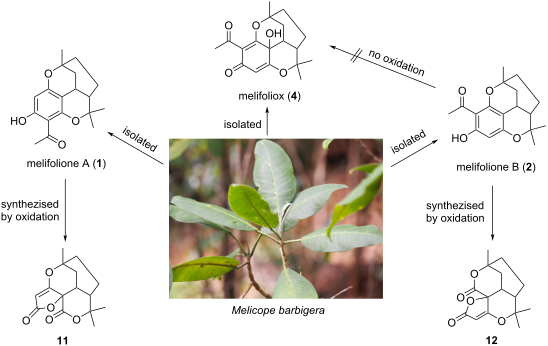
- ]pyran-3(10bH)-one (4): UV (MeOH) lmax 250 nm; NMR data see Table 1 and Table 2; HRESIMS m/z: [M + H]+ calcd. for C18H23O5, 319.1540; found, 319.1542. Chemical synthesis of compounds 1-[5,7-Dihydroxy-2-methyl-2-(4-methyl-3-pentenyl)-2H-1-benzopyran-8-yl]ethanone (5): A mixture of 2,4,6
- 5 (CAS: 59582-20-6) [20] as a beige colored viscous oil, which was used without further purification. HRESIMS m/z: [M + H]+ calcd. for C18H23O4, 303.1591; found, 303.1596. 1H NMR data in CDCl3 (δ ppm) 1.43 (s, 3H, 2-CH3), 1.56 (s, 3H, 4’-CH3), 1.67 (s, 3H, 4’-CH3), 1.70/1.85 (m, 2H, H-2’), 2.10/2.15
- , filtered and evaporated to dryness. The remaining residue was recrystallized from diethyl ether/hexane to give 2.3 g (77%) colorless crystals, containing about 90% melifolione A (1) (CAS: 59779-71-4) and 10% melifolione B (2) (CAS: 37464-54-3), based on the 1H NMR spectrum. NMR data see Table 1 and Table 2



Cone p-aminocalix[4]arenes enriched with ‘clickable’ alkyne or azide functionalities
Beilstein J. Org. Chem. 2026, 22, 399–415, doi:10.3762/bjoc.22.28
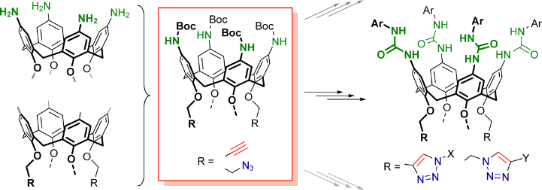
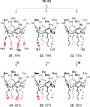
- simple filtration to remove the inorganic by-product components from the reaction mixtures. Although the free amines 31 and 32 were pure enough according to their 1H NMR data, these compounds were not fully characterized in order to avoid the risk of self-alkylation of the amines during their storage
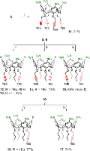
- substituents of different flexibility. However, preliminary NMR data showed that a turbid CDCl3 solution of both calixarenes, taken in a more or less equimolar ratio, contained signals from both homodimers 472 and 502, a set of broadened signals from non-capsular aggregates (readily removed from the spectrum






Synthesis of diaryl phosphates using phytic acid as a phosphorus source
Beilstein J. Org. Chem. 2026, 22, 213–223, doi:10.3762/bjoc.22.15
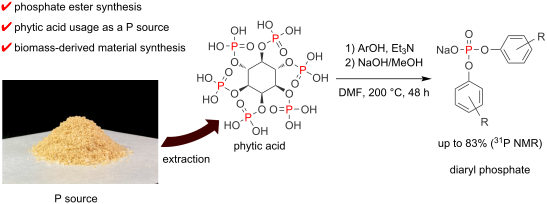
- solution. The isolated diaryl phosphates were brownish, likely due to the presence of trace impurities formed during the reaction; however, the NMR data revealed that few impurity peaks remained. All of these compounds are known, and the NMR spectral data were consistent with previously reported data for




Streptoquinolines A and B, new antibacterial meroterpenoids produced by Streptomyces sp. TMPU-A0679
Beilstein J. Org. Chem. 2026, 22, 185–191, doi:10.3762/bjoc.22.12
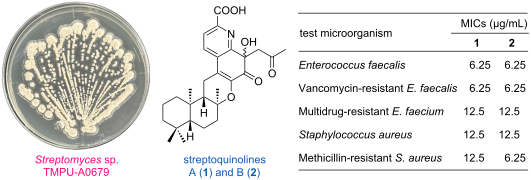
- between H3-14 and H3-15, suggested that these protons resided on the opposite face. These results support a relative configuration of 5R*, 8S*, 9S*, and 10R* for the drimane skeleton of compound 1. However, it was not possible to elucidate the configuration at C-4' from available NMR data


Reactivity umpolung of the cycloheptatriene core in hexa(methoxycarbonyl)cycloheptatriene
Beilstein J. Org. Chem. 2026, 22, 64–70, doi:10.3762/bjoc.22.2
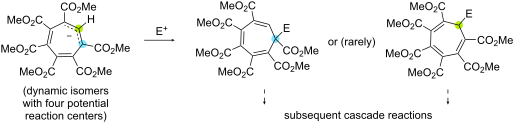
- planarity of the two neighboring ester groups and thereby stabilize the anion. The prevalence of this isomer is also confirmed by the NMR data [21], however, other conformers with different charge distributions are also available in solution. To understand the nucleophilic reactivity of the most stable


Ni-promoted reductive cyclization cascade enables a total synthesis of (+)-aglacin B
Beilstein J. Org. Chem. 2025, 21, 2548–2552, doi:10.3762/bjoc.21.197
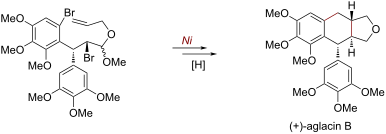
- and Et3SiH as the hydrogen source [22], affording this natural product in 58% isolated yield. NMR data of the synthetic sample were found to be in agreement with those of previous literature (Tables S1 and S2, Supporting Information File 1). Moreover, the newly synthesized (+)-aglacin B (2) formed


Further elaboration of the stereodivergent approach to chaetominine-type alkaloids: synthesis of the reported structures of aspera chaetominines A and B and revised structure of aspera chaetominine B
Beilstein J. Org. Chem. 2025, 21, 2072–2081, doi:10.3762/bjoc.21.162
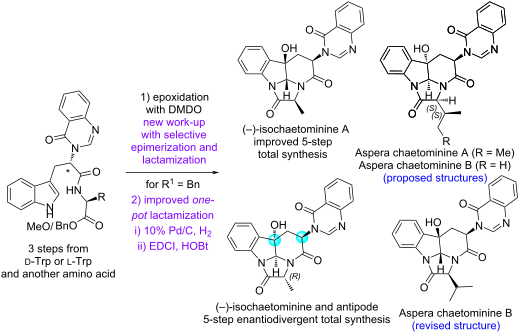
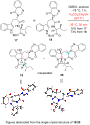
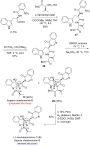
- chaetominine A (12) and monocyclization product 26 in 31% and 45% yield, respectively. The spectral (1H and 13C NMR) data of our synthetic compound are different from those reported for the natural aspera chaetominine A, suggesting that the originally proposed stereochemistry for aspera chaetominine A (12) was
- chaetominine B (13) and monocyclization product 29 in 22% and 30% yield, respectively (Scheme 5). Once again, a comparison of the 1H and 13C NMR data of our synthetic compound 13 with those of the natural aspera chaetominine B showed that two compounds are different, indicating a misassignment of the structure
- (13) for aspera chaetominine B. To our delight, one-pot catalytic debenzylation–lactamization of 29 afforded lactamization product (–)-isochaetominine C (6). The 1H and 13C NMR data of compound 6 matched those of natural aspera chaetominine B suggesting that aspera chaetominine B is




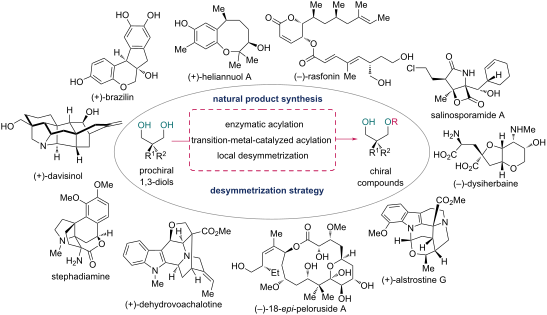
Enantioselective desymmetrization strategy of prochiral 1,3-diols in natural product synthesis
Beilstein J. Org. Chem. 2025, 21, 1932–1963, doi:10.3762/bjoc.21.151
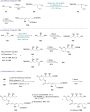
- confirmed by X-ray crystallographic analysis. Comparative analysis of the 1H NMR data with authentic samples of the natural heliannuol G and heliannuol H enabled structural revision of these compounds, correcting prior misassignments in the literature [31][32]. Through enzyme-catalyzed asymmetric










Synthesis, biological and electrochemical evaluation of glycidyl esters of phosphorus acids as potential anticancer drugs
Beilstein J. Org. Chem. 2025, 21, 1909–1916, doi:10.3762/bjoc.21.148
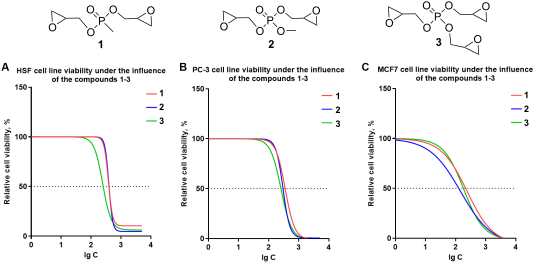
- 2.41–3.24 ppm and the POCH2- fragment at 3.66–4.36 ppm can be observed. The NMR data for the glycidyl esters of phosphorus acids 1–3 are comparable to those of related compounds. Biological activity of glycidyl esters of phosphorus acids To evaluate the biological activity of diastereomeric mixtures of
- , 13C 100.6 MHz). 1H and 13C NMR data are reported with reference to solvent resonances, and 31P NMR spectra were reported with respect to external 85% H3PO4 (0 ppm). All experiments were carried out using standard Bruker pulse programs. Infrared (IR) spectra were recorded on a Bruker Vector-22


Preparation of spirocyclic oxindoles by cyclisation of an oxime to a nitrone and dipolar cycloaddition
Beilstein J. Org. Chem. 2025, 21, 1890–1896, doi:10.3762/bjoc.21.146
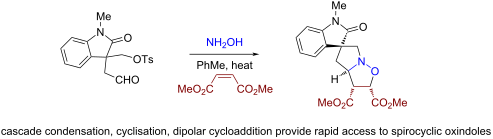
- /z): [M + H]+ calcd for C20H22NO4S, 372.1270; found: 372.1281; 1H NMR data as reported [30]. Ozone was bubbled through a solution of 3 (1.30 g, 3.74 mmol) in CH2Cl2 (22 mL) and MeOH (22 mL) at −78 °C. After 1 h, excess ozone was removed by bubbling argon gas through the solution. After 5 min
- , 124.0, 123.7, 108.4, 72.0, 48.4, 46.2, 26.4, 21.5; NMR data as reported (no lit. mp) [30]. Cycloadditions with the aldehyde 4 Aldehyde 4 (500 mg, 1.44 mmol), hydroxylamine hydrochloride (160 mg, 2.30 mmol), and iPr2NEt (0.48 mL, 2.76 mmol) in PhMe (10 mL) were heated to 60 °C. After 2 h, N


[3 + 2] Cycloaddition of thioformylium methylide with various arylidene-azolones in the synthesis of 7-thia-3-azaspiro[4.4]nonan-4-ones
Beilstein J. Org. Chem. 2025, 21, 1791–1798, doi:10.3762/bjoc.21.141
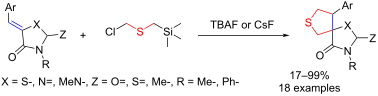
- , with only trace amounts (or none) of the alternative form (dr >19:1). Moreover, comparison of NMR data within each series of heterocycles allowed us to reliably assert that the same isomer was observed in each specific group of substances. However, NMR data alone could not unambiguously assign the



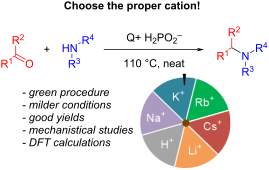
Influence of the cation in hypophosphite-mediated catalyst-free reductive amination
Beilstein J. Org. Chem. 2025, 21, 1661–1670, doi:10.3762/bjoc.21.130
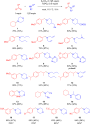
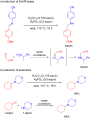
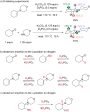
- ). The NMR data were collected using the equipment of the Center for molecular composition studies of INEOS RAS with financial support from the Ministry of Science and Higher Education of the Russian Federation (Contract No. 075-00276-25-00).


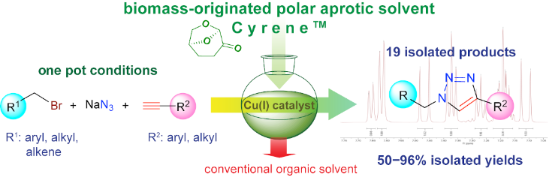
Azide–alkyne cycloaddition (click) reaction in biomass-derived solvent CyreneTM under one-pot conditions
Beilstein J. Org. Chem. 2025, 21, 1544–1551, doi:10.3762/bjoc.21.117
- = 6.3 Hz, 1H, CH), 2.73–2.02 (m, 4H, CH2); 13C NMR (75 MHz, CDCl3, TMS) δ 200.3 (CO), 101.5 (CH), 73.1 (CH), 67.6 (CH2), 31.1 (CH2), 29.9 (CH2). The NMR data correspond to the published results. Methyl 4-methoxyvalerate and ethyl 4-ethoxyvalerate were prepared using the published method [47]. The


Highly distinguishable isomeric states of a tripodal arylazopyrazole derivative on graphite through electron/hole-induced switching at ambient conditions
Beilstein J. Org. Chem. 2025, 21, 1496–1507, doi:10.3762/bjoc.21.112
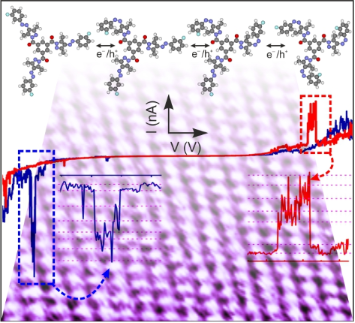
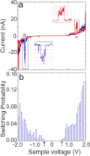
- (≈120°), the angle between the vectors. The intermolecular distance obtained from STM corresponds to the lateral length of the EEE isomer (F to F distance is 22.06 Å). Thus, we conclude that the adlayer is formed by the energetically most favorable EEE isomer. This is also consistent with the NMR data



Wittig reaction of cyclobisbiphenylenecarbonyl
Beilstein J. Org. Chem. 2025, 21, 1454–1461, doi:10.3762/bjoc.21.107
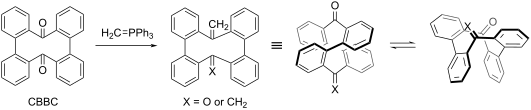
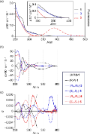
- temperature. These are attributable to the mixture of conformers with the figure-eight conformation as minor and the bathtub conformation as major conformer with a ratio of ca. 1:7. The obtained temperature-dependent 1H NMR data were subjected to the van't Hoff plot, affording an enthalpy ΔH and an entropy ΔS



N-Salicyl-amino acid derivatives with antiparasitic activity from Pseudomonas sp. UIAU-6B
Beilstein J. Org. Chem. 2025, 21, 1388–1396, doi:10.3762/bjoc.21.103
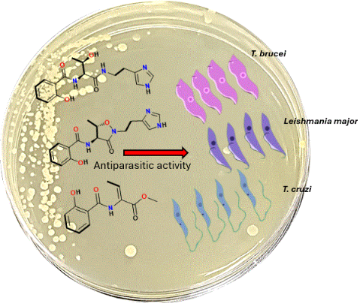
- Supporting Information File 1, Figure S16) confirming that both of these protons were present on the same side of the double bond. The structure of 3 was confirmed using mass spectrometry, 1D and 2D NMR data as a new compound, named pseudomonin F. Compound 4 was isolated as a pink oil. The negative mode
- HRESIMS gave a prominent molecular ion at m/z 234.074 corresponding to C12H13NO4 (Δ: +1.2 ppm, calcd. for C12H12NO4, 234.0772) having 7 degrees of unsaturation. Detailed analysis of the 1H NMR data of 4 showed similar resonance signals observed in 3, however, an additional intense sharp singlet at δH 3.68
- configuration to that of 3, evidenced by a medium through space correlation between the amide proton, H-8 (δH 9.9) and the methyl, H3-12 (δH 1.76) in the NOESY spectrum (see Figure 2 and Supporting Information File 1, Figure S23). Based on HRESIMS, 1D and 2D NMR data, the structure of compound 4, was confirmed


Investigations of amination reactions on an antimalarial 1,2,4-triazolo[4,3-a]pyrazine scaffold
Beilstein J. Org. Chem. 2025, 21, 1126–1134, doi:10.3762/bjoc.21.90
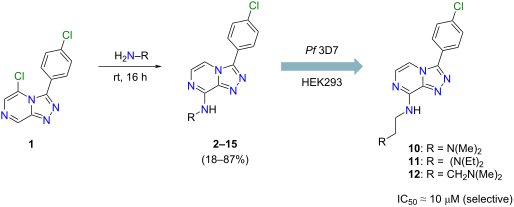
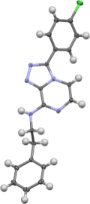
- previous reports [10]. A single and identical product was obtained from each reaction and the product, 2, was characterised following analysis of HRESIMS and 1D (1H, 13C) and 2D (COSY, HSQC, HMBC, ROESY) NMR data. The HRESIMS data of 2 showed a Na adduct ion at m/z 372.0991 [M + Na]+ (calcd for
- MHz NMR spectrometer equipped with a cryoprobe. MestreNova™ version 14.3.3 software was used for NMR data analysis. The 1H and 13C NMR chemical shifts were referenced to solvent peaks for (CD3)2SO (δH 2.50, δC 39.52). LRESIMS data was recorded on a Thermo Scientific (Waltham, MA, USA) UltiMate™ 3000




Supramolecular assembly of hypervalent iodine macrocycles and alkali metals
Beilstein J. Org. Chem. 2025, 21, 1095–1103, doi:10.3762/bjoc.21.87
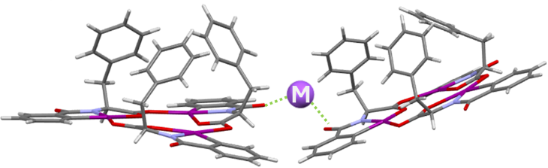
- fluctuation of the concentration of the host and the guest, which contribute to the x-axis in the fitting process. The isothermal fitting to 2:1 models is often prone to overfitting with NMR data and is noticeable with the fit for 1. However, the general trend does correlate with the strength of the





