


Search results
Search for "azo coupling" in Full Text gives 14 result(s) in Beilstein Journal of Organic Chemistry.
Halogenated azobenzene acrylates: from efficient solution photoswitching to stable solid-state photochromic materials
- Martina Vachtlová,
- Michaela Fecková,
- Vítězslav Zima,
- Jan Podlesný,
- Milan Klikar,
- Oldřich Pytela,
- Patrik Pařík,
- Jakub Opršal,
- Eliška Juhaňáková,
- Veronika Chrtová and
- Filip Bureš
Beilstein J. Org. Chem. 2026, 22, 782–794, doi:10.3762/bjoc.22.60
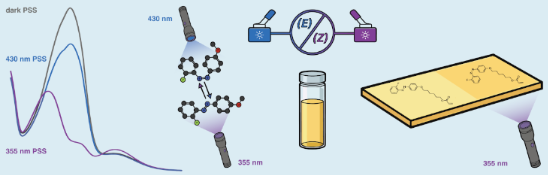
- halogenated azobenzene acrylate monomers bearing fluorine, chlorine or bromine substituents is reported. The monomers were prepared via a facile three-step synthetic route involving azo-coupling, O-alkylation and O-acylation. Apart from the steady electrochemical properties, halogen substitution proved to be
- polyacrylate or polystyrene materials. Results and Discussion Synthesis of azobenzene monomers The target azobenzene monomers 1a–f were obtained using a facile three-step synthetic route as shown in Scheme 1. The first step represents an azo-coupling reaction between phenol and the corresponding diazonium

Graphical Abstract

Figure 1: Molecular structure of investigated compounds 1a–f and known azobenzene derivatives A–C exploited i...

Scheme 1: Synthesis of azobenzene-acrylate monomers 1a–f.

Figure 2: Representative TGA (left) and DSC (right) curves of compounds 1c (black) and 1d (red).

Figure 3: Energy level diagram of the electrochemically measured (black) and DFT-calculated (red for E-isomer...

Figure 4: A) Experimentally measured UV–vis absorption spectra of the monosubstituted azobenzenes 1a, c and e...

Figure 5: A) Experimentally measured UV–vis absorption spectra of the azobenzenes 1c and 1d at c = 4 × 10⁻⁵ M...

Figure 6: A) HOMO/LUMO localizations in representative E-1a. B) HOMO−1/LUMO localizations in representative Z-...

Figure 7: 1H NMR spectra (500 MHz, CDCl3, 20 °C) of azobenzene 1e corresponding to the dark-adapted PSS (blac...

Figure 8: A) UV–vis absorption spectra of azobenzene 1e corresponding to the dark-adapted PSS (black), 355 nm...

Figure 9: A) Thermal kinetics curve of compound 1e obtained by UV–vis monitoring at c = 4 × 10⁻⁵ M (DCE, 60 °...

Figure 10: Photoswitching of target azobenzene 1a in the solid state (polymeric matrix). A) Polystyrene thin f...
Cone p-aminocalix[4]arenes enriched with ‘clickable’ alkyne or azide functionalities
- Ilia Korniltsev,
- Vasily Bazhenov,
- Alexander Gorbunov,
- Dmitry Cheshkov,
- Stanislav Bezzubov,
- Vladimir Kovalev and
- Ivan Vatsouro
Beilstein J. Org. Chem. 2026, 22, 399–415, doi:10.3762/bjoc.22.28
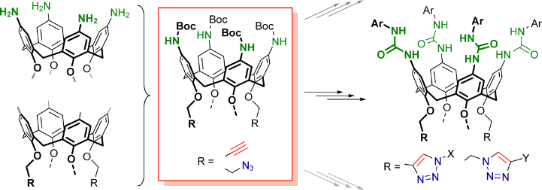
- important functionalities which can be introduced into calix[4]arene structures either through a wide-rim exhaustive nitration followed by reduction of the nitro groups [5][6][7][8][9][10][11][12][13], or through azo coupling followed by cleavage of the calixarene azo compounds thus formed [14][15][16][17
- ]arene. Notably, the alternative strategy of utilizing an azo coupling/cleavage sequence has only been applied thus far for the wide-rim modification of narrow-rim unsubstituted calixarenes. Since the exhaustive nitration and reduction steps proceed under relatively drastic conditions, which are poorly

Graphical Abstract

Figure 1: General concept of building multifunctional calix[4]arenes by joining propargyl/2-azidoethyl and p-...
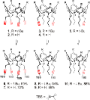
Scheme 1: Silylation of the calixarene propargyl ethers. Conditions: i) LiHMDS (HMDS + n-BuLi), TBSCl, THF, −...
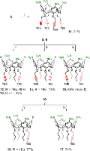
Scheme 2: Nitration of calixarenes 6, 8–10. Conditions: i) HNO3 (fuming, 10 equiv per calixarene aromatic uni...
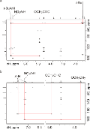
Figure 2: Parts of 1H,13C HMBC spectra of calixarenes 12 (a) and 13 (b) recorded in CDCl3 solutions at 600 MH...

Figure 3: Molecular structures of partially nitrated calixarene 16 (a) and exhaustively nitrated calixarene 15...

Scheme 3: Reduction of calixarenes 11, 15 and 17. Conditions: i) SnCl2·2H2O, HCl, EtOH, H2O, 70 °C, then KOH,...
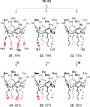
Scheme 4: Protecting group replacement in propargylated p-aminocalix[4]arenes. Conditions: i) Boc2O, Et3N, di...

Scheme 5: Synthesis of 2-azidoethylated p-aminocalix[4]arenes. Conditions: i) HNO3 (fuming, 10 equiv per cali...

Scheme 6: Synthesis of triazolated p-aminocalix[4]arenes 37–39 from the propargylated calixarene precursors 24...

Scheme 7: Synthesis of triazolated p-aminocalix[4]arenes 40 and 41 from the 2-azidoethylated calixarene precu...

Scheme 8: Removal of Boc protection in calixarenes 37–41; (i) CF3CO2H, dichloromethane, rt, then NaHCO3/H2O.

Scheme 9: Synthesis of triazolated tetraureacalix[4]arenes 47–51. Conditions: (i) p-tolyl isocyanate, toluene...

Figure 4: Planar and energy-minimized structures (with CHCl3 molecule included and triazole groups highlighte...

Figure 5: Planar structures of homodimers 482, 512, and heterodimer 48·52 (a); fragment of the 1H NMR spectru...

Figure 6: Planar structures of homodimers 472, 502, and heterodimer 47·52 (a); fragment of the 1H NMR spectru...
Photoswitches beyond azobenzene: a beginner’s guide
- Michela Marcon,
- Christoph Haag and
- Burkhard König
Beilstein J. Org. Chem. 2025, 21, 1808–1853, doi:10.3762/bjoc.21.143
- aromatic amines. Another strategy for both symmetric and asymmetric targets is the azo coupling of a diazonium salt 15 (Scheme 5A) with a nucleophile, which can be a (hetero)aromatic 16 [29] (B), a lithiated ring 19 [39] (C), or a precursor 20a,b [29][32][40] (D). In case of more than one reactive position
- acylhydrazones are accessible with comparatively low synthetic effort, especially compared to diarylethenes and fulgides. The synthesis of arylhydrazones is usually performed through condensation between a carbonyl 112 and a hydrazine 111 (Scheme 35A) [109]. Alternatively, one can perform an azo-coupling between

Graphical Abstract

Figure 1: Energy diagram of a two-state photoswitch. Figure 1 was redrawn from [2].

Figure 2: Example of the absorption spectra of the isomers of a photoswitch with most efficient irradiation w...

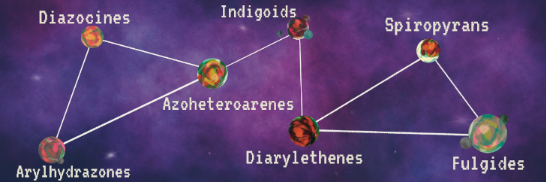
Scheme 1: Photoswitch classes described in this review.

Figure 3: Azoheteroarenes.

Scheme 2: E–Z Isomerisation (top) and mechanisms of thermal Z–E isomerisation (bottom).

Scheme 3: Rotation mechanism favoured by the electron displacement in push–pull systems. Selected examples of...

Figure 4: A) T-shaped and twisted Z-isomers determine the thermal stability and the Z–E-PSS (selected example...

Figure 5: Effect of di-ortho-substitution on thermal half-life and PSS.

Figure 6: Selected thermal lifetimes of azoindoles in different solvents and concentrations. aConcentration o...

Figure 7: Aryliminopyrazoles: N-pyrazoles (top) and N-phenyl (bottom).

Scheme 4: Synthesis of symmetrical heteroarenes through oxidation (A), reduction (B), and the Bayer–Mills rea...

Scheme 5: Synthesis of diazonium salt (A); different strategies of azo-coupling: with a nucleophilic ring (B)...

Scheme 6: Synthesis of arylazothiazoles 25 (A) and heteroaryltriazoles 28 (B).

Scheme 7: Synthesis of heteroarylimines 31a,b [36-38].

Figure 8: Push–pull non-ionic azo dye developed by Velasco and co-workers [45].

Scheme 8: Azopyridine reported by Herges and co-workers [46].

Scheme 9: Photoinduced phase transitioning azobispyrazoles [47].

Figure 9: Diazocines.

Scheme 10: Isomers, conformers and enantiomers of diazocine.

Scheme 11: Partial overlap of the ππ* band with electron-donating substituents and effect on the PSS. Scheme 11 was ada...

Figure 10: Main properties of diazocines with different bridges. aMeasured in n-hexane [56]. bMeasured in THF. cMe...

Scheme 12: Synthesis of symmetric diazocines.

Scheme 13: Synthesis of asymmetric diazocines.

Scheme 14: Synthesis of O- and S-heterodiazocines.

Scheme 15: Synthesis of N-heterodiazocines.

Scheme 16: Puromycin diazocine photoswitch [60].

Figure 11: Indigoids.

Figure 12: The main representatives of the indigoid photoswitch class.

Scheme 17: Deactivation process that prevents Z-isomerisation of indigo.

Figure 13: Stable Z-indigo derivative synthesised by Wyman and Zenhäusern [67].

Figure 14: Selected examples of indigos with aliphatic and aromatic substituents [68]. Dashed box: proposed π–π in...

Scheme 18: Resonance structures of indigo and thioindigo involving the phenyl ring.

Scheme 19: Possible deactivation mechanism for 4,4'-dihydroxythioindigo [76].

Scheme 20: Effect of different heteroaryl rings on the stability and the photophysical properties of hemiindig...

Figure 15: Thermal half-lives of red-shifted hemithioindigos in toluene [79]. aMeasured in toluene-d8.

Scheme 21: Structures of pyrrole [81] and imidazole hemithioindigo [64].

Figure 16: Examples of fully substituted double bond hemithioindigo (left), oxidised hemithioindigos (centre),...

Scheme 22: Structure of iminothioindoxyl 72 (top) and acylated phenyliminoindolinone photoswitch 73 (bottom). ...

Scheme 23: (top) Transition states of iminothioindoxyl 72. The planar transition state is associated with a lo...

Scheme 24: Baeyer–Drewsen synthesis of indigo (top) and N-functionalisation strategies (bottom).

Scheme 25: Synthesis of hemiindigo.

Scheme 26: Synthesis of hemithioindigo and iminothioindoxyl.

Scheme 27: Synthesis of double-bond-substituted hemithioindigos.

Scheme 28: Synthesis of phenyliminoindolinone.

Scheme 29: Hemithioindigo molecular motor [85].

Figure 17: Arylhydrazones.

Scheme 30: Switching of arylhydrazones. Note: The definitions of stator and rotor are arbitrary.

Scheme 31: Photo- and acidochromism of pyridine-based phenylhydrazones.

Scheme 32: A) E–Z thermal inversion of a thermally stable push–pull hydrazone [109]. B) Rotation mechanism favoured...

Scheme 33: Effect of planarisation on the half-life.

Scheme 34: The longest thermally stable hydrazone switches reported so far (left). Modulation of thermal half-...

Figure 18: Dependency of t1/2 on concentration and hypothesised aggregation-induced isomerisation.

Figure 19: Structure–property relationship of acylhydrazones.

Scheme 35: Synthesis of arylhydrazones.

Scheme 36: Synthesis of acylhydrazones.

Scheme 37: Photoswitchable fluorophore by Aprahamian et al. [115].

Scheme 38: The four-state photoswitch synthesised by the Cigáň group [116].

Figure 20: Diarylethenes.

Scheme 39: Isomerisation and oxidation pathway of E-stilbene to phenanthrene.

Scheme 40: Strategies adapted to avoid E–Z isomerisation and oxidation.
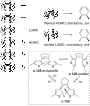
Scheme 41: Molecular orbitals and mechanism of electrocyclisation for a 6π system.

Figure 21: Aromatic stabilisation energy correlated with the thermal stability of the diarylethenes [127,129].

Figure 22: Half-lives of diarylethenes with increasing electron-withdrawing groups [128,129].

Scheme 42: Photochemical degradation pathway promoted by electron-donating groups [130].

Figure 23: The diarylethenes studied by Hanazawa et al. [134]. Increased rigidity leads to bathochromic shift.

Scheme 43: The dithienylethene synthesised by Nakatani's group [135].

Scheme 44: Synthesis of perfluoroalkylated diarylethenes.

Scheme 45: Synthesis of 139 and 142 via McMurry coupling.

Scheme 46: Synthesis of symmetrical derivatives 145 via Suzuki–Miyaura coupling.

Scheme 47: Synthesis of acyclic 148, malonic anhydride 149, and maleimide derivatives 154.

Figure 24: Gramicidin S (top left) and two of the modified diarylethene derivatives: first generation (bottom ...

Scheme 48: Pyridoxal 5'-phosphate and its reaction with an amino acid (top). The analogous dithienylethene der...

Figure 25: Fulgides.

Scheme 49: The three isomers of fulgides.

Scheme 50: Thermal and photochemical side products of unsubstituted fulgide [150].

Figure 26: Maximum absorption λc of the closed isomer compared with the nature of the aromatic ring and the su...

Scheme 51: Possible rearrangement of the excited state of 5-dimethylaminoindolylfulgide [153].

Figure 27: Quantum yields of ring closure (ΦE→C) and E–Z isomerisation (ΦE→Z) correlated with the increasing s...

Scheme 52: Active (Eα) and inactive (Eβ) conformers (left) and the bicyclic sterically blocked fulgide 169 (ri...

Scheme 53: Quantum yield of ring-opening (ΦC→E) and E–Z isomerisation (ΦE→Z) for different substitution patter...

Scheme 54: Stobbe condensation pathway for the synthesis of fulgides 179, fulgimides 181 and fulgenates 178.

Scheme 55: Alternative synthesis of fulgides through Pd-catalysed carbonylation.

Scheme 56: Optimised synthesis of fulgimides [166].

Scheme 57: Photoswitchable FRET with a fulgimide photoswitch [167].

Scheme 58: Three-state fulgimide strategy by Slanina's group.

Figure 28: Spiropyrans.

Scheme 59: Photochemical (left) and thermal (right) ring-opening mechanisms for an exemplary spiropyran with a...

Figure 29: Eight possible isomers of the open merocyanine according to the E/Z configurations of the bonds hig...

Scheme 60: pH-Controlled photoisomerisation between the closed spiropyran 191-SP and the open E-merocyanine 19...

Scheme 61: Behaviour of spiropyran in water buffer according to Andréasson and co-workers [180]. 192-SP in an aqueo...

Scheme 62: (left box) Proposed mechanism of basic hydrolysis of MC [184]. (right box) Introduction of electron-dona...

Scheme 63: Photochemical interconversion of naphthopyran 194 (top) and spirooxazine 195 (bottom) photoswitches...

Scheme 64: Synthesis of spiropyrans and spirooxazines 198 and the dicondensation by-product 199.

Scheme 65: Alternative synthesis of spiropyrans and spirooxazines with indolenylium salt 200.

Scheme 66: Synthesis of 4’-substituted spiropyrans 203 by condensation of an acylated methylene indoline 201 w...

Scheme 67: Synthesis of spironaphthopyrans 210 by acid-catalysed condensation of naphthols and diarylpropargyl...

Scheme 68: Photoswitchable surface wettability [194].

Figure 30: Some guiding principles for the choice of the most suitable photoswitch. Note that this guide is ve...
Tandem diazotization/cyclization approach for the synthesis of a fused 1,2,3-triazinone-furazan/furoxan heterocyclic system
- Yuri A. Sidunets,
- Valeriya G. Melekhina and
- Leonid L. Fershtat
Beilstein J. Org. Chem. 2024, 20, 2342–2348, doi:10.3762/bjoc.20.200

- Federation 10.3762/bjoc.20.200 Abstract A straightforward protocol for the synthesis of a previously unknown [1,2,5]oxadiazolo[3,4-d][1,2,3]triazin-7(6H)-one heterocyclic system was developed. The described approach is based on tandem diazotization/azo coupling reactions of (1,2,5-oxadiazolyl)carboxamide
- a 1,2,3-triazin-4-one core. The proposed method is based on tandem diazotization/azo coupling reactions of the corresponding amides (Scheme 1). In addition, application perspectives of thus prepared heterocyclic entities as thermally stable components of functional organic materials or NO-donor drug
- of thus generated diazonium salts. In this regard, amide 2a and mesitylene were selected as model objects to optimize the reaction conditions, since azo coupling of (1,2,5-oxadiazolyl)diazonium salts with electron-donating arenes is known to proceed quantitatively [42]. We varied the diazotization

Graphical Abstract

Figure 1: Examples of bioactive compounds containing the 1,2,3-triazin-4-one core.

Scheme 1: Tandem diazotization/azo coupling reactions of (1,2,5-oxadiazolyl)carboxamides containing an amino ...

Scheme 2: Synthesis of target furoxanotriazinones 1a–h.

Scheme 3: The synthesis of furazanotriazinones 7a–h.

Figure 2: The X-ray structure of compound 1b (CCDC 2363621) and 7h (CCDC 2363622).

Scheme 4: Control experiment with Na15NO2.

Figure 3: NO release data.
A new route for the synthesis of 1-deazaguanine and 1-deazahypoxanthine
- Raphael Bereiter,
- Marco Oberlechner and
- Ronald Micura
Beilstein J. Org. Chem. 2022, 18, 1617–1624, doi:10.3762/bjoc.18.172
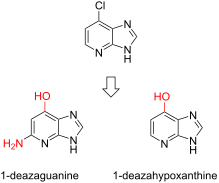
- two options for the generation of 4-ethoxy-2,3,6-triaminopyridine (9). One possibility comprised the deprotection of the dicarbamate 5 with potassium hydroxide giving the diamine 6, followed by azo coupling with the diazonium salt obtained from aniline and sodium nitrite to give azo compound 7
- differed from the above path by leaving the hydroxy group of all intermediate 4-hydroxypyridine derivatives 12–15 unprotected [19]. Moreover, instead of azo coupling or nitroso formation, a simple nitration protocol with nitric acid to give the nitro derivative 13 and subsequent reduction with Raney nickel

Graphical Abstract

Scheme 1: Syntheses of C4-substituted diethyl 2,6-pyridinedicarbamates 4, passing hazardous and explosive dia...

Scheme 2: Synthesis of 1-deazaguanine (11) described by Markees and Kidder in 1956 [18].

Scheme 3: Synthesis of 1-deazaguanine (11) described by Gorton and Shive in 1957 [19].

Scheme 4: Six-step synthesis of 1-deazaguanine (11). Abbreviations: p-toluenesulfonic acid (TsOH), 4-(dimethy...

Scheme 5: 1-Deazahypoxanthine (30) synthesis described by Kubo and Hirao in 2019 [29]. For reason of simplicity o...

Scheme 6: Synthesis of 1-deazahypoxanthine (30).
Synthesis of mono-functionalized S-diazocines via intramolecular Baeyer–Mills reactions
- Miriam Schehr,
- Daniel Hugenbusch,
- Tobias Moje,
- Christian Näther and
- Rainer Herges
Beilstein J. Org. Chem. 2018, 14, 2799–2804, doi:10.3762/bjoc.14.257

- functionalized with a carboxylic acid 4 or a benzyl alcohol 5 could not be obtained using the reductive azo coupling. For the benzyl alcohol 5 a variety of different, unidentified byproducts formed and in case of the carboxylic acid 4 only the starting material was retrieved. We now present a reliable one-pot

Graphical Abstract

Figure 1: Cis–trans isomerization of mono-functionalized S-diazocines 1–5.

Scheme 1: Reaction conditions: i) MeCN, AIBN, NBS; ii) NaBH4, THF; #commercially available iii) BH3·THF compl...

Figure 2: UV spectra of the S-diazocine 4 in cis (black) and in trans (red) configuration after irradiation w...

Figure 3: Left: crystal structure of the iodo-functionalized S-diazocine 3. Right: crystal structure of the u...
One hundred years of benzotropone chemistry
- Arif Dastan,
- Haydar Kilic and
- Nurullah Saracoglu
Beilstein J. Org. Chem. 2018, 14, 1120–1180, doi:10.3762/bjoc.14.98

Graphical Abstract

Scheme 1: Tropone (1), tropolone (2) and their resonance structures.

Figure 1: Natural products containing a tropone nucleus.

Figure 2: Possible isomers 11–13 of benzotropone.

Scheme 2: Synthesis of benzotropones 11 and 12.

Scheme 3: Oxidation products of benzotropylium fluoroborate (16).

Scheme 4: Oxidation of 7-bromo-5H-benzo[7]annulene (22).

Scheme 5: Synthesis of 4,5-benzotropone (11) using o-phthalaldehyde (27).

Scheme 6: Synthesis of 4,5-benzotropone (11) starting from oxobenzonorbornadiene 31.

Scheme 7: Acid-catalyzed cleavage of oxo-bridge of 34.

Scheme 8: Synthesis of 4,5-benzotropone (11) from o-xylylene dibromide (38).

Scheme 9: Synthesis of 4,5-benzotropone (11) via the carbene adduct 41.

Scheme 10: Heck coupling strategy for the synthesis of 11.

Scheme 11: Synthesis of benzofulvalenes via carbonyl group of 4,5-benzotropone (11).

Figure 3: Some cycloheptatrienylium cations.

Scheme 12: Synthesis of condensation product 63 and its subsequent oxidative cyclization products.

Figure 4: A novel series of benzo[7]annulenes prepared from 4,5-benzotropone (11).

Scheme 13: Preparation of substituted benzo[7]annulene 72 using the Mukaiyama-Michael reaction.

Figure 5: Possible benzo[7]annulenylidenes 73–75.

Scheme 14: Thermal and photochemical decomposition of 7-diazo-7H-benzo[7]annulene (76) and the trapping of int...

Scheme 15: Synthesis of benzoheptafulvalene 86.

Scheme 16: Synthesis of 7-(diphenylmethylene)-7H-benzo[7]annulene (89).

Scheme 17: Reaction of 4,5-benzotropone (11) with dimethyl diazomethane.

Scheme 18: Synthesis of dihydrobenzomethoxyazocine 103.

Scheme 19: Synthesis and reducibility of benzo-homo-2-methoxyazocines.

Scheme 20: Synthesis of 4,5-benzohomotropones 104 and 115 from 4,5-benzotropones 11 and 113.

Scheme 21: A catalytic deuterogenation of 4,5-benzotropone (11) and synthesis of 5-monosubstituted benzo[7]ann...

Scheme 22: Synthesis of methyl benzo[7]annulenes 131 and 132.

Scheme 23: Ambident reactivity of halobenzo[7]annulenylium cations 133a/b.

Scheme 24: Preparation of benzo[7]annulenylidene–iron complexes 147.

Scheme 25: Synthesis of 1-ethynylbenzotropone (150) and the etheric compound 152 from 4,5-benzotropone (11) wi...

Scheme 26: Thermal decomposition of 4,5-benzotropone (11).

Scheme 27: Reaction of 4,5-benzotropone (11) with 1,2-ethanediol and 1,2-ethanedithiol.

Scheme 28: Conversions of 1-benzosuberone (162) to 2,3-benzotropone (12).

Scheme 29: Synthesis strategies for 2,3-bezotropone (12) using 1-benzosuberones.

Scheme 30: Oxidation-based synthesis of 2,3-benzotropone (12) via 1-benzosuberone (162).

Scheme 31: Synthesis of 2,3-benzotropone (12) from α-tetralone (171) via ring-expansion.

Scheme 32: Preparation of 2,3-benzotropone (12) by using of benzotropolone 174.

Figure 6: Benzoheptafulvenes as condensation products of 2,3-benzotropone (12).

Scheme 33: Conversion of 2,3-benzotropone (12) to tosylhydrazone salt 182 and gem-dichloride 187.

Figure 7: Benzohomoazocines 191–193 and benzoazocines 194–197.

Scheme 34: From 2,3-benzotropone (12) to carbonium ions 198–201.

Scheme 35: Cycloaddition reactions of 2,3-benzotropone (12).
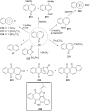
Scheme 36: Reaction of 2,3-benzotropone (12) with various reagents and compounds.

Figure 8: 3,4-Benzotropone (13) and its resonance structure.

Scheme 37: Synthesis of 6,7-benzobicyclo[3.2.0]hepta-3,6-dien-2-one (230).

Figure 9: Photolysis and thermolysis products of 230.

Figure 10: Benzotropolones and their tautomeric structures.

Scheme 38: Synthesis strategies of 4,5-benzotropolone (238).

Scheme 39: Synthesis protocol for 2-hydroxy-4,5-benzotropone (238) using oxazole-benzo[7]annulene 247.

Figure 11: Some quinoxaline and pyrazine derivatives 254–256 prepared from 4,5-benzotropolone (238).

Scheme 40: Nitration product of 4,5-benzotropolone (238) and its isomerization to 1-nitro-naphthoic acid (259)....

Scheme 41: Synthesis protocol for 6-hydroxy-2,3-benzotropone (239) from benzosuberone (162).
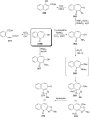
Scheme 42: Various reactions via 6-hydroxy-2,3-benzotropone (239).

Scheme 43: Photoreaction of 6-hydroxy-2,3-benzotropone (239).

Scheme 44: Synthesis of 7-hydroxy-2,3-benzotropone (241) from benzosuberone (162).

Scheme 45: Synthesis strategy for 7-hydroxy-2,3-benzotropone (241) from ketone 276.

Scheme 46: Synthesis of 7-hydroxy-2,3-benzotropone (241) from β-naphthoquinone (280).

Scheme 47: Synthesis of 7-hydroxy-2,3-benzotropone (241) from bicyclic endoperoxide 213.

Scheme 48: Synthesis of 7-hydroxy-2,3-benzotropone (241) by ring-closing metathesis.

Figure 12: Various monosubstitution products 289–291 of 7-hydroxy-2,3-benzotropone (241).

Scheme 49: Reaction of 7-hydroxy-2,3-benzotropone (241) with various reagents.

Scheme 50: Synthesis of 4-hydroxy-2,3-benzotropones 174 and 304 from diketones 300/301.

Scheme 51: Catalytic hydrogenation of diketones 300 and 174.

Scheme 52: Synthesis of halo-benzotropones from alkoxy-naphthalenes 306, 307 and 310.

Figure 13: Unexpected byproducts 313–315 during synthesis of chlorobenzotropone 309.

Figure 14: Some halobenzotropones and their cycloadducts.

Scheme 53: Multisep synthesis of 2-chlorobenzotropone 309.

Scheme 54: A multistep synthesis of 2-bromo-benzotropone 26.

Scheme 55: A multistep synthesis of bromo-2,3-benzotropones 311 and 316.

Scheme 56: Oxidation reactions of 8-bromo-5H-benzo[7]annulene (329) with some oxidants.

Scheme 57: Synthesis of 2-bromo-4,5-benzotropone (26).

Scheme 58: Synthesis of 6-chloro-2,3-benzotropone (335) using LiCl and proposed intermediate 336.

Scheme 59: Reaction of 7-bromo-2,3-benzotropone (316) with methylamine.

Scheme 60: Reactions of bromo-2,3-benzotropones 26 and 311 with dimethylamine.

Scheme 61: Reactions of bromobenzotropones 311 and 26 with NaOMe.

Scheme 62: Reactions of bromobenzotropones 26 and 312 with t-BuOK in the presence of DPIBF.

Scheme 63: Cobalt-catalyzed reductive cross-couplings of 7-bromo-2,3-benzotropone (316) with cyclic α-bromo en...

Figure 15: Cycloadduct 357 and its di-π-methane rearrangement product 358.

Scheme 64: Catalytic hydrogenation of 2-chloro-4,5-benzotropone (311).

Scheme 65: Synthesis of dibromo-benzotropones from benzotropones.

Scheme 66: Bromination/dehydrobromination of benzosuberone (162).

Scheme 67: Some transformations of isomeric dibromo-benzotropones 261A/B.

Scheme 68: Transformations of benzotropolone 239B to halobenzotropolones 369–371.

Figure 16: Bromobenzotropolones 372–376 and 290 prepared via bromination/dehydrobromination strategy.

Scheme 69: Synthesis of some halobenzotropolones 289, 377 and 378.

Figure 17: Bromo-chloro-derivatives 379–381 prepared via chlorination.

Scheme 70: Synthesis of 7-iodo-3,4-benzotropolone (382).

Scheme 71: Hydrogenation of bromobenzotropolones 369 and 370.

Scheme 72: Debromination reactions of mono- and dibromides 290 and 375.

Figure 18: Nitratation and oxidation products of some halobenzotropolenes.
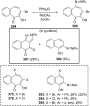
Scheme 73: Azo-coupling reactions of some halobenzotropolones 294, 375 and 378.

Figure 19: Four possible isomers of dibenzotropones 396–399.

Figure 20: Resonance structures of tribenzotropone (400).

Scheme 74: Two synthetic pathways for tribenzotropone (400).

Scheme 75: Synthesis of tribenzotropone (400) from dibenzotropone 399.

Scheme 76: Synthesis of tribenzotropone (400) from 9,10-phenanthraquinone (406).

Scheme 77: Synthesis of tribenzotropone (400) from trifluoromethyl-substituted arene 411.

Figure 21: Dibenzosuberone (414).

Figure 22: Reduction products 415 and 416 of tribenzotropone (400).

Figure 23: Structures of tribenzotropone dimethyl ketal 417 and 4-phenylfluorenone (412) and proposed intermed...

Figure 24: Structures of benzylidene- and methylene-9H-tribenzo[a,c,e][7]annulenes 419 and 420 and chiral phos...

Figure 25: Structures of tetracyclic alcohol 422, p-quinone methide 423 and cation 424.

Figure 26: Structures of host molecules 425–427.

Scheme 78: Synthesis of non-helical overcrowded derivatives syn/anti-431.

Figure 27: Hexabenzooctalene 432.

Figure 28: Structures of possible eight isomers 433–440 of naphthotropone.

Scheme 79: Synthesis of naphthotropone 437 starting from 1-phenylcycloheptene (441).

Scheme 80: Synthesis of 10-hydroxy-11H-cyclohepta[a]naphthalen-11-one (448) from diester 445.

Scheme 81: Synthesis of naphthotropone 433.

Scheme 82: Synthesis of naphthotropones 433 and 434 via cycloaddition reaction.

Scheme 83: Synthesis of naphthotropone 434 starting from 452.

Figure 29: Structures of tricarbonyl(tropone)irons 458, and possible cycloadducts 459.

Scheme 84: Synthesis of naphthotropone 436.

Scheme 85: Synthesis of precursor 465 for naphthotropone 435.

Scheme 86: Generation of naphthotropone 435 from 465.

Figure 30: Structures of tropylium cations 469 and 470.

Figure 31: Structures of tropylium ions 471+.BF4−, 472+.BF4−, and 473+.BF4−.

Scheme 87: Synthesis of tropylium ions 471+.BF4− and 479+.ClO4−.

Scheme 88: Synthesis of 1- and 2-methylanthracene (481 and 482) via carbene–carbene rearrangement.

Figure 32: Trapping products 488–490.

Scheme 89: Generation and chemistry of a naphthoannelated cycloheptatrienylidene-cycloheptatetraene intermedia...

Scheme 90: Proposed intermediates and reaction pathways for adduct 498.

Scheme 91: Exited-state intramolecular proton transfer of 505.

Figure 33: Benzoditropones 506 and 507.

Scheme 92: Synthesis of benzoditropone 506e.

Scheme 93: Synthetic approaches for dibenzotropone 507 via tropone (1).

Scheme 94: Formation mechanisms of benzoditropone 507 and 516 via 515.

Scheme 95: Synthesis of benzoditropones 525 and 526 from pyromellitic dianhydride (527).

Figure 34: Possible three benzocyclobutatropones 534–536.

Scheme 96: Synthesis of benzocyclobutatropones 534 and 539.

Scheme 97: Synthesis attempts for benzocyclobutatropone 545.

Scheme 98: Generation and trapping of symmetric benzocyclobutatropone 536.

Scheme 99: Synthesis of chloro-benzocyclobutatropone 552 and proposed mechanism of fluorenone derivatives.

Scheme 100: Synthesis of tropolone analogue 559.

Scheme 101: Synthesis of tropolones 561 and 562.

Figure 35: o/p-Tropoquinone rings (563 and 564) and benzotropoquinones (565–567).

Scheme 102: Synthesis of benzotropoquinone 566.

Scheme 103: Synthesis of benzotropoquinone 567 via a Diels–Alder reaction.

Figure 36: Products 575–577 through 1,2,3-benzotropoquinone hydrate 569.

Scheme 104: Structures 578–582 prepared from tropoquinone 567.

Figure 37: Two possible structures 583 and 584 for dibenzotropoquinone, and precursor compound 585 for 583.
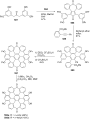
Scheme 105: Synthesis of saddle-shaped ketone 592 using dibenzotropoquinone 584.
Nitration of 5,11-dihydroindolo[3,2-b]carbazoles and synthetic applications of their nitro-substituted derivatives
- Roman A. Irgashev,
- Nikita A. Kazin,
- Gennady L. Rusinov and
- Valery N. Charushin
Beilstein J. Org. Chem. 2017, 13, 1396–1406, doi:10.3762/bjoc.13.136
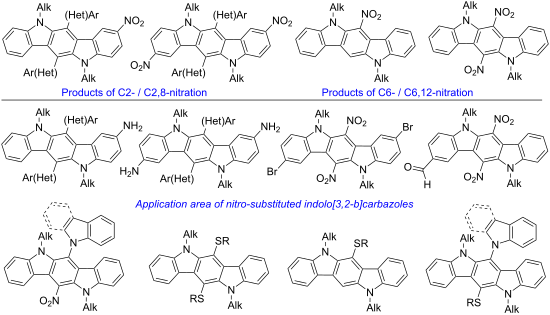
- obtained 2,8-bis(RCO)-substituted derivatives as building blocks for the synthesis of more complicated ICZ-containing compounds [42][43][44]. In addition, other research groups have previously reported convenient methods for C12-formylation, azo-coupling, bromination and chlorination of 6-mono-substituted

Graphical Abstract

Figure 1: ICZ-cored materials for organic electronic devices.

Figure 2: General positions for SEAr in ICZs 1.

Scheme 1: Double nitration of indolo[3,2-b]carbazole 1a.

Figure 3: X-ray single crystal structure of compound 2a. Thermal ellipsoids of 50% probability are presented.

Scheme 2: C2- and C2,8-nitration of indolo[3,2-b]carbazoles 1.

Scheme 3: Reduction of nitro-substituted ICZs 2 and 3.

Scheme 4: Nitration of 6,12-unsubstituted indolo[3,2-b]carbazoles 8.

Figure 4: X-ray single crystal structure of compounds 9b and 10b. Thermal ellipsoids of 50% probability are p...

Scheme 5: Modification of 6,12-dinitro-ICZs 9a,b by electrophilic substitution.

Figure 5: X-ray single crystal structure of compounds 12b and 13b. Thermal ellipsoids of 50% probability are ...

Scheme 6: A possible mechanism for the reduction of 6,12-dinitro-ICZs 9a and 13a.

Scheme 7: Reactions of 6-nitro- and 6,12-dinitro-ICZs with S-nucleophiles.

Scheme 8: Successive substitution of nitro groups in 6,12-dinitro-ICZ 9a with N- and S-nucleophiles.
The in situ generation and reactive quench of diazonium compounds in the synthesis of azo compounds in microreactors
- Faith M. Akwi and
- Paul Watts
Beilstein J. Org. Chem. 2016, 12, 1987–2004, doi:10.3762/bjoc.12.186
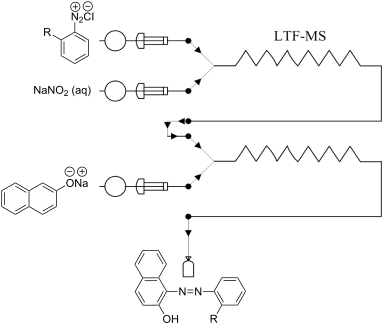
- II azo dye was used as a model reaction for the study. At found optimal azo coupling reaction temperature and pH an investigation of the optimum flow rates of the reactants for the diazotization and azo coupling reactions in Little Things Factory-MS microreactors was performed. A conversion of 98
- reaction conversions ranging between 66–91% were attained. Keywords: azo coupling; diazotization; microreactor; scale up; Introduction Going green, a familiar catch phrase in the chemical industry, in addition to environment protection laws have influenced and also triggered the development of cleaner
- the procedure of diazotization and azo coupling (using compounds that impart green benefits to the process or make it environment friendly, i.e., short reaction times thus less energy is required for the process, high yield thus low amount of waste generated, etc). Equally, process equipment can also

Graphical Abstract

Scheme 1: PTSA-catalyzed diazotization and azo coupling reaction.

Scheme 2: Ferric hydrogen sulfate (FHS) catalyzed azo compound synthesis.

Scheme 3: Synthesis of azo compounds in the presence of silica supported boron trifluoride.

Scheme 4: Phase transfer catalyzed azo coupling of 5-methylresorcinol in microreactors.

Scheme 5: Synthesis of yellow pigment 12 in a micro-mixer apparatus.

Scheme 6: Continuous flow synthesis of Sudan II azo dye in LTF-MS microreactors.

Figure 1: pH profile plot at constant flow rate of 0.03 mL/min.

Figure 2: pH profile plot at a constant flow rate of 0.7 mL/min.

Scheme 7: Azo coupling reaction under acidic conditions.

Figure 3: pH profile plot at a constant flow rate of 0.03 mL/min.

Figure 4: pH profile plot at constant flow rate of 0.7 mL/min.

Figure 5: Temperature profile plot at constant pH 5.66.

Figure 6: Schematic representation of the microreactor set up.

Figure 7: Schematic representation of the microreactor set up.

Figure 8: Scaled up microreactor set up: PTFE tubing i.d. 1.5 mm a) Chemyx Fusion 100 classic syringe pump, b...
Synthesis and reactivity of aliphatic sulfur pentafluorides from substituted (pentafluorosulfanyl)benzenes
- Norbert Vida,
- Jiří Václavík and
- Petr Beier
Beilstein J. Org. Chem. 2016, 12, 110–116, doi:10.3762/bjoc.12.12
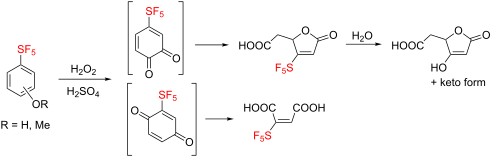
- toward 4 was prepared independently (Scheme 4). Azo coupling [20] of phenol 11 with a diazonium salt prepared from sulfanilic acid afforded red azo product 13. The regioselectivity is governed by the strong para-directing hydroxy group despite the presence of the bulky SF5 group. Compounds with

Graphical Abstract

Scheme 1: Oxidation of SF5-anisole and phenol. 19F NMR yields are shown (isolated yields in parentheses).

Scheme 2: Proposed mechanism for the formation of 3 and 4 from SF5 aromatics 1 and 2.

Scheme 3: Oxidation of anisole 10 and phenol 11. 19F NMR yields are given.

Scheme 4: Synthesis of para-benzoquinone 12 and oxidation to maleic acid 4. 19F NMR yields are shown, in pare...

Scheme 5: Catalytic hydrogenation and Diels–Alder reaction of benzoquinone 12.

Figure 1: Optimized geometries of transition states of Diels–Alder reaction of cyclopentadiene with 12. Selec...

Scheme 6: Decomposition of 3 in water.

Scheme 7: Formation of acids 5, 18 and 19 from lactone 3.

Scheme 8: Synthesis of maleic anhydride 20 and Diels–Alder adducts 21.

Scheme 9: Reaction of maleic acid 4 with diazomethane.

Scheme 10: Decarboxylation of maleic acid 4 to acrylic acid 23 in DMSO and the preparation of deuterium labell...
Pyridine-promoted dediazoniation of aryldiazonium tetrafluoroborates: Application to the synthesis of SF5-substituted phenylboronic esters and iodobenzenes
- George Iakobson,
- Junyi Du,
- Alexandra M. Z. Slawin and
- Petr Beier
Beilstein J. Org. Chem. 2015, 11, 1494–1502, doi:10.3762/bjoc.11.162
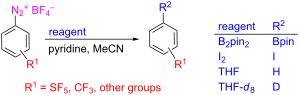
- -coupling reactions with varied degree of success. The most efficient cross-coupling reactions were the Heck reactions with alkenes, a biaryl homocoupling reaction, an azo coupling to electron-rich arenes, and a dediazoniation with TMSN3 in an ionic liquid medium [74][75]. An efficient borylation of

Graphical Abstract

Scheme 1: Borylation of aryldiazonium tetrafluoroborates 3. Reaction conditions: 3 (1 mmol), B2pin2 (1 mmol),...

Scheme 2: Proposed reaction mechanism.

Scheme 3: Reaction of diazonium salt 3i under borylation conditions.

Scheme 4: Suzuki–Miyaura reaction of boronates 2a and 2b with aryl iodides. Reaction conditions: 2 (1 mmol), ...

Scheme 5: Syntesis of boronic acid 8b and trifluoroborates 9. Reaction conditions for the synthesis of 8b: 2 ...

Scheme 6: Iodination of aryldiazonium tetrafluoroborates 3. Reaction conditions: 3 (1 mmol), I2 (1.1 mmol), p...
Azobenzene-based inhibitors of human carbonic anhydrase II
- Leander Simon Runtsch,
- David Michael Barber,
- Peter Mayer,
- Michael Groll,
- Dirk Trauner and
- Johannes Broichhagen
Beilstein J. Org. Chem. 2015, 11, 1129–1135, doi:10.3762/bjoc.11.127
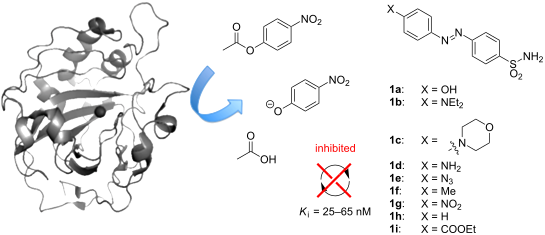
- synthesized a small library of nine azobenzene sulfonamides with differing substitution patterns in the 4´-position using either azo coupling reactions or the Mills reaction. We determined the π–π* band and the crystal structures of all nine compounds together with the protein crystal structure of hCAII bound

Graphical Abstract

Figure 1: Function and inhibition of hCAII. a) hCAII (pdb: 2vva [7]) catalyzes the hydration of carbon dioxide t...

Scheme 1: Synthesis and characterization of azobenzene-containing aryl sulfonamides by different strategies. ...

Figure 2: Crystal structures for compounds 1a–i (co-solvents and/or multiple molecules in the asymmetric cell...

Figure 3: Crystal structure of hCAII bound to 1d (pdb: 5byi). a) The terminal amine of 1d is solvent-exposed,...

Figure 4: Inhibition of hCAII by electronically different azobenzene sulfonamides and AAZ. a) Endpoint measur...
A simple, enaminone-based approach to some bicyclic pyridazinium tetrafluoroborates
- František Josefík,
- Markéta Svobodová,
- Valerio Bertolasi and
- Petr Šimůnek
Beilstein J. Org. Chem. 2013, 9, 1463–1471, doi:10.3762/bjoc.9.166
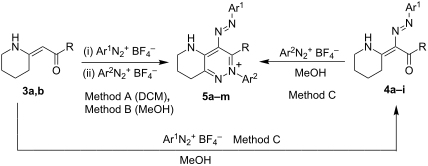
- substituents was easily synthesized. A mechanism of the formation of the pyridazinium salts is suggested. A partial drawback is the possibility of the formation of a mixture of products when using a different diazonium salt in each step due to a reversibility of the azo coupling. This can be suppressed by
- using a more reactive diazonium salt before a less reactive one. Keywords: azo coupling; diazonium salt; enaminone; pyridazinium; Introduction As heterocyclic compounds play a very important role in everyday life, e.g., as pharmaceuticals, agrochemicals, dyes, etc. (for many monographies or textbooks
- analysis or HRMS (see Experimental and Supporting Information File 1). Some of them were characterized also by means of X-ray analysis (see below). The mechanism of the azo coupling of primary and secondary enaminones was studied in [29]. The formation of compounds 4 can be assumed to proceed in an

Graphical Abstract

Scheme 1: Syntheses of 1-arylpyridazinium salts.

Scheme 2: Suggested transformation of the cyclic enaminones into the corresponding bicyclic pyridazinium salt...

Scheme 3: The synthesis of the starting β-enaminones.

Scheme 4: Synthesis of the bicyclic pyridazinium salts using different methods.

Scheme 5: Possible mechanism of the formation of the pyridazinium salts 5.

Scheme 6: An attempt at synthesis of 5n and possible explanation of the failure.
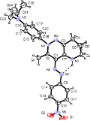
Figure 1: ORTEP view of the cation of compound 5f showing the thermal ellipsoids at 30% probability level. Bo...
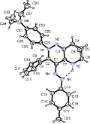
Figure 2: ORTEP view of the cation of compound 5l showing the thermal ellipsoids at 30% probability level. Bo...
Imidazole as a parent π-conjugated backbone in charge-transfer chromophores
- Jiří Kulhánek and
- Filip Bureš
Beilstein J. Org. Chem. 2012, 8, 25–49, doi:10.3762/bjoc.8.4
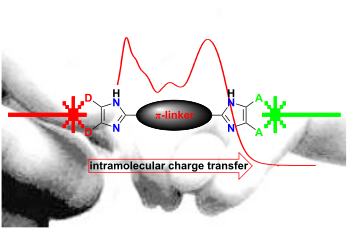
- were further used for the construction of various charge-transfer chromophores 37–43, in particular by simple diazotation and subsequent azo-coupling of the terminal NH2 group [62][63][64][65][66]. Chromophores 37–43 found wide application as polymer dopants, cross-linkable organic glasses or inorganic
- polyphosphazene backbone and subsequently modified by post-azo coupling with variously substituted benzenediazonium salts to afford systems 125–130 (Figure 22; Table 15; [125][126][127]). These systems possess good optical transparency, high Tg, and large d33 (SHG) and photoinduced birefringence values relative
- solar cells). In 2009, Koszykowska et al. demonstrated facile polymerization of 1-vinylimidazole and subsequent post-azo coupling at imidazole C2 to attach various donor- and acceptor-substituted pendants. Moreover, the poly(N-vinyl-2-(phenylazo)imidazoles 132–134 showed interesting switchable

Graphical Abstract

Figure 1: Schematic representation of organic D-π-A system featuring ICT.
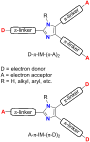
Figure 2: Two principal orientations of the imidazole-derived charge-transfer chromophores.

Scheme 1: Common synthetic approach to triarylimidazole-, diimidazole-, and benzimidazole-derived CT chromoph...

Scheme 2: Syntheses of important 4,5-dicyanoimidazole derivatives 1–3 [27-30].

Figure 3: Donor–acceptor triaryl push–pull azoles 4a–h [31,32].

Figure 4: Y-shaped CT chromophores with an extended π-conjugated pathway and various donor and acceptor subst...

Figure 5: Molecular structures of chromophores 9–14 [13,15,37-41].

Figure 6: General structure of 4,5-bis(4-aminophenyl)imidazole-derived chromophores 15a–g with various π-link...

Figure 7: Various orientations of the substituents on the parent lophine π-conjugated backbone (16–19) and th...

Figure 8: Structure and electronic absorption spectra of chromophores 21–26 [12].

Figure 9: Typical D-π-A diimidazole CT chromophore [16-18,50-53].

Figure 10: Typical D-π-D diimidazoles 28–31 [19,54-56] and photochromic diimidazoles 32,33 [57,58].

Scheme 3: Oxidation of 1H-diimidazoles to 2H-diimidazoles (quinoids).

Figure 11: Typical benzimidazoles-derived D-π-A push–pull systems 35–43 [25,62-66].

Figure 12: Structure of benzimidazoles (44–47), imidazophenanthrolines (48–57), imidazophenanthrenes (58–60), ...

Scheme 4: Acidoswitchable NLO-phores 64,65 and ESIPT mechanism [72-74].

Figure 13: General structures of bis(benzimidazole) chromophores 67–71 and pyridinium betaines 72 [75-79].

Figure 14: Overview of 4,5-dicyanoimidazole derivatives investigated by Rasmussen et al. [29,81-94].

Figure 15: 4,5-Dicyanoimidazole-derived chromophores 84–87 [103-106].

Figure 16: Push–pull chromophores 88–93 with systematically extended π-linker [30].

Figure 17: pH-triggered NLO switches 88c–93c [109].

Figure 18: Dibromoolefin 94 and branched chromophores 95–100 [112,113].

Figure 19: Imidazole as a donor–acceptor unit in CT-chromophores 101–111 [20].

Figure 20: Diimidazoles 112–115 used as small electron acceptors in organic solar cells [115,116].

Figure 21: Amino- and hydroxy-functionalized chromophores incorporated into a polymer backbone Rpol [18,50-53,122-124].

Figure 22: Structure of polyphosphazene polymers bearing NLO-phores [125-127] and some other recent examples of nonline...

Figure 23: Epoxy- and silica-based polymers functionalized with 4,5-dicyanoimidazole unit [105,130].



