Search results
Search for "carbamate" in Full Text gives 206 result(s) in Beilstein Journal of Organic Chemistry. Showing first 200.
Synthesis of functionalized, 13-alkyl-substituted coralyne derivatives and investigation of their interactions with duplex and abasic site-containing DNA
Beilstein J. Org. Chem. 2026, 22, 1057–1066, doi:10.3762/bjoc.22.84
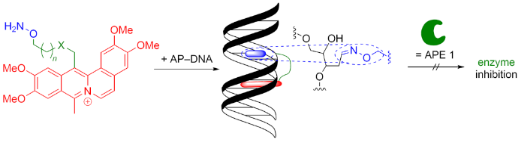
- (2.50 M in hexane); Tokio Chemical Industries Co., Ltd. (Tokio, JPN): papaverine hydrochloride (98%). Column chromatography: silica gel (60 M, 40–63 µm, 230–400 mesh ASTM, Macherey-Nagel GmBH & Co. KG). Ethyl 4-iodobutanoate [46] and 1,1-dimethylethyl N-(3-aminopropoxy)carbamate hydrochloride [37] were


Recent advances in the cleavage of non-activated amides
Beilstein J. Org. Chem. 2026, 22, 352–369, doi:10.3762/bjoc.22.23
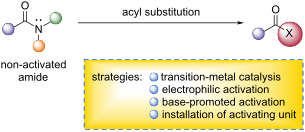
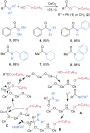
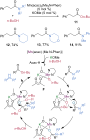
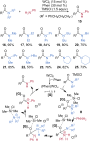
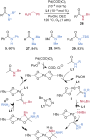
- substituents on the nitrogen (e.g., tosyl, carbamate, or acyl groups) distorts the planarity of the amide and diminishes amidic conjugation (Scheme 1b). These “twisted” amides exhibit a dramatically enhanced electrophilicity at the carbonyl carbon and a significantly weaker C–N bond strength [28][29][30][31










Circumventing Mukaiyama oxidation: selective S–O bond formation via sulfenamide–alcohol coupling
Beilstein J. Org. Chem. 2026, 22, 158–166, doi:10.3762/bjoc.22.9
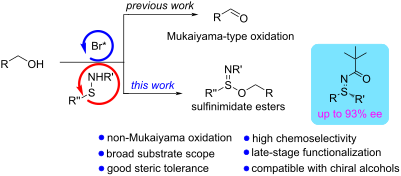
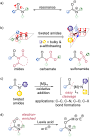
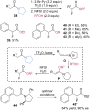
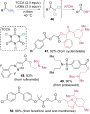
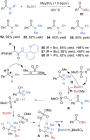
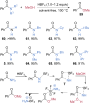
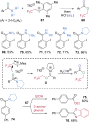
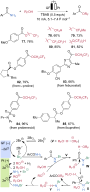
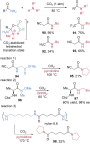
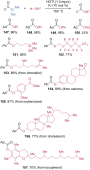
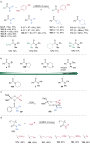
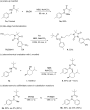
- 77% yield. The cinnamamide-derived sulfenamide, bearing a C–C double bond, also reacted smoothly under the oxidative conditions without noticeable side reactions, delivering the product 3i’ in 75% yield. Furthermore, carbamate-type sulfenamides were well tolerated under the standard conditions


Recent advances in total synthesis of illisimonin A
Beilstein J. Org. Chem. 2025, 21, 2571–2583, doi:10.3762/bjoc.21.199
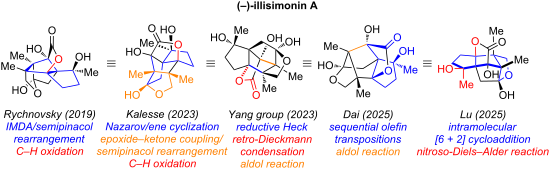
- -mediated N–O bond cleavage afforded carbamate 90. The carbamate was converted to a carbonyl group via Boc deprotection with TFA, oxidation of the resulting amine to the oxime with Na2WO4 and H2O2, and subsequent reduction with TiCl3·HCl to give 91. The LaCl3·2LiCl-mediated methyl addition to the carbonyl






Comparative analysis of complanadine A total syntheses
Beilstein J. Org. Chem. 2025, 21, 2334–2344, doi:10.3762/bjoc.21.178
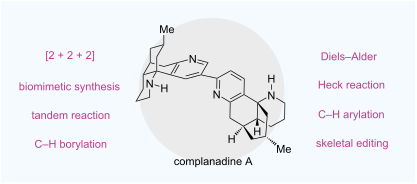
- , which continued with an amide-ketone condensation to finally produce 31 in this highly efficient one-step biomimetic cascade sequence. The secondary amine of 31 was selectively protected as a Boc carbamate and the dihydropyridone moiety was oxidized to a pyridone with Pb(OAc)4. Pyridone 32 was prepared
- hemiaminal opening and amine–ketone condensation, iminium ion 65 was produced for the next pyrrole nucleophilic addition to form a strategically important C–C bond and afford 66, which was protected as Boc carbamate in the same pot to give 67 in 96% yield from 64. In this tandem sequence, the nucleophilicity



Enantioselective desymmetrization strategy of prochiral 1,3-diols in natural product synthesis
Beilstein J. Org. Chem. 2025, 21, 1932–1963, doi:10.3762/bjoc.21.151
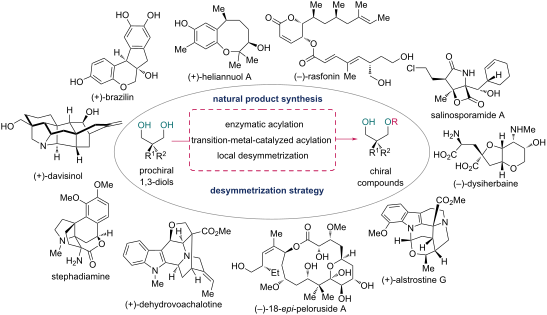
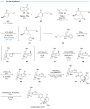
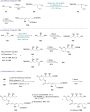
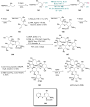
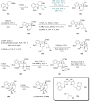
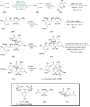
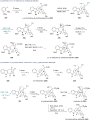
- diol 158, the ligand with only isopropyl substitution at C4 proved effective with suitable size for the substrate–catalyst coordination. A subsequent two-step sequence enabled the sythesis of olefinic carbamate 161 from benzoate 160. Treatment of 161 with Hg(CF3CO2)2 induced mercuriocyclization










Systematic pore lipophilization to enhance the efficiency of an amine-based MOF catalyst in the solvent-free Knoevenagel reaction
Beilstein J. Org. Chem. 2025, 21, 1854–1863, doi:10.3762/bjoc.21.144
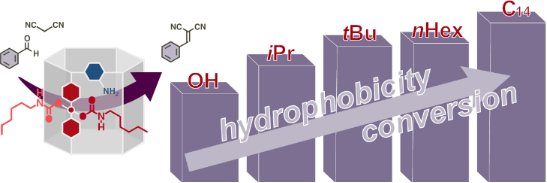
- overall surface tension. Along with reduced conversions, we also found that our anticipated trend in catalyst efficiency, i.e. increasing conversions with the increasing lipophilicity of the carbamate substituents, was not consistently followed (Table 2B). While conversions increased going from no


Synthesis of chiral cyclohexane-linked bisimidazolines
Beilstein J. Org. Chem. 2025, 21, 1786–1790, doi:10.3762/bjoc.21.140
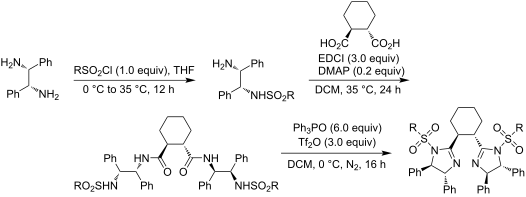
- attempted (Scheme 2). For this purpose, tert-butyl N-[(1R,2R)-2-amino-1,2-diphenylethyl]carbamate (2h) with an acid-sensitive Boc (tert-butoxycarbonyl) protecting group was prepared in 70% yield from C2-symmetric (1R,2R)-1,2-diphenylethane-1,2-diamine (1) and Boc2O. Compound 2h was then converted to (1S,2S


Approaches to stereoselective 1,1'-glycosylation
Beilstein J. Org. Chem. 2025, 21, 1700–1718, doi:10.3762/bjoc.21.133
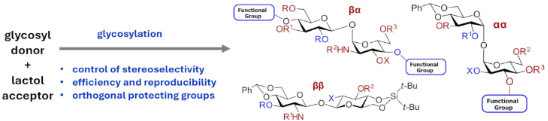
- group and the 2N-carbamate, leading to a significant shift towards the α-anomer (α/β = 7:1 to 9:1) [76]. Accordingly, the β,α-1,1'-diglucosamine 87 was synthesized via glycosylation of the conformationally armed 2N-Troc-protected lactol acceptor 86 with the torsionally locked glycosyl imidate donor 84
- -carbamate-protected GlcN derivatives, such as the 2N-Troc-protected lactol 176 or the 2N-Fmoc-protected lactol 178, in which the α-configuration is reinforced by a hydrogen bond between the anomeric OH group and the N-carbamate moiety (Scheme 14). The α-anomeric configuration on the side of the imidate


Investigations of amination reactions on an antimalarial 1,2,4-triazolo[4,3-a]pyrazine scaffold
Beilstein J. Org. Chem. 2025, 21, 1126–1134, doi:10.3762/bjoc.21.90
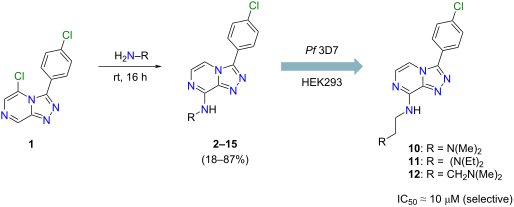
- -chlorophenyl)-[1,2,4]triazolo[4,3-a]pyrazin-8 yl)amino)butyl)carbamate (15). Yellow needles (47 mg, 57%); mp 154–156 °C; UV (MeOH) λmax, nm (log ε): 250 (4.71), 295 (4.33); 1H NMR (500 MHz, (CD3)2SO) δH 8.24 (brt, J = 5.7 Hz, 1H, H-16), 7.90 (m, 2H, H-11, H-15), 7.71 (d, J = 4.8 Hz, 1H, H-5), 7.66 (m, 2H, H-12




Studies on the syntheses of β-carboline alkaloids brevicarine and brevicolline
Beilstein J. Org. Chem. 2025, 21, 955–963, doi:10.3762/bjoc.21.79

- encountered a surprising reaction (Scheme 6). Based on literature data, we expected to transform carbamate 28, obtained from amine 25 by ethoxycarbonylation, into brevicarine (2) by reduction with LiAlH4 [40][41]. However, to our surprise, the reduction stopped at the N-formyl (26) stage, the formation of
- nitrovinylindole 19. New synthesis variants for the preparation of brevicarine alkaloid (2) and its synthetic derivative N-methylbrevicarine (27). Preparation of carbamate 28 and subsequent reduction with LiAlH4. Experiments for the synthesis of racemic brevicolline ((±)-1), and formation of unexpected products


Harnessing tethered nitreniums for diastereoselective amino-sulfonoxylation of alkenes
Beilstein J. Org. Chem. 2025, 21, 947–954, doi:10.3762/bjoc.21.78

- Abstract We present the first examples of alkene amino-sulfonoxylation reactions that leverage the unique reactivity of carbamate tethered N-alkoxy nitrenium ions. In almost all cases examined, the reactions deliver product with exquisite regioselectivity and diastereoselectivity. The protocols followed
- -trifluoroacetoxylation of alkenes [4]. In this protocol, an unusual N-alkoxy carbamate tether served as a precursor to a transient nitrenium ion [5][6][7][8][9][10][11][12][13][14][15][16][17][18][19][20][21][22][23][24], which subsequently attacked a pendant alkene to form an aziridinium intermediate. This aziridinium
- examples of alkene amino-hydroxylation reactions mediated by N-alkoxy nitreniums deliver amino-trifluoroacetate products (Scheme 1) [6]. Here, we describe the first examples of amino-sulfonoxylation reactions of alkenes, which make use of carbamate tethered N-alkoxy nitrenium ions. Results and Discussion


Synthesis of N-acetyl diazocine derivatives via cross-coupling reaction
Beilstein J. Org. Chem. 2025, 21, 490–499, doi:10.3762/bjoc.21.36
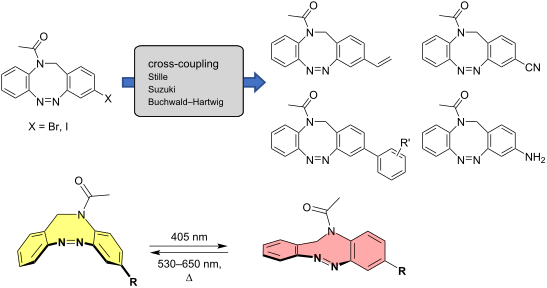
- except the preparation of the aminoaniline building block tert-butyl (2-amino-5-bromophenyl)carbamate (5), which was prepared by Boc-protection of the 5-bromo-2-nitroaniline (6) and subsequent reduction of the nitro group (see Supporting Information File 1, section II.1). Cross-coupling reactions Stille
- halogenated N-acetyl diazocines according to the procedure of Maier et al. [34] with tert-butyl carbamate resulted in the formation of Boc-protected amino-substituted N-acetyl diazocine 19 in a yield of 72%. However, the reaction only took place if iodo N-acetyl diazocine 3 was used as starting material
- . Using diphenylamine as a more electron-rich amine resulted in the formation of diphenylamino-substituted N-acetyl diazocine 20 in a significantly lower yield of 25% starting from the bromide 2 and 47% starting from the iodo precursor 3 (Table 5). Deprotection of carbamate 19 with trifluoroacetic acid


Synthesis of electrophile-tethered preQ1 analogs for covalent attachment to preQ1 RNA
Beilstein J. Org. Chem. 2025, 21, 483–489, doi:10.3762/bjoc.21.35
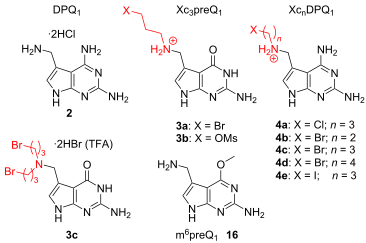
- by displacement of the mesyl group to give a six-membered cyclic carbamate, a reactivity that has been described earlier [34]. Thus, care was taken to quickly isolate compound 14 and use it immediately in the next step. Deblocking of the secondary amine by treatment with trifluoroacetic acid afforded


The effect of neighbouring group participation and possible long range remote group participation in O-glycosylation
Beilstein J. Org. Chem. 2025, 21, 369–406, doi:10.3762/bjoc.21.27
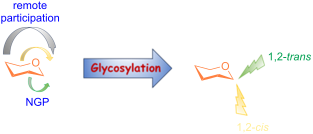
- -2 position of glycosyl donors which can contribute towards 1,2-trans glycosylations without affecting the reactivity of the donor. They introduced carbamate ester moieties as alternative protecting groups. The N-phenylcarbamoyl (PhCar) moiety showed high stability in the pH range of 1–12 and it
- ) which not only showed higher yield (78%) but also a significantly higher anomeric stereoselectivity. With the aim to understand the participating role of the C-2 protecting ‘carbamate moiety’ Liang et al. introduced the N-benzylcarbamoyl moiety as the protecting group for the C-2 position [134]. They




Cu(OTf)2-catalyzed multicomponent reactions
Beilstein J. Org. Chem. 2025, 21, 122–145, doi:10.3762/bjoc.21.7

- counteranion. The use of a carbamate among the substrates instead of the amine allowed the synthesis of propargylcarbamates 11. This reaction, effective only for the aromatic aldehydes, did not require other co-catalysts or ligands (Scheme 8) [21]. Three-component reactions of alkynes, alkyltrifluoroborates






Non-covalent organocatalyzed enantioselective cyclization reactions of α,β-unsaturated imines
Beilstein J. Org. Chem. 2024, 20, 3221–3255, doi:10.3762/bjoc.20.268
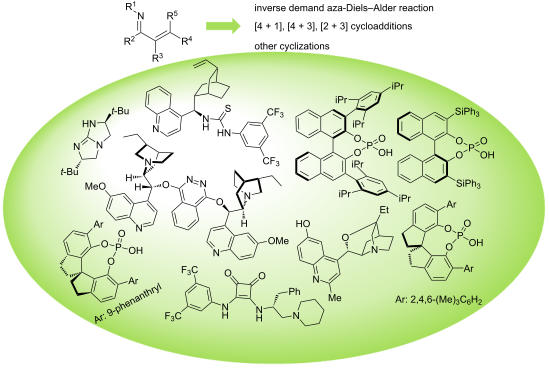
- carbamate group by interaction with the oxygen atom of the phosphoryl group. Although recently Rana and co-workers published a review article covering catalytic asymmetric transformations of azadienes [16], there is still room for this review which only focuses on non-covalent organocatalyzed cyclizations









Synthesis of extended fluorinated tripeptides based on the tetrahydropyridazine scaffold
Beilstein J. Org. Chem. 2024, 20, 3174–3181, doi:10.3762/bjoc.20.262
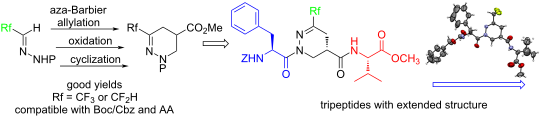
- 19F,1H NOE experiments of compound 8f did not show any specific correlation between fluorine atoms and the protons of the amino acids (see Supporting Information File 1). Finally, the low chemical shifts of the amide and carbamate protons (6.4 ppm for NH of valine and 5.5 ppm for the NH of


A review of recent advances in electrochemical and photoelectrochemical late-stage functionalization classified by anodic oxidation, cathodic reduction, and paired electrolysis
Beilstein J. Org. Chem. 2024, 20, 2500–2566, doi:10.3762/bjoc.20.214
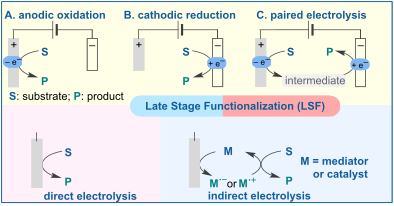
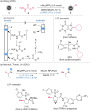
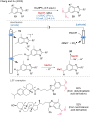
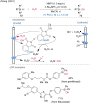
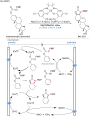
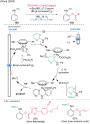
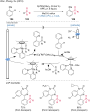
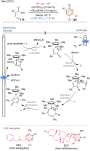
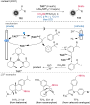
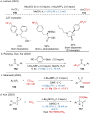
- oxidized to [Co(III)]+ at the anode, while MeOH undergoes cathodic reduction to form MeO− and H2. The MeO− then deprotonates the carbamate, and the resulting conjugated base is oxidized by the cobalt–salen complex [Co(III)]+, generating an amide radical. This amide radical initiates radical cyclization to


























Asymmetric organocatalytic synthesis of chiral homoallylic amines
Beilstein J. Org. Chem. 2024, 20, 2349–2377, doi:10.3762/bjoc.20.201
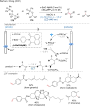
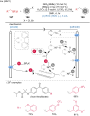
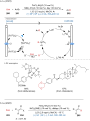
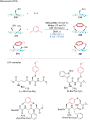
- stereospecific synthesis of γ- and γ,δ-substituted homoallylic amines by a three-component reaction between an aryl acetal, BocNH2 carbamate and a 2,3-disubstituted allylsilane, in presence of the triflate-assisted bifunctional HBD/πAr-Ar catalyst [39]. Catalytic cycle for the three-component allylation with HBD






Hypervalent iodine-catalyzed amide and alkene coupling enabled by lithium salt activation
Beilstein J. Org. Chem. 2024, 20, 1405–1411, doi:10.3762/bjoc.20.122

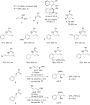
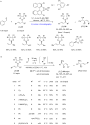
- , which then partitions into an ion pair suitable for olefin activation, followed by the addition of the bifunctional anionic carbamate (Scheme 1c). Our hypothesis here aims to directly access the reactivity of the cationic hypervalent iodine catalyst through an initial activation first, which we reason



Synthetic applications of the Cannizzaro reaction
Beilstein J. Org. Chem. 2024, 20, 1376–1395, doi:10.3762/bjoc.20.120
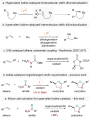
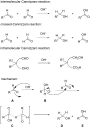
- Cannizzaro reaction commencing from 68. The primary hydroxymethyl functionality in 69 was oxidized to the corresponding aldehyde 70, which was subsequently treated with 37% aqueous formaldehyde and NaOH, to result in a mixture of the gem-hydroxymethyl derivative 72 and the carbamate 71 which led to the spiro






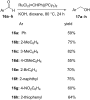


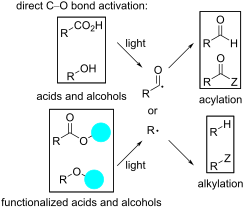
Generation of alkyl and acyl radicals by visible-light photoredox catalysis: direct activation of C–O bonds in organic transformations
Beilstein J. Org. Chem. 2024, 20, 1348–1375, doi:10.3762/bjoc.20.119
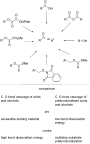
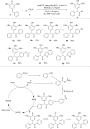
- radical intermediate 68. This carbon-centered radical, positioned near three heteroatoms, undergoes rapid β-cleavage to produce a carbamate 69 and a deoxygenated alkyl radical 70. The formation of carbamate byproduct 69, having a strong C=O double bond, acts as thermodynamic driving factor for the C–O








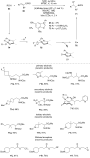
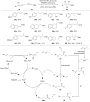
Ligand effects, solvent cooperation, and large kinetic solvent deuterium isotope effects in gold(I)-catalyzed intramolecular alkene hydroamination
Beilstein J. Org. Chem. 2024, 20, 479–496, doi:10.3762/bjoc.20.43
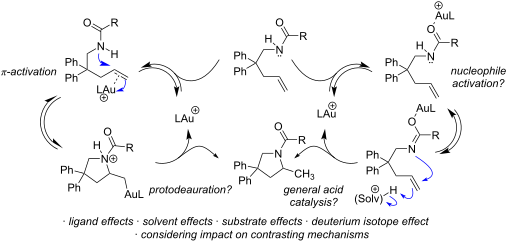
- correlation of faster rate with more electron-withdrawing ligand. Experiments with other substrates display consistent results (further discussion below, Table 6, catalyst 4a reacts faster than 4c in the reaction of carbamate 1b → 3b). Solvent effect For a screen of solvent effect on the rate of 1a
- amounts of water (Table 3, entries 12–14) [39]. The same decelerating effect of water in MeOH solvent was seen with [JPhosAu(NCCH3)]SbF6 (5) (Table 3, entries 15–17). Substrate effect The rate of hydroamination to cyclized 3a–c was measured for three substrates, tert-butylurea 1a, tert-butyl carbamate 1b
- , and benzamide 1c (Table 4). Under standard conditions (2.5 mol % [JPhosAu(NCCH3)]SbF6, 0.05 M alkene in DCM) benzamide and carbamate hydroamination were too slow to measure, so the reactions were done with 55 μL MeOH promoter but still only an estimated rate constant was obtained for 1c (14







Additive-controlled chemoselective inter-/intramolecular hydroamination via electrochemical PCET process
Beilstein J. Org. Chem. 2024, 20, 264–271, doi:10.3762/bjoc.20.27
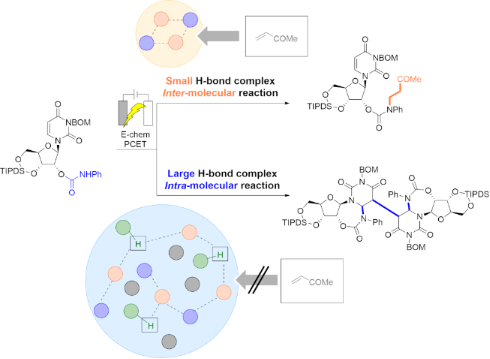
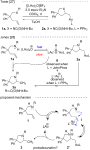
- hydroamination reaction products via a proton-coupled electron transfer (PCET) mechanism. Cyclic voltammetry (CV) analysis indicated that the chemoselectivity was derived from the size of the hydrogen bond complex, which consisted of the carbamate substrate and phosphate base, and could be controlled using
- presence of methyl vinyl ketone (MVK) as a radical acceptor (Table 1). Tetrabutylammonium dibutyl phosphate (phosphate base), which operates as a PCET initiator through hydrogen bond formation with the N–H bond of amide/carbamate [11], was used as an additive. As a result, N-alkylated product 3 was
- of conjugate addition of a cathodically generated carbamate anion was ruled out, prompting us to consider that N-alkylation proceeded via a radical mechanism. On the other hand, the addition of 1,1,1,3,3,3-hexafluoro-2-propanol (HFIP) led to the predominant formation of cyclized dimer 4 without N