Search results
Search for "mechanistic studies" in Full Text gives 209 result(s) in Beilstein Journal of Organic Chemistry. Showing first 200.
Electrochemical reduction of unsaturated carbon–carbon bonds via 3d transition-metal catalysis
Beilstein J. Org. Chem. 2026, 22, 955–981, doi:10.3762/bjoc.22.75
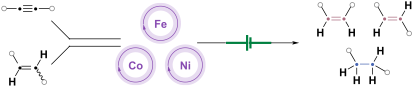
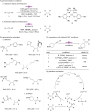
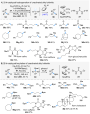
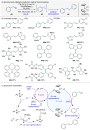
- the cobalt mediator can be productively integrated with a chiral nickel cocatalyst and structurally varied substrates to enable efficient, stereocontrolled hydrogenation under comparatively mild, fixed-potential conditions. Mechanistic studies using deuterium-labeled substrates further indicated that
- of alkynes (Scheme 6C, i). An intramolecular radical trapping experiment employing enynes further corroborated the involvement of a vinyl radical intermediate, as evidenced by the formation of cyclized products via C–C bond formation followed by hydrogen abstraction (Scheme 6C, ii). Mechanistic
- studies revealed that cathodic reduction of Co(II) generates a Co(I) species, which is subsequently protonated by HFIP to form a cobalt hydride intermediate that engages with the alkyne substrate. Cyclic voltammetry supports the generation of Co–H species [60], while UV–vis spectroelectrochemical analysis








Recent advances in copper-catalyzed direct hydroamination of alkenes with (hetero)aromatic amines
Beilstein J. Org. Chem. 2026, 22, 925–947, doi:10.3762/bjoc.22.73
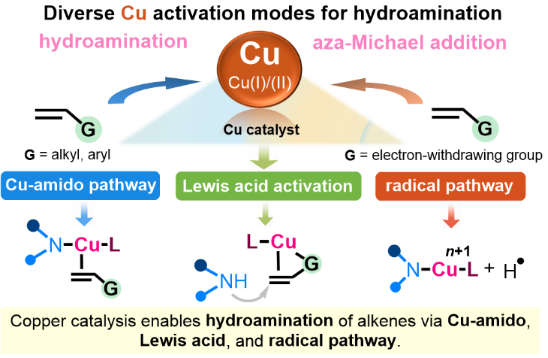
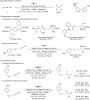
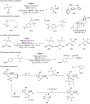
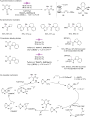
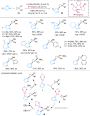
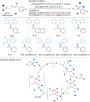
- ). In particular, NMR analysis indicated the formation of the organocopper species (IPr)Cu(N(Ph)CH2CH2CN) (VII), a key intermediate consistent with the nucleophilic addition mechanism. These early mechanistic studies established that copper-bound amido species act as key nucleophilic intermediates in
- isoindolinone framework 28. Mechanistic studies further revealed that electron-rich aminopyridines favor oxidative amidation, followed by intramolecular conjugate addition, whereas electron-deficient substrates might divert the reaction toward alternative cyclization processes. Zhong et al. reported a copper
- electrophilicity in facilitating C–N bond formation. Mechanistic studies suggested that the reaction proceeded via the direct nucleophilic addition of the copper–amido ligand to vinylarene. As illustrated in the proposed catalytic cycle, the copper–amido complex initially coordinated to the electron-deficient







Recent advances in the cleavage of non-activated amides
Beilstein J. Org. Chem. 2026, 22, 352–369, doi:10.3762/bjoc.22.23
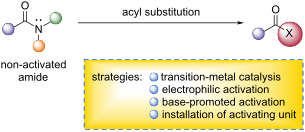
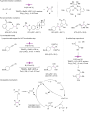
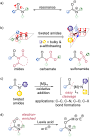
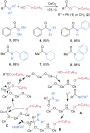
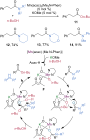
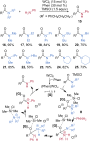
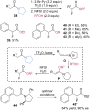
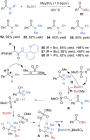
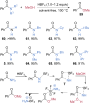
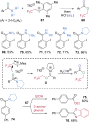
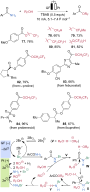
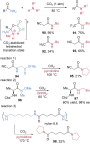
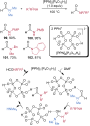
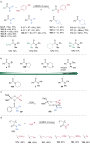
- to produce 59 in excellent yields. Even extremely hindered tertiary amides 64–66 also furnished 59 in excellent yields. Mechanistic studies suggested that the amide NH2 group coordinates with the Lewis acid HBF4. Subsequent coordination between the carbonyl oxygen and boron generates intermediate T
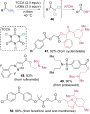
- 86% yield. Mechanistic studies indicated that the pyrrolidine-based amide 73 reacts with iodonium salt 67 to form an imidate triflate intermediate U, which was isolated and characterized by NMR and HRMS. Subsequent hydrolysis via water attack affords the trifluoroethyl ester. This strategy also
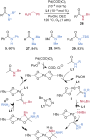
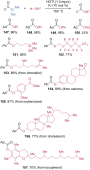
- , furnishing the corresponding hindered amides and anilides 203–205 in high yields. Likewise, esters 206 and 207 and ketones 208 were efficiently obtained by treating the acyl fluoride intermediates 194 with alcohols as O-nucleophiles and thiophene as a C-nucleophile, respectively. Mechanistic studies support










A mild and atom-efficient four-component cascade strategy for the construction of biologically relevant 4-hydroxyquinolin-2(1H)-one derivatives
Beilstein J. Org. Chem. 2026, 22, 244–256, doi:10.3762/bjoc.22.18
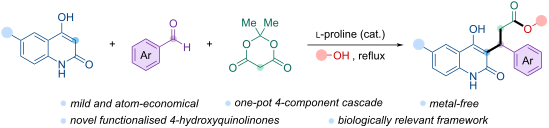
- . Mechanistic studies suggest a cascade sequence involving pyranoquinoline intermediates followed by thermodynamically driven alcoholysis in the presence of excess alcohol solvent at elevated temperatures. Thus, although the initial bond-forming events share similarities with previously reported multicomponent


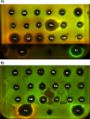
Configuration–packing synergy enabling integrated crystalline-state RTP and amorphous-state TADF
Beilstein J. Org. Chem. 2026, 22, 224–236, doi:10.3762/bjoc.22.16
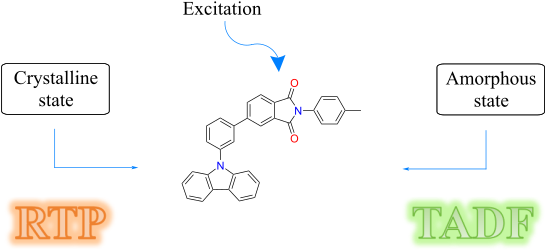
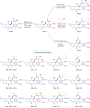
- activation of either RTP or TADF channels in different phases, thus contributing to both fundamental mechanistic studies and the expansion of device applications. In this work, phthalimide (imide) was selected as the acceptor fragment, carbazole as the donor, and a phenylene bridge was introduced to


Total synthesis of natural products based on hydrogenation of aromatic rings
Beilstein J. Org. Chem. 2026, 22, 88–122, doi:10.3762/bjoc.22.4
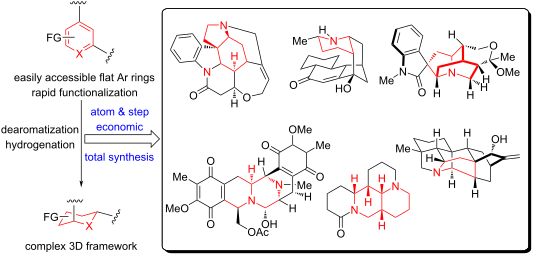
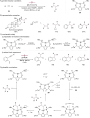
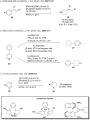
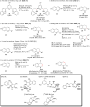
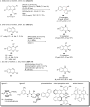
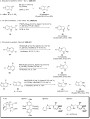
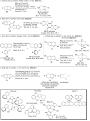
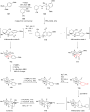
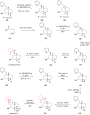
- piperidine 17 (Scheme 3) [43][44]. Mechanistic studies demonstrated that the nitrogen atoms present in both pyridine and piperidine complexed with the triarylborane, cleaving the H–H bond and reducing the pyridine. In 2022, Xiao and co-workers reported a study on the conversion of isolated pyridinium salts
- hydrogenation reaction (Scheme 7) [60]. Using an acid-assisted dynamic kinetic resolution method, they obtained a series of chiral indolines 56 containing exocyclic stereocenters in high yields and excellent enantioselectivity. Mechanistic studies of the reaction revealed that the dynamic kinetic resolution










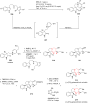

Advances in Zr-mediated radical transformations and applications to total synthesis
Beilstein J. Org. Chem. 2026, 22, 71–87, doi:10.3762/bjoc.22.3
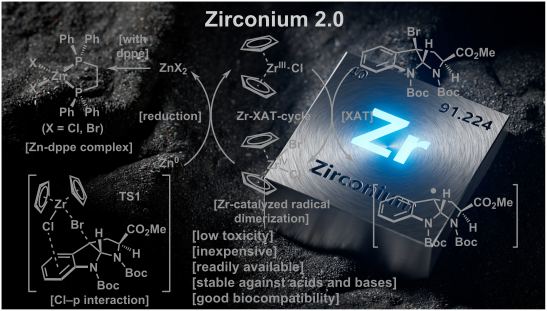
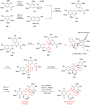
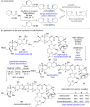
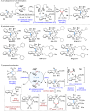
- radical species. Radical dimerization subsequently affords the desired product 61a. Mechanistic studies also revealed that ZnCl2, a byproduct of the catalytic cycle, exerts a detrimental effect on the reaction. Specifically, ZnCl2 coordinates with the two Boc groups of the substrate, raising the reduction
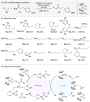
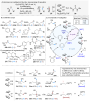
- radical homo coupling of alkyl chlorides. Zr-catalyzed fluorine atom transfer. Zr-catalyzed C–O bond cleavage. aYield without the use of P(OEt)3. Application to the total synthesis of halichondrins. Zr-catalyzed C3 dimerization of 3-bromotryptophan derivatives. aCp2ZrCl2 was used. Mechanistic studies








Visible-light-driven NHC and organophotoredox dual catalysis for the synthesis of carbonyl compounds
Beilstein J. Org. Chem. 2025, 21, 2584–2603, doi:10.3762/bjoc.21.200
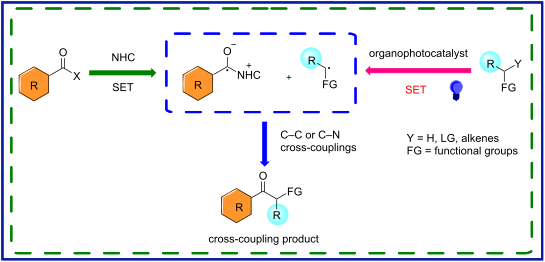
- oxidants, and proceeds in an atom-economical manner. This photochemical reaction displays a wide substrate scope, tolerating a broad range of aryl and aliphatic aldehydes with good functional group compatibility. Mechanistic studies revealed that the photochemical reaction proceeds via radical–radical
- -rich and electron-poor substituents. This reaction was carried out between arylcyclopropanes 5 and acyl fluoride 4 in the presence of NHC (10 mol %) and 4CzIPN (5 mol %). Mechanistic studies showed that the cascade proceeds via nucleophilic ring-opening of a cyclopropyl radical cation D with subsequent
- cleavage and the new C–O bond formation process were achieved using NHC (10 mol %), a photocatalyst (2 mol %), and DABCO (1.5 equiv), providing the corresponding aryl salicylates 27 in moderate to good yields. Mechanistic studies support the oxidation of the Breslow intermediate by oxygen in the presence





Palladium-catalyzed regioselective C1-selective nitration of carbazoles
Beilstein J. Org. Chem. 2025, 21, 2479–2488, doi:10.3762/bjoc.21.190
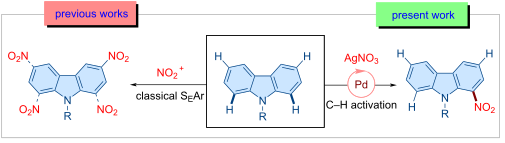
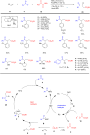
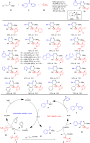
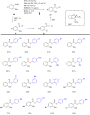
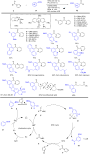
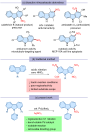
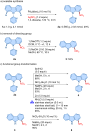
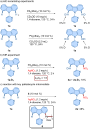
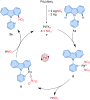
- , compound 2a was successfully reduced to the corresponding amine 4 in 85% yield. Similarly, the nitro group of compound 3 was also reduced under the NiCl2/NaBH4-promoted conditions, affording 9H-carbazol-1-amine (5) in 90% yield. Mechanistic studies Next, we sought to gain mechanistic insights into the
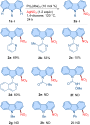
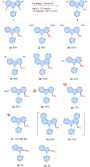
- of our method. Key mechanistic studies. Optimization studies.a Supporting Information Supporting Information File 9: Experiment details, characterization data, copy of NMR spectra of synthesized compounds, and single-crystal X-ray diffraction data. Supporting Information File 10: CIF file for 2a


Conformational effects on iodide binding: a comparative study of flexible and rigid carbazole macrocyclic analogs
Beilstein J. Org. Chem. 2025, 21, 2369–2375, doi:10.3762/bjoc.21.181
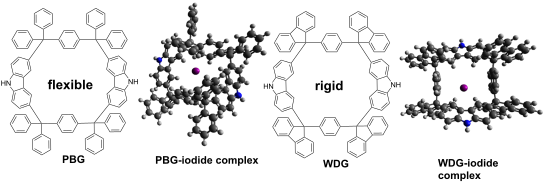
- constant (K = 1.387 × 10⁵ M−¹) compared to the rigid WDG (K = 6.089 × 10³ M−¹), highlighting the critical role of conformational adaptability in anion recognition. Mechanistic studies revealed that PBG may operate through an induced-fit mechanism, dynamically adjusting its cavity to optimize I− binding

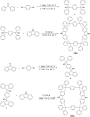


Pathway economy in cyclization of 1,n-enynes
Beilstein J. Org. Chem. 2025, 21, 2260–2282, doi:10.3762/bjoc.21.173
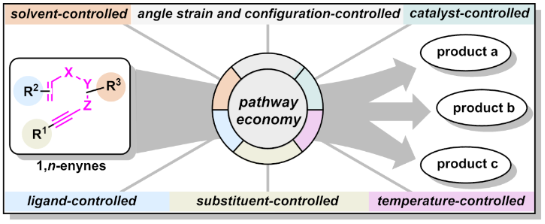
- cyclization, and hydrolysis, exclusively producing cis-tetrahydropyridin-4-one derivatives 77 (Scheme 16, path b). Mechanistic studies revealed that intermediate 74 could be stabilized by NHC ligands to facilitate 1,5-acyl migration, whereas phosphine ligands could accelerate proton dissociation in


Photochemical reduction of acylimidazolium salts
Beilstein J. Org. Chem. 2025, 21, 1973–1983, doi:10.3762/bjoc.21.153
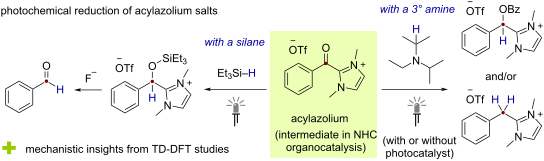
- reduction process. Further mechanistic studies will be required, however, to fully elucidate the active pathways occurring in this system. Finally, treatment of crude 5 with CsF (1.5 equiv) in MeCN-d3 at rt led to efficient desilylation and elimination of the NHC, affording benzaldehyde (10) in 56% 1H NMR


Continuous-flow-enabled intensification in nitration processes: a review of technological developments and practical applications over the past decade
Beilstein J. Org. Chem. 2025, 21, 1678–1699, doi:10.3762/bjoc.21.132
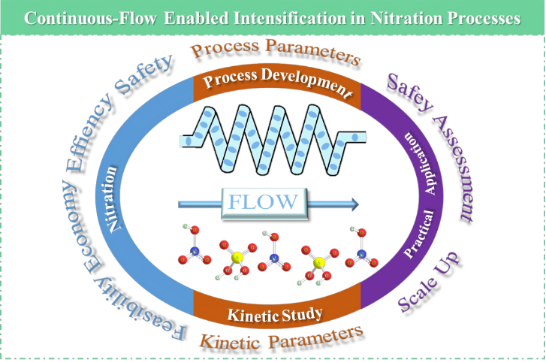
- selective mono- or di-nitration and facilitates late-stage C–H nitration of biorelevant molecules, with DFT/mechanistic studies revealing synergistic 'nitro effect' and 'methyl effect' underlying the reactivity [7]. Jia et al. developed dinitro-5,5-dimethylhydantoin (DNDMH) as an efficient arene nitration
- systems. A well-established framework has emerged for modeling nitration kinetics in homogeneous systems, with the following generalized methodology currently adopted across mechanistic studies. Reaction kinetics in homogeneous systems: The model reaction for the homogeneous nitration reaction by nitric



General method for the synthesis of enaminones via photocatalysis
Beilstein J. Org. Chem. 2025, 21, 1535–1543, doi:10.3762/bjoc.21.116
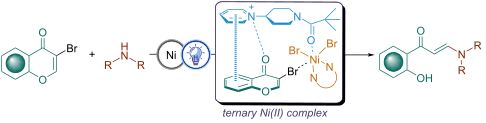
- -bromochromones via a Michael reaction of an amine with an electron-deficient alkene moiety and subsequent photocatalyzed debromination. With this dual catalytic system, a range of structurally diverse enaminone derivatives have been achieved in good yields with total trans selectivity. Mechanistic studies
- photocatalytic protocol for the direct formation of enaminones from 3-bromochromones is reported. The process involves a Ni(II)-catalyzed hydroamination, followed by photocatalytic reductive debromination. Mechanistic studies suggest that the key step of this transformation is the complexation of the starting 3
- photocatalyst. Examples of compounds with medicinal effects containing an enaminone structural moiety. Synthesis of enaminones. Substrate scope. Scale-up synthesis of enaminone 9a. Mechanistic studies. Proposed mechanism. Optimization of reaction conditions. Supporting Information Supporting Information File 6




Oxetanes: formation, reactivity and total syntheses of natural products
Beilstein J. Org. Chem. 2025, 21, 1324–1373, doi:10.3762/bjoc.21.101
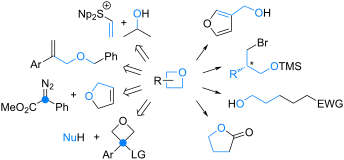
- could be further aromatized to quinolines upon treatment with ethanolic sodium hydroxide at 100 °C. Subsequent mechanistic studies showed an initial oxetane opening by the sulphonamide nitrogen as the most probable pathway. Seven months later, the same research group published another indium triflate








Recent advances in oxidative radical difunctionalization of N-arylacrylamides enabled by carbon radical reagents
Beilstein J. Org. Chem. 2025, 21, 1207–1271, doi:10.3762/bjoc.21.98
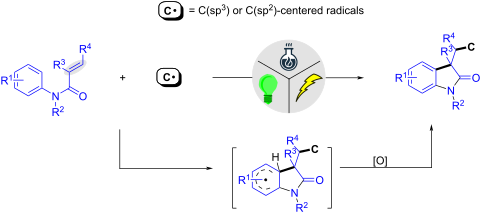
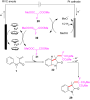
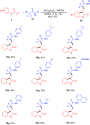
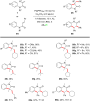
- -withdrawing or electron-donating, and polysubstituted substrates, showed good tolerance under the standard conditions (50d–f). When an N-acryloyl-N-methylbenzamide was employed as substrate, the desired compound 50g was obtained in 80% yield. Through control experiments and mechanistic studies, a plausible












Synthesis of β-ketophosphonates through aerobic copper(II)-mediated phosphorylation of enol acetates
Beilstein J. Org. Chem. 2025, 21, 1192–1200, doi:10.3762/bjoc.21.96
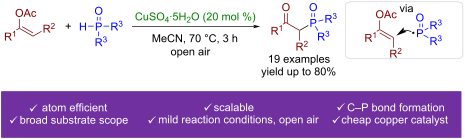
- tolerance and can be applied for the gram-scale synthesis of target compounds. Conducted mechanistic studies revealed that the discovered transformation proceeds via the formation of P-centered radicals produced by the oxidation of the corresponding phosphorous precursors by copper(II)-containing species


Enhancing chemical synthesis planning: automated quantum mechanics-based regioselectivity prediction for C–H activation with directing groups
Beilstein J. Org. Chem. 2025, 21, 1171–1182, doi:10.3762/bjoc.21.94
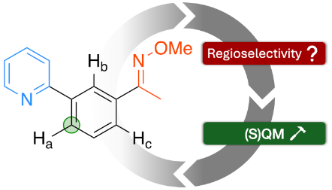
- , thereby dictating the site of C–H activation. Common DGs include unsaturated heteroatoms and alkenyl groups, which have proven effective in guiding the regioselectivity of these reactions [4]. Mechanistic studies with palladium(II) acetate (Pd(OAc)2) as catalyst support the following mechanism of C–H


Light-enabled intramolecular [2 + 2] cycloaddition via photoactivation of simple alkenylboronic esters
Beilstein J. Org. Chem. 2025, 21, 854–863, doi:10.3762/bjoc.21.69
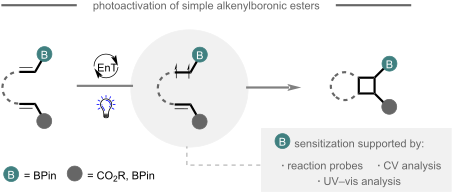
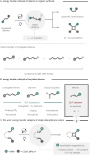
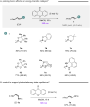
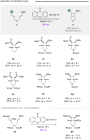
- identify a suitable catalyst and boron residue, while control reactions and mechanistic studies support the proposed sensitization. The platform enables direct access to mono- and vicinal cyclobutylboronic esters that could be effectively derivatized to demonstrate their potential in synthesis. Results and



Recent advances in the electrochemical synthesis of organophosphorus compounds
Beilstein J. Org. Chem. 2025, 21, 770–797, doi:10.3762/bjoc.21.61
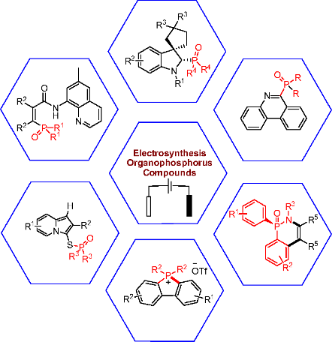
- yield was observed with increased reaction temperature. 2-Isocyanobiaryl compounds showed better reactivity when they contained electron-withdrawing groups. Diarylphosphine oxides containing a methyl group reacted well under standard conditions, regardless of their position. Mechanistic studies showed
- , or phenyl groups at the α-position. The researchers noted that the lower yields were due to substrate decomposition or poor conversion rather than regioselectivity issues. Additionally, this method was also suitable for the phosphorylation of ferrocenes. For mechanistic studies, the reaction was
- products, which also exhibit enhanced anticancer activity. The reaction was carried out in an undivided cell where the anode was reticulated vitreous carbon (RVC), and the cathode was platinum. Mechanistic studies revealed that Cp2Fe plays the main role in the reaction, and the reaction did not proceed


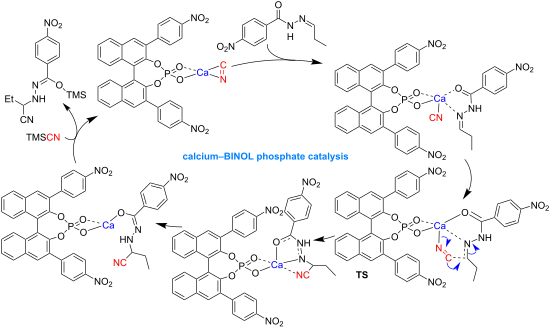
Development and mechanistic studies of calcium–BINOL phosphate-catalyzed hydrocyanation of hydrazones
Beilstein J. Org. Chem. 2025, 21, 755–765, doi:10.3762/bjoc.21.59


Copper-catalyzed domino cyclization of anilines and cyclobutanone oxime: a scalable and versatile route to spirotetrahydroquinoline derivatives
Beilstein J. Org. Chem. 2025, 21, 749–754, doi:10.3762/bjoc.21.58
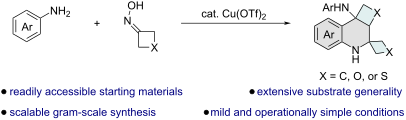
- conditions were optimized for the effective formation of tetrahydroquinoline derivatives with varying substituents, showing high yields under mild conditions. Mechanistic studies suggest a catalytic cycle involving nucleophilic attack by the aniline on the cyclobutanone oxime, followed by cyclization to form
- group tolerance. The optimized reaction conditions, utilizing copper(II) trifluoroacetate as the catalyst and hexane as the solvent, enabled the synthesis of the target products in good to excellent yields. Mechanistic studies suggest a catalytic cycle involving the formation of imine and enamine


Recent advances in allylation of chiral secondary alkylcopper species
Beilstein J. Org. Chem. 2025, 21, 639–658, doi:10.3762/bjoc.21.51
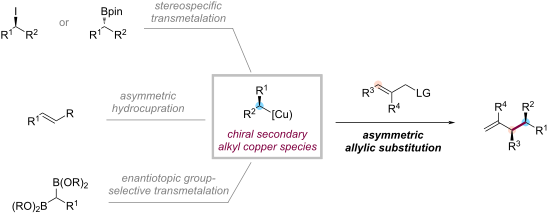
- , providing rapid access to highly enantioenriched organometallic and organosilicon compounds. Mechanistic studies using a deuterium-labeled allylic phosphate revealed that the C–C-bond formation occurs through an SN2'-like process, with attack of the organocopper species at the 3-position of the allylic


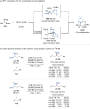


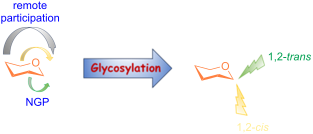
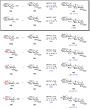
The effect of neighbouring group participation and possible long range remote group participation in O-glycosylation
Beilstein J. Org. Chem. 2025, 21, 369–406, doi:10.3762/bjoc.21.27




Synthesis of disulfides and 3-sulfenylchromones from sodium sulfinates catalyzed by TBAI
Beilstein J. Org. Chem. 2025, 21, 253–261, doi:10.3762/bjoc.21.17
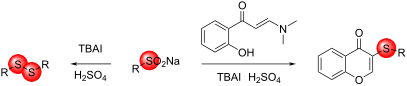
- tetrabutylammonium iodide (TBAI)/H2SO4 reduction system using sodium sulfinate as key component, thus eliminating the need for thiols and redox reagents commonly used in traditional methods. Various disulfides and 3-sulfenylchromones were obtained in moderate to excellent yields through this methodology. Mechanistic
- studies indicate that thiosulfonates play an important role in the reaction process. Keywords: disulfides; sodium sulfinates; 3-sulfenylchromones; TBAI; thiosulfonates; Introduction Organosulfur compounds containing S–S bonds, often referred to as disulfides, are among the most valuable functional