Search results
Search for "organocatalytic" in Full Text gives 192 result(s) in Beilstein Journal of Organic Chemistry.
Synthesis and structural elucidation of a novel bis-spirooxindole from isatin and ethylenediamine
Beilstein J. Org. Chem. 2026, 22, 813–820, doi:10.3762/bjoc.22.63
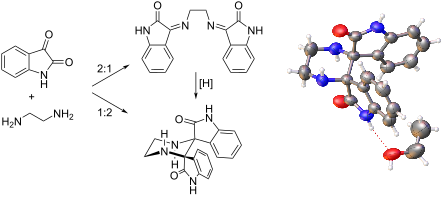
- , the design and synthesis of spiro-heterocycles – especially spirooxindoles – has continued to expand due to their broad pharmacological relevance and the wide array of modern synthetic strategies now available for their construction, including metal-free, organocatalytic, and transition-metal-mediated


Synthesis of heterocycles based on azomethine ylides from α-amino acids (or amines) and carbonyl compounds
Beilstein J. Org. Chem. 2026, 22, 705–741, doi:10.3762/bjoc.22.55
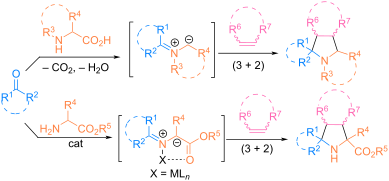
- the same time, (3 + 2) cycloaddition involving non-activated alkenes of various structures has not yet been sufficiently studied [3]. A review article [34] examines 1,3-dipolar cycloaddition reactions occurring under organocatalytic conditions. Zhao's and Bayat's works provide a detailed discussion of
- -nitrostyrene, forming optically active tetrasubstituted pyrrolidines 54 [4]. We would like to separately note the organocatalytic (metal-free) approach to enantioselective syntheses involving azomethine ylides from imino esters. In recent years, thanks to intensive efforts of several research groups, a number
- of very efficient protocols have been developed to carry out this reaction in an organocatalytic asymmetric version. In particular, Vicario [61][62][63][64] reported the first organocatalytic enantioselective (3 + 2) cycloaddition reaction between α,β-unsaturated aldehydes and azomethine ylides. The


Recent advances in the stereoselective synthesis of distal biaxially chiral molecules
Beilstein J. Org. Chem. 2026, 22, 461–479, doi:10.3762/bjoc.22.34
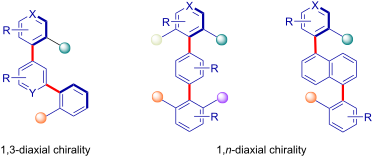
- remote biaxial chiral ligands 21 (Scheme 4) [45]. These ligands were successfully applied in asymmetric hydrogenation, revealing dual asymmetric induction effects and enriching the design principles for chiral catalytic systems. In addition, Yan’s group developed an organocatalytic strategy for the
- organocatalytic approach. The mechanistic study revealed that the reaction proceeds through a stepwise double cyclization process: The first cyclization generates an intermediate bearing a stereogenic axis, while the second cyclization involves dynamic kinetic resolution of the spiral reaction intermediate under
- stereoselective diarylation, allowing the construction of two stereogenic axes. In 2020, Tan and co-workers pioneered an organocatalytic strategy for assembling azo-naphthalenes with carbazoles to construct novel chiral N-arylcarbazole frameworks 68 (Scheme 18) [57]. Additionally, this work also represents the


Screwing the helical chirality through terminal peri-functionalization
Beilstein J. Org. Chem. 2026, 22, 205–212, doi:10.3762/bjoc.22.14
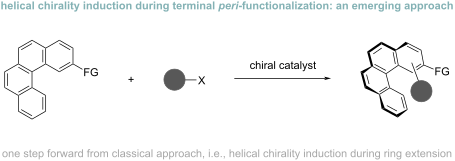
- -functionalization, where a bulkier handle provides the required enantiomerization barrier to screw helical chirality (Figure 1C and D). A straight forward preparation of various carbohelicenes via an organocatalytic enantioselective hydroamination reaction of polyaromatic phenols with diazodicarboxamide derivatives


Asymmetric Mannich reaction of aromatic imines with malonates in the presence of multifunctional catalysts
Beilstein J. Org. Chem. 2026, 22, 151–157, doi:10.3762/bjoc.22.8
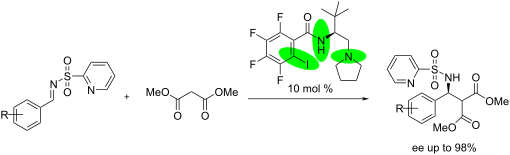
- widely used to achieve these valuable compounds [10][11][12]. Enamine activation was one of the first organocatalytic methods applied in Mannich reactions [13][14]. Concurrently, hydrogen-bond catalysis has emerged as a significant strategy for promoting asymmetric Mannich reactions [15][16]. This has


Recent advancements in the synthesis of Veratrum alkaloids
Beilstein J. Org. Chem. 2025, 21, 2657–2693, doi:10.3762/bjoc.21.206
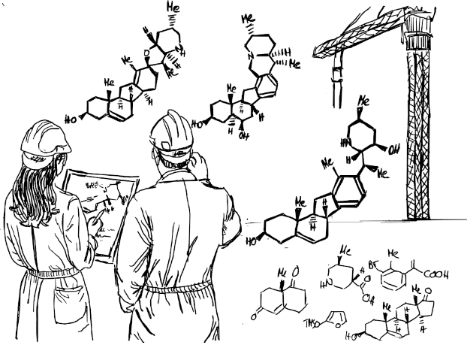
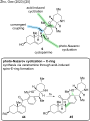
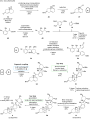
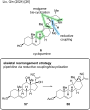
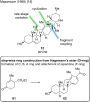
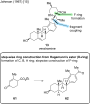
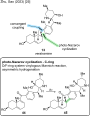
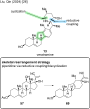
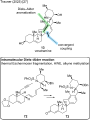
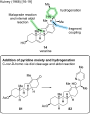
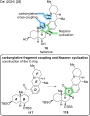
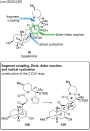
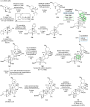
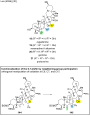
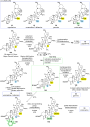
- alkyne fragment 116 (see Scheme 33). The synthesis of diyne fragment 112 commenced with an organocatalytic, enantioselective Diels–Alder reaction between siloxydiene 108 (synthesized in one step from ethyl vinyl ketone) and commercially available dienophile 109 using the proline-derived Hayashi ligand
















Visible-light-driven NHC and organophotoredox dual catalysis for the synthesis of carbonyl compounds
Beilstein J. Org. Chem. 2025, 21, 2584–2603, doi:10.3762/bjoc.21.200
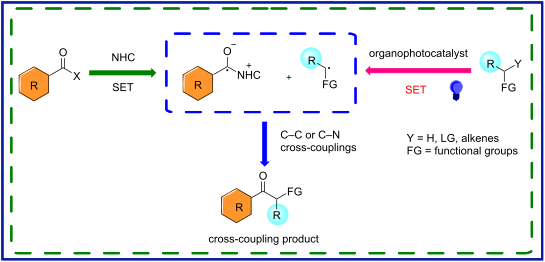
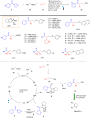
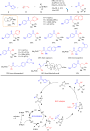
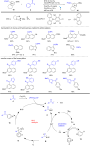
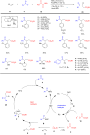
- , and aryloxymethyl potassium trifluoroborate salt 10 under mild conditions. The described catalytic system exhibited broad functional group tolerance and efficiently employed terminal alkenes 11 to generate quaternary centers adjacent to the carbonyl group. The key step in this organocatalytic process
- this dual catalytic strategy (Scheme 9) [59]. Organic dual catalysis enabled by visible-light-induced NHC and photoredoxcatalysts In 2018, Miyabe et al. reported an innovative organocatalytic method for the oxidative esterification of functionalized cinnamaldehydes 24. Dual photocatalysis, employing





Catalytic enantioselective synthesis of selenium-containing atropisomers via C–Se bond formations
Beilstein J. Org. Chem. 2025, 21, 2447–2455, doi:10.3762/bjoc.21.186
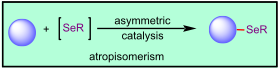
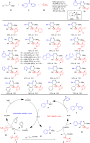
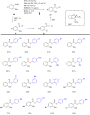
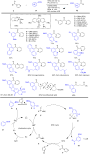
- growth and development. Representative examples of chiral selenium-containing compounds. Rhodium-catalyzed atroposelective C–H selenylation reported by You’s group [18]. Rhodium-catalyzed atroposelective C–H selenylation reported by Li et al. [19]. Organocatalytic asymmetric selenosulfonylation of
- alkynes. Rhodium-catalyzed asymmetric hydroselenation of 1-alkynylindoles. *DCE/DCM 2:1 (v/v), −50 °C. Organocatalytic atroposelective hydroselenation of alkynes. *Using cat.3, 4 h. Funding We thank National Natural Science Foundation of China (22471158, 22071149), Natural Science Foundation of Shanghai




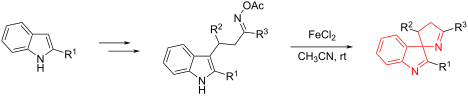
An Fe(II)-catalyzed synthesis of spiro[indoline-3,2'-pyrrolidine] derivatives
Beilstein J. Org. Chem. 2025, 21, 2383–2388, doi:10.3762/bjoc.21.183
- yield substituted spiropyrrolidines (Scheme 1, path b) [9]. Additionally, an organocatalytic, enantioselective Michael addition/cyclization sequence of 3-aminooxindole Schiff bases with terminal vinyl ketones, catalyzed by a cinchona-derived base, has been reported to afford chiral spiroindolylpyrroles




Rotaxanes with integrated photoswitches: design principles, functional behavior, and emerging applications
Beilstein J. Org. Chem. 2025, 21, 2345–2366, doi:10.3762/bjoc.21.179

- patterns that dictate the position of the macrocycle. Later, Leigh and co-workers introduced a new strategy for dynamically controlling asymmetric catalysis using a hydrazone-based rotaxane [72]. The axle features a hydrazone photoswitch and a pseudo-meso 2,5-disubstituted pyrrolidine organocatalytic unit


Measuring the stereogenic remoteness in non-central chirality: a stereocontrol connectivity index for asymmetric reactions
Beilstein J. Org. Chem. 2025, 21, 1995–2006, doi:10.3762/bjoc.21.155
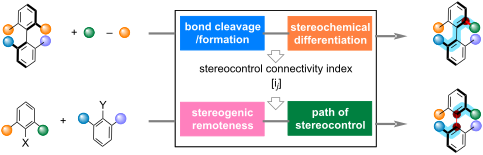
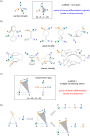
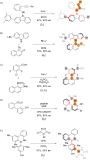
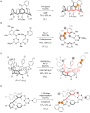
- [25] in Scheme 6C is designated as [154]. In this case, the stereochemical differentiation viewed from the reaction sites can only be made beyond the two pilot atoms; the bond connectivity remains the same till the chloro group and the carboxyl group. Recently, Wang has reported an organocatalytic




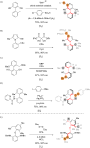

Enantioselective desymmetrization strategy of prochiral 1,3-diols in natural product synthesis
Beilstein J. Org. Chem. 2025, 21, 1932–1963, doi:10.3762/bjoc.21.151
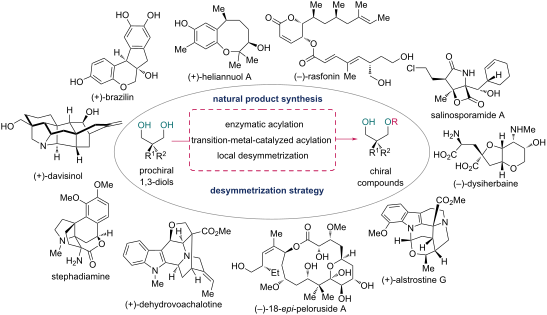
- desymmetrization strategies for diols, including enzymatic desymmetrization and organocatalytic approaches, have been published in the past decade, most of which focus on the methodological development. Although there are reviews on desymmetrization in natural product synthesis [19][20][21], none of these have put


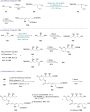


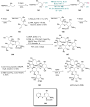






Catalytic asymmetric reactions of isocyanides for constructing non-central chirality
Beilstein J. Org. Chem. 2025, 21, 1648–1660, doi:10.3762/bjoc.21.129
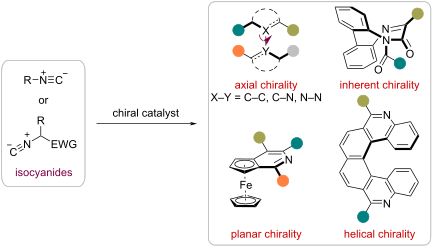
- ], insertion reactions [16][17][18], cycloaddition reactions (e.g., [4 + 1], [3 + 2]) [19][20], and others [21][22][23]. Particularly, isocyanides have been widely exploited toward the preparation of centrally chiral structures through transition-metal-catalyzed or organocatalytic asymmetric reactions [24][25
- for Pd-catalyzed isocyanide insertion reactions, organocatalytic isocyanide-based multicomponent reactions have been explored for the synthesis of axially chiral compounds. In 2024, Yang and co-workers reported a catalytic asymmetric version of the Groebke–Blackburn–Bienaymé reaction [32][33][34




New advances in asymmetric organocatalysis II
Beilstein J. Org. Chem. 2025, 21, 766–769, doi:10.3762/bjoc.21.60
- contributions in stereoselective organocatalytic transformations. The collection contains nine articles featuring various aspects of asymmetric organocatalysis. In the first contribution, Waser et al. examined how chiral phase-transfer catalysts promote β-selective additions of azlactones to allenoates. Maruoka
- Malkov reviewed the recent progress in the organocatalytic synthesis of chiral homoallylic amines. This important structural motif is typically made by asymmetric allylation of imines, and the authors describe various catalytic approaches as well as applications of these strategies in total synthesis [25
- organocatalytic cycloaddition reactions of unsaturated imines. A broad variety of activation modes, as well as catalyst structures, was covered and found to be useful in affording a diverse array of chiral N-heterocycles [27]. In my group, we recently became interested in atroposelective catalytic syntheses

Development and mechanistic studies of calcium–BINOL phosphate-catalyzed hydrocyanation of hydrazones
Beilstein J. Org. Chem. 2025, 21, 755–765, doi:10.3762/bjoc.21.59
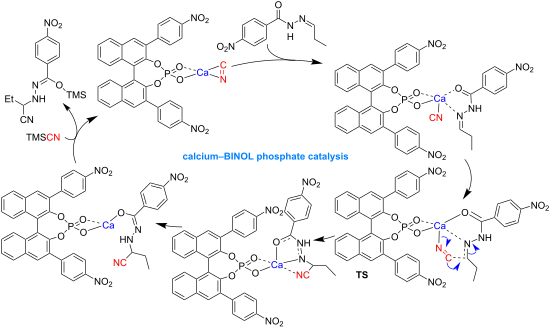
- in elucidating the mechanism by which these bifunctional compounds act as powerful catalysts [21][22][23][24][25][26][27][28][29]. Since Ishihara disclosed the crucial role of calcium in many purportedly purely organocatalytic BINOL phosphate-catalyzed reactions [30][31], several asymmetric synthesis
- [40][41][42][43][44]. However, this catalytic system has not yet been employed explicitly in the hydrocyanation of hydrazones. In 2010, our group reported the first organocatalytic enantioselective hydrocyanation of hydrazones catalyzed by BINOL phosphate [45], giving valuable and potentially


Organocatalytic kinetic resolution of 1,5-dicarbonyl compounds through a retro-Michael reaction
Beilstein J. Org. Chem. 2025, 21, 473–482, doi:10.3762/bjoc.21.34
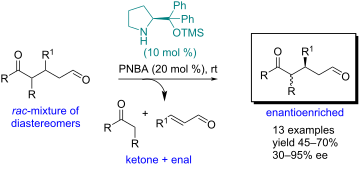
- organocatalytic synthesis of 2-cyclohexen-1-ones via a Michael/Michael/retro-Michael cascade reaction [31]. Our research has shown that the Jørgensen–Hayashi catalyst [32][33] is a highly promising organocatalyst, facilitating enantioselective Michael addition reactions with high yields and excellent levels of
- enantiocontrol [34][35][36][37][38][39]. In our studies on the organocatalytic enantioselective synthesis of 1,5-ketoaldehydes [40], we found that the prolinol derivative A is an outstanding catalyst for the enantioselective preparation of these adducts (Scheme 2). We are currently investigating whether this


Beyond symmetric self-assembly and effective molarity: unlocking functional enzyme mimics with robust organic cages
Beilstein J. Org. Chem. 2025, 21, 421–443, doi:10.3762/bjoc.21.30
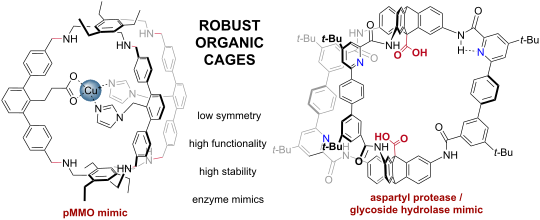
- organocatalysts [222][234] all suffer from the same limitation: they all fail to rigidly organize sufficient bifunctional groups to obtain clear transition-state binding – a hallmark of enzymes and organocatalysts [107][180]. Strategy towards organocatalytic organic cages: My laboratory has levied the following
- design criteria in the pursuit of organocatalytic organic cages: (i) efficient synthesis, ideally by self-assembly; (ii) soluble and stable in organic solvent and in the presence of reactive reagents; (iii) extreme preorganization of functionality in a cavity; (iv) the lowest possible symmetry. We
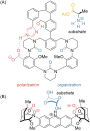
- : When we entered the field, it quickly became apparent that one reason functional organocatalytic cages had not been reported is the synthetic challenge: our chosen cage frameworks [300][302], at least, were poorly soluble [297], and required development to exploit them in the solution state (Figure 8A




Recent advances in organocatalytic atroposelective reactions
Beilstein J. Org. Chem. 2025, 21, 55–121, doi:10.3762/bjoc.21.6
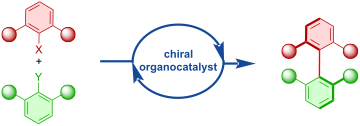
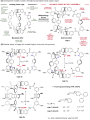
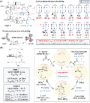
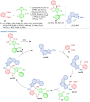
- organocatalytic reactions are discussed according to the dominant catalyst activation mode. For covalent organocatalysis, the typical enamine and iminium modes are presented, followed by N-heterocyclic carbene-catalyzed reactions. The bulk of the review is devoted to non-covalent activation, where chiral Brønsted
- organocatalyzed, methods [7][8][9][10][11]. Asymmetric organocatalysis offers efficient and environmentally benign access to numerous chiral compounds [12]. Therefore, an increasing number of researchers are now investigating the organocatalytic formation of compounds with axial stereogenic axes across various
- advances in organocatalytic atroposelective syntheses. Review Atroposelective reactions via enamine and iminium activation Iminium activation was utilized in the synthesis of axially chiral styrenes. Tan and co-workers developed an atroposelective strategy toward axially chiral alkenylarenes 3 based on an




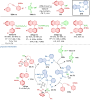


Non-covalent organocatalyzed enantioselective cyclization reactions of α,β-unsaturated imines
Beilstein J. Org. Chem. 2024, 20, 3221–3255, doi:10.3762/bjoc.20.268
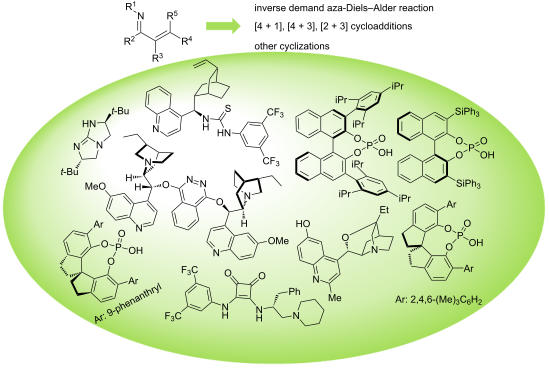
- ]. Although quite important in all organocatalytic processes, there are specific organocatalysts which activate reactants through non-covalent interactions such as hydrogen bonding. These interactions are crucial to obtain high enantioselectivity in the reaction. The 1-azadienes possess an electronegative
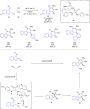
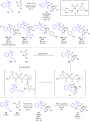
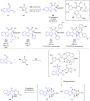
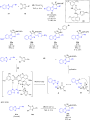
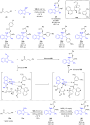
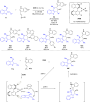
- utilized for a wide variety of organocatalytic processes. In this section, different cyclizations of α,β-unsaturated imines involving Brønsted base organocatalysts such as (DHQD)2-based catalysts will be described. In 2015, Jiang, Chen and co-worker published a modified cinchona alkaloid-catalyzed [4 + 2









Advances in the use of metal-free tetrapyrrolic macrocycles as catalysts
Beilstein J. Org. Chem. 2024, 20, 3085–3112, doi:10.3762/bjoc.20.257
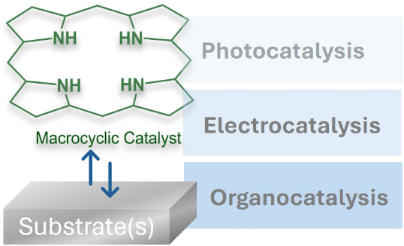
- -defined binding pockets, offer a preorganized arrangement of functional groups as a suitable microenvironment for organocatalysis. In 2008, Kohnke, Soriente and co-workers first reported [37] the H-bonding organocatalytic activity of calix[4]pyrrole derivatives 3 and 4 and acyclic dipyrromethane 5 for the
- due to the sp3-linkage between the pyrrole units that allows their inversion through the plane of the macrocycle and could inhibit the organocatalytic activity. 1.2 Porphyrin macrocycles as organocatalysts Porphyrins can coordinate almost any metal from the periodic table [42][43], they offer high
- factors on the organocatalytic performance in the same reaction as before (Table 2) [62]. Among the tested compounds, the highly nonplanar macrocycle 26 with a good accessibility of both pyrrolic –N/N–H moieties turned out to be the best candidate, giving an 80% conversion yield, whereas the other


Synthesis and antimycotic activity of new derivatives of imidazo[1,2-a]pyrimidines
Beilstein J. Org. Chem. 2024, 20, 2806–2817, doi:10.3762/bjoc.20.236
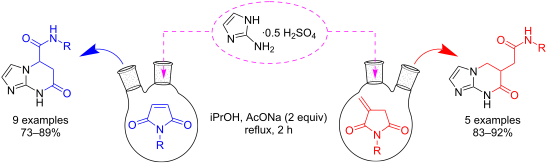
- , it is worth mentioning the work of Li and co-workers (2011) [20], who described a single example of the formation of such structures by carrying out an organocatalytic domino aza-Michael–Mannich reaction between benzylidene-1H-imidazol-2-amine and cinnamaldehyde. Although the imidazo[1,2-a


Transition-metal-free decarbonylation–oxidation of 3-arylbenzofuran-2(3H)-ones: access to 2-hydroxybenzophenones
Beilstein J. Org. Chem. 2024, 20, 2655–2667, doi:10.3762/bjoc.20.223
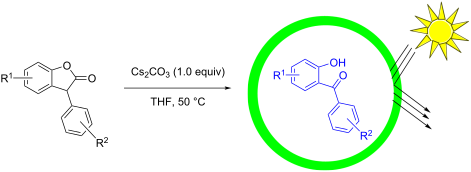
- -hydroxybenzophenones are conventionally prepared via Fries rearrangement of a phenyl ester [10]. Organocatalytic methods have also been reported for the synthesis of 2-hydroxybenzophenones [11]. In addition, several metal-mediated methods for their synthesis have been reported. For example, the Rh-catalyzed


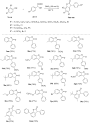
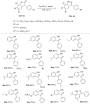


A review of recent advances in electrochemical and photoelectrochemical late-stage functionalization classified by anodic oxidation, cathodic reduction, and paired electrolysis
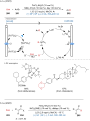
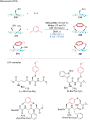
Beilstein J. Org. Chem. 2024, 20, 2500–2566, doi:10.3762/bjoc.20.214
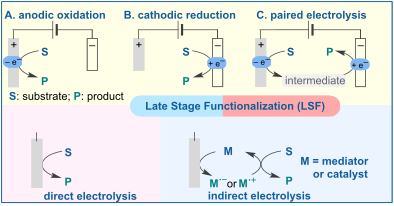


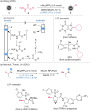


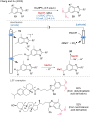


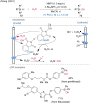


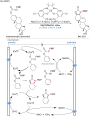


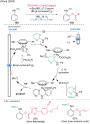








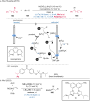


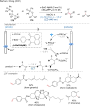


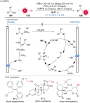
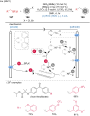




Hypervalent iodine-mediated cyclization of bishomoallylamides to prolinols
Beilstein J. Org. Chem. 2024, 20, 2455–2460, doi:10.3762/bjoc.20.209
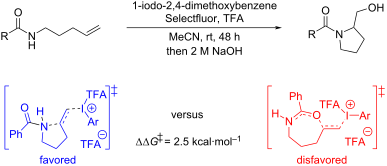
- enantioselective conjugate addition to α,β-unsaturated pyroglutamic acid derivatives followed by deoxygenation [10], and the enantioselective organocatalytic reaction between 2-acylaminomalonates and α,β-unsaturated aldehydes [11][12]. The development of new synthetic methods using hypervalent iodine reagents has


Asymmetric organocatalytic synthesis of chiral homoallylic amines
Beilstein J. Org. Chem. 2024, 20, 2349–2377, doi:10.3762/bjoc.20.201
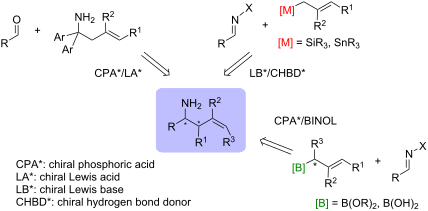
- equimolar chiral controller. However, recent years have witnessed the rise of asymmetric transition-metal catalysts and, importantly, organocatalytic allylation, reshaping the landscape of modern synthetic chemistry. This review explores the latest developments in the asymmetric allylation of imines
- ][18][19][20][21][22][23], none have focused specifically on organocatalytic approaches, which are particularly important for medicinal chemistry due to their greener credentials. Given the wide range of organocatalytic methods for synthesising homoallylic amines developed in the past decade, it is
- essential to provide a comprehensive overview of this significant topic. Review Asymmetric allylation with boron-based reagents The research on the metal-free, asymmetric organocatalytic allylation of acylimines was pioneered in 2007 by Schaus and co-workers [24]. In their elegant approach, high