Search results
Search for "prediction" in Full Text gives 164 result(s) in Beilstein Journal of Organic Chemistry.
Unsymmetrical sulfoxides with sterically hindered catechol fragment: synthesis, structure, electrochemical properties, and antiradical activity
Beilstein J. Org. Chem. 2026, 22, 828–837, doi:10.3762/bjoc.22.65
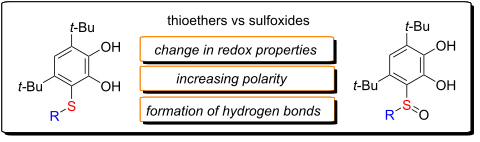
- containing sulfur atoms in various oxidation states. Furthermore, a detailed study of the redox properties of functionalized catechols allows the prediction of their antioxidant activity based on electrochemical data. The redox properties of catechol-thioethers 1–7 (CatH2-S-R) and sulfoxides 1a–7a (CatH2-SO


Using generative AI to transform peptide hits into small molecule leads
Beilstein J. Org. Chem. 2026, 22, 672–679, doi:10.3762/bjoc.22.51
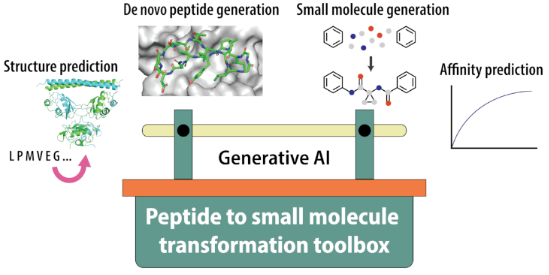
- potential for new AI-based tools to expedite the structure-based transformation of peptide hits into small molecule leads. In this Perspective, we highlight how AI-enabled prediction and design tools can potentially span the entire workflow from peptide to small molecule: target protein structure prediction
- triaging generated candidates prior to more resource-intensive modelling, laboratory synthesis, and evaluation in functional assays. Deep learning for protein structure prediction The growing wealth of structural data in the Protein Data Bank, along with ongoing improvements in computational processing
- power, has fuelled the success of protein structure prediction tools based on deep learning algorithms. Most notably, DeepMind’s AlphaFold2 heralded a breakthrough in protein structure prediction with its exemplary performance in the 14th Critical Assessment of protein Structure Prediction (CASP14


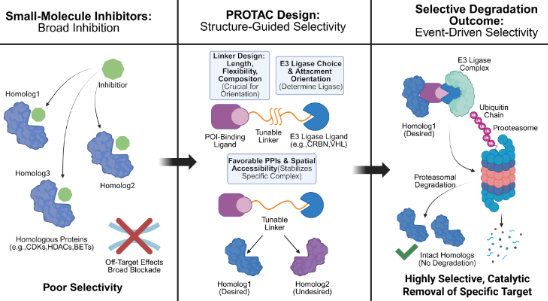
Advantages of PROTACs in achieving selective degradation of homologous protein families
Beilstein J. Org. Chem. 2026, 22, 628–661, doi:10.3762/bjoc.22.49



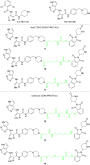


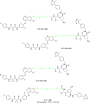
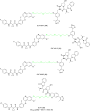


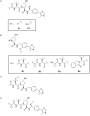


Computational prediction of C–H hydricities and their use in predicting the regioselectivity of electron-rich C–H functionalisation reactions
Beilstein J. Org. Chem. 2026, 22, 603–610, doi:10.3762/bjoc.22.46
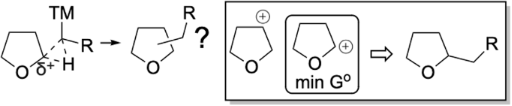
- paper we present a quantum chemistry (QM)-based workflow for the automatic prediction of hydricities. We use this QM workflow to create a training set for an ML-based hydricity predictor and give a few examples of how the method can be used to rationalise the regioselectivity of a diverse set of
- the computed value of and fit it against experimental hydricities, obtaining a mean absolute error (MAE) of 4.43 kcal/mol and a root mean squared error (RMSE) of 5.45 kcal/mol (see Figure 2). The relatively large discrepancy between prediction and experiment could, in part, derive from experimental
- that must be used when applying simple measures of selectivity prediction in a complex setting.” Compound 4 Vermeulen et al. [41] reported the Fe(DPD)-catalysed oxidation of (+)-artemisinin (compound 4). Similarly to nitrene insertion into cycloheximide (compound 2), the reactive site does not


![[Graphic 6]](/bjoc/content/inline/1860-5397-22-46-i8.svg?max-width=637&scale=1.18182)


Concept-driven strategies in target-oriented synthesis
Beilstein J. Org. Chem. 2026, 22, 451–454, doi:10.3762/bjoc.22.32
- the chemical and data sciences. Moreover, the successful translation of these academic breakthroughs into commercial applications has been demonstrated, particularly in the design and prediction of reaction pathways for small organic molecule synthesis [10][11][12]. The ongoing advances in


Design, synthesis and biological evaluation of 2,5-diaryloxazolo[4,5-d]pyrimidin-7-ylamines as selective cytotoxic agents against HeLa cells
Beilstein J. Org. Chem. 2026, 22, 390–398, doi:10.3762/bjoc.22.27
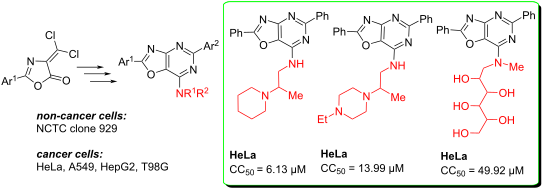
- results for a particular parameter obtained from different platforms increases the reliability of the prediction [20]. In addition, during the development of chemotherapeutics, oral bioavailability is desirable but not critical, given the preference for the parenteral route of administration. Due to the
- platforms. Pharmacokinetic properties ADMET analysis enables the prediction of a compound's pharmacokinetic profile, which is crucial for assessing its pharmacodynamic activity. The predicted pharmacokinetic properties of compounds 1, 7 and 9 are given in Table 2. For human intestinal absorption, the


The high potential of methyl laurate as a recyclable competitor to conventional toxic solvents in [3 + 2] cycloaddition reactions
Beilstein J. Org. Chem. 2025, 21, 2389–2415, doi:10.3762/bjoc.21.184
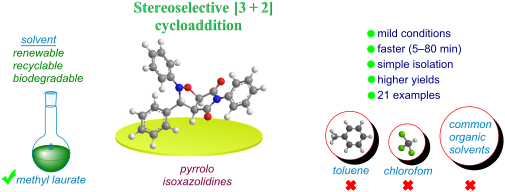
- prediction of toxicity of chemicals) [88], as shown in Figure 2b. As illustrated in the figure, the LD50 value, which serves as a measure of the toxicity of these solvents, exhibits the highest value for methyl laurate and can be characterized as the solvent with the lowest toxicity. Furthermore, the results
- . As well-known the Hildebrand solubility parameter (HSP, δT) has been defined as a measure of the cohesive energy density of a material, thus facilitating prediction of the solubility of a solute in a solvent [96]. Methyl laurate has been found to have HSPs that are in close proximity to those that
- between nitrones and N-aryl-substituted maleimides. Methyl laurate meets most of the criteria for a readily available green solvent compared to the other 15 potential solvents compared. It is demonstrated that the toxicity prediction tools employed in the present study also indicate that methyl laurate is






Adaptive experimentation and optimization in organic chemistry
Beilstein J. Org. Chem. 2025, 21, 2367–2368, doi:10.3762/bjoc.21.180
- ]. However, the contributions in the thematic issue also reveal an important insight: while automation and AI are powerful tools, human chemical intuition remains invaluable. The work of Borup et al. on pKa prediction illustrates how machine learning can complement rather than replace expert knowledge [12
Thermodynamics and polarity-driven properties of fluorinated cyclopropanes
Beilstein J. Org. Chem. 2025, 21, 1742–1747, doi:10.3762/bjoc.21.137
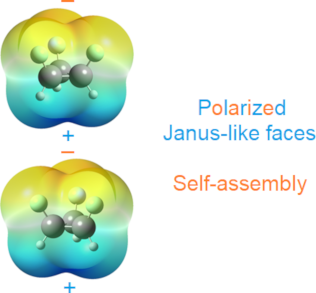
- insights can guide the prediction of molecular properties, paving the way for the design of innovative applications. Fluorinated cyclopropanes, with their unique electronic and structural characteristics, hold significant potential in the development of new drugs, advanced materials like liquid crystals


Tautomerism and switching in 7-hydroxy-8-(azophenyl)quinoline and similar compounds
Beilstein J. Org. Chem. 2025, 21, 1404–1421, doi:10.3762/bjoc.21.105
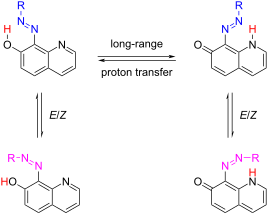
- spectral regions could be defined – around 400 nm, where the E-form absorbs (in analogy with the prediction from Figure 1 and the known individual spectra of the tautomers of 3 [55]) and around 450 nm, where the mixture of KE and KK absorbs. Bearing in mind that the predicted molar absorptivities of the




Enhancing chemical synthesis planning: automated quantum mechanics-based regioselectivity prediction for C–H activation with directing groups
Beilstein J. Org. Chem. 2025, 21, 1171–1182, doi:10.3762/bjoc.21.94
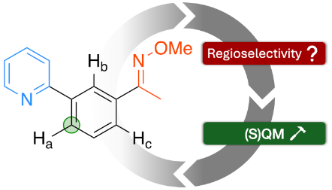
- . This study introduces a novel quantum mechanics-based computational workflow tailored for the regioselective prediction of C–H activation in the presence of DGs. Utilizing (semi-empirical) quantum calculations hierarchically, the workflow efficiently predicts outcomes by considering concerted
- reliable regioselectivity predictions that are essential for accelerating innovation in materials science and medicinal chemistry. Keywords: C–H activation; chemical synthesis planning; directing groups; quantum mechanics; regioselectivity prediction; Introduction The activation and functionalization of
- and usability since several DFT calculations need to be run on an HPC cluster in order to make a prediction. In this study, we introduce a quantum mechanics (QM)-based computational workflow specifically developed to predict regioselectivity in C–H functionalization reactions involving directing


Data accessibility in the chemical sciences: an analysis of recent practice in organic chemistry journals
Beilstein J. Org. Chem. 2025, 21, 864–876, doi:10.3762/bjoc.21.70

- , standards, and data centers for these communities. The Materials Genome Initiative (MGI) [9] has accelerated the production of large, public datasets that are driving an exponential increase in the design and discovery of novel materials, their properties prediction and characterization [10][11][12
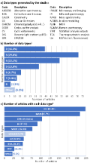
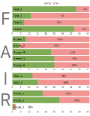
- share their data, to take advantage of recent advances in machine learning (ML) for synthesis planning, reaction optimization, and property prediction [30][31][32]. The discoverability and reusability of data, especially by machines, is central to the ‘FAIR Guiding Principles for scientific data





4-(1-Methylamino)ethylidene-1,5-disubstituted pyrrolidine-2,3-diones: synthesis, anti-inflammatory effect and in silico approaches
Beilstein J. Org. Chem. 2025, 21, 817–829, doi:10.3762/bjoc.21.65

- prediction of drug-like properties, in silico evaluations of ADMET (absorption, distribution, metabolism, excretion, and toxicity) characteristics of all potential drug candidates were conducted using the pkCSM online tool [28]. The resulting data are presented in Table 3. The absorption capability of the
- determine the melting points of all products. All NMR spectra were recorded on a Bruker Avance II+ 600 MHz instrument and chemical shifts (δ) are reported in ppm (parts per million) relative to tetramethylsilane (TMS) or internal deuterated solvent signals. Computational methods Prediction of drug-likeness


Beyond symmetric self-assembly and effective molarity: unlocking functional enzyme mimics with robust organic cages
Beilstein J. Org. Chem. 2025, 21, 421–443, doi:10.3762/bjoc.21.30
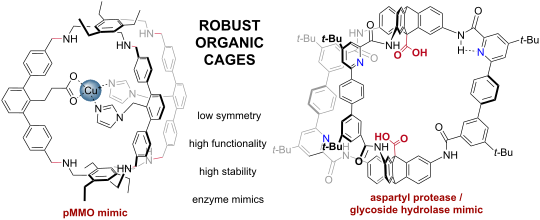
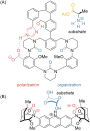
- -based porous organic cages have been a popular choice for study [377][379][406][407][408], as have MOCs [208][376][386]. Much focus remains on the prediction (and automation) [409] of the formation of cavities by probing combinations of, e.g., amines/aldehydes or metals/ligands to identify structures
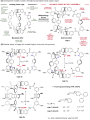
- with clear thermodynamic minima [410]. Although this approach might be forward-thinking in terms of materials access, cost, and scale, without precise property prediction it requires serendipity in terms of function-discovery within a “near infinite design space” [376]. Further, by definition
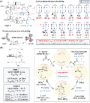
- possibility of larger polarization contributions to catalysis, it also makes property prediction difficult [419] since computational appraisal of nebulous additive effects remains challenging and ungrounded, and difficult to benchmark or validate experimentally. Materials with more precise substrate and




Effect of substitution position of aryl groups on the thermal back reactivity of aza-diarylethene photoswitches and prediction by density functional theory
Beilstein J. Org. Chem. 2025, 21, 242–252, doi:10.3762/bjoc.21.16
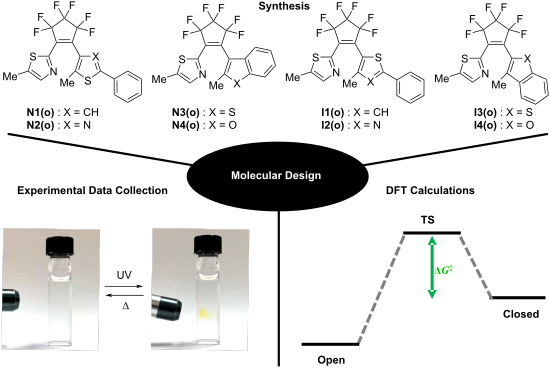
- reactivity, closely matching the experimental data. These findings offer valuable insights for the design of advanced photochromic materials with tailored thermal and photophysical characteristics. Keywords: aza-diarylethene; DFT calculation; photochromism; prediction; thermal back reactivity; Introduction
- theory in combination with the 6-31G(d) basis set well reproduces the experimental value of the activation energy for the thermal back reaction of various diarylbenzenes, resulting in the accurate prediction of the half-lifte time [58][63]. Thus, the combination of experiments and theoretical
- prediction of thermal back reactivity. Moreover, we attempt to find the optimal functional for achieving a high correlation with experimental values by DFT calculation. Results and Discussion Photochromic properties in n-hexane Compounds N1–N3 were synthesized according to the procedures described in the


Quantifying the ability of the CF2H group as a hydrogen bond donor
Beilstein J. Org. Chem. 2025, 21, 189–199, doi:10.3762/bjoc.21.11
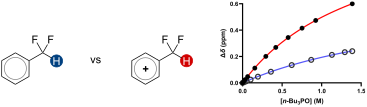
- , the ΔδDMSO–CD3NO2 values of N-methylated CF2H-containing organic salts are generally smaller than those of the corresponding neutral precursors. This observation contradicts our initial prediction that introducing a quaternary nitrogen would enhance the HB donation ability of the CF2H group. It is



Emerging trends in the optimization of organic synthesis through high-throughput tools and machine learning
Beilstein J. Org. Chem. 2025, 21, 10–38, doi:10.3762/bjoc.21.3
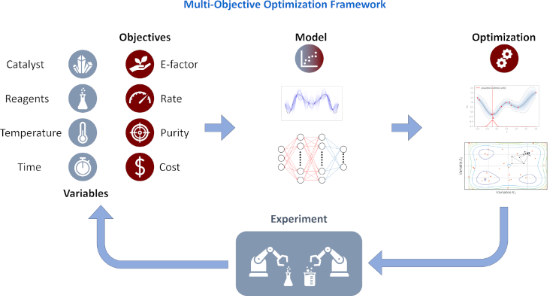
- -throughput systems or in-house designed reaction modules; (iii) data collection by in-line/offline analytical tools; (iv) mapping the collected data points with the target objectives; (v) prediction of the next set of reaction conditions towards attaining optimal solutions; and (vi) experimental validation


Chemical structure metagenomics of microbial natural products: surveying nonribosomal peptides and beyond
Beilstein J. Org. Chem. 2024, 20, 3050–3060, doi:10.3762/bjoc.20.253

- silico to avoid rediscovery. They are the cornerstone of chemical structure metagenomics; a few examples in this area of research are described below. NRP biosynthesis and structure prediction NRPs are biosynthesized by either type I or II nonribosomal peptide synthetase (NRPS) [50][51]. Type I NRPS is a
- identity of the amino acid BB it recognizes and activates, can be predicted based on its gene sequence alone [40]. Numerous prediction algorithms of this kind have been reported since [40][41][42][43][44][45][46][47][48][49]. The A domains are highly conserved in terms of both structure and sequence [41
- to the genetic code) [58]. Hundreds of known nonribosomal codes and their corresponding BBs can be extracted from natural products that have been characterized over the past several decades, generating a dataset to train NRP prediction algorithms (Figure 3b) [49][59][60]. A software suite called


Machine learning-guided strategies for reaction conditions design and optimization
Beilstein J. Org. Chem. 2024, 20, 2476–2492, doi:10.3762/bjoc.20.212

- efficiency and effectiveness of reaction conditions design, and enable novel discoveries in synthetic chemistry. Keywords: data preprocessing; reaction conditions prediction; reaction data mining; reaction optimization; reaction representation; Introduction Machine learning (ML) techniques have been widely
- models can reproduce patent-derived pathways for known compounds, and even suggest more diverse and efficient alternatives [5][6][7][8]. Building upon the retrosynthesis, the reaction conditions prediction models can help in identifying appropriate conditions for each step, ensuring compatibility with
- the platform and addressing safety concerns. On the other aspect, forward reaction prediction normally plays the role of validating the feasibility of a reaction pathway predicted by retrosynthetic models and to further enhance reaction yields by optimizing reaction parameters such as temperature


Improved deconvolution of natural products’ protein targets using diagnostic ions from chemical proteomics linkers
Beilstein J. Org. Chem. 2024, 20, 2323–2341, doi:10.3762/bjoc.20.199
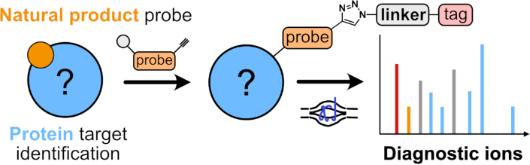
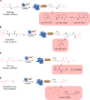
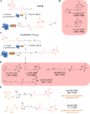
- field have the potential to facilitate this advancement. Overall chemical proteomics strategy to identify protein targets of natural products (NPs) and similar active small compounds. The example protein (blue) is an AlphaFold v2.0-generated prediction of bovine serum albumin (BSA) [23][24]. A) Design




Catalysing (organo-)catalysis: Trends in the application of machine learning to enantioselective organocatalysis
Beilstein J. Org. Chem. 2024, 20, 2280–2304, doi:10.3762/bjoc.20.196
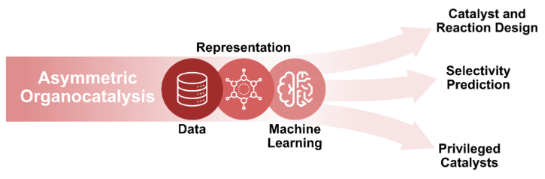
- . Keywords: catalyst design; machine learning; modelling; organocatalysis; selectivity prediction; Introduction Since the beginning of the 21st century, organocatalysts [1] have established themselves as a third group of homogeneous catalysts, next to biocatalysts [2] (enzymes) and transition metal-based
- , equipping experimentalists with the knowledge necessary to follow the developments in the field. The rest of the review is divided into three parts: (1) ML for reactivity and selectivity prediction, (2) ML for the design of privileged organocatalysts and (3) ML for catalyst and reaction design. Ultimately
- must be considered. Also, for other kind of models, e.g., random forests, it is common practice to consider the importance of individual features for the model’s prediction to gain mechanistic insight. Careful attention must be paid to the collinearity of features [73], such that they are not too


Computational toolbox for the analysis of protein–glycan interactions
Beilstein J. Org. Chem. 2024, 20, 2084–2107, doi:10.3762/bjoc.20.180
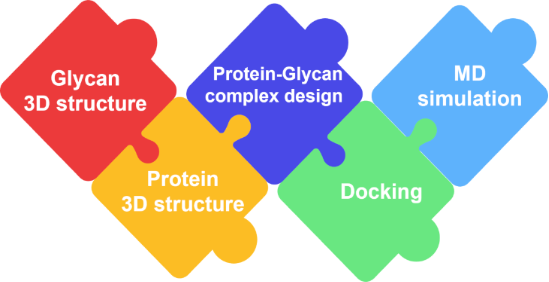
- experimental data. Tools for protein structure prediction Due to the vast conformational space and a complex energy function, protein structure prediction (PSP) is a computationally challenging task. Homology modelling is a template-based PSP that may be used to predict the 3D structure of a protein based on
- modelling, and some of the most popular include: 1. AlphaFold2 [88]: It is an open-access protein structure prediction system based on artificial intelligence and machine learning. It is based on a neural network that can predict the 3D protein structure at a high accuracy level. The AlphaFold solution is
- structure prediction with template-based modelling. It is known for its ability to predict both the structure and function of a protein. It is based on identifying structural templates from the PDB by several threading methodologies with full-length atomic models (https://zhanggroup.org/I-TASSER/). 3


Allostreptopyrroles A–E, β-alkylpyrrole derivatives from an actinomycete Allostreptomyces sp. RD068384
Beilstein J. Org. Chem. 2024, 20, 1981–1987, doi:10.3762/bjoc.20.174
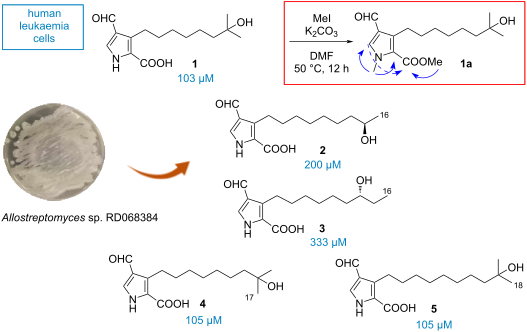
- -configurations were proposed for compounds 2 and 3. However, this prediction was not confirmed by chemical derivatization due to their limited availability. 1H and 13C NMR spectra of compounds 4 and 5 were superimposable to those of 1 except for methylene resonances, supporting that both 4 and 5 possess the same


Novel oxidative routes to N-arylpyridoindazolium salts
Beilstein J. Org. Chem. 2024, 20, 1906–1913, doi:10.3762/bjoc.20.166
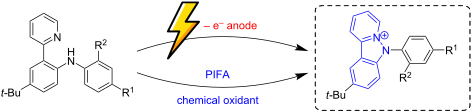
- [13][14][15][16][17][18][19], N,N-diarylbenzidines [20][21], N,N-diaryldihydrophenazines [20][21] and some others. Therefore, the selectivity issue is of primary importance. The guidelines for prediction of the dominant reaction path in the competing oxidative transformations of variously substituted


The Groebke–Blackburn–Bienaymé reaction in its maturity: innovation and improvements since its 21st birthday (2019–2023)
Beilstein J. Org. Chem. 2024, 20, 1839–1879, doi:10.3762/bjoc.20.162