Search for "synthetic design" in Full Text gives 15 result(s) in Beilstein Journal of Organic Chemistry.
Beilstein J. Org. Chem. 2025, 21, 2260–2282, doi:10.3762/bjoc.21.173
Graphical Abstract
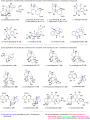
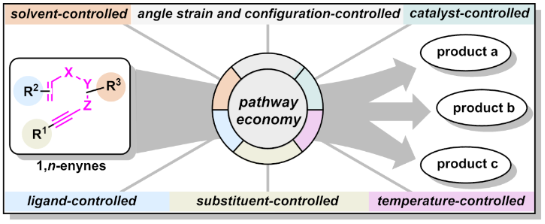
Scheme 1: Economical synthesis and pathway economy.
Scheme 2: Au(I)-catalyzed cascade cyclization paths of 1,5-enynes.
Scheme 3: Au(I)-catalyzed cyclization paths of 1,7-enynes.
Scheme 4: I2/TBHP-mediated radical cycloisomerization paths of 1,n-enyne.
Scheme 5: Au(I)-catalyzed cycloisomerization paths of 3-allyloxy-1,6-diynes.
Scheme 6: Pd(II)-catalyzed cycloisomerization paths of 2-alkynylbenzoate-cyclohexadienone.
Scheme 7: Stereoselective cyclization of 1,5-enynes.
Scheme 8: Substituent-controlled cycloisomerization of propargyl vinyl ethers.
Scheme 9: Au(I)-catalyzed pathway-controlled domino cyclization of 1,2-diphenylethynes.
Scheme 10: Au(I)-catalyzed tandem cyclo-isomerization of tryptamine-N-ethynylpropiolamide.
Scheme 11: Au(I)-catalyzed tunable cyclization of 1,6-cyclohexenylalkyne.
Scheme 12: Substituent-controlled 7-exo- and 8-endo-dig-selective cyclization of 2-propargylaminobiphenyl deri...
Scheme 13: BiCl3-catalyzed cycloisomerization of tryptamine-ynamide derivatives.
Scheme 14: Au(I)-mediated substituent-controlled cycloisomerization of 1,6-enynes.
Scheme 15: Ligand-controlled regioselective cyclization of 1,6-enynes.
Scheme 16: Ligand-dependent cycloisomerization of 1,7-enyne esters.
Scheme 17: Ligand-controlled cycloisomerization of 1,5-enynes.
Scheme 18: Ligand-controlled cyclization strategy of alkynylamide tethered alkylidenecyclopropanes.
Scheme 19: Ag(I)-mediated pathway-controlled cycloisomerization of tryptamine-ynamides.
Scheme 20: Gold-catalyzed cycloisomerization of indoles with alkynes.
Scheme 21: Catalyst-dependent cycloisomerization of dienol silyl ethers.
Scheme 22: Cycloisomerization of aromatic enynes governed by catalyst.
Scheme 23: Catalyst-dependent 1,2-migration in cyclization of 1-(indol-2-yl)-3-alkyn-1-ols.
Scheme 24: Gold-catalyzed cycloisomerization of N-propargyl-N-vinyl sulfonamides.
Scheme 25: Gold(I)-mediated enantioselective cycloisomerizations of ortho-(alkynyl)styrenes.
Scheme 26: Catalyst-controlled intramolecular cyclization of 1,7-enynes.
Scheme 27: Brønsted acid-catalyzed cycloisomerizations of tryptamine ynamides.
Scheme 28: Catalyst-controlled cyclization of indolyl homopropargyl amides.
Scheme 29: Angle strain-dominated 6-endo-trig cyclization of propargyl vinyl ethers.
Scheme 30: Angle strain-controlled cycloisomerization of alkyn-tethered indoles.
Scheme 31: Geometrical isomeration-dependent cycloisomerization of 1,3-dien-5-ynes.
Scheme 32: Temperature-controlled cyclization of 1,7-enynes.
Scheme 33: Cycloisomerizations of n-(o-ethynylaryl)acrylamides through temperature modulation.
Scheme 34: Temperature-controlled boracyclization of biphenyl-embedded 1,3,5-trien-7-ynes.
Beilstein J. Org. Chem. 2025, 21, 2085–2102, doi:10.3762/bjoc.21.164
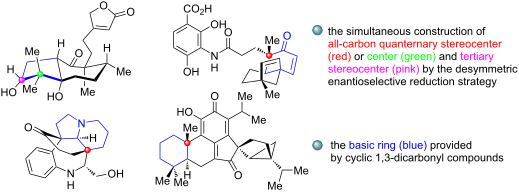
Graphical Abstract
Figure 1: Several representative terpenoid and alkaloid natural products synthesized by applying desymmetric ...
Figure 2: Selected terpenoid and alkaloid natural products synthesized by applying desymmetric enantioselecti...
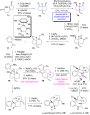
Scheme 1: The total synthesis of (+)-aplysiasecosterol A (6) by Li [14].
Scheme 2: The total synthesis of (−)-cyrneine A by Han [31].
Scheme 3: The total syntheses of three cyrneine diterpenoids by Han [31,32].
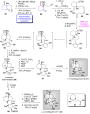
Scheme 4: The total synthesis of (−)-hamigeran B and (−)-4-bromohamigeran B by Han [51].
Scheme 5: The total synthesis of (+)-randainin D by Baudoin [53].
Scheme 6: The total synthesis of (−)-hunterine A and (−)-aspidospermidine by Stoltz [58].
Scheme 7: The total synthesis of (+)-toxicodenane A by Han [65,66].
Scheme 8: The formal total synthesis of (−)-conidiogeone B and total synthesis of (−)-conidiogeone F by Lee a...
Scheme 9: The total syntheses of four conidiogenones natural products by Lee and Han [72].
Scheme 10: The total synthesis of (−)-platensilin by Lou and Xu [82].
Scheme 11: The total synthesis of (−)-platencin and (−)-platensimycin by Lou and Xu [82].
Scheme 12: The total synthesis of (+)-isochamaecydin and (+)-chamaecydin by Han [86].
Beilstein J. Org. Chem. 2024, 20, 2024–2077, doi:10.3762/bjoc.20.178
Graphical Abstract
Scheme 1: Consecutive three-component synthesis of pyrazoles 1 via in situ-formed 1,3-diketones 2 [44].
Scheme 2: Consecutive three-component synthesis of 4-ethoxycarbonylpyrazoles 5 via SmCl3-catalyzed acylation ...
Scheme 3: Consecutive four-component synthesis of 1-(thiazol-2-yl)pyrazole-3-carboxylates 8 [51].
Scheme 4: Three-component synthesis of thiazolylpyrazoles 17 via in situ formation of acetoacetylcoumarins 18 ...
Scheme 5: Consecutive pseudo-four-component and four-component synthesis of pyrazoles 21 from sodium acetylac...
Scheme 6: Consecutive three-component synthesis of 1-substituted pyrazoles 24 from boronic acids, di(Boc)diim...
Scheme 7: Consecutive three-component synthesis of N-arylpyrazoles 25 via in situ formation of aryl-di(Boc)hy...
Scheme 8: Consecutive three-component synthesis of 1,3,4-substituted pyrazoles 27 and 28 from methylhydrazine...
Scheme 9: Consecutive three-component synthesis of 4-allylpyrazoles 32 via oxidative allylation of 1,3-dicarb...
Scheme 10: Pseudo-five-component synthesis of tris(pyrazolyl)methanes 35 [61].
Scheme 11: Pseudo-three-component synthesis of 5-(indol-3-yl)pyrazoles 39 from 1,3,5-triketones 38 [64].
Scheme 12: Three-component synthesis of thiazolylpyrazoles 43 [65].
Scheme 13: Three-component synthesis of triazolo[3,4-b]-1,3,4-thiadiazin-3-yl substituted 5-aminopyrazoles 47 [67]....
Scheme 14: Consecutive three-component synthesis of 5-aminopyrazoles 49 via formation of β-oxothioamides 50 [68].
Scheme 15: Synthesis of 3,4-biarylpyrazoles 52 from aryl halides, α-bromocinnamaldehyde, and tosylhydrazine vi...
Scheme 16: Consecutive three-component synthesis of 3,4-substituted pyrazoles 57 from iodochromones 55 by Suzu...
Scheme 17: Pseudo-four-component synthesis of pyrazolyl-2-pyrazolines 59 by ring opening/ring closing cyclocon...
Scheme 18: Consecutive three-component synthesis of pyrazoles 61 [77].
Scheme 19: Three-component synthesis of pyrazoles 62 from malononitrile, aldehydes, and hydrazines [78-90].
Scheme 20: Four-component synthesis of pyrano[2,3-c]pyrazoles 63 [91].
Scheme 21: Three-component synthesis of persubstituted pyrazoles 65 from aldehydes, β-ketoesters, and hydrazin...
Scheme 22: Three-component synthesis of pyrazol-4-carbodithioates 67 [100].
Scheme 23: Regioselective three-component synthesis of persubstituted pyrazoles 68 catalyzed by ionic liquid [...
Scheme 24: Consecutive three-component synthesis of 4-halopyrazoles 69 and anellated pyrazoles 70 [102].
Scheme 25: Three-component synthesis of 2,2,2-trifluoroethyl pyrazole-5-carboxylates 72 [103].
Scheme 26: Synthesis of pyrazoles 75 in a one-pot process via carbonylative Heck coupling and subsequent cycli...
Scheme 27: Copper-catalyzed three-component synthesis of 1,3-substituted pyrazoles 76 [105].
Scheme 28: Pseudo-three-component synthesis of bis(pyrazolyl)methanes 78 by ring opening-ring closing cyclocon...
Scheme 29: Three-component synthesis of 1,4,5-substituted pyrazoles 80 [107].
Scheme 30: Consecutive three-component synthesis of 3,5-bis(fluoroalkyl)pyrazoles 83 [111].
Scheme 31: Consecutive three-component synthesis of difluoromethanesulfonyl-functionalized pyrazole 88 [114].
Scheme 32: Consecutive three-component synthesis of perfluoroalkyl-substituted fluoropyrazoles 91 [115].
Scheme 33: Regioselective consecutive three-component synthesis of 1,3,5-substituted pyrazoles 93 [116].
Scheme 34: Three-component synthesis of pyrazoles 96 mediated by trimethyl phosphite [117].
Scheme 35: One-pot synthesis of pyrazoles 99 via Liebeskind–Srogl cross-coupling/cyclocondensation [118].
Scheme 36: Synthesis of 1,3,5-substituted pyrazoles 101 via domino condensation/Suzuki–Miyaura cross-coupling ...
Scheme 37: Consecutive three-component synthesis of 1,3,5-trisubstituted pyrazoles 102 and 103 by Sonogashira ...
Scheme 38: Polymer analogous consecutive three-component synthesis of pyrazole-based polymers 107 [132].
Scheme 39: Synthesis of 1,3,5-substituted pyrazoles 108 by sequentially Pd-catalyzed Kumada–Sonogashira cycloc...
Scheme 40: Consecutive four-step one-pot synthesis of 1,3,4,5-substituted pyrazoles 110 [137].
Scheme 41: Four-component synthesis of pyrazoles 113, 115, and 117 via Sonogashira coupling and subsequent Suz...
Scheme 42: Consecutive four- or five-component synthesis for the preparation of 4-pyrazoly-1,2,3-triazoles 119...
Scheme 43: Four-component synthesis of pyrazoles 121 via alkynone formation by carbonylative Pd-catalyzed coup...
Scheme 44: Preparation of 3-azulenyl pyrazoles 124 by glyoxylation, decarbonylative Sonogashira coupling, and ...
Scheme 45: Four-component synthesis of a 3-indoloylpyrazole 128 [147].
Scheme 46: Two-step synthesis of 5-acylpyrazoles 132 via glyoxylation-Stephen–Castro sequence and subsequent c...
Scheme 47: Copper on iron mediated consecutive three-component synthesis of 3,5-substituted pyrazoles 136 [150].
Scheme 48: Consecutive three-component synthesis of 3-substituted pyrazoles 141 by Sonogashira coupling and su...
Scheme 49: Consecutive three-component synthesis of pyrazoles 143 initiated by Cu(I)-catalyzed carboxylation o...
Scheme 50: Consecutive three-component synthesis of benzamide-substituted pyrazoles 146 starting from N-phthal...
Scheme 51: Consecutive three-component synthesis of 1,3,5-substituted pyrazoles 148 [156].
Scheme 52: Three-component synthesis of 4-ninhydrin-substituted pyrazoles 151 [158].
Scheme 53: Consecutive four-component synthesis of 4-(oxoindol)-1-phenylpyrazole-3-carboxylates 155 [159].
Scheme 54: Three-component synthesis of pyrazoles 160 [160].
Scheme 55: Consecutive three-component synthesis of pyrazoles 165 [162].
Scheme 56: Consecutive three-component synthesis of 3,5-disubstituted and 3-substituted pyrazoles 168 and 169 ...
Scheme 57: Three-component synthesis of 3,4,5-substituted pyrazoles 171 via 1,3-dipolar cycloaddition of vinyl...
Scheme 58: Three-component synthesis of pyrazoles 173 and 174 from aldehydes, tosylhydrazine, and vinylidene c...
Scheme 59: Three-component synthesis of pyrazoles 175 from glyoxyl hydrates, tosylhydrazine, and electron-defi...
Scheme 60: Pseudo-four-component synthesis of pyrazoles 177 from glyoxyl hydrates, tosylhydrazine, and aldehyd...
Scheme 61: Consecutive three-component synthesis of pyrazoles 179 via Knoevenagel-cycloaddition sequence [179].
Scheme 62: Three-component synthesis of 5-dimethylphosphonate substituted pyrazoles 182 from aldehydes, the Be...
Scheme 63: Consecutive three-component synthesis of 5-(dimethyl phosphonate)-substituted pyrazoles 185 from al...
Scheme 64: Three-component synthesis of 5-(dimethyl phosphonate)-substituted pyrazoles 187 from aldehydes, the...
Scheme 65: Three-component synthesis of 5-diethylphosphonate/5-phenylsulfonyl substituted pyrazoles 189 from a...
Scheme 66: Pseudo-three-component synthesis of 3-(dimethyl phosphonate)-substituted pyrazoles 190 [185].
Scheme 67: Three-component synthesis of 3-trifluoromethylpyrazoles 193 [186].
Scheme 68: Consecutive three-component synthesis of 5-stannyl-substituted 4-fluoropyrazole 197 [191,192].
Scheme 69: Pseudo-three-component synthesis of 3,5-diacyl-4-arylpyrazoles 199 [195].
Scheme 70: Three-component synthesis of pyrazoles 204 via nitrilimines [196].
Scheme 71: Three-component synthesis of 1,3,5-substituted pyrazoles 206 via formation of nitrilimines and sali...
Scheme 72: Pseudo four-component synthesis of pyrazoles 209 from acetylene dicarboxylates 147, hydrazonyl chlo...
Scheme 73: Consecutive three-component synthesis of pyrazoles 213 via syndnones 214 [200].
Scheme 74: Consecutive three-component synthesis of pyrazoles 216 via in situ-formed diazomethinimines 217 [201].
Scheme 75: Consecutive three-component synthesis of 3-methylthiopyrazoles 219 from aldehydes, hydrazine, and 1...
Scheme 76: Three-component synthesis of 1,3,5-substituted pyrazoles 220 from aldehydes, hydrazines, and termin...
Scheme 77: Three-component synthesis of 1,3,4,5-substituted pyrazoles 222 from aldehydes, hydrazines, and DMAD ...
Scheme 78: Pseudo three-component synthesis of pyrazoles 224 from sulfonyl hydrazone and benzyl acrylate under...
Scheme 79: Titanium-catalyzed consecutive four-component synthesis of pyrazoles 225 via enamino imines 226 [211]. a...
Scheme 80: Titanium-catalyzed three-component synthesis of pyrazoles 227 via enhydrazino imine complex interme...
Scheme 81: Pseudo-three-component synthesis of pyrazoles 229 via Glaser coupling of terminal alkynes and photo...
Scheme 82: Copper(II)acetate-mediated three-component synthesis of pyrazoles 232 [216].
Scheme 83: Copper-catalyzed three-component synthesis of 1,3,4-substituted pyrazole 234 from oxime acetates, a...
Scheme 84: Three-component synthesis of 3-trifluoroethylpyrazoles 239 [218].
Scheme 85: Pseudo-three-component synthesis of 1,4-bisulfonyl-substituted pyrazoles 242 [219].
Scheme 86: Three-component synthesis of 4-hydroxypyrazole 246 [221].
Beilstein J. Org. Chem. 2023, 19, 399–427, doi:10.3762/bjoc.19.31
Graphical Abstract
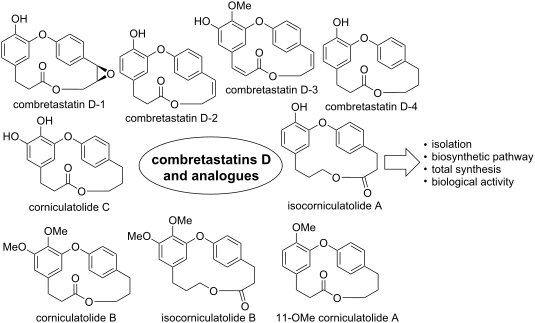
Figure 1: Structures of some members of the combretastatin D series, corniculatolides, and isocorniculatolide...
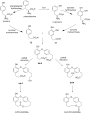
Scheme 1: Biosynthetic pathway proposed by Pettit and co-workers.
Scheme 2: Biosynthetic pathway towards corniculatolides or isocorniculatolides proposed by Ponnapalli and co-...
Scheme 3: Retrosynthetic approaches.
Scheme 4: Attempt of total synthesis of 2 by Boger and co-workers employing the Mitsunobu approach [27].
Scheme 5: Total synthesis of combretastatin D-2 (2) reported by Boger and co-workers employing an intramolecu...
Scheme 6: Formal synthesis of combretastatin D-2 (2) by Deshpande and co-workers using the Mitsunobu conditio...
Scheme 7: Total synthesis of combretastatin D-2 (2) by Rychnovsky and Hwang [36].
Scheme 8: Divergent synthesis of (±)-1 form combretastatin D-2 (2) by Rychnovsky and Hwang [36].
Scheme 9: Enantioselective synthesis of 1 by Rychnovsky and Hwang employing Jacobsen catalyst [41].
Scheme 10: Synthesis of fragment 57 by Couladouros and co-workers [43,45].
Scheme 11: Formal synthesis of compound 2 by Couladouros and co-workers [43,45].
Scheme 12: Synthesis of fragment 66 by Couladouros and co-workers [44,45].
Scheme 13: Synthesis of fragment 70 by Couladouros and co-workers [44,45].
Scheme 14: Synthesis of fragment 77 by Couladouros and co-workers [44,45].
Scheme 15: Synthesis of combretastatins 1 and 2 by Couladouros and co-workers [44,45].
Scheme 16: Formal synthesis of compound 2 by Gangakhedkar and co-workers [48].
Scheme 17: Synthesis of fragment 14 by Cousin and co-workers [50].
Scheme 18: Synthesis of fragment 91 by Cousin and co-workers [50].
Scheme 19: Formal synthesis of compound 2 by Cousin and co-workers [50].
Scheme 20: Synthesis of 2 diolide by Cousin and co-workers [50].
Scheme 21: Synthesis of combretastatin D-4 (4) by Nishiyama and co-workers [54].
Scheme 22: Synthesis of fragment 112 by Pettit and co-workers [55].
Scheme 23: Synthesis of fragment 114 by Pettit and co-workers [55].
Scheme 24: Attempt to the synthesis of compound 2 by Pettit and co-workers [55].
Scheme 25: Synthesis of combretastatin-D2 (2) starting from isovanilin (80) by Pettit and co-workers [55].
Scheme 26: Attempted synthesis of combretastatin-D2 (2) derivatives through an SNAr approach [55].
Scheme 27: Synthesis of combretastatin D-4 (4) by Pettit and co-workers [55].
Scheme 28: Synthesis of combretastatin D-2 (2) by Harras and co-workers [57].
Scheme 29: Synthesis of combretastatin D-4 (4) by Harras and co-workers [57].
Scheme 30: Formal synthesis of combretastatin D-1 (1) by Harras and co-workers [57].
Scheme 31: Synthesis of 11-O-methylcorniculatolide A (5) by Raut and co-workers [69].
Scheme 32: Synthesis of isocorniculatolide A (7) and O-methylated isocorniculatolide A 8 by Raut and co-worker...
Scheme 33: Synthesis of isocorniculatolide B (10) and hydroxyisocorniculatolide B 175 by Kim and co-workers [71].
Scheme 34: Synthesis of compound 9, 178, and 11 by Kim and co-workers [71].
Scheme 35: Synthesis of combretastatin D-2 prodrug salts [55].
Figure 2: ED50 values of the combretastatin D family against murine P388 lymphocytic leukemia cell line (appr...
Figure 3: IC50 of compounds against α-glucosidase [19].
Beilstein J. Org. Chem. 2020, 16, 2108–2118, doi:10.3762/bjoc.16.178
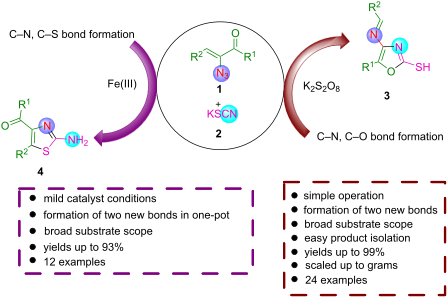
Graphical Abstract
Figure 1: Examples of biologically active oxazole and aminothiazole scaffolds.
Scheme 1: Strategies for the synthesis of 2,4,5-trisubstituted oxazole from azirine. a) I2, PPh3; b) NaH, 1H-...
Scheme 2: Scope of the α-azidochalcones. The reactions were carried out at reflux temperature, using 1 (1 mmo...
Scheme 3: Large-scale synthesis of 3i.
Figure 2: Large-scale synthesis of 3i. a) At the start of the reaction, b) after the reaction.
Scheme 4: Acetyl derivative of 3d.
Figure 3: ORTEP diagram of compound 5.
Scheme 5: Synthesis of S-methyl/benzylated products 6 and 7.
Scheme 6: Control experiments.
Scheme 7: Plausible mechanism proposed for the formation of 2,4,5-trisubstituted oxazoles 3.
Scheme 8: Reaction of vinyl azide 1 and 3 with ferric nitrate. Reactions were carried out at reflux temperatu...
Figure 4: X-ray crystal structure of 4h.
Beilstein J. Org. Chem. 2019, 15, 1974–1975, doi:10.3762/bjoc.15.192
Beilstein J. Org. Chem. 2018, 14, 148–154, doi:10.3762/bjoc.14.10
Graphical Abstract
Figure 1: Typical examples of previously reported negative-type liquid crystals containing a CF2CF2-carbocycl...
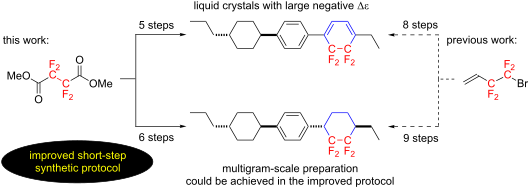
Scheme 1: Improved short-step synthetic protocol for multicyclic mesogens 1 and 2.
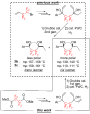
Scheme 2: Short-step approach to CF2CF2-containing carbocycles.
Figure 2: (a) Expected products of over-reaction in the Grignard reaction of dimethyl tetrafluorosuccinate (7...
Scheme 3: Mechanism for the reaction of γ-keto ester 6 with vinyl Grignard reagents.
Scheme 4: First multigram-scale preparation of CF2CF2-containing multicyclic mesogens.
Scheme 5: Stereochemical assignment of the ring-closing metathesis products.
Beilstein J. Org. Chem. 2017, 13, 2094–2114, doi:10.3762/bjoc.13.207
Graphical Abstract
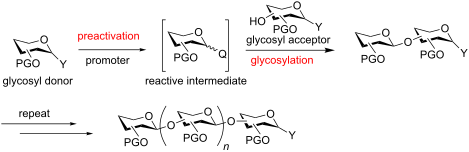
Scheme 1: a) Traditional glycosylation typically employs the premixed approach with both the donor and the ac...
Scheme 2: Glycosylation of an unreactive substrate. Reagents and conditions: (a) Tf2O, −78 °C, CH2Cl2 (DCM), ...
Scheme 3: Bromoglycoside-mediated glycosylation.
Scheme 4: Glycosyl bromide-mediated selenoglycosyl donor-based iterative glycosylation. Reagents and conditio...
Scheme 5: Preactivation-based glycosylation using 2-pyridyl glycosyl donors.
Scheme 6: Chemoselective dehydrative glycosylation. Reagents and conditions: (a) Ph2SO, Tf2O, 2-chloropyridin...
Figure 1: Representative structures of products formed by the preactivation-based dehydrative glycosylation o...
Scheme 7: Possible mechanism for the dehydrative glycosylation. (a) Formation of diphenyl sulfide bis(triflat...
Scheme 8: Chemoselective iterative dehydrative glycosylation. Reagents and conditions: (a) Ph2SO, Tf2O, 2,4,6...
Scheme 9: Chemoselective iterative dehydrative glycosylation. Reagents and conditions: (a) Ph2SO, Tf2O, −40 °...
Scheme 10: Chemical synthesis of a hyaluronic acid (HA) trimer 47. Reagents and conditions: (a) Ph2SO, TTBP, CH...
Figure 2: Retrosynthetic analysis of pentasaccharide 48.
Scheme 11: Effects of anomeric leaving groups on glycosylation outcomes. Reagents and conditions: (a) Ph2SO, Tf...
Scheme 12: Reactivity-based one-pot chemoselective glycosylation.
Scheme 13: Preactivation-based iterative glycosylation of thioglycosides.
Scheme 14: BSP/Tf2O promoted synthesis of 75.
Scheme 15: Proposed mechanism for preactivation-based glycosylation strategy.
Figure 3: The preactivations of glycosyl donors 83, 85 and 87 were investigated by low temperature NMR, which...
Scheme 16: The more electron-rich glycosyl donor 91 gave a higher glycosylation yield than the glycosyl donor ...
Scheme 17: Comparison of the BSP/Tf2O and p-TolSCl/AgOTf promoter systems in facilitating the preactivation-ba...
Scheme 18: One-pot synthesis of Globo-H hexasaccharide 105 using building blocks 101, 102, 103 and 104.
Scheme 19: Synthesis of (a) oligosaccharides 109–113 towards (b) 30-mer galactan 115. Reagents and conditions:...
Figure 4: Structure of mycobacterial arabinogalactan 116.
Figure 5: Representative complex glycans from glycolipid family synthesized by the preactivation-based thiogl...
Figure 6: Representative microbial and mammalian oligosaccharides synthesized by the preactivation-based thio...
Figure 7: Some representative mammalian oligosaccharides synthesized by the preactivation-based thioglycoside...
Figure 8: Preparation of a heparan sulfate oligosaccharides library.
Scheme 20: Synthesis of oligo-glucosamines through electrochemical promoted preactivation-based thioglycoside ...
Scheme 21: Synthesis of 2-deoxyglucosides through preactivation. Reagents and conditions: a) AgOTf, p-TolSCl, ...
Scheme 22: Synthesis of tetrasaccharide 153. Reagents and conditions: (a) AgOTf, p-TolSCl, CH2Cl2, −78 °C; the...
Scheme 23: Aglycon transfer from a thioglycosyl acceptor to an activated donor can occur during preactivation-...
Beilstein J. Org. Chem. 2017, 13, 1871–1878, doi:10.3762/bjoc.13.182
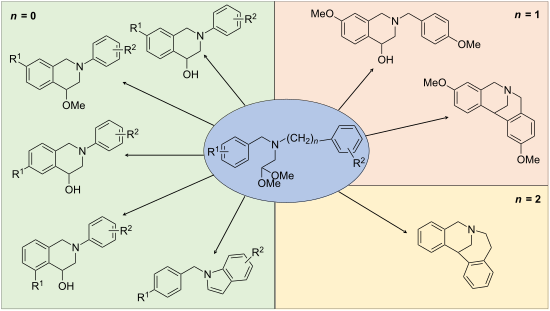
Graphical Abstract
Figure 1: Non-steroidal templates from estradiol.
Scheme 1: Pomeranz–Fritsch and Pomeranz–Fritsch–Bobbitt reactions. Conditions: (a) conc. H2SO4; (b) benzene, ...
Scheme 2: Designed synthesis of THIQ. Conditions: (a) NaBH(OAc)3, CHCl3, rt; (b) 6 M HCl or 70% HClO4 (see Table 1),...
Scheme 3: Side reaction during the double alkylation of 7 and possible reaction mechanism for the formation o...
Scheme 4: Competition between the formation of 5- and 7-substituted THIQs. Conditions: (a) 6 M HCl, rt.
Scheme 5: Formation of the 4-hydroxy and 4-methoxy-THIQs. Conditions: (a) 6 M HCl or 70% HClO4, rt (see Table 3).
Scheme 6: Competition between the formation of THIQs 10a,o,p and indoles 16a,o,p. Conditions: (a) 70% HClO4, ...
Scheme 7: Competition between 6- and 7-membered ring formation. Conditions: (a) NaBH(OAc)3, CHCl3, rt; (b) 2,...
Scheme 8: Competition between ring formation para- or meta- to an activating group. Conditions: (a) NaBH(OAc)3...
Beilstein J. Org. Chem. 2016, 12, 2234–2239, doi:10.3762/bjoc.12.215
Graphical Abstract
Figure 1: Structure of rosaprostol (1) and numbering system.
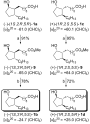
Figure 2: The structures of stereoisomers of rosaprostol (1).
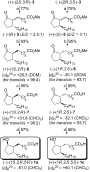
Scheme 1: Synthesis of stereoisomeric rosaprostols 1a and 1b from (−)-2a.
Scheme 2: Synthesis of racemic rosaprostol (±-1).
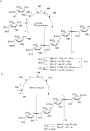
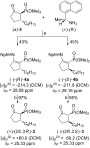
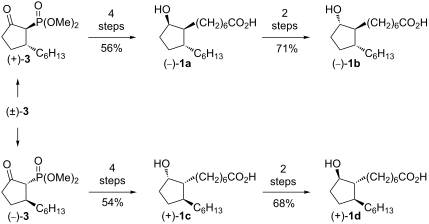
Scheme 3: Resolution of racemic cyclopentanone 3. Reagents and conditions: (a) Al2O3, SiO2, MS 5 Å, DCM, rt, ...
Scheme 4: Synthesis of rosaprostol stereoisomers 1a and 1c. Reagents and conditions: (a) KOH/Al2O3, OHC(CH2)5...
Scheme 5: Conversion of methyl ester (+)-6 into rosaprostol (−)-1a. Reagents and conditions: (a) L-Selectride...
Scheme 6: Synthesis of rosaprostol stereoisomers 1b and 1d. Reagents and conditions: (a) CH2N2, Et2O, −30 °C;...
Beilstein J. Org. Chem. 2016, 12, 611–627, doi:10.3762/bjoc.12.60
Graphical Abstract
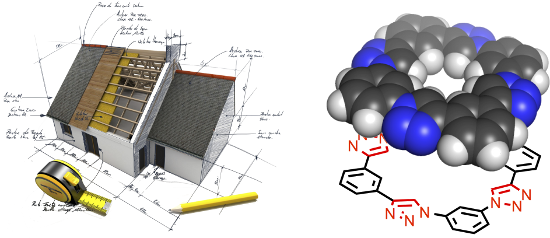
Figure 1: The design and building of a house is just as satisfying as that of a new molecule and often takes ...
Figure 2: Timeline of anion-binding macrocycles.
Figure 3: Click chemistry’s copper-catalyzed azide–alkyne cycloaddition (CuAAC) forms 1,2,3-triazoles that st...
Figure 4: These molecular compounds are the same and not the same.
Figure 5: (a, b, c) Sequence of chemical sketches leading to triazolophanes. (d) The precursor that led, by C...
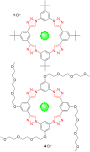
Figure 6: Variation in phenylene substituents weakens chloride affinity from 1 to 4.
Figure 7: (a) Pyridyl triazolophane and (b) its high-fidelity sandwich around iodide (crystal). Adapted with ...
Figure 8: Testing the (a) macrocyclic effect, and (b) effect of rigidity against (c) the parent triazolophane....
Figure 9: (a) Representations of the four equilibria that dominate in dichloromethane for which the (b) propy...
Figure 10: Representations of (a) aryl–triazole–ether macrocycle 12 and (b) the ion-pair crystal structure of ...
Figure 11: Chloride is used as a comparator for (a) cyanide and (b) biflouride. (c) Computer-aided receptor de...
Figure 12: (a) One-pot synthesis of cyanostars. (b) Volcano plot of anion affinities (40:60 methanol/dichlorom...
Figure 13: (a) Representation and (b) crystal structure of cyanostar-based [3]rotaxane.
Figure 14: Crystal structures of cyanostar sandwich around (a) perchlorate and (b) diglyme (molecules shown wi...
Figure 15: (a) Star-extended cyanostar and an (b) STM image cropped from a 2D lamellar lattice. Part (b) adapt...
Figure 16: (a) Synthesis and one-pot macrocyclization of the tricarb macrocycle. (b) Volcano plot of anion aff...
Figure 17: (a) Tricarb binds iodide. (b) Tricarb’s single-molecule STM image resembles a donut. (c) Honeycomb ...
Figure 18: Timeline of crescent-shaped anion receptors.
Figure 19: Timeline of anion-binding foldamers.
Figure 20: Family portrait of 3D-printed molecular receptors.
Beilstein J. Org. Chem. 2015, 11, 659–667, doi:10.3762/bjoc.11.74
Graphical Abstract
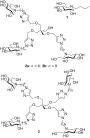
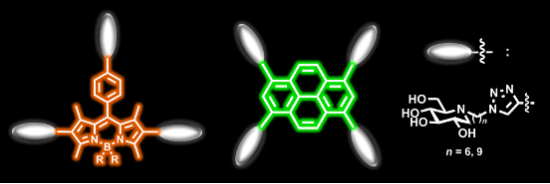
Figure 1: N-Bu DNJ (1) and examples of potent multivalent pharmacological chaperones and CFTR correctors (2 a...
Figure 2: Azide-armed DNJ derivatives 4 and polyalkyne “clickable” scaffolds 5 and 6.
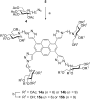
Scheme 1: Synthesis of trisubstituted BODIPY derivatives. (a) ICl, CHCl3/MeOH, rt, 15 min, quantitative; (b) ...
Scheme 2: Synthesis of DNJ clusters 13: (a) CuSO4·5H2O cat., sodium ascorbate, THF/H2O (1:1), 83% (12a), 56% (...
Scheme 3: Synthesis of DNJ clusters 15: (a) CuSO4·5H2O cat., sodium ascorbate, DMF/H2O (6:1), 80 °C (MW) or r...
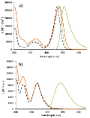
Figure 3: a) Absorption (orange line), corrected emission (green line) (λexc = 510 nm), excitation (dashed bl...
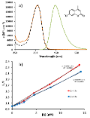
Figure 4: a) Absorption (orange line), corrected emission (green line) (λexc = 360 nm) and excitation (dashed...
Beilstein J. Org. Chem. 2013, 9, 1192–1193, doi:10.3762/bjoc.9.134
Beilstein J. Org. Chem. 2013, 9, 1170–1178, doi:10.3762/bjoc.9.131
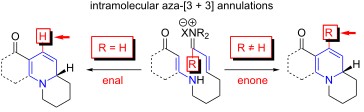
Graphical Abstract
Figure 1: An aza-[3 + 3] annulation.
Scheme 1: Aza-[3 + 3] annulations with enones.
Figure 2: Possible natural-product targets.
Scheme 2: Synthesis of the annulation precursor enone 10.
Scheme 3: Propyleine-isopropeleine interconversion.
Figure 3: Relative stabilities of propyleine and isopropyleine.
Scheme 4: Retrosynthesis of propyleine (12).
Scheme 5: Synthesis of allyl alcohol 25.
Beilstein J. Org. Chem. 2007, 3, No. 38, doi:10.1186/1860-5397-3-38

Graphical Abstract
Scheme 1: An example of a vinylogous Mukaiyama aldol in a natural product synthesis. Reagents and conditions:...
Scheme 2: Our vinylogous Mukaiyama aldol reaction with different substituents. Reagents and conditions: a) n-...
Figure 1: X-ray crystal structure of 6b.
Scheme 3: Synthesis of N-benzyl-3-pyrrolin-2-one 4f. Reagents and conditions: a) MsCl, Et3N, DMAP, 90%; b) Et3...
Figure 2: Structure of (+)-castanospermine 9.
Figure 3: C-8/C-8a disconnection stategy for castanospermine synthesis.
Scheme 4: Synthesis of Adduct 16 from adduct 6a. Reagents and conditions: a) CAN, aq CH3CN, -20°C to rt, 5 h,...
Scheme 5: Conversion of adduct 16 to indolizidine 18. Reagents and conditions a) (1.5 equiv), Et3N (2 equiv),...
Figure 4: X-ray structure of 16.
Figure 5: Structure of 6a with numbering to demonstrate numbering system used in this section.