Search results
Search for "automated" in Full Text gives 109 result(s) in Beilstein Journal of Nanotechnology.
Restorative potential of laser-synthesized silver nanoparticles with Salvia officinalis for periodontal disease treatment: an in vitro study
Beilstein J. Nanotechnol. 2026, 17, 781–795, doi:10.3762/bjnano.17.55
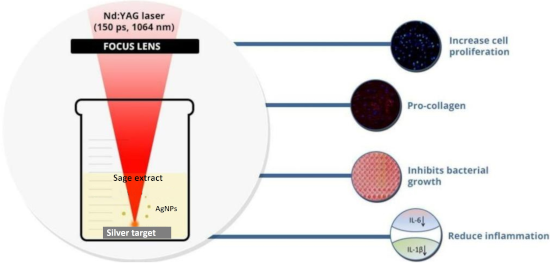
- energy on nanoparticle synthesis. The laser beam was focused through a lens having a focal length of 15.2 cm with the target placed at 16.2 cm from this lens, that is, under slightly defocused conditions. An automated x–y translation stage ensured continuous movement of the target during ablation so that



afspm: A framework for manufacturer-agnostic automation in scanning probe microscopy
Beilstein J. Nanotechnol. 2026, 17, 653–667, doi:10.3762/bjnano.17.45
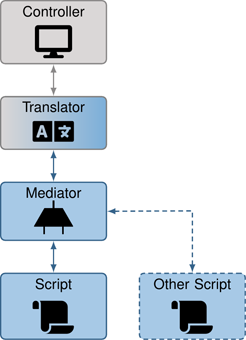
- interfaces types. An automated experiment was run to ensure overall running beyond integration testing. Keywords: atomic force microscopy; automation; manufacturer-agnostic; scanning probe microscopy; software framework; Introduction In scanning probe microscopy (SPM), an atomically sharp tip is scanned
- a generalized approach to data handling solves part of the problem, it does nothing to address the control needs posed across the various SPM controllers. Another contribution was made in [16], where a hardware–software framework enables automated experimentation. This framework focuses on the
- integrating and testing translators for each possible scripting interface type. We show the framework functioning beyond integration testing by running an automated experiment; specifically, we implement a drift estimation approach similar to that in [14]. In doing so, we enable easier reuse of this specific




Impacts of annealing on structural and photophysical properties of zinc phthalocyanine adsorbed on graphene
Beilstein J. Nanotechnol. 2026, 17, 576–585, doi:10.3762/bjnano.17.39
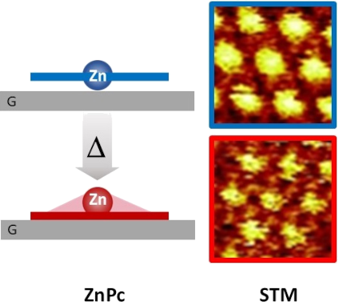
- an inverted optical microscope (IX71, Olympus) equipped with an objective lens (Nikon, 60×, 0.8 N.A.). The detection chain was made of an imaging spectrometer (Kymera 193i, Andor) equipped with a blazed grating (SR2-GRT-0150-0500, Andor) and a CMOS camera (Zyla 5.5, Andor). An automated slit was


Defects and defect-mediated engineering of two-dimensional materials: challenges and open questions
Beilstein J. Nanotechnol. 2026, 17, 454–488, doi:10.3762/bjnano.17.31





Beam shaping techniques for pulsed laser ablation in liquids: Unlocking tunable control of nanoparticle synthesis in liquids
Beilstein J. Nanotechnol. 2026, 17, 309–342, doi:10.3762/bjnano.17.22







Comparative study on 3D morphologies of delignified, single tracheids and fibers of five wood species
Beilstein J. Nanotechnol. 2026, 17, 239–250, doi:10.3762/bjnano.17.16
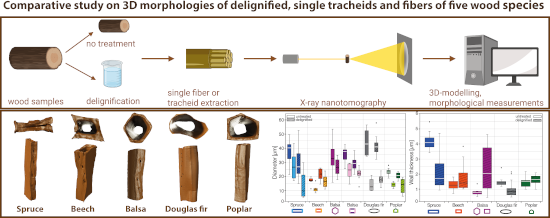
- performed using the P05 reconstruction pipeline, which is based on tomopy [32], as described earlier [30]. The most representative examples (4× spruce, 2× beech, 4× balsa, 2× Douglas fir, and 4× poplar) were then segmented manually with the brush tool and semi-automated with the magic wand tool using Amira


Safe and sustainable by design with ML/AI: A transformative approach to advancing nanotechnology
Beilstein J. Nanotechnol. 2026, 17, 176–185, doi:10.3762/bjnano.17.11
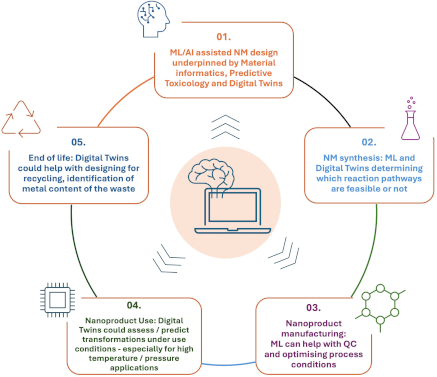
- (AI) have significantly expanded the capabilities of SSbD by enabling high-throughput and automated approaches that can quickly evaluate the safety profile of candidate materials [22] as well as multi-criteria decision analysis in which several parameters (e.g., functionality, safety, sustainability


Influence of surface characteristics on the in vitro stability and cell uptake of nanoliposomes for brain delivery
Beilstein J. Nanotechnol. 2026, 17, 139–158, doi:10.3762/bjnano.17.9
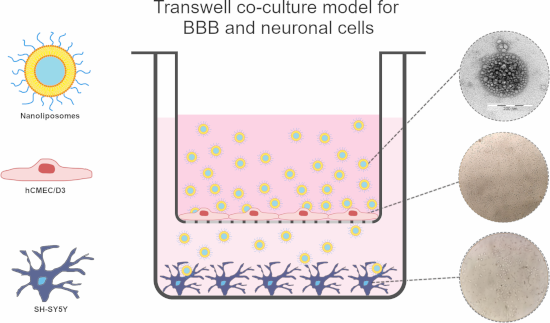
- set to 1.38 and 0.010, respectively. Water was set as the dispersant, the temperature was set to 25 °C, while the attenuation was set to 11. The 'general purpose (normal distribution)' was chosen as the analysis model. High-resolution automated electrophoresis of the adsorbed proteins onto
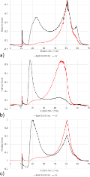
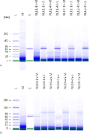
- at the initial time points of incubation) contains more proteins than the hard corona formed at later time intervals, resulting in a larger particle diameter at early incubation periods. High-resolution automated electrophoresis of adsorbed proteins onto the nanoliposomal surface In the next step




Optical bio/chemical sensors for vitamin B12 analysis in food and pharmaceuticals: state of the art, challenges, and future outlooks
Beilstein J. Nanotechnol. 2025, 16, 2207–2244, doi:10.3762/bjnano.16.153
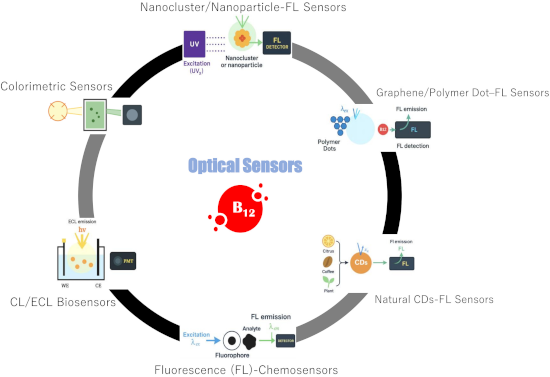
- -soluble vitamin, especially Lactobacillus leichmannii (ATCC 7830). Meanwhile, radioisotope dilution methods also came into use. But now, automated tests, owing to their higher speed and lower labor intensity, are the top choice for determining VB12. Since the early 1990s, assays based on competitive
- gained popularity for their enhanced sensitivity and specificity [26]. Currently, automated enzyme immunoassays, GC-MS, LC-MS, and HPLC with either fluorescent or electrochemical detection are utilized to assess the total HCY level [26][71][74]. Optical biosensing techniques of vitamin B12 RNA aptamer
- + concentrations from 1.0 × 10⁻⁹ to 3.0 × 10⁻⁷ g/mL and an LOD of 4.4 × 10⁻¹⁰ g/mL with 2.3% RSD [105]. Andrade et al. designed a flow–batch methodology paired with a large-area silicon photodiode instead of a photomultiplier tube, resulting in a convenient and automated luminometer for CL analysis. In this


Targeting the vector of arboviruses Aedes aegypti with nanoemulsions based on essential oils: a review with focus on larvicidal and repellent properties
Beilstein J. Nanotechnol. 2025, 16, 1894–1913, doi:10.3762/bjnano.16.132


Beyond the bilayer: multilayered hygroscopic actuation in pine cone scales
Beilstein J. Nanotechnol. 2025, 16, 1695–1710, doi:10.3762/bjnano.16.119
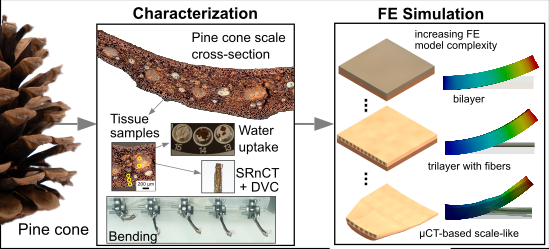
- more apical (right) based on the original position along the central cone axis. (C) Single frame of the first scale row during the automated point tracking for calculating the bending angle. Geometries used for finite element analysis. (A) Bilayer. (B) Trilayer. (C) Trilayer with uniform fibers. (D


Nanotechnology-based approaches for the removal of microplastics from wastewater: a comprehensive review
Beilstein J. Nanotechnol. 2025, 16, 1607–1632, doi:10.3762/bjnano.16.114
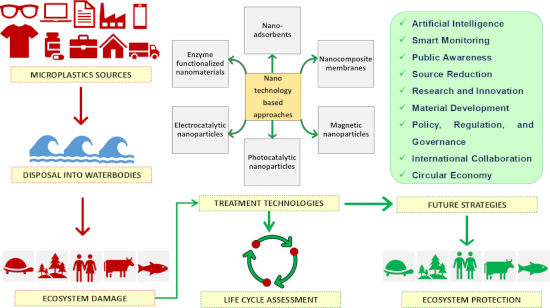
- evaluation. Current sampling and pre-processing methods face limitations such as complexity, inconsistent outputs, and time inefficiency, which intelligent sampling tools and cloud-based platforms aim to overcome through real-time optimization. Automated systems will enhance reagent selection and streamline
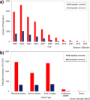


Automated collection and categorisation of STM images and STS spectra with and without machine learning
Beilstein J. Nanotechnol. 2025, 16, 1367–1379, doi:10.3762/bjnano.16.99
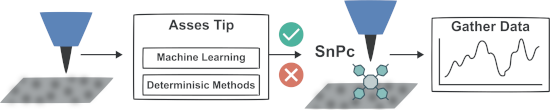
- datasets to implement on new systems and demonstrate a proof-of-principle automated experiment that is able to repeatedly prepare the tip, identify molecules of interest, and perform site-specific STS experiments using DM, in order to produce large numbers of spectra with different tips suitable for
- statistical analysis. Deterministic methods can be easily implemented to classify the imaging and spectroscopic quality of a STM tip for the purposes of high-resolution STM and STS on small organic molecules. Via automated classification of the tip state, we demonstrate an automated experiment that can
- collect a high number of spectra on multiple molecules without human intervention. The technique can be easily extended to most metal–adsorbate systems and is promising for the development of automated, high-throughput, STM characterisation of small adsorbate systems. Keywords: automated; machine




Deep-learning recognition and tracking of individual nanotubes in low-contrast microscopy videos
Beilstein J. Nanotechnol. 2025, 16, 1316–1324, doi:10.3762/bjnano.16.96
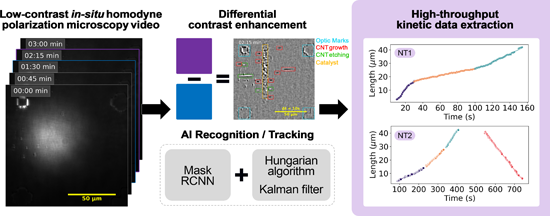
- developing an automated deep learning (DL) approach. A Mask-RCNN architecture, enhanced with a ResNet-FPN backbone, was employed to recognize and track individual nanotubes in microscopy videos, significantly improving the efficiency and reproducibility of kinetic data extraction. The method involves a
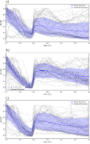
- , while panel (b) includes nanotubes with varying growth rates. Green dots represent data obtained using the automated recognition system (AI), and grey dots correspond to manual measurements (MR). Large dots indicate the mean values of each distribution, with whiskers representing one standard deviation


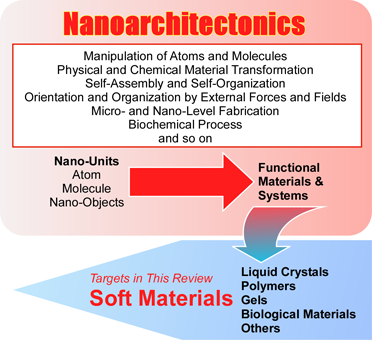
Soft materials nanoarchitectonics: liquid crystals, polymers, gels, biomaterials, and others
Beilstein J. Nanotechnol. 2025, 16, 1025–1067, doi:10.3762/bjnano.16.77
- on/off response of the fabricated structures is length-dependent. For example, the switching current under light illumination increases with increasing molecular length and monolayer thickness. Furthermore, the technique has the potential to be automated, which would facilitate its use as an assembly






Focused ion and electron beams for synthesis and characterization of nanomaterials
Beilstein J. Nanotechnol. 2025, 16, 613–616, doi:10.3762/bjnano.16.47

- intelligence and automation, the potential for real-time process control and modeling-informed precision fabrication is immense. Rapid data analysis and automated software development could pave the way for a bottom-up approach, akin to how nature constructs complex biological systems. On behalf of all editors

Functionalized gold nanoflowers on carbon screen-printed electrodes: an electrochemical platform for biosensing hemagglutinin protein of influenza A H1N1 virus
Beilstein J. Nanotechnol. 2025, 16, 540–550, doi:10.3762/bjnano.16.42
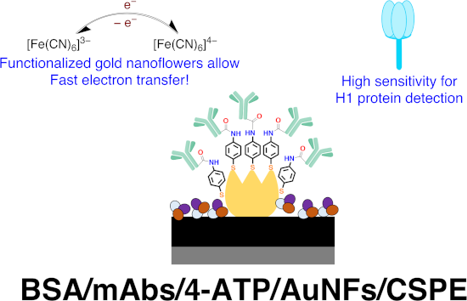
- was coupled to an automated microfluidics system, and no significant decrease of the electrochemical signal was observed. Keywords: charge transfer; cyclic voltammetry; differential pulse voltammetry; electrochemical impedance spectroscopy; electrodeposition; Introduction Viral infections pose a
- measurements [46]. Furthermore, compatibility with microfluidic devices is important for the development of portable biosensing devices with automated functions and of simple use. Different antigens of the influenza A H1N1 virus have been targeted for detection over the years. In order to make a substantial


Integrating high-performance computing, machine learning, data management workflows, and infrastructures for multiscale simulations and nanomaterials technologies
Beilstein J. Nanotechnol. 2024, 15, 1498–1521, doi:10.3762/bjnano.15.119
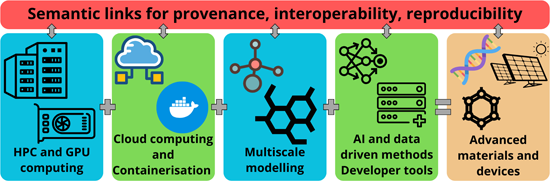
- ]), collaborative research environments (ResearchGate Labs [29], Mendeley Data) and other services for AI, data analytics, visualization, and training. Cloud platforms have also been used to perform simulations in the materials science domain [30] and to perform automated data analysis [31]. However, the power of
- domain provides the basic components to represent complex workflows in terms of basic and reusable building blocks enabling high-throughput and automated data processing. IATA Frameworks Integrated Approaches to Testing and Assessment (IATA) frameworks constitute another key set of technologies in the
- predictive analysis [71]. Moreover, it is tailored to the safe-by-design paradigm, making it an essential tool for future researches [72]. ASCOT (an acronym derived from Ag-Silver, Copper Oxide, Titanium Oxide) is a tool for the automated construction and optimization of molecular structures for, as the name


Hymenoptera and biomimetic surfaces: insights and innovations
Beilstein J. Nanotechnol. 2024, 15, 1333–1352, doi:10.3762/bjnano.15.107
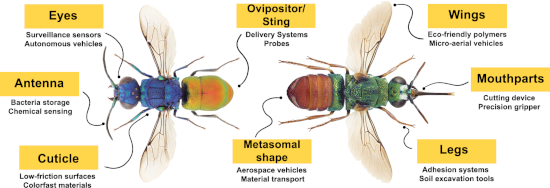
- some of these Hymenopteran species, that can even carry lift loads greater than the theoretical maximum as expected by their body mass and wing morphology [190], can inspire the design of robotic systems for material handling and transport, enhancing the efficiency of automated loading and unloading




New design of operational MEMS bridges for measurements of properties of FEBID-based nanostructures
Beilstein J. Nanotechnol. 2024, 15, 1273–1282, doi:10.3762/bjnano.15.103
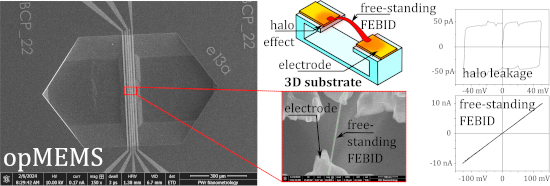
- prototyping and experimentation, such as electron and ion beams, and in particular FEBID [11][12][13]. FEBID has a resolution of a few nanometres [14] and can be automated [15] or combined with other technologies [16][17]. It can be used to deposit conductive or insulating layers, as well as layers of special


Direct electron beam writing of silver using a β-diketonate precursor: first insights
Beilstein J. Nanotechnol. 2024, 15, 1117–1124, doi:10.3762/bjnano.15.90

- deposition of an automated sequence of shapes overnight, carefully avoiding unintended electron beam impact while precursor molecules were present (cf. the section on deposit evolution in Supporting Information File 1 for more details). The high-resolution images presented in the main manuscript were taken


On the mechanism of piezoresistance in nanocrystalline graphite
Beilstein J. Nanotechnol. 2024, 15, 376–384, doi:10.3762/bjnano.15.34
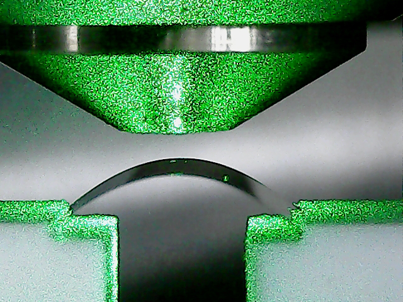
- , which was constructed in-house and automated using Python. Then, sheet resistance measurements under externally applied strain are discussed. Raman spectroscopy of the NCG under strain is studied, which gives insights into the distribution of strain in the film. Utilizing electrical and optical
- Keithley 2636A device. The substrate holder and contacts holder were machined and attached to the stepper motor as shown in Figure 1a. A detailed description of the setup has been given by Kumar [23]. The complete setup was automated via self-programmed Python code. To completely eliminate any strain


Comparative electron microscopy particle sizing of TiO2 pigments: sample preparation and measurement
Beilstein J. Nanotechnol. 2024, 15, 317–332, doi:10.3762/bjnano.15.29
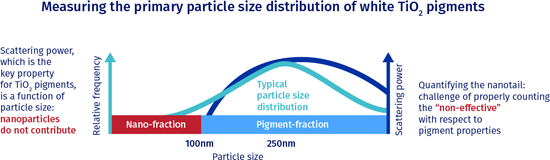
- , and M3 completely rely on particle edge detection by the human eye, which is the most accurate detection method assuming good laboratory practice. Methods M1, P1, and P6 rely on automated particle detection, the former using a model-free sizing algorithm and the latter two using a sizing algorithm
- boundaries, the software packages listed in Table 10 evaluate all relevant size parameters, including ECD, Feret, and shape characteristics (e.g., convexity or shape factor). The automated pigment detection used by KRONOS detects the pigments based on their grey value in the image after automatic
- thresholding. While the former detection methods do not require any pre-processing of the image filtering of the obtained results, the automated detection methods require both noise reduction and contrast–brightness unification prior to the automated grey-value thresholding, and a shape- and grey value-based


Multiscale modelling of biomolecular corona formation on metallic surfaces
Beilstein J. Nanotechnol. 2024, 15, 215–229, doi:10.3762/bjnano.15.21
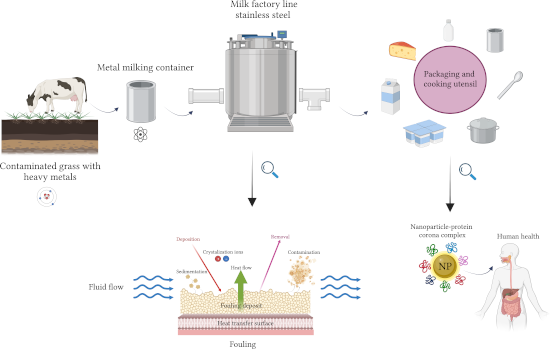
- molecule, each constituent glucose bead is assigned a charge of 0, and the Hamaker term is neglected because of the small size of these beads. Following this parameterization, the coarse-grained lactose molecule is processed identically to proteins using the same automated pipeline, that is, UnitedAtom is




Dual-heterodyne Kelvin probe force microscopy
Beilstein J. Nanotechnol. 2023, 14, 1068–1084, doi:10.3762/bjnano.14.88
- of the post-data acquisition data treatment (automated adjustment of the matrix of spectroscopic curves by batch processing with OriginPro software) are presented in Figure 4, along with the topographic image recorded simultaneously pixel by pixel with the spectroscopic curves. Note that the