Search results
Search for "contaminants" in Full Text gives 196 result(s) in Beilstein Journal of Nanotechnology.
Synthesis and characterization of RF-sputtered ZnTe/Cu2−xTe thin films for solar cell applications
Beilstein J. Nanotechnol. 2026, 17, 1016–1027, doi:10.3762/bjnano.17.69
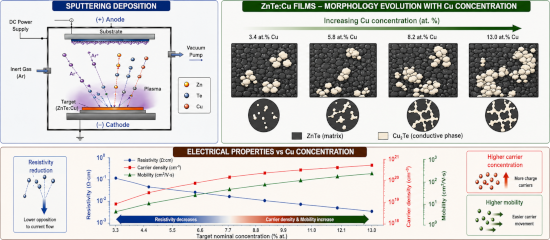
- reported to occur at temperatures below 250 °C in RF sputtering systems [20]. The base pressure prior to deposition was ≈10−5 Torr and the working pressure during growth was maintained at approximately ≈2 × 10⁻³ Torr. The targets were pre-sputtered for 5 min to remove surface contaminants, and the



Materials challenges in solid-state sensors for continuous monitoring of ions in water
Beilstein J. Nanotechnol. 2026, 17, 935–973, doi:10.3762/bjnano.17.66
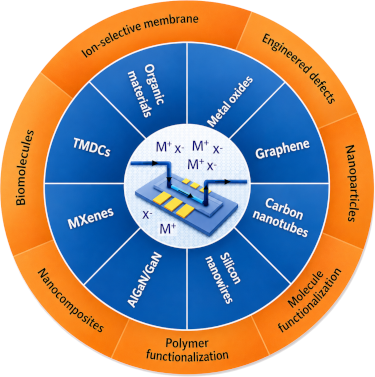
- monitoring of nitrate, nitrite, and ammonium is increasingly essential in drinking water, domestic wastewater, and industrial wastewater because these nitrogen species are contaminants that are subject to regulatory limits and serve as real-time indicators of treatment performance. In drinking water, nitrate



Sustainable fabrication of 2D-based devices through reuse of substrates with microfabricated electrodes
Beilstein J. Nanotechnol. 2026, 17, 818–827, doi:10.3762/bjnano.17.58
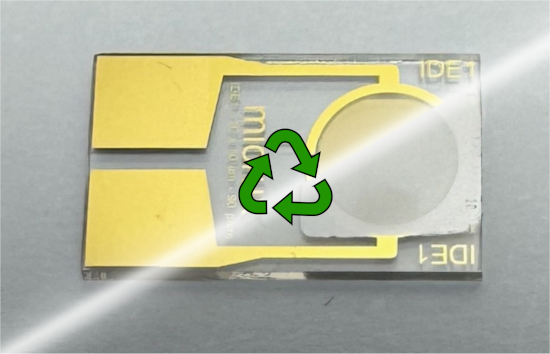
- immersed in NMP and treated in an ultrasonic bath at 50 °C. The effectiveness of the ultrasonic cleaning is likely related to the interaction between NMP molecules and the interface between the 2D material flakes and the SiO2/Si substrate. NMP is known for its strong affinity for surface contaminants and
- appears clean and free of contaminants. The rationale for selecting NMP as the representative cleaning solvent and 50 °C as the operating temperature is discussed in detail in Supporting Information File 1 (see Figures S1–S4), where the performance of alternative solvents under representative cleaning


Environmental applications of silver nanoparticles: state-of-the-art review and emerging trends
Beilstein J. Nanotechnol. 2026, 17, 697–736, doi:10.3762/bjnano.17.49
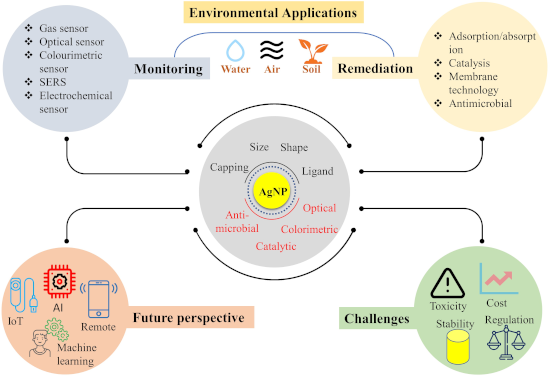
- to rapid industrialisation, technological advancements, urbanisation, and unsustainable agricultural practices. This causes significant concern and disrupts ecosystems and food cycles, ultimately affecting living beings. Anthropogenic activities generate all environmental contaminants, and industries
- population and their demand for advanced technology, healthcare, and household products. Therefore, monitoring and remediation of these contaminants from the environment is the need of the hour, with cost-effective, sensitive, and selective strategies or systems foremost. Indeed, various high-throughput
- polyfluoroalkyl substances (PFASs), and polycyclic aromatic hydrocarbons (PAHs) in environmental samples [10][11][12][13][14][15][16][17]. This indicates that nanosilver acts as a potent nanosensor for detecting various contaminants via different approaches, namely Raman spectroscopy, electrochemistry


Decontamination from water pollutants and pathogens by electrospun nanofibers doped with heavy-atom-free borafluorene-BODIPY photosensitizers
Beilstein J. Nanotechnol. 2026, 17, 668–682, doi:10.3762/bjnano.17.46

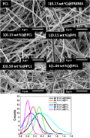
- decrease (to less than 5%) in bacterial growth under light irradiation. Overall, our results demonstrate the significant promise of electrospun BODIPY-based nanofibers for water purification, providing a durable and efficient platform for advanced photocatalytic treatment of pharmaceutical contaminants and



Cellulose as a photocatalyst support material: extraction, structural features, and environmental applications
Beilstein J. Nanotechnol. 2026, 17, 635–652, doi:10.3762/bjnano.17.44
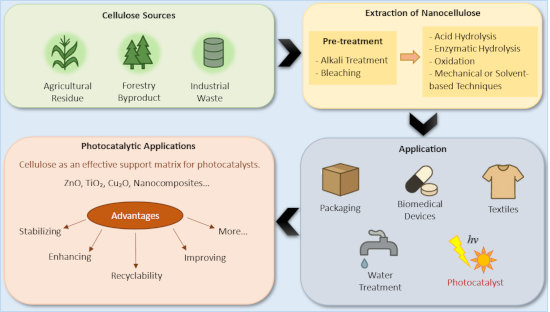
- immobilizing photocatalysts on membrane surfaces to create a polymer photocatalytic membrane matrix, which has shown strong effectiveness in degrading water contaminants [14]. They also prevent biofouling, a major problem in membrane separation. Scientists are increasingly combining cellulose with different
- used to develop entirely new high-performance ones [83]. The effectiveness of CNCs is due to especially the high surface area and the abundance of hydroxy groups, which enable improved interaction with water contaminants while also aligning with environmental sustainability goals [82][83]. In practical
- and holes but also enhance the adsorption of contaminants while preventing the undesirable aggregation of TiO2 particles, thereby improving both the stability and efficiency of the photocatalyst [101]. There is strong compatibility between TiO2 nanoparticles and cellulose chains, as the interaction


Two-step laser synthesis of Ag@TiO2 nanomaterials for the photocatalytic degradation of rhodamine B
Beilstein J. Nanotechnol. 2026, 17, 622–634, doi:10.3762/bjnano.17.43
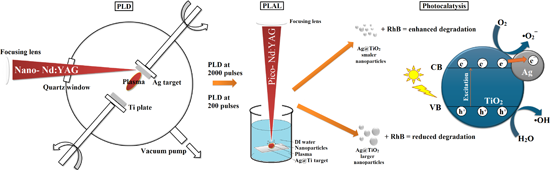
- visible light, such as water treatment and degradation of organic contaminants [10][11][12]. Among various synthesis techniques, laser-based methods, such as pulsed laser ablation in liquids (PLAL) and laser pyrolysis, stand out as clean, efficient, and surfactant-free routes for fabricating Ag@TiO2
- the morphology, composition, and crystallinity of the resulting nanostructures with high precision. The absence of organic contaminants or residual reagents maximizes the catalytic surface area, while the presence of silver can influence the optical response of TiO2 through plasmon-related effects


Synthesis of Cu–Mo/TiO2 and Co–Mo/TiO2 photocatalysts for the efficient degradation of organic pollutants in water
Beilstein J. Nanotechnol. 2026, 17, 559–570, doi:10.3762/bjnano.17.37
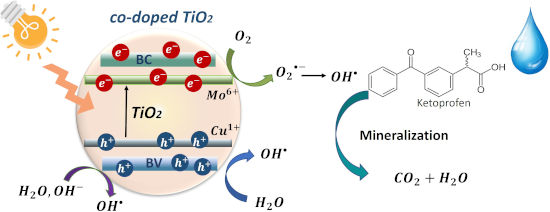
- organic contaminants. These products are frequently detected in aquatic bodies due to human use and include pharmaceuticals, pesticides, and industrial chemicals, which significantly degrade drinking water quality [1]. To achieve the efficient removal of emerging pollutants, advanced oxidation processes



Upcycling agroindustrial waste into graphene oxide supports for gold nanoparticles: toward sustainable nanomaterials
Beilstein J. Nanotechnol. 2026, 17, 489–504, doi:10.3762/bjnano.17.32
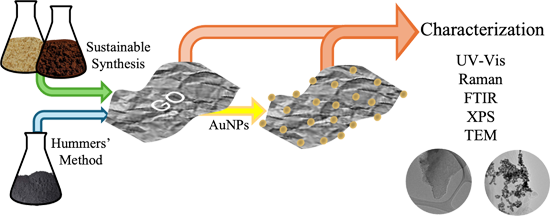
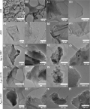
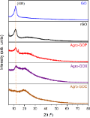
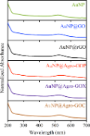
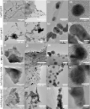
- platforms have shown promise in electrochemical and colorimetric sensing of environmental contaminants, allowing for sensitive and rapid detection of toxic species in water [60][61][62]. Beyond catalysis and sensing, the well-documented antibacterial activity of AuNPs, combined with the large surface area



Defects and defect-mediated engineering of two-dimensional materials: challenges and open questions
Beilstein J. Nanotechnol. 2026, 17, 454–488, doi:10.3762/bjnano.17.31
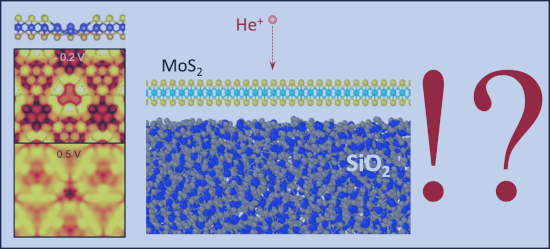
- residues and other contaminants may alter the XPS spectra, leading to misinterpretation of defect characteristics. To mitigate this, careful sample preparation in controlled environments and in situ cleaning methods, such as argon ion sputtering, are essential. However, these approaches must be applied





Advancing nanolithography: a comprehensive review of materials for local anodic oxidation with AFM
Beilstein J. Nanotechnol. 2026, 17, 275–291, doi:10.3762/bjnano.17.19
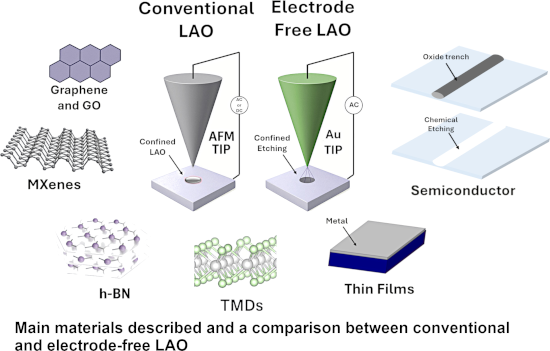
- -treatment techniques, such as oxygen plasma cleaning, ensure that the substrate surface is free of contaminants and uniform, providing a consistent environment for the oxidation reaction. Similarly, applying thin surface coatings, like hydrophilic layers, can enhance the formation and stability of the water


Time of flight secondary ion mass spectrometry imaging of contaminant species in chemical vapour deposited graphene on copper
Beilstein J. Nanotechnol. 2026, 17, 200–213, doi:10.3762/bjnano.17.13
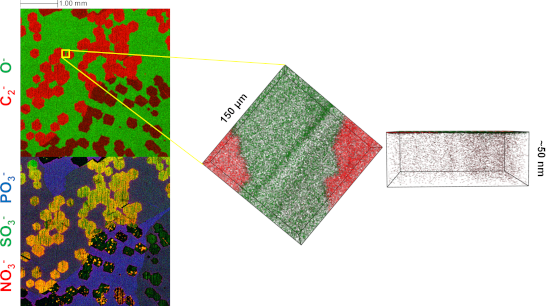
- quality control method. These results highlight the significance of understanding the role of trace contaminants and elemental distributions within the catalyst in conjunction with growth parameters for optimised CVD of graphene layers. Keywords: contamination; copper; CVD; graphene; ToF-SIMS
- contaminants in as-grown graphene [29] or contamination associated with processing [30][31][32][33]. Trace contaminants can significantly influence the catalytic growth process, as well as the post-growth processing required for electronics, and can be deleterious for many applications. There is a need for
- of copper or copper oxide. However, as recent studies have shown through energy-dispersive X-ray spectroscopy mapping [30], there are significant other contaminants detectable on high-purity Cu foils that can influence graphene nucleation and can remain after growth [31]. A more detailed examination









Functional surface engineering for cultural heritage protection: the role of superhydrophobic and superoleophobic coatings – a comprehensive review
Beilstein J. Nanotechnol. 2026, 17, 63–96, doi:10.3762/bjnano.17.6








Optical bio/chemical sensors for vitamin B12 analysis in food and pharmaceuticals: state of the art, challenges, and future outlooks
Beilstein J. Nanotechnol. 2025, 16, 2207–2244, doi:10.3762/bjnano.16.153


Microplastic pollution in Himalayan lakes: assessment, risks, and sustainable remediation strategies
Beilstein J. Nanotechnol. 2025, 16, 2144–2167, doi:10.3762/bjnano.16.148
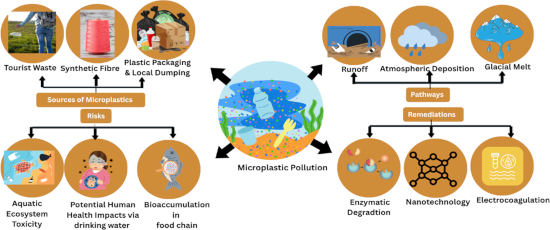
- urban runoff have resulted in plastic pollution increasing in Nainital Lake, a popular tourist destination, threatening aquatic biodiversity [2]. Nazir et al. state that MPs pollute water bodies by accumulating in food chains and bearing toxic contaminants such as heavy metals. This problem is
- key mechanism in remote lakes besides direct input [7]. Groundwater modeling methods have been instrumental in describing the transport and fate of contaminants, including MPs, in subsurface environments. Numerical methods such as MODFLOW coupled with transport methods such as MT3DMS and RT3D are
- runoff. Summer melt pulses enhance the transport of MPs from catchment basins, whereas weak winter flows allow for sedimentation. Perennial flow of the Brahmaputra and the Koshi rivers across borders makes sure that extraneous contaminants enter such pristine ecosystems [24]. Hydrological conveyance is


Toward clinical translation of carbon nanomaterials in anticancer drug delivery: the need for standardisation
Beilstein J. Nanotechnol. 2025, 16, 2092–2104, doi:10.3762/bjnano.16.144

- , sedentary behaviour, obesity, environmental contaminants, and certain occupations and pharmaceuticals [17]. Prevention, the most cost-effective and beneficial approach for the general population [18], is supported by strong evidence-based recommendations from organisations like the World Cancer Research
- , and material purity are essential for translational development. Contaminants such as carboxylated carbonaceous fragments (CCFs) may be introduced during synthesis and processing, and these impurities can alter biological responses or induce toxicity. Their detection and removal should form a routine



Current status of using adsorbent nanomaterials for removing microplastics from water supply systems: a mini review
Beilstein J. Nanotechnol. 2025, 16, 1837–1850, doi:10.3762/bjnano.16.127
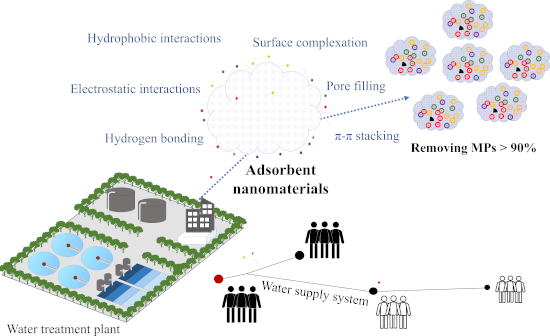
- polychlorinated biphenyls, polycyclic aromatic hydrocarbons, and dichlorodiphenyltrichloroethane [4][5][6]. These adsorbed contaminants can bioaccumulate through the food chain and move from marine organisms to human food [7]. In water supply systems, MPs with adsorbed toxins pose significant risks without being
- properly removed during treatment [8]. Exposure to MPs and their adsorbed contaminants through water supply systems has been related to various adverse health effects, including endocrine disruption, neurotoxicity, carcinogenesis, and chronic exposure-related issues [9][10]. Ecologically, MPs disrupt
- , leading to cellular damage [111]. According to Thirunavukkarasu et al., the interactions between these nanomaterials and other contaminants are not fully understood. While some studies suggest that different synthesis methods can reduce toxicity, they still pose a significant threat to end-users [112


Electrical, photocatalytic, and sensory properties of graphene oxide and polyimide implanted with low- and medium-energy silver ions
Beilstein J. Nanotechnol. 2025, 16, 1794–1811, doi:10.3762/bjnano.16.123
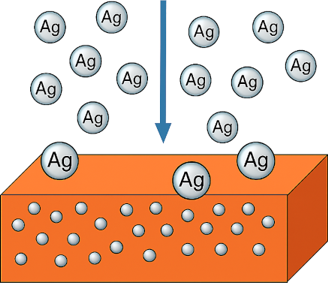
- , where they initiate redox reactions with adsorbed species, such as water or dissolved oxygen, leading to the formation of reactive oxygen species that degrade organic contaminants. In Ag-modified polymer matrices, several synergistic effects contribute to enhanced photocatalytic activity. The


Nanotechnology-based approaches for the removal of microplastics from wastewater: a comprehensive review
Beilstein J. Nanotechnol. 2025, 16, 1607–1632, doi:10.3762/bjnano.16.114
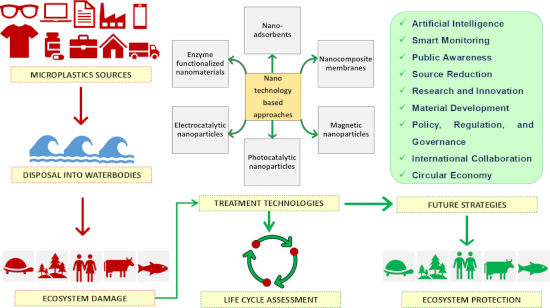
- hydrocarbons, heavy metals, and other toxic contaminants, increasing their potential risks to living ecosystems and organisms [9][10]. MPs have low density, variable sizes, high persistence, and non-biodegradable nature. These characteristics make their removal difficult, especially in aquatic environments [11
- of these contaminants includes airborne particles introduced during food processing or handling, degradation of plastic packaging, and, most significantly, contamination from polluted freshwater sources [13]. Primary, secondary, and tertiary treatment methods have been explored to mitigate MP
- 1039 in 2024. This indicates a growing recognition of NPs as emerging contaminants, though they still receive less attention than MPs. In contrast, Figure 1b provides insights from Springer Nature, categorizing the type of publications related to both MP and NP removal between 2015 and 2025. Research



Photocatalytic degradation of ofloxacin in water assisted by TiO2 nanowires on carbon cloth: contributions of H2O2 addition and substrate absorbability
Beilstein J. Nanotechnol. 2025, 16, 1567–1579, doi:10.3762/bjnano.16.111
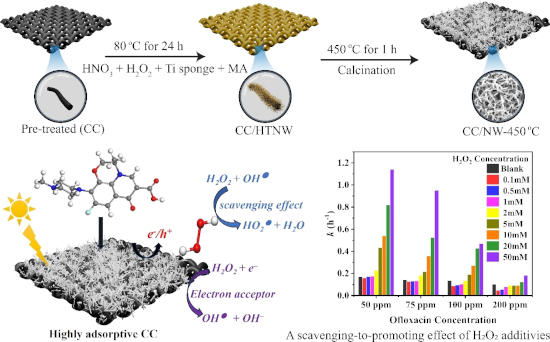
- unsatisfactory interaction with target contaminants diminishes photocatalytic degradation efficiency in water. Here, we present a mild solution method to precipitate anatase TiO2 nanowire arrays, measuring 1.5 μm in thickness, over carbon cloth to ensure substantial interactions with target pollutants and, in
- concentration of 200 ppm, suggesting the high adsorption capacity and probably a deep mineralization capacity of the thin film photocatalyst developed in the current investigation. This work represents a new promising strategy to tackle emerging contaminants and could lead to the advancement of cutting-edge


Laser processing in liquids: insights into nanocolloid generation and thin film integration for energy, photonic, and sensing applications
Beilstein J. Nanotechnol. 2025, 16, 1428–1498, doi:10.3762/bjnano.16.104




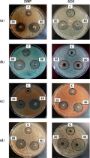


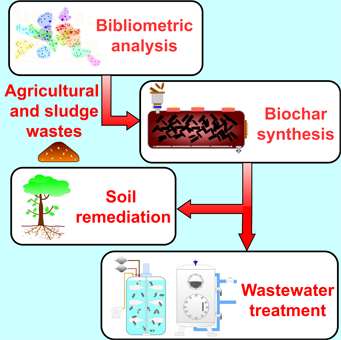
The role of biochar in combating microplastic pollution: a bibliometric analysis in environmental contexts
Beilstein J. Nanotechnol. 2025, 16, 1401–1416, doi:10.3762/bjnano.16.102


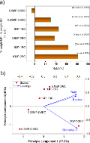

Automated collection and categorisation of STM images and STS spectra with and without machine learning
Beilstein J. Nanotechnol. 2025, 16, 1367–1379, doi:10.3762/bjnano.16.99
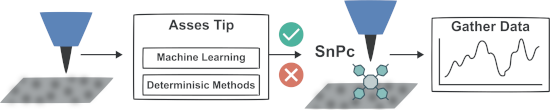
- contaminants can also strongly perturb the electronic structure of the tip. Methods of optimising the probe state for ideal STS are slow and laborious, involving indentation into a metal surface and bias pulses applied to the tip, manually checking spectra and imaging after each probe shaping attempt. The





Deep-learning recognition and tracking of individual nanotubes in low-contrast microscopy videos
Beilstein J. Nanotechnol. 2025, 16, 1316–1324, doi:10.3762/bjnano.16.96
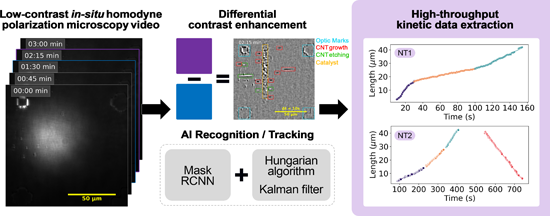
- and carrier gas. Oxygen and water sensors monitored gas-phase contaminants at the outlet line. In situ microscopy Nanotube growth was imaged in situ using a custom-built optical setup for homodyne polarization microscopy. A supercontinuum source (Fianium SC-400-4, 2 ps pulses, 40 MHz, spectral range


Wavelength-dependent correlation of LIPSS periodicity and laser penetration depth in stainless steel
Beilstein J. Nanotechnol. 2025, 16, 1302–1315, doi:10.3762/bjnano.16.95
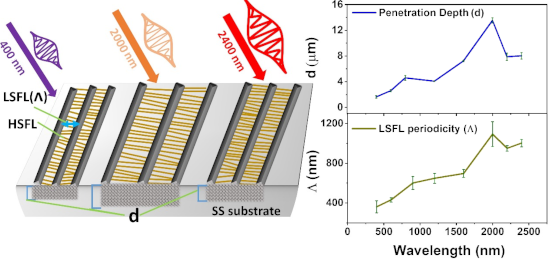
- . Before and after the laser treatment, these SS surfaces underwent ultrasonic rinsing with acetone for 10 min each, aiming to eliminate dust particles and other contaminants. Experimental details A commercially available Ti:sapphire femtosecond laser operating at an 800 nm central wavelength, with 75 fs