


Search results
Search for "indentation" in Full Text gives 109 result(s) in Beilstein Journal of Nanotechnology.
Multifrequency AFM integrating PeakForce tapping and higher eigenmodes for heterogeneous surface characterization
Beilstein J. Nanotechnol. 2025, 16, 2077–2085, doi:10.3762/bjnano.16.142
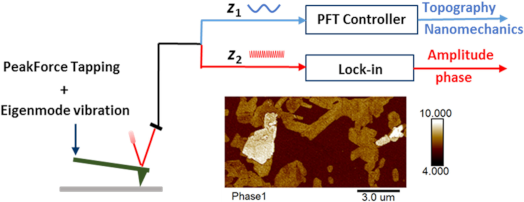
- stiffness (k) matching, a critical requirement for accurate contact mechanics models [20]. The stiffness k should be neither too large (to ensure a sufficient deflection signal for accurate force measurement) nor too small (to achieve adequate sample indentation). For heterogeneous samples with modulus


Beyond the bilayer: multilayered hygroscopic actuation in pine cone scales
Beilstein J. Nanotechnol. 2025, 16, 1695–1710, doi:10.3762/bjnano.16.119
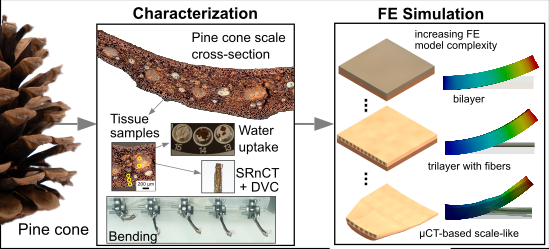
- represent the biological model. As part of these considerations of the relevance of Young’s modulus, it was also noted that the indentation measurements by Eger et al. [23] used as the basis for our simulations may reflect a cellular rather than a structural Young’s modulus of the tissue. In their
- samples is very important in relation to what one wants to measure [48][49], it is possible that a tip that is too small was used. It is also possible that the gradual transition between sclereid cells and brown tissue may have caused the indentation to sample predominantly the adaxial sclereid cells


Automated collection and categorisation of STM images and STS spectra with and without machine learning
Beilstein J. Nanotechnol. 2025, 16, 1367–1379, doi:10.3762/bjnano.16.99
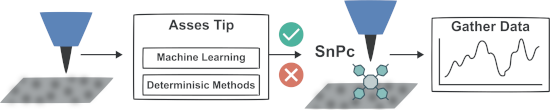
- contaminants can also strongly perturb the electronic structure of the tip. Methods of optimising the probe state for ideal STS are slow and laborious, involving indentation into a metal surface and bias pulses applied to the tip, manually checking spectra and imaging after each probe shaping attempt. The




Mechanical stability of individual bacterial cells under different osmotic pressure conditions: a nanoindentation study of Pseudomonas aeruginosa
Beilstein J. Nanotechnol. 2025, 16, 1171–1183, doi:10.3762/bjnano.16.86
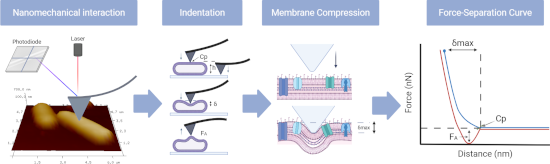
- direction of the scanning in relation to the orientation of the bacteria. Especially at the edges, the influence of the finite 3D size and angle of the AFM tip became evident because indentation can take place perpendicularly, along the longer axis of PA, or in an intermediate diagonal direction of the
- higher osmolarities. This behavior of k and Y can be understood, considering the observed change in curvature in the force curves at the beginning of the indentation process and before the curve approaches linearity. The Sneddon model used here to extract the elasticity modulus is sensitive to these


Multifunctional properties of bio-poly(butylene succinate) reinforced with multiwalled carbon nanotubes
Beilstein J. Nanotechnol. 2025, 16, 1014–1024, doi:10.3762/bjnano.16.76
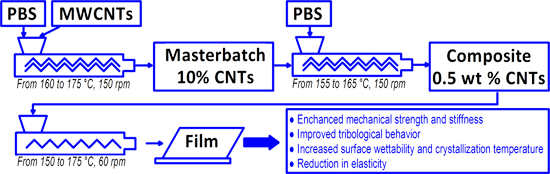
- speed of 100 mm·min−1, using rectangular film samples measuring 80 × 350 mm2 with a thickness of 350 µm. Hardness tests were performed using the Shore method in accordance with ISO 868:2003 “Plastics and Ebonite – Determination of Indentation Hardness by Means of a Durometer (Shore Hardness)”. Square



Interface properties of nanostructured carbon-coated biological implants: an overview
Beilstein J. Nanotechnol. 2024, 15, 1041–1053, doi:10.3762/bjnano.15.85
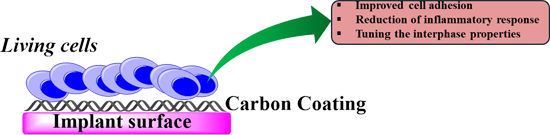
- self-repairing of the damaged surfaces by filling the cracks, thus, reducing wear loss. Chen et al. [134] improved the mechanical properties of a titanium alloy though deposition of graphene flakes. The authors investigated the system through indentation showing improvements in both toughness and yield



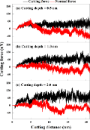
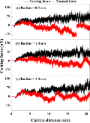
Effects of cutting tool geometry on material removal of a gradient nanograined CoCrNi medium entropy alloy
Beilstein J. Nanotechnol. 2024, 15, 925–940, doi:10.3762/bjnano.15.76
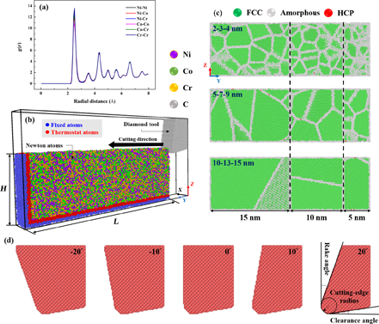
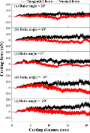
- , friction coefficients, and hardness values of some CoCrNi alloys from experimental works and MD simulations. In this work, the hardness was calculated using the following equation [46]: where Fmax and Ac are, respectively, the maximum indentation force and the contact area between the tool and the








Determination of the radii of coated and uncoated silicon AFM sharp tips using a height calibration standard grating and a nonlinear regression function
Beilstein J. Nanotechnol. 2023, 14, 1200–1207, doi:10.3762/bjnano.14.99
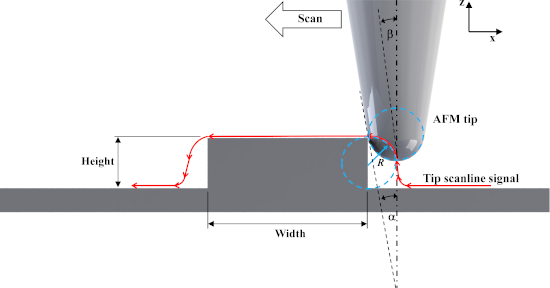
- for 30 nm depth to obtain sufficient data of force curves. The blunted tips were imaged by SEM immediately after running the nanoindentation process in the AFM program. Then, each tip radius was determined by fitting the force loading curves with the Hertz model equation using the indentation depth


Elasticity, an often-overseen parameter in the development of nanoscale drug delivery systems
Beilstein J. Nanotechnol. 2023, 14, 1149–1156, doi:10.3762/bjnano.14.95
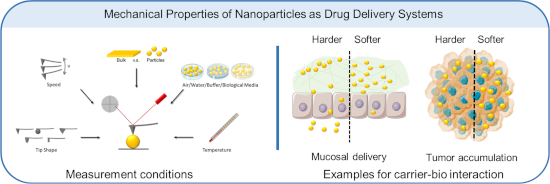
- most popular method is the evaluation of nanoindentation data resulting in Young’s moduli. The determination of the Young’s modulus is based on different theories. The adapted Hertz’ model, according to Sneddon [23], is most often used requiring a maximum indentation of 10% of the particle height
- measurement parameters are well studied. Indentation speed, applied force, and tip shape are some examples. Faster indentation leads to enhanced Young’s moduli [33][34] and rounded tips result in lower Young’s moduli compared to those of sharp pyramidal or quadratic pyramidal tips. Additionally, larger tip
- . Furthermore, it should be common that measurement conditions such as temperature, applied force, and indentation speed are provided. Also, if measurements are performed in water or in buffer, the composition needs to be given in order to achieve better comparability. In Table 2, the parameters that need to be


Hydroxyapatite–bioglass nanocomposites: Structural, mechanical, and biological aspects
Beilstein J. Nanotechnol. 2022, 13, 1490–1504, doi:10.3762/bjnano.13.123
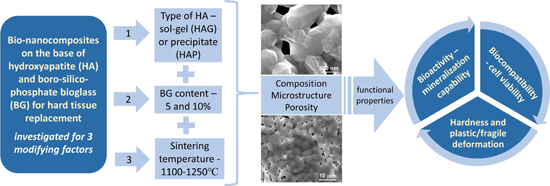
- an additional free surface facilitating plastic deformation. The material is easier to displace toward this free surface with the possibility to fill the pores, which leads to the compaction of the structure. The densification of the porous structure under Vickers indentation was demonstrated for (Bi
- increase of Ts. The analysis of the indentation morphology allowed us to differentiate three types of specific mechanical behavior of the studied composites. “Type I” is plastic behavior with no visible cracks or delaminations around the indentations (Figure 6a) or very small ones (Figure 6b). “Type II” is
- plastic-fragile behavior with light delaminations for loads of 0.2–1.0 N, displayed as fine highlights around the indentation, and pronounced delaminations for a load of 2.0 N (Figure 6 d,e). Note that both light and pronounced delaminations do not appear in all indentations and exhibit event frequency
Frequency-dependent nanomechanical profiling for medical diagnosis
Beilstein J. Nanotechnol. 2022, 13, 1483–1489, doi:10.3762/bjnano.13.122
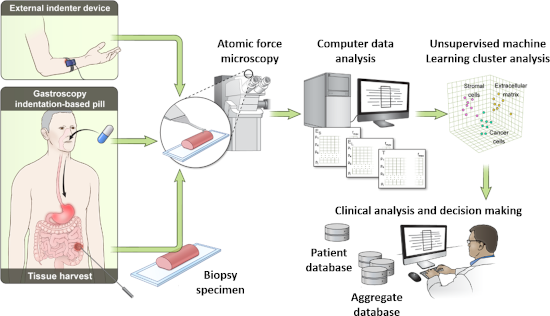
- seamlessly transferred from fundamental research to routine applications. Example of nanomechanical profiling strategy of patient tissues for medical diagnosis. Multiple non-invasive and invasive indentation-based strategies are proposed to characterize the frequency-dependent material properties of multiple
- patient tissues depending on accessibility and disease. Note that the proposed indentation strategies are not mutually exclusive. For example, intestinal tissue harvesting for characterization on an external AFM device may follow an initial scan conducted with an indentation-based pill (Figure 2) if the


Dry under water: air retaining properties of large-scale elastomer foils covered with mushroom-shaped surface microstructures
Beilstein J. Nanotechnol. 2022, 13, 1370–1379, doi:10.3762/bjnano.13.113
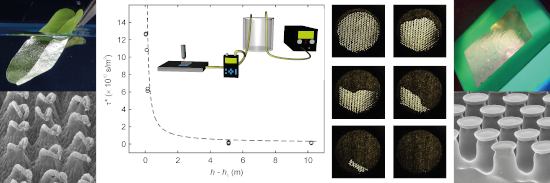
- analyzed again by CLSM. In Figure 2 it could be seen that the air–water interface showed only a slight indentation between the MSM. This is due to a little loss of air which happens before air layer and water were in an equilibrium state which from then on was stable over the entire time period. This


Straight roads into nowhere – obvious and not-so-obvious biological models for ferrophobic surfaces
Beilstein J. Nanotechnol. 2022, 13, 1345–1360, doi:10.3762/bjnano.13.111
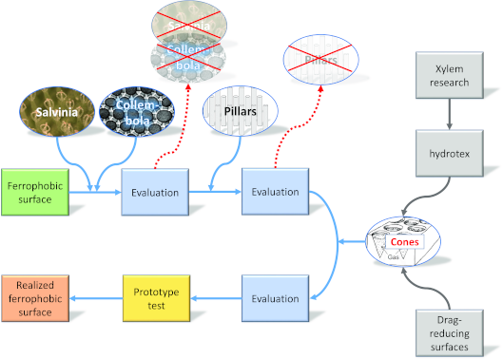
- , Ψ becomes negative, and the interface is unstable (right part of Figure 9). If the indentation resembles an ice cream cone, such as in Figure 5, application of Equation 8 leads to Ψ > 0, regardless of the sign of H [47]. The surface tension in the iron/gas interface should also be able to restrain


Studies of probe tip materials by atomic force microscopy: a review
Beilstein J. Nanotechnol. 2022, 13, 1256–1267, doi:10.3762/bjnano.13.104
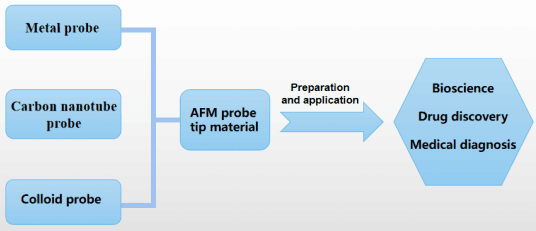
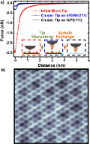
- shown to be removed one by one from the sample surface by tip indentation of the scanning tunneling microscope (STM). The probing of the interaction forces by AFM and thus the analysis of van der Waals (vdW) forces can provide valuable information on the evolution of the tip size. Carbon nanotube probes
- ][24]. Jiménez-Sánchez et al. [25] studied the extraction of Ir clusters from graphene (by indentation) on the surface of Rh(111) to fabricate AFM sharp nano-tips, i.e., with weak van der Waals interactions. Experiments were performed under ultrahigh pressure and low temperature (5 K) conditions using
Gelatin nanoparticles with tunable mechanical properties: effect of crosslinking time and loading
Beilstein J. Nanotechnol. 2022, 13, 778–787, doi:10.3762/bjnano.13.68
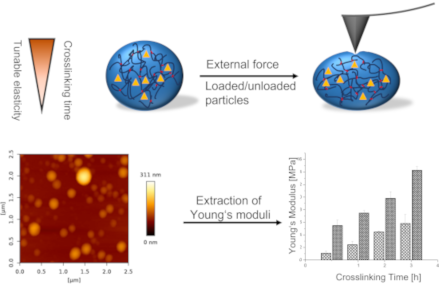
- determined. The curve obtained during the AFM experiment is based on the piezo movement. The piezo movement is larger than the indentation into the nanoparticle as the cantilever bends to the opposite direction. This effect is corrected by the so-called tip–sample separation, leading to the actual
- indentation curve. Subsequently, the force–distance curves are fitted by the Hertz equation modified to use square-pyramidal probes according to Bilodeau [28]. Thus, Young’s moduli are obtained. Subsequently, averages of the selected curves were calculated per particle. Therefore, per batch at least 30


Effects of substrate stiffness on the viscoelasticity and migration of prostate cancer cells examined by atomic force microscopy
Beilstein J. Nanotechnol. 2022, 13, 560–569, doi:10.3762/bjnano.13.47
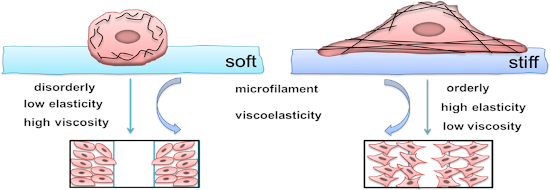
- stiffness values. To overcome the effect of different indentation depths on elasticity, we measured the cells in the same area and at the same force. PC-3 cells were found to have significantly lower elasticity values than HPV-PZ-7 cells, indicating that prostate cancer cells are less stiff than normal
- maintained. An indentation area of 3 μm × 3 μm was selected at the nuclear region where 36 force curves were recorded for each cell in force spectroscopy mode. The indentation force of 1 nN, spring constant values of 0.01 N·m−1, Z length of 5 μm, and an approach speed of approximately 2 μm·s−1 were employed

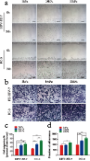
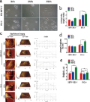


Effect of sample treatment on the elastic modulus of locust cuticle obtained by nanoindentation
Beilstein J. Nanotechnol. 2022, 13, 404–410, doi:10.3762/bjnano.13.33
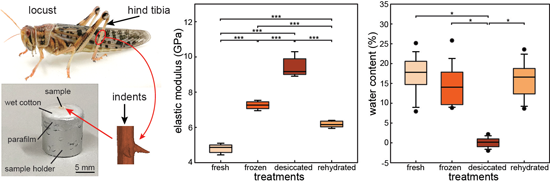
- elastic modulus continuously as a function of the indentation depth (Figure 1d). The method involves applying a dynamic load on the top of the static load while loading. The dynamic unloading part is then used to measure the stiffness, which is further processed to calculate the elastic modulus of the
- cuticle [12][13]. Nanoindentations were performed on the cross sections of the tibiae on ten preset indentation sites. The distance between adjacent indentation sites was set to be larger than 30 μm, to avoid the interference between consecutive measurements. In all indentations, maximum indentation depth
- indentation is the average value of the elastic moduli measured during indentations from 0.6 to 2.0 μm (red box, Figure 1d). The elastic modulus of each tibia is the average elastic modulus obtained from ten indents. Water content and evaporation rate measurements To measure the water content of the specimens


Nanoscale friction and wear of a polymer coated with graphene
Beilstein J. Nanotechnol. 2022, 13, 63–73, doi:10.3762/bjnano.13.4
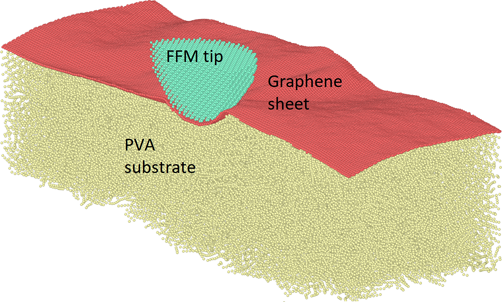
- the polymer chains and reduces the indentation depth. Keywords: friction; graphene; molecular dynamics; polymer; Introduction Graphene is a two dimensional material that has remarkable properties, both electronic [1][2] and mechanical [3][4]. Even before anything was known about graphene, the
- 300 K and a damping time of 0.1 ps. This thermostat is applied only to the bottom quarter of the PVA molecules, and later to the graphene sheet. To prevent the polymer slab from moving as a result of the external forces during deposition of the graphene, indentation, and sliding, the centers of mass
- total normal force applied is around 4 nN (3.3 MPa). Then the force is removed and the graphene sheet stays on the surface due to adhesion. To avoid sliding of the entire graphene sheet over the polymer substrate, we fix the position of some of the graphene carbon atoms during indentation and sliding


Alteration of nanomechanical properties of pancreatic cancer cells through anticancer drug treatment revealed by atomic force microscopy
Beilstein J. Nanotechnol. 2021, 12, 1372–1379, doi:10.3762/bjnano.12.101
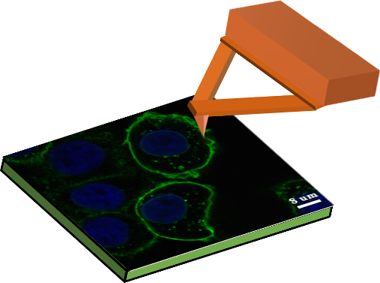
- angle of the probe, and δ is the indentation depth. Thus the E can be calculated by transforming the above equation: Hence the Young’s modulus can be calculated by fitting the linear part of the force–distance curves, that is, the slope of the force–distance curve. Energy dissipation is the loss of


Cantilever signature of tip detachment during contact resonance AFM
Beilstein J. Nanotechnol. 2021, 12, 1286–1296, doi:10.3762/bjnano.12.96
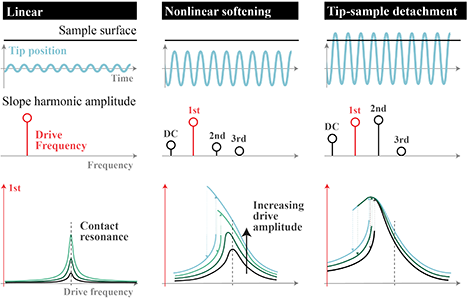
- , the equilibrium indentation Δ* is defined as: where w*(L1) is the equilibrium deflection of the cantilever at the location of the probe tip L1, shown in Figure 5b, and Z is the undeflected tip position (upward) relative to the undeformed sample surface. While vibrating, the dynamic indentation Δdyn is
- linearize the adhesive regime and Labuda et al. [36] to replace the standard Hertzian indentation model by a generalized Sneddon law interaction for a variety of tip geometries [37]. It is defined as: where Fadh is the maximum adhesive force, gadh is the range of the linear attractive region, αTS is the
- indentation coefficient, and P is the parameter controlling the probe tip geometry. Photothermal excitation of the AFM cantilever is approximated as a pair of opposing bending moments centered at the laser spot location LbD, measured from the base of the cantilever, and separated from each other by the laser


A new method for obtaining model-free viscoelastic material properties from atomic force microscopy experiments using discrete integral transform techniques
Beilstein J. Nanotechnol. 2021, 12, 1063–1077, doi:10.3762/bjnano.12.79
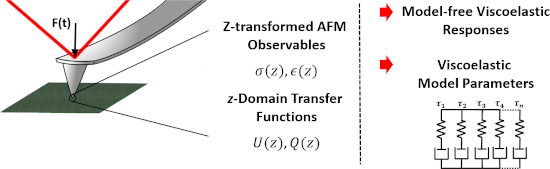
- distance for a particular location on the sample [27]. Force–distance analysis provides direct information on the force and indentation history with respect to time, which makes it appropriate for viscoelastic material property inversion. Existing inversion methods are based on viscoelastic models, which
- cases a continuous distribution of characteristic times is assumed via power-law rheology models [17][22]. Regardless of the model chosen, the strategy encompasses fitting the properties implied by the model to the experimental force–indentation data. In order to enable a new route to viscoelastic
- sinusoidal stresses and strains. To analyze the case of an AFM tip penetrating a viscoelastic surface we need an equation relating force with sample penetration (indentation). Equation 1 and Equation 2 relate stress and strain but do not consider the geometrical aspects of our boundary value problem


Determination of elastic moduli of elastic–plastic microspherical materials using nanoindentation simulation without mechanical polishing
Beilstein J. Nanotechnol. 2021, 12, 213–221, doi:10.3762/bjnano.12.17
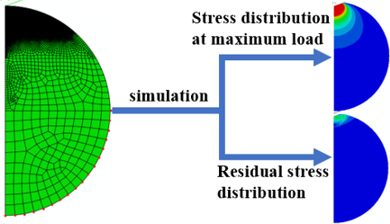
- encountered in engineering. The simulated results indicate that contact height is unsuitable to replace contact depth for obtaining the indentation elastic modulus of microspherical materials. The extracted elastic modulus of a microsphere using the Oliver–Pharr method with the simulated unloading curve
- depends on the indentation depth. It demonstrates that nanoindentation on microspherical materials exhibits a “size effect”. Keywords: elastic–plastic; microsphere; nanoindentation; Oliver–Pharr method; simulation; Introduction Instrumented nanoindentation is the most commonly used technique for the
- characterization of the mechanical behavior of filaments [1], thin films [2], microplastics, coatings, powders, small crystals, and other materials at small scales. One of the great advantages of the technique is that many mechanical properties of materials can be determined from the analysis of indentation load


Correction: Extracting viscoelastic material parameters using an atomic force microscope and static force spectroscopy
Beilstein J. Nanotechnol. 2021, 12, 137–138, doi:10.3762/bjnano.12.10

- microscopy (AFM); creep; force mapping; indentation; Kelvin–Voigt; static force spectroscopy (SFS); viscoelasticity; In the “Useful Viscoelastic Quantities” section of the original publication, it is stated that the storage modulus (E′) and storage compliance (J′) are inverses of one another (Equation 10
Application of contact-resonance AFM methods to polymer samples
Beilstein J. Nanotechnol. 2020, 11, 1714–1727, doi:10.3762/bjnano.11.154
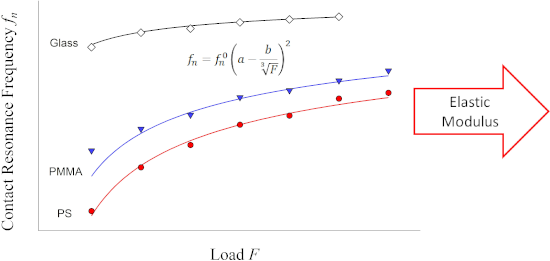
- measurements. In different series of measurements, the static force exerted on the sample by the tip has been varied. A sufficiently small excitation amplitude has been chosen for the frequency sweep, so that the vibration amplitude is always smaller than the static indentation of the sample and the tip always


Fabrication of nano/microstructures for SERS substrates using an electrochemical method
Beilstein J. Nanotechnol. 2020, 11, 1568–1576, doi:10.3762/bjnano.11.139
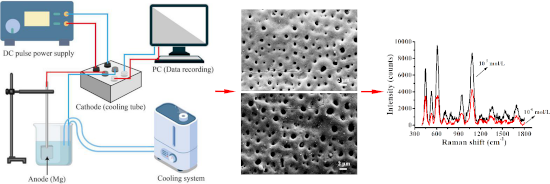
- treatment times of 2 and 5 min. A single-cavity structure can significantly enhance the Raman signal [48][49][50]. Chang et al. [48] fabricated cavities by using an indentation method and found that the Raman intensities of R6G were influenced by indentation depth and tip-to-tip displacement. In our
- previous studies [49][50], a cavity depth of 1.7 µm was generated using a normal force of 10 mN with the force modulation indentation method. However, nanocavities were formed by the overlap of adjacent cavities. The depth of the nanocavities reached ca. 200 nm as the machining feeds were reduced. In





