Search results
Search for "low temperature" in Full Text gives 390 result(s) in Beilstein Journal of Nanotechnology. Showing first 200.
Nanoglasses: a trail towards uncharted regions of vitreous materials and their properties?
Beilstein J. Nanotechnol. 2026, 17, 1047–1062, doi:10.3762/bjnano.17.72

- distinct courses of the specific heats of both states down to the low-temperature limit. For this reason, Figure 1 displays the free enthalpy minimum for the GGI as a dashed curve with a minimum at equal level as the ideal glass. In this sense, the Kauzmann temperature is taken here as a material-inherent


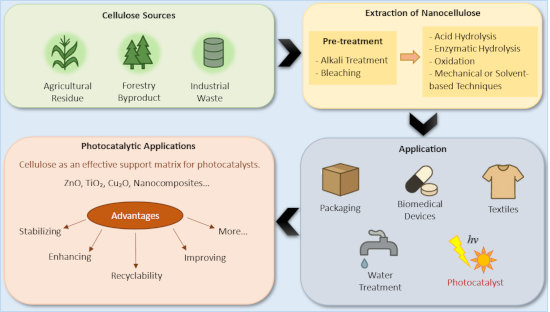
Cellulose as a photocatalyst support material: extraction, structural features, and environmental applications
Beilstein J. Nanotechnol. 2026, 17, 635–652, doi:10.3762/bjnano.17.44


Recent progress in enhancing built-in electric fields of perovskite solar cells via junction engineering
Beilstein J. Nanotechnol. 2026, 17, 602–621, doi:10.3762/bjnano.17.42
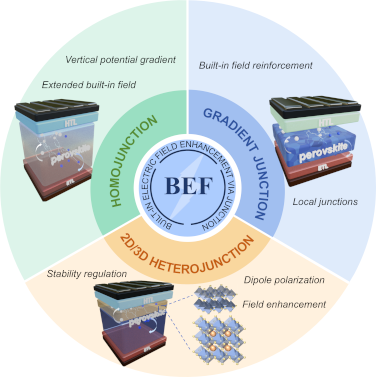
- stability and compatibility with low-temperature processing remains challenging [49][50]. Liu et al. [40] embedded SnI2 into the PEDOT:PSS bottom electrode and annealed the layer. During the deposition of FA0.7MA0.3Sn0.5Pb0.5I3, this treatment induced a vertical redistribution of Sn2+ and Pb2+, forming a
- , which promoted exciton dissociation and carrier transport. This method is compatible with low-temperature processing and maintains stability for over 1000 h. The device retained about 90% of its initial PCE after 1000 h in an unpackaged room-temperature environment with 25% humidity. The Sn/Pb gradient
- powder is deposited onto the surface of a 3D perovskite and then undergoes low-temperature solid-state diffusion. This method produces a solvent-free, compositionally uniform 3D/2D heterojunction interface. The process yields continuous 2D layers with tunable thicknesses (from 26.5 to 40.1 nm



Electrochemical determination of ciprofloxacin using a MIL-101/reduced graphene oxide-modified electrode
Beilstein J. Nanotechnol. 2026, 17, 541–554, doi:10.3762/bjnano.17.35
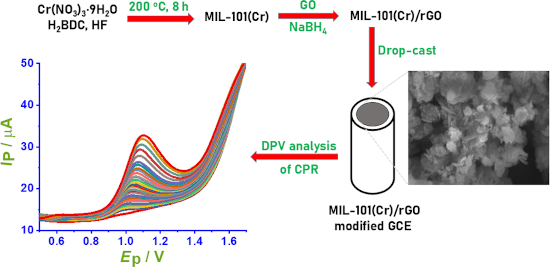
- sensor was evaluated using a single electrode stored in BR buffer at low temperature after use and tested over several days (Figure 9b). The peak current was recalled as ICPR = 4.25 ± 0.14 µA with an RSD of 3.33%. After ten days of storage, approximately 92% of the initial current response was retained


Fractional shot noise of an SU(N) Kondo system
Beilstein J. Nanotechnol. 2026, 17, 515–540, doi:10.3762/bjnano.17.34
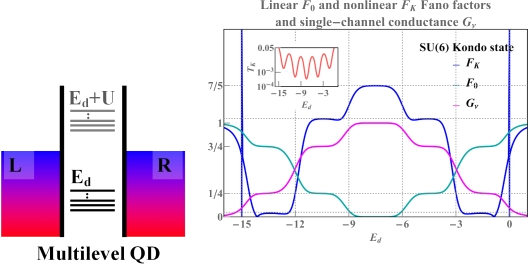
- Figure 6 below, we present (TK + T)χN. In the low-temperature limit, T → 0, it reaches the characteristic value: TKχN depends on the degree of degeneration N and the charge (via the phase shift of δν), where (TK + T)χN = . This measurable quantity provides information about the residual interaction of
- nanotube-based quantum dots (SU(4)) by Delattre et al. [62] confirm this result and prove that F0 calculated by SBMFA, describing shot noise of renormalized independent particles, accurately estimates the noise in the low-temperature, low-voltage regime. The earlier calculations of partition noise for SU(4


![[Graphic 127]](/bjnano/content/inline/2190-4286-17-34-i187.svg?max-width=637&scale=1.18182)

Upcycling agroindustrial waste into graphene oxide supports for gold nanoparticles: toward sustainable nanomaterials
Beilstein J. Nanotechnol. 2026, 17, 489–504, doi:10.3762/bjnano.17.32
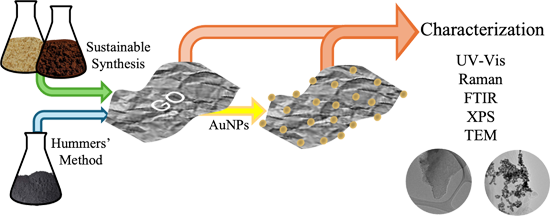
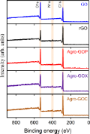
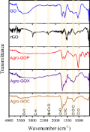
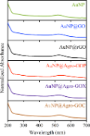
- alternatives based on low-temperature and rapid pyrolysis of biowaste have been proposed [20]. Previous studies have shown that organometallic catalysts can lower the energetic barrier for carbon domain formation, enabling carbonization at temperatures significantly below those required for conventional
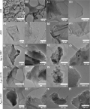
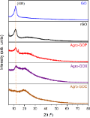
- biomass pyrolysis [21][22]. For instance, Tohamy et al. and Hashmi et al. successfully obtained GO from agroindustrial waste using ferrocene as a catalyst [23][24]. Here, peanut shells and spent coffee grounds were used to produce GO from agroindustrial waste (Agro-GO) via low-temperature, rapid pyrolysis
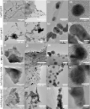
- dynamics of AuNPs [34][35]. This study compares GO produced by the modified Hummers' method and its reduced form (rGO) with Agro-GO derived from fast, low-temperature pyrolysis of agroindustrial residues (peanut shells and spent coffee grounds), examining how the carbon source affects the type and content



Defects and defect-mediated engineering of two-dimensional materials: challenges and open questions
Beilstein J. Nanotechnol. 2026, 17, 454–488, doi:10.3762/bjnano.17.31
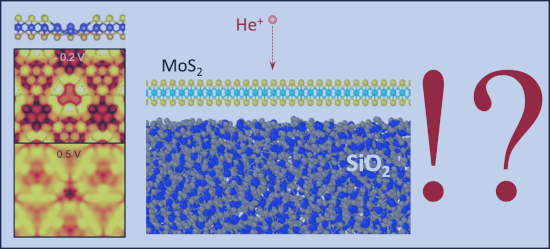
- MoSe2 on a gold substrate to the Janus MoSeS structure [77]. Also, a facile low-temperature thiol chemistry route was suggested to remove sulfur vacancies in 2D MoS2 [78], which resulted in a significant drop in the number of the charged impurities and traps and increased the mobility. Qualitatively





Fast vortex dynamics and relaxation times in NbRe-based heterostructures
Beilstein J. Nanotechnol. 2026, 17, 292–302, doi:10.3762/bjnano.17.20
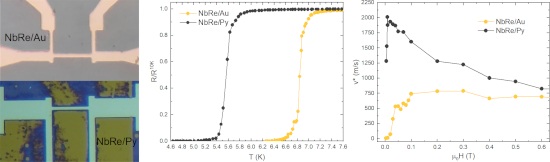
- the normal layer with vF the Fermi velocity and l the electron mean free path. For typical Fermi velocities [36] and low-temperature mean free paths measured in normal metals, ξN lies in the range of tens to hundreds of nanometers. According to Belzig et al. [37], the superconducting correlation in N
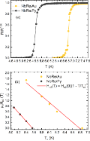
- proximity to a ferromagnetic layer leads to a stronger suppression of superconductivity than in S/N bilayers. From R10K, the low-temperature resistivities of the two strips have been calculated, yielding = 52 μΩ·cm and = 124 μΩ·cm. The significant difference in resistivity observed between the two
- bilayers cannot be ascribed to the different thicknesses of the NbRe layers since NbRe films of the same thickness exhibit nearly identical superconducting critical temperatures (around 7 K, ΔTc ≈ 0.1 K) and low-temperature resistivities, of the order of ρ = 140 μΩ·cm [19]. In contrast, the capping layers


Gold nanoparticle-decorated reduced graphene oxide as a highly effective catalyst for the selective α,β-dehydrogenation of N-alkyl-4-piperidones
Beilstein J. Nanotechnol. 2026, 17, 218–238, doi:10.3762/bjnano.17.15
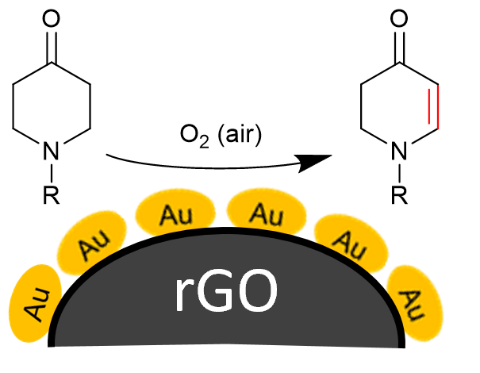
- -supported gold nanoparticles (Au/C) have been extensively studied for their remarkable selective catalytic performance in low-temperature oxidation reactions, including CO oxidation, alcohol oxidation, hydrocarbon oxidation, amino and thiol oxidation, and glucose oxidation [20]. However, despite their


Reduced graphene oxide paper electrode for lithium-ion cells – towards optimized thermal reduction
Beilstein J. Nanotechnol. 2026, 17, 24–37, doi:10.3762/bjnano.17.3
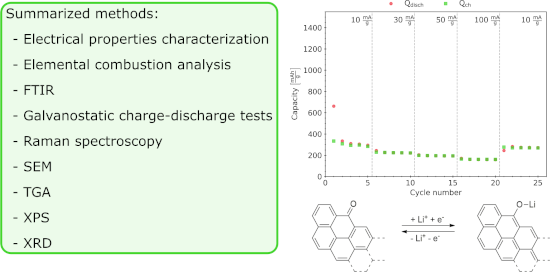
- revealed local maxima at 45, 548, 648, 714, 726, and 735 °C. The low-temperature weight loss contribution results from moisture removal. Since the initial material was previously mildly reduced at temperatures up to 300 °C, the weight loss in this range is moderate. The highest rates of reduction at 548 °C



Geometry-controlled engineering of the low-temperature proximity effect in normal metal–superconductor junctions
Beilstein J. Nanotechnol. 2025, 16, 2265–2273, doi:10.3762/bjnano.16.155


Microplastic pollution in Himalayan lakes: assessment, risks, and sustainable remediation strategies
Beilstein J. Nanotechnol. 2025, 16, 2144–2167, doi:10.3762/bjnano.16.148
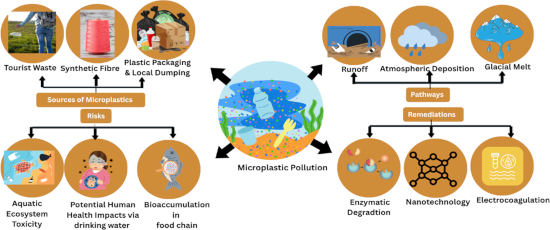
- alpine ecosystems [46]. Tiwari et al. found that psychrophilic lipases and esterases found in marine environments degrade MPs in low-temperature experiments, lending credibility to their use in Himalayan habitats [42]. The ecological significance of cryophilic fungal species has been highlighted by
- the most prevalent mechanisms in nanomaterials to eliminate MPs, where metal oxides and carbon materials are particularly effective. Surface modification and environmental factors are crucial in controlling removal. 6.3 Tailoring nanomaterials for low-temperature, high-UV environments The Himalayan
- climates represent a promising direction for future trials. 7 Ecotoxicological impact and risk assessment MP pollution of high-altitude ecosystems is a new issue with significant ecological and health effects. Because of low temperature, high levels of UV irradiation, and slow biodegradation rates, MPs


Calibration of piezo actuators and systems by dynamic interferometry
Beilstein J. Nanotechnol. 2025, 16, 2086–2091, doi:10.3762/bjnano.16.143
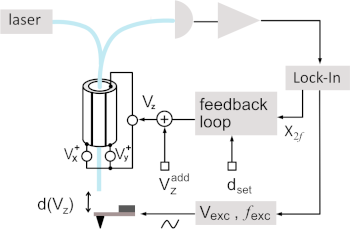
- microscopy (NC-AFM) operation in an ultrahigh-vacuum (UHV) environment at low temperature and has been developed tremendously over the last three decades [7][8][9][10][11][12]. In frequency-modulated NC-AFM, the cantilever is kept at oscillation with constant amplitude, yielding an interferometric signal


Stereodiscrimination of guests in chiral organosilica aerogels studied by ESR spectroscopy
Beilstein J. Nanotechnol. 2025, 16, 2034–2054, doi:10.3762/bjnano.16.140
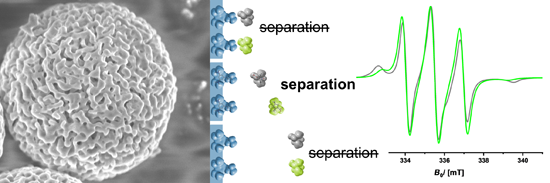
- spin probe covalently linked to the surface of the aerogels. Figure 13a shows ESR spectra of TEMPONHxSIL with x increasing from 0.01 to 0.15, recorded at 103 K. Because of the attachment to the surface and due to the low temperature, the spectra are characteristic for a slow tumbling dynamics and the




Low-temperature AFM with a microwave cavity optomechanical transducer
Beilstein J. Nanotechnol. 2025, 16, 1873–1882, doi:10.3762/bjnano.16.130
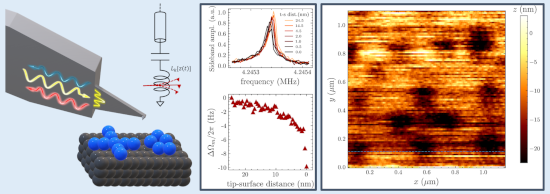
- force-sensor design is a significant improvement over piezoelectric force sensors commonly used in low-temperature AFM. We discuss the potential for further improvement of the sensor design to achieve optimal detection at the standard quantum limit. We demonstrate AFM operation with surface-tracking
- improving low-temperature AFM. AFM sensor and detection principle The advantages of cavity optomechanical detection for AFM sensors were already showcased by Liu et al. [8], who implemented a whispering gallery mode toroidal optical cavity coupled through its evanescent field to a doubly clamped beam with a
- = −Ωm, and the mechanical mode is measured on resonance Ω = Ωm where , detector noise is minimized when , where If the mechanical oscillator is cooled to a very low temperature, so that it is in its quantum ground state, a measurement at gives , the so-called standard quantum limit (SQL). In an actual


Further insights into the thermodynamics of linear carbon chains for temperatures ranging from 13 to 300 K
Beilstein J. Nanotechnol. 2025, 16, 1818–1825, doi:10.3762/bjnano.16.125
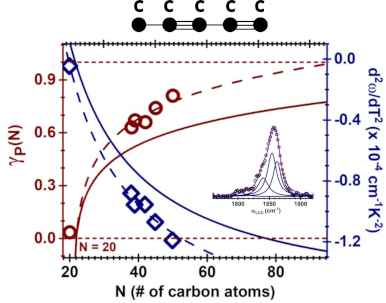
- therefore, the extra data we bring in this paper provides a better low-temperature convergent behavior of ωLCC(N,T) and a better estimate for both and , when compared with reference [30]. Since γP depends on ΔωLCC(T), it is important to remind that, although the Debye model is understood to be valid even


![[Graphic 23]](/bjnano/content/inline/2190-4286-16-125-i25.svg?max-width=637&scale=1.18182)
Photocatalytic degradation of ofloxacin in water assisted by TiO2 nanowires on carbon cloth: contributions of H2O2 addition and substrate absorbability
Beilstein J. Nanotechnol. 2025, 16, 1567–1579, doi:10.3762/bjnano.16.111
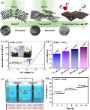
- Ultura DLD system (Kratos, UK), and the binding energies were calibrated to C 1s = 284.8 eV. The specific surface area and pore size were analyzed using low-temperature N2 adsorption–desorption measurements conducted with an ASAP 2460 (USA). The absorption spectrum of the sample was acquired through UV
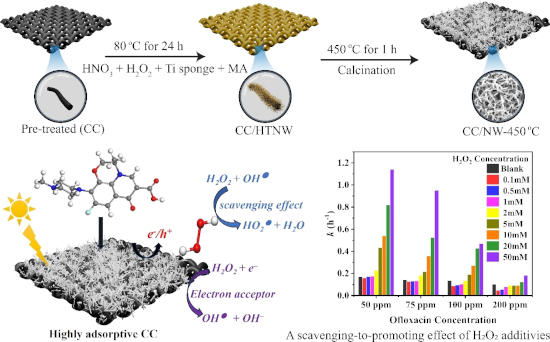
- . (b) Low-temperature nitrogen adsorption–desorption isotherm of CC/NW-450 °C. The inset shows the corresponding pore size distribution curve. XPS spectra of CC/NW-450 °C and CC/HTNW. (a) Survey spectra and detailed XPS spectra of (b) C 1s, (c) O 1s, and (d) Ti 2p. (a) Photocatalytic degradation of


Laser processing in liquids: insights into nanocolloid generation and thin film integration for energy, photonic, and sensing applications
Beilstein J. Nanotechnol. 2025, 16, 1428–1498, doi:10.3762/bjnano.16.104
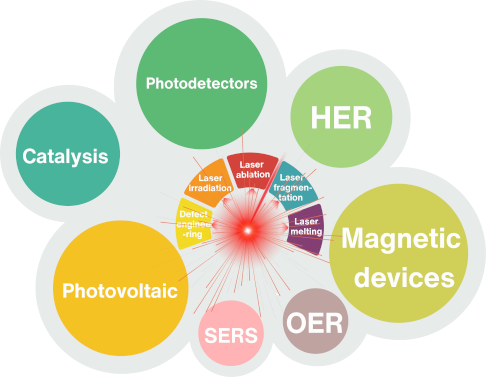
- , and HER/OER devices. These films exhibit unique morphologies and properties due to the controlled nanoparticle size and dispersion. Additionally, these nanocolloids enable facile, low-temperature, single-step film fabrication under standard laboratory conditions, making it an efficient and versatile
- volume [113]. A pellet of copper metal was utilized as a target for the production of CuO NPs in deionized water and the CuO NPs were then dropped on 3–5 Ω·cm p-type silicon substrate employing drop casting at low temperature to study its photodiode properties with a layer thickness of 400 nm. Packed






Automated collection and categorisation of STM images and STS spectra with and without machine learning
Beilstein J. Nanotechnol. 2025, 16, 1367–1379, doi:10.3762/bjnano.16.99
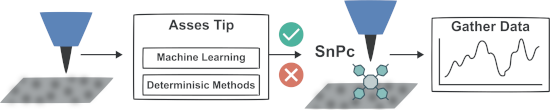
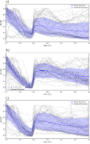
- number of STS measurements can be obtained over various molecules automatically with optimised tips and the quality of the spectra and image assessed automatically. Methods Experimental details We used a third-generation commercial low-temperature (LT) STM NC-AFM instrument (Scienta Omicron GmbH), which




Tendency in tip polarity changes in non-contact atomic force microscopy imaging on a fluorite surface
Beilstein J. Nanotechnol. 2025, 16, 944–950, doi:10.3762/bjnano.16.72
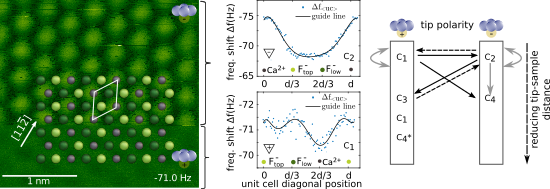
- stable configuration. Unlike in the RT data, where we observe both polarity-preserving and polarity-changing tip changes, at low temperature, so far no polarity-preserving tip changes were observed. This is a plausible result as tip stability is generally considered a merit of LT measurements. However
- , conclusions drawn from LT data are based on a much smaller number of measurements than those for RT data, and we anticipate that polarity-preserving tip changes at low temperature would be found as rare events in a sample of measurements with higher statistical significance. Conclusion In conclusion, we
- foremost tip atom may rearrange to minimize the tip surface energy in response to increasing tip–sample interaction forces. Here, we perform an experimental investigation of tip changes during NC-AFM imaging of a CaF2(111) surface with non-functionalized tips at both room temperature (RT) and low


Focused ion beam-induced platinum deposition with a low-temperature cesium ion source
Beilstein J. Nanotechnol. 2025, 16, 910–920, doi:10.3762/bjnano.16.69
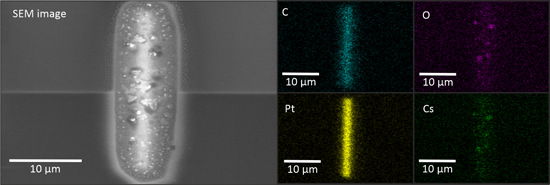
- surface is a frequently used process of focused ion beam (FIB) systems. Here, we report on the deposition of platinum (Pt) with a new kind of cesium (Cs) FIB, in which the cesium ions are produced by a low-temperature ion source. Platinum was deposited at different acceleration voltages and ion beam


Synchrotron X-ray photoelectron spectroscopy study of sodium adsorption on vertically arranged MoS2 layers coated with pyrolytic carbon
Beilstein J. Nanotechnol. 2025, 16, 847–859, doi:10.3762/bjnano.16.64
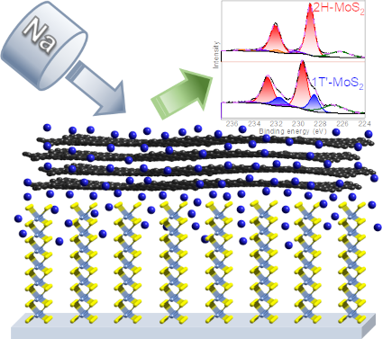
- /Si substrates in a two-zone quartz reactor. The substrate was placed in the high-temperature zone and annealed there at 423 K for 30 min in an argon flow of 250 sccm. Then, this zone was heated to 873 K. 200 mg of sulfur powder (99.9% purity) were placed in a quartz crucible in the low-temperature


Synthesis and magnetic transitions of rare-earth-free Fe–Mn–Ni–Si-based compositionally complex alloys at bulk and nanoscale
Beilstein J. Nanotechnol. 2025, 16, 823–836, doi:10.3762/bjnano.16.62
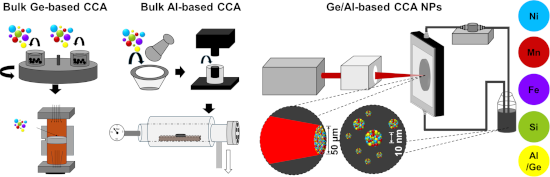
- metal and X can be Si, Ge or Al) have gained attention because of their magneto-structural phase transition at low temperatures. As ternary alloys, these materials undergo a magnetic and structural transition from a low-temperature orthorhombic TiNiSi-type structure to a high-temperature hexagonal Ni2In
- the Al-based CCA is more gradual, possibly because of different multiple phases and microstructures. However, the low-temperature magnetization of the Al-based CCA (≈1 A·m2·kg−1) is much lower than that of the Ge-based CCA (≈5 A·m2·kg−1), indicating that antiferromagnetic correlations may become
- to enhanced surface anisotropy effects that arise from the smaller particle size. However, Ms (300 K, 9 T) and Ms (5 K, 9 T) of the Al-based CCA NPs are comparable, while a lower Hc is exhibited at low temperature (5 K) compared to Ge-based CCA NPs (Table 4). This decrease in Hc can be attributed to


Changes of structural, magnetic and spectroscopic properties of microencapsulated iron sucrose nanoparticles in saline
Beilstein J. Nanotechnol. 2025, 16, 762–784, doi:10.3762/bjnano.16.59
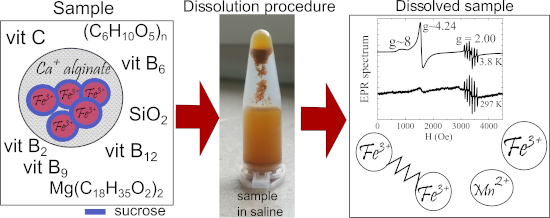
- AC) performed on the undissolved sample revealed the presence of a low temperature blocking process (
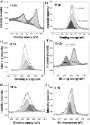
≈ 10 K), and confirmed its superparamagnetic state between 70– 250 K. X-ray photoelectron spectroscopy and Raman studies showed a varied composition of the undissolved sample in which organic
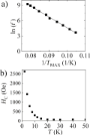
- magnetization of the curves slightly increases, then a low temperature maximum, at TMAX ≈ 10 K, appears in the ZFC curve, while the magnetization value of the FC curve begins to more rapidly increase. The observed maximum in the ZFC relation is sharp, and this is the only singularity visible in this curve in
- the microcapsule as a magnetic system, it is expected that the sucrose shell will prevent or significantly diminish interactions between nanoparticles, also probably modifies the surface state of the core. To understand the low-temperature magnetic state of the FS0 sample, the zero field cooled





Quantification of lead through rod-shaped silver-doped zinc oxide nanoparticles using an electrochemical approach
Beilstein J. Nanotechnol. 2025, 16, 422–434, doi:10.3762/bjnano.16.33
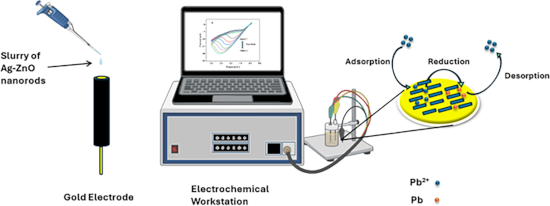
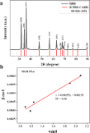
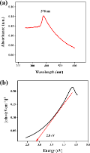
- they were fabricated using a low-temperature co-precipitation method. The resulting Ag@ZnO NRs had good optical properties, nanorod morphologies, and high crystallinity with no impurities. Technological advancements are leading people to use lightweight electronics and affordable sensors
- experiments. Conclusion In conclusion, a low-temperature co-precipitation technique was utilized to yield highly crystalline nanorods of ZnO doped with Ag. A variety of techniques were employed to analyze the physical and chemical characteristics of as-synthesized Ag@ZnO NRs. The results demonstrate that the