Search results
Search for "mathematical model" in Full Text gives 46 result(s) in Beilstein Journal of Nanotechnology.
Superconducting artificial neural networks and quantum circuits
Beilstein J. Nanotechnol. 2026, 17, 744–747, doi:10.3762/bjnano.17.51

- is a time-consuming process. To reduce the number of costly technological iterations, modelling of technological processes is essential for predicting the properties of prepared layers and multilayers. Smart computational experiments based on a mathematical model describing coordinated atomic motion
Capabilities of the 3D-MLSI software tool in superconducting neuron design
Beilstein J. Nanotechnol. 2026, 17, 122–138, doi:10.3762/bjnano.17.8

- primary subject of this article is the detailed verification of 3D-MLSI software tool. The main task of this inductance extractor is an evaluation of two-terminal partial inductances [48] associated with equivalent scheme ones. The general mathematical model for all superconductor inductance calculations



Venom-loaded cationic-functionalized poly(lactic acid) nanoparticles for serum production against Tityus serrulatus scorpion
Beilstein J. Nanotechnol. 2025, 16, 1633–1643, doi:10.3762/bjnano.16.115
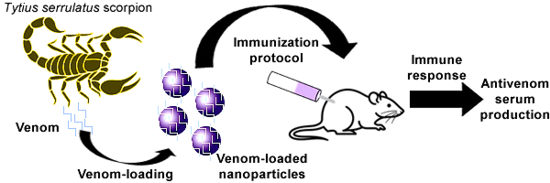
- parabolic diffusion model. This mathematical model suggests that the release mechanism of venom-loaded PLA nanoparticles was controlled by diffusion dependent on the protein-loading level [18]. These results corroborate with previous studies that used nanoparticles for venom protein delivery [42][43


Modeling magnetic properties of cobalt nanofilms used as a component of spin hybrid superconductor–ferromagnetic structures
Beilstein J. Nanotechnol. 2025, 16, 1557–1566, doi:10.3762/bjnano.16.110
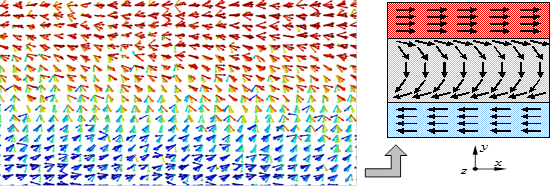
- ., Dolgoprudny, 141701, Russia 10.3762/bjnano.16.110 Abstract The paper presents a mathematical model for studying the magnetic behavior of atoms, which takes into account spin and interatomic interactions. Two problems were solved by means of mathematical modeling. At the first stage, the problem of modeling a
- previously obtained data confirmed the adequacy of the applied mathematical model. The second stage of numerical studies was devoted to the analysis of the magnetic behavior of cobalt nanofilms of different thicknesses. It was shown that the film thickness has a significant influence on the magnetic
- Josephson contacts [13]. These nanomaterials are widely used [17][18][19] in the creation of individual qubits and quantum computers in general, superconducting microcircuits and interferometers, single photon detectors [20] and other devices of quantum electronics and spintronics. Mathematical Model for


Laser processing in liquids: insights into nanocolloid generation and thin film integration for energy, photonic, and sensing applications
Beilstein J. Nanotechnol. 2025, 16, 1428–1498, doi:10.3762/bjnano.16.104
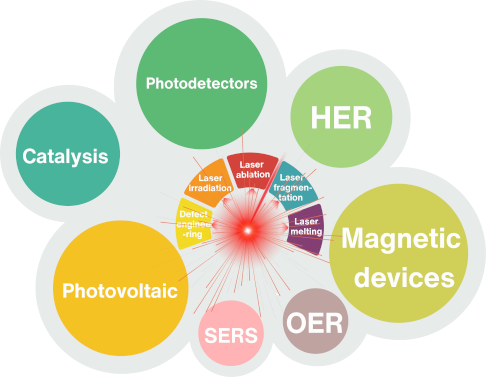
- thicknesses ranging from micrometers to nanometers. A mathematical model was derived to explain the dominant mechanisms in film formation, considering factors such as evaporation and shear stress, and extending the analysis to non-Newtonian fluids [102]. Despite its widespread use, the process faces






Towards a quantitative theory for transmission X-ray microscopy
Beilstein J. Nanotechnol. 2025, 16, 1113–1128, doi:10.3762/bjnano.16.82
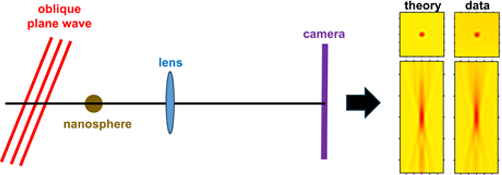
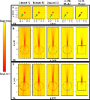
- determined by Beer’s law, whereas the microscope underestimates this absorption by 10–20%. This surprising observation highlights the need for future work to identify the microscope feature(s) that lead to this quantitative discrepancy. Keywords: 3D imaging; mathematical model; Mie theory; nanoparticle



Modeling and simulation of carbon-nanocomposite-based gas sensors
Beilstein J. Nanotechnol. 2025, 16, 90–96, doi:10.3762/bjnano.16.9
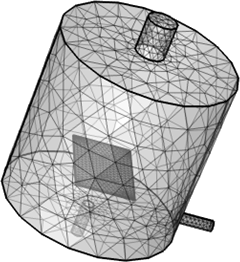
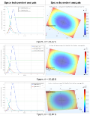
- development of these sensors, it becomes imperative to establish a mathematical model for economically predicting their behavior. The simulation using COMSOL Multiphysics is performed to obtain the surface coverage of the sensor by introducing carbon monoxide gas through a Gaussian pulse feed inlet at



AI-assisted models to predict chemotherapy drugs modified with C60 fullerene derivatives
Beilstein J. Nanotechnol. 2024, 15, 1170–1188, doi:10.3762/bjnano.15.95
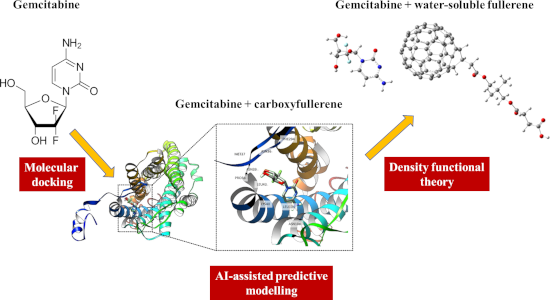
- models, another approach was used as detailed below [50]. Multiple linear regression (MLR) could be a tool to solve the problem in a complementary way to Extra Trees regression. MLR is a mathematical model that can be seen as an extension of linear regression. In terms of n input variables, x1, x2,…, xn


Dual-heterodyne Kelvin probe force microscopy
Beilstein J. Nanotechnol. 2023, 14, 1068–1084, doi:10.3762/bjnano.14.88
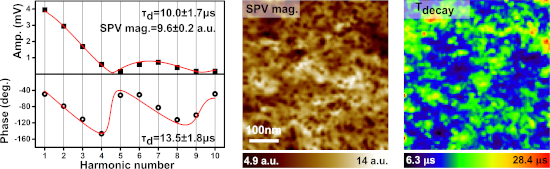
- dynamics in the mathematical model used to describe the SPV dynamics. A first approach consists in checking what the dynamics of the SPV are from the perspective of another technique. To that end, we performed a series of complementary spectroscopic measurements (single data points at selected locations on




Biomimetics on the micro- and nanoscale – The 25th anniversary of the lotus effect
Beilstein J. Nanotechnol. 2023, 14, 850–856, doi:10.3762/bjnano.14.69
- nanofibres do not stick. The authors use the geometry of the spider system to develop an elegant mathematical model of the interaction between the fibres and the surface. They then test their predictions using a structured metal mimic of the spider legs. They find that for some metals, in which they were


Suspension feeding in Copepoda (Crustacea) – a numerical model of setae acting in concert
Beilstein J. Nanotechnol. 2023, 14, 603–615, doi:10.3762/bjnano.14.50
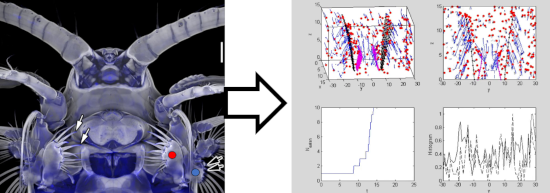
- mechanical properties of the setae were previously documented by CLSM [55][56][57]. The short setae on maxilla 2 possess soft tips and soft bases, and the long setae on maxilla 1 possess only soft bases (Figure 1). Mathematical model For the simulations, we employed MatLab R2022a (The MathWorks, Inc., Natick


The influence of structure and local structural defects on the magnetic properties of cobalt nanofilms
Beilstein J. Nanotechnol. 2023, 14, 23–33, doi:10.3762/bjnano.14.3
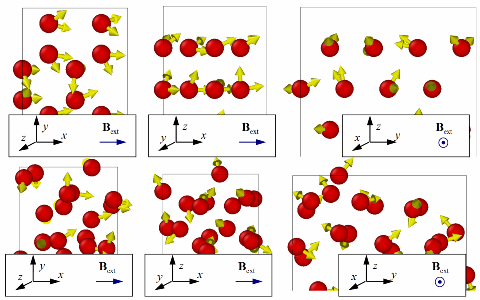
- , Academiei 3/3, Chisinau 2028, Moldova 10.3762/bjnano.14.3 Abstract The present paper considers a mathematical model describing the time evolution of spin states and magnetic properties of a nanomaterial. We present the results of two variants of nanosystem simulations. In the first variant, cobalt with a
- the influence of structure on the materials magnetic properties is not new and has been previously solved by other authors [4][32][33][34]. For example, in [4], to describe the thermodynamic equilibrium and nonequilibrium properties of magnetic materials, a multiscale approach of a mathematical model
- nanomaterial arising from its production are important tasks, often closely related to the composition of the sample in question. In this paper, we propose one mathematical model to investigate the relationship between the material structure and its magnetic properties. Mathematical modeling is used to


Sputtering onto liquids: a critical review
Beilstein J. Nanotechnol. 2022, 13, 10–53, doi:10.3762/bjnano.13.2

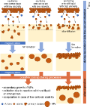
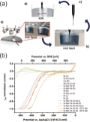
- monodisperse particles and provided a mathematical model for fitting the kinetic curves [89]. As a result, it was applied to any colloidal system, including colloidal dispersions of metal NPs, and finally was considered as “overcited” [90]. In reality, this mechanism describes very well the formation of sulfur






Reducing molecular simulation time for AFM images based on super-resolution methods
Beilstein J. Nanotechnol. 2021, 12, 775–785, doi:10.3762/bjnano.12.61
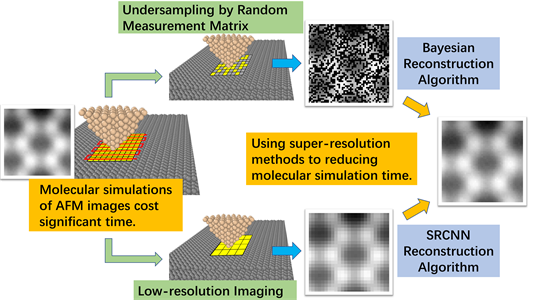
- raster scan path. Mathematical model of compressed-sensing AFM imaging. The image obtained by AFM can be regarded as a two-dimensional matrix, and each pixel of the image is an element of the matrix. The imaging process can be regarded as collecting the element of the vector x, the Φ is the measurement




Physical constraints lead to parallel evolution of micro- and nanostructures of animal adhesive pads: a review
Beilstein J. Nanotechnol. 2021, 12, 725–743, doi:10.3762/bjnano.12.57
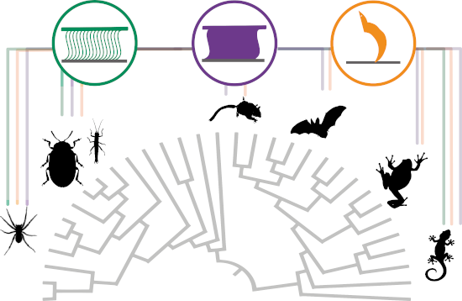
- in the AMS is high and different AMS types coexist in the same groups, the adaptation to the corresponding natural surfaces probably took place in a comparatively short period of time [163]. Using a mathematical model, the potential of self-assembly of the structures observed in the AMS of phasmids
- on insects as well to investigate evolutionary scenarios (e.g., the patterns of nanocoatings on the corneae of different lineages [228]). Employing this mathematical model to access self-formation and transformations of the euplantular AMS of phasmids yielded the prediction of stable patterns of


Molecular dynamics modeling of the influence forming process parameters on the structure and morphology of a superconducting spin valve
Beilstein J. Nanotechnol. 2020, 11, 1776–1788, doi:10.3762/bjnano.11.160
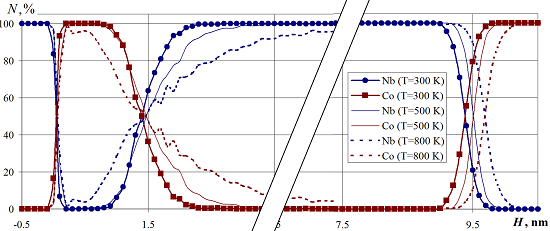
- technological parameters (substrate temperature, concentration and spatial distribution of the deposited atoms over the interface) on the structure and morphology of the layered nanosystem. Mathematical Model and Theoretical Foundations The formation processes and the structure of multilayer systems for
- multilayer nanosystem composition and structure due to the increase in the thermal diffusion processes. Conclusion The paper proposes a technique and describes a mathematical model for studying technological modes and parameters in the manufacture of multilayer nanosystems. The model was tested in the study


A set of empirical equations describing the observed colours of metal–anodic aluminium oxide–Al nanostructures
Beilstein J. Nanotechnol. 2020, 11, 798–806, doi:10.3762/bjnano.11.64
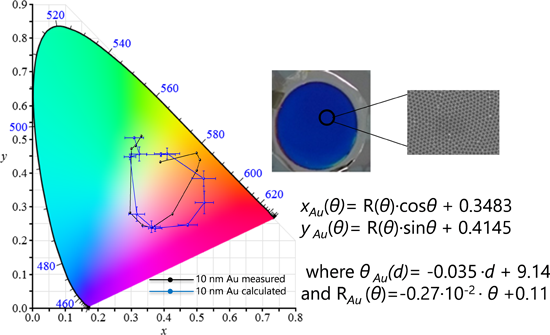
- thickness and porosity of the nanostructures was determined, which describes a gamut of colours. The proposed mathematical model can be applied in different fields, such as wavelength absorbers, RGB (red, green, blue) display devices, as well as chemical or optical sensors. Keywords: anodic aluminium oxide
- . The model proposed in this study was defined for two different metals, chromium and gold. The work reported in this manuscript provides a mathematical model to estimate the xy values in the CIE 1931 colour diagram by only measuring the thickness and porosity of the AAO films. Results and Discussion
- and y values from the reflectance measurements, the values of slope and R2 were 2.09 ± 0.31 and 0.47, respectively. These values corroborate that the mathematical model proposed in this study is more accurate that other equations found in literature, which use wavelengths and not tristimulus values


Stochastic excitation for high-resolution atomic force acoustic microscopy imaging: a system theory approach
Beilstein J. Nanotechnol. 2020, 11, 703–716, doi:10.3762/bjnano.11.58
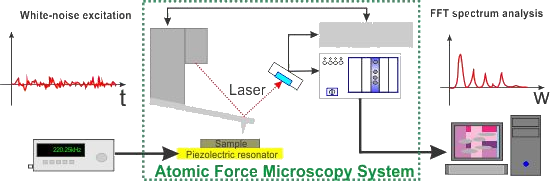
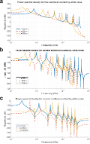
- ]. Here, a mathematical model that describes the resonance frequencies for a free cantilever and a cantilever at contact with the sample is calculated for stochastic perturbations of the tip–sample interaction. For this reason, the technique is referred to as stochastic atomic force acoustic microscopy (S
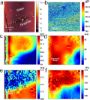
- measurement. At the end of the scanning, all the acquired FFT spectra yield a 128 × 128 pixels mapping in which the resolution for frequency shifts is about 153.8 Hz. Then, an offline process is carried out using a software routine in Matlab, which is based on a mathematical model that relates the contact
- is described with further details, including the acquisition data process and the AFM equipment. Then, in the section “Mathematical Model”, the mathematical background for the power spectral density is described for a free cantilever and a cantilever in contact with the sample when white-noise



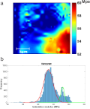
A novel method to remove impulse noise from atomic force microscopy images based on Bayesian compressed sensing
Beilstein J. Nanotechnol. 2019, 10, 2346–2356, doi:10.3762/bjnano.10.225
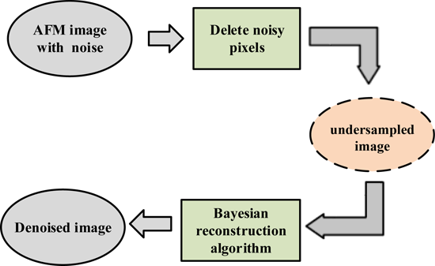
- different noise densities without worrying about the degradation of the final image quality. The proposed method is an effective, competitive and robust method to remove impulse noise from AFM images. The schematic of removing impulse noise from AFM images based on Bayesian compressed sensing. Mathematical
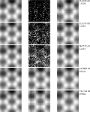
- model of compressed sensing AFM imaging. Comparison of denoising between the interval-BCS denoising, the median filter and the adaptive median filter. (a, f) Original images. (b, g) Images with added impulse noise with a density of 0.4. (c) Denoised image obtained by the median filter; the PSNR is 29.8


Effects of surface charge and boundary slip on time-periodic pressure-driven flow and electrokinetic energy conversion in a nanotube
Beilstein J. Nanotechnol. 2019, 10, 1628–1635, doi:10.3762/bjnano.10.158
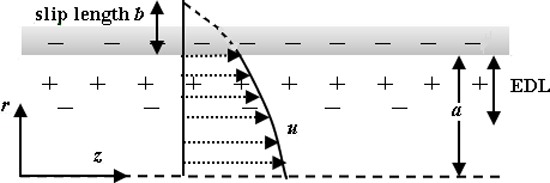
- attracting electrostatic force between the charged solid surface and the liquid near the charged solid surface. They also described the coupling relationship between the surface charge and the slip length by a mathematical model in 2006. Experiments [19][20][21] showed that the slip length decreases as the


Energy distribution in an ensemble of nanoparticles and its consequences
Beilstein J. Nanotechnol. 2019, 10, 1452–1457, doi:10.3762/bjnano.10.143
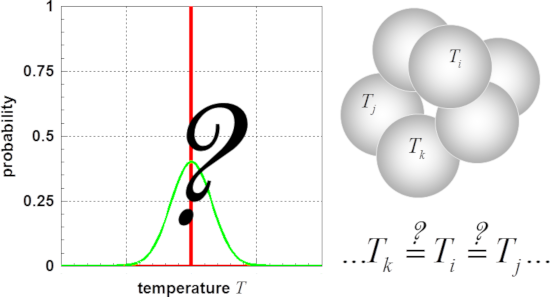
- particle size dependent, the determination of the particle size distribution is inherently possible from the experimentally found temperature dependence of a phase transformation. Results and Discussion Mathematical model Maxwell and Boltzmann assumed a normal distribution of the velocity for gas atoms


Mechanism of silica–lysozyme composite formation unravelled by in situ fast SAXS
Beilstein J. Nanotechnol. 2019, 10, 182–197, doi:10.3762/bjnano.10.17
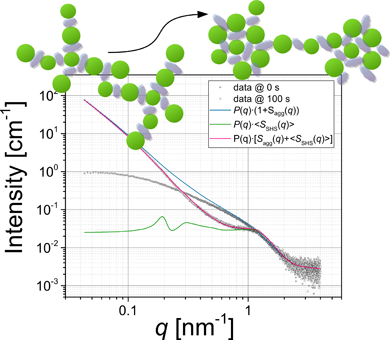
- presentation and a discussion of general trends; (2) derivation of a self-consistent mathematical model to fit the timer-resolved scattering curves; (3) presentation of the quantitative results from the model fits; (4) discussion of the quantitative trends. Evolution of SAXS patterns and derived aggregation



Scanning probe microscopy for energy-related materials
Beilstein J. Nanotechnol. 2019, 10, 132–134, doi:10.3762/bjnano.10.12
- dynamics in order to study charge carrier lifetimes. This contribution focuses on a mathematical model to calculate time constants [3]. Such a model is critical for understanding the photophysics at the nanometer scale. Amelie Axt and co-workers discuss the applicability and reliability of different ways
Numerical analysis of single-point spectroscopy curves used in photo-carrier dynamics measurements by Kelvin probe force microscopy under frequency-modulated excitation
Beilstein J. Nanotechnol. 2018, 9, 1834–1843, doi:10.3762/bjnano.9.175
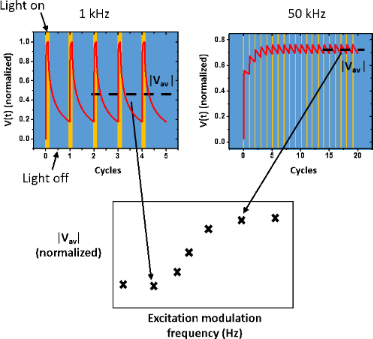
- given to the mathematical model used in the data-fitting process as it constitutes a determining aspect in the calculation of time constants. Here, we propose and demonstrate an automatic numerical simulation routine that enables to predict the behavior of spectroscopy curves of the average surface
- order to extract time constants associated to photo-physical processes, a mathematical fit procedure is usually implemented. It is evident that the mathematical model used in the fit procedure constitutes a determining aspect in the calculation of time constants. Hence, there is a need to define methods
- . Then, the average value of the last two pulses is calculated and stored in the form of a vector. At the end of the for loop, this vector is plotted yielding the spectroscopy curve VAV(f). Results and Discussion Using SPECTY we can now verify the validity of the mathematical model used in a previous


Study of the vertically aligned in-plane switching liquid crystal mode in microscale periodic electric fields
Beilstein J. Nanotechnol. 2018, 9, 11–19, doi:10.3762/bjnano.9.2
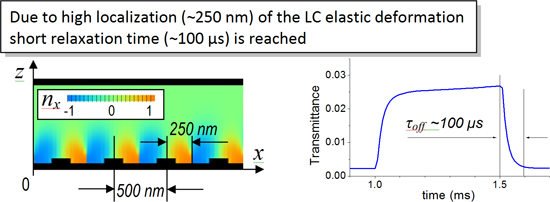
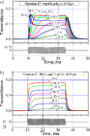
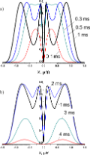
- account the inhomogeneous LC director distribution discussed above. The response results are quite similar to that observed experimentally (Figure 2a), which confirms our mathematical model. In Figure 8, a series of local transmittance distribution curves of an E7 LC cell is shown at different times after