Search results
Search for "nanowires" in Full Text gives 335 result(s) in Beilstein Journal of Nanotechnology. Showing first 200.
Supramolecular one-dimensional conducting nanofibers from a C3-symmetric tetrathiafulvalene derivative
Beilstein J. Nanotechnol. 2026, 17, 872–881, doi:10.3762/bjnano.17.63
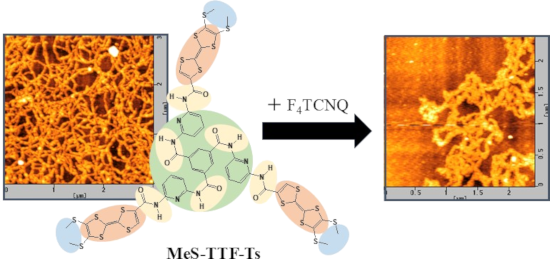
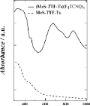
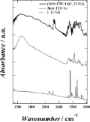
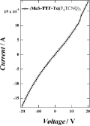
- have been reported to form highly ordered one-dimensional stacked structures through cooperative hydrogen bonding and π–π stacking interactions, leading to the formation of nanowires via self-assembly [15][16][17][18][19][20]. These assemblies can be partially oxidized through charge-transfer


Beam shaping techniques for pulsed laser ablation in liquids: Unlocking tunable control of nanoparticle synthesis in liquids
Beilstein J. Nanotechnol. 2026, 17, 309–342, doi:10.3762/bjnano.17.22







Advancing nanolithography: a comprehensive review of materials for local anodic oxidation with AFM
Beilstein J. Nanotechnol. 2026, 17, 275–291, doi:10.3762/bjnano.17.19
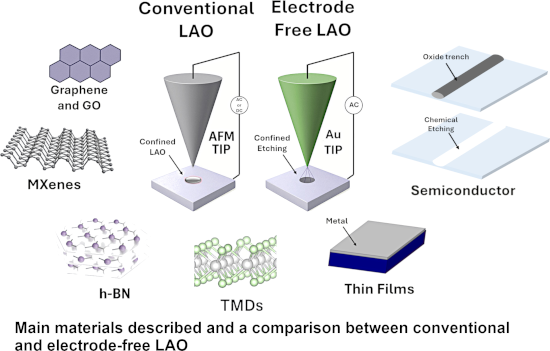
- , and most commercial AFM nowadays implement some interface enabling LAO lithography. Often, the oxide features are used as masks to amplify the pattern depth, as shown in Figure 1e, where silicon nanowires (SiNWs) are created by patterning a SOI wafer [42]. In Figure 2b,c, we show some outcome of LAO
- experiments have utilized non-commercial probes equipped with integrated piezoresistive read-out and thermomechanical actuation (active cantilevers). Despite these challenges, Behzadirad et al. demonstrated that using sharp gallium nitride nanowires (GaN NWs) as tips enables atomic-scale patterning [67] (<1
- ) based on silicon nanowires [42][70][71][72][73]. Usually, a narrow oxide mask is patterned on top of the active layer of a silicon-on-insulator (SOI) substrate; further etching removes the excess silicon, leaving a free-standing silicon nanowire matching the shape and size of the original oxide mask


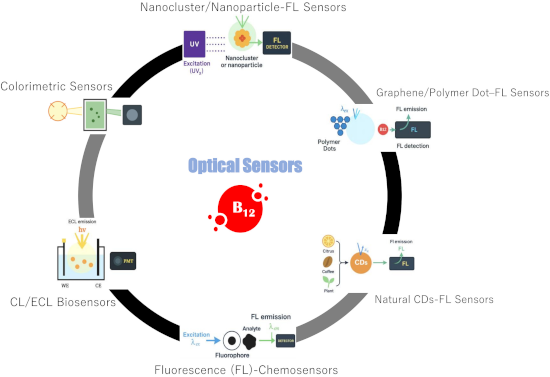
Optical bio/chemical sensors for vitamin B12 analysis in food and pharmaceuticals: state of the art, challenges, and future outlooks
Beilstein J. Nanotechnol. 2025, 16, 2207–2244, doi:10.3762/bjnano.16.153


Microplastic pollution in Himalayan lakes: assessment, risks, and sustainable remediation strategies
Beilstein J. Nanotechnol. 2025, 16, 2144–2167, doi:10.3762/bjnano.16.148
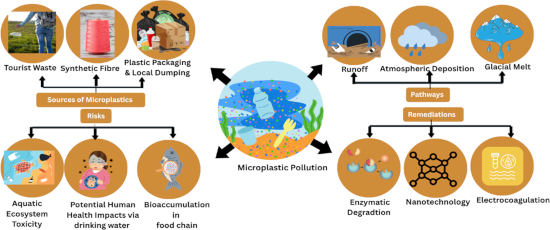
- ., these changes make TiO2 photocatalysts more effective in natural sunlight by letting more visible light pass through them [75]. ZnO has demonstrated potential as a result of its compatibility with UV light and high oxidative potential. Its nanostructured forms, such as nanorods and nanowires, provide


Laser ablation in liquids for shape-tailored synthesis of nanomaterials: status and challenges
Beilstein J. Nanotechnol. 2025, 16, 1963–1997, doi:10.3762/bjnano.16.137
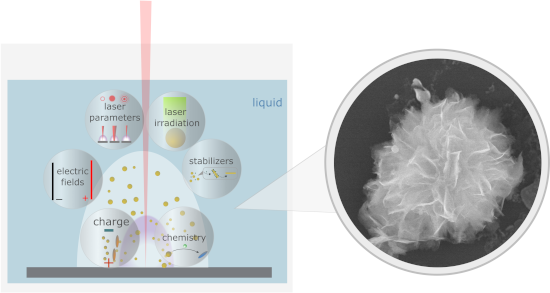
- as nanowires, rods, and nanofilaments is extremely demanded for the application in biolabeling and telecom-band laser sources. In conventional wet chemical methods, the controlled formation of nonspherical nanomaterials typically requires complex approaches and addition of chemicals that reduce the
- formation of iron oxide nanowires was reported only in case of ablation with a 248 nm laser of iron powder suspended in methanol, while other solvents (including water, ethanol, isopropanol, and glycol) resulted in only spherical NPs. Moreover, ablation using a 532 nm laser produced spherical NPs in all the
- . However, the additional 248 nm laser irradiation of the spherical NPs in methanol could transform NPs into nanowires. This underlines the importance of controlling chemical reactions during all stages of laser ablation and laser modification processes. Chemical interactions can become key parameters if




Photocatalytic degradation of ofloxacin in water assisted by TiO2 nanowires on carbon cloth: contributions of H2O2 addition and substrate absorbability
Beilstein J. Nanotechnol. 2025, 16, 1567–1579, doi:10.3762/bjnano.16.111
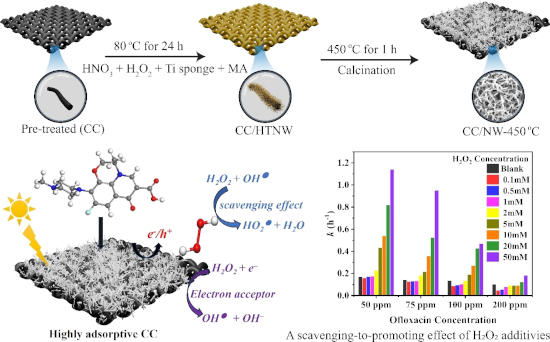
- Environmental and Optoelectronic Applications, Institute of Wenzhou, Zhejiang University, Wenzhou 325006, P. R. China 10.3762/bjnano.16.111 Abstract Vertically aligned TiO2 nanowires demonstrate exceptional photoactivity owing to their high specific surface area and improved charge separation; however, their
- turn, a superior photoactivity. Compared to TiO2 nanowire arrays grown on metallic Ti substrates, TiO2 nanowires supported on carbon cloth substrates demonstrate markedly superior efficiency in the photocatalytic degradation of ofloxacin (OFL) molecules in water when exposed to UV light. The TiO2
- nanowires remove 90–97% OFL in water with a high initial concentration of 50 ppm in 6 h under UV light irradiation for up to six cycles. The contributions of the hydrogen peroxide (H2O2) additive were also studied. An enhanced efficiency could be achieved only when the H2O2 in water reaches a critical


Influence of laser beam profile on morphology and optical properties of silicon nanoparticles formed by laser ablation in liquid
Beilstein J. Nanotechnol. 2025, 16, 1533–1544, doi:10.3762/bjnano.16.108
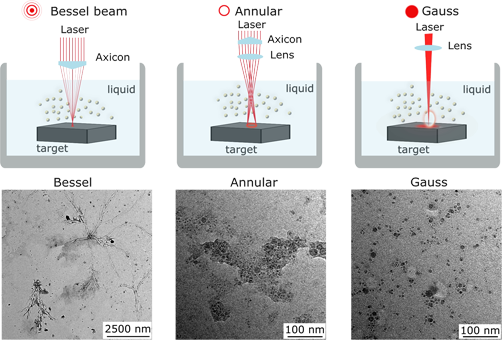
- become an emerging field of research [3][4][5][6][7]. The expanding application areas require silicon nanomaterials of different morphologies, including quantum dots, nanowires, and nanocrystalline films. Si nanowires, for example, are considered as a promising alternative to silicon electrodes in Li-ion
- batteries by providing a solution to the urgent problem of large volumetric expansion known for Si during lithiation process [3]. Due to the possibility of lateral expansion in Si nanowires, the cracking of the electrodes during lithiation is minimized. In addition, the one-dimensional structure of Si
- nanowires facilitates the electronic transport along the wire axis, while the transport of the ions occurs in the transverse direction, providing shorter diffusion distances. All these aspects underline the benefits of Si nanowires and the need to develop novel approaches for their formation. Despite


Laser processing in liquids: insights into nanocolloid generation and thin film integration for energy, photonic, and sensing applications
Beilstein J. Nanotechnol. 2025, 16, 1428–1498, doi:10.3762/bjnano.16.104


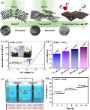


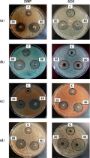


Parylene-coated platinum nanowire electrodes for biomolecular sensing applications
Beilstein J. Nanotechnol. 2025, 16, 1392–1400, doi:10.3762/bjnano.16.101
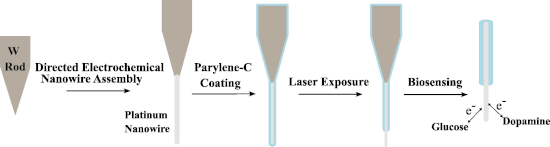
- introduced. Results show that the diameter of the platinum nanowire and electrode tip length can be tuned down to 120 nm and 1.2 µm, respectively, where the exposed nanowires on the electrode tips are chemically active and their surfaces can be modified for specific biosensing applications. The biosensing
- . developed a glucose sensor using copper nanowires and CNTs, achieving a limit of detection as low as 0.3 nM, highlighting the remarkable sensitivity of CNT-based electrodes [9]. Nevertheless, several studies reported the toxicity of CNTs for tissues and cells including loss of cellular integrity, DNA damage
- inappropriate for some applications [13][14][15]. Among various manufacturing techniques, directed electrochemical nanowire assembly (DENA) stands out as a one-step method that enables rapid and tunable fabrication of crystalline metal nanowires [16][17]. In the DENA method, AC power and a metal salt (e.g., Au


Electronic and optical properties of chloropicrin adsorbed ZnS nanotubes: first principle analysis
Beilstein J. Nanotechnol. 2025, 16, 1184–1196, doi:10.3762/bjnano.16.87
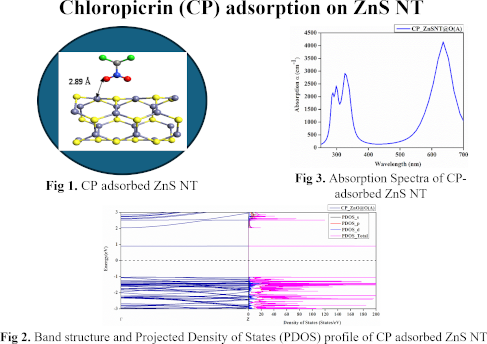
- their bulk counterparts [9][10][11][12][13][14]. Zinc sulfide (ZnS) attracts considerable attention among various nanomaterials due to its unique properties. Nanostructured ZnS with different morphologies, including nanotubes, nanowires, nanoparticles, and nanosheets has been extensively investigated


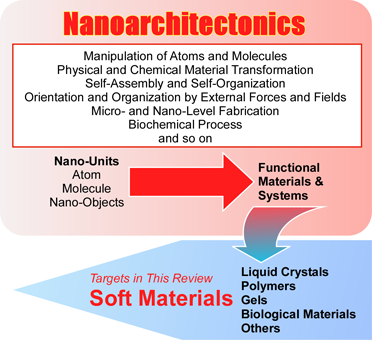
Soft materials nanoarchitectonics: liquid crystals, polymers, gels, biomaterials, and others
Beilstein J. Nanotechnol. 2025, 16, 1025–1067, doi:10.3762/bjnano.16.77
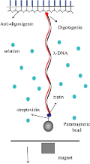
- self-organization at the molecular film level offers significant potential for a range of applications. The precise separation and alignment of π-conjugated discotic liquid crystal molecular nanowires represents an attractive area of research. Kumar, Nayak, and colleagues investigated an approach to
- control the structure of discotic liquid crystal molecular nanowires by manipulating the subphase temperature and surface pressure in a Langmuir monolayer system (Figure 2) [226]. The LB technique represents a powerful methodology that allows for effective control over the assembly of molecular-sized
- thicknesses. At low temperatures, the molecular nanowires coalesce, whereas, at high temperatures, the nanowires separate to form interconnected networks. The compression of the thin-film structure on the water surface resulted in the transformation of the network into a compact and highly uniform monolayer






Morphology and properties of pyrite nanoparticles obtained by pulsed laser ablation in liquid and thin films for photodetection
Beilstein J. Nanotechnol. 2025, 16, 785–805, doi:10.3762/bjnano.16.60
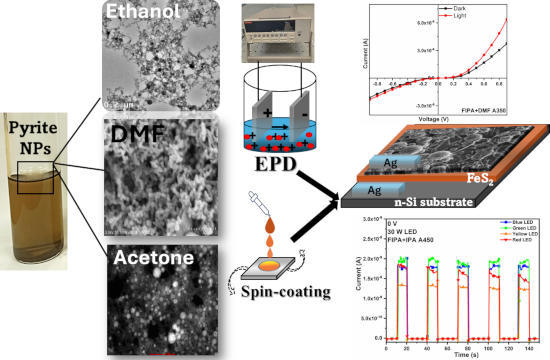
- techniques; hence, completely different morphologies are reported. Zebarjad et al. reported cauliflower-like blotches developed on the rough surface of nanostructured FeS2 films made via electrodeposition [57]. Nanowires, nanorods, and nanoribbons of 1D single crystalline FeS2 nanostructures with pyrite


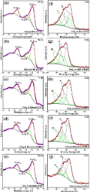


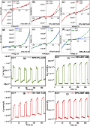


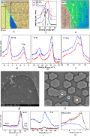
Nanostructured materials characterized by scanning photoelectron spectromicroscopy
Beilstein J. Nanotechnol. 2025, 16, 700–710, doi:10.3762/bjnano.16.54
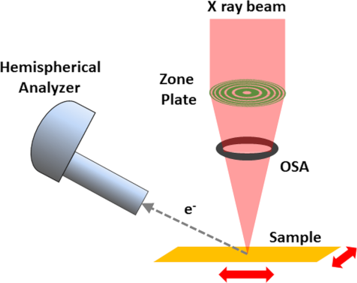
- ; operando; oxides; scanning photoelectron spectromicroscopy; semiconductor nanowires; transition metal dichalcogenides; XPS; Introduction Nanometer or micrometer-sized materials play a key role in modern technologies in the search of new routes for unforeseen performances generating breakthroughs in
- 1i–k). Operando characterization of InP nanowire p–n junctions Semiconductor nanowires offer unprecedented possibilities in utilizing, combining, and modifying material properties for application in electronic, photonic, energy harvesting, or quantum information devices [15][16]. Their small
- expensive III–V materials to the active device area. The flexible geometry of nanowires standing upright on their growth substrate directly leads to gate-all-around metal-oxide-semiconductor stacks [23][24], and advanced electronic device designs such as nanowire tunneling field-effect transistors [24] or


Ion-induced surface reactions and deposition from Pt(CO)2Cl2 and Pt(CO)2Br2
Beilstein J. Nanotechnol. 2024, 15, 1427–1439, doi:10.3762/bjnano.15.115

- greater purity such as the FEBID fabrication of Co3Fe nanowires [15][26][27]. Similarly, the frequently studied Pt precursor MeCpPtMe3 yields a deposit with nearly 100% Pt content from CVD [28][29]. This purity is achieved by utilizing reactive carrier gases, such as H2 and O2, as co-reactants during


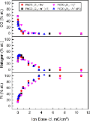

New design of operational MEMS bridges for measurements of properties of FEBID-based nanostructures
Beilstein J. Nanotechnol. 2024, 15, 1273–1282, doi:10.3762/bjnano.15.103
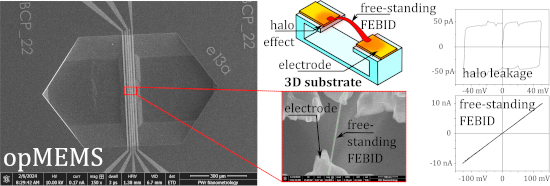
- nanostructure. Keywords: FEBID; MEMS; MEMS bridge; nanowires; opMEMS; Introduction Nanoelectronics is the fastest developing branch of modern electronic technology. Reduced dimensions allow for lower power consumption of the circuit and higher operating speeds [1][2]. Even more advantages (e.g., developed
- of the nanostructures into larger devices remains one of the major challenges, especially when non-silicon materials (such as carbon nanotubes or multimaterial nanowires) are used [8][9][10]. Among the fabrication methods, particle beam-based methods offer the greatest versatility for rapid
- effect using operational microelectromechanical systems” (Grant No. 2020/37/B/ST7/03792) and PRELUDIUM-21 grant “Nanometrology of field emission phenomena from electron beam deposited nanowires operating as nano- and picodeflection sensors – FEmet” (Grant No. 2022/45/N/ST7/03049) with help from the


Photocatalytic methane oxidation over a TiO2/SiNWs p–n junction catalyst at room temperature
Beilstein J. Nanotechnol. 2024, 15, 1132–1141, doi:10.3762/bjnano.15.92
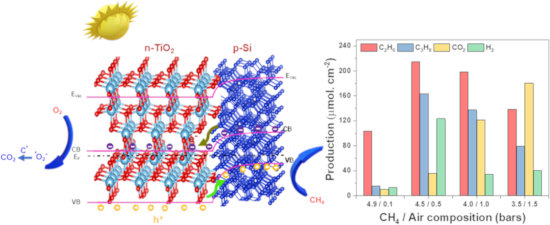
- recombination of charge carriers in semiconductors is a main drawback for photocatalytic oxidative coupling of methane (OCM) reactions. Herein, we propose a novel catalyst by developing a p–n junction titania–silicon nanowires (TiO2/SiNWs) heterostructure. The structure is fabricated by atomic layer deposition
- morphology of SiNWs is characterized by individual nanowires that bunch together in a highly ordered manner, resulting in well-oriented Si NW arrays perpendicular to the Si bulk surface. Figure 2 shows cross-sectional- and top-view SEM images of the as-prepared TiO2/SiNWs sample. The TiO2/SiNWs arrays were


Elastic modulus of β-Ga2O3 nanowires measured by resonance and three-point bending techniques
Beilstein J. Nanotechnol. 2024, 15, 704–712, doi:10.3762/bjnano.15.58
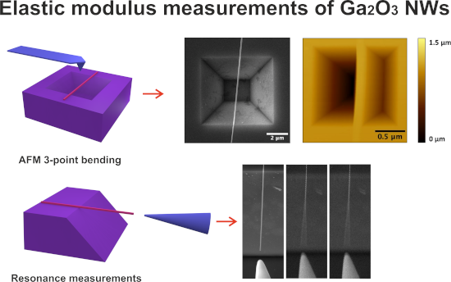
- the mechanical properties of Ga2O3 nanowires (NWs). In this work, we investigated the elastic modulus of individual β-Ga2O3 NWs using two distinct techniques – in-situ scanning electron microscopy resonance and three-point bending in atomic force microscopy. The structural and morphological properties
- chemical stability [4][5]. Ga2O3 is a promising candidate for visible-blind UV-light sensors [3], power devices and optoelectronics [6][7][8][9], gas sensors [10], and memory devices [8]. These applications can be scaled down to the nanoscale, including flexible nanodevices. Ga2O3 nanowires (NWs) could be
- . The synthesized NWs were mechanically deposited onto the etched Si wafers. Nanowires, particularly those partially suspended over the groove with a free end, were selected for mechanical studies in SEM. Nanowires suspended over the inverted pyramid with both ends fixed were selected for three-point


Sidewall angle tuning in focused electron beam-induced processing
Beilstein J. Nanotechnol. 2024, 15, 447–456, doi:10.3762/bjnano.15.40
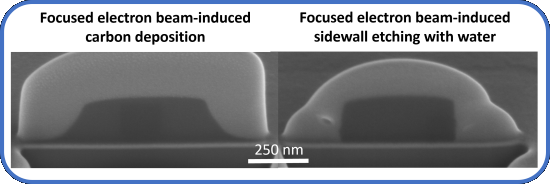
- . Although etching on a slope has been experimentally demonstrated with the slimming of nanowires [20], the shape evolution during etching on sloped surfaces has not been studied thoroughly. Ten carbon deposits were made, 300 nm in width and 500 nm in length, identically patterned at a centre-to-centre




Heat-induced morphological changes in silver nanowires deposited on a patterned silicon substrate
Beilstein J. Nanotechnol. 2024, 15, 435–446, doi:10.3762/bjnano.15.39
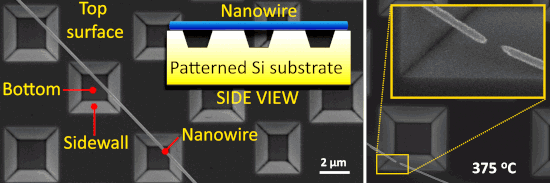
- Abstract Metallic nanowires (NWs) are sensitive to heat treatment and can split into shorter fragments within minutes at temperatures far below the melting point. This process can hinder the functioning of NW-based devices that are subject to relatively mild temperatures. Commonly, heat-induced
- ; silver nanowires; Introduction Metal nanowires (NWs) are promising key elements in a wide range of applications, including solar cells [1], smart windows [2], flexible sensors [3], touch screens [4], biocompatible polymer binders [5], temperature sensing [6], medical materials [7], and key elements of
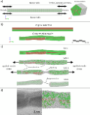
- the statistical analysis are given in Figure 6. For the heating scheme 1, the extent of fragmentation in the suspended parts is one order of magnitude higher than that for the adhered parts, while a totally opposite behavior is observed for the heating scheme 2. Inner structure of Ag nanowires Silver


Modulated critical currents of spin-transfer torque-induced resistance changes in NiCu/Cu multilayered nanowires
Beilstein J. Nanotechnol. 2024, 15, 360–366, doi:10.3762/bjnano.15.32
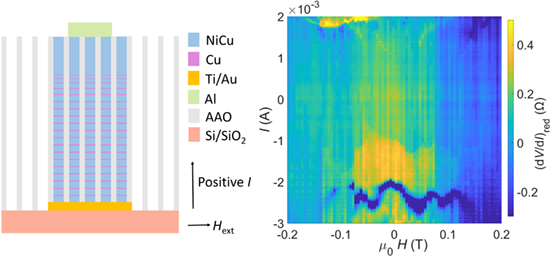
- vertically patterned magnetic nanowires on a Si substrate. With this approach we fabricated three-dimensional nanowire-based spin valve devices without the need of complex etching processes or additional spacer coating. Through this method, we successfully obtained NiCu/Cu multilayered nanowire arrays with a
- controlled sequence along the long axis of the nanowires. Both magnetic switching and excitation phenomena driven by spin-polarized currents were clearly demonstrated in our NiCu/Cu multilayered nanowires. Moreover, the critical currents for switching and excitation were observed to be modulated in an
- oscillatory manner by the magnetic field in the nanowire-based devices. We present a toy model to qualitatively explain these observations. Keywords: AAO template; critical current; multilayered magnetic nanowires; spin-transfer torque; three-dimensional devices; Introduction Spin-transfer torque (STT) has


Controllable physicochemical properties of WOx thin films grown under glancing angle
Beilstein J. Nanotechnol. 2024, 15, 350–359, doi:10.3762/bjnano.15.31
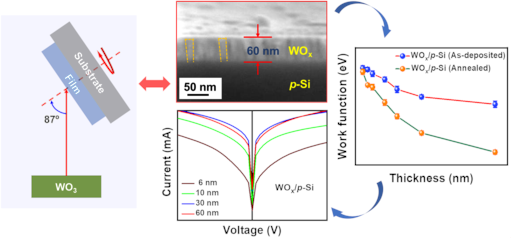
- , heterostructures having an n-type WOx layer on various p-type substrates such as p-Si [12][13], Cu2O [14], NiO [15], p-ZnO nanowires (NWs) [16], diamond [17], and BiVO4 [18], have a great technological importance in the field of heterojunction solar cells, LEDs, and resistance random access memory (RRAM) devices


Design, fabrication, and characterization of kinetic-inductive force sensors for scanning probe applications
Beilstein J. Nanotechnol. 2024, 15, 242–255, doi:10.3762/bjnano.15.23
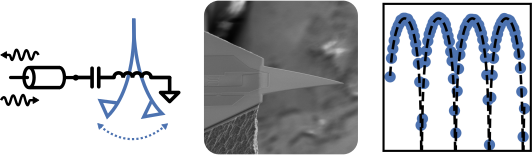
- . We present design simulations including mechanical finite-element modeling of surface strain and electromagnetic simulations of meandering nanowires with large kinetic inductance. We discuss a lumped-element model of the force sensor and describe the role of an additional shunt inductance for tuning
- larger than the geometric (electromagnetic) inductance in thin films and nanowires made of amorphous superconductors [16]. It is, therefore, useful in applications that require compact microwave resonators with low loss [17], including microwave filters [18] and resonant radiation detectors [19]. Large
- through the inductor is limited by the critical current Ic, also set by material choice and physical dimensions. From Equation 5, we can increase nc for a given material by, again, making the nanowire longer or narrower, or by increasing Lk,□ through a thinner film. However, longer and narrower nanowires



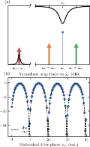
New application of bimetallic Ag/Pt nanoplates in a colorimetric biosensor for specific detection of E. coli in water
Beilstein J. Nanotechnol. 2024, 15, 95–103, doi:10.3762/bjnano.15.9
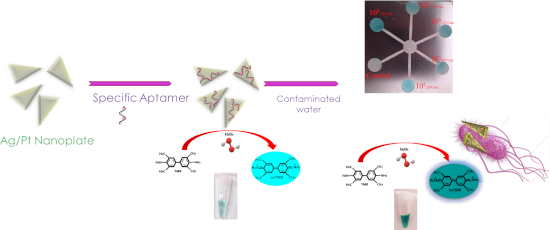
- ]. Nanomaterials have improved the ability to detect pathogens in water and food by enhancing signals and sensitivity. These materials, which encompass nanoparticles, nanorods, nanowires, and nanoclusters, can be combined with aptamers, antibodies, enzymes, and other ligands to display unique physical, chemical


A combined gas-phase dissociative ionization, dissociative electron attachment and deposition study on the potential FEBID precursor [Au(CH3)2Cl]2
Beilstein J. Nanotechnol. 2023, 14, 1178–1199, doi:10.3762/bjnano.14.98
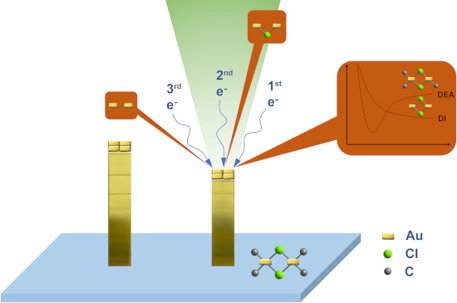
- nanotechnology. These include, but are not limited to electronic interconnects [5], metamaterials [6], growth substrates for nanowires and nanotubes [7], and complex plasmonic structures [8][9]. For the latter application, mastery over the shape as well as accurate control of the distribution of the