


Search results
Search for "organometallic" in Full Text gives 76 result(s) in Beilstein Journal of Nanotechnology.
Upcycling agroindustrial waste into graphene oxide supports for gold nanoparticles: toward sustainable nanomaterials
Beilstein J. Nanotechnol. 2026, 17, 489–504, doi:10.3762/bjnano.17.32
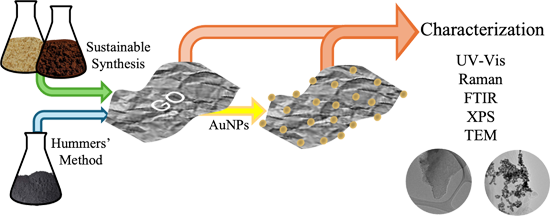
- alternatives based on low-temperature and rapid pyrolysis of biowaste have been proposed [20]. Previous studies have shown that organometallic catalysts can lower the energetic barrier for carbon domain formation, enabling carbonization at temperatures significantly below those required for conventional



Advancing nanolithography: a comprehensive review of materials for local anodic oxidation with AFM
Beilstein J. Nanotechnol. 2026, 17, 275–291, doi:10.3762/bjnano.17.19
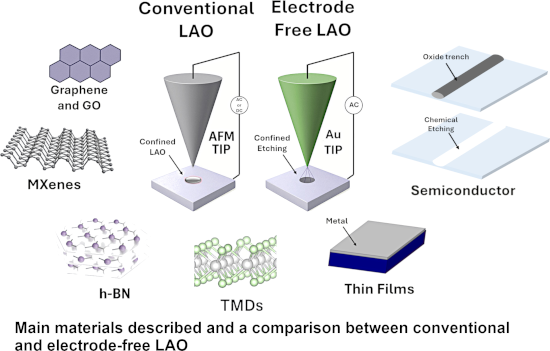
- ]. Polymers remain an underexploited material domain for LAO experiments. Suitable polymeric materials with electrochemical patterning capabilities are rare. With few exceptions, like the organic semiconductor [111] or organometallic multilayers [112], polymers, with their markedly insulating nature, tend to


Quantitative estimation of nanoparticle/substrate adhesion by atomic force microscopy
Beilstein J. Nanotechnol. 2026, 17, 1–14, doi:10.3762/bjnano.17.1

- are immobilized on supports like carbon-based materials or TiO2 to prevent aggregation and to maintain catalytic activity, strong adhesion is required [11]. To improve adhesion, Au NPs have been stabilized on SiO2 substrates by embedding them into an organometallic layer, effectively immobilizing the



Structural and magnetic properties of microwave-synthesized reduced graphene oxide/VO2/Fe2O3 nanocomposite
Beilstein J. Nanotechnol. 2025, 16, 921–932, doi:10.3762/bjnano.16.70
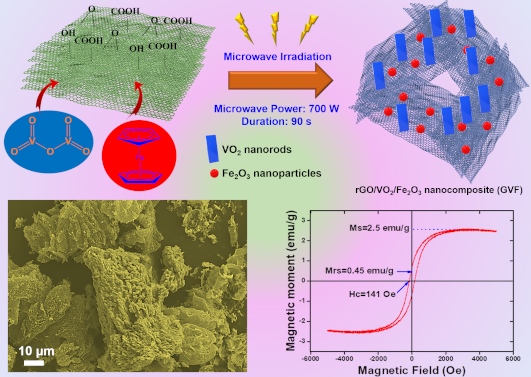
- NC displayed good electrochemical performance as the SC electrode [13]. In another work, Kumar et al. reported the MW-assisted synthesis of Fe3O4/rGO NC using FeCl3 aqueous salt as the precursor [14]. Ferrocene, an Fe-based organometallic compound, was also utilized as the precursor for developing
- conducted inside the MW oven at room temperature. Furthermore, most of the reported works are based on synthesizing Fe2O3 from Fe-based aqueous salt in liquid phases. In contrast, the current work demonstrates the formation of Fe2O3 from a Fe-based organometallic compound, ferrocene. Herein, the graphite



Changes of structural, magnetic and spectroscopic properties of microencapsulated iron sucrose nanoparticles in saline
Beilstein J. Nanotechnol. 2025, 16, 762–784, doi:10.3762/bjnano.16.59
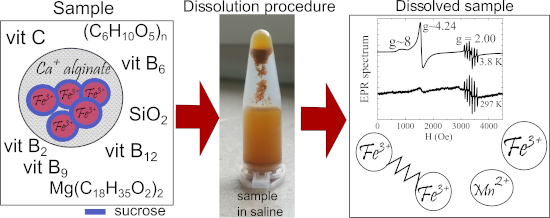
- and the formation of organometallic complexes [62][63][64]. A closer examination of FS0 and FST spectra reveals some distinctions (Figure 10). The Raman spectrum of FS0 contained a higher number of CHx bands with higher intensity compared to the spectrum of FST. Furthermore, in the fingerprint region




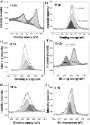

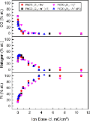
Precursor sticking coefficient determination from indented deposits fabricated by electron beam induced deposition
Beilstein J. Nanotechnol. 2025, 16, 35–43, doi:10.3762/bjnano.16.4

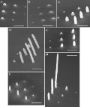
- decrease of the sticking coefficient with increasing energy. In comparison, the molecules investigated in all of these studies are significantly smaller than the organometallic precursors typically used in FEBID. Nevertheless, these findings are important in order to understand the adsorption kinetics of


Ion-induced surface reactions and deposition from Pt(CO)2Cl2 and Pt(CO)2Br2
Beilstein J. Nanotechnol. 2024, 15, 1427–1439, doi:10.3762/bjnano.15.115

- ability of data acquired from fundamental UHV surface science studies to provide insights that can be used to better understand the interactions between ions and precursors during IBID from inorganic precursors. Keywords: deposition; ion beam; nanostructure; organometallic; precursor; Introduction
- Focused ion beam-induced deposition (FIBID) and focused electron beam-induced deposition (FEBID) are vacuum-based, charged-particle bottom-up nanofabrication techniques that directly fabricate metal containing nanostructures as a consequence of the reactions between ions or electrons and organometallic
- of this analysis are tabulated in Table 1. Ar ion-induced decomposition of surface-adsorbed organometallic precursors has previously been attributed to momentum transfer from the ion to the adsorbed precursor as a result of inelastic nuclear collisions [21][22][23][25][41]. Given the smaller mass of



Enhanced catalytic reduction through in situ synthesized gold nanoparticles embedded in glucosamine/alginate nanocomposites
Beilstein J. Nanotechnol. 2024, 15, 1227–1237, doi:10.3762/bjnano.15.99
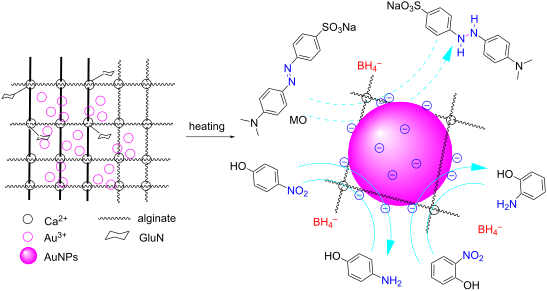
- nanocomposite as a versatile catalyst with promising applications across various industrial sectors. Keywords: catalysis; gold nanoparticles; organic dyes; organometallic nanocomposites; reduction; Introduction Gold nanoparticles (AuNPs) have garnered significant attention because of their exceptional



Direct electron beam writing of silver using a β-diketonate precursor: first insights
Beilstein J. Nanotechnol. 2024, 15, 1117–1124, doi:10.3762/bjnano.15.90

- fabrication of nano-optical components, where the actual geometry in combination with the material composition governs the optical response of the device [13]. However, typically a dominant carbon portion is present in the deposit due to the use of organometallic precursors [9][14], which poses practical
- that a significant portion of nanoparticles sits on the deposit surface. This is in contrast to the typical deposition morphology with metal nanoparticles in a carbonaceous matrix from FEBID with organometallic precursor compounds. The obtained silver content of about 0.6 atom % is very low. Apart from


Water-assisted purification during electron beam-induced deposition of platinum and gold
Beilstein J. Nanotechnol. 2024, 15, 884–896, doi:10.3762/bjnano.15.73
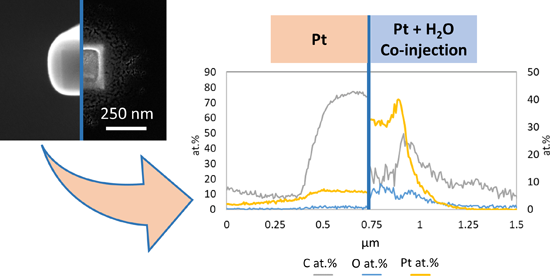
- ) is a nanofabrication technique that allows for the direct writing of three-dimensional nanostructures [1][2][3]. In FEBID, a gaseous precursor, often an organometallic compound, is injected in the vacuum chamber of a scanning electron microscope (SEM), adsorbed on a substrate, and dissociated by a
- focused electron beam. As a result, a solid deposit is formed, and organic and inorganic volatile fragments are removed by the vacuum pumps of the chamber. In the case of an organometallic precursor gas, in an ideal scenario, only metal is deposited, and all fragments arising from organic and inorganic





Electron-induced ligand loss from iron tetracarbonyl methyl acrylate
Beilstein J. Nanotechnol. 2024, 15, 797–807, doi:10.3762/bjnano.15.66
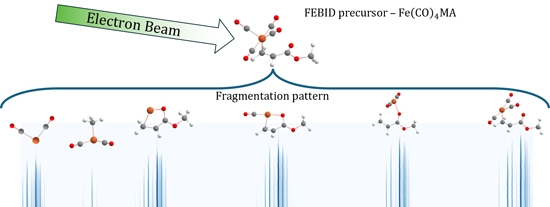
- (FEBID); FEBID precursor; iron tetracarbonyl methyl acrylate; Introduction In recent years, a wave of interest in the electron-induced loss of ligands from organometallic and coordination compounds appeared, which has been motivated by the need to understand focused electron beam-induced deposition
- probable reasons are its availability (it is a common precursor for iron-containing compounds in organometallic synthesis), ease of handling (it is a volatile liquid at standard conditions), and relatively simple structure, which allows for advanced theoretical description. The ligand loss from Fe(CO)5 in



Sidewall angle tuning in focused electron beam-induced processing
Beilstein J. Nanotechnol. 2024, 15, 447–456, doi:10.3762/bjnano.15.40
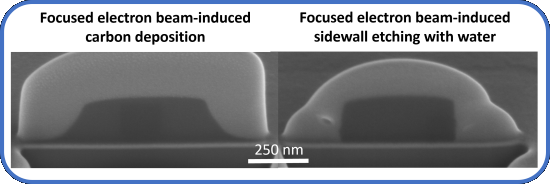
- structures by removing the undesired carbon remnants from organometallic precursors [5][11][12][13][14][15][16][17][18]. Another example is a study of the etching rate and the etching profiles achieved in FEBIE with water on diamond samples [19]. Most studies were limited to etching of planar surfaces




A combined gas-phase dissociative ionization, dissociative electron attachment and deposition study on the potential FEBID precursor [Au(CH3)2Cl]2
Beilstein J. Nanotechnol. 2023, 14, 1178–1199, doi:10.3762/bjnano.14.98
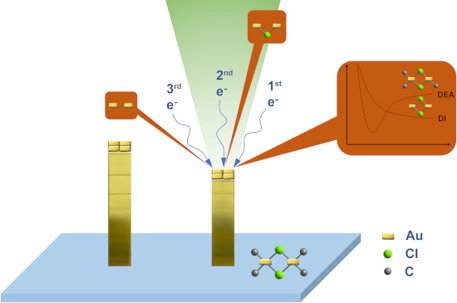
- Iceland, Dunhagi 3, 107 Reykjavík, Iceland Inorganic and Organometallic Chemistry, Universität Erlangen-Nürnberg, 91058 Erlangen, Germany Carl Zeiss SMT GmbH, 64380 Roßdorf, Germany 10.3762/bjnano.14.98 Abstract Motivated by the potential of focused-electron-beam-induced deposition (FEBID) in the
- assessment but shows that multiple electron collisions may play a role in FEBID, while the gas-phase experiments are conducted under single collision conditions. In the last decade, interest in organometallic FEBID precursors containing higher amounts of halogens, chlorine, bromine, and iodine has increased



Fragmentation of metal(II) bis(acetylacetonate) complexes induced by slow electrons
Beilstein J. Nanotechnol. 2023, 14, 980–987, doi:10.3762/bjnano.14.81
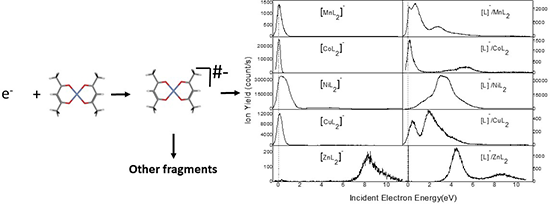
- Nowadays, organometallic complexes receive particular attention because of their use in the design of pure nanoscale metal structures. In the present work, we present results obtained from a series of studies on the degradation of metal(II) bis(acetylacetonate)s induced by low-energy electrons. These slow
- particles induce the formation of the acetylacetonate anion, [acac]−, and the parent anion as the most dominant species at incident electron energies near 0 eV. They also fragment the organometallic compounds via various competitive reaction channels that occur at higher energies via dissociative electron
- phase; metal(II) bis(acetylacetonate); negative ions; organometallic complexes; Introduction Nowadays, organometallic compounds are used in many applications. They receive great interest in the field of nanoscale technologies [1][2][3]. For example, in nanoscale design processes, the combination of an


Molecular nanoarchitectonics: unification of nanotechnology and molecular/materials science
Beilstein J. Nanotechnol. 2023, 14, 434–453, doi:10.3762/bjnano.14.35
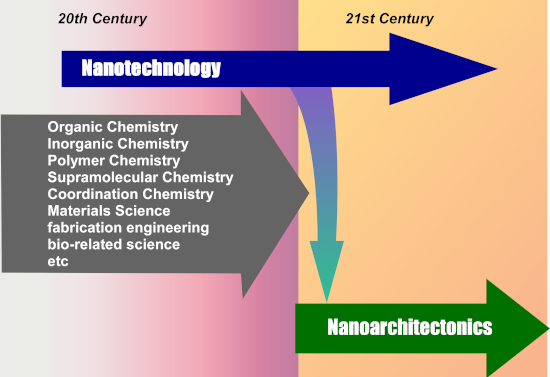
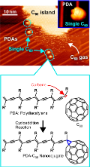
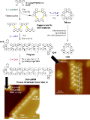
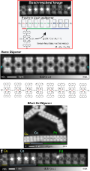
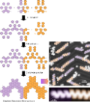
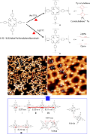
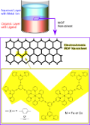
- . Dehalogenation of some precursor molecules was induced upon annealing at 420/480 K, forming short chains or cyclic organometallic intermediates. In addition to isolated nanographene containing V-shaped C44 and hexagonal C66 on the platform, formation of polymer chains was confirmed after annealing. The





Role of titanium and organic precursors in molecular layer deposition of “titanicone” hybrid materials
Beilstein J. Nanotechnol. 2022, 13, 1240–1255, doi:10.3762/bjnano.13.103
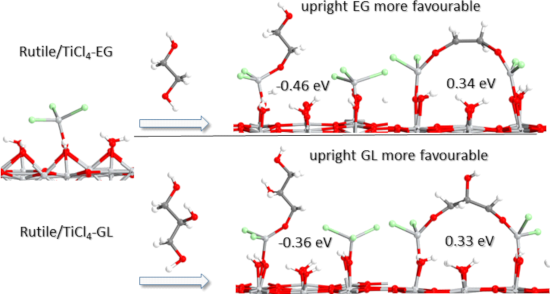
- combination of the individual properties of the organic and inorganic components that are incorporated into the film [1][2][13][14][15]. A special class of hybrid organic–inorganic films are so-called metalcones, which are fabricated via MLD using organometallic precursors and organic alcohols. These films
- are described as O–M–O–(CHx)y–O–M–O. Metalcones are known to be flexible in nature due to the flexible organic backbones present in their architectures and with excellent mechanical properties at the atomic and molecular level arising from the organometallic precursors [16][17]. The first metalcone


Engineered titania nanomaterials in advanced clinical applications
Beilstein J. Nanotechnol. 2022, 13, 201–218, doi:10.3762/bjnano.13.15
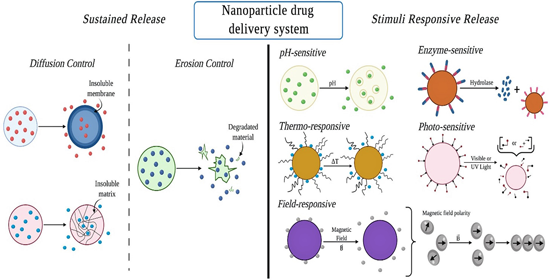
- , inorganic, or organometallic material whose chemical, physical, and/or electrical properties change as a function of the size and shape of the material. Nanomaterials are designed at the atomic or molecular level, and most of the therapeutic nanoparticles (nps) are usually between 10 and 100 nm in size so


Low-energy electron interaction and focused electron beam-induced deposition of molybdenum hexacarbonyl (Mo(CO)6)
Beilstein J. Nanotechnol. 2022, 13, 182–191, doi:10.3762/bjnano.13.13
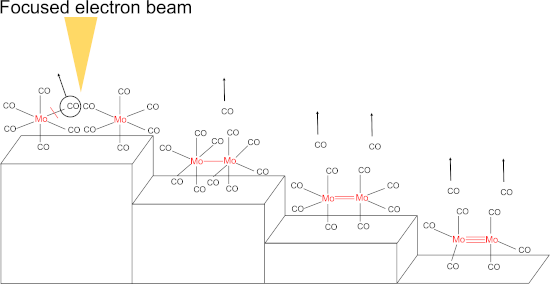
- applications of such types a good and target-oriented fabrication control of molybdenum nanostructures is important. Potentially, this may be achievable by focused electron beam-induced deposition (FEBID). In FEBID of metallic structures, organometallic precursor molecules are generally used as the metal
- source [3][4][5]. The organometallic precursors are continuously supplied to a substrate surface in proximity to the impact side of a tightly focused, high-energy electron beam in a high-vacuum instrument. Ideally, the organometallic precursor is completely dissociated through the interaction with the
- dissociative ionization of metal carbonyls; however, the loss of all ligands is generally less efficient for other organometallic species [52][53]. The doubly ionized species [Mo(CO)n]++, with n = 1, 2 and 3, are also observed with fairly significant intensity. Contributions which we attribute to [MoC(CO)n


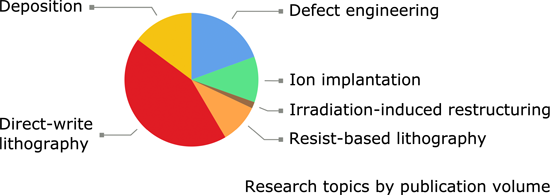
A review of defect engineering, ion implantation, and nanofabrication using the helium ion microscope
Beilstein J. Nanotechnol. 2021, 12, 633–664, doi:10.3762/bjnano.12.52


Gold(I) N-heterocyclic carbene precursors for focused electron beam-induced deposition
Beilstein J. Nanotechnol. 2021, 12, 257–269, doi:10.3762/bjnano.12.21
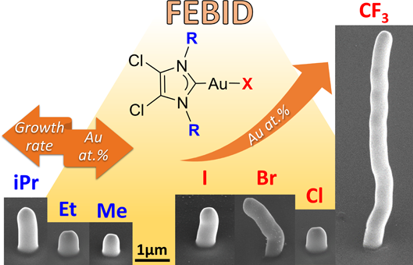
- ][15] and biomedical applications [16]. FEBID provides a flexible direct-write technique to fabricate complex 3D structures, which are hard to realize using resist-based planar lithography processes. However, when using organometallic precursors, usually, undesired dissociation fragments also end up in
- demonstrated that the presence of alkyl ligands in gold FEBID precursors has a highly positive effect on the stability of the compounds [33][34] and can lead to a satisfactory purity of the obtained nanostructures (19–25 and 29–41 atom % Au, respectively) [32]. The most recent organometallic gold complexes
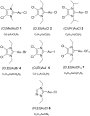
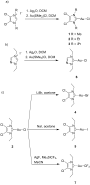
- ]. Although many different ligand architectures of gold organometallic complexes were tested as FEBID gold precursors, the effect of different substitutions in the core structure of the molecule on the composition and growth rate of deposits is still largely unexplored. Such studies may reveal groups or





Atomic layer deposited films of Al2O3 on fluorine-doped tin oxide electrodes: stability and barrier properties
Beilstein J. Nanotechnol. 2021, 12, 24–34, doi:10.3762/bjnano.12.2
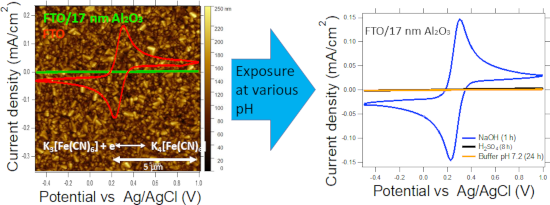
- identical deposition cycles. Trimethylaluminium (TMA) and water (both from Strem Chemicals, Inc.) were used as precursors. The temperature range for all the organometallic aluminium precursors was 30–300 °C [17]. The deposition of Al2O3 was performed at 300 °C, as recommended [4]. The pulse of the TMA


Electron beam-induced deposition of platinum from Pt(CO)2Cl2 and Pt(CO)2Br2
Beilstein J. Nanotechnol. 2020, 11, 1789–1800, doi:10.3762/bjnano.11.161
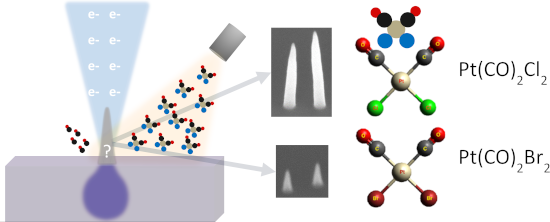
- main challenges associated with FEBID is the typical low purity of the deposits. Many FEBID precursors are organometallic, leading to high carbon content in the deposit [6][8][9]. Often, unwanted fragments of the precursor molecules remain in the deposits [10]. Some precursors perform better in this
- complexes were compared to the widely used commercially available precursor MeCpPtMe3. The design of Pt(CO)2X2 takes advantage of the known tendency for CO and halogens to dissociate from metal centres upon electron irradiation [14][15][16]. Other organometallic compounds that include a halide and CO


Synthesis of nickel/gallium nanoalloys using a dual-source approach in 1-alkyl-3-methylimidazole ionic liquids
Beilstein J. Nanotechnol. 2019, 10, 1754–1767, doi:10.3762/bjnano.10.171
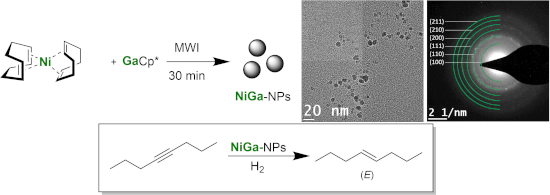
- [17]. Alternatively, ionic liquids can be used as solvents and stabilization agents for different metal nanoparticles from metal carbonyls [18] or organometallic complexes [19]. Ni nanoparticles from Ni(COD)2 in ionic liquids can be obtained through spontaneous decomposition [20] or decomposition
- ], [Au(Bi8)(AlCl4)5] [54], and [(CuBi8)(AlCl4)] [55] In organic solvents, organometallic Ni complexes, e.g., Ni(COD)2 and Ni(CO)4 are known to form different types of intermetallic clusters with GaCp* and similar compounds, such as Ni(Cp*Ga)(CO)3, Ni4(Cp*Ga)4(CO)6, Ni(GaCp*)4 [46][56][57][58][59][60




Materials nanoarchitectonics at two-dimensional liquid interfaces
Beilstein J. Nanotechnol. 2019, 10, 1559–1587, doi:10.3762/bjnano.10.153
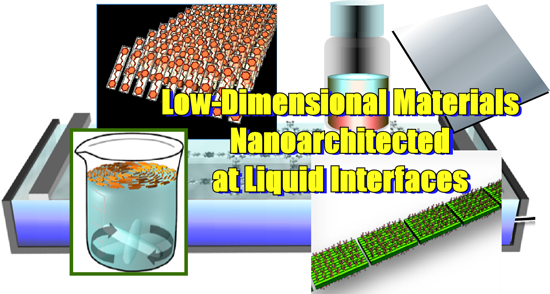
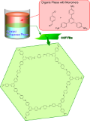
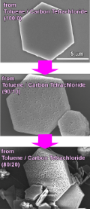
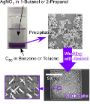
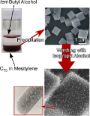
- ) [252]. Three-dimensional cubic structures were precipitated as Olmstead’s crystalline C60–Ag(I) organometallic hetero-nanostructures [C60{AgNO3}5] at the interface between a saturated benzene solution of C60 and an ethanol solution of silver(I) nitrate. The formed cubic structures underwent structural













Playing with covalent triazine framework tiles for improved CO2 adsorption properties and catalytic performance
Beilstein J. Nanotechnol. 2019, 10, 1217–1227, doi:10.3762/bjnano.10.121
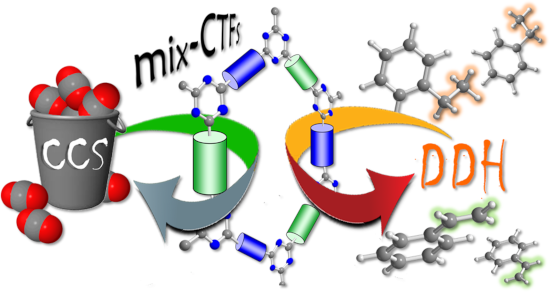
- Giulia Tuci Andree Iemhoff Housseinou Ba Lapo Luconi Andrea Rossin Vasiliki Papaefthimiou Regina Palkovits Jens Artz Cuong Pham-Huu Giuliano Giambastiani Institute of Chemistry of OrganoMetallic Compounds, ICCOM-CNR and Consorzio INSTM, Via Madonna del Piano 10-50019, Sesto F.no, Florence, Italy





