Search results
Search for "Ga" in Full Text gives 158 result(s) in Beilstein Journal of Nanotechnology.
Observation of collective excitation of surface plasmon resonances in large Josephson junction arrays
Beilstein J. Nanotechnol. 2022, 13, 1578–1588, doi:10.3762/bjnano.13.132
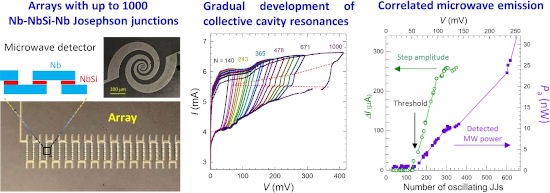
- using photolithography and reactive ion etching. The JJ sensor with variable thickness and a width of ≈100 nm is made by Ga+ focused ion beam etching. The JJ is made small in order to increase its resistance Rn to approx. 50 Ω, which is needed for a good impedance matching with the antenna. In order to




Hydroxyapatite–bioglass nanocomposites: Structural, mechanical, and biological aspects
Beilstein J. Nanotechnol. 2022, 13, 1490–1504, doi:10.3762/bjnano.13.123
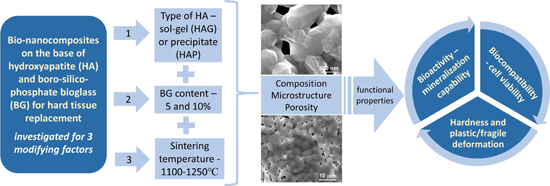
- addition of different dopants to the glass can enhance the osteogenesis (Mg, Sr, Fe, and Zr) or can yield particular properties such as angiogenesis (Cu and Co) and antimicrobial activity (Ag, Zn, Ce, Ga, and Cu). Also, dopants can change the glass solubility [13][15][16][17][18][19]. The presence of the
Near-infrared photoactive Ag-Zn-Ga-S-Se quantum dots for high-performance quantum dot-sensitized solar cells
Beilstein J. Nanotechnol. 2022, 13, 1337–1344, doi:10.3762/bjnano.13.110
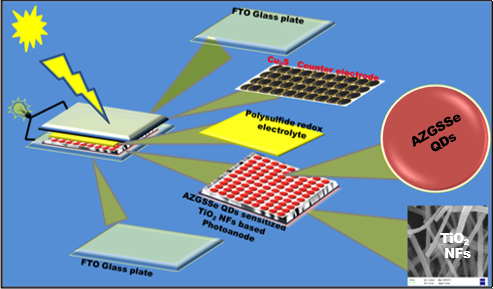
- of solar cells. In this study, we synthesized Ag-Zn-Ga-S-Se-based alloyed QDs by colloidal hot injection and characterized them. The X-ray photoelectron spectrum analysis confirms the +1, +2, +3, −2, and −2 oxidation states of, respectively, Ag, Zn, Ga, S, and Se in the QDs, and the energy-dispersive
- X-ray spectrum analysis confirms the 1:1:1:1.5:1.5 stoichiometric ratio of, respectively, Ag, Zn, Ga, S, and Se. These two results indicate the formation of I-II-III-VI3-type alloyed crystals (AgZnGaS1.5Se1.5 nanocrystals). TEM image analysis reveals the QD nature of the synthesized Ag-Zn-Ga-S-Se
- lead and cadmium have been used as sensitizers in QDSCs. However, due to the high toxicity and low efficiency, research moved to group I-III-VI QDs such as Cu-In-Se, Cu-In-S, Ag-In-Se, Ag-In-S, Ag-Ga-S, and Ag-Ga-S. Even though their light-harvesting capability is still limited by a high number of


Bioselectivity of silk protein-based materials and their bio-inspired applications
Beilstein J. Nanotechnol. 2022, 13, 902–921, doi:10.3762/bjnano.13.81
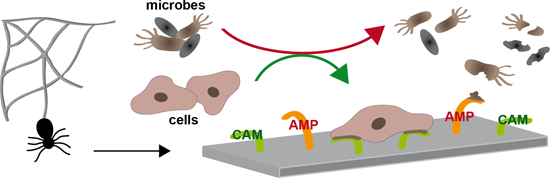
- silks. However, some conserved motifs like polyalanine (An, poly-A), glycine–alanine (GA), glycine–glycine–X (GGX) and glycine–proline–glycine–(X)n (GPG(X)n, where X is typically tyrosine, leucine, or glutamine) are abundant in the repetitive core regions in various spidroins [120]. Similar to silkworm
- silk, poly-A and GA sequences in the spider dragline thread form nanocrystalline hydrophobic β-sheets aligned along the fibre axis, which are embedded in a matrix of more hydrophilic GGX and GPG(X)n regions responsible for helical and spring-like secondary structures with fewer hydrogen bonds and


Temperature and chemical effects on the interfacial energy between a Ga–In–Sn eutectic liquid alloy and nanoscopic asperities
Beilstein J. Nanotechnol. 2022, 13, 817–827, doi:10.3762/bjnano.13.72
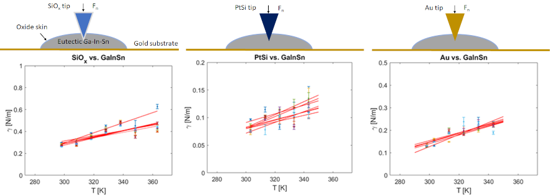
- interfacial energies between a eutectic Ga–In–Sn liquid alloy and single nanoscopic asperities of SiOx, Au, and PtSi have been determined in the temperature range between room temperature and 90 °C by atomic force spectroscopy. For all asperities used here, we find that the interfacial tension of the eutectic
- Ga–In–Sn liquid alloy is smaller than its free surface energy by a factor of two (for SiOx) to eight (for PtSi). Any significant oxide growth upon heating studied was not detected here, and the measured interfacial energies strongly depend on the chemistry of the asperities. We also observe a weak
- increase of the interfacial energy as a function of the temperature, which can be explained by the reactivity between SiOx and Ga and the occurrence of chemical segregation at the liquid alloy surface. Keywords: atomic force microscopy (AFM); interfacial energy; liquid alloy; Introduction Recently, room



Systematic studies into uniform synthetic protein nanoparticles
Beilstein J. Nanotechnol. 2022, 13, 274–283, doi:10.3762/bjnano.13.22
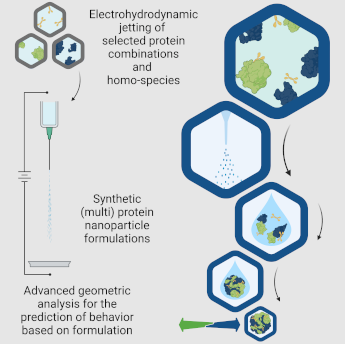
- protocol published by Rahmani and co-workers [35]. Briefly, a protein solution was pumped at 0.1 mL/h through a 25 Ga needle. Once an electric voltage was applied, the meniscus was distorted and formed a Taylor cone [25]. An electrically charged protein solution then ejected from the apex of the Taylor


Bacterial safety study of the production process of hemoglobin-based oxygen carriers
Beilstein J. Nanotechnol. 2022, 13, 114–126, doi:10.3762/bjnano.13.8
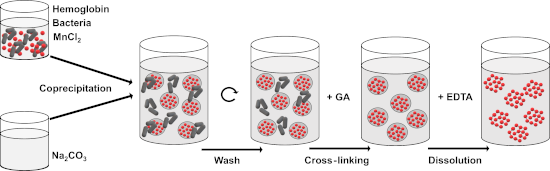
- product. The production process includes several washing steps that could contribute to the depletion of a potential bacterial load. Glutaraldehyde (GA) is used for the inter- and, to a certain extent, intramolecular cross-linking of the hemoglobin molecules at a concentration of 0.02% [20][21]. It is
- permeabilize the cell wall of Gram-negative cells [28][29]. A certain inhibitory effect of EDTA on the growth of Staphylococcus epidermidis could also be shown [30]. Therefore, the aim of this work was to investigate whether the steps of cross-linking with GA or dissolution with EDTA, in addition to the
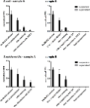
- HbMP. To investigate the possible inhibitory effects of the chemicals used in the CCD process, we assessed the growth of bacteria upon the addition of GA and EDTA to the growth medium. In addition, HbMP fabricated with bacteria-spiked hemoglobin were produced and the bacterial load was examined at


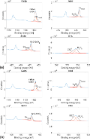
Measurement of polarization effects in dual-phase ceria-based oxygen permeation membranes using Kelvin probe force microscopy
Beilstein J. Nanotechnol. 2021, 12, 1380–1391, doi:10.3762/bjnano.12.102
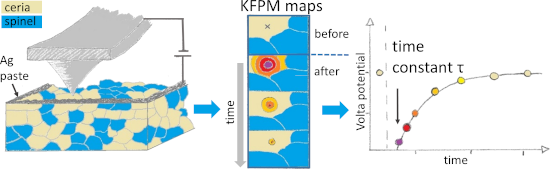
- , KPFM measurements were started with an imaging velocity of 1 image per minute to measure the relaxation of the introduced gradient. Electron microscopy The TEM specimens were cut from 60CSO20-FC2O pellets by focused ion beam (FIB) milling using a FEI Strata400 system with Ga ion beam. Further thinning


Chemical vapor deposition of germanium-rich CrGex nanowires
Beilstein J. Nanotechnol. 2021, 12, 1365–1371, doi:10.3762/bjnano.12.100
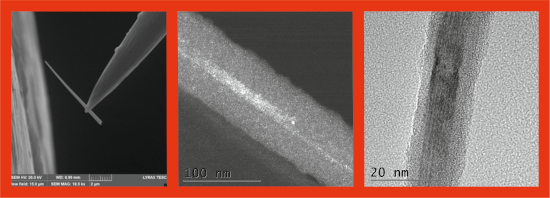
- with the Ga+ focused ion beam (FIB), gas injection system (GIS), and nanomanipulator OmniProbe 400 (Oxford Instruments) with a tungsten tip. The nanomanipulator enabled a direct contact of single as-grown NWs. The current–voltage (I–V) characteristics were measured using a Keithley 237 source



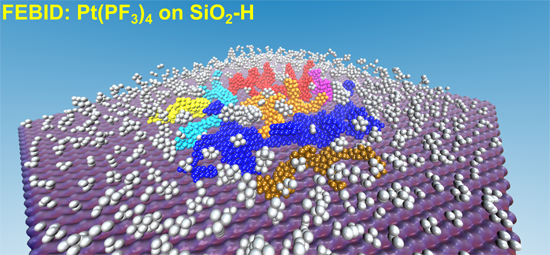
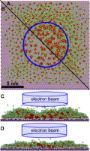
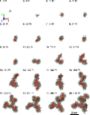
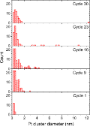
Irradiation-driven molecular dynamics simulation of the FEBID process for Pt(PF3)4
Beilstein J. Nanotechnol. 2021, 12, 1151–1172, doi:10.3762/bjnano.12.86








Assessment of the optical and electrical properties of light-emitting diodes containing carbon-based nanostructures and plasmonic nanoparticles: a review
Beilstein J. Nanotechnol. 2021, 12, 1078–1092, doi:10.3762/bjnano.12.80
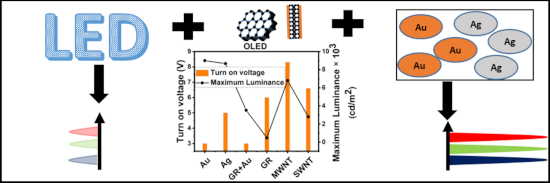
- a wider choice of emission wavelengths compared to conventional lighting systems. Inorganic LED consist of inorganic semiconductor materials in the active region, for example thin films of GaAs that emit in the red to near-infrared (>700 nm) region [4]. Ga-based LED belong to the III–V group of


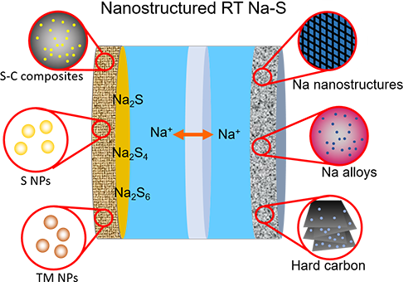
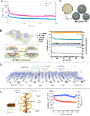
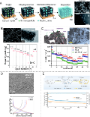
Progress and innovation of nanostructured sulfur cathodes and metal-free anodes for room-temperature Na–S batteries
Beilstein J. Nanotechnol. 2021, 12, 995–1020, doi:10.3762/bjnano.12.75




Is the Ne operation of the helium ion microscope suitable for electron backscatter diffraction sample preparation?
Beilstein J. Nanotechnol. 2021, 12, 965–983, doi:10.3762/bjnano.12.73
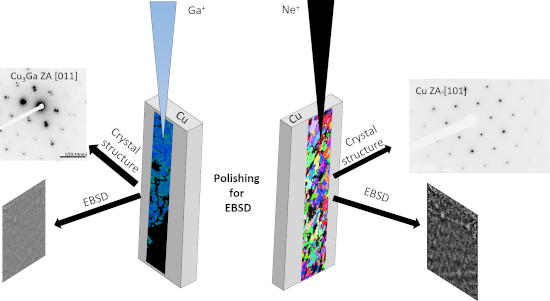
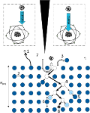
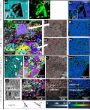
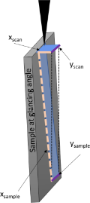
- commonly used approach is the focused ion beam (FIB) polishing. Unfortunately, artefacts that can be easily induced by Ga FIB polishing approaches are seldom published. This work aims to provide a better understanding of the underlying causes for artefact formation and to assess if the helium ion
- microscope is better suited to achieve the required mirror-flat sample surface when operating the ion source with Ne instead of He. Copper was chosen as a test material and polished using Ga and Ne ions with different ion energies as well as incident angles. The results show that crystal structure
- alterations and, in some instances, phase transformation of Cu to Cu3Ga occurred when polishing with Ga ions. Polishing with high-energy Ne ions at a glancing angle maintains the crystal structure and significantly improves indexing in EBSD measurements. By milling down to a depth equaling the depth of the



The role of deep eutectic solvents and carrageenan in synthesizing biocompatible anisotropic metal nanoparticles
Beilstein J. Nanotechnol. 2021, 12, 924–938, doi:10.3762/bjnano.12.69
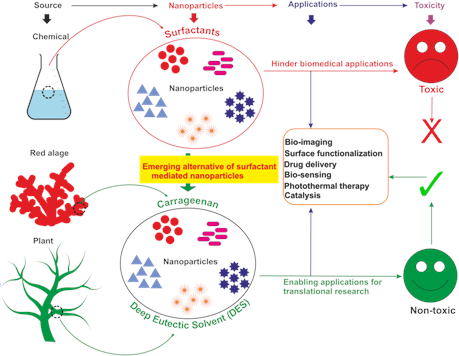
- systems. Guar-gum-fabricated gold nanoparticles (GA-GNPs) in a DES were synthesized for the use as X-ray contrast agent. The precursors for the DES used were choline chloride, gallic acid and glycerol. The X-ray attenuation coefficient of GA-GNPs was three times higher than that of the clinically used
- contrast agent Visipaque [95]. The in vitro study of the synthesized GA-GNPs confirmed their high potential to replace conventional contrast agents. In another example, Mahyari et al. synthesized gold nanoflowers using a DES without using reducing agents [95]. The gold nanoflowers showed excellent surface


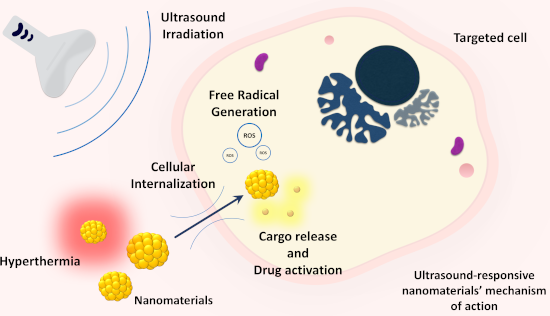
Comprehensive review on ultrasound-responsive theranostic nanomaterials: mechanisms, structures and medical applications
Beilstein J. Nanotechnol. 2021, 12, 808–862, doi:10.3762/bjnano.12.64


Impact of GaAs(100) surface preparation on EQE of AZO/Al2O3/p-GaAs photovoltaic structures
Beilstein J. Nanotechnol. 2021, 12, 578–592, doi:10.3762/bjnano.12.48
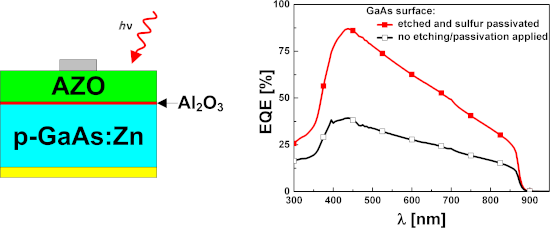
- filling As and Ga dangling bonds with adsorbed S atoms, such that covalent bonds (e.g., S–S, As–S, and Ga–S) are observed [26][27][28][29]. As a result, the energy of the surface states is changed such that they no longer work as charge traps [30]. This approach has already proven to be a method that
- 2p and Zn, Ga and As 3d spin–orbit doublets were measured. The spectra were analyzed using the commercial CASA XPS software package (Casa Software Ltd, version 2.3.17) with Shirley background. The spectra were fitted with a mixed Gaussian–Lorentzian (GL(30)) function. The depth profiling was
- content of Zn and O were observed and the presence of Ga and As lines was registered only after 52 min. In the case of B1, already after 32 min small amounts of Ga and As were detected. The content of Zn and O in B1 (with only an initial cleaning of the substrate) was 1:1 but in A2 (with the substrate




The patterning toolbox FIB-o-mat: Exploiting the full potential of focused helium ions for nanofabrication
Beilstein J. Nanotechnol. 2021, 12, 304–318, doi:10.3762/bjnano.12.25
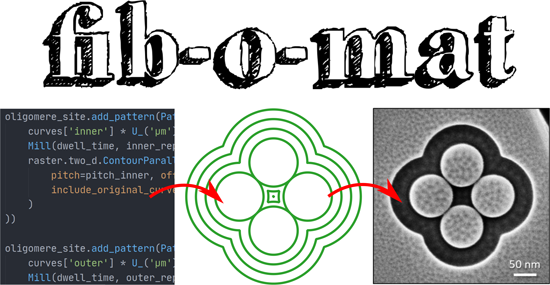
- -step process without the need of potential contaminants, such as the resists used in lithographic approaches. For conventional gallium (Ga) ion beams the achievable minimum feature sizes are still limited to approx. 10 nm [2], and Ga implantation may cause unwanted modification of material properties
- demonstrated for He ion beam patterning in three different use cases. In general, FIB-o-mat is usable for all sorts of ions and microscopes of multiple manufacturers. Only the output files have to be adapted to the specific patterning back end. Ion Beam Machining with Light Ions Focused Ga ion beams are
- depth of 30 keV He ions in silicon is more than five times larger than the penetration depth of Ga ions of the same energy [21]. The consequently large collision cascade may create a significant amount of heat. Even for small ion doses deformation of the manufactured structures can be observed when


The nanomorphology of cell surfaces of adhered osteoblasts
Beilstein J. Nanotechnol. 2021, 12, 242–256, doi:10.3762/bjnano.12.20
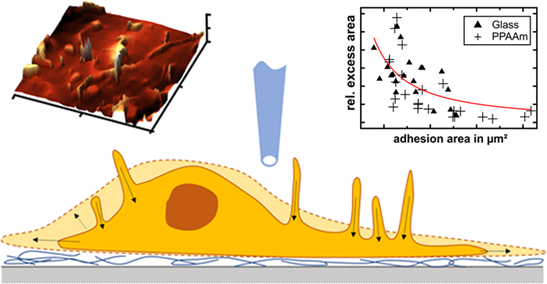
- osteoblast after 3 h of adhesion to titanium. The ruffles on the cell membrane are visible. (FE-SEM SUPRA25, 1 kV, 30° angle, 100 nm Ti on Si wafer, fixation by 2.5% glutardialdehyde (GA), acetone series, critical point drying). Edge height analysis. (a) Topography of a fixed osteoblast on a 10 nm Au layer


Mapping the local dielectric constant of a biological nanostructured system
Beilstein J. Nanotechnol. 2021, 12, 139–150, doi:10.3762/bjnano.12.11
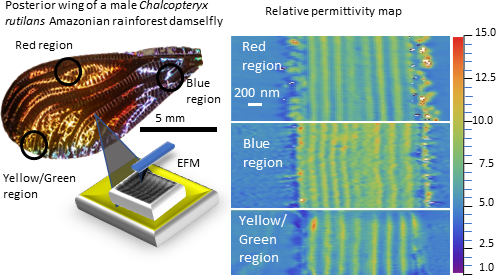
- and reduce the curtain effect during FIB polishing. The Ga+ beam of the FIB was adjusted to 30 kV and 1 nA to mill a cross section of the wing while polishing was carried out under 30 kV, 16 kV and 5 kV, all of them with a beam current of 50 pA. Determination of the SPM parameters The sample thickness




ZnO and MXenes as electrode materials for supercapacitor devices
Beilstein J. Nanotechnol. 2021, 12, 49–57, doi:10.3762/bjnano.12.4
- large family of hexagonal layered ternary transition-metal carbides, carbonitrides, and nitrides with the formula: Mn+1AXn where M denotes a transition metal (Sc, Ti, V, Cr, Zr, Nb, Mo, Hf, or Ta), A denotes a group-13 or group-14 element (Al, Si, P, S, Ga, Ge, As, Cd, Ln, Sn, Tl, or Pb), and X denotes
- . synthesized large-scale 2D Mo2CTx from Mo2Ga2C powder by etching gallium (Ga) selectively with the aid of two etchants, hydrogen fluoride (HF) and lithium fluoride (LiF)/HCl, with subsequent delamination. The morphology of the developed flakes differed with the used etchant. After using LiF/HCl as etchant
Bio-imaging with the helium-ion microscope: A review
Beilstein J. Nanotechnol. 2021, 12, 1–23, doi:10.3762/bjnano.12.1
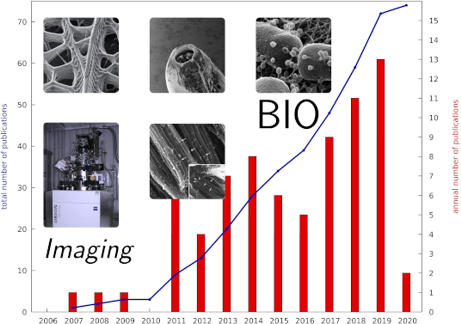
- imaging of insulating samples with nanoscale milling capabilities in one instrument. The milling efficiency can also be increased by the use of heavier ion species, such as Ne or Ga, where Ne is available for the standard He column, whereas Ga requires an additional column. In contrast to its success in


Piezotronic effect in AlGaN/AlN/GaN heterojunction nanowires used as a flexible strain sensor
Beilstein J. Nanotechnol. 2020, 11, 1847–1853, doi:10.3762/bjnano.11.166
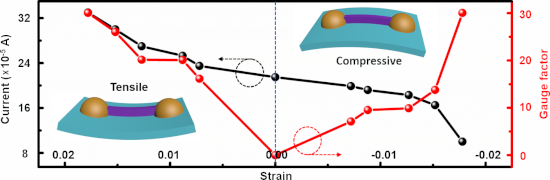
- by MOCVD (Thomas Swan). Trimethylgallium (TMGa), trimethylaluminum (TMAl), and ammonia (NH3) were used as Ga, Al, and N sources, respectively. N2 and H2 were used as carrier gases in the growth process. A 1 μm layer of unintentionally doped GaN was deposited as the buffer layer on a sapphire


Imaging and milling resolution of light ion beams from helium ion microscopy and FIBs driven by liquid metal alloy ion sources
Beilstein J. Nanotechnol. 2020, 11, 1742–1749, doi:10.3762/bjnano.11.156
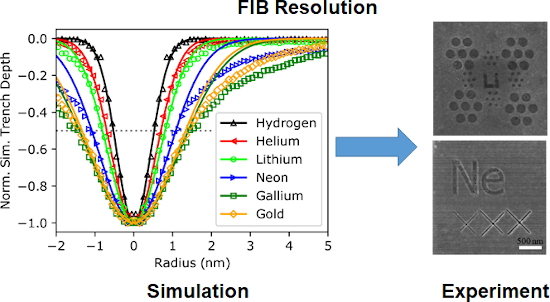
- ]. Currently, the majority of such instruments use a gallium liquid metal ion source (Ga-LMIS), but the demand in research as well as in the industry for other ion species is increasing permanently. Today, nearly half of the elements of the periodic table are demonstrated to be usable in FIB applications [2
- electronic drifts. In addition, gas bubble formation will not take place when Ga ions are used. To discuss the deviation between the simulated minimum milling width and the achieved trench widths in more detail, the experimental sputter beam profiles have been analyzed further. For HIM, the profiles of the
- multi-isotope LMAISs is a further factor of uncertainty that, in general, will worsen the achievable spatial resolution. Literature data for He and Ga are compiled in Figure 6. Normalized half profiles (ion beam radius) for helium beams averaged for different substrates (taken from [42][43]) and for 40


Out-of-plane surface patterning by subsurface processing of polymer substrates with focused ion beams
Beilstein J. Nanotechnol. 2020, 11, 1693–1703, doi:10.3762/bjnano.11.151
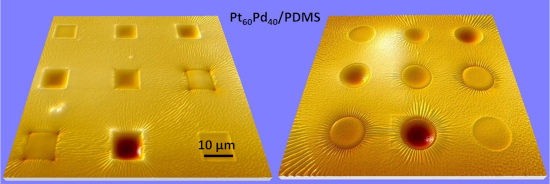
- of the polymer. Effects of subsurface and surface processes on the surface morphology have been studied for three polymer materials: poly(methyl methacrylate), polycarbonate, and polydimethylsiloxane, by using focused ion beam irradiation with He+, Ne+, and Ga+. Thin films of a Pt60Pd40 alloy and of
- -plane features, at the nanoscale, of the pre-deposited films. Ion irradiation of the Au-coated samples results in delamination, bulging, and perforation of the Au film, which is attributed to the accumulation of gases from radiolysis at the film–substrate interface. The irradiation with Ne+ and Ga+ ions
- PMMA surface essentially intact and provides a new route to their out-of-plane patterning, which is interesting for a range of thin film applications. In the current work, we extend our study to the effects of the ion mass by irradiating PMMA substrates with He+, Ne+, and Ga+ ions, and to the role of


Triboelectric nanogenerator based on Teflon/vitamin B1 powder for self-powered humidity sensing
Beilstein J. Nanotechnol. 2020, 11, 1394–1401, doi:10.3762/bjnano.11.123
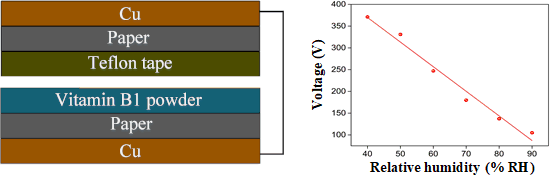
- ]. Recently, TENG-based sensors have attracted increased attention [34][35][36][37][38][39][40][41]. In 2014, Ga-doped ZnO was used for the fabrication of piezo-humidity sensors with a high sensitivity and a fast response [42]. In 2018, Vivekananthan et al. proposed sustainable energy harvesting and battery