


Search results
Search for "Ne" in Full Text gives 111 result(s) in Beilstein Journal of Nanotechnology.
Effects of drug concentration and PLGA addition on the properties of electrospun ampicillin trihydrate-loaded PLA nanofibers
Beilstein J. Nanotechnol. 2022, 13, 245–254, doi:10.3762/bjnano.13.19
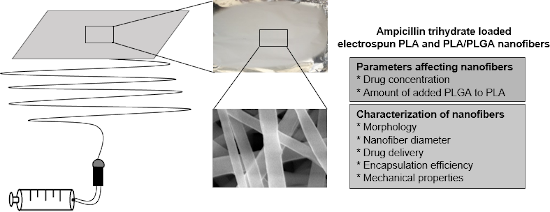
- used in the current study are shown in Table 1 and Table 2 (Electrospinning machine Ne-200, Inovenso, Turkey). The collector covered by a piece of aluminum foil was used for fiber deposition. The deposited fiber mats were dried for 72 h at room temperature and stored in a desiccant until the analysis


Is the Ne operation of the helium ion microscope suitable for electron backscatter diffraction sample preparation?
Beilstein J. Nanotechnol. 2021, 12, 965–983, doi:10.3762/bjnano.12.73
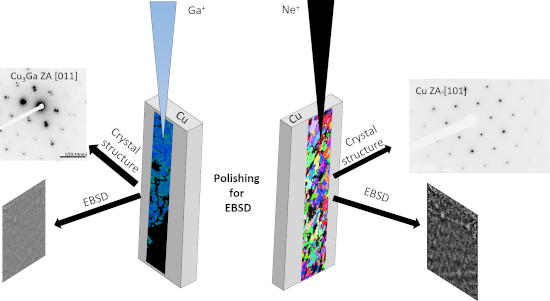
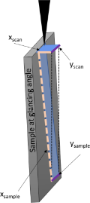
- microscope is better suited to achieve the required mirror-flat sample surface when operating the ion source with Ne instead of He. Copper was chosen as a test material and polished using Ga and Ne ions with different ion energies as well as incident angles. The results show that crystal structure
- alterations and, in some instances, phase transformation of Cu to Cu3Ga occurred when polishing with Ga ions. Polishing with high-energy Ne ions at a glancing angle maintains the crystal structure and significantly improves indexing in EBSD measurements. By milling down to a depth equaling the depth of the
- interaction volume, a steady-state condition of ion impurity concentration and number of induced defects is reached. The EBSD measurements and Monte Carlo simulations indicate that when this steady-state condition is reached more quickly, which can be achieved using high-energy Ne ions at a glancing incidence



Comprehensive review on ultrasound-responsive theranostic nanomaterials: mechanisms, structures and medical applications
Beilstein J. Nanotechnol. 2021, 12, 808–862, doi:10.3762/bjnano.12.64
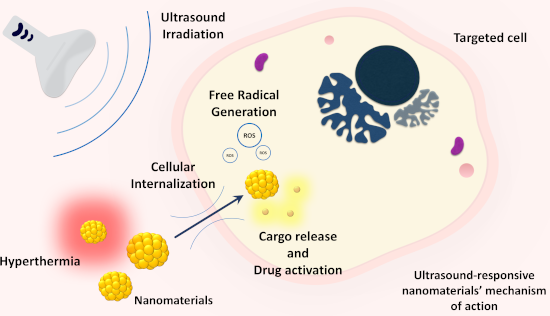
- and enhance therapeutic efficacy by providing local control of energy absorption and minimizing the treatment time and tissue damage [120]. The US-induced vaporization of a NE can also provide the force to increase the penetration and delivery of drug cargos through the skin with the goal of


The patterning toolbox FIB-o-mat: Exploiting the full potential of focused helium ions for nanofabrication
Beilstein J. Nanotechnol. 2021, 12, 304–318, doi:10.3762/bjnano.12.25
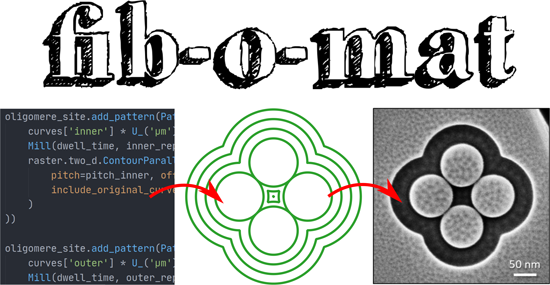
- consequence is the deep implantation of light ions. He and Ne are chemically inert and may therefore diffuse out of the substrate after a while. Diffusion in solids, however, is extremely inefficient, such that the majority of the primary ions will be implanted at their final trajectory position [22]. Hence


TiOx/Pt3Ti(111) surface-directed formation of electronically responsive supramolecular assemblies of tungsten oxide clusters
Beilstein J. Nanotechnol. 2021, 12, 203–212, doi:10.3762/bjnano.12.16
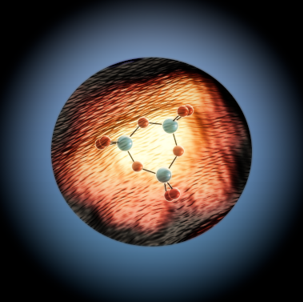
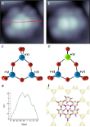
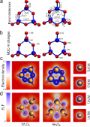
- , the Pt3Ti(111) single crystal surface (purchased by MaTecK) was cleaned by several cycles of neon sputtering (p(Ne) = 1 × 10⁻⁵ mbar) for 10 min and subsequently annealed at 1200 K for 25 min until a sharp p(2×2) pattern was visible by LEED. This procedure led to a clean alloy surface with a single Pt



Bio-imaging with the helium-ion microscope: A review
Beilstein J. Nanotechnol. 2021, 12, 1–23, doi:10.3762/bjnano.12.1
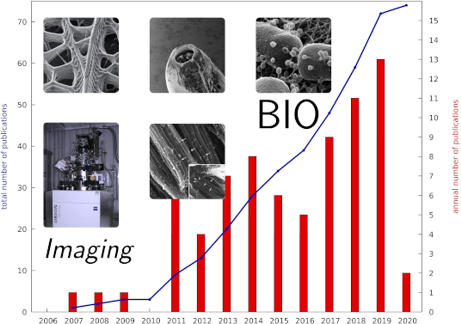
- imaging of insulating samples with nanoscale milling capabilities in one instrument. The milling efficiency can also be increased by the use of heavier ion species, such as Ne or Ga, where Ne is available for the standard He column, whereas Ga requires an additional column. In contrast to its success in


Imaging and milling resolution of light ion beams from helium ion microscopy and FIBs driven by liquid metal alloy ion sources
Beilstein J. Nanotechnol. 2020, 11, 1742–1749, doi:10.3762/bjnano.11.156
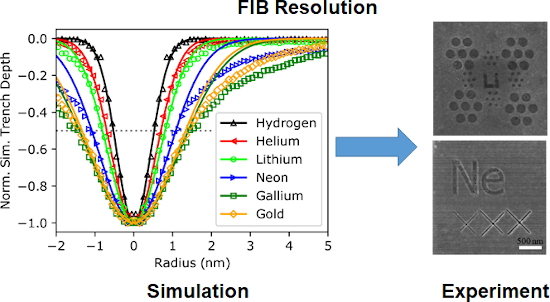
- resolution of Ne+ from a gas field ion source. The comparison allows one to select the best possible ion species for the specific demands in terms of resolution, beam current, and volume to be drilled. Keywords: focused ion beam; gas field ion source; liquid metal alloy ion source; resolution; Introduction
- ion beam current for different relevant FIB systems determined theoretically [15] (r50) and from experiments using a 20% to 80% rise of intensity for He, Li [16][17][18], Ne, and Ga [19]. The beam size criterion for Xe [20] is unknown. Mass spectrum of a Ga33Bi57Li10 LMAIS at an acceleration potential
- keV Ne+, FOV: 2.5 × 2.5 µm2, trench width: 12 nm, d) 70 keV Be++, FOV: 1.9 × 1.9 µm2, best imaging res: (4.0 ± 0.5) nm, e) 35 keV Li+, FOV: 1.2 × 1.2 µm2, best imaging res: (2.9 ± 0.5) nm, f) 35 keV B+, FOV: 1.6 × 1.6 µm2, best imaging res: (19 ± 2) nm. Summary of the imaging resolution (80/20


Out-of-plane surface patterning by subsurface processing of polymer substrates with focused ion beams
Beilstein J. Nanotechnol. 2020, 11, 1693–1703, doi:10.3762/bjnano.11.151
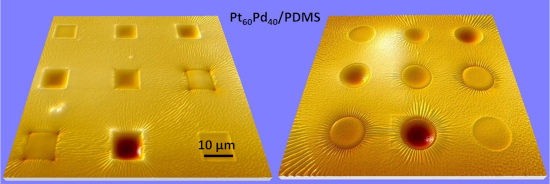
- of the polymer. Effects of subsurface and surface processes on the surface morphology have been studied for three polymer materials: poly(methyl methacrylate), polycarbonate, and polydimethylsiloxane, by using focused ion beam irradiation with He+, Ne+, and Ga+. Thin films of a Pt60Pd40 alloy and of
- -plane features, at the nanoscale, of the pre-deposited films. Ion irradiation of the Au-coated samples results in delamination, bulging, and perforation of the Au film, which is attributed to the accumulation of gases from radiolysis at the film–substrate interface. The irradiation with Ne+ and Ga+ ions
- interest within diverse fields of materials science and technology [1]. In recent years, the capabilities of FIBs have been substantially enhanced leading to a broad range of applications by the implementation of light ion beams (He+ and Ne+) emitted by a gas field ion source (GFIS). This has enabled


Helium ion microscope – secondary ion mass spectrometry for geological materials
Beilstein J. Nanotechnol. 2020, 11, 1504–1515, doi:10.3762/bjnano.11.133
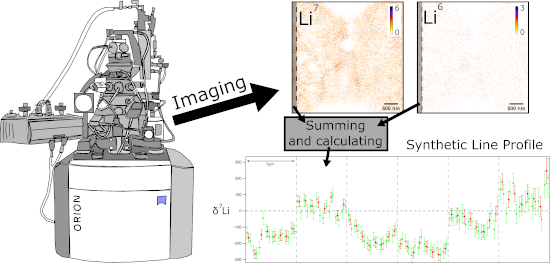
- ion stream of He+ or Ne+, with a very small probe size (0.5 nm for He+ and less than 3 nm for Ne+). Primary ion currents of 1–10 pA were applied to the samples with acceleration voltages between 10,000 and 20,000 keV. Positive secondary ions of Li+ were extracted by the application of a 500 V
- , which is typically measured after the analysis: The sputtering yield depends on the nature of the atoms as well as the matrix in which they are bound. This yield can be predicted semi-empirically for a primary Ne beam [17]. Figure 3 shows how the calculated yield of different atoms varies for a silicate
- . The calculated sputtering yield as a function of the atomic number for a 10 kV primary Ne beam impacting a silicate glass matrix for a low-density glass (2.2 g·cm−3, blue) and a high-density glass (3.3 g·cm−3, red), calculation after [17]. Reflected-light micrograph of the analysed Spodumene grain



Transient coating of γ-Fe2O3 nanoparticles with glutamate for its delivery to and removal from brain nerve terminals
Beilstein J. Nanotechnol. 2020, 11, 1381–1393, doi:10.3762/bjnano.11.122
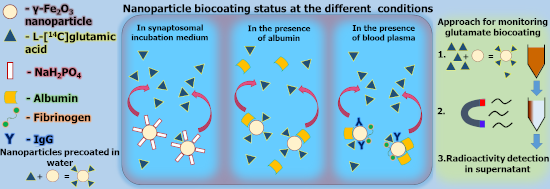
- ) equipped with a He–Ne laser LGN-111 (P = 25 mW, λ = 633 nm). A suspension of γ-Fe2O3 nanoparticles (1 mL) in the standard salt solution was placed to a cylindrical quartz cuvette of 10 mm in diameter, which was inserted into the laser correlation spectrometer. The measurement range of the instrument is


Magnetic-field-assisted synthesis of anisotropic iron oxide particles: Effect of pH
Beilstein J. Nanotechnol. 2020, 11, 1230–1241, doi:10.3762/bjnano.11.107
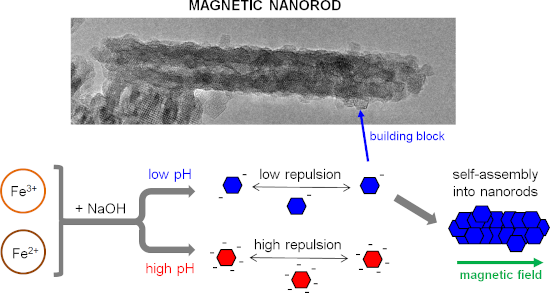
- HR800, Villeneuve-d'Ascq, France) equipped with 100× magnification lens. The copper substrates were dip-coated in the sample solutions and dried under ambient conditions. The measurements of the produced films were conducted at room temperature and atmospheric air. A He–Ne laser (λ = 632.8 nm) was used





Nanoparticles based on the zwitterionic pillar[5]arene and Ag+: synthesis, self-assembly and cytotoxicity in the human lung cancer cell line A549
Beilstein J. Nanotechnol. 2020, 11, 421–431, doi:10.3762/bjnano.11.33
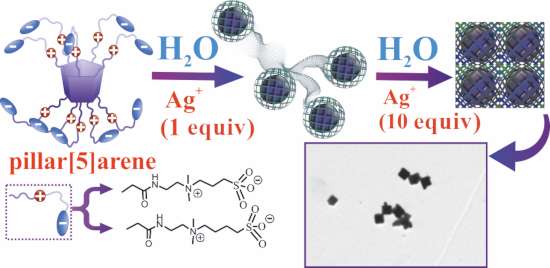
- cuvettes. The instrument contains a 4 mW He–Ne laser operating at a wavelength of 633 nm and incorporates noninvasive backscatter optics (NIBS). The measurements were performed at the detection angle of 173° and the software automatically determined the measurement position within the quartz cuvette. The




pH-Controlled fluorescence switching in water-dispersed polymer brushes grafted to modified boron nitride nanotubes for cellular imaging
Beilstein J. Nanotechnol. 2019, 10, 2428–2439, doi:10.3762/bjnano.10.233
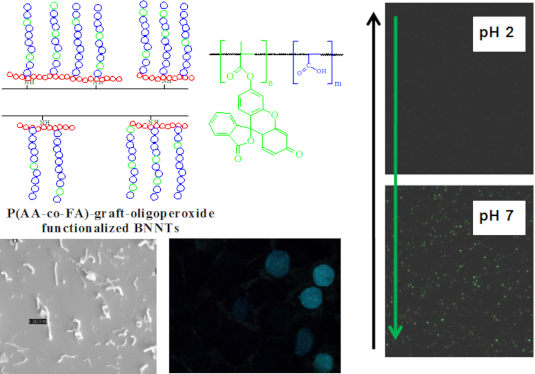
- measurements of the nanotubes were performed with a Zetasizer Nano ZS device (Malvern, USA) at 25 °C. The Nano ZS contains a 4 mW He–Ne laser operating at a wavelength of 633 nm and an avalanche photodiode detector. The scattered light was detected at an angle of 173°. The refractive index and absorption of


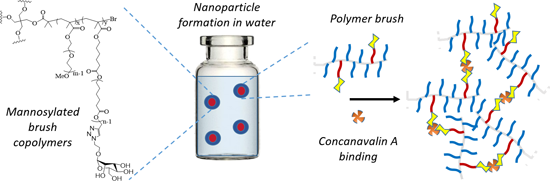
Mannosylated brush copolymers based on poly(ethylene glycol) and poly(ε-caprolactone) as multivalent lectin-binding nanomaterials
Beilstein J. Nanotechnol. 2019, 10, 2192–2206, doi:10.3762/bjnano.10.212
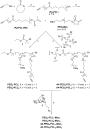
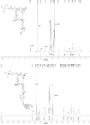
- : -CH2CH2CH2-), 1.25–0.77 (m, 3H·(y + x), -CH3,backbone). Particle size measurements by DLS DLS analyses of polymers (1 mg/mL, filtered solutions with PTFE 0.45 µm filters) were performed using a Malvern Instrument Zetasizer Nano ZS instrument equipped with a 4 mW He–Ne laser operating at λ = 634 nm. Particle



Use of data processing for rapid detection of the prostate-specific antigen biomarker using immunomagnetic sandwich-type sensors
Beilstein J. Nanotechnol. 2019, 10, 2171–2181, doi:10.3762/bjnano.10.210

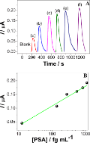
- working carbon electrodes combined with one pseudo-reference electrode (Ag/AgCl) and one auxiliary electrode (carbon). The microfluidic system was set up with an injection pump (NE-1000 programmable Single Syringe Pump, New Era Pump System, Farmingdale, USA) and an injection valve with a sample loop of


Liquid crystal tunable claddings for polymer integrated optical waveguides
Beilstein J. Nanotechnol. 2019, 10, 2163–2170, doi:10.3762/bjnano.10.209
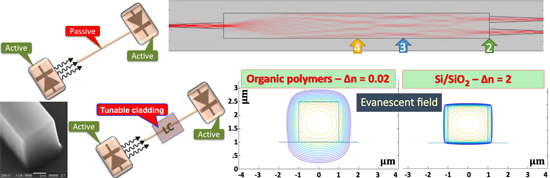
- constructed. The cell consists of a LC (Merck MDA-98-1602, no = 1.52, ne = 1.78) sandwiched between the substrate containing the waveguides and an ITO-coated glass plate to provide a conductive layer for applying electric signals (Figure 8). The substrate Si wafer was employed as counter electrode. Si was
- structure with this alignment, one mode of light propagating through the waveguide would experience a cladding with a tunable refractive index in a range close to the LC birefringence ∆n = ne − no, where ne and no are the extraordinary and the ordinary index of the LC, respectively. In a second experimental


Ion mobility and material transport on KBr in air as a function of the relative humidity
Beilstein J. Nanotechnol. 2019, 10, 2084–2093, doi:10.3762/bjnano.10.203
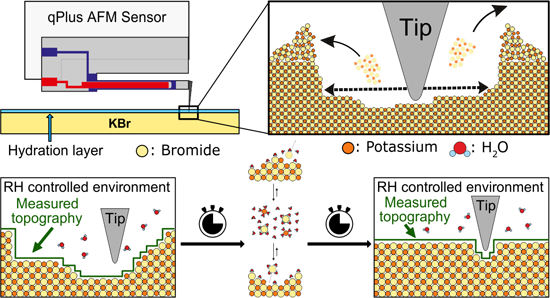
- interatomic spacing of a: The number of atoms at the step edge Ne can be described by If material transport is confined to the edges, then (see Equation 5): with Eb,e being the energy barrier height at the step edge. This yields a solution of the form with , and explains the increased decay of the structure


Green and scalable synthesis of nanocrystalline kuramite
Beilstein J. Nanotechnol. 2019, 10, 2073–2083, doi:10.3762/bjnano.10.202
- ][55]. Raman spectroscopy was performed with a He–Ne laser source emitting at 632.8 nm with a laser spot on the sample of about 10 μm2. The main reference for the positions of the Raman peaks is from the RRUFF database [56]. XAS measurements at Cu and Sn K-edge (8978.9 and 29200.1 eV, respectively


Gold-coated plant virus as computed tomography imaging contrast agent
Beilstein J. Nanotechnol. 2019, 10, 1983–1993, doi:10.3762/bjnano.10.195
- recorded with the following settings: 20 mW He–Ne laser, λ0 = 780 nm, scattering angle θ = 90°, molar refractive index of 1.33; viscosity of 0.8872 at 25 °C; the attenuator was set up automatically and ranged between 6 to 9. Corresponding quartz cells were flushed with deionized water followed by a 1% (v/v
- –Einstein equation. Zeta potential measurements The zeta potential of the particles was measured on a Zetasizer™ NanoZS-90 (Malvern Instruments) equipped with a 4 mW, λ0 = 632 nm He–Ne laser operating with a detector angle of θ = 173° degree. The cell voltage of the instrument was fixed to 80 V during




Precise local control of liquid crystal pretilt on polymer layers by focused ion beam nanopatterning
Beilstein J. Nanotechnol. 2019, 10, 1691–1697, doi:10.3762/bjnano.10.164
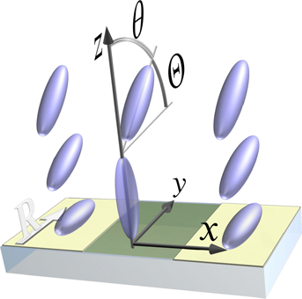
- through the LC layer. Due to the LC birefringence, they acquire different optical paths: for the x-polarized state, and for the y-polarized state. For a relatively weak birefringence Δn = ne − no, we can write the measured phase retardation approximately as which is formally x-dependent. Substituting


Magnetic segregation effect in liquid crystals doped with carbon nanotubes
Beilstein J. Nanotechnol. 2019, 10, 1464–1474, doi:10.3762/bjnano.10.145
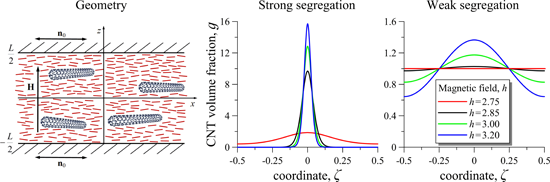
- distortions in the orientational structure, the refractive index of the ordinary ray no remains unchanged, and the refractive index of the extraordinary ray ne will decrease and approach the value of no. Above the Fréedericksz transition the value of the effective refractive index neff depending on the angle
- the optical phase lag, in Equation 24 we change from integration over the coordinate ζ to integration over the angle φ using Equation 10, then Equation 24 can be written as Here, δ0 = 2πL(ne − no)/λ is the phase lag in the absence of a magnetic field, and the notation is introduced. In Equation 25
- passing through the NLC cell with a CNT impurity. For calculations we use the values of the refractive index of the liquid crystal 5CB (no = 1.53, ne = 1.71 for λ = 632.8 nm [45]), on the basis of which NLC–CNT mixtures can be prepared [24][32][50]. From Figure 7 it can be seen that in the initial planar


Molecular attachment to a microscope tip: inelastic tunneling, Kondo screening, and thermopower
Beilstein J. Nanotechnol. 2019, 10, 1243–1250, doi:10.3762/bjnano.10.124
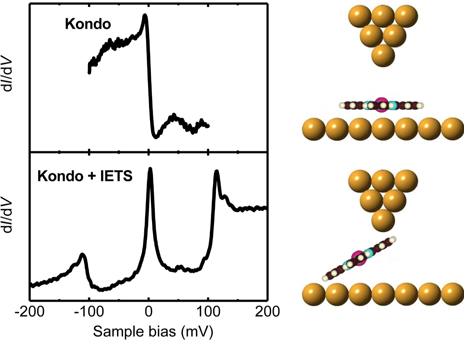
- tunneling microscope (Modified Createc LT-STM) equipped with a vector magnetic field of 1 T. As described in [21], the Au(111) single crystal was cleaned by repeated cycles of Ne+ ion bombardment followed by thermal annealing at 800 K. The MnPc molecules were evaporated from an Al2O3 crucible heated by


Correlation of surface-enhanced Raman scattering (SERS) with the surface density of gold nanoparticles: evaluation of the critical number of SERS tags for a detectable signal
Beilstein J. Nanotechnol. 2019, 10, 1016–1023, doi:10.3762/bjnano.10.102
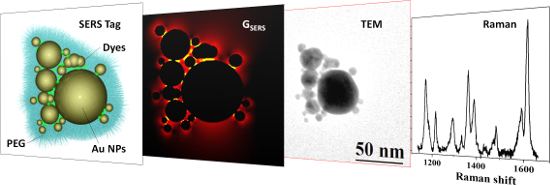
- micro-Raman instrument (CCD detector with 100 mm slits) on the TEM grids containing the AuNTs and using the 633 nm line of a He–Ne laser. The laser power at the entrance pupil of the microscope objective was 0.85 mW, corresponding to 0.65 mW at the output of the microscope objective (measured with a


Nanoscale optical and structural characterisation of silk
Beilstein J. Nanotechnol. 2019, 10, 922–929, doi:10.3762/bjnano.10.93
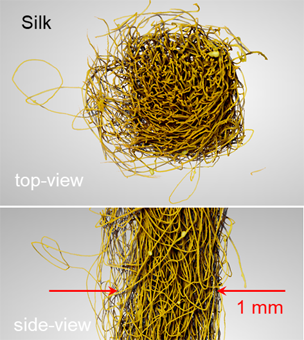
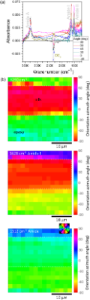
- (LC) retarder, which was inserted with its slow-axis perpendicular to the orientation of the silk fiber (see inset in Figure 3b). Using such a geometry, it is possible to compensate for the birefringence of the silk fibers, Δn ≡ ne − no > 0, with a phase delay imparted by the LC retarder. When the


An efficient electrode material for high performance solid-state hybrid supercapacitors based on a Cu/CuO/porous carbon nanofiber/TiO2 hybrid composite
Beilstein J. Nanotechnol. 2019, 10, 781–793, doi:10.3762/bjnano.10.78
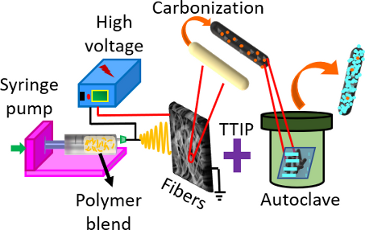
- and a transmission electron microscope (JEOL JEM 2100) operating at 200 kV. The crystalline structure was identified using a Rigaku Rintz Ultima X-ray diffraction unit. Raman spectra were analyzed by a LabRAM HP 800 UV with a 632 nm He–Ne laser as the excitation source in the range of 100–3000 cm−1 at





