


Search results
Search for "anode" in Full Text gives 183 result(s) in Beilstein Journal of Nanotechnology.
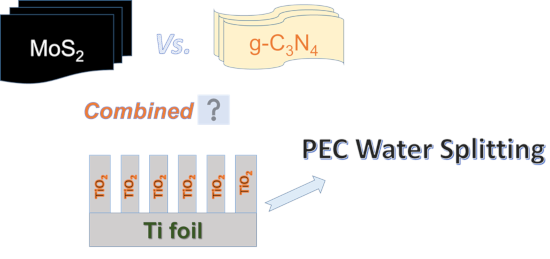
Photoelectrochemical water oxidation over TiO2 nanotubes modified with MoS2 and g-C3N4
Beilstein J. Nanotechnol. 2022, 13, 1541–1550, doi:10.3762/bjnano.13.127
- and reduction reactions at, respectively, the anode and cathode described by Equation 3 and Equation 4. Oxidation reaction at the anode: Reduction reaction at the cathode: Carrying out the reactions in a neutral medium also contributes to the increased durability of the electrodes. However, the lack
- of initial H+ concentration can reduce the efficiency of the H2 production. For an effective water splitting process, the oxidation reaction of OH− ions in the electrolyte needs to take place at the anode to generate e− and H+ ions along with O2. The e− current will immediately migrate to the cathode


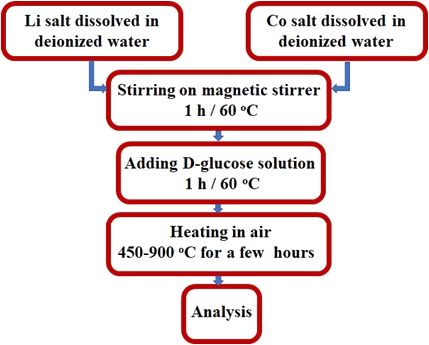
Structural studies and selected physical investigations of LiCoO2 obtained by combustion synthesis
Beilstein J. Nanotechnol. 2022, 13, 1473–1482, doi:10.3762/bjnano.13.121
- lithium cells in 1979 by researchers from Oxford University [1]. The cell consisted of LCO, which was used as the cathode material, and metallic lithium, which was used as the anode material. In 1985, it was proposed to replace the Li metal in the negative electrode with the carbonaceous material graphite
- cathode and a graphite anode immersed in a lithium-ion conducting electrolyte, which is 1 M lithium hexafluorophosphate LiPF6 in a 1:1 (v/v) mixture of ethylene and dimethyl carbonate. Most commercial Li-ion cells are used to power portable devices, including mobile phones, laptops, and cameras [5][6][7




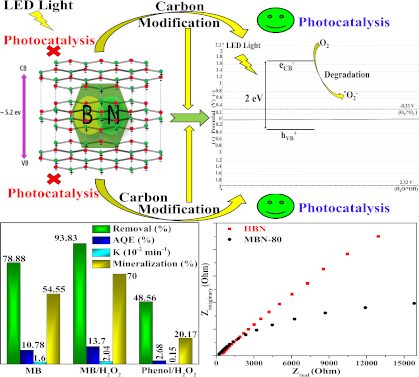
LED-light-activated photocatalytic performance of metal-free carbon-modified hexagonal boron nitride towards degradation of methylene blue and phenol
Beilstein J. Nanotechnol. 2022, 13, 1380–1392, doi:10.3762/bjnano.13.114
- times with DI water, and dried overnight at 60 °C. The commercially available HBN was used as a control sample. Characterization techniques A Rigaku Smart Lab high-resolution X-ray diffractometer (HR-XRD) equipped with a HyPix-3000 detector and Cu anode emitting Kα radiation was employed to obtain the



Studies of probe tip materials by atomic force microscopy: a review
Beilstein J. Nanotechnol. 2022, 13, 1256–1267, doi:10.3762/bjnano.13.104
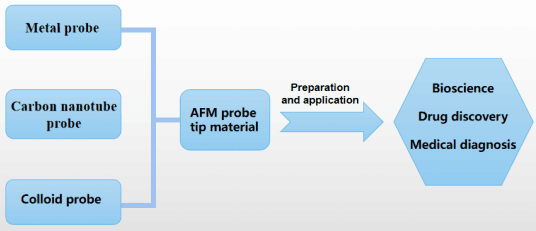
- fluoride oxidation at the anode to form nanopores of 50–100 nm in diameter. After electrodeposition, the carbon nanotubes are grown by CVD at 750 °C. If the carbon nanotubes do not grow in a suitable trend, they are removed by oxidation. The CNT tips are then grown again by CVD. The CVD nanotube tips can
Application of nanoarchitectonics in moist-electric generation
Beilstein J. Nanotechnol. 2022, 13, 1185–1200, doi:10.3762/bjnano.13.99
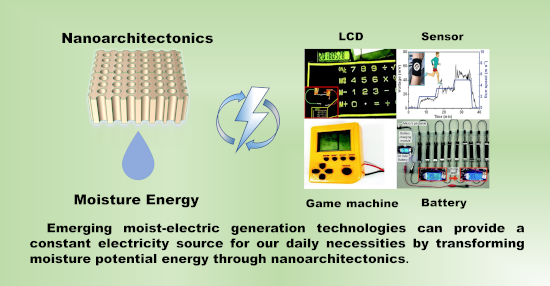
- voltage to two spiral electrodes, the material between the electrodes generated a gradient of hydroxy groups through polarization. The cathode was reduced to generate more hydroxy groups; the anode was oxidized to generate more o-quinone structures. This asymmetry was demonstrated by the stronger hydrogen
- electrodes for (1) the anode and (2) the cathode. (f) Infrared spectra of g-PDA near (1) the anode and (2) the cathode. (g) High-resolution C 1s spectra of the g-PDA film for (1) the anode and (2) the cathode. Figure 8e–g were reprinted with permission from [84], Copyright 2019 American Chemical Society


Efficient liquid exfoliation of KP15 nanowires aided by Hansen's empirical theory
Beilstein J. Nanotechnol. 2022, 13, 788–795, doi:10.3762/bjnano.13.69
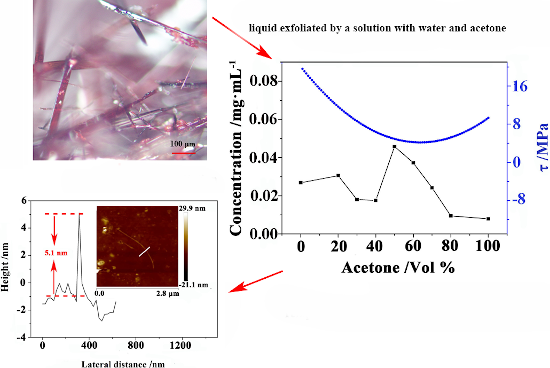
- nanoparticles as anode materials to promote the rapid diffusion and electron transfer of lithium, and Rongjun Zhao prepared n-butanol gas sensors with one-dimensional In2O3 nanorods [1][2]. Different from 2D materials, 1D materials generally have a chain-like crystal structure and are easily exfoliated due to a


Nanoarchitectonics of the cathode to improve the reversibility of Li–O2 batteries
Beilstein J. Nanotechnol. 2022, 13, 689–698, doi:10.3762/bjnano.13.61
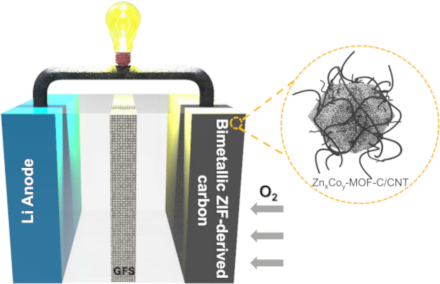
- (LOBs) have received great attention as a future energy storage solution since they offer a tremendously high energy density compared to commercial lithium-ion batteries (LIBs) [1][2]. An aprotic LOB is composed of a porous air cathode and a metallic Li anode, which are separated by a porous separator
- from the metallic Li anode, leading to the formation of Li2O2 as the final discharge product. During the subsequent charge, Li2O2 can be reversibly decomposed to Li+ and O2 by the oxygen evolution reaction (OER) [3][4][5][6]. Considering these reaction mechanisms of LOBs, the cathode should have a
- (Thermal Analyzer, TGA Q5000 IR) with a scan rate of 5 °C·min−1 under Ar atmosphere. Electrochemical experiments The electrochemical performance of cathode materials was investigated using a coin-type LOB cell composed of a Li metal anode, a liquid electrolyte impregnated into a glass-fiber separator, and



Influence of thickness and morphology of MoS2 on the performance of counter electrodes in dye-sensitized solar cells
Beilstein J. Nanotechnol. 2022, 13, 528–537, doi:10.3762/bjnano.13.44
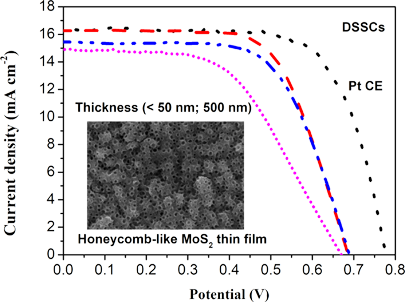
- ) [6][7][8][9]. Since the reduction of I3− to I− on the CE plays a vital role in the regeneration of the oxidized dye molecules on the photoanode of the DSSCs, the electrocatalytic behavior of MoS2 CEs was further evaluated regarding the first redox couple (Ox1/Red1). Various parameters including anode
- /cathode peak potentials (EpOx1, EpRed1), peak-to-peak voltage separation (Epp), and anode/cathode peak current densities (JOx1, JRed1) were calculated and presented in Table 1. The Epp value for MoS2 CEs was slightly larger than that of Pt CE confirming their excellent electrocatalytic activity. The JRed1
- assembled using the pre-cleaned FTO plates (1.5 × 1.5 cm) for the fabrication of anode and cathode. For cathode preparation, MoS2/FTO CEs were prepared with different morphologies from the above MoS2 samples. The obtained CEs were designated as MoS2-1.25/FTO, MoS2-2.5/FTO, and MoS2-5.0/FTO. For comparison


Electrostatic pull-in application in flexible devices: A review
Beilstein J. Nanotechnol. 2022, 13, 390–403, doi:10.3762/bjnano.13.32
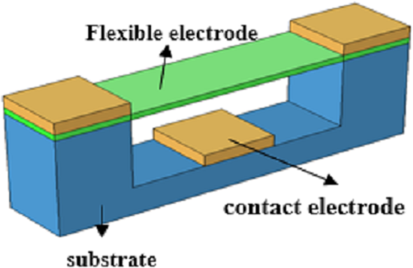
- protection based on GR NEM switch structures can be integrated into the back end of the substrate, as shown in Figure 7. The anode and cathode of the switches are connected to input/output pads and ground pad on a chip, respectively. When electrostatic discharge occurs, the suspended graphene will be pulled


The effect of metal surface nanomorphology on the output performance of a TENG
Beilstein J. Nanotechnol. 2022, 13, 298–312, doi:10.3762/bjnano.13.25
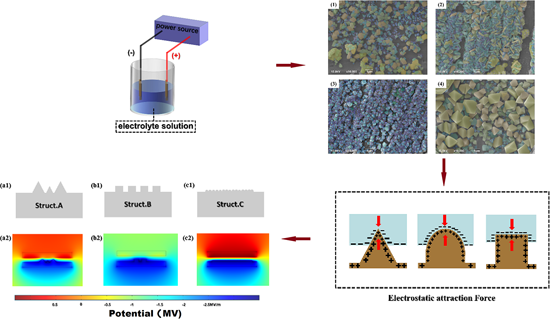
- during electrodeposition. The sample after electrodeposition was dried in a Geruida GRD220H oven. After obtaining 16 groups of experimental samples, PTFE (purchased from Bukraun) was used as the anode, and the experimental sample was used as the cathode to fabricate the TENGs. The open-circuit voltage
- the electrolyte. The deposition area was set to 9 cm2 by adjusting the position of the anode copper sheet and the cathode copper sheet immersed in the electrolyte. The distance between the anode and cathode plates was fixed at 5 cm to avoid the impact of plate spacing on the nanomorphology of the







Assessment of the optical and electrical properties of light-emitting diodes containing carbon-based nanostructures and plasmonic nanoparticles: a review
Beilstein J. Nanotechnol. 2021, 12, 1078–1092, doi:10.3762/bjnano.12.80
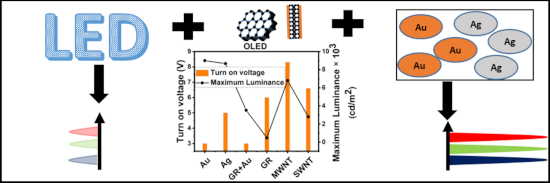
- as the emissive layer (EML), the hole transport layers (HTL), the electron transport layers (ETL), the cathode, and the anode [17][18][19][20][21]. Enhancement in LED properties via surface plasmon resonance (SPR) of metal nanoparticles (MNP) such as Au and Ag have also been reported [22][23]. This
- feasibility of incorporating GR and CNT in large-scale devices is also discussed. Even though plasmonic nanoparticles (NP) are a developing field, their applications are nonetheless promising. The effect of these nanostructures on the performance of LED when included in individual layers (i.e., anode, HTL
- review is available in Table 1. Enhancing the anode characteristics For LED, the general strategy is to use a current-spreading layer (anode) with a high electrical conductivity and a high transparency ranging from the UV to the red region. Additionally, it should also be cost-effective and producible on


Progress and innovation of nanostructured sulfur cathodes and metal-free anodes for room-temperature Na–S batteries
Beilstein J. Nanotechnol. 2021, 12, 995–1020, doi:10.3762/bjnano.12.75
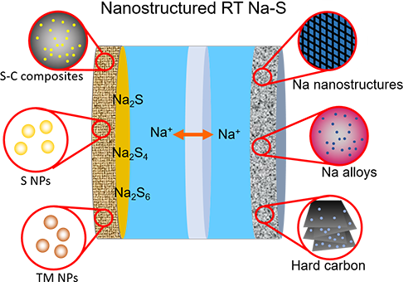
- , Na dendrite growth, and slow reaction kinetics by nanostructuring both the sulfur cathode and the Na anode. Moreover, a survey of recent patents on room temperature (RT) Na–S batteries revealed that nanostructured sulfur and sodium electrodes are still in the minority, which suggests that much
- investigation and innovation is needed until RT Na–S batteries can be commercialized. Keywords: composites; metal-free anode; Na–S; sodium nanostructures; sodium–sulfur batteries; sulfur nanostructures; Introduction The progress and innovation of cheaper, cleaner, safer, and more efficient electrical energy
- available anode and cathode materials are sought. Table 1 lists some abundant metals as anode materials with high capacity and reduction potential values that are explored in metal-ion batteries [7][8][9]. Besides sodium as alternative anode material, also sulfur as abundant cathode material has emerged due





The role of deep eutectic solvents and carrageenan in synthesizing biocompatible anisotropic metal nanoparticles
Beilstein J. Nanotechnol. 2021, 12, 924–938, doi:10.3762/bjnano.12.69

- surface coating with nanoparticles through electrodeposition. A general electrodeposition setup consists of three electrodes, that is cathode, anode, and a reference electrode [78]. The solvation property and the conductivity of DESs also play a critical role in determining the physical structure, yield


Electromigration-induced formation of percolating adsorbate islands during condensation from the gaseous phase: a computational study
Beilstein J. Nanotechnol. 2021, 12, 694–703, doi:10.3762/bjnano.12.55
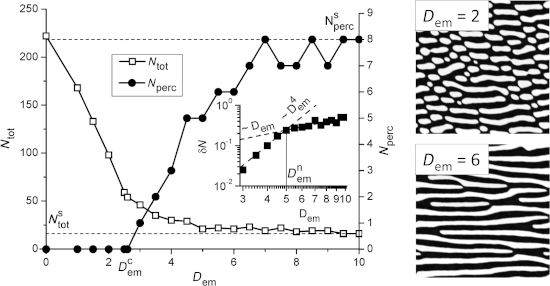
- neighboring vacancies in the direction of electron flow leading to an accumulation of atoms at the anode and vacancies at the cathode [1][2]. Current trends in computer technology, namely, reducing the size of integrated circuits, increasing their power, and increasing the density of elements, have led to an
- between anode and cathode); e is the electron charge. The direction of the force Fel is defined by the effective valence Z, which is negative for most metals. Thus, the adsorbed atoms move in the opposite direction to the electric field. In the general case if the electric field is applied across the
- induced by an electric field: ±kem∇xx(r), where it is taken into account that the electric field is directed along the direction x, and the sign ± is determined by the relative position of the cathode and anode. The rate of directed motion kem is proportional to the strength E of the electric field. A




![[Graphic 29]](/bjnano/content/inline/2190-4286-12-55-i36.svg?max-width=637&scale=1.18182) on the adsorption coefficient α ...
on the adsorption coefficient α ...

Interface interaction of transition metal phthalocyanines with strontium titanate (100)
Beilstein J. Nanotechnol. 2021, 12, 485–496, doi:10.3762/bjnano.12.39
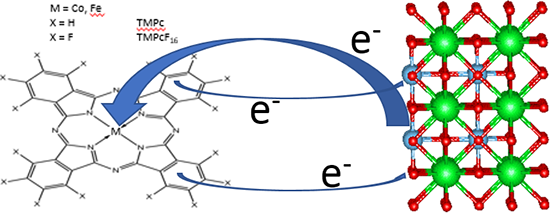
- a thickness of 0.34 nm estimated from the structure of an α-polymorph of TMPcs [42][43][44]. Photoelectron spectroscopy (PES) measurements were performed using an ultrahigh-vacuum setup equipped with a monochromatized standard source (Al Kα), a twin-anode standard source (Al Kα and Mg Kα), PHOIBOS


Solution combustion synthesis of a nanometer-scale Co3O4 anode material for Li-ion batteries
Beilstein J. Nanotechnol. 2021, 12, 424–431, doi:10.3762/bjnano.12.34
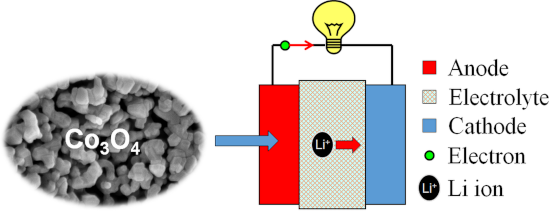
- obtained material was composed of loosely arranged nanoparticles whose average diameter was about 36 nm. The as-prepared cobalt oxide powder was also tested as the anode material for Li-ion batteries and revealed specific capacities of 1060 and 533 mAh·g−1 after 100 cycles at charge–discharge current
- current densities between 50 and 5000 mA·g−1. Keywords: anode material; cobalt oxide; lithium-ion battery; solution combustion synthesis; transition metal oxide; Introduction Recently, a considerable research effort regarding new anode materials has been made because the traditional carbonaceous anodes
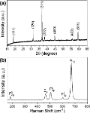
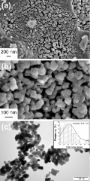
- area, which, surprisingly, revealed high rate capability and long cycle life as anode electrode material for Li-ion batteries. The obtained results are discussed in detail in the following sections of this work. Results and Discussion The structure of as-prepared Co3O4 powder was verified by XRD and


Paper-based triboelectric nanogenerators and their applications: a review
Beilstein J. Nanotechnol. 2021, 12, 151–171, doi:10.3762/bjnano.12.12
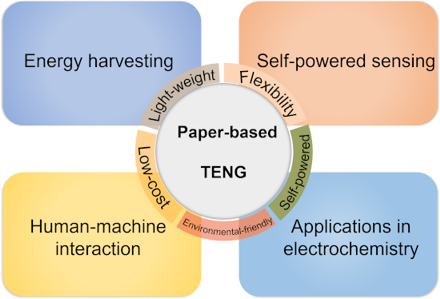
- attention from different sectors. Cathodic protection is an effective and a traditional method to keep metals from corrosion. It can be obtained by an external direct current or a by a passive sacrificial anode [155][156][157]. However, traditional cathodic protection needs external electricity, which is
- square-shaped A3 steel piece was connected to the cathode and a carbon electrode was connected to the anode, with a P-TENG paired with a rectifier and a capacitor connected in parallel with the electrochemical system. The P-TENG, in this case, was composed of PVDF and paper as the friction layers. The
- (Dunaliella and Navicula) were used as typical indicators to simulate the ecological environment of the marine fouling organisms. Two stainless steel pieces were connected to the anode and to the cathode with a rectifier, and another piece of stainless steel was directly immersed into the algae medium as the







A review on the green and sustainable synthesis of silver nanoparticles and one-dimensional silver nanostructures
Beilstein J. Nanotechnol. 2021, 12, 102–136, doi:10.3762/bjnano.12.9
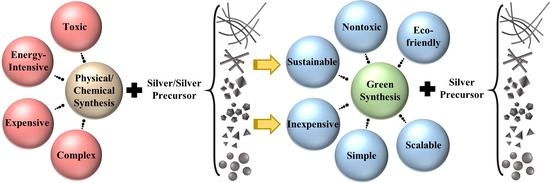
- . Another physical method widely used for the synthesis of AgNPs is the arc discharge method. In this method, two electrodes – a cathode and an anode – are connected in a high current DC circuit and submerged in a solvent – mostly deionized water – to run the process [129][131]. These electrodes can be
- anode, and an electron exchange takes place in the plasma region where silver ions are reduced [129]. In the case of silver electrodes, silver will be melted and vaporized from the electrode ends, and as a result, nanoparticles are formed from the silver condensates [131]. Tien et al. [227] synthesized


Scanning transmission imaging in the helium ion microscope using a microchannel plate with a delay line detector
Beilstein J. Nanotechnol. 2020, 11, 1854–1864, doi:10.3762/bjnano.11.167
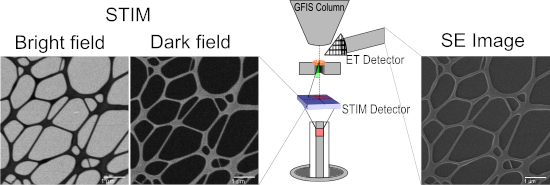
- transmission-channeling contrast using polycrystalline silicon, thallium chloride samples and beam steering in single-crystalline silicon. Experimental The new STIM detector comprises a stack of two MCPs and a resistive anode layer with a delay line readout structure behind it, as represented in Figure 1c. The
- numerous collisions along the way within the channels creating an electron cloud. The electron cloud hits the resistive anode layer in front of the delay lines and, by capacitive coupling, induces signals on the delay line meanders. These signals are collected at the endpoints of each delay line and passed
- 4 megapixels over its entire area. The MCP front is biased to a potential of approximately −2 kV, while the MCP back is kept at approximately −400 V, relative to the anode, which is at ground potential. With this bias scheme, in the working instrument (detectors and gauges powered up, column


Piezotronic effect in AlGaN/AlN/GaN heterojunction nanowires used as a flexible strain sensor
Beilstein J. Nanotechnol. 2020, 11, 1847–1853, doi:10.3762/bjnano.11.166
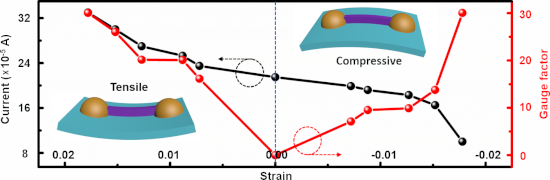
- silver paste and connected to the anode of the electrolytic cell, and the cathode was the Pt sheet. Oxalic solution (0.3 M) was used as the electrolyte. The applied voltage was 20 V and the duration of its application was 10 min. After selective EC wet etching, the sample with suspended NWs was placed in


Self-standing heterostructured NiCx-NiFe-NC/biochar as a highly efficient cathode for lithium–oxygen batteries
Beilstein J. Nanotechnol. 2020, 11, 1809–1821, doi:10.3762/bjnano.11.163
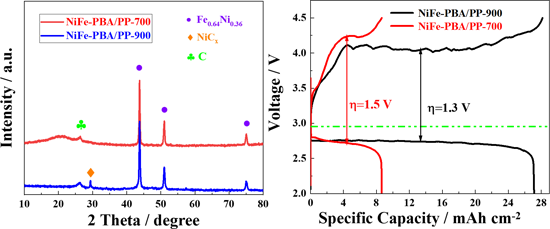
- the anode, and LiCF3SO3 dissolved in tetraethylene glycol dimethyl ether was used as the electrolyte. A glass filter (Whatman grade GF/D) was used as the separator in these coin cells. The cell assembly was carried out in an Ar-filled glove box (H2O < 0.5 ppm, O2 < 0.5 ppm). The sealed coin cells were







Mapping of integrated PIN diodes with a 3D architecture by scanning microwave impedance microscopy and dynamic spectroscopy
Beilstein J. Nanotechnol. 2020, 11, 1764–1775, doi:10.3762/bjnano.11.159
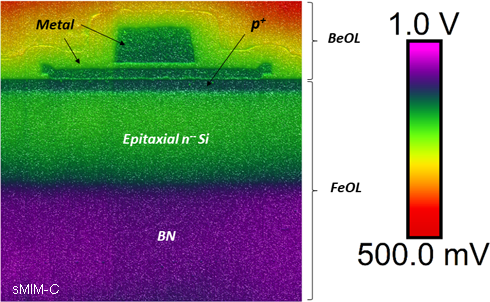
- lightly doped n-type epitaxial silicon layer is, then, grown on top of the buried layer using chemical vapour deposition. The targeted epitaxial layer thickness is 7.5 µm with a resistivity of 12 Ω·cm. The anode of the diode is formed by a 30 µm diameter p+ layer, also made by the implantation and
- ) have a slightly different polishing rate, which results in the observed topography. In the AFM topography image, one can localize the two deep trench isolation structures in the silicon wafer, as well as the anode and cathode contacts. It is important to note that a low roughness is required for a
- stable tip–sample contact during the sMIM measurements. A root mean square (RMS) roughness of the silicon surface below 3 nm was measured. First, we studied the PIN vertical structure and the anode contact. Area 1 in Figure 2 was scanned with VDC = 0 V and VAC = 1.0 V. The sMIM results for a scanned area


Fabrication of nano/microstructures for SERS substrates using an electrochemical method
Beilstein J. Nanotechnol. 2020, 11, 1568–1576, doi:10.3762/bjnano.11.139
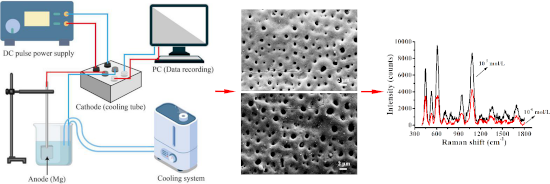
- succession. No further purification was carried out. A customized DC power supply was used to conduct the PEO. Figure 1 shows the schematic diagram of nanopore formation using PEO processing. The specimens and carbon tubes were utilized as the anode and cathode, respectively, and the electrolyte solution was


Wafer-level integration of self-aligned high aspect ratio silicon 3D structures using the MACE method with Au, Pd, Pt, Cu, and Ir
Beilstein J. Nanotechnol. 2020, 11, 1439–1449, doi:10.3762/bjnano.11.128
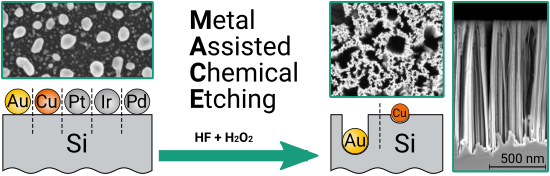
- transport and improve the efficiency of the thermoelectric generator [7]. Silicon nanowire arrays are also an emerging anode material for integrated lithium-ion batteries. They have a ten times higher theoretical capacity than graphite and can be used for cells with high energy density. However, these
- features cannot be achieved with dense silicon, i.e., a nanoporous silicon anode is required for a successful integration [8]. Also, integrated capacitors can benefit from the increased surface of nanowires with high aspect ratio. In combination with atomic layer deposition, one can fabricate integrated


Structure and electrochemical performance of electrospun-ordered porous carbon/graphene composite nanofibers
Beilstein J. Nanotechnol. 2020, 11, 1280–1290, doi:10.3762/bjnano.11.112
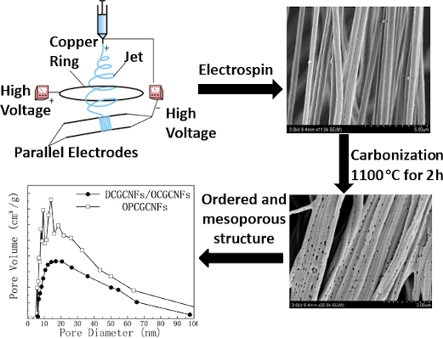
- of two high-voltage power generators (NTPS-35K, Ntsse Co., Korea), a flow pump (LSP01, Longerpump Co., Ltd., China), a syringe (20 mL) with a capillary tip (diameter = 0.5 mm), a copper ring and a parallel electrode collector. The needle tip and the copper ring were clamped on the anode of the high





