


Search results
Search for "carbonization" in Full Text gives 58 result(s) in Beilstein Journal of Nanotechnology.
Synthesis of amorphous and graphitized porous nitrogen-doped carbon spheres as oxygen reduction reaction catalysts
Beilstein J. Nanotechnol. 2020, 11, 1–15, doi:10.3762/bjnano.11.1
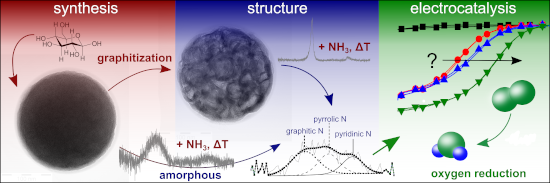
- microporosity of the materials is critical for an efficient ORR. Keywords: amorphous carbon; graphitized carbon; hydrothermal carbonization; nitridation; nitrogen doping; oxygen reduction reaction (ORR); porosity; Introduction Fuel cells and metal–air batteries are important renewable energy technologies
- , NCS-1000 = 240 ± 30 nm; g-NCS-550 = 255 ± 35 nm, g-NCS-1000 = 220 ± 30 nm). This is due to the carbonization and decomposition processes taking place at higher reaction temperatures, together with H2 etching as side reaction of the ammonia nitriding [34]. The elemental bulk composition of the NCSs and
- . The carbonization process of the carbon spheres involves the decomposition of the functional groups to gases such as CO2, H2O and CH4 [39]. Therefore, the carbon weight fraction of the elemental bulk composition increases constantly with higher reaction temperatures, whereas the hydrogen and oxygen




Upcycling of polyurethane waste by mechanochemistry: synthesis of N-doped porous carbon materials for supercapacitor applications
Beilstein J. Nanotechnol. 2019, 10, 1618–1627, doi:10.3762/bjnano.10.157
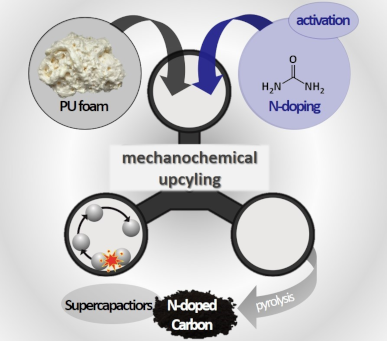
- carbonization [49]. The utilization of a solvent in general has to be critically examined, since it has to be separated from the product, which is time-consuming and costly, and later on accumulates as waste that has to be reprocessed in an energy-intensive procedure. Furthermore, solvents can be hazardous to
- surface area of 950 m2·g−1, a total pore volume of 0.41 cm3·g−1 and a N content of 1.1 wt %. Please note, the nitrogen content decreased during the activation process and thus nitrogenous compounds must have been released from the polymer during carbonization. The further increase of the K2CO3 content
- -energy ball milling and carbonization of a mixture of PU foam as the carbon source and potassium carbonate (K2CO3) as an activation reagent to form nitrogen-doped porous carbon as an electrode material for supercapacitors. (A, C) Nitrogen adsorption/desorption (filled symbols/empty symbols) isotherms


Materials nanoarchitectonics at two-dimensional liquid interfaces
Beilstein J. Nanotechnol. 2019, 10, 1559–1587, doi:10.3762/bjnano.10.153
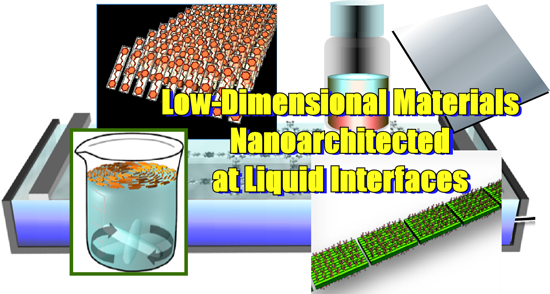
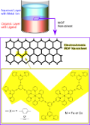
- uniform two-dimensional nanocarbon films, so-called carbon nanosheets, with ca. 10 nm thickness with dispersed nanopore structural motifs. The electrical conductivity of the transferred film was significantly increased after the thermal carbonization process. Nitrogen-doping was carried out simply by
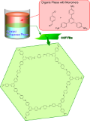
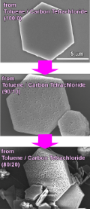
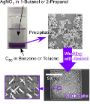
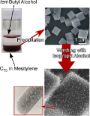
- molecules. The one-dimensional carbon materials prepared through high-temperature carbonization of C70 crystalline assemblies showed high specific capacitances at a high current density and scan rate [243]. These nano-engineered one-dimensional carbon materials might be useful as electrode materials for













Synthesis of P- and N-doped carbon catalysts for the oxygen reduction reaction via controlled phosphoric acid treatment of folic acid
Beilstein J. Nanotechnol. 2019, 10, 1497–1510, doi:10.3762/bjnano.10.148
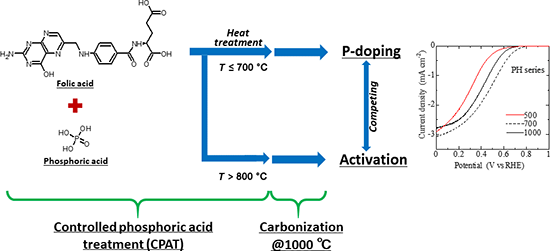
- employed as a single-cell cathode [17]. The ORR activity of carbon-based catalysts can be substantially improved by their simultaneous doping with N and other elements. In 2007, we reported that carbon prepared by carbonization of a N- and B-doped furan resin exhibited an increased ORR activity in sulfuric
- , co-doping with P and N was found to be an effective way of increasing the ORR activity of carbon materials [22][23][24][25][26]. Most of the reported PN-doping techniques involve the carbonization of [N-containing polymer + P-containing compound] mixtures or of ionic liquids containing both N and P
- prepared by thoroughly rinsing P-series precursors with water to remove excess PA and subjecting them to carbonization at 1000 °C. The same operation was also performed for H-series precursors to afford HH-series carbon materials. The N2 adsorption isotherms are presented in Figure S5 (Supporting





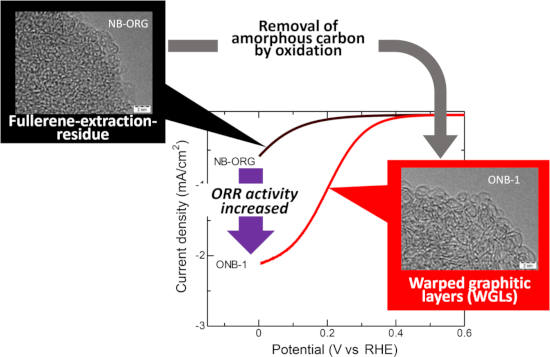
Warped graphitic layers generated by oxidation of fullerene extraction residue and its oxygen reduction catalytic activity
Beilstein J. Nanotechnol. 2019, 10, 1391–1400, doi:10.3762/bjnano.10.137
- ]. Our non-precious-metal ORR catalysts are based on carbon alloy catalysts (CACs) [29]. CACs are carbon-based catalysts with active sites consisting of mainly carbon atoms. The sites are constructed by controlling the crystallographic and chemical states of carbon atoms through careful carbonization
- . Controlling carbonization by metal catalysts such as iron or cobalt produces nanoshell-containing carbon (NSCC) with ORR activity [30][31][32][33][34][35]. This activity is thought to originate from surface defects formed on the nanoshell carbons, including edges and warped graphitic layers (WGLs) [31][36



Porous N- and S-doped carbon–carbon composite electrodes by soft-templating for redox flow batteries
Beilstein J. Nanotechnol. 2019, 10, 1131–1139, doi:10.3762/bjnano.10.113
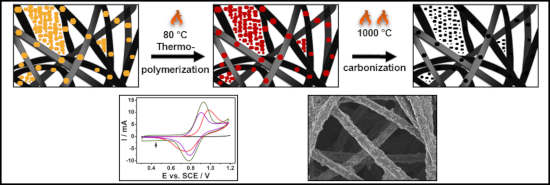
- interactions between phloroglucinol and the surfactant lead to the formation of hydrogen bonds to the polyethylene chains of the polymer. In this fashion the porogen initiates a porous structure. It will be removed during the subsequent carbonization step [25]. The new composite materials have great potential
- additional 2-thiophenecarboxaldehyde was employed as a sulfur source. The carbon–carbon composite materials were synthesized by soaking the felts in a solution containing the aforementioned precursors. After thermopolymerization under air a subsequent carbonization step under protective atmosphere, in which
- content. Table 2 summarizes the elemental composition of the different felts. In accordance with our expectations the main component is carbon, followed by nitrogen and sulfur. The felts lose material during the carbonization step, and a trend can be observed that with increasing temperature the remaining



Glucose-derived carbon materials with tailored properties as electrocatalysts for the oxygen reduction reaction
Beilstein J. Nanotechnol. 2019, 10, 1089–1102, doi:10.3762/bjnano.10.109
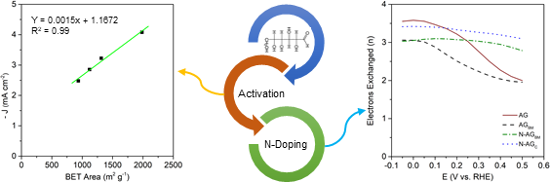
- -doped biomass-derived carbon materials were prepared by hydrothermal carbonization of glucose, and their textural and chemical properties were subsequently tailored to achieve materials with enhanced electrochemical performance towards the oxygen reduction reaction. Carbonization and physical activation
- to be an attractive alternative. In this context, hydrothermal carbonization (HTC) has appeared in recent years as an interesting strategy to obtain biomass-derived carbons due to its low cost and mild synthesis conditions, making the process environmentally friendly [34]. However, the main drawback
- of HTC is that the as-prepared hydrothermal carbon materials usually exhibit limited porosity and inadequate chemical properties for the ORR. To solve this problem, different strategies can be addressed: i) carbonization and activation methods to tailor the porosity and ii) the incorporation of


An efficient electrode material for high performance solid-state hybrid supercapacitors based on a Cu/CuO/porous carbon nanofiber/TiO2 hybrid composite
Beilstein J. Nanotechnol. 2019, 10, 781–793, doi:10.3762/bjnano.10.78
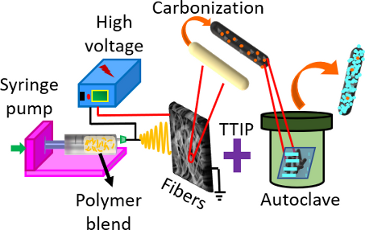
- stabilization and carbonization processes to enhance the performance. More importantly, the obtained results have demonstrated that the composite material displays outstanding rate capability and long cycling stability which demonstrates its great potential as an efficient electrode material for supercapacitors
- spacing of 0.350 nm and 0.354 nm, respectively. This clearly indicates the introduction of pores in PCNF during the decomposition of PVDF through the carbonization process. This process contributes to more disturbances and thus increases the d spacing from 0.350 nm to 0.354 nm. Also, the wide diffraction


Zn/F-doped tin oxide nanoparticles synthesized by laser pyrolysis: structural and optical properties
Beilstein J. Nanotechnol. 2019, 10, 9–21, doi:10.3762/bjnano.10.2
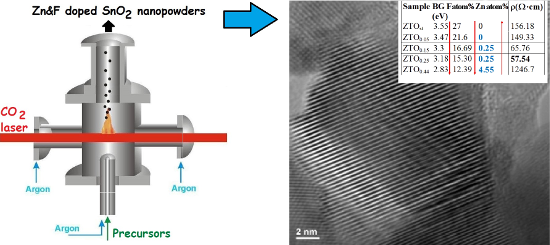
- as dimerization, dehydrogenation, polymerization, reticulation, aromatization and carbonization with the final formation of amorphous hydrogenated carbon. For the ZTO0.44 case, in spite of an apparent oxygen excess, the carbon is still formed (the EDX-extracted carbon atomic percent is the smallest



Co-intercalated layered double hydroxides as thermal and photo-oxidation stabilizers for polypropylene
Beilstein J. Nanotechnol. 2018, 9, 2980–2988, doi:10.3762/bjnano.9.277
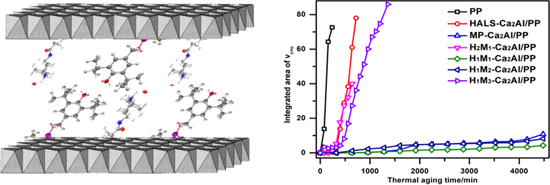
- increase with the percentage of M. H2M1-Ca2Al/PP has the highest Tonset value. Moreover, with the addition of HnMn′-Ca2Al-LDHs, the amount of residue is also increased, the promotion of the carbonization process leads to a better flame retardancy of Ca2Al/PP composites. As a result, the thermal stability


Hydrothermal-derived carbon as a stabilizing matrix for improved cycling performance of silicon-based anodes for lithium-ion full cells
Beilstein J. Nanotechnol. 2018, 9, 2381–2395, doi:10.3762/bjnano.9.223
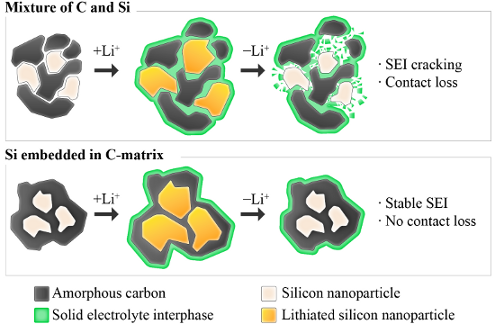
- ] showed that Si nanoparticles (Si-NPs) can be embedded in spherical hydrothermal carbon via a simple one-step hydrothermal process and Hu et al. [53] used hydrothermal carbonization to form a thin carbon and SiOx layer around Si-NPs and reported a great improvement in cycling stability compared to pure Si
- improved first cycle CEs and enhanced cycle life of the prelithiated electrodes in comparison to the non-prelithiated electrodes. In this work, we use a simple hydrothermal process, followed by a carbonization step to synthesize Si/C composites, in which Si-NPs are homogeneously dispersed within an
- . This indicates an amorphous structure of the carbon and can be explained with the carbonization temperature of 900 °C that is way below the temperature needed to grow large crystalline, graphitic domains [64][65]. This carbonization temperature was chosen with the aim to synthesize a material with a


Uniform cobalt nanoparticles embedded in hexagonal mesoporous nanoplates as a magnetically separable, recyclable adsorbent
Beilstein J. Nanotechnol. 2018, 9, 1770–1781, doi:10.3762/bjnano.9.168
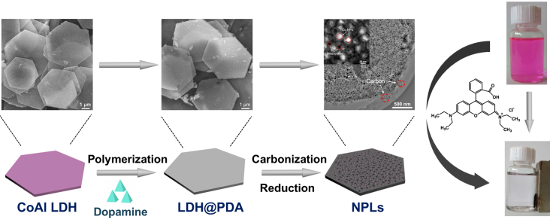
- University of Technology, Tianjin 300384, China 10.3762/bjnano.9.168 Abstract Novel hexagonal nanoplates (NPLs) comprised of mesoporous carbon containing imbedded magnetic Co nanoparticles (CoAl2O4 phase) are prepared through direct carbonization of polydopamine (PDA)-coated CoAl layered double hydroxide
- morphology and specific surface area of the as-prepared NPLs can be tailored by adjusting the initial dopamine concentration and carbonization temperature. The mesoporous NPLs exhibit excellent sorption of rhodamine B (RhB) dye and fast magnetic separation in aqueous solution. Over 95% of RhB can be adsorbed
- be used as a type of carbon precursor with a high carbonization yield even at a high carbonization temperature [20]. More notably, it can self-polymerize under weak basic conditions at room temperature [21] and form a uniform coating [22] on almost any surface. The obtained polydopamine (PDA)-coated


Green synthesis of fluorescent carbon dots from spices for in vitro imaging and tumour cell growth inhibition
Beilstein J. Nanotechnol. 2018, 9, 530–544, doi:10.3762/bjnano.9.51
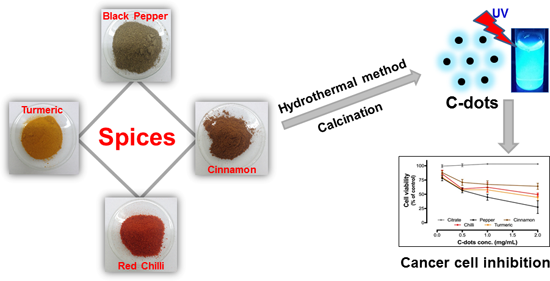
- . Results and Discussion Absorption and photoluminescence characterization of C-dots The C-dots were synthesized using spices as starting material through a green one-pot hydrothermal method that involves pyrolysis, carbonization and passivation [33][34][35], with no need to add surface passivation agents


Ultralight super-hydrophobic carbon aerogels based on cellulose nanofibers/poly(vinyl alcohol)/graphene oxide (CNFs/PVA/GO) for highly effective oil–water separation
Beilstein J. Nanotechnol. 2018, 9, 508–519, doi:10.3762/bjnano.9.49
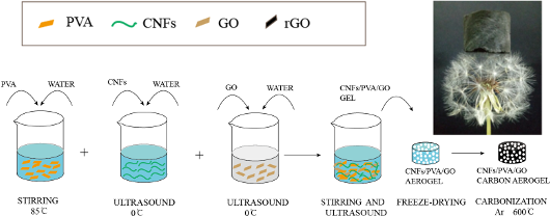
- ° (super-hydrophobic) and high oil absorption capacity (97 times its own weight). The carbonization treatment of the CNF/PVA/GO aerogel not only improved the hydrophobic properties but also enhanced the adsorption capacity and specific surface area. Given the many good performance characteristics and the
- properties but also exhibit some drawbacks such as poor hydrophobic properties and low oil absorption capacity. Therefore, a carbonization treatment of the CNF/PVA/GO aerogels was required to improve their properties. In this work, we present a facile process for preparing carbon aerogels exhibiting super
- -hydrophobicity for oil–water separation. The CNF/PVA/GO aerogel with a macroscopic 3D structure was prepared through freeze drying to connect the three components. Then, the super-hydrophobic CNF/PVA/GO carbon aerogel was fabricated by a carbonization treatment in a tubular furnace. The as-prepared carbon


Sugarcane juice derived carbon dot–graphitic carbon nitride composites for bisphenol A degradation under sunlight irradiation
Beilstein J. Nanotechnol. 2018, 9, 353–363, doi:10.3762/bjnano.9.35
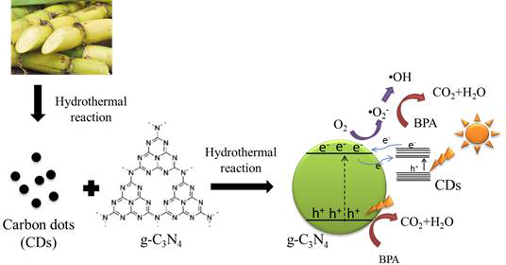
- -driven photocatalysis. Prasannan and Imae reported a simple and facile one-pot synthesis of fluorescent CDs from orange waste peels using the hydrothermal carbonization method. As prepared CDs were combined with zinc oxide (ZnO) to degrade naphthol blue–black azo dye under UV irradiation, and the


One-step chemical vapor deposition synthesis and supercapacitor performance of nitrogen-doped porous carbon–carbon nanotube hybrids
Beilstein J. Nanotechnol. 2017, 8, 2669–2679, doi:10.3762/bjnano.8.267
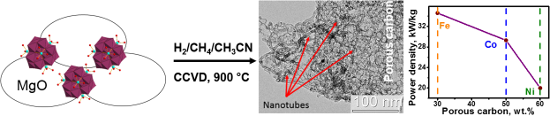
- ]. Electrochemical tests of the obtained materials in 6 M KOH electrolyte evidenced a significant reduction of the interfacial contact resistance of the electrode with the insertion of MWCNTs. Luo et al. have prepared a hierarchical porous carbon–MWCNT hybrid by carbonization of a mixture of phenolic resin and
- has been shown to form because of the carbonization of the carbon source at the surface of MgO [17]. Advantages of this method are that carbon stabilization and activation steps are not required, as well as the control of the size and the volume of the pores through the design/choice of the used MgO


Fabrication of carbon nanospheres by the pyrolysis of polyacrylonitrile–poly(methyl methacrylate) core–shell composite nanoparticles
Beilstein J. Nanotechnol. 2017, 8, 1897–1908, doi:10.3762/bjnano.8.190

- carbonization treatments, polyacrylonitrile (PAN) can be converted into carbon. High-performance carbon fibers, carbon nanofiber membranes, 3D-ordered carbon materials, and carbon nanoparticles have been fabricated from various PAN precursors [28][29][30][31][32][33][34][35]. Discrete and well-defined carbon
- nanospheres were first fabricated by Kowaleski et al. [31] via successive shell crosslinking, oxidization and carbonization of the micelles resulting from the self-assembly of PAN-b-poly(acrylic acid) (PAA) block copolymer in water. The crosslinked shell can retain the micelle structure during the heat
- nanoparticles. Furthermore, an extra acid-washing process was needed to remove the inorganic salt layer [33][36]. As the cyclization reactions between nitriles mainly occur during the preoxidization and low-temperature carbonization steps (<450 °C), we tried to coat with a protective poly(methyl methacrylate



Oxidative stabilization of polyacrylonitrile nanofibers and carbon nanofibers containing graphene oxide (GO): a spectroscopic and electrochemical study
Beilstein J. Nanotechnol. 2017, 8, 1616–1628, doi:10.3762/bjnano.8.161
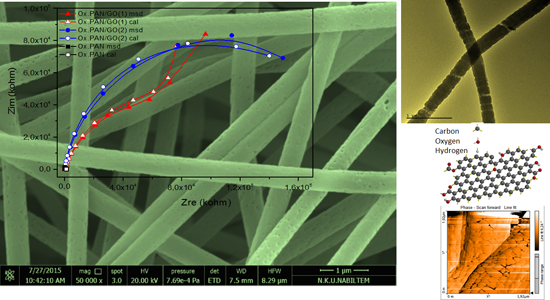
- Istanbul, Turkey 10.3762/bjnano.8.161 Abstract In this study, a precursor for carbon nanofibers (CNF) was fabricated via electrospinning and carbonized through a thermal process. Before carbonization, oxidative stabilization should be applied, and the oxidation mechanism also plays an important role
- during carbonization. Thus, the understanding of the oxidation mechanism is an essential part of the production of CNF. The oxidation process of polyacrylonitrile was studied and nanofiber webs containing graphene oxide (GO) are obtained to improve the electrochemical properties of CNF. Structural and
- rigors of high-temperature processing [9][10][11]. Oxidative stabilization is crucial to prevent melting or fusion of the fibers. Also, it minimizes volatilization of elemental carbon in the following carbonization step and maximizes the final carbon yield. Chemistry and mechanisms of complex oxidative


Hierarchically structured nanoporous carbon tubes for high pressure carbon dioxide adsorption
Beilstein J. Nanotechnol. 2017, 8, 1135–1144, doi:10.3762/bjnano.8.115
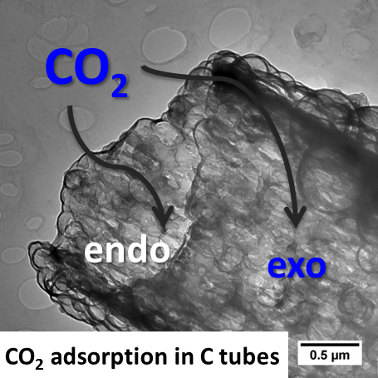
- tubes to be obtained. To obtain these materials, a polymer was employed and used as the carbon source and template to mold a spherical structure of silica particles obtained by the Stoeber process. After a carbonization step, a second thermal treatment was employed to obtain either SiC tubes or a
- observed on the fibre surface of 1 (Figure 2b) [38]. After heat treatment, a silica@carbon material 3 with a hollow tube structure results (Figure 2c). During the processing at 250 °C under air, the PS melts and surrounds the silica spheres. During the final carbonization step, this polymer layer is
- transformed into carbon. If the silica shell is removed by etching, self-supporting carbon tubes 4 remain (Figure 2d). Due to the carbonization of the molten PS, the remaining carbon forms an interconnected porous carbon framework structure which allows the infiltration of the etching solution. Silicon


Phosphorus-doped silicon nanorod anodes for high power lithium-ion batteries
Beilstein J. Nanotechnol. 2017, 8, 222–228, doi:10.3762/bjnano.8.24
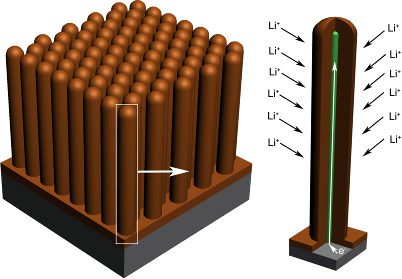
- battery performance [7][11]. In such a stratagem, nanostructured current collectors are generally prepared by carbonization of organics, electrochemical deposition with templates, and reduction of metal oxides, all of which are complicated and costly [7][11][12][13]. On the other hand, as a semiconductor


Fundamental properties of high-quality carbon nanofoam: from low to high density
Beilstein J. Nanotechnol. 2016, 7, 2065–2073, doi:10.3762/bjnano.7.197
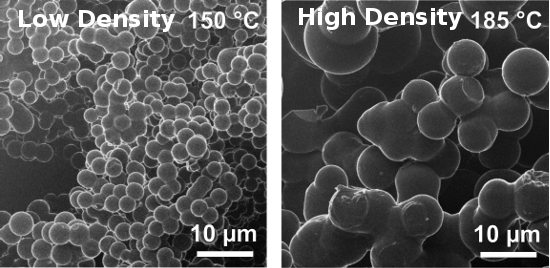
- Bielefeld, Germany 10.3762/bjnano.7.197 Abstract Highly uniform samples of carbon nanofoam from hydrothermal sucrose carbonization were studied by helium ion microscopy (HIM), X-ray photoelectron spectroscopy (XPS), and Raman spectroscopy. Foams with different densities were produced by changing the
- and a stronger sp3-type electronic contribution, related to the inclusion of sp3 connections in their surface network. Keywords: carbon nanofoam; helium ion microscopy; hydrothermal carbonization; nanocarbons; Introduction Nanofoams are of considerable current interest due to their unique structure
- [23] with potential application in high energy density electrochemical supercapacitors. A promising formation method for high-quality carbon nanofoam is the low-temperature hydrothermal carbonization of sucrose [24]. In order to produce advanced carbon nanomaterials, there is a need for further


Facile fabrication of luminescent organic dots by thermolysis of citric acid in urea melt, and their use for cell staining and polyelectrolyte microcapsule labelling
Beilstein J. Nanotechnol. 2016, 7, 1905–1917, doi:10.3762/bjnano.7.182
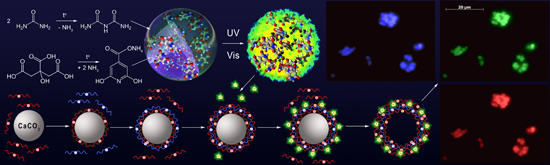
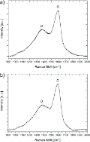
- (physical) forces; with further heating, type-I dots can be transformed into type-II dots, but not vice versa (see Supporting Information File 1, Figure S1). Organic type-II dots are usually the products of deep carbonization of pristine organic substances, and are more like carbon. The structure of type-II
- electrochemical carbonization of sodium citrate and urea. Citric acid- and urea-based organic dots were also synthesized by microwave heating at 180 °C, in a solution of oleic acid [30]. It should be noted that all the above-mentioned syntheses were carried out in solutions, (aqueous or non-aqueous), and required
- of process completion are the stabilization of the system weight and carbonization (hardening) of the melt. At a temperature of 160 °C, the mixture hardened in 1.5–2.0 hours, and after that its weight varied only slightly (see Supporting Information File 1, Figure S11). The absorption spectrum of the




Improved lithium-ion battery anode capacity with a network of easily fabricated spindle-like carbon nanofibers
Beilstein J. Nanotechnol. 2016, 7, 1289–1295, doi:10.3762/bjnano.7.120
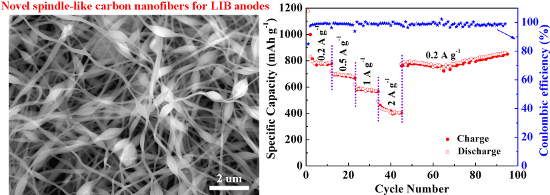
- be observed in the XRD pattern, meaning that the carbon nanofibers derived from the carbonization of the polyacrylonitrile (PAN) precursor has an amorphous structure. The Raman spectrum of the sample is shown in the inset of Figure 2a. The weak signal at about 648 cm−1 can be attributed to the Mn–O


Mesoporous hollow carbon spheres for lithium–sulfur batteries: distribution of sulfur and electrochemical performance
Beilstein J. Nanotechnol. 2016, 7, 1229–1240, doi:10.3762/bjnano.7.114
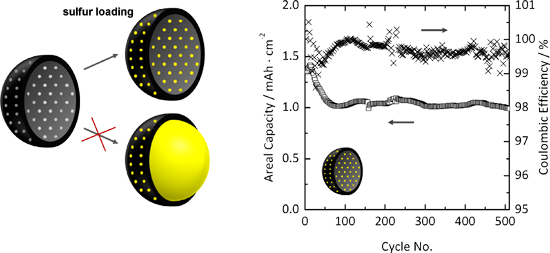
- mg·cm−2 was investigated. Results and Discussion Silica template and hollow carbon spheres Hollow carbon spheres with a mesoporous shell were obtained by impregnation of silica spheres with a core–shell structure with phenol and formaldehyde (first step in Figure 1). Carbonization under inert atmosphere
- density of liquid sulfur is used again. The density of the carbon is unknown, but as the HCS are obtained by carbonization at 900 °C and the XRD pattern indicates mainly amorphous carbon, the density of amorphous carbon (ρamorphousC = 1.8 g·cm−3) [12] is assumed. This way a sulfur loading of 81 wt % is
- with water and dried at 60 °C. Carbonization was carried out in a tubular furnace under argon atmosphere in two steps: The sample was heated to 350 °C for 5 h (heating rate: 1 °C/min) and 900 °C for 2 h (heating rate: 5 °C/min). The silica template was removed by washing with hydrofluoric acid (10


Experimental and simulation-based investigation of He, Ne and Ar irradiation of polymers for ion microscopy
Beilstein J. Nanotechnol. 2016, 7, 1113–1128, doi:10.3762/bjnano.7.104
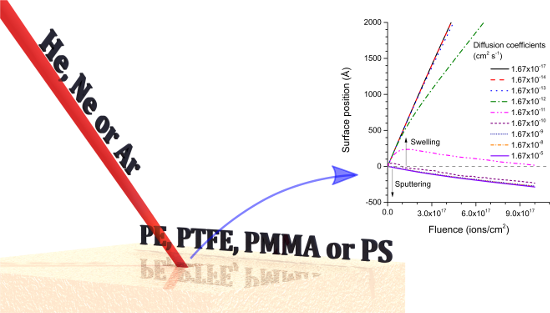
- chain scission, cross-linking as well as carbonization of the target. For the multiple impacts, larger molecular fragments (up to C36H69) and a smaller H to C ratio was observed. These results show that different species are not necessarily sputtered in the ratio as present in the sample, which may lead





