


Search results
Search for "chemical reactions" in Full Text gives 153 result(s) in Beilstein Journal of Nanotechnology.
Laser synthesis of nanoparticles in organic solvents – products, reactions, and perspectives
Beilstein J. Nanotechnol. 2024, 15, 638–663, doi:10.3762/bjnano.15.54
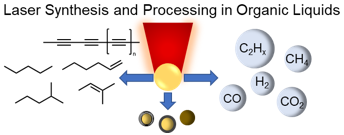
- , the corresponding reactions in organic liquids remain elusive, particularly because of the much greater complexity of carbon chemistry. To this end, this article first reviews the knowledge base of chemical reactions during LSPC and then deduces identifiable reaction pathways and mechanisms. This
- laser ablation, fragmentation, or melting in liquids (RLAL, RLFL, or RLML), which refers to the synthesis of nanoparticles wherein molecular or galvanic replacement precursors, such as metal salts, are added to react in situ [7]. The added precursors take part in chemical reactions leading to the
- reactions and radical species [43]. Besides the reactions involving metal salts during LRL, gas formation [44][45][46][47] and solvent decomposition [48][49][50][51] have also been reported, highlighting the importance of chemical reactions during the processes, although LSPC is often considered to be a





Electron-induced deposition using Fe(CO)4MA and Fe(CO)5 – effect of MA ligand and process conditions
Beilstein J. Nanotechnol. 2024, 15, 500–516, doi:10.3762/bjnano.15.45
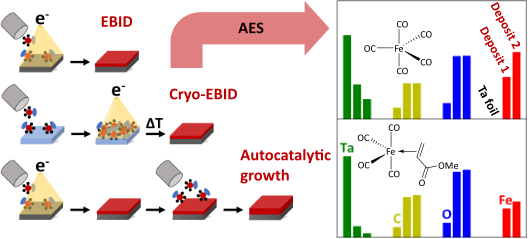
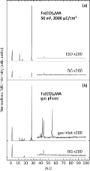
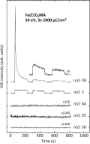
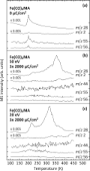
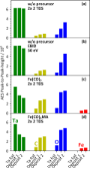
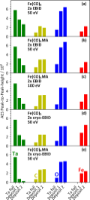
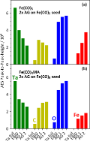
- phase [30][31][32][33][34], of clusters of the precursor [35][36][37][38], or of Fe(CO)5 adsorbed on surfaces [27][39][40][41][42][43] with the aim to provide insight into the chemical reactions inherent in the FEBID process. A recent surface science study was performed on Fe(CO)5 adsorbed on a Au



Aero-ZnS prepared by physical vapor transport on three-dimensional networks of sacrificial ZnO microtetrapods
Beilstein J. Nanotechnol. 2024, 15, 490–499, doi:10.3762/bjnano.15.44
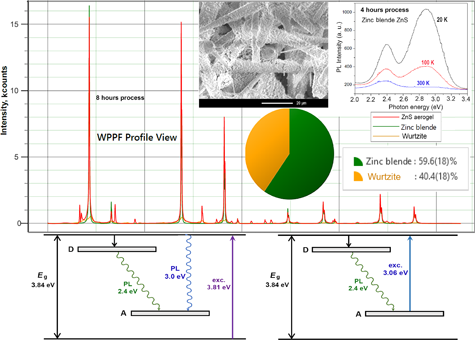
- ZnS hollow microtetrapods was produced as a result of chemical reactions. The duration of the technological procedure was four and eight hours. This technological installation is less sophisticated and, consequently, less expensive than the equipment for HVPE previously used for the preparation of



Graphene removal by water-assisted focused electron-beam-induced etching – unveiling the dose and dwell time impact on the etch profile and topographical changes in SiO2 substrates
Beilstein J. Nanotechnol. 2024, 15, 190–198, doi:10.3762/bjnano.15.18
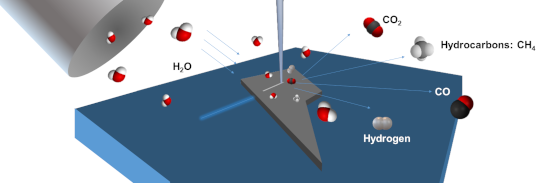
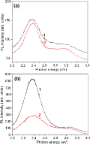
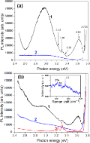
- already been studied by several groups [32][33][34][35]. However, the direct mechanism has not yet been fully elucidated up to now [36]. In the studies of etching of thermally grown SiO2, reported in 1995 by Bakker and Hess [32], the authors claim that chemical reactions between Si atoms and OH− groups


Antibody-conjugated nanoparticles for target-specific drug delivery of chemotherapeutics
Beilstein J. Nanotechnol. 2023, 14, 912–926, doi:10.3762/bjnano.14.75
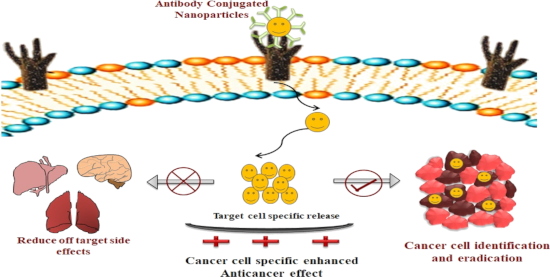
- do not have sugar moieties in their structure. Click chemistry: Click chemistry is characterized as a group of chemical reactions with orthogonality and site-specificity. This chemistry yields promising reaction rates with high efficiency in aqueous solutions and generates minimal cytotoxic



Nanoarchitectonics for advanced applications in energy, environment and biology: Method for everything in materials science
Beilstein J. Nanotechnol. 2023, 14, 738–740, doi:10.3762/bjnano.14.60

- parallel and is due to the development of functional materials. In the beginning of the civilization, humans used to extract materials directly from nature and process them for personal use. Later, we learned how to create materials not found in nature through various chemical reactions. Such material

Metal-organic framework-based nanomaterials as opto-electrochemical sensors for the detection of antibiotics and hormones: A review
Beilstein J. Nanotechnol. 2023, 14, 631–673, doi:10.3762/bjnano.14.52
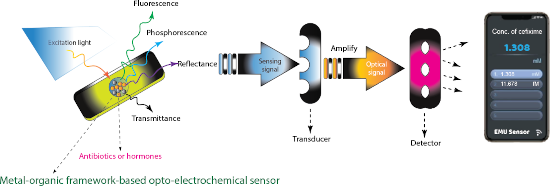
- electrochemical sensors (Figure 10). The target analyte interacts with the recognition layer at the sensing electrode surface to produce an electrical signal that contains the analytical information. Chemical reactions (redox reactions) on the electrode surface are converted by the physicochemical transducer into


Titania nanoparticles for photocatalytic degradation of ethanol under simulated solar light
Beilstein J. Nanotechnol. 2023, 14, 616–630, doi:10.3762/bjnano.14.51
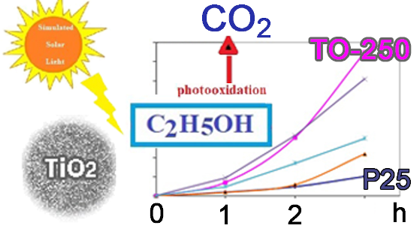
- differences could promote the fabrication of new devices with higher efficiency in electron–hole separation [33]. There are a lot of methods to obtain TiO2 powder, from chemical reactions in solvents [34][35][36] to simple oxidation at high temperatures [37]. Every method has its particular yield and




Nanoarchitectonics to entrap living cells in silica-based systems: encapsulations with yolk–shell and sepiolite nanomaterials
Beilstein J. Nanotechnol. 2023, 14, 522–534, doi:10.3762/bjnano.14.43
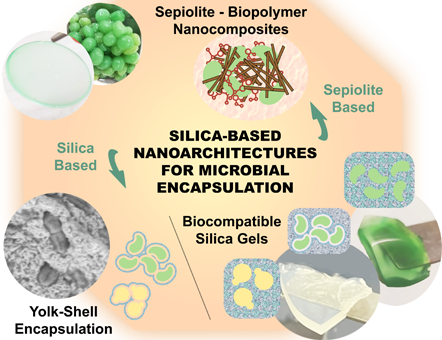
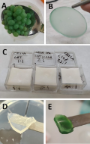
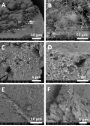
- nanoarchitectonics approach involves the manipulation at the nanometre or molecular level, using chemical reactions, processes of self-assembly and self-organization, as well as modulation under external stimuli. This strategy represents a path of great interest to develop new biohybrid materials harbouring


Molecular nanoarchitectonics: unification of nanotechnology and molecular/materials science
Beilstein J. Nanotechnol. 2023, 14, 434–453, doi:10.3762/bjnano.14.35
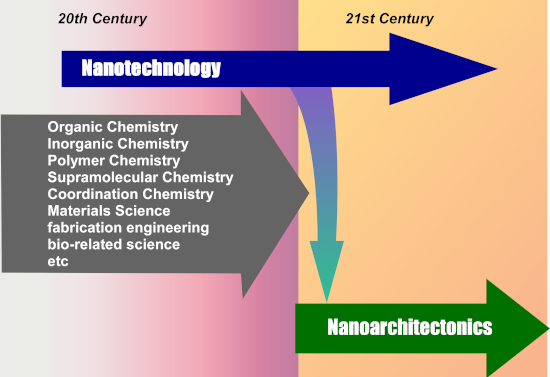
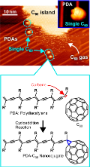
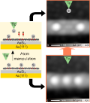
- solid substrate could be a key technology for building nanoscale electronic circuits. Nakayama and co-workers have succeeded in controlling the self-assembly and intermolecular chemical reactions of functional molecular components predeposited on a solid surface [112]. Specifically, they fabricated
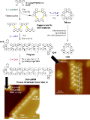
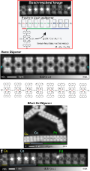
- extended π-carbon systems is an important process for spintronics applications. On-surface synthetic nanoarchitectonics Besides manipulating molecules and atoms with a tip, in situ observation of specific chemical reactions occurring on surfaces with a probe microscope is a very significant approach to
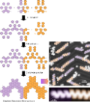
- this method, one precursor is vaporized and the other precursor is introduced to the surface in advance, allowing coupling reactions to occur at the solid–vapor interface. Various two-component chemical reactions can be applied to this methodology, not limited to the Schiff base reaction they reported






Plasmonic nanotechnology for photothermal applications – an evaluation
Beilstein J. Nanotechnol. 2023, 14, 380–419, doi:10.3762/bjnano.14.33




Bismuth-based nanostructured photocatalysts for the remediation of antibiotics and organic dyes
Beilstein J. Nanotechnol. 2023, 14, 291–321, doi:10.3762/bjnano.14.26
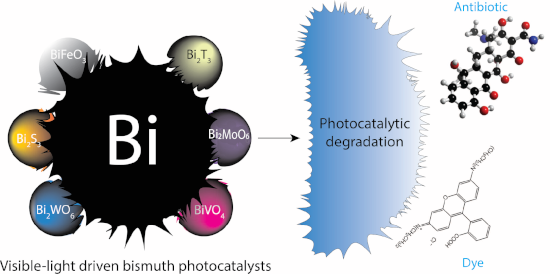
- inactivate pathogens. The term “photocatalysis” refers to chemical reactions that use light and a photocatalyst (basically a semiconductor). A few of the requirements that an effective photocatalyst system should satisfy include high sunlight absorption, an appropriate gap (1.5–2.8 eV), long-term charge


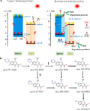
Design of surface nanostructures for chirality sensing based on quartz crystal microbalance
Beilstein J. Nanotechnol. 2022, 13, 1201–1219, doi:10.3762/bjnano.13.100
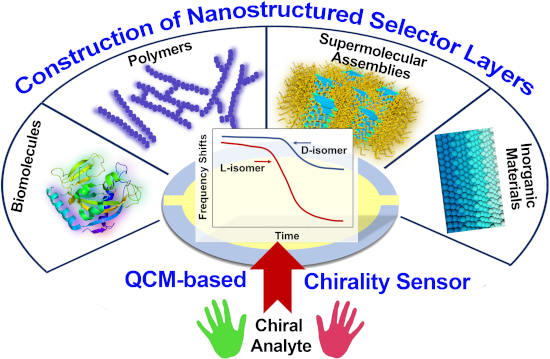
- QCM electrodes for chiral sensing. Cyclodextrin derivatives. Cyclodextrins (CDs) are a class of oligomers composed of glucose units. They possess hollow truncated cones with a lipophilic inner cavity and a hydrophilic edge. The hydroxy groups at the edge can undergo different chemical reactions, which


Influence of water contamination on the sputtering of silicon with low-energy argon ions investigated by molecular dynamics simulations
Beilstein J. Nanotechnol. 2022, 13, 986–1003, doi:10.3762/bjnano.13.86
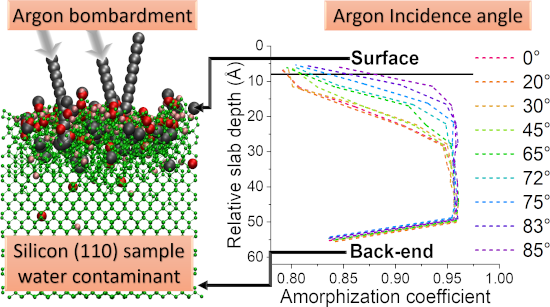
- simulations to study the sputtering of a surface with water contamination by sub-500 eV ions. The information of interest is the chemical reactions occurring at and below the sample surface, as well as the mixing of the contaminant layer into the sample. The ReaxFF reactive force field is used in this work
- many-body systems whereas classical MD makes the assumption of fixed bonds and usually do not include complex chemical reactions. ReaxFF captures the dynamic nature of bond formation and breaking, based on bond-order calculation from interatomic distances. ReaxFF also includes nonbonded terms such as




Efficient liquid exfoliation of KP15 nanowires aided by Hansen's empirical theory
Beilstein J. Nanotechnol. 2022, 13, 788–795, doi:10.3762/bjnano.13.69
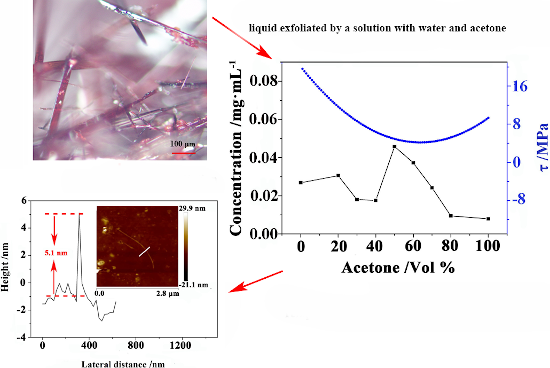
- high flexibility. In this case, the surface of bulk materials is peeled off or corroded by physical or chemical reactions in a liquid medium, and finally low-dimensional materials are obtained. Based on the Hansen's empirical theory, the exfoliation efficiency of low-dimensional materials can be


Direct measurement of surface photovoltage by AC bias Kelvin probe force microscopy
Beilstein J. Nanotechnol. 2022, 13, 712–720, doi:10.3762/bjnano.13.63
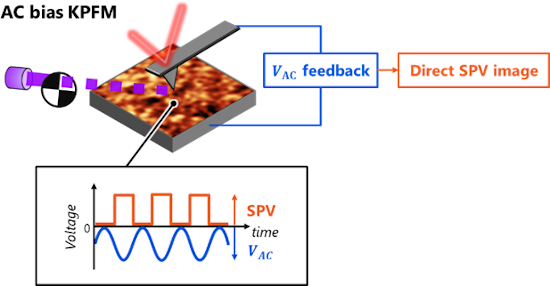
- ) because of the need for consecutive measurements in darkness and under illumination. Thus, AC-KPFM and classical KPFM measure the SPV derived from different origins, such as charge recombination (nanoseconds to milliseconds) [60], ion transport (milliseconds to seconds) [61], and surface chemical
- reactions (hours) [62][63][64]. Particularly for photocatalytic semiconductors, AC-KPFM would be an indispensable tool for detecting the fast SPV distribution related to charge redistribution (microseconds to milliseconds) because SPV measured with classical KFPM is attributed to both charge redistribution


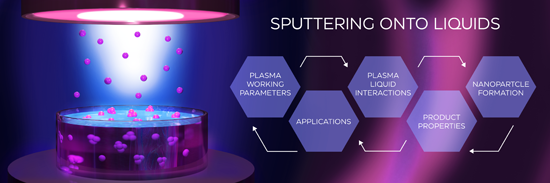
Sputtering onto liquids: a critical review
Beilstein J. Nanotechnol. 2022, 13, 10–53, doi:10.3762/bjnano.13.2




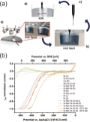


Measurement of polarization effects in dual-phase ceria-based oxygen permeation membranes using Kelvin probe force microscopy
Beilstein J. Nanotechnol. 2021, 12, 1380–1391, doi:10.3762/bjnano.12.102
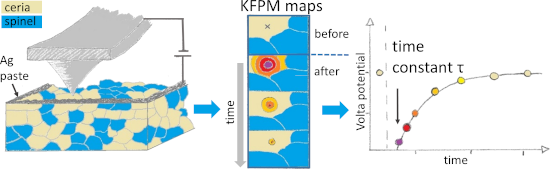
- environment are the strong decrease in oxygen ion mobility below 600 °C, mechanical stability and chemical stability against the used reactive gases, and local chemical reactions at the triple-phase boundaries (ceria|electron conductor|gas) as well as at the interfaces between the different components (ceria


Morphology-driven gas sensing by fabricated fractals: A review
Beilstein J. Nanotechnol. 2021, 12, 1187–1208, doi:10.3762/bjnano.12.88
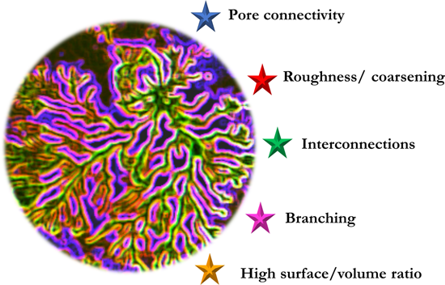
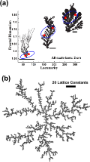
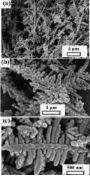
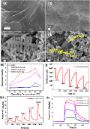
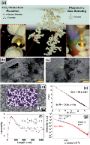
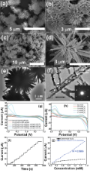
- ). The dendritic leaf-like structures provided active sites for the chemical reactions occurring on the surface. Figure 7k and Figure 7l show, respectively, the response of a leaf-like SnO2 architecture to different gases and its stability against NO2. The fab-frac structure demonstrated enhanced sensing










Self-assembly of amino acids toward functional biomaterials
Beilstein J. Nanotechnol. 2021, 12, 1140–1150, doi:10.3762/bjnano.12.85
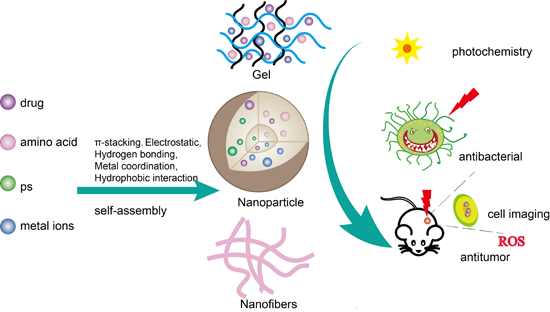
- . [88] combined chemical reactions and manufactured bionic photobacteria based on self-assembly of amino acids and porphyrins. First, Fmoc-ʟ-Lys was self-assembled into a nanofiber template, then the ε-amino group on the surface of the Fmoc-ʟ-Lys fiber reacted with 3,4-dihydroxyphenylalanine (DOPA

Recent progress in actuation technologies of micro/nanorobots
Beilstein J. Nanotechnol. 2021, 12, 756–765, doi:10.3762/bjnano.12.59
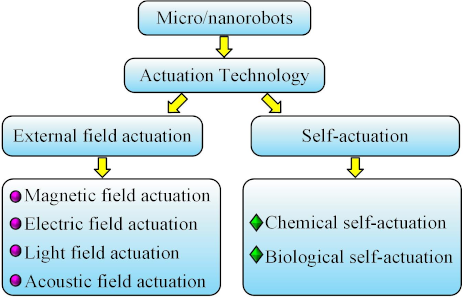
- besides oral treatment. Inspired by the molecular motion of proteins in animal cells, scientists integrated enzymes as catalytic engines, using chemical reactions to provide power for micro/nanorobots. Compared with traditional chemical self-actuation methods, enzyme actuation uses biocompatible fuels and


Interface interaction of transition metal phthalocyanines with strontium titanate (100)
Beilstein J. Nanotechnol. 2021, 12, 485–496, doi:10.3762/bjnano.12.39
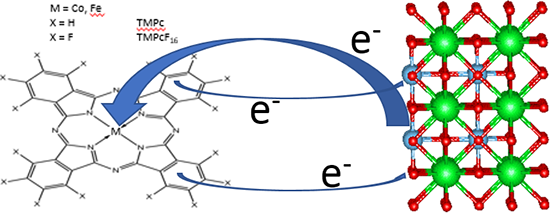
- structural ordering of the near-surface region below the topmost layer, and we may rule out a completely SrO-terminated surface. CoPcFx on STO(100) Possible interactions between organic molecules and different substrates may include charge transfer processes or even chemical reactions. In the case of


The patterning toolbox FIB-o-mat: Exploiting the full potential of focused helium ions for nanofabrication
Beilstein J. Nanotechnol. 2021, 12, 304–318, doi:10.3762/bjnano.12.25
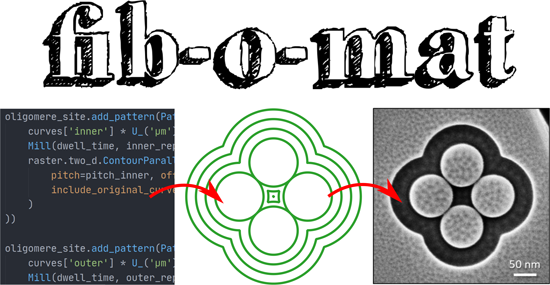
- local ion–solid interaction is a balance among several ion-induced, surface-related, and thermally triggered processes [24]. Physical sputtering is only one of the processes. Also, chemical reactions with adsorbed contaminants can occur and, under certain circumstances, may dominate over the atomic


The role of gold atom concentration in the formation of Cu–Au nanoparticles from the gas phase
Beilstein J. Nanotechnol. 2021, 12, 72–81, doi:10.3762/bjnano.12.6
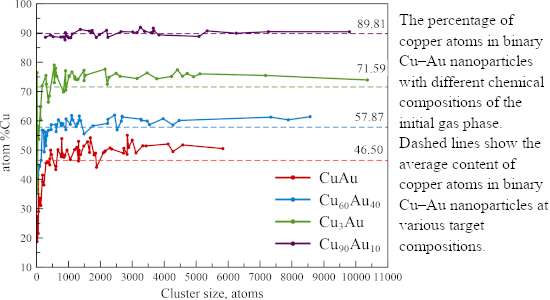
- during chemical reactions. Therefore, the relationship between the initial experimental conditions and the final result is far from explicit [2]. This fact limits the design of Cu–Au nanoparticles for various potential applications and, at the same time, contributes to their study as a model system. In
- the contribution of the small Cu clusters. Incomplete doping of gold in Cu–Au nanoparticles can be explained based on the chemical reactions that take place in [3]. As shown in [25], the redox potential of (Au3+/Au) is +1.50 V. In the case of Cu, the corresponding potential is only +0.34 V [26
- only based on the kinetics of chemical reactions. Thus, according to the MD simulation results, several important conclusions can be drawn. First, an increase in the percentage of gold atoms in a binary vapor composed of Cu–Au leads to a decrease in the size of the synthesized nanoparticles. Second


Selective detection of complex gas mixtures using point contacts: concept, method and tools
Beilstein J. Nanotechnol. 2020, 11, 1631–1643, doi:10.3762/bjnano.11.146
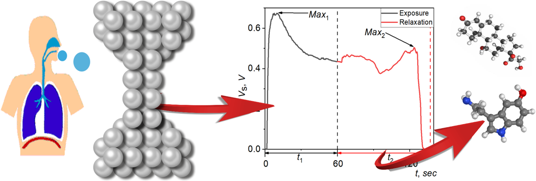
- formed as a result of these interactions can be catalysts for new chemical reactions. This leads to a change in the original state of the breath, which may cause false-positive or false-negative results in medical diagnosis [27][28]. This problem has motivated the development of an alternative approach


![[Graphic 4]](/bjnano/content/inline/2190-4286-11-146-i8.svg?max-width=637&scale=1.18182) in th...
in th...

![[Graphic 7]](/bjnano/content/inline/2190-4286-11-146-i11.svg?max-width=637&scale=1.18182) in the...
in the...



