Search results
Search for "electrolyte" in Full Text gives 301 result(s) in Beilstein Journal of Nanotechnology. Showing first 200.
Influence of conductive carbon and MnCo2O4 on morphological and electrical properties of hydrogels for electrochemical energy conversion
Beilstein J. Nanotechnol. 2024, 15, 57–70, doi:10.3762/bjnano.15.6
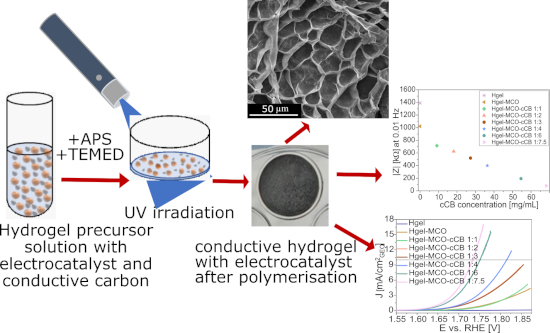
- catalytic activity of the electrode in the oxygen evolution reaction. The use of a hydrogel as a matrix to suspend the catalyst particles, and thus increase their availability through the electrolyte, seems to be an interesting and promising application approach. Keywords: electrical properties; energy
- the morphology also facilitates the penetration by the electrolyte, the diffusion of ions to electroactive sites, and the rapid release of the reaction, thus promoting the kinetics of the reaction and achieving higher efficiency of the catalyst built into the 3D structure [19]. The hydrogel matrix
- porous structure is capable of swelling and thus accommodating large amounts of ionic liquids. Moreover, the swollen hydrogel structure provides constant access of electrolyte molecules/ions to the catalyst particles, increasing the speed and efficiency of the electrochemical reaction [20]. The swelling


In situ magnesiothermic reduction synthesis of a Ge@C composite for high-performance lithium-ion batterie anodes
Beilstein J. Nanotechnol. 2023, 14, 751–761, doi:10.3762/bjnano.14.62
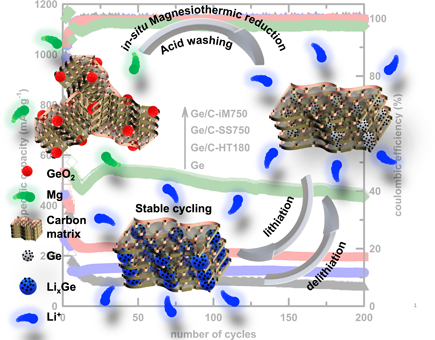
- compositions such as Li7Ge2, Li9Ge4, and Li22Ge2 [53][54][55]. The remaining shoulder can be ascribed to the decomposition of the electrolyte and the formation of solid–electrolyte interface (SEI) layers [55][56]. In the following cycles, the signal of the SEI layer formation at a potentials of 0.3 V vs Li/Li
- + remains, demonstrating the continuous loss of lithium in this irreversible process. This is consistent with the fact that the alloying electrodes suffer from damages caused by the volume variation during lithiation/delithiation, leading to the continuous exposure of new active material and electrolyte [57
- conductivity of the additional carbon matrix, indicating the decrease in charge transfer resistance of the composite electrodes. The EIS results were fitted using an equivalent circuit model, including an internal or electrolyte resistance (Re), a charge transfer resistance (Rct), and two constant phase


A graphene quantum dots–glassy carbon electrode-based electrochemical sensor for monitoring malathion
Beilstein J. Nanotechnol. 2023, 14, 701–710, doi:10.3762/bjnano.14.56
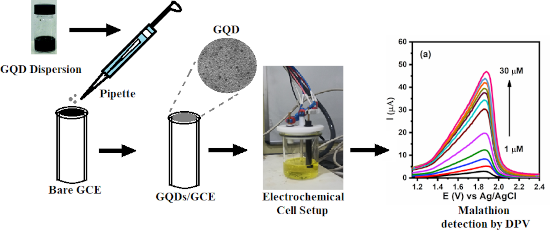
- on a SP Biologic 150 electrochemical workstation at room temperature. A solution of 0.1 M KCl containing 0.05 M K3[Fe(CN)6] was used as an electrolyte to analyze the oxidation–reduction behavior of the working electrode through cyclic voltammetry. For detection and quantification of pesticides


Metal-organic framework-based nanomaterials as opto-electrochemical sensors for the detection of antibiotics and hormones: A review
Beilstein J. Nanotechnol. 2023, 14, 631–673, doi:10.3762/bjnano.14.52
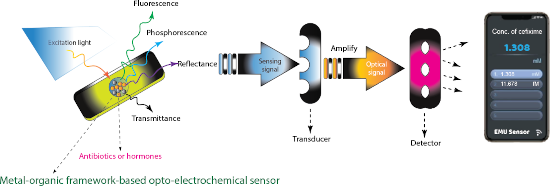
- 100 nm are the main choice for the design of electrochemical sensors. These characteristics all combine to improve the electrochemical process. A sensing or working electrode that acts as a transducer, an electrolyte, a diffusion barrier, and a reference counter electrode are the common components of


Molecular nanoarchitectonics: unification of nanotechnology and molecular/materials science
Beilstein J. Nanotechnol. 2023, 14, 434–453, doi:10.3762/bjnano.14.35
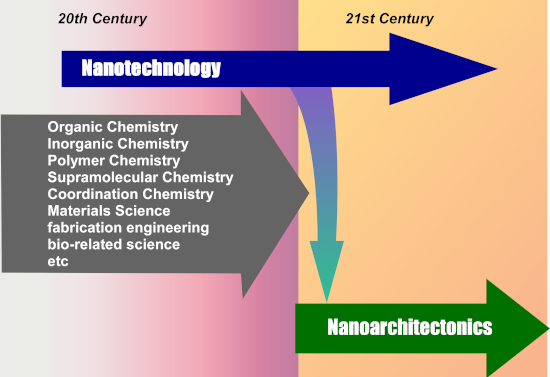
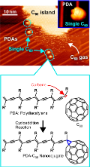
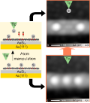
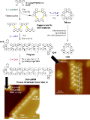
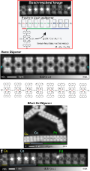
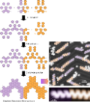
- multistep electrochemical epitaxial polymerization technique [113]. This technique consists of combining two electrochemical polymerization processes using different monomer solutions. First, a voltage pulse was applied to an iodine-covered Au(111) substrate in an electrolyte solution containing the first
- thiophene monomer. This process produced the first polythiophene wires on the substrate. The substrate was then transferred to an electrolyte solution containing another thiophene monomer. The second process of applying voltage oxidized both the thiophene monomer in solution and the polythiophene on the





Polymer nanoparticles from low-energy nanoemulsions for biomedical applications
Beilstein J. Nanotechnol. 2023, 14, 339–350, doi:10.3762/bjnano.14.29
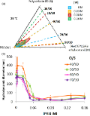
- [58]. The region for nanoemulsion formation in the phase diagram changes with the electrolyte (PBS) concentration (Figure 4a). There seems to be an optimum value for which this region is the largest, and the colloidal stability is maximum. Note that the presence of electrolyte is expected to reduce
- Ostwald ripening, especially considering that the solubility of ethyl acetate in water is relatively high (about 80 g/L at 20 °C). The hydrodynamic diameter of the particles decreases sharply (from 300–400 nm to ca. 40 nm) at a given electrolyte concentration (Figure 4b), with a concomitant decrease in




A novel approach to pulsed laser deposition of platinum catalyst on carbon particles for use in polymer electrolyte membrane fuel cells
Beilstein J. Nanotechnol. 2023, 14, 190–204, doi:10.3762/bjnano.14.19
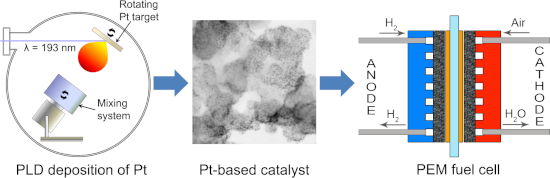
- an efficient Pt-based catalyst for polymer electrolyte membrane fuel cells (PEMFCs) by using a cost-effective and efficient physical method to deposit platinum nanoparticles (PtNPs) on carbon supports directly from the platinum target. The method developed avoids the chemical functionalization of the
- electric power generation. Among various fuel cells, polymer electrolyte membrane fuel cells (PEMFCs) have received considerable attention because of several physicochemical advantages over other fuel cell types [1][2][3][4][5]. PEMFCs, constructed of polymer electrolyte membranes as the proton conductor
- cost of PEMFCs depend on the materials used to construct their major components, which are anode, cathode, and polymer electrolyte membranes [3][6]. Therefore, supplying good-performance materials with controlled nanostructures to fuel cell technology is a crucial issue [7]. One solution to this



Utilizing the surface potential of a solid electrolyte region as the potential reference in Kelvin probe force microscopy
Beilstein J. Nanotechnol. 2022, 13, 1558–1563, doi:10.3762/bjnano.13.129
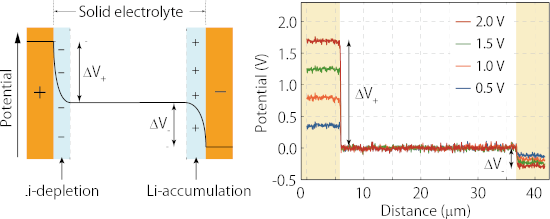
- the electrolyte region, is consistent with the changes in the electrode potential measured using a voltmeter relative to a reference electrode. These results demonstrate that the surface potential in the electrolyte region can be utilized as a stable potential reference when analyzing KPFM data
- . Keywords: electrochemistry; Kelvin probe force microscopy (KPFM); reference electrode; solid electrolyte; Introduction Kelvin probe force microscopy (KPFM) is a scanning probe technique for imaging surface potentials on the nanometer scale [1][2][3][4]. Its operating principle is based on detecting the
- , in the case of electrochemical devices such as batteries, the redox reactions that occur at the electrode are determined by the potential difference across the electrode–electrolyte interface, not the electrode potential relative to ground. This prevents the accurate consideration of redox reactions




Photoelectrochemical water oxidation over TiO2 nanotubes modified with MoS2 and g-C3N4
Beilstein J. Nanotechnol. 2022, 13, 1541–1550, doi:10.3762/bjnano.13.127
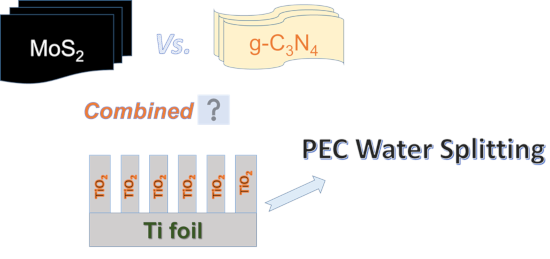
- electrodes were a Pt counter electrode, a Ag/AgCl 3 M reference electrode, and a MoS2/TNAs or g-C3N4/TNAs working electrode in a 1 M Na2SO4 (pH 7.4) electrolyte solution. The light source used in this study was a 150 W Xe lamp (ABET Instruments) with a calibrated luminous intensity of 100 mW·cm−2 and a UV
- exhibit only single semicircular shape, which shows the charge transfer resistance equivalent to the polarization resistance. This result also demonstrates a unique interaction of the electrode surface and the electrolyte solution. Furthermore, the g-C3N4 sample shows the semicircle with the largest
- radius, followed by TNAs and MoS2, which indicates the low interaction of these materials with the electrolyte. However, after coupling, the g-C3N4/TNAs sample shows a semicircle with smaller radius compared than that of g-C3N4 or TNAs. The Nyquist plot of the MoS2/TNAs sample shows the smallest


A TiO2@MWCNTs nanocomposite photoanode for solar-driven water splitting
Beilstein J. Nanotechnol. 2022, 13, 1520–1530, doi:10.3762/bjnano.13.125
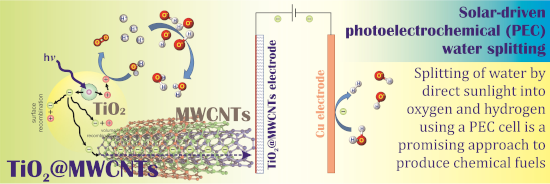
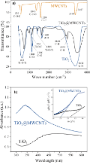
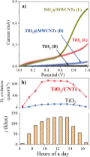
- irradiation is significantly higher than that prepared by TiO2 (vs Ag/AgCl). The low charge capacity of the TiO2@MWCNTs electrode–electrolyte interface hinders the recombination of the photogenerated electrons and holes, which contributes to the enhancement of the solar-to-hydrogen (STH) conversion efficiency
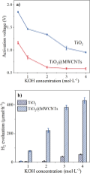
- -electrode cell, including the photoanode and a Cu-based cathode. Hydrogen evolution at the cathode and the solar irradiance is recorded at 60 min intervals. The prepared photoelectrochemical electrode is wholly immersed in KOH electrolyte before each photoelectrochemical measurement. Only one electrode
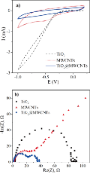
- photoelectrochemical processes occurring at the interface between electrode and electrolyte [31]. Cyclic voltammetry measurements are utilized to analyze the characteristics of charge and discharge of the photoelectrochemical electrodes. Figure 8a shows the cyclic voltammograms (CVs) generated using the prepared TiO2



Structural studies and selected physical investigations of LiCoO2 obtained by combustion synthesis
Beilstein J. Nanotechnol. 2022, 13, 1473–1482, doi:10.3762/bjnano.13.121
- cathode and a graphite anode immersed in a lithium-ion conducting electrolyte, which is 1 M lithium hexafluorophosphate LiPF6 in a 1:1 (v/v) mixture of ethylene and dimethyl carbonate. Most commercial Li-ion cells are used to power portable devices, including mobile phones, laptops, and cameras [5][6][7
- cobalt ions in the electrolyte above 4.2 V. Therefore, the practical capacity of the LCO material is approximately 150 mAh·g−1 [5][6][7][8][9]. One of the ways to improve the performance is (i) to obtain a nanosized LiCoO2 material in different forms and shapes using chemical or physical syntheses (see




Rapid and sensitive detection of box turtles using an electrochemical DNA biosensor based on a gold/graphene nanocomposite
Beilstein J. Nanotechnol. 2022, 13, 1458–1472, doi:10.3762/bjnano.13.120
- shows that the diffusion process regulates the electrochemical reaction of ferrocyanide. Given that the diffusion coefficient and electrolyte concentration were constant throughout all tests, the effective surface area (A) of the electrode had the greatest influence on the peak current (Ip
- using electrochemical impedance spectroscopy (EIS) measurements. In 2.0 mM [Fe(CN)6]3−/4− containing 0.2 M KCl as the supporting electrolyte, the Nyquist plots of the SPCE, Gr/SPCE, AuNPs/SPCE, and AuNPs/Gr/SPCE are shown in Figure 3d. The inset is the equivalent circuit indicating the charge transfer

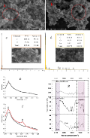


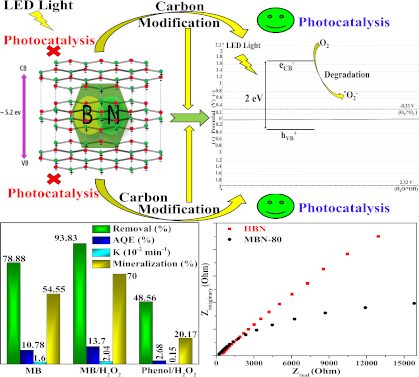
LED-light-activated photocatalytic performance of metal-free carbon-modified hexagonal boron nitride towards degradation of methylene blue and phenol
Beilstein J. Nanotechnol. 2022, 13, 1380–1392, doi:10.3762/bjnano.13.114
- , respectively. The setup consists of a 0.5 M Na2SO4 electrolyte/hole-scavenger solution along with LED lamps as a visible light source. The working electrode was fabricated through an ITO-PTFE electrode (dimensions: 1 cm × 1 cm) drop casted with a slurry of the studied materials, isopropanol and Nafion solution
- MBN-80 by providing in-depth information on the charge transfer kinetics, and the obtained Nyquist plots are depicted in Figure 6a. The charge transfer resistance at the electrode–electrolyte interface can be interpreted through the arc radius from the Nyquist plot [30]. The lower Nyquist radius for
- –electrolyte interface was measured as a function of the applied potential (Eappl) and enunciated through Equation 8. Furthermore, the band structure, Debye length (LDB), density of charge carriers (Nd), and width of the space charge region (Wsc) pertaining to MBN-80 could also be calculated from the Mott



Near-infrared photoactive Ag-Zn-Ga-S-Se quantum dots for high-performance quantum dot-sensitized solar cells
Beilstein J. Nanotechnol. 2022, 13, 1337–1344, doi:10.3762/bjnano.13.110
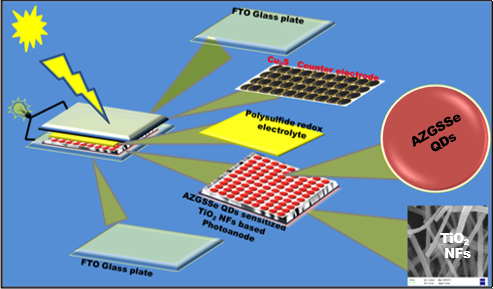
- glass. This substrate was then dried at 60 °C in vacuum for 12 h to obtain the Cu2S-based CE. CE and photoanode were sandwiched with a 60 µm hot melt spacer at 110 °C for 50 s and clipped together. After that, the electrolyte was injected between the electrodes through pre-drilled holes in the CE to get
- ) that appears at the interface of electrolyte and counter electrode. The low-frequency region hemisphere is attributed to the charge transfer resistance (R2) appearing at the interface of electrolyte and photoanode. The sheet resistance (Rs) is the resistance of the intercept of the real axis. Similarly
- , CD1 is the double layer capacitance in the counter electrode/electrolyte interface and CD2 is the capacitance in the photoanode/electrolyte interface. In this work, we focused on R2, and it was observed to be 26.78 Ω. This low value of R2 reveals that the AZGSSe/TiO2 NF-based photoanode has superior


Application of nanoarchitectonics in moist-electric generation
Beilstein J. Nanotechnol. 2022, 13, 1185–1200, doi:10.3762/bjnano.13.99
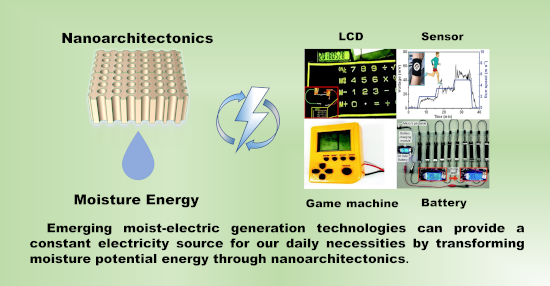
- the device provided an instantaneous electrical output with a maximum open-circuit voltage of 0.3 V and a short-circuit current of 120 μA. After adding a conducting polymer to improve the number of charged ions and the ion selectivity of the diffusion channel, a specific electrolyte fluid was selected


Electrocatalytic oxygen reduction activity of AgCoCu oxides on reduced graphene oxide in alkaline media
Beilstein J. Nanotechnol. 2022, 13, 1020–1029, doi:10.3762/bjnano.13.89
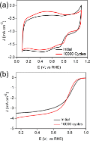
- the electrode/electrolyte interface during the ORR, electrochemical impedance spectroscopy was performed. The Nyquist plot was acquired at 5 mV as AC amplitude between 100 kHz and 100 mHz with 0 V as a bias potential (Figure 4d). It is important to note that the prepared electrocatalysts displayed a
- the interaction between electrolyte and the electrode surface. We probed the water wetting ability of supported ACC-2 and supportless ACC-2* by measuring the water contact angles (Figure S8a,b, Supporting Information File 1). The rGO-supported ACC-2 material showed a higher water wettability (14 ± 1
- °) than the supportless ACC-2* (40 ± 5°). The improved wettability can enhance the charge transfer rate between the electrolyte and the electrode, along with enabling effective electrical integration to reduce ohmic losses, boosting the ORR activity of ACC-2. We observed that ACC-2 displayed superior ORR


DNA aptamer selection and construction of an aptasensor based on graphene FETs for Zika virus NS1 protein detection
Beilstein J. Nanotechnol. 2022, 13, 873–881, doi:10.3762/bjnano.13.78
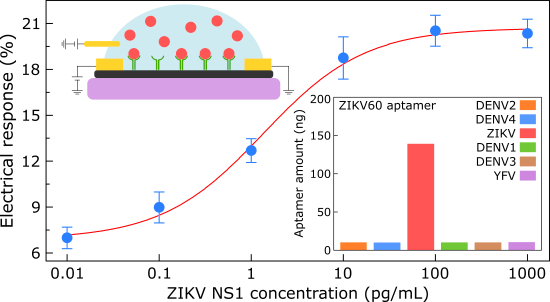
- . The electrical characterization for both demonstration of graphene functionalization with ZIKV60 aptamers and ZIKV NS1 protein detection consisted of DC measurements of the graphene transistors transfer characteristics. We conducted these measurements via electrolyte gating, utilizing a Keysight
- B2902A Precision Source/Measure Unit, immediately after the functionalization process. The source–drain bias was fixed at 1 mV, and we applied the gate voltage via a gold electrode in contact with 100 mM PBS or human serum. PBS was used as electrolyte for validation of the graphene functionalization with
- ZIKV60 aptamers, while human serum was adopted for ZIKV NS1 protein detection. Human serum (from human male AB plasma) was obtained from Sigma-Aldrich. We stress the fact that by using human serum as the gating electrolyte we can directly address any question about the selectivity of the detection since



Optimizing PMMA solutions to suppress contamination in the transfer of CVD graphene for batch production
Beilstein J. Nanotechnol. 2022, 13, 796–806, doi:10.3762/bjnano.13.70
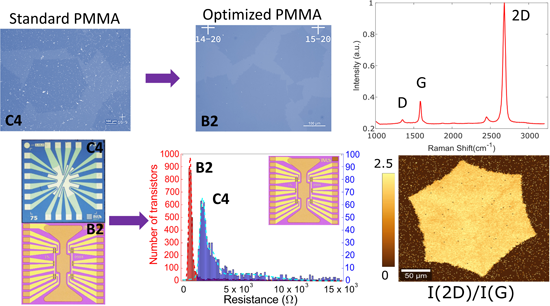
- electrolyte-gated graphene field-effect transistors operating as biosensors. On average, the transistor channel resistance decreased from 1860 to 690 Ω when using the optimized PMMA. Even more importantly, the vast majority of these resistance values are distributed within a narrow range (only ca. 300 Ω wide
- electrolyte-gated graphene field-effect transistors (GFETs, Figure 5) designed to operate as DNA biosensors. Two batches of GFETs having a topmost graphene channel (75 µm width × 25 µm length) were fabricated (see details in Supporting Information File 1). In the first batch [37][38] (including 1755 GFETs
- fabrication of arrays of electrolyte-gated GFETs. The channel resistances of thousands of GFETs prepared using B2 and C4 PMMA were measured with a probe station in air. The resistance distributions were analyzed and fitted with Gaussian curves. The resistance distributions were centered at 690 Ω (FWHM = 303 Ω




Hierarchical Bi2WO6/TiO2-nanotube composites derived from natural cellulose for visible-light photocatalytic treatment of pollutants
Beilstein J. Nanotechnol. 2022, 13, 745–762, doi:10.3762/bjnano.13.66
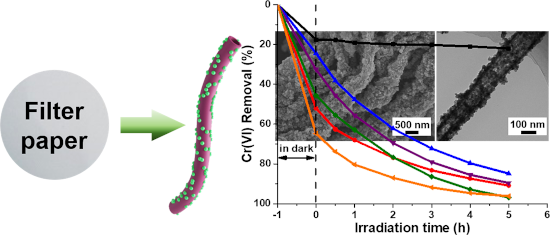
- × 1.0 cm2) and saturated calomel electrode (SCE) were used as the reference and counter electrodes, respectively. The Na2SO4 aqueous solution (0.5 M) was employed as the electrolyte and a xenon lamp with a 420 nm cutoff filter was used as the light source. The corresponding sample (5.0 mg) was


A nonenzymatic reduced graphene oxide-based nanosensor for parathion
Beilstein J. Nanotechnol. 2022, 13, 730–744, doi:10.3762/bjnano.13.65
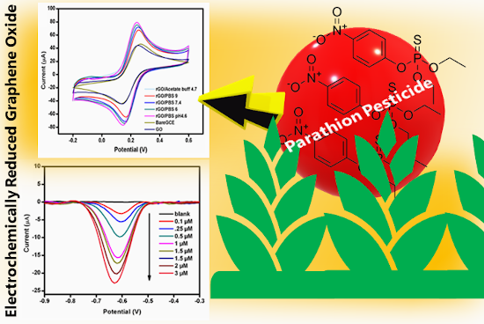
- bond disappeared in ERGO. The amount of residual oxygenated functional groups in ERGO films is likely to vary depending on the experimental conditions, such as applied potential, reduction times, and the electrolyte used [25]. The process parameters for electrochemical reduction were optimized to
- composition of the electrolyte were optimized to increase the deoxygenation of the GO sheet during ERGO formation. Figure 1B depicts three significant Raman peaks of GO at 1350 cm−1 for the D band (associated with defects in the sp2 lattice), 1596 cm−1 for the G band (due to vibrations of the hexagonal
- microstructures of ERGO, which makes the graphene sheets more accessible to the electrolyte. It also facilitates electron transfer and diffusion of ions during the electrochemical process [28][34]. Electrochemical behavior of parathion at modified nanosensors Figure 5A depicts the CVs (first cycle) of bare GCE


Nanoarchitectonics of the cathode to improve the reversibility of Li–O2 batteries
Beilstein J. Nanotechnol. 2022, 13, 689–698, doi:10.3762/bjnano.13.61
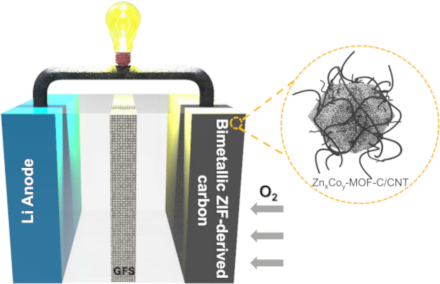
- containing a Li+-conductive aprotic electrolyte. In principle, electrochemical reactions between Li+ and O2 take place in the cathode to store and convert energy. During the discharge, the oxygen reduction reaction (ORR) occurs at the surface of the cathode, where O2 is spontaneously reduced by Li+ coming
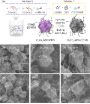
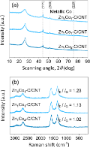
- sufficient diffusion pathways for oxygen and electrolyte in the cathode. The ratio of Zn/Co in the starting materials greatly affects the microstructure and porosity of the resulting bimetallic ZIF–carbon/CNT composites. The correlation between the microstructure and the electrochemical performance of the
- which the highly porous ZnxCoy–C particles are beneficial for facilitating the electrochemical reactions between Li+ and O2. Moreover, CNT networks allow for sufficient electronic conduction as well as diffusion pathways for O2 and electrolyte in the composites. The atomic ratios of Zn and in the Zn1Co4


Reliable fabrication of transparent conducting films by cascade centrifugation and Langmuir–Blodgett deposition of electrochemically exfoliated graphene
Beilstein J. Nanotechnol. 2022, 13, 666–674, doi:10.3762/bjnano.13.58
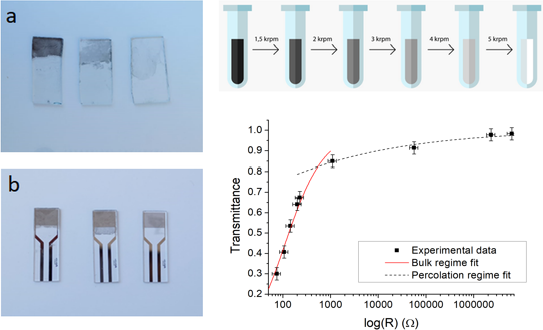
- electrochemical exfoliation, whereby graphene is exfoliated in an electrolyte from an electrode made of graphite [19]. In electrochemical exfoliation, ions from the electrolyte flow towards the graphite electrode and intercalate between the graphene layers. The electrochemical reaction provides a driving force to


Detection and imaging of Hg(II) in vivo using glutathione-functionalized gold nanoparticles
Beilstein J. Nanotechnol. 2022, 13, 549–559, doi:10.3762/bjnano.13.46
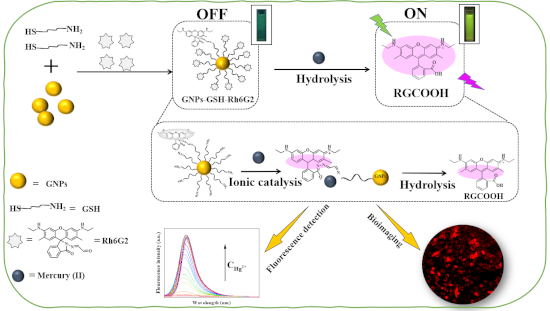
- fluorescence in the temperature range of 25–45 °C. In addition, we also investigated the effect of the electrolyte solution (taking NaCl solution as an example) on the stability of GNPs-GSH-Rh6G2. As shown in Figure 4d, the fluorescence intensity of GNPs-GSH-Rh6G2 remained relatively stable when the
- concentration of electrolyte solution was increased. The GNPs-GSH-Rh6G2 have a lower fluorescence baseline in 0.10 M NaCl solution, which is important for the application in living organisms. Detection of Hg(II) We investigated the optical sensing properties of GNPs-GSH-Rh6G2 using fluorescence spectroscopy. To


Influence of thickness and morphology of MoS2 on the performance of counter electrodes in dye-sensitized solar cells
Beilstein J. Nanotechnol. 2022, 13, 528–537, doi:10.3762/bjnano.13.44
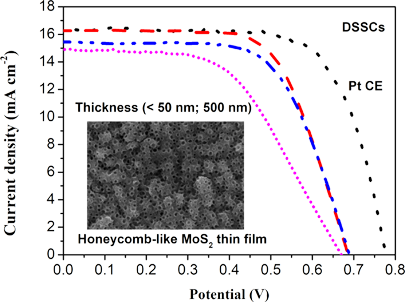
- and respectable efficiency [1]. This promising third generation of solar cells contains a dye-adsorbed TiO2 photoanode, an iodide/triiodide electrolyte, and a platinum-based cathode, also known as the counter electrode (CE). However, the high cost of platinum has prevented the real-world application of
- and Na2S in KCl electrolyte solution. To study the redox behavior of the solution, the CV curves for each component and the mixture solutions were recorded in the potential range from −1.5 V to 1.0 V (Figure 1). The blank KCl electrolyte exhibits a straight line around zero current, while the
- is associated with the reduction of I3− at the cathode (CE/electrolyte), while the second one in the low-frequency region is attributed to electron transport in the TiO2 film in the back reaction at the TiO2/electrolyte interface (TiO2/dye/electrolyte). EIS data were fitted using an equivalent


The effect of metal surface nanomorphology on the output performance of a TENG
Beilstein J. Nanotechnol. 2022, 13, 298–312, doi:10.3762/bjnano.13.25
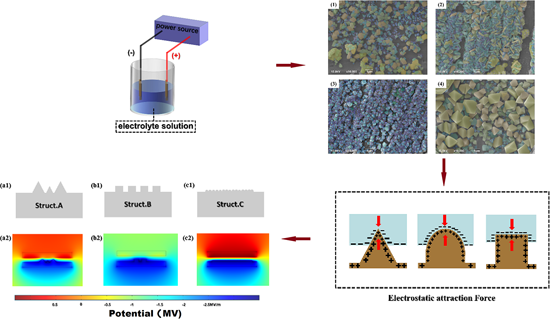
- of a metal and a polymer. There are different charge densities on different kinds of metal surface nanomorphology, which significantly influences the output performance of the TENG. Copper samples with different nanomorphology were obtained by controlling pH value, current density, electrolyte
- sulfate pentahydrate (purchased from Yongrong) with purity greater than 99.5%, and deionized water were used to prepare the electrolyte solution. The experimental temperature was controlled using a water bath (Olabo, model HH-S6). A Kelong KLX305 DC power source was used to control the current density
- . Copper sulfate pentahydrate of different concentrations (50 mL) was added to the electroplating solution. The electroplating process was based on an orthogonal test design for 16 sets of experimental conditions. First, the electrolytic cell was filled with electrolyte and the pole plate was immersed into