Search results
Search for "electrospinning" in Full Text gives 79 result(s) in Beilstein Journal of Nanotechnology.
Piezoelectric nanogenerator for bio-mechanical strain measurement
Beilstein J. Nanotechnol. 2022, 13, 192–200, doi:10.3762/bjnano.13.14
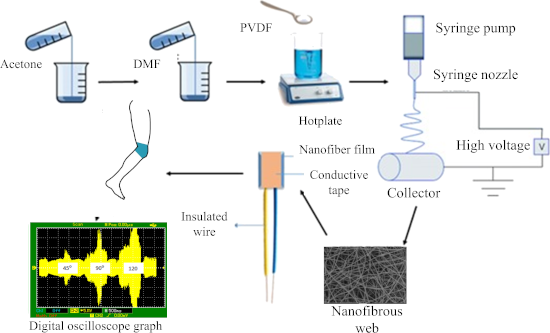
- . Keywords: electrospinning; human body angle measurement; nanofibers; piezoelectric; PVDF; Introduction Smart textiles are normally elevated to value-added textile products with improved properties and characteristics [1]. They exhibit properties of a textile with some added characteristics. Smart textiles
- electrospinning. A conventional electrospinning process was used to create the piezoelectric electrospun nanofibers. The polymeric solution was pumped from a metallic syringe needle of 0.4 mm inner diameter at a flow rate of 3.5 mL/h. The fibers were collected on a stationary collector placed at a working


A comprehensive review on electrospun nanohybrid membranes for wastewater treatment
Beilstein J. Nanotechnol. 2022, 13, 137–159, doi:10.3762/bjnano.13.10
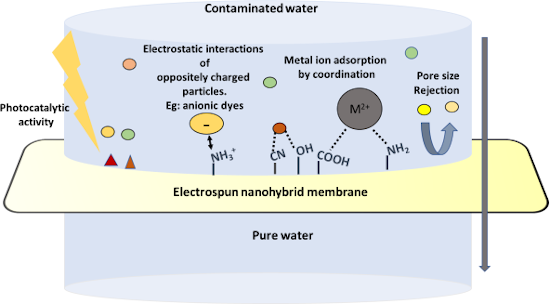
- for Advanced Materials Research (CAMR), Faculty of Applied Sciences, University of Sri Jayewardenepura, Gangodawila, Nugegoda, Sri Lanka 10.3762/bjnano.13.10 Abstract Electrospinning, being a versatile and straightforward method to produce nanofiber membranes, has shown significant advancement in
- discussed. Finally, an outlook on the future research pathways to fill the gaps existing in water remediation have been suggested. Keywords: electrospinning; environmental remediation; membrane technologies; nanohybrids; water purification; Review 1 Introduction Nanotechnology is a technique that exploits
- , and phase inversion [1] to fabricate porous nanomembranes, electrospinning is a straightforward emerging technology that uses electrostatic forces to produce ultrathin fibers with diameters at the nanometer scale. In comparison to the membranes developed via other methodologies, electrospinning





The effect of cobalt on morphology, structure, and ORR activity of electrospun carbon fibre mats in aqueous alkaline environments
Beilstein J. Nanotechnol. 2021, 12, 1173–1186, doi:10.3762/bjnano.12.87
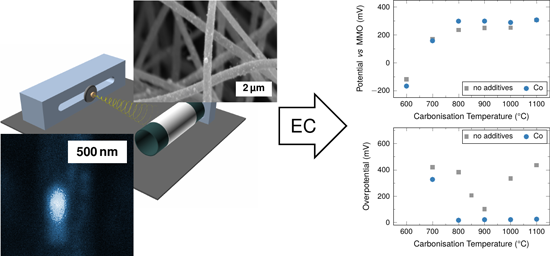
- at an overpotential of 100 mV and low overpotentials at current densities of 333 μA·cm−2 were found for all electrodes made from cobalt-decorated fibre mats carbonised at temperatures between 800 and 1000 °C. Keywords: carbon fibres; cobalt-decorated fibres; electrospinning; metal–air batteries
- three main groups: electroplating, electroless plating, and bottom-up methods such as vapour deposition. Another way to introduce metals to a carbon fibre system in form of nanoparticles was reported by groups who prepared cobalt/cobalt oxide-decorated carbon nanofibres from electrospinning by adding a
- electrospinning are a convenient and promising material for air electrodes in metal–air batteries. These studies used the cobalt-enhanced fibre material either as a bottom-up catalyst material in aqueous alkaline systems [21][22] or as free-standing electrodes in non-aqueous systems with a lab-scale geometric


Solution combustion synthesis of a nanometer-scale Co3O4 anode material for Li-ion batteries
Beilstein J. Nanotechnol. 2021, 12, 424–431, doi:10.3762/bjnano.12.34
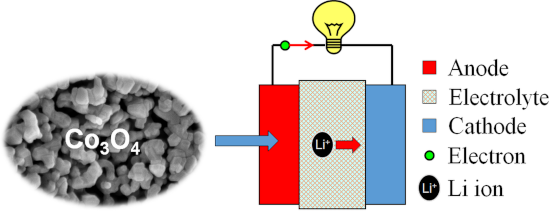
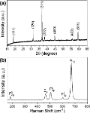
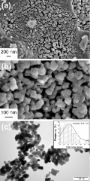
- been proposed including sol–gel methods [4][6][13][14][15], sol–electrospinning techniques [16][17][18][19], hydrothermal and solvothermal syntheses [20][21][22][23][24][25][26][27][28], precipitation and co-precipitation [29][30][31], chemical thermal decomposition and pyrolysis [32][33][34][35][36


Bulk chemical composition contrast from attractive forces in AFM force spectroscopy
Beilstein J. Nanotechnol. 2021, 12, 58–71, doi:10.3762/bjnano.12.5
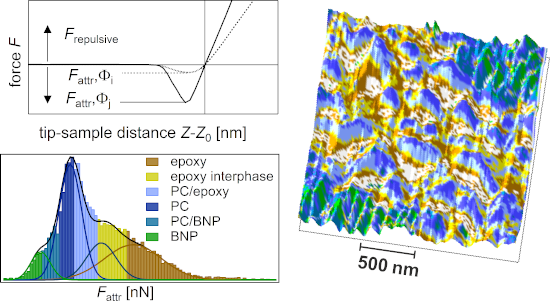
- surface was modified with taurine (coverage of ≈16%) which was found to enable the subsequent electrospinning process. The nanoparticles were mixed in a solution of methylene chloride (CH2Cl2) and PC. The solution was electrospun to form fibers at 30 kV and at distance of 10 cm from the collector. The


Piezoelectric sensor based on graphene-doped PVDF nanofibers for sign language translation
Beilstein J. Nanotechnol. 2020, 11, 1655–1662, doi:10.3762/bjnano.11.148
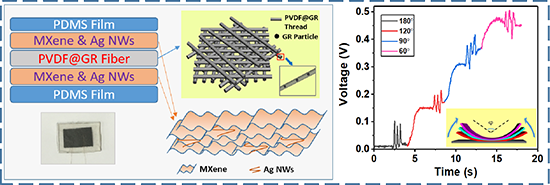
- PVDF nanofibers. The fiber properties after electrospinning were measured, and a potential application of the PES in the translation of sign language was successfully demonstrated. The designed PES shows a high sensitivity regarding both pressure and bending. In particular, a stable angle mapping under
- concentrated in the bent part of the material, and the potential is generated on the opposite side of the device. Electrospinning is used to manufacture GR-doped PVDF fibers. The overall process is shown in Figure 2a. Firstly, GR is dispersed in dimethylformamide (DMF). After ultrasonic treatment, PVDF powder
- is added under stirring to yield the spinning solution for electrospinning. After preparation of the fibers, an aqueous solution of Ti3C2 MXene and Ag NWs is sprayed on both sides of the material and then dried. Finally, the nanowire membrane is covered on both sides with PDMS to obtain the


High-responsivity hybrid α-Ag2S/Si photodetector prepared by pulsed laser ablation in liquid
Beilstein J. Nanotechnol. 2020, 11, 1596–1607, doi:10.3762/bjnano.11.142
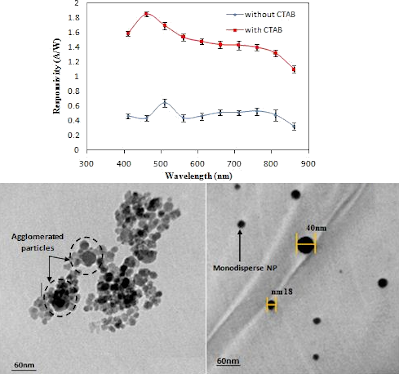
- hydrothermal methods, chemical bath deposition, laser ablation in liquid reverse microemulsion, electrospinning, sol–gel, electrochemical method, template method, sonochemical method, and hydrochemical bath deposition [10][11][12][13]. The size of Ag2S NPs depends on the preparation conditions [14]. Ag2S NPs




Antimicrobial metal-based nanoparticles: a review on their synthesis, types and antimicrobial action
Beilstein J. Nanotechnol. 2020, 11, 1450–1469, doi:10.3762/bjnano.11.129

- , Lopez de Dicastillo et al. (2018, 2019) have recently developed hollow titanium dioxide nanotubes and nanospheres through the deposition of tetrakis(dimethylamide) titanium and water, as precursors, on polymeric structures obtained via electrospinning. The resulting hollow nanotubes and nanospheres had
- NPs has been directed towards water disinfection, food packaging in addition to their known use as a UV filter to prevent skin cancer [114]. Lopez de Dicastillo et al. (2019) developed hollow TiO2 nanotubes and nanospheres with high antimicrobial activity through the combination of electrospinning and


Structure and electrochemical performance of electrospun-ordered porous carbon/graphene composite nanofibers
Beilstein J. Nanotechnol. 2020, 11, 1280–1290, doi:10.3762/bjnano.11.112
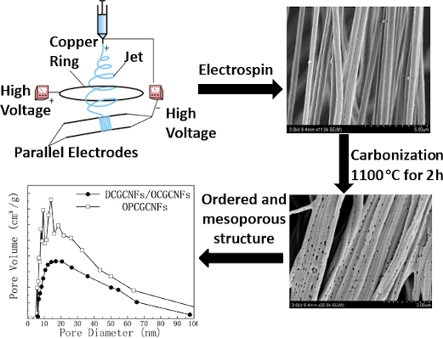
- configurations were used as a material to fabricate supercapacitor electrodes. These nanofibers were synthesized by applying a modified parallel electrode to the electrospinning method (MPEM) in order to generate electrospun polyacrylonitrile (PAN) nanofibers containing graphene. After synthesis, these fibers
- ; electrochemistry; electrode material; electrospinning method; ordered and porous nanofibers; supercapacitor; Introduction As the technology sector develops, societal demands for energy storage devices also increases. Supercapacitors, including electric double-layer capacitors (EDLCs) and pseudo-capacitance
- improvement of the current supercapacitor electrochemical performance, the capacitance and cycle stability of supercapacitors are still subjects of research interest. Electrospinning is one of the most convenient methods to synthesize nanofibers in a continuous manner. Electrospinning has many advantages over


Wet-spinning of magneto-responsive helical chitosan microfibers
Beilstein J. Nanotechnol. 2020, 11, 991–999, doi:10.3762/bjnano.11.83
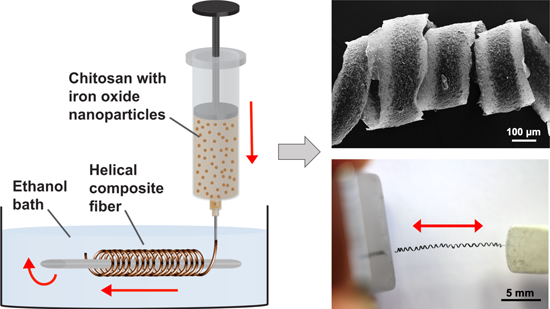
- immunogenicity [17] and, therefore, has become highly used in tissue regeneration [18][19]. Chitosan fibers are particularly well-suited for tissue engineering due to their highly porous scaffold architecture [20]. Using electrospinning, chitosan fibers can be produced with a diameter ranging from several tens
- of nanometers to a few micrometers [21]. Blends of chitosan with alginate, silk, fibroin, cellulose or collagen can also be processed into composite fibers by electrospinning [22]. Wet-spinning is another well-established method of fabricating chitosan fibers with a diameter in the micrometer range
- ]. Additionally, by using either wet-spinning or electrospinning techniques, nanoparticles can be suspended into the viscous spinning solution and embedded into the fiber matrix. For example, silver nanoparticles have been incorporated into electrospun chitosan fibers enabling antibacterial activity in wound


A novel dry-blending method to reduce the coefficient of thermal expansion of polymer templates for OTFT electrodes
Beilstein J. Nanotechnol. 2020, 11, 671–677, doi:10.3762/bjnano.11.53
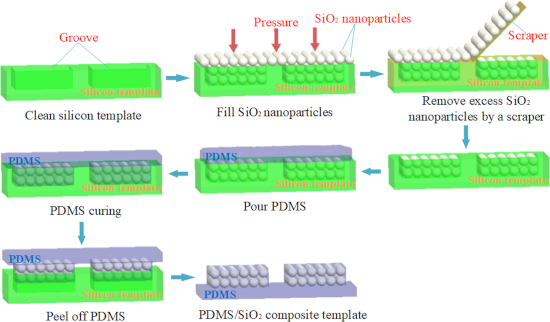
- a sol–gel precursor by adding tetraethyl orthosilicate (TEOS) to polyvinyl pyrrolidone (PVP), and then synthesized a silica/PVP nanofiber composite by electrospinning. The content of silica nanofibers in the composite is 9.1 wt %, and the CTE was decreased by ca. 40%. Jeyranpour et al. [13] studied


Preparation, characterization and photocatalytic performance of heterostructured CuO–ZnO-loaded composite nanofiber membranes
Beilstein J. Nanotechnol. 2020, 11, 631–650, doi:10.3762/bjnano.11.50
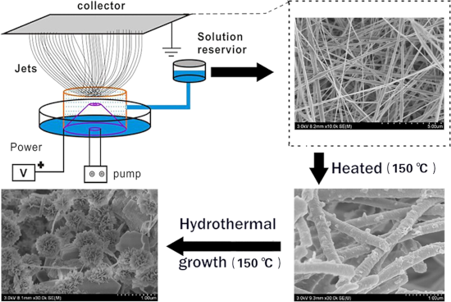
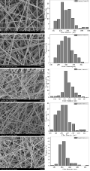
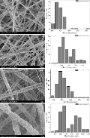
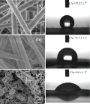
- environmental monitoring, industry, aviation, and transportation. In this paper, heterostructured CuO–ZnO-loaded CNF membranes (CNFMs) were prepared successfully by a combination of electrospinning, heat treatment, and hydrothermal synthesis. The influence of the synthesis parameters on morphology, structure
- three times, and the degradation rate remained above 90%. Keywords: electrospinning; composite nanofibers; heterostructured CuO–ZnO; hydrothermal synthesis; photocatalysis; semiconductor oxide; Introduction Water remediation is one of the main scientific research subjects regarding environmental
- , electrical, mechanical and chemical properties, which might result in applications in photocatalysis [26]. Electrospinning is a simple and convenient method for preparing composite nanofibers (CNFs) [27][28][29][30][31]. CNFs have been widely applied as carrier material due to their outstanding













Four self-made free surface electrospinning devices for high-throughput preparation of high-quality nanofibers
Beilstein J. Nanotechnol. 2019, 10, 2261–2274, doi:10.3762/bjnano.10.218
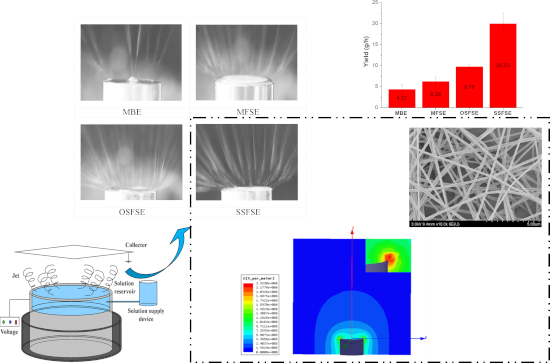
- Yue Fang Lan Xu National Engineering Laboratory for Modern Silk, College of Textile and Engineering, Soochow University, 199 Ren-ai Road, Suzhou 215123, China 10.3762/bjnano.10.218 Abstract Four different self-made free surface electrospinning (FSE) techniques, namely, modified bubble
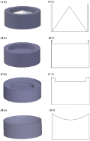
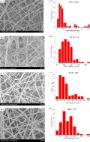
- -electrospinning (MBE), modified free surface electrospinning (MFSE), oblique section free surface electrospinning (OSFSE) and spherical section free surface electrospinning (SSFSE), designed for high-throughput preparation of high-quality nanofibers, are presented in this paper. The mechanisms of fiber
- device performs best, providing the highest quality and yield of nanofibers. The SSFE device could yield 20.03 g/h of nanofibers at an applied voltage of 40 kV. Keywords: electric field; free surface electrospinning; high-throughput preparation; Maxwell 3D; mechanism; nanofibers; Introduction Due to








A novel all-fiber-based LiFePO4/Li4Ti5O12 battery with self-standing nanofiber membrane electrodes
Beilstein J. Nanotechnol. 2019, 10, 2229–2237, doi:10.3762/bjnano.10.215
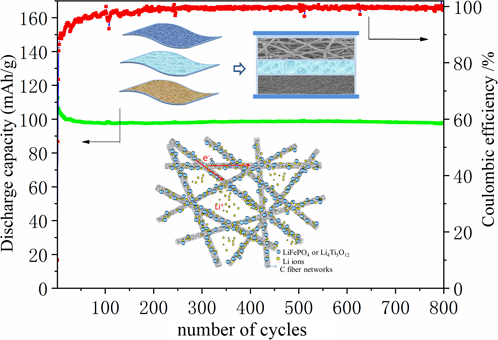
- , Chongqing, 400715, China 10.3762/bjnano.10.215 Abstract Electrodes with high conductivity and flexibility are crucial to the development of flexible lithium-ion batteries. In this study, three-dimensional (3D) LiFePO4 and Li4Ti5O12 fiber membrane materials were prepared through electrospinning and directly
- network; electrospinning; flexible electrodes; lithium ion battery; nanofiber; self-standing electrodes; Introduction With the rapid development of renewable energy technologies, electric vehicles and electronic devices, energy storage technology has become a focus of global research [1][2][3][4][5][6][7
- increased, the utilization ratio of the active material is improved, and the structural stability of the material is enhanced [18][27][28]. Therefore, it is highly desirable to fabricate all-fiber-based batteries to achieve high performance for practical applications [34][35]. Electrospinning is an


Review of advanced sensor devices employing nanoarchitectonics concepts
Beilstein J. Nanotechnol. 2019, 10, 2014–2030, doi:10.3762/bjnano.10.198

- , vinylidenefluoride-tetrafluoroethylene-hexafluoropropylene, and an ionic liquid, 1-butyl-3-methylimidazolium bis(trifluoromethanesulphonyl)imide, through an electrospinning process. The prepared sensor can only sense normal pressure without significant disturbance up to a bending radius of 80 µm. This sensor system





Optimization and performance of nitrogen-doped carbon dots as a color conversion layer for white-LED applications
Beilstein J. Nanotechnol. 2019, 10, 2004–2013, doi:10.3762/bjnano.10.197
- to inorganic phosphors that are commonly employed in white-LED configurations. Keywords: color conversion layer; electrospinning; nitrogen-doped carbon dots; PVP; solid-state lighting; white LED; white-light generation; Introduction Light-emitting carbon dots (CDots) are a new class of
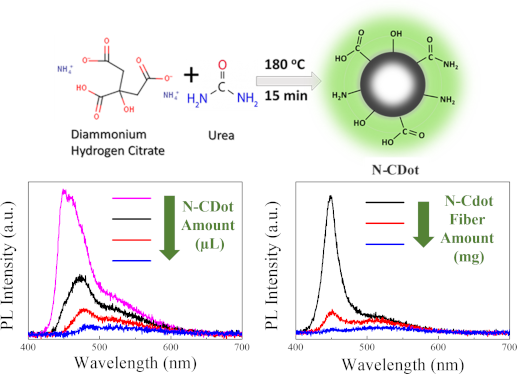
- of the red emission component on the white-light properties. Additionally, composite fibers were prepared by electrospinning of the water-based PVP/N-CDots. By adjusting the amount of fibers in the color conversion layers, the quality of the generated white light was improved, and a high CRI together
- first, 3.0 g of PVP was mixed with 2.5 mL of ethanol and 2.5 mL of pure water in a glass vial. Then, 2.0 mL of the PVP solution was mixed with 15.0 µL of the N-CDot dispersion for electrospinning. The PVP/N-CDot fibers were fabricated by employing a potential difference of 15 kV and a flow rate of 1 mL


Nanostructured and oriented metal–organic framework films enabling extreme surface wetting properties
Beilstein J. Nanotechnol. 2019, 10, 1994–2003, doi:10.3762/bjnano.10.196
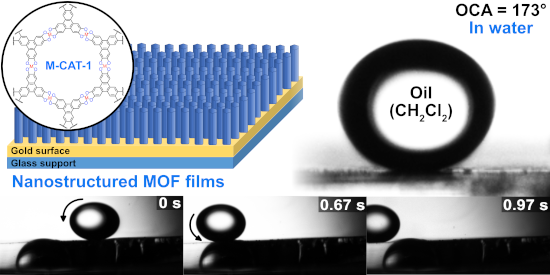
- example, sol–gel synthesis, electrochemical deposition, anodization, electrochemical polymerization, electrospinning, plasma treatment, chemical or hydrothermal methods, vapor deposition, layer-by-layer assembly or laser ablation [19][27][28][29][30][31][32][33][34][35][36][37][38][39]. However, the


Novel hollow titanium dioxide nanospheres with antimicrobial activity against resistant bacteria
Beilstein J. Nanotechnol. 2019, 10, 1716–1725, doi:10.3762/bjnano.10.167
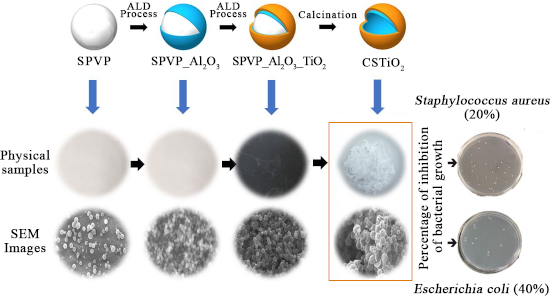
- this work, novel, hollow, calcined titanium dioxide nanospheres (CSTiO2) were successfully synthesized for the first time through the combination of electrospinning and atomic layer deposition techniques. Poly(vinylpyrrolidone) (PVP) electrosprayed spherical particles were double-coated with alumina
- ; atomic layer deposition; electrospinning; hollow nanospheres; titanium dioxide; Introduction Microbial contamination and the increase of multidrug bacterial resistance have become two major current concerns for food safety and human health due to the number of food-borne diseases and nosocomial
- [10][15]. In this work, the combination of electrospinning and atomic layer deposition (ALD) technologies are presented as an innovative strategy to develop titanium dioxide hollow nanospheres with controlled and homogeneous dimensions. Electrospinning is a technique able to produce different


High-temperature resistive gas sensors based on ZnO/SiC nanocomposites
Beilstein J. Nanotechnol. 2019, 10, 1537–1547, doi:10.3762/bjnano.10.151
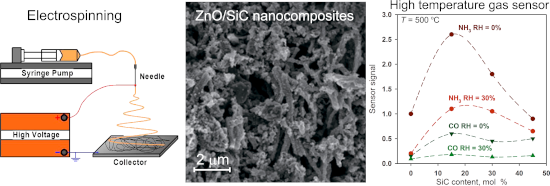
- dispersed silicon carbide (SiC). In this work, ZnO and SiC nanofibers were synthesized by electrospinning of polymer solutions followed by heat treatment, which is necessary for polymer removal and crystallization of semiconductor materials. ZnO/SiC nanocomposites (15–45 mol % SiC) were obtained by mixing
- an n–n heterojunction at the ZnO/SiC interface. Keywords: electrospinning; high temperature gas sensor; n–n heterojunction; ZnO/SiC nanocomposite; Introduction The risk of air pollution is growing due to the development of new technologies in the chemical, metallurgical and food industries, the use
- been practically studied. A few works of the MO/SiC composite material based on highly dispersed silicon carbide [8][15] showed the stability of the material structure at 600 °C and its high response to carbon monoxide. Electrospinning is inexpensive tool widely used today for preparation porous



Tailoring the magnetic properties of cobalt ferrite nanoparticles using the polyol process
Beilstein J. Nanotechnol. 2019, 10, 1166–1176, doi:10.3762/bjnano.10.116
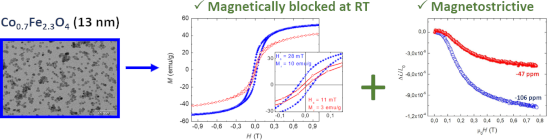
- fibers, made by electrospinning [9]. Focusing on this latter class of materials, the polymer exhibiting the most interesting ferro-and piezoelectric properties is a semi-crystalline fluoropolymer: poly(vinylidene fluoride) or PVDF. Mixing PVDF with magnetic nanoparticles leads to a higher polymer




An efficient electrode material for high performance solid-state hybrid supercapacitors based on a Cu/CuO/porous carbon nanofiber/TiO2 hybrid composite
Beilstein J. Nanotechnol. 2019, 10, 781–793, doi:10.3762/bjnano.10.78
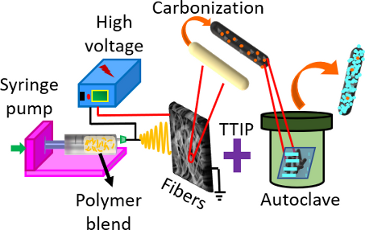
- carbon nanofiber/TiO2 (Cu/CuO/PCNF/TiO2) composite uniformly covered with TiO2 nanoparticles was synthesized by electrospinning and a simple hydrothermal technique. The synthesized composite exhibits a unique morphology and excellent supercapacitive performance, including both electric double layer and
- have been envisaged as a prospective electrode material due to its good mechanical strength, high surface area, relatively high conductivity [11][12]. Hence, carbon nanofibers produced by electrospinning, which is a cost-effective, simple and industry-viable technology, offer high production rate, high
- behavior. Herein, we report a novel approach for the fabrication of a Cu/CuO/porous carbon nanofiber (PCNF)/TiO2 (Cu/CuO/PCNF/TiO2) composite that is uniformly covered by TiO2 nanoparticles and is synthesized using the electrospinning method together with a hydrothermal technique, followed by air


Graphene-enhanced metal oxide gas sensors at room temperature: a review
Beilstein J. Nanotechnol. 2018, 9, 2832–2844, doi:10.3762/bjnano.9.264
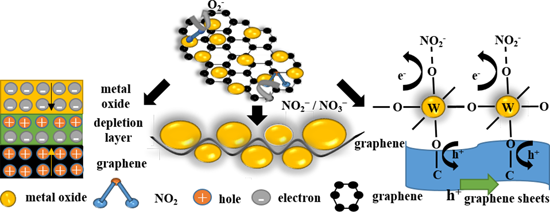
- the single components. The mechanisms through which graphene enhances the sensing performance of MOS sensors will be interpreted in the following sections. Wang et al. [35] reported that a formaldehyde (HCHO) sensor based on SnO2–GO composites, fabricated via electrospinning, exhibited a three times
- electrospinning. The Co3O4–rGO room-temperature sensor showed excellent sensitivity to low concentrations of NH3, an ultrafast response time of only 4 s with exceptional selectivity to NH3. The authors claimed that the introduction of rGO exhibiting a strong attraction to NH3 played a crucial role in improving



Nanocellulose: Recent advances and its prospects in environmental remediation
Beilstein J. Nanotechnol. 2018, 9, 2479–2498, doi:10.3762/bjnano.9.232

- cellulose pulp is required to produce CNF/CNC. In general, most CNCs and CNFs are produced through breaking down the cellulose fibres into nanosize fragments (top-down process), except for BC and electrospun cellulose nanofiber (ECNF) which utilize bacteria and an electrospinning technique (bottom-up
- counter collision, ball milling, blending, cryocrushing, electrospinning, extrusion, grinding, homogenization, refining, steam explosion, ultrasonication, or a combination thereof. Chemical reaction Effective and energy-efficient nanocellulose preparation techniques are being pursued to sustain and meet


Effect of electrospinning process variables on the size of polymer fibers and bead-on-string structures established with a 23 factorial design
Beilstein J. Nanotechnol. 2018, 9, 2466–2478, doi:10.3762/bjnano.9.231
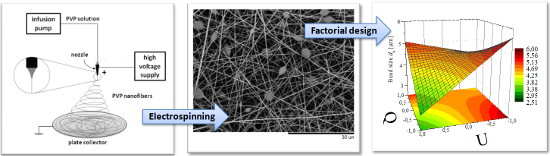
- diameter of uniform and heterogeneous fibers (with and without bead-on-string structures) and the size of beads obtained during the electrospinning process. A 23 factorial design was performed to determine the influence of the following factors: electrical voltage, flow rate and dynamic viscosity of the
- viscosity, while the voltage had the greatest influence on the bead-free fiber diameter. The interactions between the studied factors were also analyzed. It was found that the presented method can be used for the design of an optimal and cost-effective electrospinning process, allowing the desired product
- to be obtained with expected features. Keywords: bead-on-string structure; electrospinning; factorial design; polymer fiber; Introduction Since the beginning of the 21st century, the interest in electrospinning processes has been growing constantly. The reason for this is the wide range of


Electrospun one-dimensional nanostructures: a new horizon for gas sensing materials
Beilstein J. Nanotechnol. 2018, 9, 2128–2170, doi:10.3762/bjnano.9.202
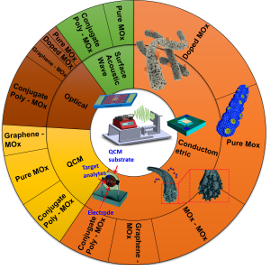
- in everyday life. Herein, we review recent developments of gas sensors based on electrospun 1D nanostructures in different sensing platforms, including optical, conductometric and acoustic resonators. After explaining the principle of electrospinning, we classify sensors based on the type of
- benefits and limitations for every approach. Keywords: 1D nanostructures; conductometric devices; electrospinning; gas sensors; optical sensors; resonators; Review 1 Introduction The monitoring and control of air pollutants, toxic gases and explosives has become increasingly important for human wellness
- produced by many different approaches. For example, by use of a molten-salt method, wet (or liquid) chemistry, nanocarving, self-catalyst growth, template-assisted (or sacrificial template) synthesis, chemical vapour deposition, thermal evaporation, spray pyrolysis or electrospinning [34][35][36]. Among