Search results
Search for "energy dissipation" in Full Text gives 107 result(s) in Beilstein Journal of Nanotechnology.
Influence of water contamination on the sputtering of silicon with low-energy argon ions investigated by molecular dynamics simulations
Beilstein J. Nanotechnol. 2022, 13, 986–1003, doi:10.3762/bjnano.13.86
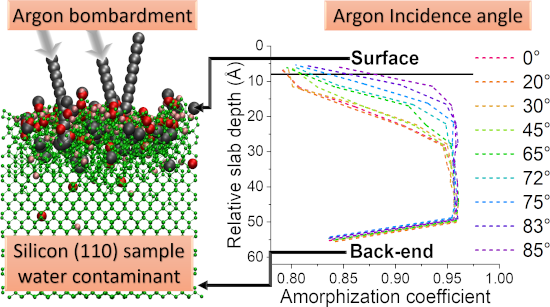
- the NVE ensemble in order to avoid any impact of a thermostat on the collision cascade. Once properly equilibrated, the simulation of argon bombardment of pristine Si(100) was run for 50 ps, which was enough for the modelling of energy dissipation and sputtering, and then thermalized to 300 K. The




A superconducting adiabatic neuron in a quantum regime
Beilstein J. Nanotechnol. 2022, 13, 653–665, doi:10.3762/bjnano.13.57
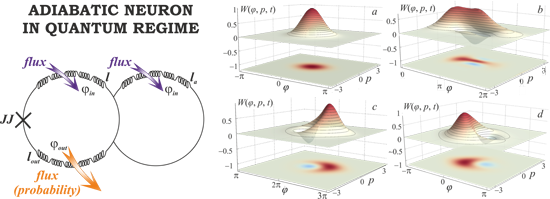
- with extremely small energy dissipation [42][43][44][45]. We especially note the demonstrated possibility of the adiabatic evolution of the state for a neuron in a multilayer perceptron with Josephson junctions without resistive shunting [46]. It is precisely such a heterostructure without resistive


Effects of substrate stiffness on the viscoelasticity and migration of prostate cancer cells examined by atomic force microscopy
Beilstein J. Nanotechnol. 2022, 13, 560–569, doi:10.3762/bjnano.13.47
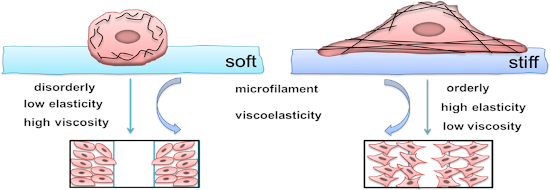
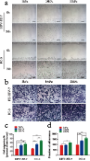
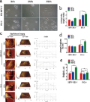
- deformation [38][39]) the energy dissipation was mainly caused by cell adhesion, which was a certain separation between the approach and retraction curves (Figure 5c). The results showed a negative correlation between viscosity values and substrate stiffness in PC-3 cells: the higher the substrate stiffness



Tunable superconducting neurons for networks based on radial basis functions
Beilstein J. Nanotechnol. 2022, 13, 444–454, doi:10.3762/bjnano.13.37
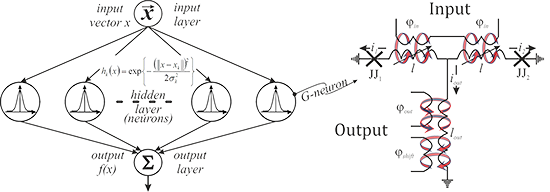
- considered a basic cell for superconducting signal neurocomputers designed for the fast processing of a group signal with extremely low energy dissipation. It turned out that for this purpose it is possible to modify the previously discussed element of adiabatic superconducting neural networks. The ability
- deviation from the Gaussian-like function depending on the inductances l and lout of the G-cell. The bias flux is equal to 0.05π. (a) Dynamic transfer function of a Gauss-neuron for a trapezoidal external signal for different values of the rise/fall times of the signal tRF and (b) energy dissipation


Effect of lubricants on the rotational transmission between solid-state gears
Beilstein J. Nanotechnol. 2022, 13, 54–62, doi:10.3762/bjnano.13.3
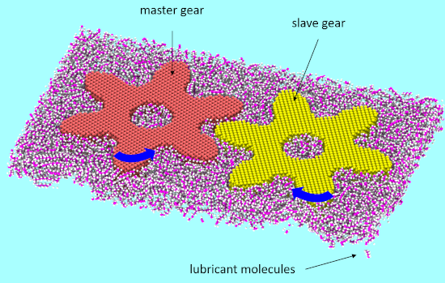
- friction or gear–lubricant friction are accounted for within the MD simulation in the form of an irreversible rotational kinetic energy dissipation. The energy of gear rotation can be transferred to deformation energy [49] or to the lubricants due to microscopic Lennard-Jones interactions. Angular velocity


Alteration of nanomechanical properties of pancreatic cancer cells through anticancer drug treatment revealed by atomic force microscopy
Beilstein J. Nanotechnol. 2021, 12, 1372–1379, doi:10.3762/bjnano.12.101
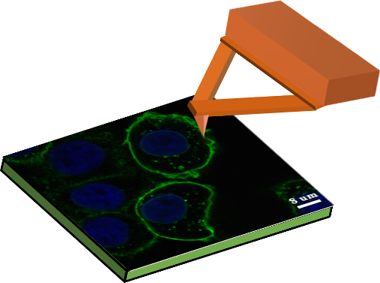
- angle of the probe, and δ is the indentation depth. Thus the E can be calculated by transforming the above equation: Hence the Young’s modulus can be calculated by fitting the linear part of the force–distance curves, that is, the slope of the force–distance curve. Energy dissipation is the loss of
- mechanical energy during each trace–retrace cycle. The hysteresis in the force–distance curves between different types of cells indicates the energy dissipation. The dissipated energy can be calculated by the following formula, where W is the total amount of energy dissipation, and its value in the force
- indicates that pancreatic cancer softens pancreatic cells. Also, there is energy dissipation manifested as hysteresis in a cycle of force–distance curves in all four kinds of cells. The results (Supporting Information File 1, Table S2) show that the hysteresis in the force–displacement cycle of HPDE6-C7 is


A review on slip boundary conditions at the nanoscale: recent development and applications
Beilstein J. Nanotechnol. 2021, 12, 1237–1251, doi:10.3762/bjnano.12.91
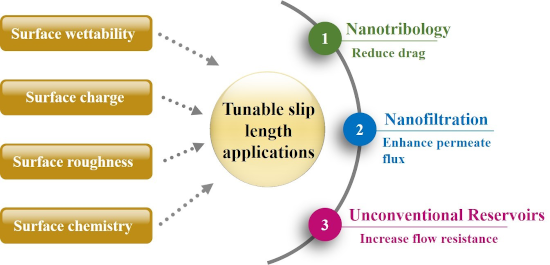
- ]. 3 Applications of nanofluidics with tunable slip length 3.1 Drag reduction Reducing drag is of great significance in many areas related to nanotechnology, such as nanotribology [117], nanomedicine [118], and electrokinetics [119] due to the low energy dissipation. For instance, it has been reported


Functional nanostructures for electronics, spintronics and sensors
Beilstein J. Nanotechnol. 2020, 11, 1704–1706, doi:10.3762/bjnano.11.152

- not solve the problem [3]. The future of high-performance computing will most likely be associated with one of the alternative “post-Moore’s” technologies where energy dissipation is drastically lower. It is expected that the most promising “post-Moore’s” candidate to lead the technological way is
On the frequency dependence of viscoelastic material characterization with intermittent-contact dynamic atomic force microscopy: avoiding mischaracterization across large frequency ranges
Beilstein J. Nanotechnol. 2020, 11, 1409–1418, doi:10.3762/bjnano.11.125
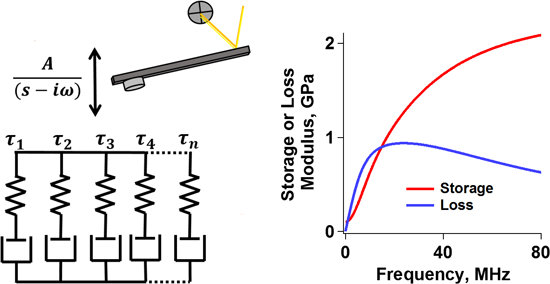
- studies have explored different phenomena, such as energy dissipation and the proportion between elastic and viscous probe–sample interactions during the measurement [22][23][24][25][26][27]. A large number of publications have focused on the study of the phase signal (i.e., the lag of the oscillatory
- relaxation in the sample, whereby the distance between the two force minima on the curve can be approximately thought of as the distance that the surface has yielded (relaxed) due to its viscous behavior, while the area of the loops represents energy dissipation [35]. In (b) the surface of material 1 relaxes


Controlling the proximity effect in a Co/Nb multilayer: the properties of electronic transport
Beilstein J. Nanotechnol. 2020, 11, 1336–1345, doi:10.3762/bjnano.11.118
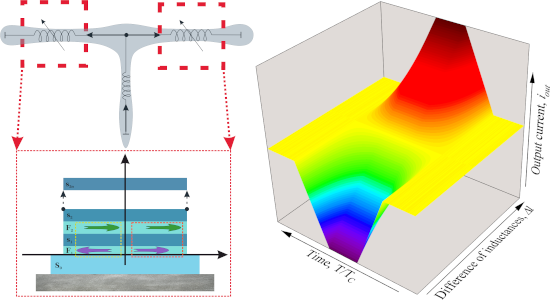
- nonlinearly transform the incoming signal (neurons), which is connected by linear tunable connections (synapses). There are more than 106 synapses in the neural networks that are used in these applications. The energy dissipation at these interconnects is a serious problem, which motivates the search for
- investigate neural networks (and primarily synapses) with an ultra-small energy dissipation. That was done based on adiabatic superconducting logic cells with the presentation of information in the form of magnitudes and directions of currents in the superconducting circuits [17][18][19]. The main problem in



Quantitative determination of the interaction potential between two surfaces using frequency-modulated atomic force microscopy
Beilstein J. Nanotechnol. 2020, 11, 729–739, doi:10.3762/bjnano.11.60
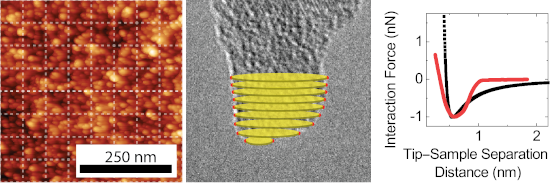
- were considered because the retraction curves have been previously shown to be affected by creep of the piezoelectric actuator and energy dissipation processes [51][52]. These artifacts and dissipation processes are indistinguishable from the interaction forces, rendering the retraction curves far more


Multilayer capsules made of weak polyelectrolytes: a review on the preparation, functionalization and applications in drug delivery
Beilstein J. Nanotechnol. 2020, 11, 508–532, doi:10.3762/bjnano.11.41
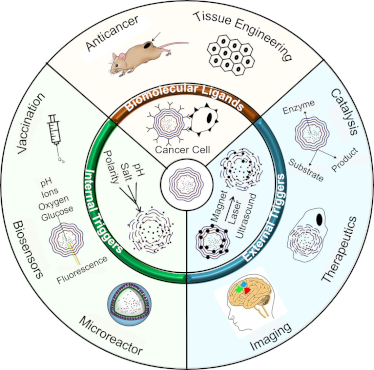
- of magnetic NPs (e.g., iron oxide and cobalt oxide NPs) into capsules allows them to respond to magnetic stimuli and produce heat due to magnetic energy dissipation, mechanical vibrations and motion induced in the film, thus releasing the cargo [80]. The Fe2O4-PAH capsules studied with A549 cancer



Atomic-resolution imaging of rutile TiO2(110)-(1 × 2) reconstructed surface by non-contact atomic force microscopy
Beilstein J. Nanotechnol. 2020, 11, 443–449, doi:10.3762/bjnano.11.35
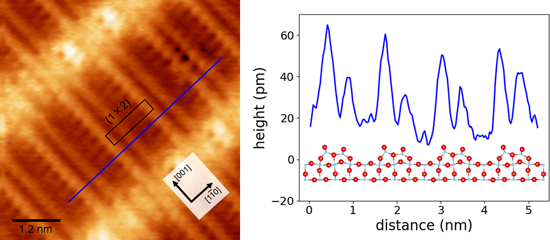
- the sample surface that cause a deformation of the surface structure. In this case, a non-conservative force induced by surface structure deformations acts between the tip and the sample surface [36][37] and the signal should be observed as an energy dissipation. In the case of surface deformation, a


Nanosecond resistive switching in Ag/AgI/PtIr nanojunctions
Beilstein J. Nanotechnol. 2020, 11, 92–100, doi:10.3762/bjnano.11.9
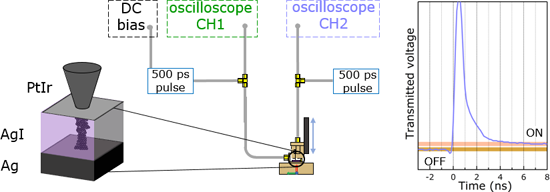
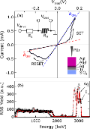
- of the pulse, i.e., the switching happens in less than 500 ps. According to the telegraph equations the actual voltage drop on the junction is 2VRefl. From this we estimate 50–100 pJ energy dissipation along the switching pulses, which is more than an order of magnitude smaller than the programming


The effect of heat treatment on the morphology and mobility of Au nanoparticles
Beilstein J. Nanotechnol. 2020, 11, 61–67, doi:10.3762/bjnano.11.6
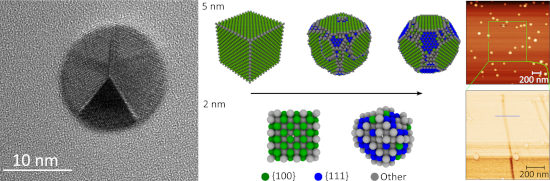
- manipulated on a silica substrate with an atomic force microscope (AFM) in tapping mode. Initially, the NPs were immovable by AFM energy dissipation. However, annealed NPs became movable, and less energy was required to displace the NPs annealed at higher temperature. However, after annealing at 800 °C, the


Pulsed laser synthesis of highly active Ag–Rh and Ag–Pt antenna–reactor-type plasmonic catalysts
Beilstein J. Nanotechnol. 2019, 10, 1958–1963, doi:10.3762/bjnano.10.192
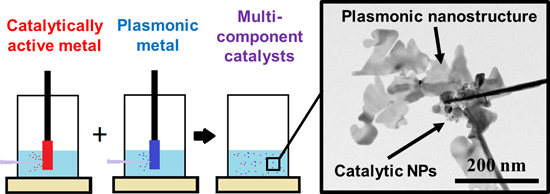
- plasmon decay for monometallic Ag. However, after Pt deposition the primary pathway for plasmon decay changed to absorption, indicating the thin Pt layer provided an alternate pathway for the dissipation of energy. Combined with electrodynamic simulations of spatial distributions of LSPR energy
- dissipation, the experiments concluded that charge carriers produced in the Pt shell via LSPR excitation from the Ag nanocube core could be utilized for surface chemistry. Similarly, Zhang et al. coined the term “antenna–reactor” photocatalysis by fabricating Al, surrounded by a thin layer of Al2O3, as a


Graphynes: an alternative lightweight solution for shock protection
Beilstein J. Nanotechnol. 2019, 10, 1588–1595, doi:10.3762/bjnano.10.154
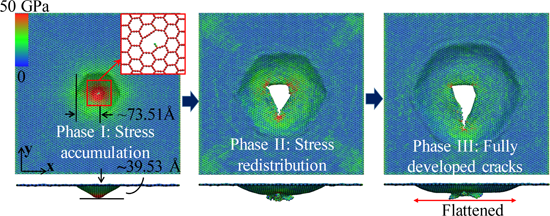
- energy dissipation or delocalization is expected during impact. This study provides a fundamental understanding of the deformation and penetration mechanisms of monolayer GY nanosheets under impact, which is crucial in order to facilitate their emerging applications for impact protection. Keywords
- to be transferred at a faster rate, thus, a better energy dissipation or delocalization is expected during impact. In this regard, we track the location of the highest stress during the simulation and estimate the elastic stress wave velocity (perpendicular to the fixed boundaries). As listed in
- ≫ 1 [26]. Here, the first term refers to the minimum inelastic energy transferred to the sample and the second term represents the contribution from other energy dissipation mechanisms, e.g., bond breakage. As represents the strike face area (As = πr2, r is the radius of the projectile); and v is the




Unipolar magnetic field pulses as an advantageous tool for ultrafast operations in superconducting Josephson “atoms”
Beilstein J. Nanotechnol. 2019, 10, 1548–1558, doi:10.3762/bjnano.10.152
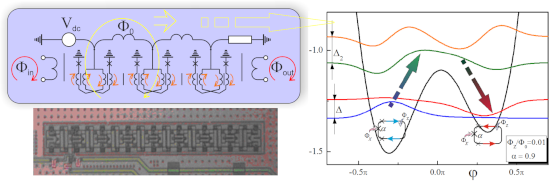
- in the limit the energy dissipation due to the transition in the resistive state). Figure 7a shows schematically the information transfer in such a data bus. The role of the ASL elements here can be played by connected nSQUIDs, that is, interferometers with a negative mutual inductance of the


Nanoscale spatial mapping of mechanical properties through dynamic atomic force microscopy
Beilstein J. Nanotechnol. 2019, 10, 1332–1347, doi:10.3762/bjnano.10.132
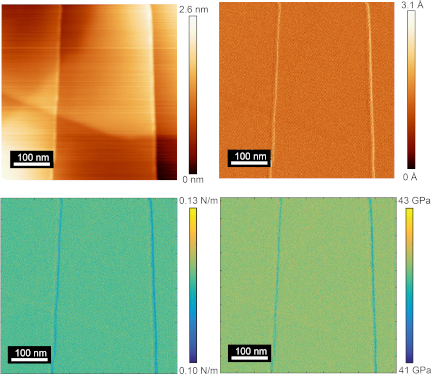
- topography, environmental contamination, the Schwoebel–Ehrlich barrier, energy dissipation through viscoelastic energy losses, applied normal force, tip shape, and modulation frequency (both for CR and FMM modes). Each examination will show that the elastic modulus measured in the previous section is




Periodic Co/Nb pseudo spin valve for cryogenic memory
Beilstein J. Nanotechnol. 2019, 10, 833–839, doi:10.3762/bjnano.10.83
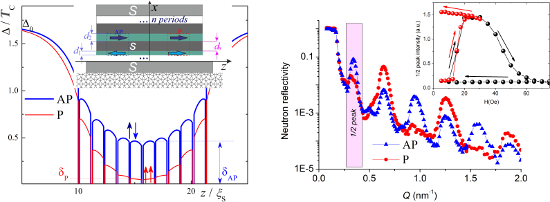
- ], and also due to compatibility with a number of quantum and neuromorphic computers under development [2][3][4]. However the lack of cryogenic memory elements (including synapses) with sufficiently fast switching between stable states and sufficiently small energy dissipation is still the main obstacle


Choosing a substrate for the ion irradiation of two-dimensional materials
Beilstein J. Nanotechnol. 2019, 10, 531–539, doi:10.3762/bjnano.10.54
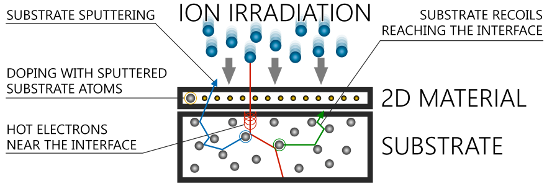
- electrons in the defect formation in monolayers is in accordance with the previously reported experiments [34]. The effect is expected to be more pronounced for semiconducting 2D materials, such as MoS2 and other 2D TMDs, where the electronic energy dissipation is less rapid than, for example, in graphene
Friction reduction through biologically inspired scale-like laser surface textures
Beilstein J. Nanotechnol. 2018, 9, 2561–2572, doi:10.3762/bjnano.9.238
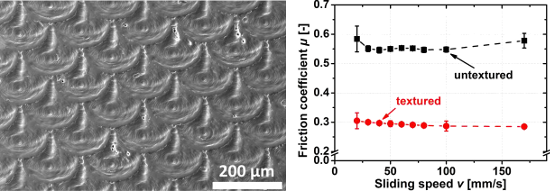
- elaborate fluid dynamics simulations. As far as the unlubricated experiments are concerned, the concept developed by Bowden and Tabor [51] points out that most frictional energy dissipation is due to plastic deformation of the subsurface layer. If one of the sliding partners is harder than the other, the


Effective sensor properties and sensitivity considerations of a dynamic co-resonantly coupled cantilever sensor
Beilstein J. Nanotechnol. 2018, 9, 2546–2560, doi:10.3762/bjnano.9.237
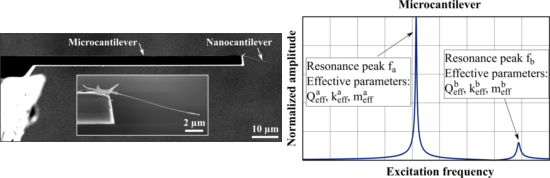
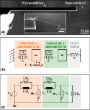
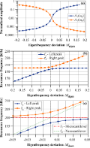
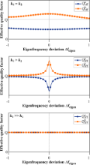
- co-resonantly coupled system, the definition based on energy dissipation will be used, hence: with Ea,b denoting the total energy stored in the system and ΔEa,b the dissipated energy per oscillation period. Please note that the absolute value for the dissipated energy (often considered with a


![[Graphic 7]](/bjnano/content/inline/2190-4286-9-237-i43.svg?max-width=637&scale=1.18182) ...
...


Recent highlights in nanoscale and mesoscale friction
Beilstein J. Nanotechnol. 2018, 9, 1995–2014, doi:10.3762/bjnano.9.190
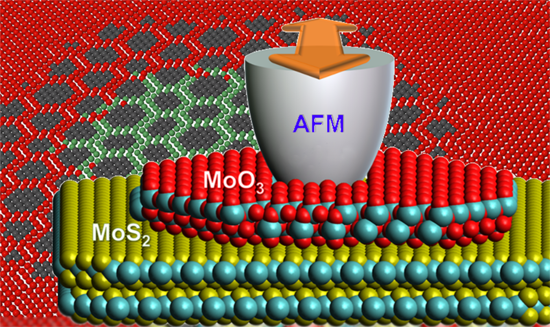
- minimum of energy dissipation. In this case, the low friction is depending on the high elastic modulus of graphene, which ensures that the graphene lattice remains nearly unaltered relative to the gold lattice. Therefore, an incommensurate contact is maintained during movement along the gold surface. An
- process and the task of the related functional molecular groups. Then, the frictional properties of these films in the different conformations (e.g., trans and cis) will be intensively studied to understand how this conformation switching affects energy dissipation. Multiscale bridging The current
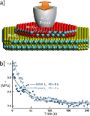
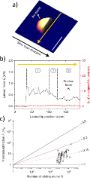
- to investigate the load dependence of friction for viscoelastic materials [208]. A second aspect of this effort is investigating and controlling the mechanisms of energy dissipation due to wear and plastic deformations, and in particular in making contact between atomistic studies of friction with


Electrostatically actuated encased cantilevers
Beilstein J. Nanotechnol. 2018, 9, 1381–1389, doi:10.3762/bjnano.9.130
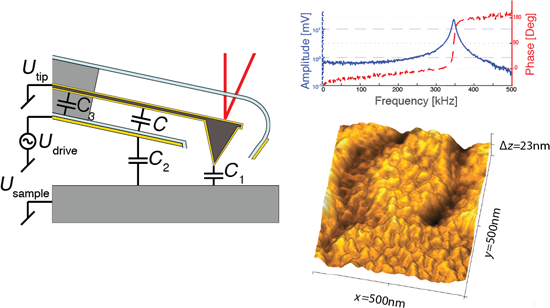
- immersed in a viscous fluid. Quantitative measurements of stiffness, energy dissipation and tip–sample interactions using dynamic force sensors remain challenging due to spurious resonances of the system. Results: We demonstrate for the first time electrostatic actuation with a built-in electrode. Solely