


Search results
Search for "ferromagnetic" in Full Text gives 187 result(s) in Beilstein Journal of Nanotechnology.
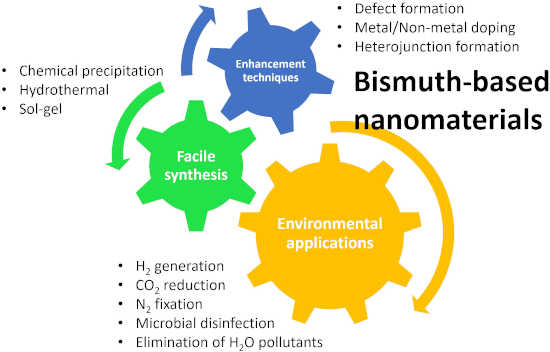
Recent trends in Bi-based nanomaterials: challenges, fabrication, enhancement techniques, and environmental applications
Beilstein J. Nanotechnol. 2022, 13, 1316–1336, doi:10.3762/bjnano.13.109




Design of surface nanostructures for chirality sensing based on quartz crystal microbalance
Beilstein J. Nanotechnol. 2022, 13, 1201–1219, doi:10.3762/bjnano.13.100
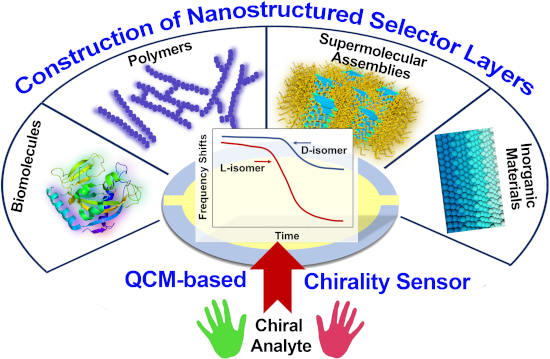
- enantiospecific adsorption on a ferromagnetic Ni surface was proven to arise from the adsorption kinetics rather than from thermodynamic stabilization. The adsorption rate of ᴅ-Cys and ʟ-Cys onto a ferromagnetic substrate showed a significantly different behavior according to the magnetic field direction and


Nonlinear features of the superconductor–ferromagnet–superconductor φ0 Josephson junction in the ferromagnetic resonance region
Beilstein J. Nanotechnol. 2022, 13, 1155–1166, doi:10.3762/bjnano.13.97
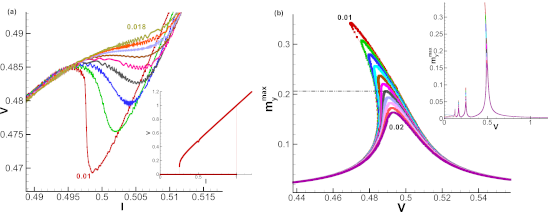
- characteristics of a φ0 Josephson junction in the ferromagnetic resonance region. We show that at small values of the system parameters damping, spin–orbit interaction, and Josephson-to-magnetic energy ratio, the magnetic dynamics is reduced to the dynamics of a scalar Duffing oscillator driven by the Josephson
- oscillations. The role of the increasing superconducting current in the resonance region is clarified. Shifting of the ferromagnetic resonant frequency and the reversal of its damping dependence due to nonlinearity are demonstrated by the full Landau–Lifshitz–Gilbert–Josephson system of equations and in its
- –voltage (I–V) characteristics by magnetic dynamics in the ferromagnet, in particular, to create a DC component in the superconducting current [6][7][8]. A remarkable manifestation of this coupling is the possibility to stimulate a magnetization reversal in the ferromagnetic layer by applying a current


![[Graphic 14]](/bjnano/content/inline/2190-4286-13-97-i38.svg?max-width=637&scale=1.18182) at differ...
at differ...


![[Graphic 18]](/bjnano/content/inline/2190-4286-13-97-i42.svg?max-width=637&scale=1.18182) (V) on α in the damping parameter interval [0.001–0.12]....
(V) on α in the damping parameter interval [0.001–0.12]....

Theoretical investigations of oxygen vacancy effects in nickel-doped zirconia from ab initio XANES spectroscopy at the oxygen K-edge
Beilstein J. Nanotechnol. 2022, 13, 975–985, doi:10.3762/bjnano.13.85
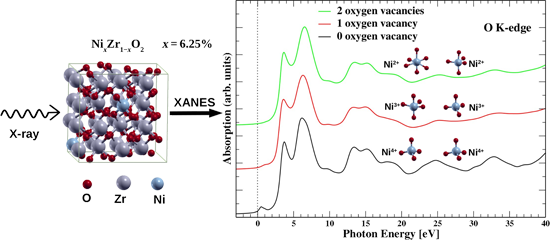
- varying concentrations. Specifically, our model system consist of a supercell composed of a zirconia (ZrO2) matrix containing two nickel dopants (2Ni), which substitute two Zr atoms at a finite separation. We found the 2Ni atoms to be most stable in a ferromagnetic configuration in the absence of oxygen
- hybridized with unoccupied Ni 3d states. The intensity of this pre-edge peak, however, reduces upon the introduction of a single vacancy in the 2Ni-doped zirconia matrix. The corresponding ground state remains ferromagnetic, while one of the nickel atoms adopts a trigonal bipyramidal geometry, and the other
- been achieved [3][4]). Also, in the last decade, considerable efforts have been devoted to determine the type of magnetic interaction (paramagnetic, ferromagnetic, or antiferromagnetic) and the microscopic mechanisms responsible for the magnetism in doped magnetic oxides (DMO) [5]. Several experimental


Efficiency of electron cooling in cold-electron bolometers with traps
Beilstein J. Nanotechnol. 2022, 13, 896–901, doi:10.3762/bjnano.13.80
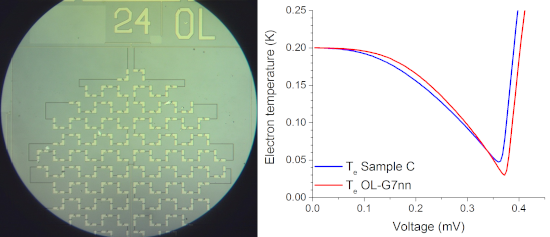
- -electron bolometers with traps and hybrid superconducting/ferromagnetic absorbers have shown a temperature reduction of the electrons in the refrigerator junctions from 300 to 82 mK, from 200 to 33 mK, and from 100 to 25 mK in the idle regime without optical power load. The electron temperature was


Self-assembly of C60 on a ZnTPP/Fe(001)–p(1 × 1)O substrate: observation of a quasi-freestanding C60 monolayer
Beilstein J. Nanotechnol. 2022, 13, 857–864, doi:10.3762/bjnano.13.76
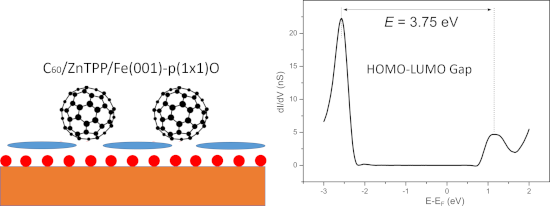
- [15][16]. The ability to tailor the degree of electronic coupling between the molecules and the substrate is of utmost importance when it comes to embedding the interface in a specific application. For instance, if the molecules are interfaced with ferromagnetic electrodes in spin-valve architectures


Ultrafast signatures of magnetic inhomogeneity in Pd1−xFex (x ≤ 0.08) epitaxial thin films
Beilstein J. Nanotechnol. 2022, 13, 836–844, doi:10.3762/bjnano.13.74
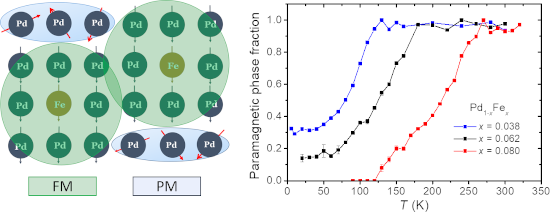
- ferromagnetic state causes a qualitative change of both the reflectivity and the magneto-optical Kerr effect transients. A nanoscale magnetic inhomogeneity of the ferromagnet/paramagnet type inherent in the palladium-rich Pd1−xFex alloys reveals itself through the occurrence of a relatively slow, 10–25 ps
- inhomogeneities. The low-temperature fraction of the residual paramagnetic phase can be deduced from the magnitude of the slow reflectivity relaxation component. It is estimated as ≈30% for x = 0.038 and ≈15% for x = 0.062 films. The minimal iron content ensuring the magnetic homogeneity of the ferromagnetic
- required, including logic gates [19][20][21][22][23], programmable logics [16], non-dissipative biasing [1], and random access and cache memories [17][24][25][26][27][28]. From the fabrication point of view, it is strongly desirable to utilize a universal tunable ferromagnetic material for every


Experimental and theoretical study of field-dependent spin splitting at ferromagnetic insulator–superconductor interfaces
Beilstein J. Nanotechnol. 2022, 13, 682–688, doi:10.3762/bjnano.13.60
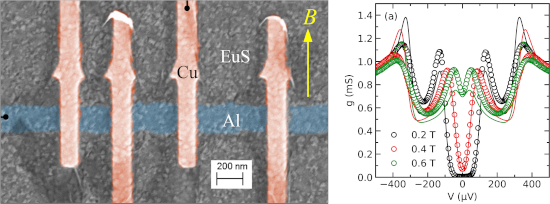
- effect at a ferromagnetic insulator–superconductor (FI–S) interface. The calculations are based on the boundary condition for diffusive quasiclassical Green’s functions, which accounts for arbitrarily strong spin-dependent effects and spin mixing angles. The resulting phase diagram shows a transition
- central for obtaining unprecedentedly high thermoelectric performance at low temperatures [19][20][21][22][23]. Ferromagnetic insulators such as EuO and EuS are interesting materials since they show ferromagnetism (they are almost ideal Heisenberg ferromagnets) but are electrically insulating at the same
- time [24][25][26]. Magnetic insulators have been used successfully, for example, in magnetic Josephson junctions [27], superconducting spin switches [13], and for studying the triplet proximity effect [28]. Ferromagnetic insulators are a good probe of the spin-dependent proximity effect in bilayer



Tunable superconducting neurons for networks based on radial basis functions
Beilstein J. Nanotechnol. 2022, 13, 444–454, doi:10.3762/bjnano.13.37
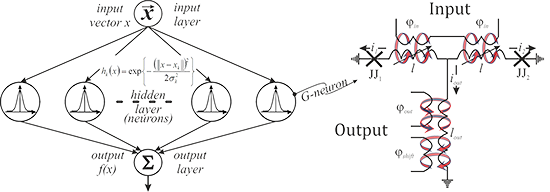
- , ferromagnetic, and normal layers. Keywords: networks on radial basis functions; Josephson circuits; radial basis functions (RBFs); spintronics; superconducting electronics; superconducting neural network; Introduction For modern telecommunications, probabilistic identification of various sources in a
- proximity effect. The typical spin valve [55][56][57] is a hybrid structure containing at least a pair of ferromagnetic (FM) layers with different coercive forces. Variations in the relative orientation of their magnetizations change the spatial distribution of the superconducting order parameter. In the
- can be implemented as a multilayer structure FM1–s–FM2–s–FM1–s–FM2 with several ferromagnetic layers FM1 and FM2 of different thicknesses dFM1,2 (dFM1 = 0.15ξ, dFM2 = 0.1ξ, exchange energy H = 100 kBTC in calculations, separated by thin spacers of a superconductor or normal metal (N) (ds = 0.5ξ for


Controllable two- and three-state magnetization switching in single-layer epitaxial Pd1−xFex films and an epitaxial Pd0.92Fe0.08/Ag/Pd0.96Fe0.04 heterostructure
Beilstein J. Nanotechnol. 2022, 13, 334–343, doi:10.3762/bjnano.13.28
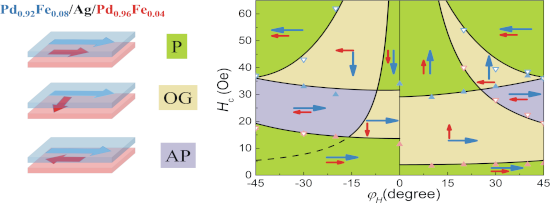
- the film. In a wide range of the appled field directions, the magnetization reversal proceeds in two steps via the intermediate easy axis. An epitaxial heterostructure of two magnetically separated ferromagnetic layers, Pd0.92Fe0.08/Ag/Pd0.96Fe0.04, was synthesized and studied with dc magnetometry
- alloy; thin epitaxial film; Introduction The generation of the long-range triplet component of the superconducting pairing at noncollinear orientations of magnetization in ferromagnetic layered systems is extensively studied in the framework of magnetic Josephson junctions (MJJs) ([1][2][3] for early
- , extending its functionality. Palladium–iron alloys Pd1−xFex with x < 0.10 are of strong practical interest for such MJJ and SSV structures [13][14][15][16][17] as a material for weak ferromagnetic links with tunable magnetic properties [18]. Epitaxial films of Pd1−xFex alloys with low iron content x are


Influence of magnetic domain walls on all-optical magnetic toggle switching in a ferrimagnetic GdFe film
Beilstein J. Nanotechnol. 2022, 13, 74–81, doi:10.3762/bjnano.13.5
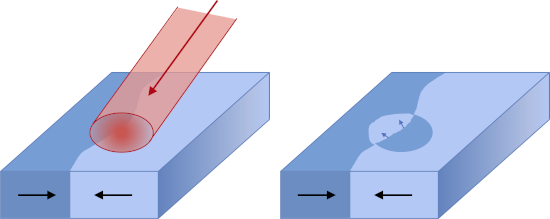
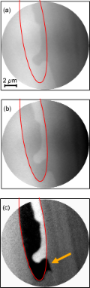
- ][10][11][12][13][14][15]. AOS has been observed in a broad variety of ferri- and ferromagnetic materials, either as single-pulse or multiple-pulse switching. It can be both, depending on the helicity of the exciting laser pulse or independent of helicity. Particularly interesting is the switching of


Chemical vapor deposition of germanium-rich CrGex nanowires
Beilstein J. Nanotechnol. 2021, 12, 1365–1371, doi:10.3762/bjnano.12.100
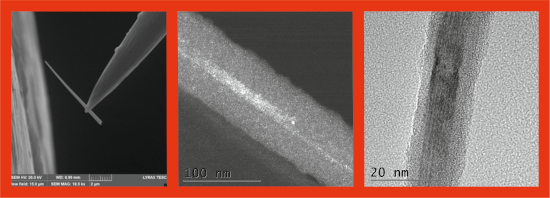
- prepared, too. Magnetic properties were measured and the growth mechanism was discussed [10]. The formation of Cr/Ge nanoparticles during the epitaxial growth of Cr/Ge films and their magnetic properties were studied to understand the ferromagnetic semiconductor behavior [11]. In this work, we made an



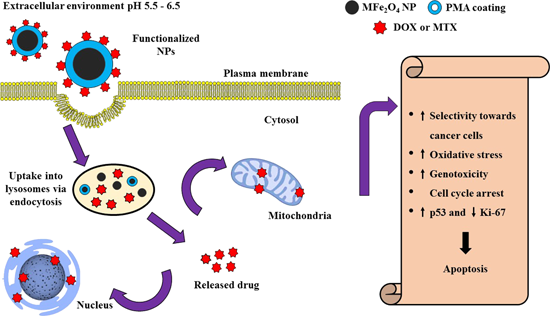
Biocompatibility and cytotoxicity in vitro of surface-functionalized drug-loaded spinel ferrite nanoparticles
Beilstein J. Nanotechnol. 2021, 12, 1339–1364, doi:10.3762/bjnano.12.99
- physical property measurement system (PPMS) was used to evaluate magnetic properties of MFe2O4 NPs. Hysteresis loops were measured at room temperature upon an applied field of 2.0 T. The samples clearly showed ferromagnetic behavior with different saturation magnetization Ms (emu/g) and coercivity Hc (Oe





Enhancement of the piezoelectric coefficient in PVDF-TrFe/CoFe2O4 nanocomposites through DC magnetic poling
Beilstein J. Nanotechnol. 2021, 12, 1262–1270, doi:10.3762/bjnano.12.93
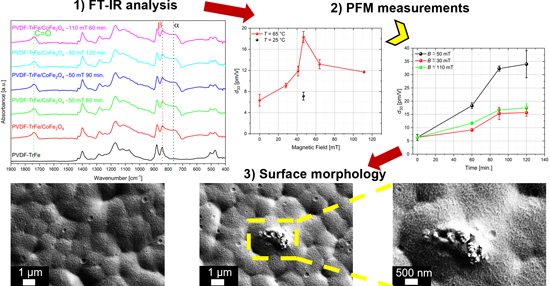
- place between PVDF-TrFe and CoFe2O4 nanoparticles, with the formation of a carbonyl group (C=O), as suggested by the FTIR spectra reported in Figure 1. When the DC magnetic field is applied, the ferromagnetic nanoparticles orient themselves along the direction of the applied field and then drag the
- piezoelectric coefficient by adding ferromagnetic CoFe2O4 nanoparticles to PVDF-TrFe and performing magnetic poling. The highest d33 value, up to 39 pm/V, was obtained after adding 5 wt % of CoFe2O4 nanoparticles and applying a DC magnetic field of 50 mT. Application of the magnetic field produced an alignment
- nanocomposite, including ferromagnetic CoFe2O4 nanoparticles, and the application of a DC magnetic poling provides an alternative route to obtain highly efficient piezoelectric materials with excellent d33 values, avoiding electrical poling or mechanical stretching. This process may be particularly attractive


In situ transport characterization of magnetic states in Nb/Co superconductor/ferromagnet heterostructures
Beilstein J. Nanotechnol. 2021, 12, 913–923, doi:10.3762/bjnano.12.68
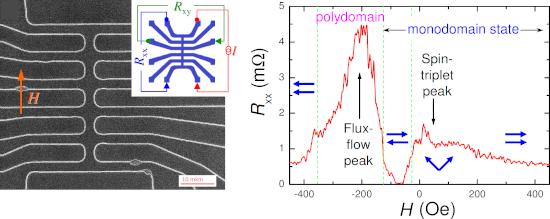
- demonstrate how FORC can be used for detailed in situ characterization of magnetic states. It reveals that upon reduction of the external field, the magnetization in ferromagnetic layers first rotates in a coherent scissor-like manner, then switches abruptly into the antiparallel state and after that splits
- is caused by subtractive (in the AP state) and additive (in the P state) influences of ferromagnetic exchange fields from neighbor F-layers, which are detrimental to the spin-singlet order in S′ [1][2][3][4][5][6][7][8]. Simulations in Figure 1c demonstrate the tunability of superconductivity in such
- MLs. The key technique that we employ for this purpose is FORC, a powerful tool for the characterization of magnetic states in complex ferromagnetic structures [60][61][62]. FORC analysis starts at the same saturated state. Then the field is swept to a reversal field Hr and measurements are carried


Comprehensive review on ultrasound-responsive theranostic nanomaterials: mechanisms, structures and medical applications
Beilstein J. Nanotechnol. 2021, 12, 808–862, doi:10.3762/bjnano.12.64


Recent progress in actuation technologies of micro/nanorobots
Beilstein J. Nanotechnol. 2021, 12, 756–765, doi:10.3762/bjnano.12.59
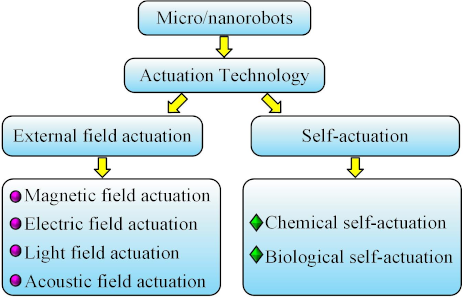
- content about MC-1 magnetotactic bacteria (MTB) in the treatment of cancer, especially as a supplementary means to advance in smaller capillaries. Therefore, Martel innovatively used MC-1 magnetotactic bacteria combined with ferromagnetic materials to push microbeads and therapeutic agents together for


Recent progress in magnetic applications for micro- and nanorobots
Beilstein J. Nanotechnol. 2021, 12, 744–755, doi:10.3762/bjnano.12.58
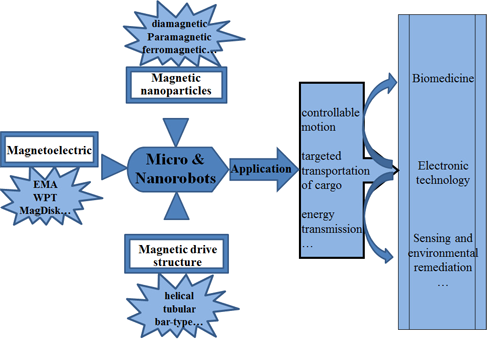
- this article, recent progress in magnetic applications in the field of micro- and nanorobots is reviewed. First, the achievements of manufacturing micro- and nanorobots by incorporating different magnetic nanoparticles, such as diamagnetic, paramagnetic, and ferromagnetic materials, are discussed in
- transportation of cargo [22][23], and transmit energy. Compared with other concepts, magnetic MNRs that combine diamagnetic, paramagnetic, and ferromagnetic materials [24] could have a greater driving force and exhibit characteristics such as biocompatibility [25]. Hence, magnetic nanoparticles (MNPs) are widely
- according to the alignment and response of magnetic dipoles, magnetic materials can be divided into diamagnetic, paramagnetic [31], ferromagnetic, ferrimagnetic, and antiferromagnetic. Diamagnetism of the material can be attributed to the orbital angular momentum, which is a phenomenon in which


A review of defect engineering, ion implantation, and nanofabrication using the helium ion microscope
Beilstein J. Nanotechnol. 2021, 12, 633–664, doi:10.3762/bjnano.12.52
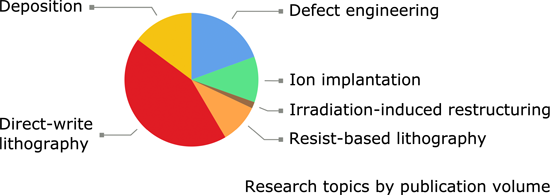
- junctions by the HIM method has again been demonstrated [48]. Ferromagnetic properties The first demonstration of defect engineering using the HIM was actually for a magnetic device by Franken and co-authors [49]. In this work, ferromagnetic microstrips comprising Pt(4 nm)/Co(0.6 nm)/Pt(2 nm) layers on an
- demonstrated [51]. Furthermore, tuning of the metamagnetic transition temperature of an FeRh thin film (from antiferromagnetic to ferromagnetic behavior) has been achieved by varying the helium ion dose from 1 × 10¹⁴ to 5 × 10¹⁵ ions/cm2, with the patterning of features down to 25 nm in size [52]. In a study
- the collision cascade to create individual ferromagnetic domains in a previously non-ferromagnetic material [55]. In the cited work, Röder et al. used this phenomenon of disorder-induced ferromagnetism, together with the small probe size of the neon ion beam, to directly write nanomagnets into a


Spontaneous shape transition of MnxGe1−x islands to long nanowires
Beilstein J. Nanotechnol. 2021, 12, 366–374, doi:10.3762/bjnano.12.30
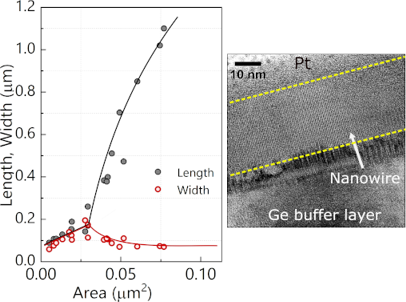
- literature for other heteroepitaxial systems. Our study gives experimental evidence for the spontaneous formation of spatially uniform and compositionally homogeneous Mn-rich GeMn nanowires on Ge(111). The reliable and simple synthesis approach allows one to exploit the room-temperature ferromagnetic
- ]. The growth of MnxGe1−x alloys on Ge wafers, and in particular of Mn5Ge3, has been studied extensively in recent years [18][19][20][21][22][23][24]. The high Curie temperature of Mn5Ge3 (≈296 K), in particular, can make it suitable to exploit ferromagnetic properties in everyday applications [25][26
- ≃1.5 μm in length. Considering that several Mn-rich Ge–Mn phases are usually ferromagnetic at room temperature, our results offer an alternative route to a simple and fast fabrication process of novel nanodevices, capable to exploit ferromagnetic properties. SEM images of the morphological evolution of


Nickel nanoparticle-decorated reduced graphene oxide/WO3 nanocomposite – a promising candidate for gas sensing
Beilstein J. Nanotechnol. 2021, 12, 343–353, doi:10.3762/bjnano.12.28
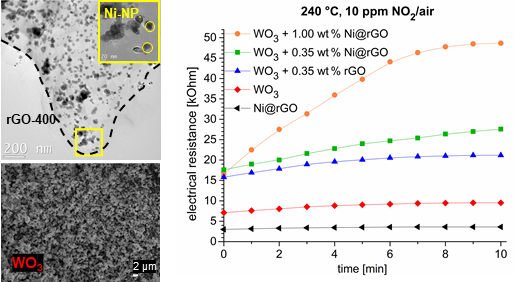
- with a noncollinear spin configuration, which causes the formation of a surface spin canting due to thermal fluctuation of magnetic moments. Figure 7 shows the temperature dependence of the magnetization obtained in the course of the last measurement cycle at which, for nickel particles, ferromagnetic


Exploring the fabrication and transfer mechanism of metallic nanostructures on carbon nanomembranes via focused electron beam induced processing
Beilstein J. Nanotechnol. 2021, 12, 319–329, doi:10.3762/bjnano.12.26
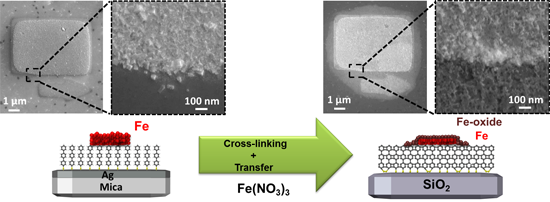
- irradiation (100 eV, 120 mC/cm2) the whole surface of the cross-linked SAM is afterwards covered with clean iron nanocrystals (Figure S6d,e in Supporting Information File 1). The insulating ultrathin CNM is covered with a thin layer of conductive ferromagnetic iron crystals. By this process laterally


The patterning toolbox FIB-o-mat: Exploiting the full potential of focused helium ions for nanofabrication
Beilstein J. Nanotechnol. 2021, 12, 304–318, doi:10.3762/bjnano.12.25
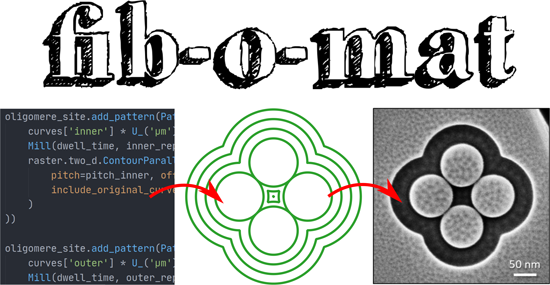
- , atomic composition, and crystallographic phase [33][34]. Here, the impact of He irradiation on the ferromagnetic multilayer [Co0.6/Pt0.8]15 is studied [35][36]. This multilayer shows perpendicular magnetic anisotropy arising from the Co/Pt interfaces and forms nanometer-scale, labyrinth-like domains with


Nanocasting synthesis of BiFeO3 nanoparticles with enhanced visible-light photocatalytic activity
Beilstein J. Nanotechnol. 2020, 11, 1822–1833, doi:10.3762/bjnano.11.164
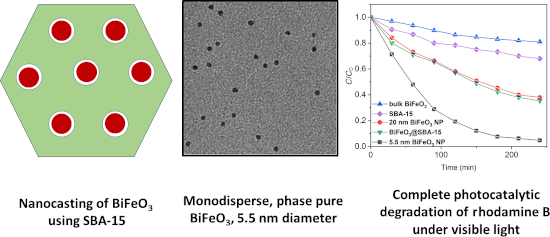
- visible-light region (2.1–2.8 eV), high chemical stability, and ferroelectric and ferromagnetic properties at room temperature [19][20][21][22][23][24][25][26][27]. Furthermore, slow electron–hole recombination as a result of efficient separation of the charge carriers has yielded an enhancement of its




Molecular dynamics modeling of the influence forming process parameters on the structure and morphology of a superconducting spin valve
Beilstein J. Nanotechnol. 2020, 11, 1776–1788, doi:10.3762/bjnano.11.160
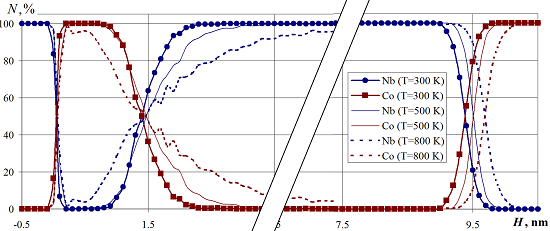
- This work is a study of the formation processes and the effect of related process parameters of multilayer nanosystems and devices for spintronics. The model system is a superconducting spin valve, which is a multilayer structure consisting of ferromagnetic cobalt nanolayers separated by niobium
- atomic structures depending on the main parameters of the deposition process. Keywords: hybrid nanostructure; mathematical modeling; modified embedded-atom method; molecular dynamics; spintronics; spin valve; vacuum deposition; Introduction Multilayer superconductor/ferromagnetic (S/F) hybrid
- ferromagnetic layers causes a restructuring of the magnetic moment configuration under low-power magnetic fields and switches the spin valve from a high to a low resistance state. When a superconducting film is used as a magneto-resistive interlayer, a superconducting spin valve is obtained. Furthermore, these





