Search results
Search for "fluorescence emission" in Full Text gives 64 result(s) in Beilstein Journal of Nanotechnology.
Ultrasonication-assisted synthesis of CsPbBr3 and Cs4PbBr6 perovskite nanocrystals and their reversible transformation
Beilstein J. Nanotechnol. 2019, 10, 666–676, doi:10.3762/bjnano.10.66
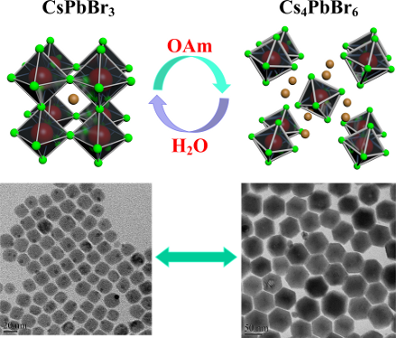
- -sonication at a power of 120 W for 40 min. During the sonication, the colorless reaction medium gradually transformed into a yellow and then an orange-yellow solution, which suggests the formation of PNCs and demonstrates strong fluorescence emission under 365 nm UV light excitation. After completion of the



Ceria/polymer nanocontainers for high-performance encapsulation of fluorophores
Beilstein J. Nanotechnol. 2019, 10, 522–530, doi:10.3762/bjnano.10.53
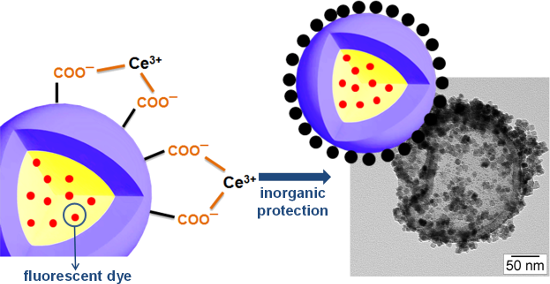
- -tetramethylbutyl)phenoxy]terrylene-3,4,11,12-bis(dicarboximide) (TDI) was synthesized according to [26] (molecular structure and absorption/fluorescence emission spectra are given in Supporting Information File 1, Figures S1 and S2, respectively). The prepared TDI was dissolved in sufficient amounts of THF and
- Lasertechnik GmbH, ADL-63201TL) with an excitation intensity of 0.2 W·cm−2. It is important to note that all fluorescence emission measurements were carried out by using the same batch of nanocapsules at the same capsule content. A first batch of nanocapsules was prepared under ambient conditions and an
- this sample was determined to be about 44 wt % by thermogravimetric analysis (see Supporting Information File 1, Figure S4). The fluorescence spectrum measured under ambient conditions for the pure polymer nanocapsules (sample NC) is shown in Figure 5 (black line). An intense fluorescence emission from


Enhanced antineoplastic/therapeutic efficacy using 5-fluorouracil-loaded calcium phosphate nanoparticles
Beilstein J. Nanotechnol. 2018, 9, 2499–2515, doi:10.3762/bjnano.9.233
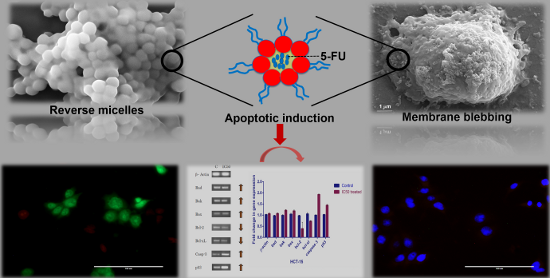
- apoptotic stages, less EB is taken up by the cells, followed intermixed red–green fluorescence emission [41]. Like the MTT assay result, the 0.5×IC50 of CaP@5-FU NPs treated cells showed early apoptotic phase with less EB fluorescence in both the HCT-15 and A549 cancer cell lines. In the Figure 5A, the blue
- , which stains apoptotic cells or nuclei and yields blue florescence when bound to dsDNA in the cell nucleus [42] with excitation/emission wavelength at 352/455 nm. Rhodamine B, with an excitation/emission wavelength of 543/565 nm, provides a red fluorescence emission. A drastic decrease in the Hoechst
- . In its reduced state, CellROX deep red has no or little fluorescence. Upon oxidation by reactive oxygen species, the increased bright red fluorescence emission of CellROX deep red dye can be easily quantified by fluorescence via flow cytometry [46]. The finding was quite interesting whereby 5.1% of


The role of adatoms in chloride-activated colloidal silver nanoparticles for surface-enhanced Raman scattering enhancement
Beilstein J. Nanotechnol. 2018, 9, 2236–2247, doi:10.3762/bjnano.9.208
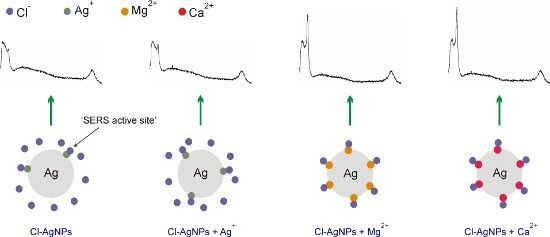
- observable anymore. In the case of 10−7, 10−8 and 10−11 M R6G analyzed with as-synthesized cit-AgNPs, only the fluorescence emission due to R6G was observed (Supporting Information File 1, Figure S4A,B). The SERS spectrum of R6G 10−8 M shows only fluorescence emission even after the addition of 10−4 M Ca2



Dumbbell gold nanoparticle dimer antennas with advanced optical properties
Beilstein J. Nanotechnol. 2018, 9, 2188–2197, doi:10.3762/bjnano.9.205
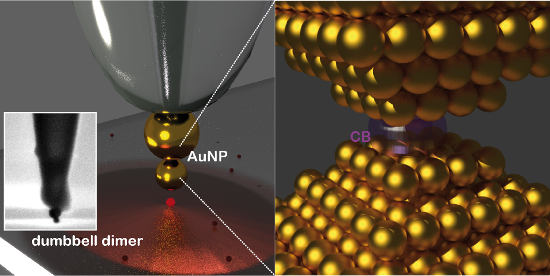
- fluorescence enhancement factor can be also accomplished by measuring the fluorescence emission of single dye molecule as a function of the antenna–sample separation. The corresponding approach curves account for two mechanisms occurring when the antenna is coupled to the dye molecule: 1.) the absorption
- enhancement of the fluorescence emission of a single quantum emitter. The deviations are likely correlated to different gap configurations, which are easily identified in HR-TEM studies. The influence of the gap morphology on the optical properties turns out to be non-negligible. However, this effect becomes
- sample through the laser focus using a piezoelectric scanner (Nano-H, Mad City Labs, USA). For each image pixel the emitted fluorescence signal is integrated for 5–10 ms. For the antenna-enhanced fluorescence emission, the antenna is precisely aligned in the laser focus and the antenna–sample distance is




Nanoconjugates of a calixresorcinarene derivative with methoxy poly(ethylene glycol) fragments for drug encapsulation
Beilstein J. Nanotechnol. 2018, 9, 2057–2070, doi:10.3762/bjnano.9.195
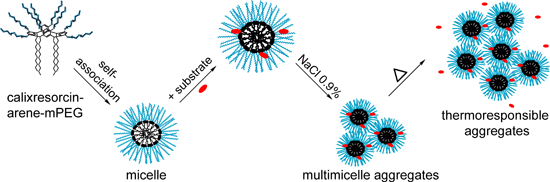
- . The fluorescence emission of naproxen sodium is quenched in the presence of macrocycle and does not change in the presence of mPEG-550 (Figure S12, Supporting Information File 1). This is evidence for the binding of Nap near the aromatic fragments of macrocycle. After the solubilization of IF and Nap


Closed polymer containers based on phenylboronic esters of resorcinarenes
Beilstein J. Nanotechnol. 2018, 9, 1594–1601, doi:10.3762/bjnano.9.151
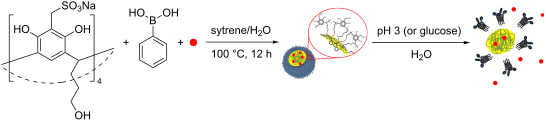
- recorded with a Perkin–Elmer Lambda 25 UV–vis spectrometer. А cuvette with an optical path length of 50 mm was used in all experiments. The pH value was measured with a pH meter Orion 2STAR pH benchtop (Thermo Scientific). Fluorescence emission spectra were recorded with a Cary Eclipse fluorescence
- , p(SRA-B) is decomposed at pH 3 and 44–47% of the dye molecules are released from the cavity into the solution. The dissociation of the capsule can also occur after the addition influence of glucose. When glucose is added to the aqueous solution of Fl@p(SRA-B), a slight increase in the fluorescence
- emission intensity is observed in the first two minutes (Figure 4). Then a hypsochromic shift of the fluorescence band occurs in the next 5–10 minutes (Figure 4). To determine the quantitative yield, D@p(SRA-B) (D = Fl, PTS) were dialyzed (Table 2, Figure 4). Almost all of the dye was released into water


Enzymatically promoted release of organic molecules linked to magnetic nanoparticles
Beilstein J. Nanotechnol. 2018, 9, 986–999, doi:10.3762/bjnano.9.92
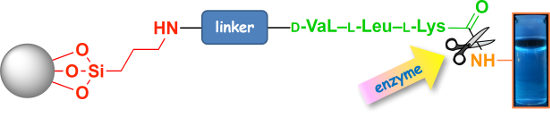
- spectrum of pyrene. The fluorescence emission spectrum of pyrene, and therefore of 6, is characterized by an ensemble of four major bands with well-defined maxima at ≈375, 388, 398, and 415 nm, respectively. The peaks are attributed to the π → π* transitions and are cumulatively defined as monomeric




Green synthesis of fluorescent carbon dots from spices for in vitro imaging and tumour cell growth inhibition
Beilstein J. Nanotechnol. 2018, 9, 530–544, doi:10.3762/bjnano.9.51
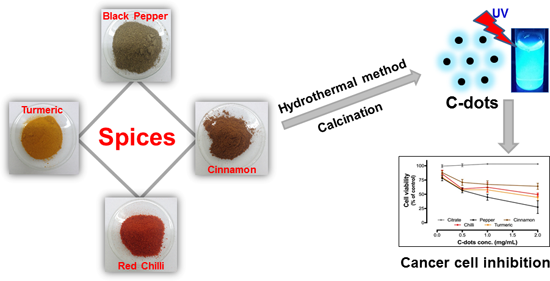
- maximum emission wavelength was observed as the excitation wavelength increased. The emission intensity was enhanced as the excitation wavelength increased from 290 to 390 nm (Figure 2a), while excitation wavelengths beyond 390 nm gave rise to a decrease on the fluorescence emission (Figure 2b). The
- type of spice C-dots was calculated by using the comparative William’s method [51]. For this purpose, quinine sulphate was employed as a reference and the quantum yield was calculated according to Equation 1: where, Fs is the integrated fluorescence emission of the sample, Fr is the integrated
- fluorescence emission of the reference (quinine sulfate), As is the absorbance at the excitation wavelength of the sample, Ar is the absorbance at the excitation wavelength of the reference, QYs is the quantum yield of the sample, and QYr is the quantum yield of the reference fluorophore (quinine sulfate QY


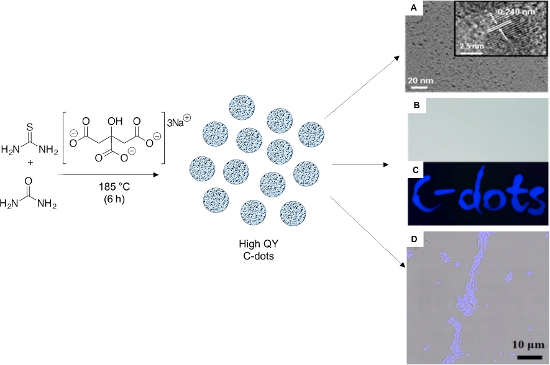
Co-reductive fabrication of carbon nanodots with high quantum yield for bioimaging of bacteria
Beilstein J. Nanotechnol. 2018, 9, 137–145, doi:10.3762/bjnano.9.16
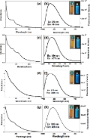
- –vis absorption, excitation and emission spectra, (D–F) fluorescence emission spectra recorded at different excitation wavelengths and (G–I) fluorescence intensity decay curves of Sa, Sb and Se, respectively. Fourier transform infrared spectra of Sa, Sb, and Se. XPS spectra of Sa, Sb, and Se. (A) full


PTFE-based microreactor system for the continuous synthesis of full-visible-spectrum emitting cesium lead halide perovskite nanocrystals
Beilstein J. Nanotechnol. 2017, 8, 2521–2529, doi:10.3762/bjnano.8.252
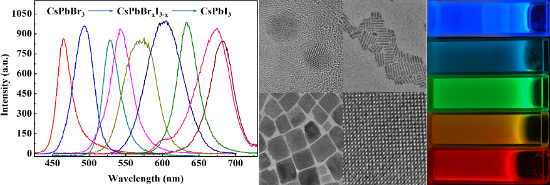
- . Conclusion In summary, we have constructed a PTFE-based microreactor system to continuously synthesize CsPbX3 QDs. The fluorescence emission wavelength of the CsPbX3 QDs can be tuned by changing the reaction temperature in the range of 70–180 °C and the Br:I precursor ratio. The PL emission spectra of the


Strategy to discover full-length amyloid-beta peptide ligands using high-efficiency microarray technology
Beilstein J. Nanotechnol. 2017, 8, 2446–2453, doi:10.3762/bjnano.8.243
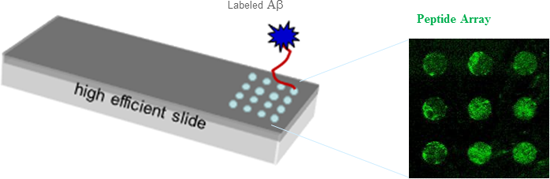
- phosphate washing and the final water washing. The dried slides were finally scanned for the fluorescence measurements. Th-T fluorescence measurements The fluorescence emission spectra of Th-T undergoes a red shift upon incorporation into β-sheet amyloid structures. An aggregation assay was performed on a
- VarioSkan Flash from Thermo Scientific fluorescence 96-well plate reader, programmed to agitate the plate for 30 s before measuring fluorescence emission. Readings were taken every 10 min over a range of 4200 min. To minimize evaporation effects, the wells were sealed with a transparent heat-resistant


Carbon nano-onions as fluorescent on/off modulated nanoprobes for diagnostics
Beilstein J. Nanotechnol. 2017, 8, 1878–1888, doi:10.3762/bjnano.8.188
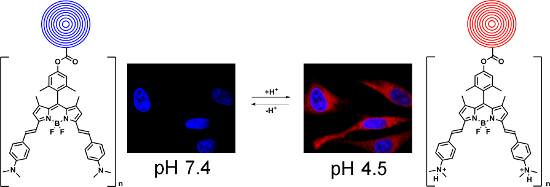
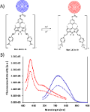
- boron dipyrromethene (BODIPY) dye with on/off modulated fluorescence emission activated by an acidic environment. The switching properties are linked to the photoinduced electron transfer (PET) characteristics of the dimethylamino functionalities attached to the BODIPY core. The on/off emission of the




Optical techniques for cervical neoplasia detection
Beilstein J. Nanotechnol. 2017, 8, 1844–1862, doi:10.3762/bjnano.8.186

- of the inelastically scattered light from the strong intensity of the Rayleigh scattering signal. Current solution consists in using notch or edge optical filters to cut the contribution of the Raman probing wavelength. To avoid the interference of the Raman signal with fluorescence emission, special
- fluorophores for cellular imaging [57][83][85][90][91][92][93]. The unique optical properties of semiconductor quantum dots including quantum confinement effect, wide absorption spectrum (i.e., broad excitation band), and narrow emission spectrum (i.e., tunable fluorescence emission via QD bandgap engineering



Development of an advanced diagnostic concept for intestinal inflammation: molecular visualisation of nitric oxide in macrophages by functional poly(lactic-co-glycolic acid) microspheres
Beilstein J. Nanotechnol. 2017, 8, 1637–1641, doi:10.3762/bjnano.8.163
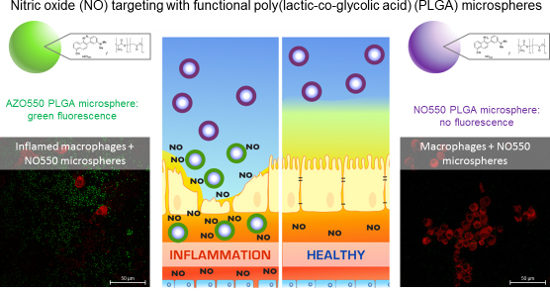
- -loaded microspheres. Confocal laser scanning microscopy (CLSM) images of activated (A) and inactivated (B) NO550-loaded polymeric microspheres in DPBS including fluorescence emission spectra (C) of the microspheres are shown. UV-irradiated SNP (10 mM, 2 min, 254 nm) was used for 2 minutes to activate


Luminescent supramolecular hydrogels from a tripeptide and nitrogen-doped carbon nanodots
Beilstein J. Nanotechnol. 2017, 8, 1553–1562, doi:10.3762/bjnano.8.157
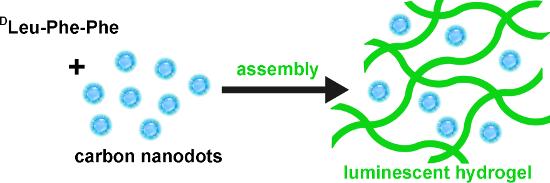
- material. Fluorescence properties of NCND–peptide hydrogels The excitation-dependent fluorescence emission range of the NCNDs was probed within the hydrogel structure (Figure 3). As expected, the peptide hydrogel showed negligible fluorescence properties at the wavelengths explored, while the NCNDs
- displayed intense fluorescence, especially in the UV region [6]. Relative to NCNDs in solution, their incorporation within the hydrogel matrix resulted in a decrease of their fluorescence emission intensity, accounting for nearly 30% upon excitation at 300 nm, and 20–25% upon excitation at longer
- fluorescence emission spectra was registered, and the NCND fluorescence stability was not affected over a 7-day period. Peptide conformation in the presence of NCNDs Peptide conformation was assessed by means of circular dichroism (CD), FTIR spectroscopy, and thioflavin T fluorescence. CD was used to monitor


Nano-engineered skin mesenchymal stem cells: potential vehicles for tumour-targeted quantum-dot delivery
Beilstein J. Nanotechnol. 2017, 8, 1218–1230, doi:10.3762/bjnano.8.123
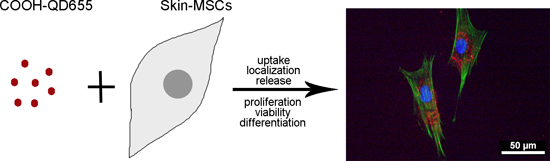
- , quantum dots (QDs) have demonstrated extensive application capabilities. High photostability and brightness, broad excitation and narrow fluorescence-emission spectra are some of the main properties required for the generation of new fluorescent nano-agents. The unique optical and electronic properties of




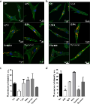

Surface-enhanced Raman spectroscopy of cell lysates mixed with silver nanoparticles for tumor classification
Beilstein J. Nanotechnol. 2017, 8, 1183–1190, doi:10.3762/bjnano.8.120
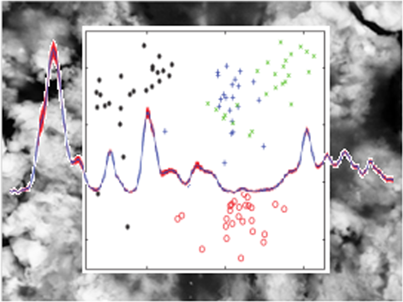
- the near-IR region and therefore longer excitation wavelengths can be used for SERS measurements. SERS was also suggested for cell identification [13][14]. While the signal intensity is similar to that of fluorescence emission, SERS nanoparticles do not suffer from photobleaching and offer a high


Selective detection of Mg2+ ions via enhanced fluorescence emission using Au–DNA nanocomposites
Beilstein J. Nanotechnol. 2017, 8, 762–771, doi:10.3762/bjnano.8.79
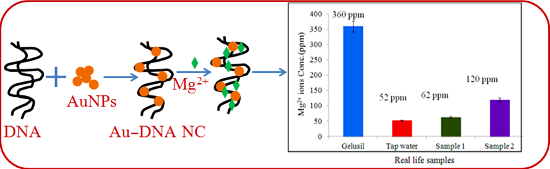
- to the size and shape dependent plasmonic interactions of AuNPs (33–78 nm) with DNA, the resultant Au–DNA nanocomposites (NCs) exhibit superior fluorescence emission due to chemical binding with Ca2+, Fe2+ and Mg2+ ions. A significant increase in fluorescence emission (λex = 260 nm) of Au–DNA NCs was
- nanostructure. Keywords: Au–DNA nanocomposites; enhanced fluorescence emission; metal-ion detection; Mg2+ ion detection; Introduction The interactions between Au nanoparticles (AuNPs) and DNA are essential to classify and expand upon, given the potential applications for NP–DNA complexes such as gene therapy
- characterization of Au–DNA NCs can be used to tune their optical properties and fluorescence emission for the detection of Mg2+, Ca2+ and Fe2+ ions. As there is a difference in the ionic size and linkage of metal ions with Au–DNA NCs, the fluorescence properties can be significantly varied depending on the nature




Assembling semiconducting molecules by covalent attachment to a lamellar crystalline polymer substrate
Beilstein J. Nanotechnol. 2016, 7, 784–798, doi:10.3762/bjnano.7.70
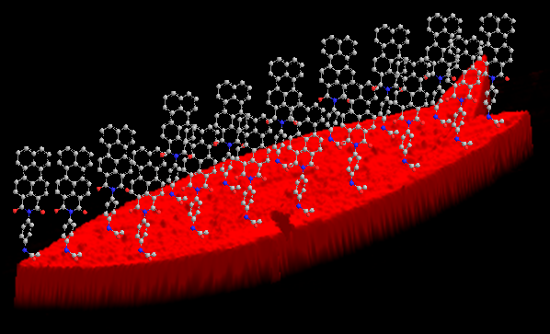
- transport [20] parallel to the nanocrystal surface. For a proof of principle, an amino functionalized perylene 3,4-dicarboximide derivative (1) was chosen. We synthesized molecules 1 according to the procedure given in [21]. For an isolated molecule 1, fluorescence emission is quenched due to the presence
- emission. In addition, upon π–π stacking of molecule 1, fluorescence emission exhibits large spectral shifts [23]. Therefore, we can draw conclusions about the packing density of semiconducting molecule 1 attached to CPE45 nanocrystal surfaces without having to resort to conductivity measurements. As a
- solution. However, 1 becomes fluorescent upon reaction with a carboxyl group. Therefore, the covalent attachment of 1 to the crystal surface is conveniently proven by measuring the fluorescence emission. The coupling reaction was carried out in dimethylformamide (DMF) using a standard peptide coupling


Two step formation of metal aggregates by surface X-ray radiolysis under Langmuir monolayers: 2D followed by 3D growth
Beilstein J. Nanotechnol. 2015, 6, 2406–2411, doi:10.3762/bjnano.6.247
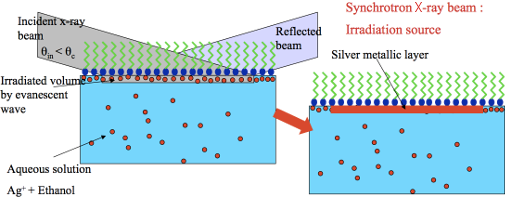
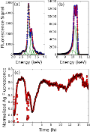
- the irradiation. Figure 1a is the L fluorescence emission due to the presence of silver atoms at the interface within the irradiated depth. The signal is analyzed by determining the weight of the individual fluorescence peaks, fitted by a Gaussian function, centered at each emission energy maximum, as


Charge carrier mobility and electronic properties of Al(Op)3: impact of excimer formation
Beilstein J. Nanotechnol. 2015, 6, 1107–1115, doi:10.3762/bjnano.6.112
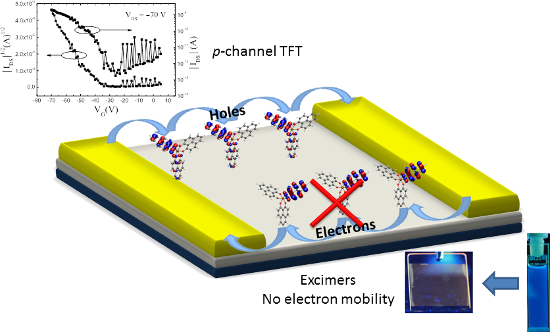
- was successfully evaporated onto quartz substrates and was clearly identified in the absorption spectra of both the solution and the thin film. A structured steady state fluorescence emission was detected in solution, whereas a broad, red-shifted emission was observed in the thin film. This indicates


Low-cost formation of bulk and localized polymer-derived carbon nanodomains from polydimethylsiloxane
Beilstein J. Nanotechnol. 2015, 6, 744–748, doi:10.3762/bjnano.6.76
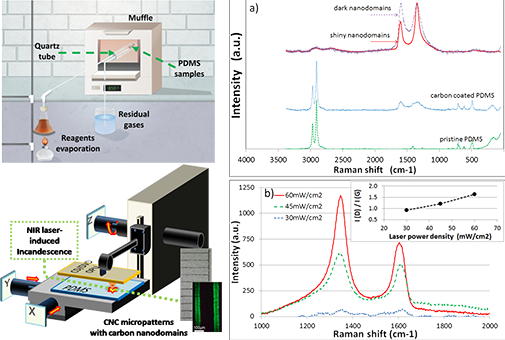
- reported in [20]. The nanoresidues also show good photothermal stability as the intensity of the fluorescence emission did not present quenching after hours of irradiation under a fluorescence microscope or when characterized with a 4 W UV lamp and characterized with a photomultiplier tube, even months


Silica micro/nanospheres for theranostics: from bimodal MRI and fluorescent imaging probes to cancer therapy
Beilstein J. Nanotechnol. 2015, 6, 546–558, doi:10.3762/bjnano.6.57
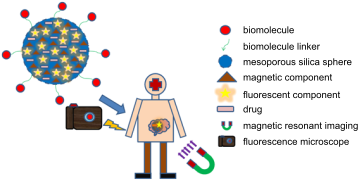
- . The fluorescence emission peak at 520 (from FITC) and 573 nm (from nanocomposites) confirmed the bioconjugation of amine-functionalized hybrid nanocomposites with FITC-IgG. In a similar way, Nai-Qiang et al. [41] reported a simple modified Stöber process in combination with layer by layer assembly for
- 100–130 nm. The fluorescence emission peak of Mn-ZnS QDs was observed at 460 nm. Further, a blue shift of this peak by 10 nm was observed when Mn-ZnS QDs were added to magnetic silica sphere. The magnetic properties of these NPs were observed by SQUID. The saturation magnetization value of Fe3O4


Functionalization of α-synuclein fibrils
Beilstein J. Nanotechnol. 2015, 6, 124–133, doi:10.3762/bjnano.6.12
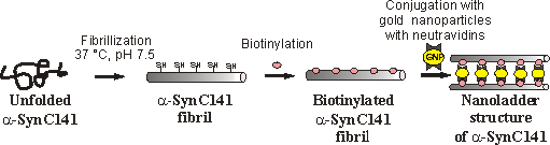
- solution (calculated from the initial concentration of protein prior to fibrillization) and incubated for 10 minutes at room temperature. Fluorescence emission spectra of ThT, excited at 450 nm, were recorded between 460 and 600 nm on a PerkinElmer LS55 luminescence spectrometer using excitation and