


Search results
Search for "indentation" in Full Text gives 109 result(s) in Beilstein Journal of Nanotechnology.
On the frequency dependence of viscoelastic material characterization with intermittent-contact dynamic atomic force microscopy: avoiding mischaracterization across large frequency ranges
Beilstein J. Nanotechnol. 2020, 11, 1409–1418, doi:10.3762/bjnano.11.125
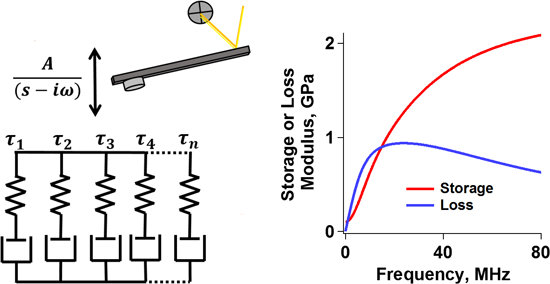
- of characteristic viscoelastic timescales, and on a previous mathematical development by Lee and Radok for spherical indenters deforming flat incompressible surfaces [32]. Lee and Radok’s expression for the Laplace transformed indentation depth, h, is where, is the transformed load (applied force
- ), is the retardance of the material, relating stress and strain, and R is the indenter radius. The indentation and load are available from the force–distance curve, and an expression for can be easily derived for the Generalized Voigt or Maxwell models (Figure 1), whereby the constants of springs and
- the moduli of material 1 are lower than those of material 2 in the vicinity of the characterization frequency, resulting in greater indentation for material 1. Note that both materials have the same glassy modulus (Table 1), and would thus behave equally stiff and elastic at very high frequencies


Extracting viscoelastic material parameters using an atomic force microscope and static force spectroscopy
Beilstein J. Nanotechnol. 2020, 11, 922–937, doi:10.3762/bjnano.11.77
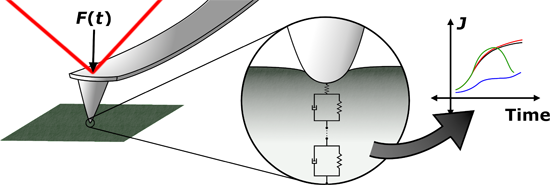
- microscopy (AFM); creep; force mapping; indentation; Kelvin–Voigt; static force spectroscopy (SFS); viscoelasticity; Introduction Modern AFM applications commonly involve testing samples that are soft, biological, or polymeric in nature. Understanding the dissipative nature of these materials at the
- viscoelastic indentation problems proposed by Lee and Radok [18] in 1960. Lee and Radok presented a framework that used Hertzian contact relationships and the “viscoelastic correspondence principle”, in which elastic parameters are replaced by their viscoelastic counterparts to account for differences in the
- choices available for viscoelastic models in AFM indentation problems, it is helpful to begin with the viscoelastic correspondence principle framework mentioned above. An AFM tip–sample interaction involves measuring force and deformation, which can then be compared to the solution of a contact problem


Stochastic excitation for high-resolution atomic force acoustic microscopy imaging: a system theory approach
Beilstein J. Nanotechnol. 2020, 11, 703–716, doi:10.3762/bjnano.11.58
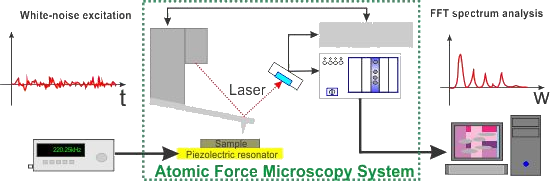
- Guanajuato. Ex Hacienda San Matías s/n C.P. 36020. Guanajuato, Guanajuato, México 10.3762/bjnano.11.58 Abstract In this work, a high-resolution atomic force acoustic microscopy imaging technique is developed in order to obtain the local indentation modulus at the nanoscale level. The technique uses a model
- that gives a qualitative relationship between a set of contact resonance frequencies and the indentation modulus. It is based on white-noise excitation of the tip–sample interaction and uses system theory for the extraction of the resonance modes. During conventional scanning, for each pixel, the tip
- instrumentation requirements and higher frequency resolution at different resonant modes. Also, more than one vibrational mode in each measurement step as well as indentation modulus mappings are obtained. This is possible when system theory [21] is taken into account, i.e., the system identification problem [22



Examination of the relationship between viscoelastic properties and the invasion of ovarian cancer cells by atomic force microscopy
Beilstein J. Nanotechnol. 2020, 11, 568–582, doi:10.3762/bjnano.11.45
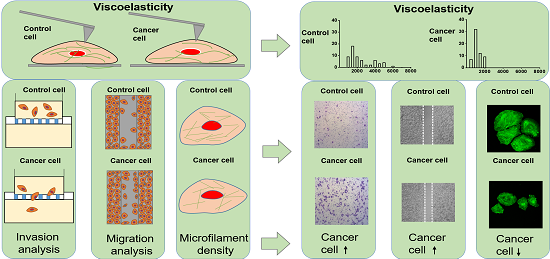
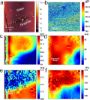
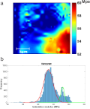
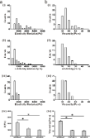
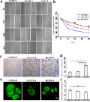
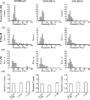
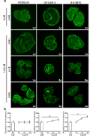
- indentation curves obtained with AFM on three different ovarian cell lines shown in Figure 1. The results of cell elasticity showed a concentrated and narrow distribution in OVCAR-3 and HO-8910 cells (Figure 1a-ii,iii) and a dispersive and broad distribution in HOSEpiC cells (Figure 1a-i). The average values
- , which reflects the viscoelastic response of cells to force stimulation [3], and the energy dissipated during the force indentation process [36]. The measurements of cell viscosity showed that the average values of OVCAR-3 (11.38 ± 0.72 Pa·s) and HO-8910 (10.70 ± 0.66 Pa·s) were significantly lower than
- values of 0.01 N·m−1 were employed in all AFM experiments. Selected areas surrounding the nuclei of cells (3 μm × 3 μm) were chosen for measurements in medium at room temperature. The indentation force was 1 nN with a constant velocity of 5 μm·s−1. All data were analyzed using the JPK data processing


Current measurements in the intermittent-contact mode of atomic force microscopy using the Fourier method: a feasibility analysis
Beilstein J. Nanotechnol. 2020, 11, 453–465, doi:10.3762/bjnano.11.37
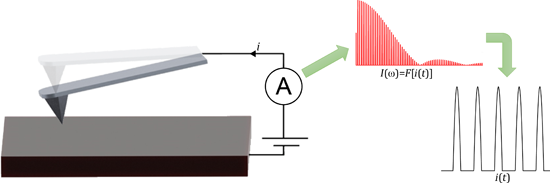
- an Ohmic contact, and will neglect the small tunnelling current for simplicity. Using the Hertzian contact model [42] for the repulsive interaction and considering surface indentation, we can write the current as: where d is the tip–sample distance, C is a conduction proportionality constant, and R
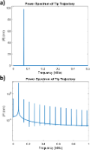
- current. We can address this issue using the square wave function (sq) to represent the indentation, In, as follows: where ψ is the tip trajectory, and sq(τ,T) is the square wave function with period T and duty cycle τ, ranging from zero to unity and with a duty cycle centred around zero time [43]. It is
- clear that τ, the duty cycle of the square wave function, corresponds to the effective interaction time between the tip and the sample. Upon introduction of sq(τ,T), which has a well-defined Fourier transform, our indentation will automatically be zero whenever there is a positive tip–sample distance




Label-free highly sensitive probe detection with novel hierarchical SERS substrates fabricated by nanoindentation and chemical reaction methods
Beilstein J. Nanotechnol. 2019, 10, 2483–2496, doi:10.3762/bjnano.10.239
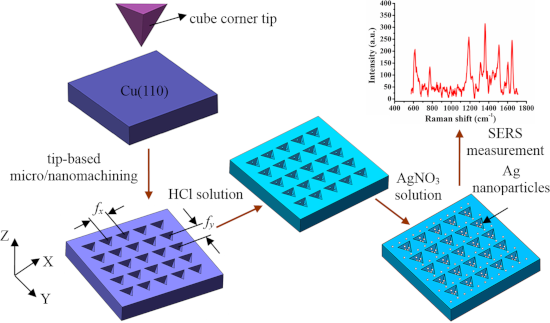
- nanoindentation process and chemical redox reaction to machine a hierarchical SERS substrate. The micro/nanostructures are first formed on a Cu(110) plane and then Ag nanoparticles are generated on the structured copper surface. The effect of the indentation process parameters and the corrosion time in the AgNO3
- . Therefore, arrayed microcavities could be machined by a tip-based indention method previously described by us [31]. This prior work [31] is mainly concerned with the fabrication of arrayed inverted pyramid cavities as SERS substrates using an indentation method that studied the effect of the Raman intensity
- of R6G molecules on the arrayed inverted pyramid cavities of Cu(110) substrates with different feeds. In the present work, a new method including an indentation process and chemical redox reaction is achieved to machine the hierarchical SERS substrates. Complex arrayed micro/nanocavities are formed


Subsurface imaging of flexible circuits via contact resonance atomic force microscopy
Beilstein J. Nanotechnol. 2019, 10, 1636–1647, doi:10.3762/bjnano.10.159
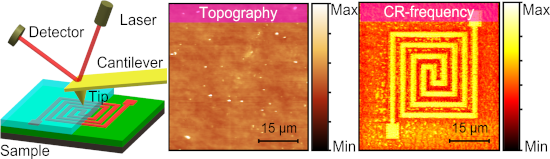
- been carried out using CR-AFM for subsurface imaging, its application in defect diagnosis for flexible circuits has seldom been reported. Intuitively, the presence of buried metal circuit patterns in the tip-generated stress field will alter the local indentation modulus. This consequently leads to
- the second eigenmodes, respectively. The cantilever stiffness and the free resonance frequency were calibrated by utilizing the thermal noise method while others were provided by the respective manufacturers. Multilayer contact model The axisymmetric indentation of a tip contacting with a multilayered
- elastic half-space sample as illustrated in Figure 1b is too complicated for a simple analytical solution. Many efforts have been tried to solve this kind of contact problem. The contact stiffness and the equivalent indentation modulus are usually calculated via approximated approaches [29][30], empirical



Development of a new hybrid approach combining AFM and SEM for the nanoparticle dimensional metrology
Beilstein J. Nanotechnol. 2019, 10, 1523–1536, doi:10.3762/bjnano.10.150
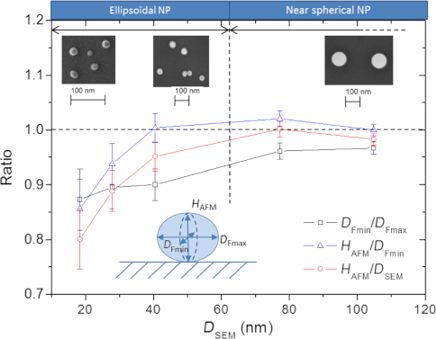
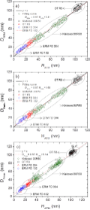
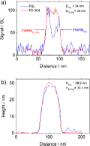
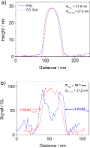
- defined by: where K the equivalent elastic modulus of the NP and the substrate defined by: where Ei and νi are the Young’s modulus and the Poisson’s ratio of the sphere and the half space. The depth of indentation δ, i.e., the elastic displacement is defined by: In the case of silica NPs deposited on a Si




Nanoscale spatial mapping of mechanical properties through dynamic atomic force microscopy
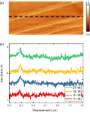
Beilstein J. Nanotechnol. 2019, 10, 1332–1347, doi:10.3762/bjnano.10.132
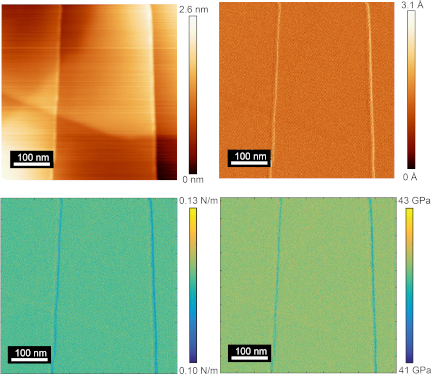
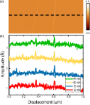
- change in elastic modulus. Static indentation measurements using stiff cantilevers (≈40 N/m normal bending spring constant) were conducted and are summarized in the Appendix. These results showed that the mean elastic modulus of the HOPG terrace was 38 GPa, but could not be acquired with sufficient
- spatial resolution to measure the variation of the elastic modulus over an atomic step edge, as was possible with CR and FMM. However, the static indentation measurements show that the FMM calibration is consistent with well-established nanoindentation measurements conducted on the same microscope. We can
- the literature [41][42][43][44]. Thus, we believe that our subsequent report of a 0.5 percent decrease in the elastic modulus at atomic step edges is also very accurate. To further understand and interpret our FMM results, we conducted static indentation measurements on the graphite surface with




Molecular attachment to a microscope tip: inelastic tunneling, Kondo screening, and thermopower
Beilstein J. Nanotechnol. 2019, 10, 1243–1250, doi:10.3762/bjnano.10.124
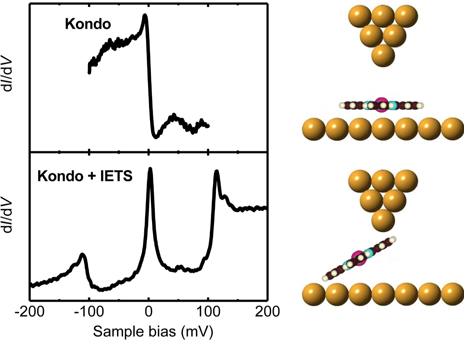
- chamber. All STM/STS measurements have been performed at T = 4.5 K. Tungsten tips were flash-annealed in UHV and conditioned in situ by indentation into the Au substrate. STM images were acquired in constant-current mode, while the bias voltage is applied to the sample with respect to the tip kept at a


Mechanical and thermodynamic properties of Aβ42, Aβ40, and α-synuclein fibrils: a coarse-grained method to complement experimental studies
Beilstein J. Nanotechnol. 2019, 10, 500–513, doi:10.3762/bjnano.10.51
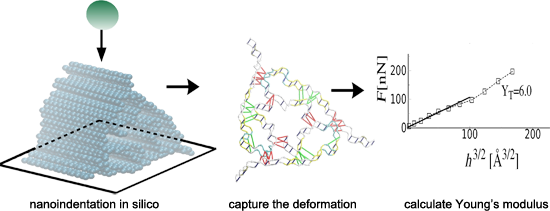
- molecular understanding. Our approach allows a comparison of diverse elastic properties based on different deformations , i.e., tensile (YL), shear (S), and indentation (YT) deformation. From our analysis, we find a significant elastic anisotropy between axial and transverse directions (i.e., YT > YL) for
- YT being the transversal Young modulus and h being the indentation depth). If it actually follows this relationship, then the elastic modulus can be easily obtained from the slope of the curve. This approach can be used to test the experimental estimation of an elastic property. Most importantly, the
- use it as a reference for comparing the indentation values we obtained to the experimental ones, although we remark that our molecular modeling can adapt further anisotropic mechanical models, envisioned within force microscopy techniques. Biological fibrils are well-known biomaterials of practical


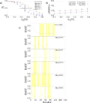
Intuitive human interface to a scanning tunnelling microscope: observation of parity oscillations for a single atomic chain
Beilstein J. Nanotechnol. 2019, 10, 337–348, doi:10.3762/bjnano.10.33
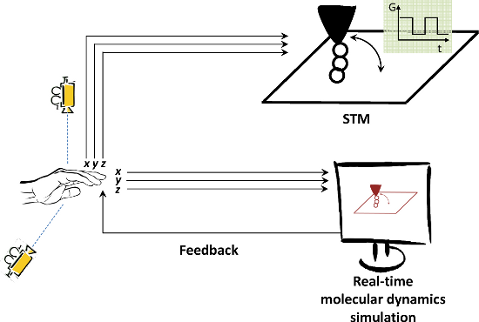
- annealing cycles to obtain an atomically flat Au(111) facet showing herringbone surface reconstruction. We further prepare the surface at low temperature by creating a localized stress pattern [11][12][13][14] on the surface using gentle indentation of the STM tip at a spot on the surface remote from the
- investigation (Figure 2b) by establishing point contact with the surface using the STM tip at 100 mV bias. The STM tips used in the experiments are hand-cut PtIr tips that get covered by Au atoms on indentation of the surface. Real-time molecular dynamic simulation A conventional atomic manipulation operation




Nitrous oxide as an effective AFM tip functionalization: a comparative study
Beilstein J. Nanotechnol. 2019, 10, 315–321, doi:10.3762/bjnano.10.30
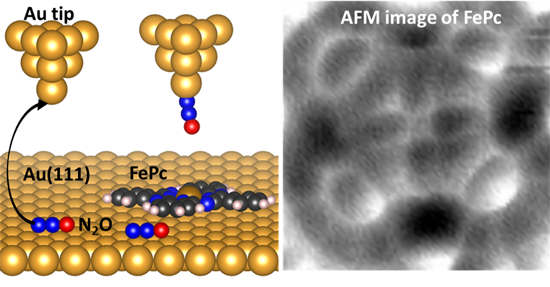
- formation, the metallic tip (pre-treated by a gentle indentation into the substrate) was functionalized by an impurity CO molecule, which significantly improved the resolution in both STM and AFM. We performed high-resolution AFM/STM measurements on various clusters (comparable to the inset of Figure 1a


Pull-off and friction forces of micropatterned elastomers on soft substrates: the effects of pattern length scale and stiffness
Beilstein J. Nanotechnol. 2019, 10, 79–94, doi:10.3762/bjnano.10.8
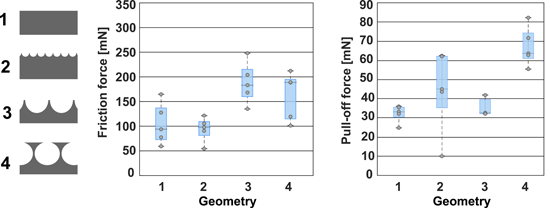
- stiffness of the micropatterned adhesive, as this strength depends on the area of contact that is formed, which in turn is determined by the indentation depth of the adhesive into the substrate [23]. The performance of biomimetic micropatterned adhesives is usually tested on hard substrates, primarily glass
- rigid glass substrate [24]. On very soft substrates (Young’s modulus E ≈ 10 kPa), the indentation depth of microscale features is determined by a balance between the elastic properties of the substrate and the substrate–micropattern adhesion effects [25]. The length scale at which these adhesion effects
- are present is referred to as the elastocapillary length l, which is defined as l = γ/μ, where γ is the surface tension of the substrate and μ is the elastic shear modulus of the substrate [26]. If the length scale of the microscale features is in the order of the elastocapillary length, indentation





Apparent tunneling barrier height and local work function of atomic arrays
Beilstein J. Nanotechnol. 2018, 9, 3048–3052, doi:10.3762/bjnano.9.283
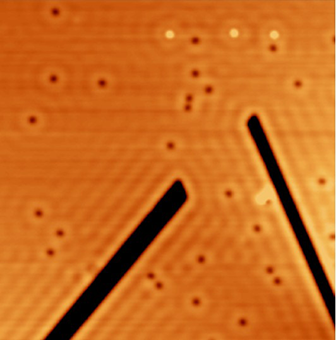
- Cu. In surface areas close to the point of indentation (typical distance 200 nm) long, straight atomic chains are formed on the substrate (Figure 1). While the width of the chains varies, one- and two-atom wide chains are frequently observed. They may be identified from their apparent widths in


Friction reduction through biologically inspired scale-like laser surface textures
Beilstein J. Nanotechnol. 2018, 9, 2561–2572, doi:10.3762/bjnano.9.238
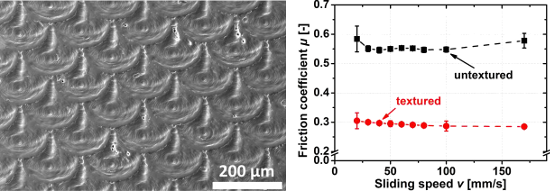
- approaches to realize such textured surfaces, such as chemical etching [12] or material indentation [13], the use of lasers is established as the most versatile and economical method [14]. The most common texturing element is the round dimple [10][14], with which friction reduction of around 80% has been
- arguments based on indentation depth do change for a sliding contact (e.g., Hamilton’s [42] instead of Hertz’s [43] solution) should be applied for the stress field. We made use of the contact mechanics solver developed and provided by Pastewka [44]. This program allows uploading white light profilometry


Evidence of friction reduction in laterally graded materials
Beilstein J. Nanotechnol. 2018, 9, 2443–2456, doi:10.3762/bjnano.9.229
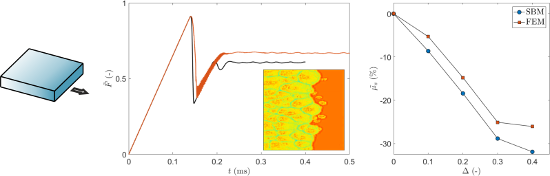
- of the indentation of materials with an exponential or power law variation of the Young’s modulus through the depth [20][21]. Giannakopoulos and Pallot then extended the analysis to 2D [22]. Graded substrates have also been considered in elastohydrodynamic lubrication problems [23]. More recently


![[Graphic 5]](/bjnano/content/inline/2190-4286-9-229-i10.svg?max-width=637&scale=1.18182) as function of time for the non-graded material: SBM solution for dif...
as function of time for the non-graded material: SBM solution for dif...


Adhesive contact of rough brushes
Beilstein J. Nanotechnol. 2018, 9, 2405–2412, doi:10.3762/bjnano.9.225
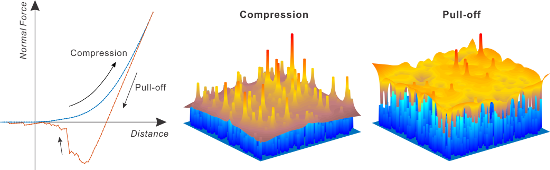
- following pull-off. The quantities which we are interested in, and which will be presented in the following diagrams, are solely the maximum force during the indentation stage, Fp, and the force of adhesion, FA, defined as the absolute value of the minimum (negative) value of the normal force during the


Imaging of viscoelastic soft matter with small indentation using higher eigenmodes in single-eigenmode amplitude-modulation atomic force microscopy
Beilstein J. Nanotechnol. 2018, 9, 1116–1122, doi:10.3762/bjnano.9.103
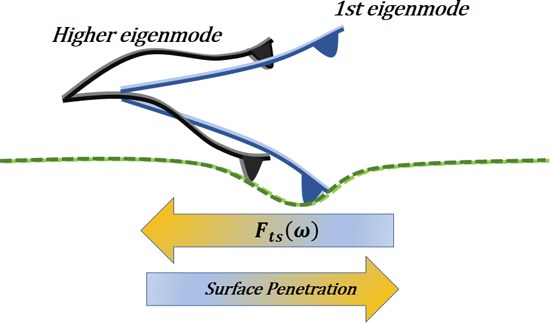
- Abstract In this short paper we explore the use of higher eigenmodes in single-eigenmode amplitude-modulation atomic force microscopy (AFM) for the small-indentation imaging of soft viscoelastic materials. In viscoelastic materials, whose response depends on the deformation rate, the tip–sample forces
- generated as a result of sample deformation increase as the tip velocity increases. Since the eigenfrequencies in a cantilever increase with eigenmode order, and since higher oscillation frequencies lead to higher tip velocities for a given amplitude (in viscoelastic materials), the sample indentation can
- in some cases be reduced by using higher eigenmodes of the cantilever. This effect competes with the lower sensitivity of higher eigenmodes, due to their larger force constant, which for elastic materials leads to greater indentation for similar amplitudes, compared with lower eigenmodes. We offer a


A robust AFM-based method for locally measuring the elasticity of samples
Beilstein J. Nanotechnol. 2018, 9, 1–10, doi:10.3762/bjnano.9.1
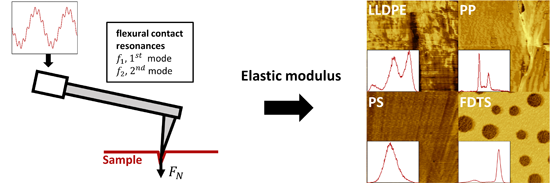
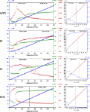
- observe first a nonlinear relation between the measured frequency shifts, Δf1 and Δf2, and the displacement of the scanner, followed by a linear relation. This suggests a plastic deformation phase of the sample surface during the first step of the indentation, followed by an elastic deformation phase
- applied normal force generated by the Z-displacement Δz, is FN = keffΔz, where keff is the effective spring of value k1ksample,norm/(k1 + ksample,norm). As the normal stiffness of sample increases during indentation, the value of keff approaches k1, so that beyond a certain value of ksample,norm, the
- 1. Sample surface deformations and evolution of stress during indentation The existence of a plastic and an elastic deformation phase is explained by the evolution of stress σ (ratio between the applied normal force FN and the cross section A of the cantilever tip) during indentation (Figure 5). At


Robust procedure for creating and characterizing the atomic structure of scanning tunneling microscope tips
Beilstein J. Nanotechnol. 2017, 8, 2389–2395, doi:10.3762/bjnano.8.238
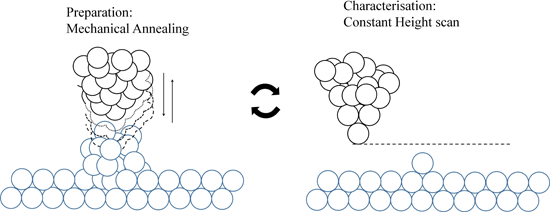
- authors report to have obtained crystalline tips by repeated deep indentation of a Au tip into a Au surface followed by retraction until the contact breaks. These indentation cycles cause plastic deformation of the tip apex [26], which first gives random conductance traces but gradually evolves to
- values at maximum indentation of 5G0, 6G0, 6G0 and 2.6G0, respectively) below which the conductance traces shows reproducible cycles. Procedure of tip preparation We will now present a procedure, illustrated in Figure 2, that is based upon this mechanical annealing. This procedure permits arriving at
- choice of bias voltage influences the process, although we have not tested this to much higher bias voltages. The depth of indentation is more critical: just touching the surface with the front atom is not enough, and much deeper indentation does not result in reproducible conductance cycles [30]. We


Molecular dynamics simulations of nanoindentation and scratch in Cu grain boundaries
Beilstein J. Nanotechnol. 2017, 8, 2283–2295, doi:10.3762/bjnano.8.228
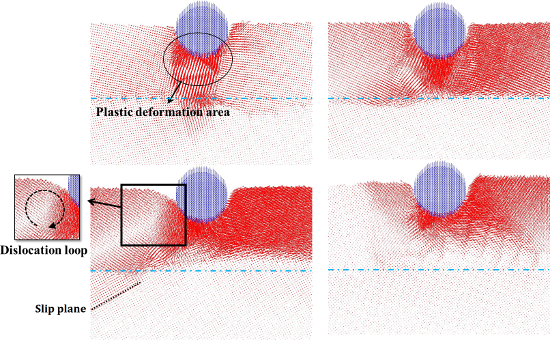
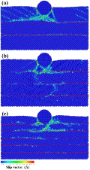
- nanoindentation results (i.e., indentation on the upper area) of the vertical grain boundary showed that the force was translated along the grain boundary, thereby producing intergranular fractures. Keywords: indentation; molecular dynamics; nanograin boundary; nanoscratch; Introduction The recent developments
- diagrams used herein for analyzing the grain boundary properties (i.e., transverse grain boundary indentation, vertical grain boundary indentation, and vertical grain boundary scratches) are shown in Figure 1a–c, respectively. The indenter (blue) was made of a perfectly structured diamond while perfect
- . In this study, the substrate first undergoes a balance process for about 200 ps. The indentation and scratch processes will not begin until the substrate is stable. In the transverse grain boundary and multilayers, a periodic boundary condition was imposed in the x and y directions, while the z




Fabrication of gold-coated PDMS surfaces with arrayed triangular micro/nanopyramids for use as SERS substrates
Beilstein J. Nanotechnol. 2017, 8, 2271–2282, doi:10.3762/bjnano.8.227
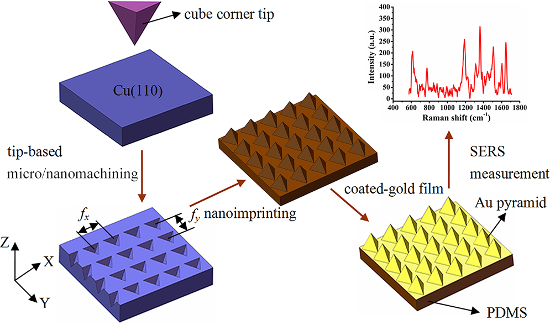
- School of Chemistry and Chemical Engineering, Harbin Institute of Technology, Harbin, Heilongjiang 150001, P.R. China 10.3762/bjnano.8.227 Abstract Using the tip-based continuous indentation process, arrays of three-dimensional pyramidal cavities have been successfully machined on a copper template and
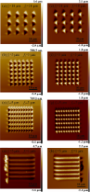
- ) was used as a probe molecule in the present study to confirm the SERS measurements. Arrays of micro/nanostructures of different dimensions were formed by the overlap of pyramidal cavities with different adjacent distances using the tip-based continuous indentation process. The effects of the reverse
- is not suitable for mass production. Similar to traditional nanoindenter methods, in our previous study, a force modulation indentation method was also presented [33][34]. The force modulation indention equipment that we built improved the machining efficiency. By controlling the period and amplitude





Material property analytical relations for the case of an AFM probe tapping a viscoelastic surface containing multiple characteristic times
Beilstein J. Nanotechnol. 2017, 8, 2230–2244, doi:10.3762/bjnano.8.223
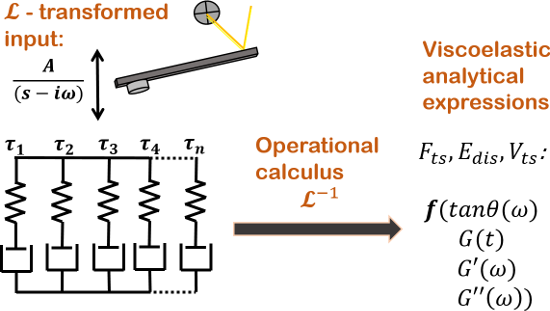
- meaningful material properties in tapping-mode AFM, where oversimplified assumptions are frequently used, which are not appropriate for viscoelastic materials. Flat-punch indentation has been chosen for two main reasons: i) to ensure full applicability of the correspondence viscoelastic principle, and ii) to
- keep the analytics workable. Although this only represents a portion of the general problem of indentation of viscoelastic materials by arbitrary profiled AFM indenters, it is a step forward in terms of understanding the complexities of the technique in the context of viscoelastic materials, as well as
- The constant b corresponds to a cell constant (with units of displacement) which allows conversion between stress–strain and force–displacement relationships [8]. By applying the correspondence principle to the elastic solution of flat-end punch indentation (derived by Sneddon [29]), it is possible to


High-stress study of bioinspired multifunctional PEDOT:PSS/nanoclay nanocomposites using AFM, SEM and numerical simulation
Beilstein J. Nanotechnol. 2017, 8, 2069–2082, doi:10.3762/bjnano.8.207
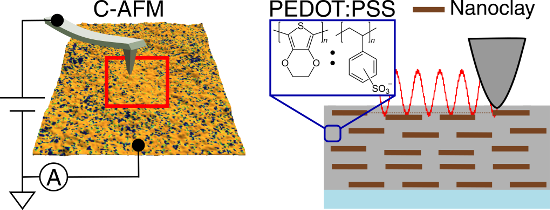
- intermittent-contact AFM technique in which two eigenmodes of the cantilever are excited simultaneously, resulting in an enhanced material contrast and the ability to modulate indentation depth or applied force during imaging [62]. The strategy followed consisted of mapping the conservative and dissipative





