


Search results
Search for "junction" in Full Text gives 316 result(s) in Beilstein Journal of Nanotechnology. Showing first 200.
Strain-induced bandgap engineering in 2D ψ-graphene materials: a first-principles study
Beilstein J. Nanotechnol. 2024, 15, 1440–1452, doi:10.3762/bjnano.15.116
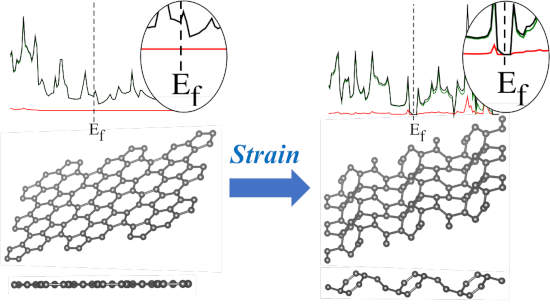
- inequivalent carbon atoms labeled C1, C2, C3, and C4, possessing unique chemical and physical attributes (Figure 1). At the junction of three s-indacene molecules, the C–C bond length d1 is significantly longer than typical C–C bonds (Figure 1). To investigate the electronic properties of these 2D nanosheets
- of all C–C bonds of ψ-graphone, the bond length d1 at the junction of the s-indacene molecule reaches its minimum value of 1.47 Å at −16% strain along the lattice plane, which indicates that only 8.69% contraction is possible in this specific bond length of ψ-graphone. The bond length between C atoms


Nanotechnological approaches for efficient N2B delivery: from small-molecule drugs to biopharmaceuticals
Beilstein J. Nanotechnol. 2024, 15, 1400–1414, doi:10.3762/bjnano.15.113

- well-studied tight junction opening abilities of chitosan [85]. In another study on the mucoadhesion and permeation properties of materials, a thiolated cellulose was synthesized and used for delivering a model drug, enoxaparin. The authors reported that thiolation increased mucoadhesion by a factor of


Green synthesis of carbon dot structures from Rheum Ribes and Schottky diode fabrication
Beilstein J. Nanotechnol. 2024, 15, 1369–1375, doi:10.3762/bjnano.15.110
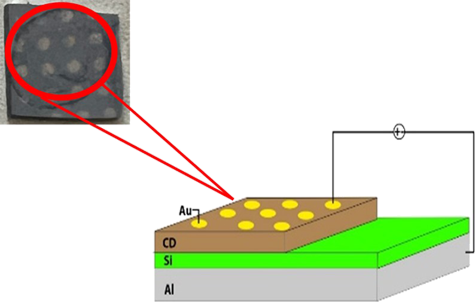
- electrical current. There are many types of diodes, such as Zener diodes, crystal diodes, and Schottky diodes, and each type has different features and is used for different purposes. Schottky diodes contain a metal–semiconductor junction. This structure differs from other diodes because of its high
- , the quantum yield of the CDs was calculated as 0.03. Schottky diode fabrication The usability of these newly synthesized CDs in an application area was also discussed. For this purpose, a metal (Au)–semiconductor (CDs) junction-based thin film device was produced. SEM images were taken to determine




New design of operational MEMS bridges for measurements of properties of FEBID-based nanostructures
Beilstein J. Nanotechnol. 2024, 15, 1273–1282, doi:10.3762/bjnano.15.103
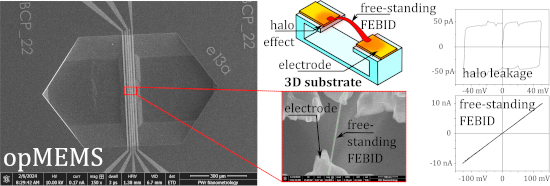
- apex by choosing appropriate dwell time and pitch for the deposition. The dimensions of the nanowire were 60 nm in diameter and 1.6 μm in length. The junction was tested by resistance measurements (Figure 8b). The measured resistance was 12 MΩ, giving a resistivity of approximately 2.1 Ω·cm, which is


Quantum-to-classical modeling of monolayer Ge2Se2 and its application in photovoltaic devices
Beilstein J. Nanotechnol. 2024, 15, 1153–1169, doi:10.3762/bjnano.15.94
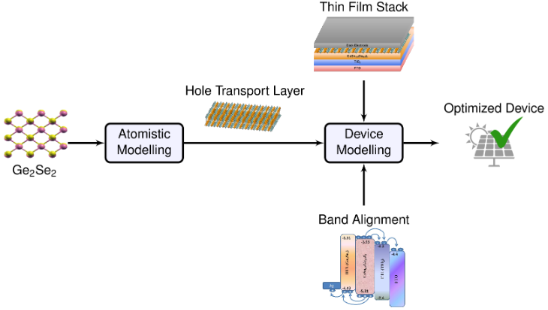
- between active and transport layers The photovoltaic behavior of halide perovskites is significantly affected by the properties of the interfaces. This is because a majority of defects arises at the junction between two layers during the fabrication of the device, caused by mismatches in the lattice




Photocatalytic methane oxidation over a TiO2/SiNWs p–n junction catalyst at room temperature
Beilstein J. Nanotechnol. 2024, 15, 1132–1141, doi:10.3762/bjnano.15.92
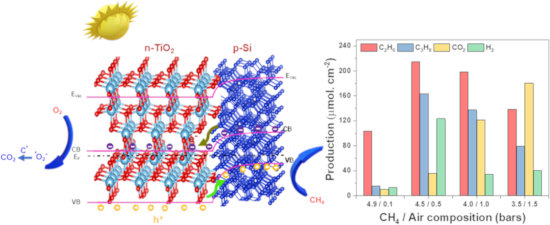
- recombination of charge carriers in semiconductors is a main drawback for photocatalytic oxidative coupling of methane (OCM) reactions. Herein, we propose a novel catalyst by developing a p–n junction titania–silicon nanowires (TiO2/SiNWs) heterostructure. The structure is fabricated by atomic layer deposition
- electrons for reactions [25][26][27]. However, the generated electron affinity of metal NPs is sometimes insufficient and cannot prevent recombination or maintain electrons for further reactions. As an advanced solution for catalysis modification, p–n junction photocatalysts with an intrinsic electric field
- tools is extremely essential and important [37][38][39]. Herein, we constructed a robust p–n junction catalyst by atomic layer deposition (ALD) of TiO2 thin films on a p-type SiNW substrate for enhancing the photocatalytic efficiency in CH4 oxidation. Pristine p-Si wafers have limited surface area and


Bolometric IR photoresponse based on a 3D micro-nano integrated CNT architecture
Beilstein J. Nanotechnol. 2024, 15, 1030–1040, doi:10.3762/bjnano.15.84
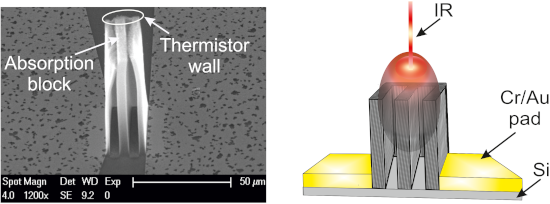
- thermistor region, can be fabricated in a single chemical vapor deposition process step. The thermistor resistance is mainly determined by the high junction resistances of the adjacent aligned CNTs. This configuration also provides low lateral thermal conductivity and a high temperature coefficient of
- applications [3]. The device resistance perpendicular to the CNT orientation is mainly determined by the high junction resistances of the neighboring aligned CNTs [4]. This configuration allows for high device resistance, low thermal conductivity, and high temperature coefficient of resistance, thus, enabling
- material. The electrical conductivity of a vertically aligned CNT structure is defined by the intrinsic conductivity along the CNTs and the tunneling at the CNT junctions. The vertical electrical conduction is based on long conduction paths along the CNTs and few junction contacts, while the lateral


Recent progress on field-effect transistor-based biosensors: device perspective
Beilstein J. Nanotechnol. 2024, 15, 977–994, doi:10.3762/bjnano.15.80
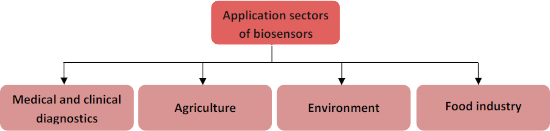
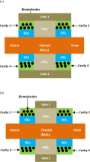
- inner and outer gate cavity regions is set to 10 nm [63]. Therefore, the physical properties of the biosensor have been analyzed via source-channel junction electrostatics and thermionic emission. The effect of applying biasing conditions on the efficiency of the transduction is also investigated. It
- , forming a plasma layer of holes. An abrupt junction at the channel/source was created to facilitate the entry of biomolecules into the cavity. Thus, significant variations in electrostatic properties were observed due to the distinct characteristics of the biomolecules, leading to improved sensitivity
- presents the organization of PKD FET-based biosensor. This structure uses the double-gate architecture with III–V compound semiconductors at the channel and an N+-doped pocket at the junction between the source and channel regions. The drain and source regions are realized with GaSb material. HfO2 was used




Reduced subthreshold swing in a vertical tunnel FET using a low-work-function live metal strip and a low-k material at the drain
Beilstein J. Nanotechnol. 2024, 15, 713–718, doi:10.3762/bjnano.15.59
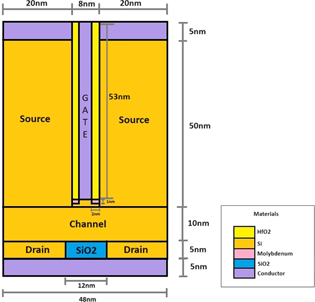
- dielectric gate contains a molybdenum live strip, which raises the electron concentration at the source–channel junction because of its low work function. The rise in electron concentration creates an abrupt change in the source channel. Figure 3 presents the electric field of the VTFET with DLWLS + spacer
- DLWLS + spacer, 25 mV/dec for DLWLS, and 30 mV/dec for the design with only the spacer. The subthreshold swing of a TFET depends on the high-k gate dielectric and a thin body to assure that the gate field directly modulates the channel. Maximizing the derivative of the junction electric field on the
- gate–source voltage [4] is another method for reducing the subthreshold voltage swing. Veff is the tunnel–junction bias, ξ is the electric field, a, b are coefficients based on the junction's material characteristics and the device’s cross-sectional area: Comparison of VTFET with VTFET (DLWLS and


Superconducting spin valve effect in Co/Pb/Co heterostructures with insulating interlayers
Beilstein J. Nanotechnol. 2024, 15, 457–464, doi:10.3762/bjnano.15.41
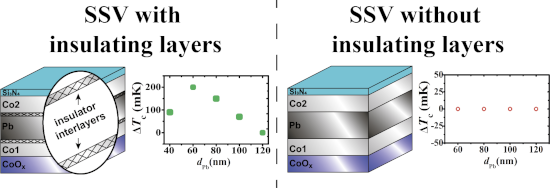
- in a conventional tunneling junction”. While the theory [50] assumes a symmetric F1/S/F2 structure, our samples may actually be asymmetric from the point of view of the interface transparencies. The oxidation times of the two interfaces were different in our samples, and our fabrication procedure was

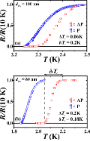


![[Graphic 6]](/bjnano/content/inline/2190-4286-15-41-i6.svg?max-width=637&scale=1.18182)
Unveiling the nature of atomic defects in graphene on a metal surface
Beilstein J. Nanotechnol. 2024, 15, 416–425, doi:10.3762/bjnano.15.37
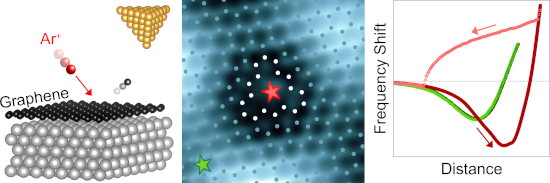
- . Constant-height scanning tunneling spectroscopy (STS) of dI/dV was performed by sinusoidally modulating (5 mVrms, 725 Hz) the dc bias voltage and measuring the first harmonic of the ac current response of the tunneling junction with a lock-in amplifier. For AFM data acquisition, resonance frequency changes
- inversion is induced by the reduction of the tip–graphene separation. As will be shown below, the involved junction currents correspond to a separation that is still larger than, but close to, the point of maximum attractive force. Therefore, a tentative rationale to the observed contrast inversion is the
- increased tip–graphene hybridization compared to the far tunneling range, which may entail a modification of the graphene electronic structure or enhance the contribution of substrate states to the junction current [46]. The mounds and adjacent valleys of the moiré superstructure are characterized by


Controllable physicochemical properties of WOx thin films grown under glancing angle
Beilstein J. Nanotechnol. 2024, 15, 350–359, doi:10.3762/bjnano.15.31
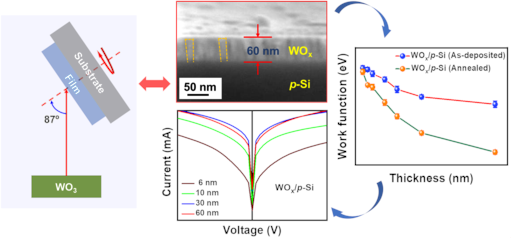
- for the as-deposited and annealed NS-WOx/p-Si heterojunctions at three different applied voltages (V), viz. ±0.5, ±0.7, and ±1 V, where a higher value of RR indicates a stronger rectifying nature of a junction. As can be seen from Table 1, an increase in the film thickness minimizes the RR value of
- the junction, thereby leading to more symmetric I–V curves. Nevertheless, one can infer from the observed low values of RR (Table 1) that all the as-deposited NS-WOx/p-Si samples show a quasi-ohmic conduction behaviour, which implies that tunnelling may be responsible for the current transport. The
- -deposited films, compared to the annealed ones, indicating a quasi-ohmic nature of the junction. Increased rectification ratios are observed for thinner WOx films, which are insufficient to overcome the metal electrode-induced gap states at the interface leading to Fermi level pinning. Improved current


Josephson dynamics and Shapiro steps at high transmissions: current bias regime
Beilstein J. Nanotechnol. 2024, 15, 51–56, doi:10.3762/bjnano.15.5
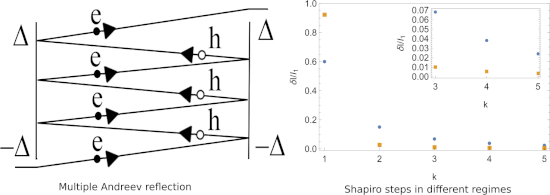
- junctions is the presence of coherent current oscillations with the fundamental frequency ωJ = 2 eV/ℏ, where V is the voltage applied to the junction and −e is the electron charge. Under the influence of external microwave radiation with frequency ω, current jumps appear on the junction I–V curve, which are
- modified by replacing V by its time average V→. Dissipation usually plays an important role in the case of current-biased superconducting nanojunctions. One possible way to account for dissipative currents is to employ the so-called resistively shunted junction (RSJ) model [1]. In the case of tunnel
- T → 0 can flow across the junction. The situation becomes entirely different provided one goes beyond the tunneling limit and considers highly transparent superconducting weak links in which case the charge transfer is essentially controlled by the mechanism of multiple Andreev reflection [2]. This


Measurements of dichroic bow-tie antenna arrays with integrated cold-electron bolometers using YBCO oscillators
Beilstein J. Nanotechnol. 2024, 15, 26–36, doi:10.3762/bjnano.15.3
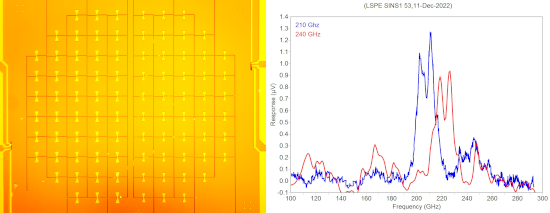
- measured with YBCO Josephson Junction oscillators show narrow peaks at 205 GHz for the 210 GHz array and at 225 GHz for the 240 GHz array; the separation of these two frequency bands is clearly visible. The noise equivalent power level at an operating point in the current bias mode is 5 × 10⁻¹⁶ W/√Hz
- . Keywords: cosmic microwave background; B mode; cold-electron bolometer; dichroic antenna array; dipole bow-tie antenna; Josephson junction; LSPE; Introduction The cosmic microwave background (CMB) radiation contains a lot of information about origin and evolution of our universe. The temperature and
- the order of a few micrometers, detector can be placed inside the antenna slot without additional microwave feed lines, forming a multi-absorber array [15][17][18]. Because of this feature, one can adjust the total resistance by forming series or parallel arrays of CEBs to match for either junction


A bifunctional superconducting cell as flux qubit and neuron
Beilstein J. Nanotechnol. 2023, 14, 1116–1126, doi:10.3762/bjnano.14.92
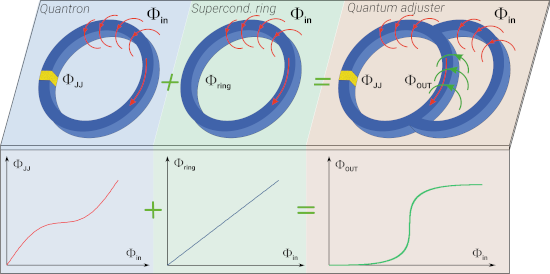
- by the second term in Equation 1, wherein the effective coordinate is a phase of the Josephson junction, φ. The quantities Ec = and EJ = are the capacitive and the Josephson energy, respectively, determined by critical current Ic and the capacity C of the Josephson junction. A typical example of
- . The action time of the symmetric input flux to avoid Landau–Zener transitions is ∼100 ns for l = 2. The estimate was made with the characteristic parameters of a Josephson junction, that is, Ic = 50 nA and C = 6 fF. In contrast, it takes ∼30 ns for the transition from the ground state to the first
- ⟩ = bφin(t) − a⟨φ⟩ is the mean value of the current operator on the Josephson junction when the external flux changes relative to the mean phase of the contact ⟨φ⟩ = ⟨ψ(t)|φ|ψ(t)⟩. As shown in Figure 4a, the transfer characteristic of the parametron has a sigmoidal dependence. It is worth noting that this



Density functional theory study of Au-fcc/Ge and Au-hcp/Ge interfaces
Beilstein J. Nanotechnol. 2023, 14, 1093–1105, doi:10.3762/bjnano.14.90
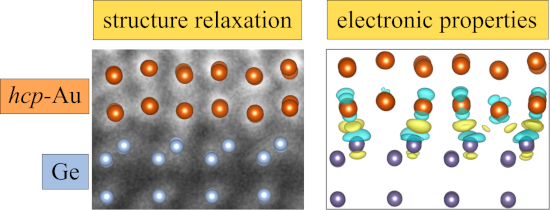
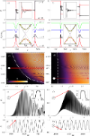
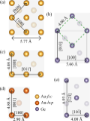
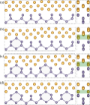
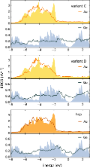
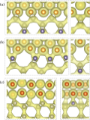
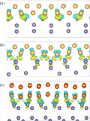
- . Our DFT calculations for the Au-fcc(011)/Ge(001) junction show how the presence of defects in the interface layer can help to stabilize the atomic pattern, consistent with microscopic images. Although the Au-hcp/Ge interface is characterized by a similar interface energy, it reveals large atomic
- optimized supercell shown in Figure 9d, the interface energy is slightly higher (0.395 J/m2) than that of the defect-free junction. We also tested another type of defects (Au vacancies). To construct the supercell, we first found the position of slabs with the smallest possible Au–Ge distances (two such
- -free optimized structure shown in Figure 9a. We can observe that the atomic pattern at the interface is well reproduced by our model. The interface seen in the experimental image is not as regular as the Au-fcc/Ge junction presented in Figure 8, and other types of defects may additionally stabilize





Dual-heterodyne Kelvin probe force microscopy
Beilstein J. Nanotechnol. 2023, 14, 1068–1084, doi:10.3762/bjnano.14.88
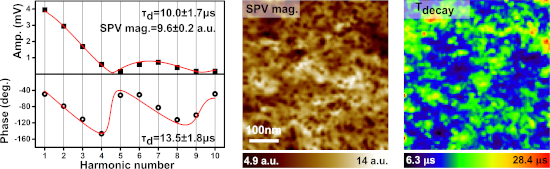
- (CPD). If one considers a simple junction formed by a metallic AFM tip and a metallic sample, the CPD originates from the tip–sample work function difference. More generally, the CPD stems from the existence of electric charges and/or dipoles in the system under consideration. As a result, the




Spatial mapping of photovoltage and light-induced displacement of on-chip coupled piezo/photodiodes by Kelvin probe force microscopy under modulated illumination
Beilstein J. Nanotechnol. 2023, 14, 1059–1067, doi:10.3762/bjnano.14.87
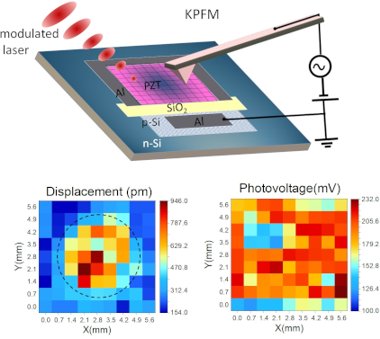
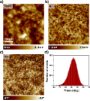
- from the top reached the Si p–n junction and generated electron–hole pairs, building a potential difference across the junction. The generated photovoltage was applied to the piezoelectric capacitor through the photolithographically defined contacts and induced mechanical displacement in the


Cross-sectional Kelvin probe force microscopy on III–V epitaxial multilayer stacks: challenges and perspectives
Beilstein J. Nanotechnol. 2023, 14, 725–737, doi:10.3762/bjnano.14.59
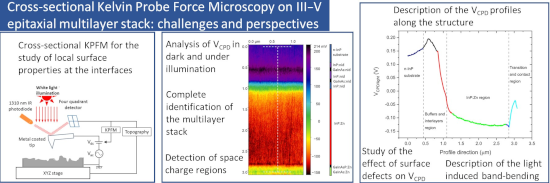
- expected trend in a p-type layer with surface defects. However, in case of pn junctions, the SPV can also include the contribution of the open-circuit voltage (VOC) of the pn junction due to the splitting of the quasi-Fermi levels of electrons and holes and the related charge separation at the junction. In
- our case, because the n-type side of the junction (substrate) is grounded, we expect a positive SPV contribution from the VOC of the pn junction at the surface of the p layer outside the space charge region of the pn junction. Therefore, the SPV measured in the InP:Zn region should be a trade-off
- between the negative contribution due to the flattening of surface defect-related band bending and the positive contribution of VOC. As a consequence, the slightly negative SPV value of −95 mV measured in the InP:Zn region indicates a weaker contribution of the pn junction (VOC) compared to the change in


Current-induced mechanical torque in chiral molecular rotors
Beilstein J. Nanotechnol. 2023, 14, 711–721, doi:10.3762/bjnano.14.57
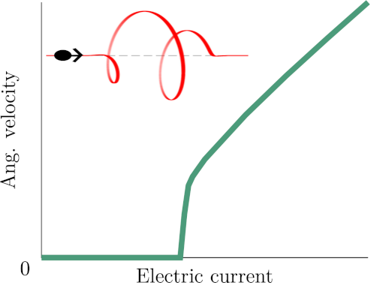
- unidirectional rotation in the STM setup requires a degree of symmetry breaking. There are two typical situations, that is, either the molecule by itself exhibits a handedness (chirality) or chirality is imposed by the geometry of the molecular junction [6][10]. The purpose of this article is to provide a


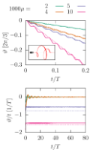


![[Graphic 29]](/bjnano/content/inline/2190-4286-14-57-i54.svg?max-width=637&scale=1.18182)


Overview of mechanism and consequences of endothelial leakiness caused by metal and polymeric nanoparticles
Beilstein J. Nanotechnol. 2023, 14, 329–338, doi:10.3762/bjnano.14.28
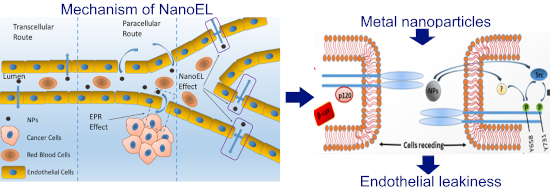
- for the interaction with adherens junction proteins (e.g., VE-cadherin). The width of the endothelial gaps was ca. 22.5 nm [28]. Researchers observed that the interaction of the endothelium with NPs widens the existing gaps or induces new ones in the monolayer of vascular endothelial cells, thus


Bismuth-based nanostructured photocatalysts for the remediation of antibiotics and organic dyes
Beilstein J. Nanotechnol. 2023, 14, 291–321, doi:10.3762/bjnano.14.26
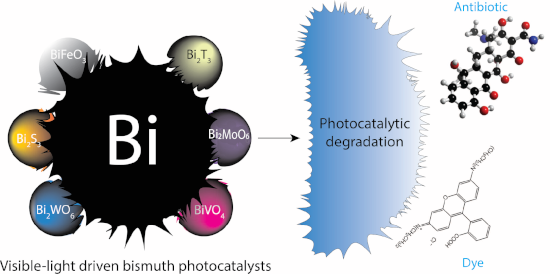
- applications, are addressed. Keywords: advanced oxidation processes; emerging contaminants; low-dimensional nanomaterials; pharmaceutical by-products; Schottky junction; Review Introduction Worldwide, water pollution is rising, endangering the economic potential and development objectives of severely
- were degraded by 94.8% and 81.1% after 1 h, respectively. Another strategy for overcoming constraints such as low charge migration and the unpredictable direction of charge diffusion is the construction of a Schottky junction. A Schottky junction can be created at the interface between the
- semiconductor and a noble metal with an appropriate work function. A unidirectional charge transfer is enabled by the Schottky potential barrier, increasing charge density and separation [72]. Shen et al. [166] created a Schottky junction by synthesising NiSe2 nanosheets on top of BiVO4 nanosheets using a


A distributed active patch antenna model of a Josephson oscillator
Beilstein J. Nanotechnol. 2023, 14, 151–164, doi:10.3762/bjnano.14.16
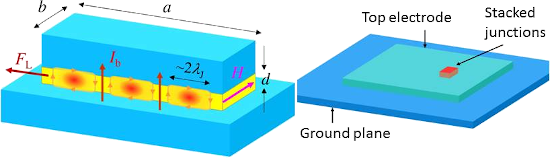
- Vladimir M. Krasnov Department of Physics, Stockholm University, AlbaNova University Center, SE-10691 Stockholm, Sweden 10.3762/bjnano.14.16 Abstract Optimization of Josephson oscillators requires a quantitative understanding of their microwave properties. A Josephson junction has a geometry
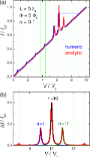
- similar to a microstrip patch antenna. However, it is biased by a dc current distributed over the whole area of the junction. The oscillating electric field is generated internally via the ac-Josephson effect. In this work, I present a distributed, active patch antenna model of a Josephson oscillator. It
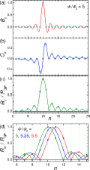
- takes into account the internal Josephson electrodynamics and allows for the determination of the effective input resistance, which couples the Josephson current to cavity modes in the transmission line formed by the junction. The model provides full characterization of Josephson oscillators and


Batch preparation of nanofibers containing nanoparticles by an electrospinning device with multiple air inlets
Beilstein J. Nanotechnol. 2023, 14, 141–150, doi:10.3762/bjnano.14.15
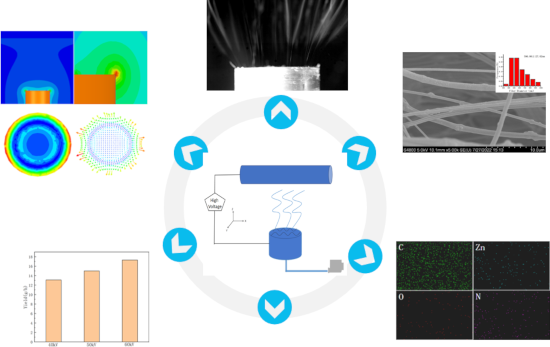
- solution, forming a large potential difference resulting in the increase of electric field intensity [27]. Similarly, the electric field intensity dropped sharply and afterwards increased sharply at the junction of the groove and the spinneret edge (30 mm). At the edge of the porous spinneret (30–35 mm


Frontiers of nanoelectronics: intrinsic Josephson effect and prospects of superconducting spintronics
Beilstein J. Nanotechnol. 2023, 14, 79–82, doi:10.3762/bjnano.14.9

- [15][16]. - Detection of ultrahigh frequency radiation by new devices: Based on Josephson junctions with frequencies of 72–265 GHz using the Josephson grain boundary junction fabricated in YBaCuO films [17] and broad-band detectors based on YBaCuO Josephson junctions fabricated on ZrYO bicrystals with
- a very high responsivity at 77 K (up to 9 kV/W), low noise equivalent power (NEP) of 3 × 10⁻¹³ W/Hz(1/2), and with a wide power dynamic range equal to 1 × 10⁶ [18]. Integrating an aluminum Josephson junction, with a size of a few micrometers, operating as a single photon counter in the microwave
- /ferromagnetic absorber with a temperature reduction of the electrons in the refrigerator junctions down to 25 mK in the idle regime without an optical power load [22]. - Implementation of Josephson junctions for the design of quantum computers by analyzing the dynamics of a single-junction superconducting



