


Search results
Search for "multimodal" in Full Text gives 69 result(s) in Beilstein Journal of Nanotechnology.
Uniform Fe3O4/Gd2O3-DHCA nanocubes for dual-mode magnetic resonance imaging
Beilstein J. Nanotechnol. 2020, 11, 1000–1009, doi:10.3762/bjnano.11.84
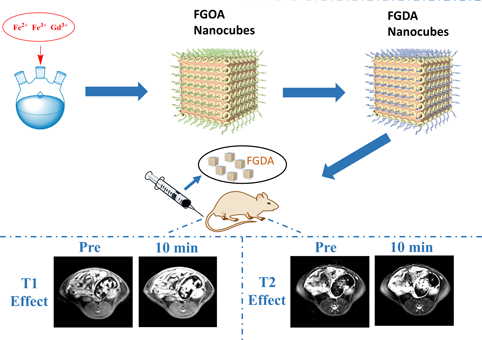
- multimodal magnetic resonance imaging (MRI) technique has been extensively studied over the past few years since it offers complementary information that can increase diagnostic accuracy. Simple methods to synthesize contrast agents are necessary for the development of multimodal MRI. Herein, uniformly
- into multimodal contrast agents in order to synergistically maximize their advantages while compensating for their drawbacks [20][21]. In addition, this strategy also allows for complementary diagnostic information, which can improve the sensitivity and reliability in detecting lesions. Given that



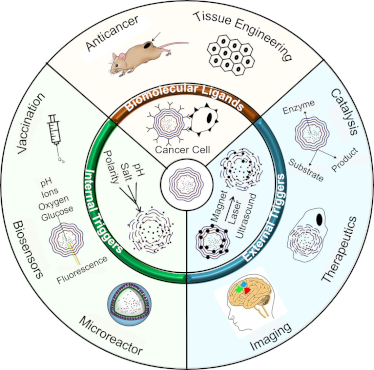
Multilayer capsules made of weak polyelectrolytes: a review on the preparation, functionalization and applications in drug delivery
Beilstein J. Nanotechnol. 2020, 11, 508–532, doi:10.3762/bjnano.11.41



Rational design of block copolymer self-assemblies in photodynamic therapy
Beilstein J. Nanotechnol. 2020, 11, 180–212, doi:10.3762/bjnano.11.15
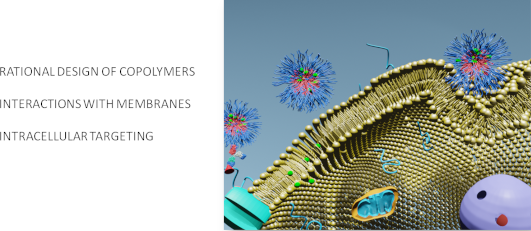
- is an example of “all in one“ nanomedicine used for chemotherapy combining loading with doxorubicin, PDT and PTT. This is possible thanks to the activation of the photosensitizer and multimodal imaging using the fluorescence of the photosensitizer (near-infrared fluorescence imaging, NIRFI) and the
- design point to the development of versatile and “all in one” nanocarriers embedding different functions in order to both visualize the tumor and kill it. For this purpose, PDT has been associated with multimodal imaging and other treatments such as chemotherapy or photothermal therapy (PTT). Doxorubicin






A review of demodulation techniques for multifrequency atomic force microscopy
Beilstein J. Nanotechnol. 2020, 11, 76–91, doi:10.3762/bjnano.11.8

- components. Small interaction forces associated with higher-harmonic AFM have been imaged in free air [18] as well as liquid [19]. This has lead to relatively large biological objects being imaged including viruses [20] and cells [21]. Multimodal AFM, where two or more resonance frequencies are driven, has


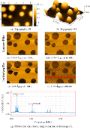
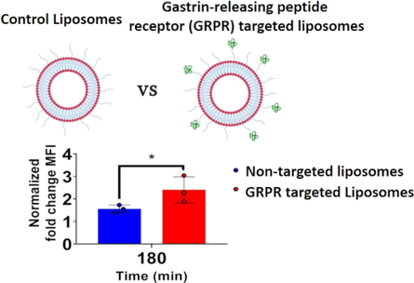
Bombesin receptor-targeted liposomes for enhanced delivery to lung cancer cells
Beilstein J. Nanotechnol. 2019, 10, 2553–2562, doi:10.3762/bjnano.10.246
- function of both incubation time and temperature. For example, the control-lipo vesicles increased to 125 nm diameter after 24 or 72 h incubation at 37 °C. We noted a transition from a unimodal size distribution of liposomes in PBS buffer to a multimodal size distribution after extended incubation with 10

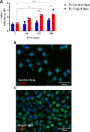
Small protein sequences can induce cellular uptake of complex nanohybrids
Beilstein J. Nanotechnol. 2019, 10, 2477–2482, doi:10.3762/bjnano.10.238
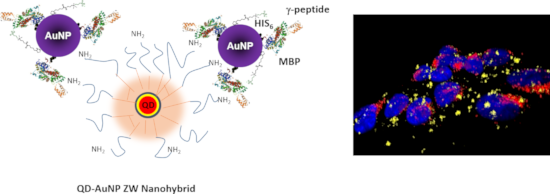
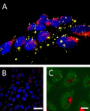
- nanostructures made of more than one component nanomaterial, combined with biomolecules is a highly sought goal in biomedical science, and can find applications in multimodal imaging and therapeutics [1][2]. Although interest in developing such hybrid nanostructures by, for example, combining plasmonic and
- macrophages to these hybrid materials combined with an improvement in their in vivo tumour accumulation [6]. Weil and co-workers described the use of multimodal platforms, made of diamond dots combined with gold nanoparticles, as imaging probes of live cell cultures [7]. We have recently characterized a

Microfluidics as tool to prepare size-tunable PLGA nanoparticles with high curcumin encapsulation for efficient mucus penetration
Beilstein J. Nanotechnol. 2019, 10, 2280–2293, doi:10.3762/bjnano.10.220
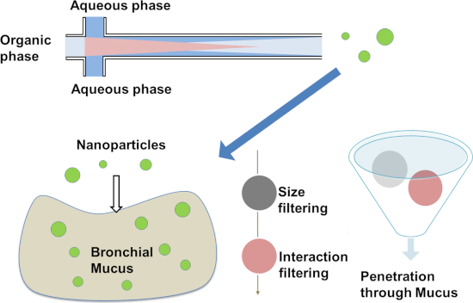
- 0.05 (0.27 ms) in contrast to τmix = 2.19 ms at a FRR of 0.6. Additionally, a focus channel of 50 µm was tested, but this, unfortunately, resulted in a multimodal size distribution of NPs, which is most likely due to the non-stable flow pattern (turbulent flow instead of laminar flow). Effect of


Nitrogen-vacancy centers in diamond for nanoscale magnetic resonance imaging applications
Beilstein J. Nanotechnol. 2019, 10, 2128–2151, doi:10.3762/bjnano.10.207
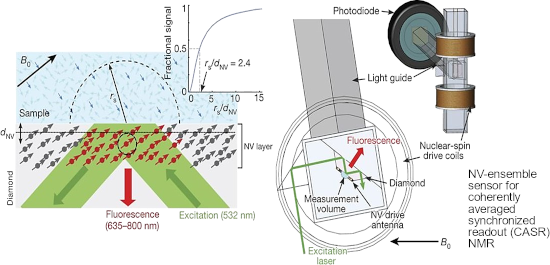
- the singlet state. Magnetic nanoparticles (MNPs) can act as contrast agents [16] to improve the imaging of tumors in specific cancer MRI. Multimodal imaging has been recently made possible by functionalizing the particle surface with biocompatible chemicals, where surface coverings (such as the


Microbubbles decorated with dendronized magnetic nanoparticles for biomedical imaging: effective stabilization via fluorous interactions
Beilstein J. Nanotechnol. 2019, 10, 2103–2115, doi:10.3762/bjnano.10.205
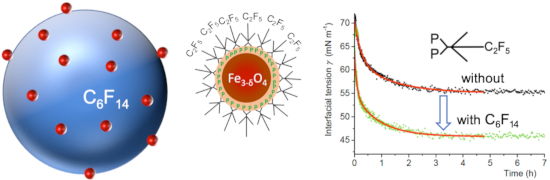
- osmotic agent [14][15] and as a co-surfactant to phospholipids [16] and block co-polymers [17]. Nanoparticles can be attached to the bubble shells to extend their diagnostic and therapeutic potential by combining multimodal imaging, drug or gene delivery, and/or enhancement and control of the acoustic


Engineered superparamagnetic iron oxide nanoparticles (SPIONs) for dual-modality imaging of intracranial glioblastoma via EGFRvIII targeting
Beilstein J. Nanotechnol. 2019, 10, 1860–1872, doi:10.3762/bjnano.10.181
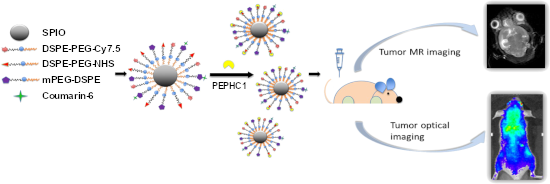
- bimodal imaging capability, this novel and versatile multimodal nanoprobe could bring a new perspective for elucidating intracranial glioblastoma preoperative diagnosis and the accuracy of tumor resection. Keywords: epidermal growth factor receptor variant III (EGFRvIII); glioblastoma; magnetic resonance
- for sensitive characterization and detection of glioblastoma. Compared with single mode imaging, multimodal imaging can facilitate early cancer detection, providing a more comprehensive and multidimensional description of tumor biological behavior [27][28][29]. Optical imaging enables the
- multimodal imaging nanoprobe, which has both high sensitivity and high spatial resolution for early and precise detection and localization of glioblastoma, is constructed in this work. The multimodal imaging of EGFRvIII overexpression in glioblastoma was performed using Cy7.5-labeled SPIONs with EGFRvIII




Polydopamine-coated Au nanorods for targeted fluorescent cell imaging and photothermal therapy
Beilstein J. Nanotechnol. 2019, 10, 794–803, doi:10.3762/bjnano.10.79
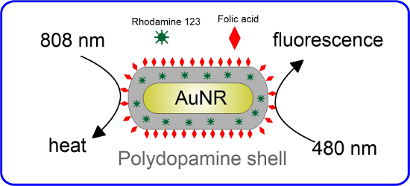
- theranostics in the future. Keywords: Au nanorods; cancer theranostics; fluorescent bioimaging; folate; polydopamine; targeted phototherapy; Introduction Multifunctional imaging and combined multimodal therapy strategies are very promising in cancer theranostics [1][2]. Possible way for such purpose is to
- efficient multimodal cancer treatments both in vitro and in vivo. An ideal nanorod coating for efficient nanocomposite formation should meet several important criteria. First, the resulting nanoparticles should be nontoxic and colloidally stable in blood serum. Second, the shell should have high loading


Surface plasmon resonance enhancement of photoluminescence intensity and bioimaging application of gold nanorod@CdSe/ZnS quantum dots
Beilstein J. Nanotechnol. 2019, 10, 22–31, doi:10.3762/bjnano.10.3
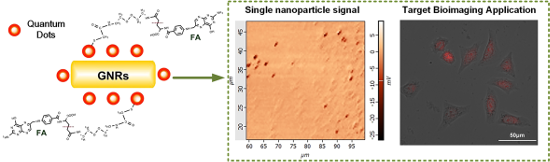
- biological application and therapy of human diseases [26][27]. In this work, we demonstrated a novel GNR@CdSe/ZnS multimodal nanostructure in aqueous phase. We chose CdSe/ZnS QDs as a PL contributor due to its high degree of brightness, excellent photostability, and good spectral overlap with GNRs. We then


Size-selected Fe3O4–Au hybrid nanoparticles for improved magnetism-based theranostics
Beilstein J. Nanotechnol. 2018, 9, 2684–2699, doi:10.3762/bjnano.9.251
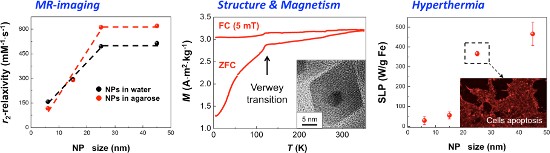
- be adjusted by heterogeneous nucleation of NPs on noble metal seeds [21][22]. Additionally, such bifunctional Fe3O4–Au NPs are potentially applicable for targeted drug delivery, enhanced hyperthermia, multimodal imaging and theranostics [8][23][24][25][26][27]. In this work, we present the first size


High-throughput micro-nanostructuring by microdroplet inkjet printing
Beilstein J. Nanotechnol. 2018, 9, 2372–2380, doi:10.3762/bjnano.9.222
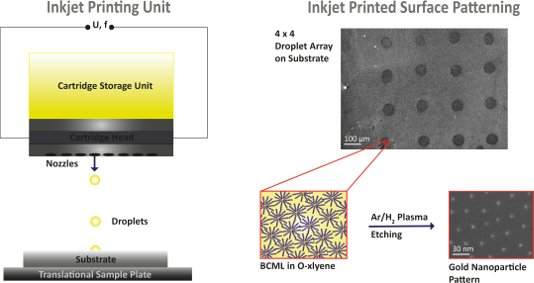
- : biofunctional surfaces; inkjet printing; microstructures; nanolithography; nanoparticles; Introduction Many applications require well-organized micro- and nanoscale patterning of metallic nanoparticles. Examples include high-performance optics [1], multimodal waveguides [2], biosensors [3] and biomaterials [4


Nanoconjugates of a calixresorcinarene derivative with methoxy poly(ethylene glycol) fragments for drug encapsulation
Beilstein J. Nanotechnol. 2018, 9, 2057–2070, doi:10.3762/bjnano.9.195
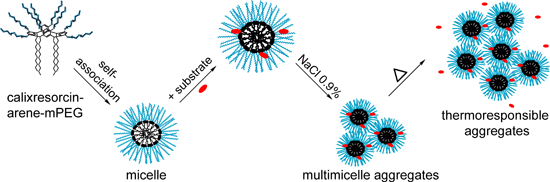
- micelles exhibited a slower release rate. In the first 10 h, the released amount of 3 + RhB micelles was around 40%, then the release slowed down and about 30% of the substrate was released over a period of the following 80 h. The slower release of RhB-loaded micelles is attributed to the multimodal


Multimodal noncontact atomic force microscopy and Kelvin probe force microscopy investigations of organolead tribromide perovskite single crystals
Beilstein J. Nanotechnol. 2018, 9, 1695–1704, doi:10.3762/bjnano.9.161
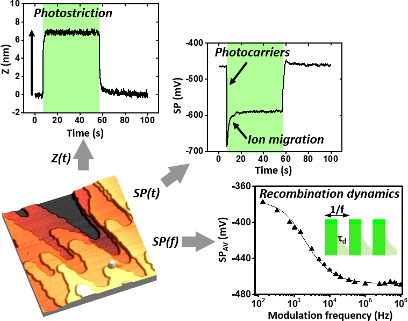
- photocarrier lifetime is quantified by performing KPFM measurements under frequency-modulated illumination. Our multimodal approach provides a unique way to investigate the interplay between the charges and ionic species, the photocarrier-lattice coupling and the photocarrier dynamics in hybrid perovskites
- modulation of the illumination source. Thus, it has been possible to analyze both the photostriction and carrier lifetime as a function of the optical power. Our multimodal approach opens up new possibilities to investigate a wide range of photo-physical process and dynamical phenomena in organic–inorganic


Sulfur-, nitrogen- and platinum-doped titania thin films with high catalytic efficiency under visible-light illumination
Beilstein J. Nanotechnol. 2018, 9, 1629–1640, doi:10.3762/bjnano.9.155
- distribution (≈10 nm), whereas S3 has a multimodal pore size distribution. The distributions of pores in other samples synthesized with HCl (Urea_15, Thiourea_15) and H2SO4 (S3_N0.5, S3_N0.5+1% Pt) are similar to the distributions shown in Figure 3. Band gap measurements The diffuse reflectance, R, of the


Field-controlled ultrafast magnetization dynamics in two-dimensional nanoscale ferromagnetic antidot arrays
Beilstein J. Nanotechnol. 2018, 9, 1123–1134, doi:10.3762/bjnano.9.104
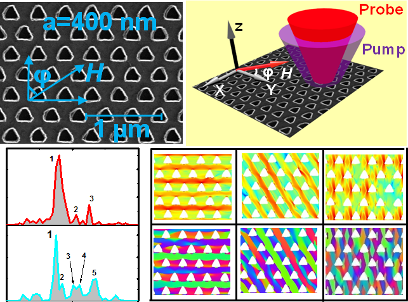
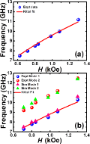
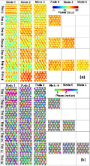
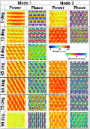
- observe a distinct variation in the magnetization dynamics. For all φ and a-values, multimodal SW spectra are observed corresponding to the damped nonuniform oscillations [36]. The experimental data of bias-field-angle dependence of SW spectra for S1 has been taken at H = 1.0 kOe, whereas for S2 the data



Optical techniques for cervical neoplasia detection
Beilstein J. Nanotechnol. 2017, 8, 1844–1862, doi:10.3762/bjnano.8.186




Synthesis and functionalization of NaGdF4:Yb,Er@NaGdF4 core–shell nanoparticles for possible application as multimodal contrast agents
Beilstein J. Nanotechnol. 2017, 8, 1815–1824, doi:10.3762/bjnano.8.183
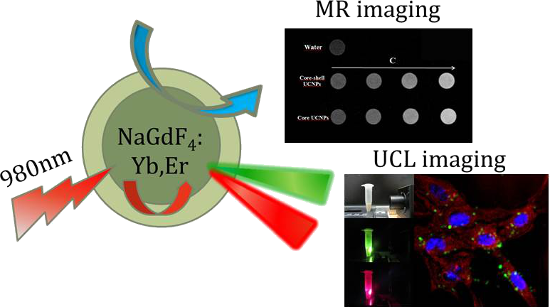
- Institute of Chemistry, Center for Physical Sciences and Technology, Sauletekio Ave. 3, Vilnius, LT-10222, Lithuania 10.3762/bjnano.8.183 Abstract Upconverting nanoparticles (UCNPs) are promising, new imaging probes capable of serving as multimodal contrast agents. In this study, monodisperse and
- contrast probe for in vivo bioimaging. Keywords: cancer theranostics; core–shell structure; luminescence; multimodal; nanoparticles; upconverting nanoparticles; upconversion; Introduction Lanthanide-doped multimodal upconverting nanoparticles (UCNPs), which can convert near-infrared (NIR) radiation into
- amphiphilic polymer coating [18] have been developed in order to transfer nanoparticles with hydrophobic surfaces into aqueous media. Furthermore, the multimodal UCNP surface modification field still lacks reference materials and established protocols for functionalization and targeting. Some studies showed


Methionine-mediated synthesis of magnetic nanoparticles and functionalization with gold quantum dots for theranostic applications
Beilstein J. Nanotechnol. 2017, 8, 1734–1741, doi:10.3762/bjnano.8.174
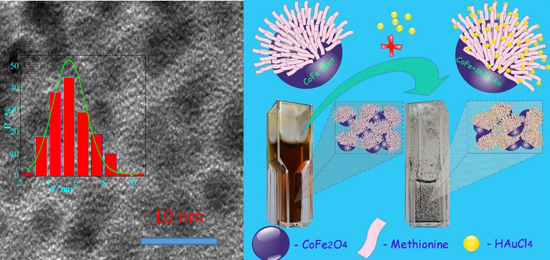
- nanomedicine, biocompatible iron oxide-based NPs have attracted particular interest due to their size-dependent magnetic, optical and chemical properties that allow for the design of NPs for multimodal imaging and photothermal therapy of cancer cells [1]. Dual-imaging probes, capable to perform simultaneously


Calcium fluoride based multifunctional nanoparticles for multimodal imaging
Beilstein J. Nanotechnol. 2017, 8, 1484–1493, doi:10.3762/bjnano.8.148
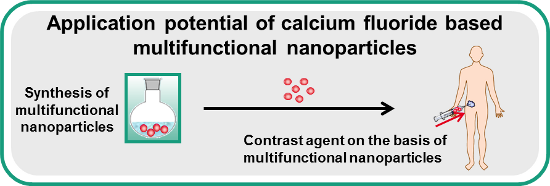
- nanoparticles; magnetic resonance imaging (MRI); multifunctional nanoparticles; multimodal imaging; photoluminescence; Introduction In recent years, medical imaging has become an important approach in the fields of diagnostics, therapy and regenerative medicine. Besides the classical technology of X-ray
- imaging modality has its advantages and disadvantages. The integration of multiple functions into one NP system yields synergies and allows for a precise and fast diagnosis of diseases. Recently, various multimodal imaging probes on the basis of different functional NPs were fabricated for more accurate
- fluorolytic sol–gel process [33]. The stability and biocompatibility of CaF2 makes it an attractive material for biomedical applications [28][29]. In addition, due to the high capacity to accept lanthanide ions, CaF2 is suitable for the preparation of CAs for multimodal imaging [24]. In this study, we report


Carbon nanomaterials sensitize prostate cancer cells to docetaxel and mitomycin C via induction of apoptosis and inhibition of proliferation
Beilstein J. Nanotechnol. 2017, 8, 1307–1317, doi:10.3762/bjnano.8.132
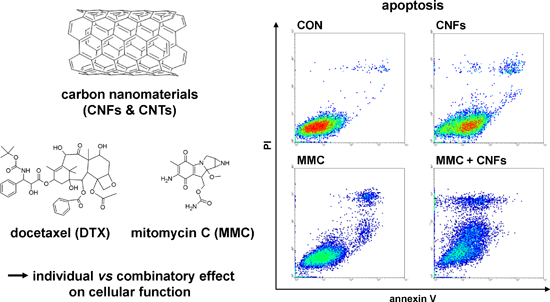
- in combination with DTX and MMC evoked additive to partly synergistic anti-tumor effects. CNFs and CNTs possess the ability to sensitize cancer cells to a wide range of structurally diverse chemotherapeutics and thus represent an interesting option for the development of multimodal cancer therapies
- with our previous findings, this study shows that CNFs and CNTs can enhance the cytotoxic effects of a wide range of structurally diverse chemotherapeutics. Thus, the development of multimodal therapies based on carbon nanomaterials seems very promising, as carbon nanomaterials possess great potential


Multimodal cantilevers with novel piezoelectric layer topology for sensitivity enhancement
Beilstein J. Nanotechnol. 2017, 8, 358–371, doi:10.3762/bjnano.8.38
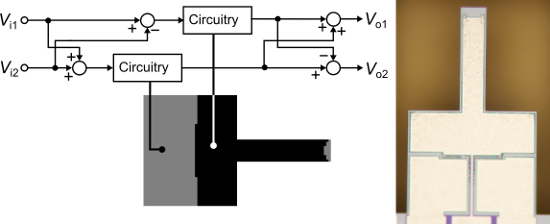
- multifrequency AFM and has the potential to provide higher resolution imaging on higher order modes. Keywords: atomic force microscopy; multifrequency AFM; multimodal AFM; piezoelectric cantilever, self-sensing; Introduction The invention of the atomic force microscope (AFM) [1] provided for the observation of


Nanoanalytics for materials science
Beilstein J. Nanotechnol. 2016, 7, 1674–1675, doi:10.3762/bjnano.7.159

- high-sensitivity chemical information at the nanoscale are of utmost importance for future developments [1]. One of the possible approaches is based on bimodal or even multimodal nanoanalysis, which was increasingly developed during the last decade. Other important aspects that have to be considered
- and reliable understanding and accurate physical models. Furthermore, a reliable and easy way to extract a maximum of information out of the multimodal datasets, efficient data visualization strategies, and methods for analysis, mining and modeling are of utmost importance. This Thematic Series on



