


Search results
Search for "post-processing" in Full Text gives 56 result(s) in Beilstein Journal of Nanotechnology.
Open-loop amplitude-modulation Kelvin probe force microscopy operated in single-pass PeakForce tapping mode
Beilstein J. Nanotechnol. 2021, 12, 1115–1126, doi:10.3762/bjnano.12.83
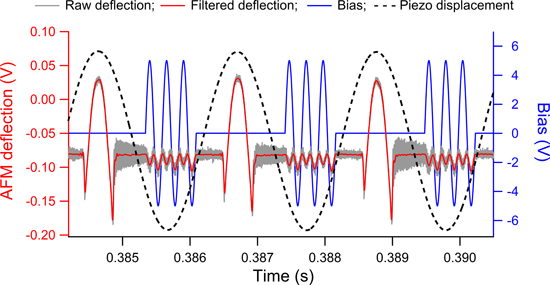
- -KPFM [27][28]. The benefit of a CL KPFM method is that the CPD is readily obtained in the form of a final product that is assembled in a map over the scanned area. However, the detailed response of the electrostatic tip–sample interaction is not available in CL KPFM, so post-processing and modeling of





The role of convolutional neural networks in scanning probe microscopy: a review
Beilstein J. Nanotechnol. 2021, 12, 878–901, doi:10.3762/bjnano.12.66
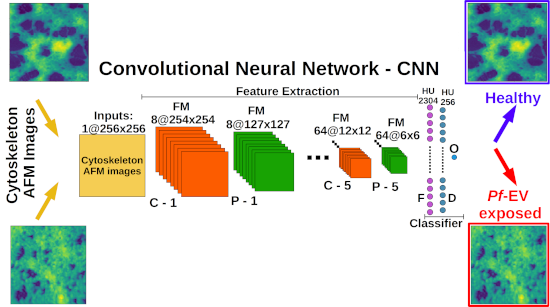
- for automating the post-processing of the HS-AFM images. AFM images need to be post-processed to remove unwanted image features such as background slopes and image artifacts. The large number of images can be best handled by automation of this process. Conventional methods for automated image







Scanning transmission imaging in the helium ion microscope using a microchannel plate with a delay line detector
Beilstein J. Nanotechnol. 2020, 11, 1854–1864, doi:10.3762/bjnano.11.167
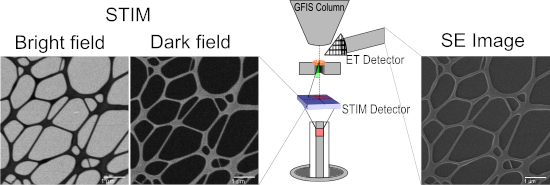
- the sample with the position (scattering angle) and time of the transmission events. Various imaging modes, such as bright field and dark field or the direct image of the transmitted signal, can be created by post-processing the collected STIM data. Furthermore, the detector has high spatial and
- transmission imaging mode and further tuning of acceptance angles can be done in post-processing. Additionally, ToF-resolved recording of the transmission events can be integrated into this system. Here, we use this system to study the mass-thickness-dependent contrast in amorphous materials and demonstrate
- information. Therefore, the user can generate BF, ADF, or other DF images through post-processing the transmission data at will at any time. The experiments were conducted using the npSCOPE prototype, which is a high-vacuum instrument based on the gas field ion source (GFIS) column technology. This instrument


Detecting stable adsorbates of (1S)-camphor on Cu(111) with Bayesian optimization
Beilstein J. Nanotechnol. 2020, 11, 1577–1589, doi:10.3762/bjnano.11.140
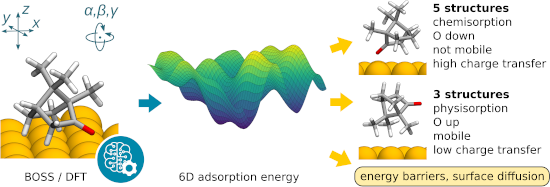
- structures. BOSS provides post-processing tools to locate the lowest energy barriers between two minima in the PES with the nudged elastic band (NEB) method. Since we compute the PES with the building block approximation and not in the space of all atomic degrees of freedom, these energy barriers are only


Extracting viscoelastic material parameters using an atomic force microscope and static force spectroscopy
Beilstein J. Nanotechnol. 2020, 11, 922–937, doi:10.3762/bjnano.11.77
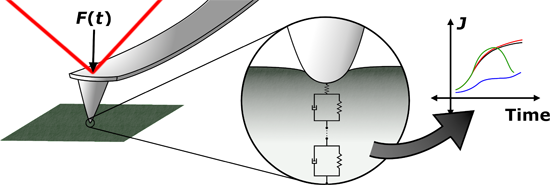
- data streams for post-processing, including Z-Raw (expected Z-position based on the voltage applied to the Z-piezo), Z-Sensor (measured Z-position), deflection, amplitude, and phase. The Z-Sensor measurement corresponds to the position of the piezo that controls the position of the base of the


Growth of lithium hydride thin films from solutions: Towards solution atomic layer deposition of lithiated films
Beilstein J. Nanotechnol. 2019, 10, 1443–1451, doi:10.3762/bjnano.10.142
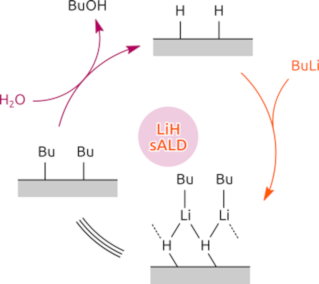
- crystalline when deposited at room temperature, making further post-processing unnecessary. The air sensitivity of this solid requires in situ materials characterization using methods such as spectroscopic ellipsometry, XPS and Auger spectroscopy. Further development of the process, especially more


Review of time-resolved non-contact electrostatic force microscopy techniques with applications to ionic transport measurements
Beilstein J. Nanotechnol. 2019, 10, 617–633, doi:10.3762/bjnano.10.62
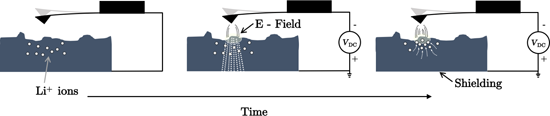
- for time resolution much faster than the cantilever oscillation period, but requires a priori knowledge of the time-evolution of the signal and the functional form of the tip–sample capacitance. FF-trEFM, which uses post-processing to extract the instantaneous frequency of the cantilever, allows for





Advanced scanning probe lithography using anatase-to-rutile transition to create localized TiO2 nanorods
Beilstein J. Nanotechnol. 2019, 10, 412–418, doi:10.3762/bjnano.10.40
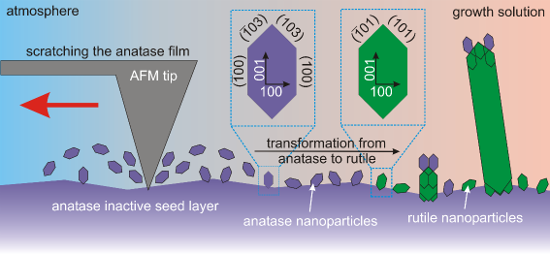
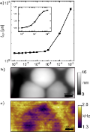
- direct writing method, and scratching influences only a very thin region at the sample surface and the majority of the seed film remains unchanged. As a consequence, this method can be applied to ultrathin films of a few nanometers thickness only. Third, this technique does not need any pre- and post
- -processing such as resist handling. This gives the opportunity to apply this method on very uneven or pre-structured substrates. Furthermore, it does not matter if the seed is a film or bulk material and by which technique the inactive seed is deposited. Conclusion We demonstrated the position-controlled


Charged particle single nanometre manufacturing
Beilstein J. Nanotechnol. 2018, 9, 2855–2882, doi:10.3762/bjnano.9.266
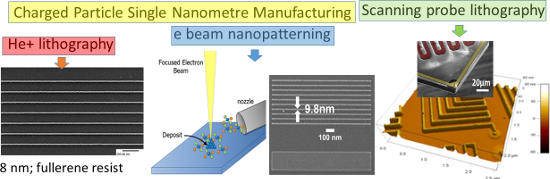
- reported in detail in the literature, with the demonstration of both post processing and in situ techniques for achieving, inter alia, high-purity metallic deposits [71][72][73] and will not be discussed further here. Another important issue is throughput, which although lower than that of optical or EUV


Electrospun one-dimensional nanostructures: a new horizon for gas sensing materials
Beilstein J. Nanotechnol. 2018, 9, 2128–2170, doi:10.3762/bjnano.9.202
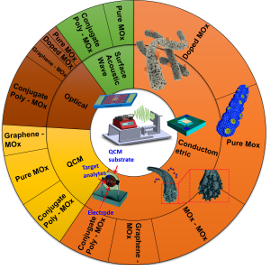
- applications. This approach shows good potential for applications involving the self-assembly of anisotropic NPs to generate new functional devices [63]. There are two major methods for producing electrospun NP fibers [40]: (i) “indirect synthesis”, that requires some post-processing methods after






Spin-coated planar Sb2S3 hybrid solar cells approaching 5% efficiency
Beilstein J. Nanotechnol. 2018, 9, 2114–2124, doi:10.3762/bjnano.9.200
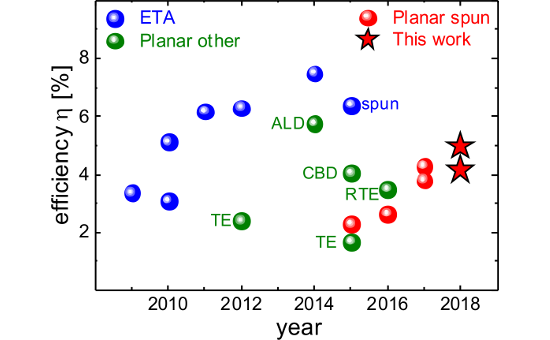
- design of new precursors that could further enhance the efficiency of solution processed Sb2S3. For any new process pinhole-free layers with tuneable thickness and control over stoichiometry are desirable and correlation to device performance is insightful. Post-processing, such as sulfurization from gas


The electrical conductivity of CNT/graphene composites: a new method for accelerating transmission function calculations
Beilstein J. Nanotechnol. 2018, 9, 1254–1262, doi:10.3762/bjnano.9.117
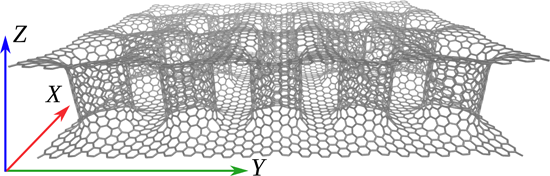
- -processing stage. The limitations of our method are that a too coarse k-point sampling or a too coarse energy sampling will lead unrealistic results, in spite of any post-processing scheme. Using developed method we obtained new knowledge about the electrical conductive properties of a new composite material
- particular, by the example of the graphene fragment, it was shown that the calculation speed of transmission function using our approach is three times higher than the calculation speed in the method proposed in [9]. Also, we introduce an additional part in the runtime of calculations, not only at the post


A systematic study of the controlled generation of crystalline iron oxide nanoparticles on graphene using a chemical etching process
Beilstein J. Nanotechnol. 2017, 8, 2017–2025, doi:10.3762/bjnano.8.202
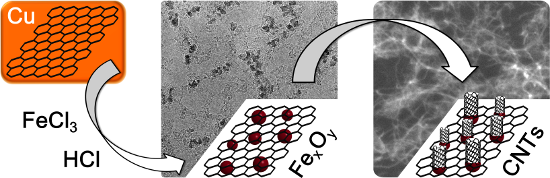
- without the need for any additional post-processing. During the course of our transfer studies, we found that the etching process that is usually employed can lead to contamination of the graphene layer with the Faradaic etchant component FeCl3, resulting in the deposition of iron oxide FexOy
- residue can be ruled out, thus replacing the need for further post-processing of graphene. Results and Discussion Graphene was synthesized by CVD on a copper substrate using methane. For the copper substrate etching process used to isolate the graphene, we used an encircling polymer frame made of standard
- itself was not coated by a polymer layer, additional post-processing steps to remove residue after the transfer are not required. A detailed schematic of the modified etching process, which is the basis of the following systematic study, is shown in Supporting Information File 1, Figure S2. Employing the


Uptake and intracellular accumulation of diamond nanoparticles – a metabolic and cytotoxic study
Beilstein J. Nanotechnol. 2017, 8, 1649–1657, doi:10.3762/bjnano.8.165
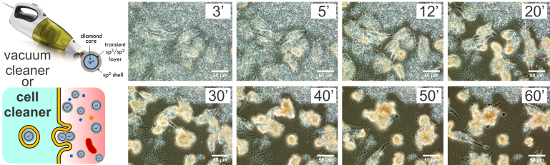
- approximately 20 nm, or by further post-processing down to 1 nm, as has recently been reported [22]. NDs typically contain impurities, such as other carbon allotropes, various oxides or carbides (i.e., carriers of various functional surface groups) [3][23]. Therefore, for use in biological or biomedical studies


Metal oxide nanostructures: preparation, characterization and functional applications as chemical sensors
Beilstein J. Nanotechnol. 2017, 8, 1205–1217, doi:10.3762/bjnano.8.122
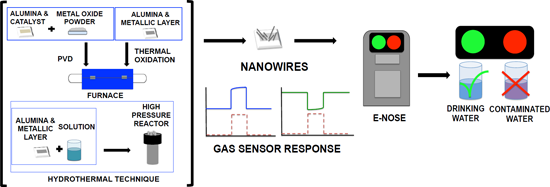
- method that may not guarantee the stability and reproducibility required for potential commercial devices. The deposition has been directly performed on the functional substrates, avoiding post-processing transfer techniques that may decrease the adhesion and therefore the mechanical and electrical


Scanning probe microscopy studies on the adsorption of selected molecular dyes on titania
Beilstein J. Nanotechnol. 2016, 7, 1642–1653, doi:10.3762/bjnano.7.156
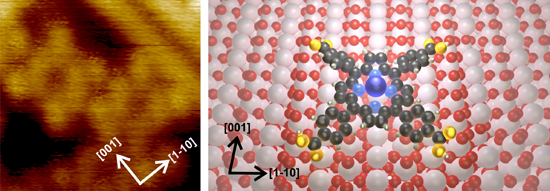
- assemblies induced by incoming light. Here, the charge transfer through the semiconductor–molecule junction is crucially important. Additionally, it is important to determine the feasibility of post-processing the molecular layer, as well as its stability against high temperatures and the ambient environment


The hydraulic mechanism in the hind wing veins of Cybister japonicus Sharp (order: Coleoptera)
Beilstein J. Nanotechnol. 2016, 7, 904–913, doi:10.3762/bjnano.7.82
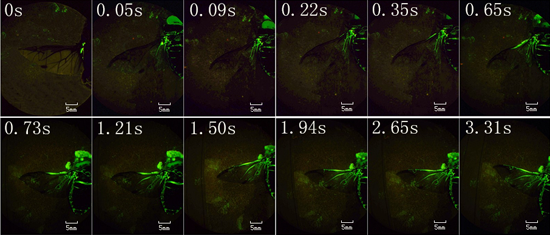
- from the entrance. There is a slight fluctuation until the veins are fully expanded, and the entrance flow tends to 0; Figure 8B and Figure 8C show the pressure change with time at q1 and q2, similar to Figure 5 (the actual test curve). Via FLUENT post-processing, we set up monitoring points at q1 and



Efficient electron-induced removal of oxalate ions and formation of copper nanoparticles from copper(II) oxalate precursor layers
Beilstein J. Nanotechnol. 2016, 7, 852–861, doi:10.3762/bjnano.7.77
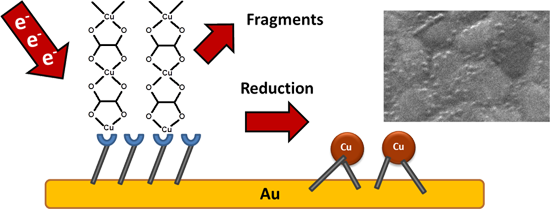
- to penetrate deeper in the material than 50 eV electrons [42]. HIM also reveals that degradation of copper(II) oxalate yields a nanoparticulate material with relatively narrow size distribution as compared to similar techniques. The advantage of the process is that no thermal post processing is


Invariance of molecular charge transport upon changes of extended molecule size and several related issues
Beilstein J. Nanotechnol. 2016, 7, 418–431, doi:10.3762/bjnano.7.37
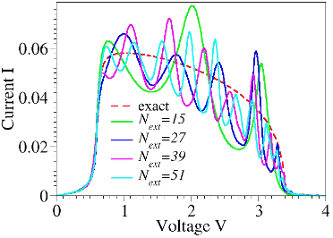
- easy, because the post-processing step of adding ε-independent self energies (Equation 1) does not require any DFT-code modification. A further advantage is that the diagonalization can be done before performing transport calculations. This fact drastically reduces the computational effort, as


Linear and nonlinear optical properties of hybrid metallic–dielectric plasmonic nanoantennas
Beilstein J. Nanotechnol. 2016, 7, 111–120, doi:10.3762/bjnano.7.13
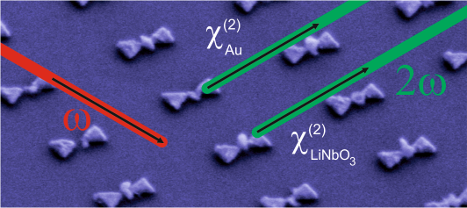
- not be possible to align them in a post-processing step. It is not yet clear if it is possible to accomplish the alignment while depositing the particles. Nevertheless, our results suggest that the χ(2) nonlinearity of lithium niobate might be too small in order to observe a strong SH emission from


Atomic scale interface design and characterisation
Beilstein J. Nanotechnol. 2015, 6, 1708–1711, doi:10.3762/bjnano.6.174

- Bittencourt, Chris Ewels and Arkady Krasheninnikov, with the reviews covering key areas of advanced synthesis methods, controlled functionalization and post-processing routes, developments in nanoscale characterization tools as well as theoretical modeling of structure and dynamics, and electronic properties
Simple and efficient way of speeding up transmission calculations with k-point sampling
Beilstein J. Nanotechnol. 2015, 6, 1603–1608, doi:10.3762/bjnano.6.164
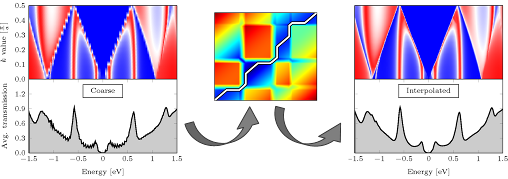
- or phonon transport in the Landauer transport picture. We suggest a simple and computationally “cheap” post-processing scheme to interpolate transmission functions over k-points to get smooth well-converged average transmission functions. This is relevant for data obtained using typical “expensive
- wavefunctions, which tend to be elaborate. In this paper we present a simple and efficient post-processing interpolation scheme which can significantly speed up the convergence with respect to k-points. We illustrate the method by applying it to various graphene-based nano-structures which are prone to bad
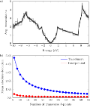
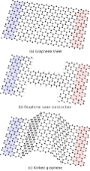
- original data. In the three cases we obtain speed-ups of approximately 5, 6, and 8, for the pristine graphene sheet, the graphene nano-constriction, and the kinked graphene sheet, respectively. Thus, we have demonstrated that by applying a simple post-processing interpolation scheme we can speed up


Transformations of PTCDA structures on rutile TiO2 induced by thermal annealing and intermolecular forces
Beilstein J. Nanotechnol. 2015, 6, 1498–1507, doi:10.3762/bjnano.6.155
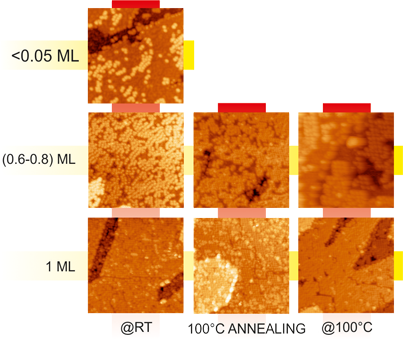
- for proposing a means of control over that spontaneous process or for suggesting further post-processing methodology in the search of desired material. Among many different substrates that are used as templates for molecular growth, metal oxides are currently regarded as very promising supports. For


Tunable magnetism on the lateral mesoscale by post-processing of Co/Pt heterostructures
Beilstein J. Nanotechnol. 2015, 6, 1082–1090, doi:10.3762/bjnano.6.109
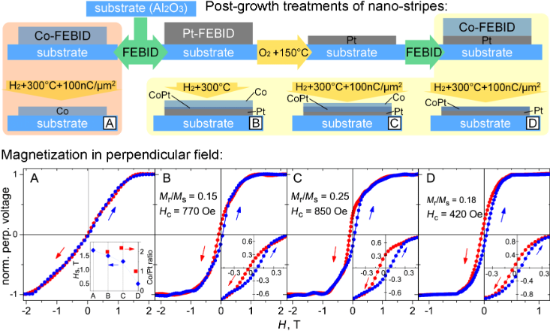
- heterostructures on the lateral mesoscale. By means of in situ post-processing of Pt- and Co-based nano-stripes prepared by focused electron beam induced deposition (FEBID) we are able to locally tune their coercive field and remanent magnetization. Whereas single Co-FEBID nano-stripes show no hysteresis, we find
- . Still, owing to the sensitivity of the matrix to post-processing treatments, the compositional, structural, and, hence, electrical [27][28] and magnetic [29][30] properties of metal-based layers fabricated by FEBID can be substantially modified either in situ or ex situ. Exemplary purification
- the formation of the CoPt L10 phase with strongly increased magnetic anisotropy compared to pure Co. Here, we employ direct writing of Pt and Co layers by FEBID and demonstrate by means of in situ post-processing how to locally tune the coercive field and the remanent magnetization of layered Co/Pt


Microwave assisted synthesis and characterisation of a zinc oxide/tobacco mosaic virus hybrid material. An active hybrid semiconductor in a field-effect transistor device
Beilstein J. Nanotechnol. 2015, 6, 785–791, doi:10.3762/bjnano.6.81
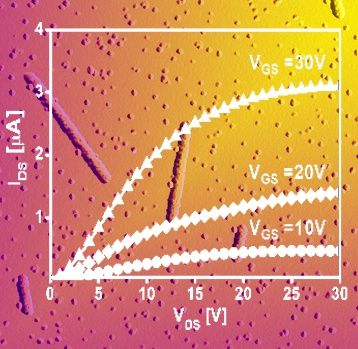
- nature of the deposited ZnO film along the c-axis. FET devices fabricated using the zinc oxide mineralized virus template material demonstrates an operational transistor performance which was achieved without any high-temperature post-processing steps. Moreover, a further improvement in FET performance
- semiconducting material based on a microwave assisted ZnO mineralization of the TMV [17]. The resultant TMV/ZnO nanoscale hybrid material exhibits functional transistor behaviour with a reasonable performance without any post-processing at higher temperature. Experimental section All reagents were purchased from
- exhibit functional transistor properties without any post-processing treatment. As a reference we had measured the electrical characteristics of microwave processed bare nanoscale ZnO without TMV, obtained again from the molecular zinc oximato precursor complex under similar conditions. These results





