Search results
Search for "switching" in Full Text gives 260 result(s) in Beilstein Journal of Nanotechnology. Showing first 200.
Beyond biomimicry – next generation applications of bioinspired adhesives from microfluidics to composites
Beilstein J. Nanotechnol. 2024, 15, 965–976, doi:10.3762/bjnano.15.79
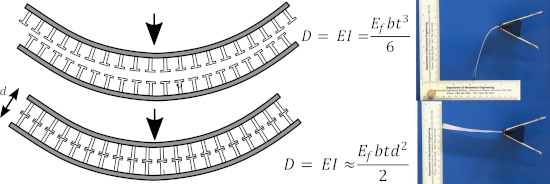
- 2010 with the advent of the modern soft robotics field. Traditional stiffness-switching mechanisms include phase change materials [39], jamming actuators [40], electrorheological fluids [41], and antagonistic actuators [42], but vacuum jamming has been the most popular in academic literature [43


Superconducting spin valve effect in Co/Pb/Co heterostructures with insulating interlayers
Beilstein J. Nanotechnol. 2024, 15, 457–464, doi:10.3762/bjnano.15.41
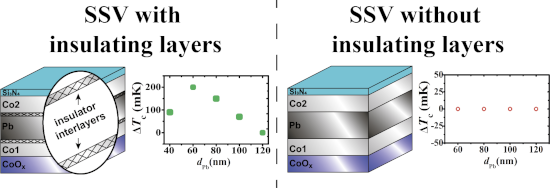
- insulating interlayers. The main specific feature of these structures is the intentional oxidation of both superconductor/ferromagnet (S/F) interfaces. We study the variation of the critical temperature of our systems due to switching between parallel and antiparallel configurations of the magnetizations of
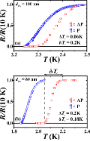
- full spin valve effect. A shift of the superconducting transition temperature Tc by switching the mutual orientation of the magnetizations of the two ferromagnetic Co layers from antiparallel to parallel amounted to ΔTc = 0.2 K at the optimal thickness of the superconducting Pb layer. Our findings
- . Several experimental works confirmed the predicted influence of the mutual orientation of the magnetization vectors of the F layers on Tc in the F1/S/F2 type of structures [4][5][6][23][24][25]. However, a full switching between the normal and the superconducting state was not achieved because in these



![[Graphic 6]](/bjnano/content/inline/2190-4286-15-41-i6.svg?max-width=637&scale=1.18182)
Modulated critical currents of spin-transfer torque-induced resistance changes in NiCu/Cu multilayered nanowires
Beilstein J. Nanotechnol. 2024, 15, 360–366, doi:10.3762/bjnano.15.32
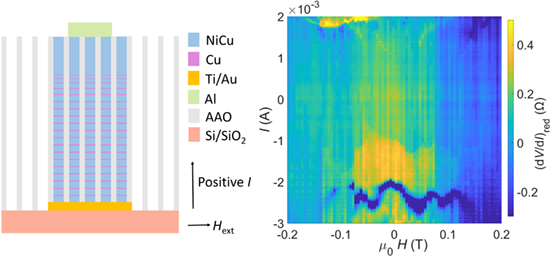
- controlled sequence along the long axis of the nanowires. Both magnetic switching and excitation phenomena driven by spin-polarized currents were clearly demonstrated in our NiCu/Cu multilayered nanowires. Moreover, the critical currents for switching and excitation were observed to be modulated in an
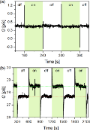
- and the abrupt change of (dV/dI)red indicate that the free layers remain single domains (so-called “macrospin approximation”) and are flipped uniformly during the switching by the current-induced STT [7][27]. By analyzing the dependence of the (dV/dI)red change on the direction of current sweep, the
- of STT-assisted resistance switching in multilayered nanowires, raw data before the background subtraction, a schematic diagram of the four-point measurements at low temperature, 2D color maps of (dV/dI)red over a larger current range and under upsweep of the magnetic field, the potential influence


Graphene removal by water-assisted focused electron-beam-induced etching – unveiling the dose and dwell time impact on the etch profile and topographical changes in SiO2 substrates
Beilstein J. Nanotechnol. 2024, 15, 190–198, doi:10.3762/bjnano.15.18
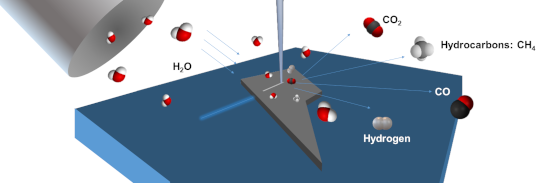
- deposit, and at a current of 245 pA (higher electron flux) the indent shape. This controllable switching between the hydrocarbons pinning and etching caused by increasing electron flux was explained using the continuum model. The model is based on the dissociation process of adsorbed molecules by
- deposited should be etched away with water. The parameters used in our experiments are even further from the switching point. Therefore, the protrusions in the middle of the line profiles, visible in Figure 3 for doses D3–D5, are unlikely due to the deposition of hydrocarbons. The nanostructurizing process


TEM sample preparation of lithographically patterned permalloy nanostructures on silicon nitride membranes
Beilstein J. Nanotechnol. 2024, 15, 1–12, doi:10.3762/bjnano.15.1
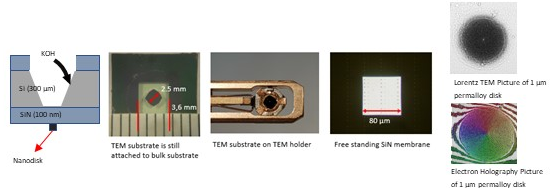
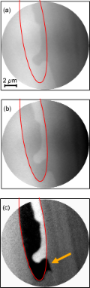
- magnetization of the sample was first saturated out-of-plane by switching on the objective lens of the TEM and then allowing it to relax. To switch the magnetic configuration, a small objective-lens field was applied, which resulted in in-plane (Hip) and out-of-plane (Hoop) fields applied to the sample (Figure


Dual-heterodyne Kelvin probe force microscopy
Beilstein J. Nanotechnol. 2023, 14, 1068–1084, doi:10.3762/bjnano.14.88
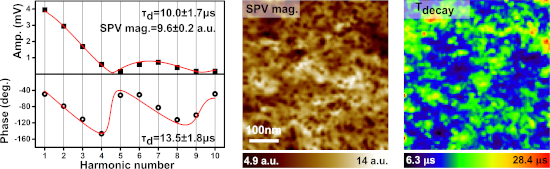
- consists in “switching” (during a selected time window of the spectroscopic sequence) the sideband generation to the standard AM-heterodyne KPFM scheme (i.e., ωac = ω1 – (ω0 + Δω0) instead of ωac = ω1 – (ω0 + Δω0) + nωmod when working with the 4n-th sidebands). In this configuration, the demodulated
- the surface) by switching the configuration of the setup to perform pump-probe KPFM measurements. We will merely remind that now, the SPV time-measurement proceeds by recording the KPFM compensation potential as a function of a time-delay between the optical pump and the probe. The probe is obtained




Carboxylic acids and light interact to affect nanoceria stability and dissolution in acidic aqueous environments
Beilstein J. Nanotechnol. 2023, 14, 762–780, doi:10.3762/bjnano.14.63
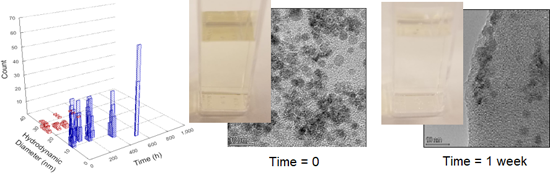
- biological systems. Ceria has been considered a possible UV filter in sunscreens [2][42]. Oxygen defects in the crystal lattice of ceria can presumably be altered by UV irradiation causing a redox switching of the cerium atoms between Ce3+ and Ce4+. This could explain the observance of a blue shift of the
Current-induced mechanical torque in chiral molecular rotors
Beilstein J. Nanotechnol. 2023, 14, 711–721, doi:10.3762/bjnano.14.57
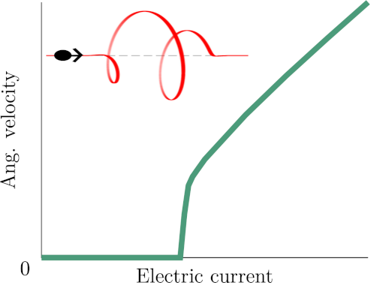
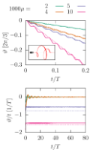
- velocity must be corrected due to energy transfer, which yields a term of the second order in μ. Switching in the SA The condition for switching is that the energy gain of the path, Equation 6, must overcome the potential barrier. In the limit of large velocities, the kinetic term (due to angular momentum
- boosts) dominates over the potential gain via angular boosts, and the condition becomes . For a single particle, the switching condition reads . Under a current, the velocity boosts can be added sequentially, and the condition becomes where we introduced the incident momentum current . The nominator of
- large impact velocities the switching due to angular momentum boosts overtakes and the threshold Im drops inversely proportional to . This regime is the familiar garden hose effect. To take a closer look at the mechanism of angular momentum boosts, we have plotted the threshold momentum current Ip for




![[Graphic 29]](/bjnano/content/inline/2190-4286-14-57-i54.svg?max-width=637&scale=1.18182)


Molecular nanoarchitectonics: unification of nanotechnology and molecular/materials science
Beilstein J. Nanotechnol. 2023, 14, 434–453, doi:10.3762/bjnano.14.35
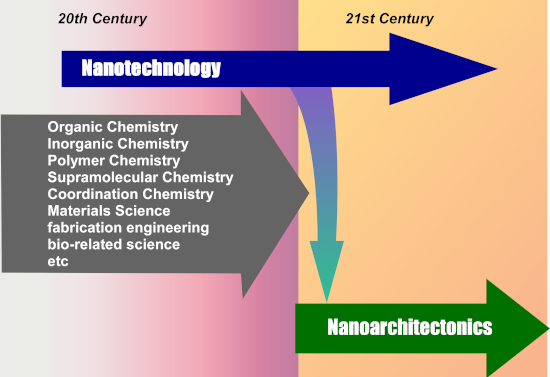
- ][35], efficient molecular identification [36][37][38], and device switching mechanisms based on nanoscale phenomena [39][40][41] have been revealed. The contribution of nanotechnology is not limited to the elucidation of such physical properties of materials. Nanotechnology has also contributed





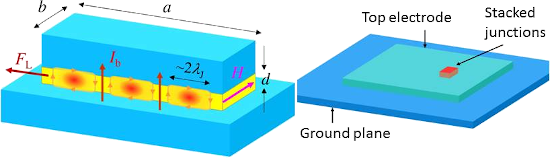
A distributed active patch antenna model of a Josephson oscillator
Beilstein J. Nanotechnol. 2023, 14, 151–164, doi:10.3762/bjnano.14.16
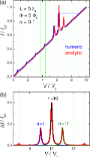
- causes a premature switching out of the resonance before reaching the resonant frequency. It is somewhat miraculous that the agreement with the perturbative solution (red line in Figure 2a) is so good. Apparently, it works remarkably well far beyond the range of its formal applicability, |gn| ≪ 1. A


Frontiers of nanoelectronics: intrinsic Josephson effect and prospects of superconducting spintronics
Beilstein J. Nanotechnol. 2023, 14, 79–82, doi:10.3762/bjnano.14.9

- following novelties are presented in the contributed articles of this volume: - Novel promising spintronic elements and materials with controllable switching between stable parallel, orthogonal, and antiparallel arrangements of magnetic moments of the epitaxial PdFe films and PdFe/Ag/PdFe heterostructures
- frequency range, switching from the superconducting to the resistive state due to absorption of a 10 GHz external signal [19]. Achieving a large coherent gain of the receiver, up to a factor of three, of the emitted power from two simultaneously biased arrays of Josephson junctions compared to that of the
Observation of collective excitation of surface plasmon resonances in large Josephson junction arrays
Beilstein J. Nanotechnol. 2022, 13, 1578–1588, doi:10.3762/bjnano.13.132
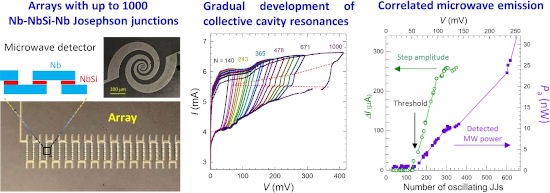
- between JJs and the long-range phase-locking of the arrays. Our main result is the observation of a gradual development of collective resonances upon sequential switching of JJs into the oscillating resistive state. We show that a threshold number of JJs, Nth ≈ 100, is required for excitation of the
- steps with small separation in voltage. The linear array, Figure 1d, exhibits several evenly spaced steps. The I–V characteristics are hysteretic, with the retrapping current being significantly smaller than the switching current. The hysteresis leads to a metastability, which allows for the observation
- frequency up to f ≈ 1 THz. Olive and pink curves in Figure 6d show the I–Vs with attenuated and full MW power, respectively. The detector operates as a Josephson switching current detector [15]. The incoming MW signal suppresses the switching current, Is, of the detector JJ. At high MW power, it is fully




Induced electric conductivity in organic polymers
Beilstein J. Nanotechnol. 2022, 13, 1551–1557, doi:10.3762/bjnano.13.128
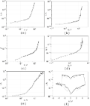
- the effect of electronic switching to a highly conductive state can be observed (Figure 3f). Such a bi-stable switching is often used in practice to create non-volatile memory elements. Presented in Figure 3 I–V characteristics do not contradict the presented above model considerations. In this regard
- electric circuit; (f) demonstrates the switching phenomenon of the thin PDP film from insulating to metal state. Thickness of Pb electrodes is about 200 nm. Sandwich structure Pb–PDP–Pb–0.4-GLASS, thickness of polymer is about 350 nm, both Pb electrodes are ≈200 nm thick. (a) Resistance vs temperature R(T



A super-oscillatory step-zoom metalens for visible light
Beilstein J. Nanotechnol. 2022, 13, 1220–1227, doi:10.3762/bjnano.13.101
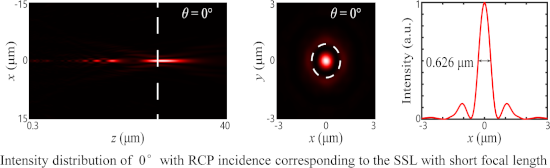
- target rapidly within the field of view after switching to the super-oscillatory lens. Although dynamically tunable super-oscillatory lenses could be realized by utilizing phase-change materials [23], the problem of inflexibility still exists. Here, we propose a super-oscillatory step-zoom lens (SSL
- analyzed by electromagnetic simulations to verify the super-resolution focusing capability corresponding to two different focal lengths. Additionally, with our method, the focal plane can be changed by switching the polarization of the incident light instead of moving the lens. We believe this unique


A superconducting adiabatic neuron in a quantum regime
Beilstein J. Nanotechnol. 2022, 13, 653–665, doi:10.3762/bjnano.13.57
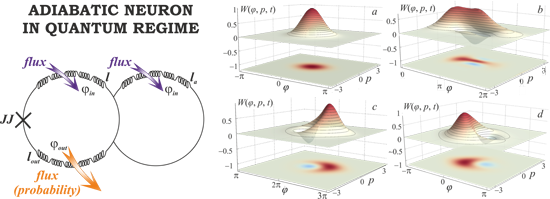
- this work is to determine the parameters of the adiabatic switching of the quantum neuron for l < l* (single-well mode) and l > l* (double-well mode). Within the adiabatic approach it is possible to numerically solve the time-independent Schrödinger equation (see Appendix 1) for each moment of time to
- higher the value of the inductance l, the slower the process of adiabatic switching of the quantum neuron. For superconducting circuit parameters Ic = 0.35 μA, C =10 fF, ωp ≈ 1011 s−1, the adiabatic switching time is approx. 5 ns for l = 0.1 (see Figure 3, the regime without oscillations) and approx. 100
- cycle of switching of the input flux () due to dissipative processes. In Figure 10b,c there is an obvious suppression of the oscillations on the activation function, which were observed due to the anti-crossing of the energy levels in the double-well potential. In addition, coherent oscillations on the


Sodium doping in brookite TiO2 enhances its photocatalytic activity
Beilstein J. Nanotechnol. 2022, 13, 599–609, doi:10.3762/bjnano.13.52
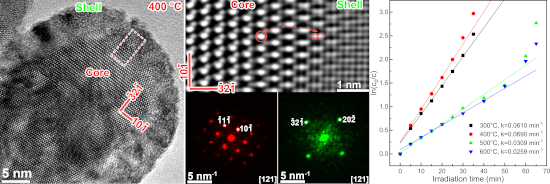
- magnetically stirred for 30 min in the dark to equilibrate the adsorption and desorption of MB on the surface of the crystallites. After switching on the UV light, samples were periodically collected and centrifuged. The concentration of the MB solution was analyzed based on the characteristic absorption peak


Approaching microwave photon sensitivity with Al Josephson junctions
Beilstein J. Nanotechnol. 2022, 13, 582–589, doi:10.3762/bjnano.13.50
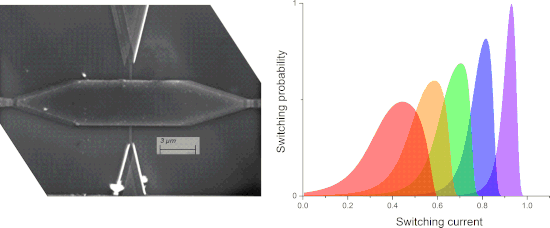
- photon counter in the microwave frequency range. We have measured the switching from the superconducting to the resistive state through the absorption of 10 GHz photons. The dependence of the switching probability on the signal power suggests that the switching is initiated by the simultaneous absorption
- power, whose presence can be observed only in the switching distributions and in the shorter lifetime of the superconducting state. The used experimental setup is the same as in [7], except for the measured sample. In [7], the critical current of the sample was very low, and the phase diffusion regime
- the experiment is done with a more general theory, which considers the absorption probabilities of different numbers of photons. The time traces of setting a current and an external microwave signal to measure the switching probability as a function of power are shown in Figure 1c. First, the current


Detection and imaging of Hg(II) in vivo using glutathione-functionalized gold nanoparticles
Beilstein J. Nanotechnol. 2022, 13, 549–559, doi:10.3762/bjnano.13.46
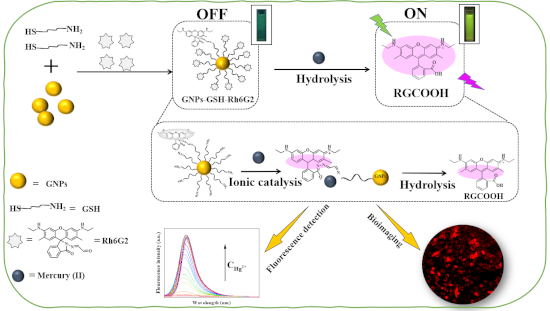
- molecular release system. After adding Cu(II), we observed a switching of the GNP–ʟ-Cys–Rh6G2 fluorescence from “OFF” to “ON” with high stability. Furthermore, it is worth noting that glutathione (GSH) contains a thiol and an amino group. It can not only conjugate to the nanoparticle surfaces through the


Tunable superconducting neurons for networks based on radial basis functions
Beilstein J. Nanotechnol. 2022, 13, 444–454, doi:10.3762/bjnano.13.37
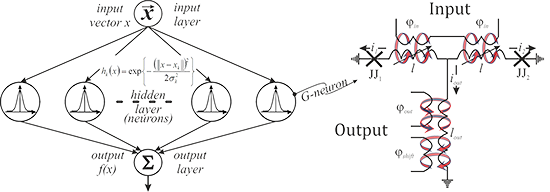
- For neural networks based on the considered G-neurons, tunable elements with linear current-to-flux transformation (linear inductors) and memory properties are extremely important [50][51]. Tunability of the inductance l in Figure 1b allows for an in situ switching between operating modes directly on
- valve), providing a propagation of Cooper pairs to the outlying layers of the hybrid structure. The switching between the open and closed states of the valve leads to a noticeable change in the spatial distribution of Cooper pairs. The implementation of a thin superconducting spacer (s) between the FM
- times during switching between states with parallel and antiparallel magnetization orientations. We also made some estimates for the quantitative value of the kinetic inductance of the structure shown in Figure 7 based on niobium technology. The inductance of the strip with width W = 100 nm, length X


A chemiresistive sensor array based on polyaniline nanocomposites and machine learning classification
Beilstein J. Nanotechnol. 2022, 13, 411–423, doi:10.3762/bjnano.13.34
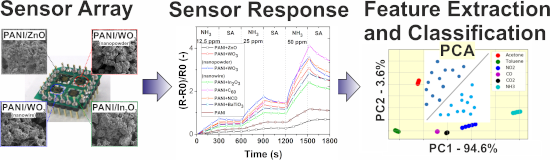
- multiplexor for switching four sensor elements, and a Labview-based data acquisition system. The sensing layers were tested towards carbon dioxide (250 ppm CO2), carbon monoxide (25 ppm), ammonia (25 ppm), nitrogen dioxide (25 ppm), acetone (6%), toluene (500 ppm) and humid air (RH) in synthetic air (SA) at




Electrostatic pull-in application in flexible devices: A review
Beilstein J. Nanotechnol. 2022, 13, 390–403, doi:10.3762/bjnano.13.32
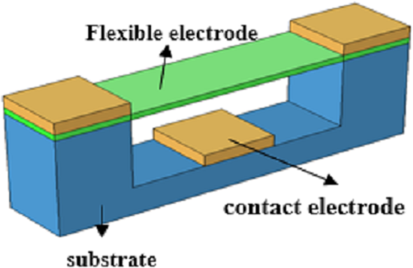
- cross section of 14 µm × 400 nm. The gap is 300 nm, and the pull-in voltage is 70 V. As the width is reduced to 200 nm and the gap is reduced to 100 nm, the pull-in voltage is reduced to 5 V. The switching current ratio is greater than 106, and the number of life cycles is greater than 105. Jasulaneca
- with a switching ratio of about 103. Qian et al. [37] produced a U-shaped NEM switch with two Si nanowires, which support a square capacitive plate to form a U-shaped removable electrode, as shown in Figure 5b. The length of the silicon nanowires is 5 µm, the cross section is 90 × 90 nm square, the
- a lateral spacing of 50 nm. The pull-in voltage was −1.8 V and the switching ratio was 105. However, the introduction of heavy doping will increase the risk of failure. In situ technique: In 2010, Andzane et al. [14] used the in situ technique to characterize Mo6S3I6 NW electrodes. The Mo6S3I6 beam


Controllable two- and three-state magnetization switching in single-layer epitaxial Pd1−xFex films and an epitaxial Pd0.92Fe0.08/Ag/Pd0.96Fe0.04 heterostructure
Beilstein J. Nanotechnol. 2022, 13, 334–343, doi:10.3762/bjnano.13.28
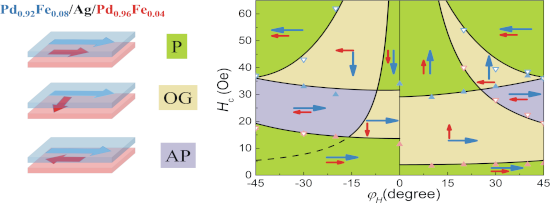
- . Its magnetic configuration diagram has been constructed and the conditions have been determined for a controllable switching between stable parallel, orthogonal, and antiparallel arrangements of magnetic moments of the layers. Keywords: anisotropic magnetoresistance; magnetization reversal; Pd–Fe
- degrees of freedom to control the critical current of MJJs [10] or SSVs [6], or current–phase relations in MJJs [11][12]. In particular, the spin-valve structure embedded into a MJJ can serve as an actuator for switching the MJJ between critical current modes or flipping its current–phase relation, thus
- makes it possible to achieve parallel, orthogonal, and antiparallel configurations of their magnetic moments. Such a heterostructure can serve as a magnetic actuator for switching the MJJ from the singlet conduction mode to the triplet conduction mode and vice versa. The experimental rotation of the


Investigation of a memory effect in a Au/(Ti–Cu)Ox-gradient thin film/TiAlV structure
Beilstein J. Nanotechnol. 2022, 13, 265–273, doi:10.3762/bjnano.13.21
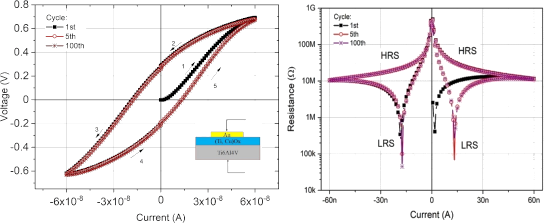
- analysis of resistive switching properties observed in a Au/(Ti–Cu)Ox/TiAlV structure with a gradient distribution of Cu and Ti along the (Ti–Cu)Ox thin film thickness. Thin films were prepared via multisource reactive magnetron co-sputtering. The programmed profile of the pulse width modulation
- resistive switching behavior. Results of optical, X-ray, and ultraviolet photoelectron spectroscopy measurements allowed us to elaborate the scheme of the bandgap alignment of the prepared thin films with respect to the Au and TiAlV electrical contacts. Detailed structure and elemental profile
- investigations allowed us to conclude about the possible mechanism for the observed resistive switching mechanism. Keywords: gradient thin film; magnetron sputtering; memory effect; resistive switching; Introduction In recent years, significant development has been observed in design, simulation, manufacturing



Impact of device design on the electronic and optoelectronic properties of integrated Ru-terpyridine complexes
Beilstein J. Nanotechnol. 2022, 13, 219–229, doi:10.3762/bjnano.13.16
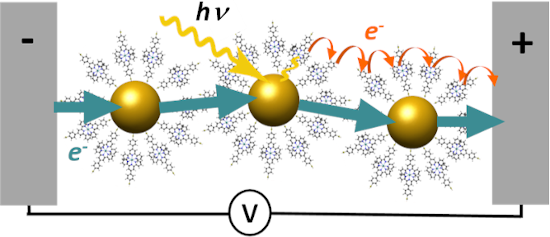
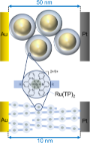
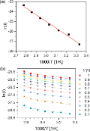
- mechanism, that is, thermally activated hopping conduction in the case of Ru-terpyridine wire devices or sequential tunneling in nanoparticle-based devices. Furthermore, the conductance switching of nanoparticle-based devices upon 530 nm irradiation was attributed to plasmon-induced metal-to-ligand charge
- transfer in the Ru-terpyridine complexes used as switching ligands. Finally, our results reveal a superior device performance of nanoparticle-based devices compared to molecular wire devices based on Ru-terpyridine complexes as functional units. Keywords: conductance switching; gold nanoparticles
- . Molecular engineering is required to design and assemble molecules or supramolecular systems with specific functions and to ensure the device performance. Favorable molecular systems are capable of performing electronic operations such as data storage, rectification, sensing or switching. In this regard


Influence of magnetic domain walls on all-optical magnetic toggle switching in a ferrimagnetic GdFe film
Beilstein J. Nanotechnol. 2022, 13, 74–81, doi:10.3762/bjnano.13.5
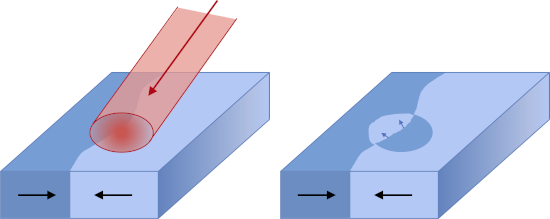
- , Universitätsstraße 1, 86135 Augsburg, Germany Helmholtz-Zentrum Berlin für Materialien und Energie, Albert-Einstein-Straße 15, 12489 Berlin, Germany 10.3762/bjnano.13.5 Abstract We present a microscopic magnetic domain imaging study of single-shot all-optical magnetic toggle switching of a ferrimagnetic Gd26Fe74
- magnetization direction, the so-called toggle switching. Local deviations from this deterministic behavior close to magnetic domain walls are studied in detail. Reasons for nondeterministic toggle switching are related to extrinsic effects, caused by pulse-to-pulse variations of the exciting laser system, and
- to intrinsic effects related to the magnetic domain structure of the sample. The latter are, on the one hand, caused by magnetic domain wall elasticity, which leads to a reduction of the domain-wall length at features with sharp tips. These features appear after the optical switching at positions