


Search results
Search for "water splitting" in Full Text gives 80 result(s) in Beilstein Journal of Nanotechnology.
Flexible freestanding MoS2-based composite paper for energy conversion and storage
Beilstein J. Nanotechnol. 2019, 10, 1488–1496, doi:10.3762/bjnano.10.147
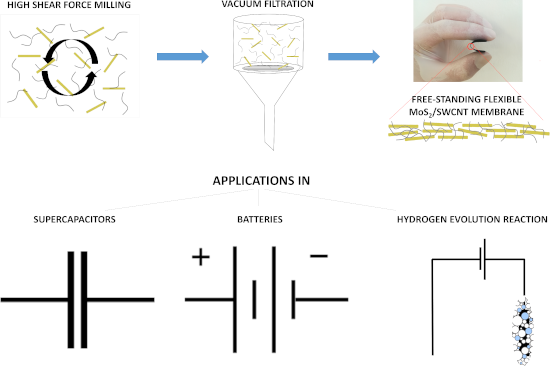
- materials [26]. Another popular related field in the context of energy storage and sustainable energy production is water splitting to produce hydrogen. The best catalysts for the hydrogen evolution reaction (HER) are unequivocally based on platinum and iridium, however the scarcity and the high cost of


BiOCl/TiO2/diatomite composites with enhanced visible-light photocatalytic activity for the degradation of rhodamine B
Beilstein J. Nanotechnol. 2019, 10, 1412–1422, doi:10.3762/bjnano.10.139
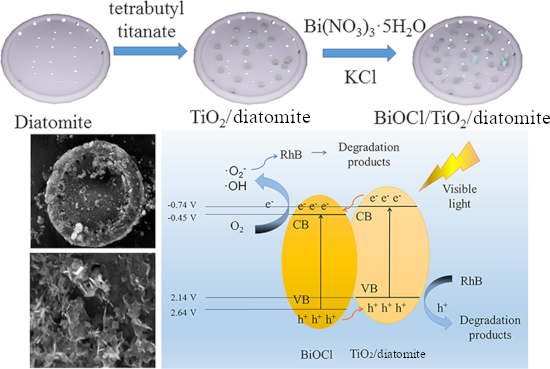
- [10]. As one of the most promising photocatalysts, in terms of its chemical stability, non-toxicity, photo-corrosion resistance in aqueous media and advanced oxidation properties, titanium dioxide (TiO2) has been widely studied [11][12] and employed for water splitting [13], energy storage [14], and


Photoactive nanoarchitectures based on clays incorporating TiO2 and ZnO nanoparticles
Beilstein J. Nanotechnol. 2019, 10, 1140–1156, doi:10.3762/bjnano.10.114
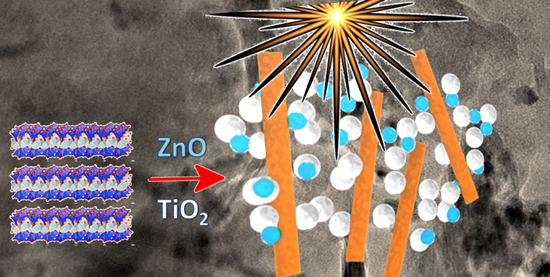
- materials that have been assembled at the nanometer scale with clay silicates and deeply investigated due to their useful properties for various applications, including heterogeneous photocatalysis, antibacterial activity, and water splitting [12][13][14][15][16][17][18][19][20]. Both semiconducting solids
- photodegradation of diverse organic compounds, including the photodecolorization of dyes such as methylene blue (MB), methyl green (MG), acid red G, acid yellow 11, acid orange 11, and Congo red, in water, as well as other photo-applications, for instance, water splitting under UV or visible/solar light



Synthesis of novel C-doped g-C3N4 nanosheets coupled with CdIn2S4 for enhanced photocatalytic hydrogen evolution
Beilstein J. Nanotechnol. 2019, 10, 912–921, doi:10.3762/bjnano.10.92
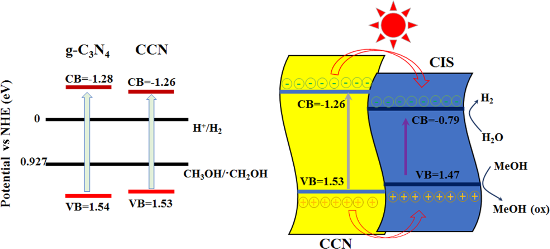
- Jingshuai Chen Chang-Jie Mao Helin Niu Ji-Ming Song School of Chemistry and Chemical Engineering, Anhui University, Hefei 230601, P.R. China 10.3762/bjnano.10.92 Abstract Photocatalytic hydrogen generation from water splitting has become a favorable route for the utilization of solar energy. An


Renewable energy conversion using nano- and microstructured materials
Beilstein J. Nanotechnol. 2019, 10, 771–773, doi:10.3762/bjnano.10.76

- benefits arising from core–shell nanowire arrays for Si heterojunction solar cells. Contacts with a high surface-to-volume ratio can clearly be seen. Particularly in photovoltaics, they may be prone to increased recombination losses. For other applications, such as water splitting, porous materials may
Reduced graphene oxide supported C3N4 nanoflakes and quantum dots as metal-free catalysts for visible light assisted CO2 reduction
Beilstein J. Nanotechnol. 2019, 10, 448–458, doi:10.3762/bjnano.10.44
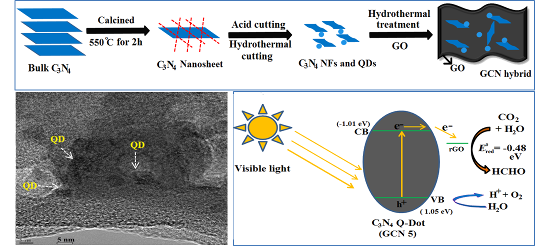
- attention in recent years for CO2 reduction and water splitting applications [12][13][14][15][16][17]. Both g-C3N4 and rGO have a two-dimensional sheet structure with high surface area and possess appropriate band edges for CO2 reduction. Also, g-C3N4 and rGO are inexpensive and easy to synthesize. Despite





Nanoporous water oxidation electrodes with a low loading of laser-deposited Ru/C exhibit enhanced corrosion stability
Beilstein J. Nanotechnol. 2019, 10, 157–167, doi:10.3762/bjnano.10.15
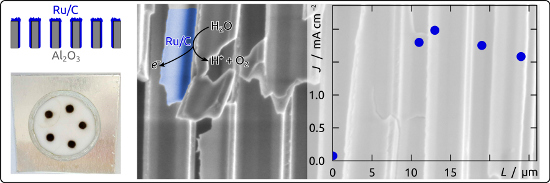
- to planar samples at pH 4. Finally, their electrocatalytic performance depends on the geometric parameters and is optimized with 13 μm pore length, which yields 2.6 mA cm−2, or 49 A g−1, at η = 0.20 V. Keywords: electrochemistry; nanostructures; noble metals; ruthenium catalyst; water splitting
- artificial water splitting, catalysts are required for the rate-limiting half reaction, the dioxygen evolution, which must be driven at low overpotential (for maximizing conversion efficiency) [2]. The most active catalyst materials for this transformation are metallic iridium and ruthenium particles, the




Amorphous NixCoyP-supported TiO2 nanotube arrays as an efficient hydrogen evolution reaction electrocatalyst in acidic solution
Beilstein J. Nanotechnol. 2019, 10, 62–70, doi:10.3762/bjnano.10.6
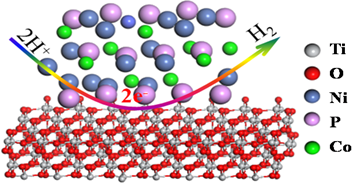
- growing energy demands and associated environmental crisis [1][2][3]. In water splitting, the hydrogen evolution reaction (HER) is a fundamentally important process. This process involves the reduction of protons to form dihydrogen (2H+ + 2e → H2) with a thermodynamic potential of 0 V vs SHE. A major




Nanocellulose: Recent advances and its prospects in environmental remediation
Beilstein J. Nanotechnol. 2018, 9, 2479–2498, doi:10.3762/bjnano.9.232
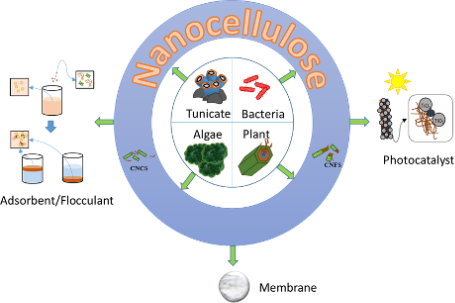
- : algae. Recent research on artificial photosynthesis such as CO2 fixation and water splitting has boosted the appeal of algae [37]. Significant attention has been given to the use of algae to fabricate adsorbents and membranes from its extracted nanocellulose for environmental remediation. The green alga


Thickness-dependent photoelectrochemical properties of a semitransparent Co3O4 photocathode
Beilstein J. Nanotechnol. 2018, 9, 2432–2442, doi:10.3762/bjnano.9.228
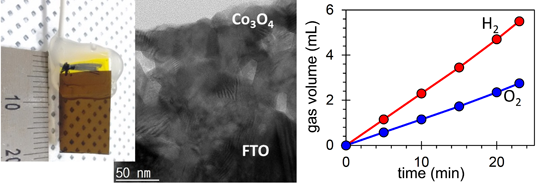
- University, 119 Academy Rd. Yeonsu, Incheon, 22012, Republic of Korea 10.3762/bjnano.9.228 Abstract Co3O4 has been widely studied as a catalyst when coupled with a photoactive material during hydrogen production using water splitting. Here, we demonstrate a photoactive spinel Co3O4 electrode grown by the
- oxidation and reduction processes. To demonstrate the stability, an alkaline cell was composed for the water splitting system by using two Co3O4 photoelectrodes. The oxygen gas generation rate was obtained to be 7.17 mL·h−1 cm−1. Meanwhile, hydrogen gas generation rate was almost twice of 14.35 mL·h−1·cm−1
- -dependent properties; Introduction Hydrogen production using water splitting in photoelectrochemical (PEC) cells may help to overcome challenges in the conversion and storage of solar energy. Most of the metal oxides are earth-abundant, non-toxic, stable and easy to synthesise, and hence attractive



Localized photodeposition of catalysts using nanophotonic resonances in silicon photocathodes
Beilstein J. Nanotechnol. 2018, 9, 2097–2105, doi:10.3762/bjnano.9.198
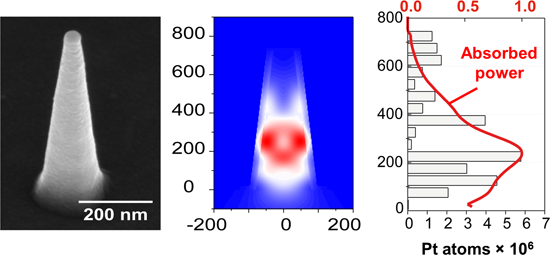
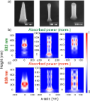
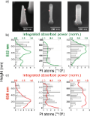
- separation participate in chemical reactions in the electrolyte to make fuels. One example is water splitting for H2 generation [5][6]. Carefully designed photo-electrodes are necessary for low cost and high efficiency, which are both needed to make solar fuels competitive with fossil fuels as an energy


Improving the catalytic activity for hydrogen evolution of monolayered SnSe2(1−x)S2x by mechanical strain
Beilstein J. Nanotechnol. 2018, 9, 1820–1827, doi:10.3762/bjnano.9.173
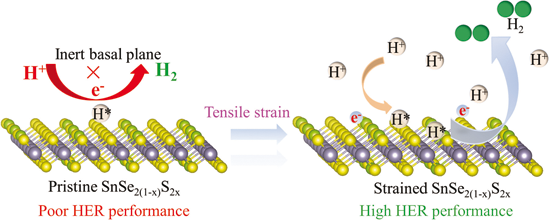
- non-noble metals and earth-abundant elements is a promising pathway for achieving practical electrochemical water splitting. In this work, the electronic properties and catalytic activity of monolayer SnSe2(1−x)S2x (x = 0–1) under compressive and tensile strain were investigated using density
- synthesized by using traditional mechanical exfoliation techniques [24][25] because of the weak van der Waals (vdW) interactions between layers. These mono- and few-layer SnX2 (X = S, Se) compounds are expected to be widely used in the fields of water splitting [26], high-speed photodetection [27


Controllable one-pot synthesis of uniform colloidal TiO2 particles in a mixed solvent solution for photocatalysis
Beilstein J. Nanotechnol. 2018, 9, 1715–1727, doi:10.3762/bjnano.9.163
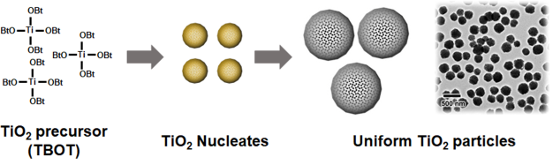
- valance bands, TiO2 can absorb photons in the ultraviolet (UV) portion of the light spectrum. This leads to the sequential generation of electron–hole pairs that can induce a variety of surface redox reactions. Photocatalytic water splitting via a TiO2 electrode under UV irradiation was first reported by




Cr(VI) remediation from aqueous environment through modified-TiO2-mediated photocatalytic reduction
Beilstein J. Nanotechnol. 2018, 9, 1448–1470, doi:10.3762/bjnano.9.137
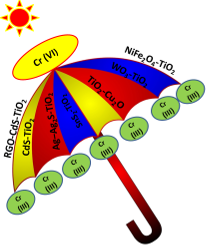
- considerable attention. The applications of photocatalysis, such as water splitting, CO2 reduction, pollutant degradation, organic transformation reactions, N2 fixation, etc., towards solving the energy crisis and environmental issues are briefly discussed in the Introduction of this review. The advantages of
- friendly manner [26][27][28][29]. This process involves: (i) generation of renewable energy such as H2 and O2 by photoelectrochemical water splitting [30][31][32], (ii) photocatalytic CO2 conversion [33][34][35][36][37], (iii) photocatalytic nitrogen (N2) fixation [38], (iv) selective organic
- (electrons (eCB−) and holes (hVB+)) must be effectively separated before they can carry out appropriate redox reactions at the semiconductor surface. Photoelectrochemical water splitting Hydrogen (H2) is considered as a sustainable, clean and renewable energy source to provide a solution to the global energy


Computational exploration of two-dimensional silicon diarsenide and germanium arsenide for photovoltaic applications
Beilstein J. Nanotechnol. 2018, 9, 1247–1253, doi:10.3762/bjnano.9.116
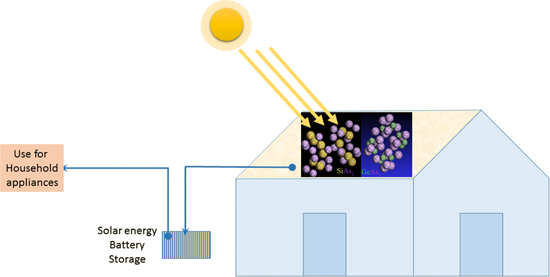
- The potential applications of two-dimensional (2D) materials are one of the key research areas for many researchers since graphene was isolated and characterized in 2004 [1]. The number of applications is vast including photovoltaics, nanoelectronics, Dirac materials and solar fuels through water
- splitting, to name but a few. Although single elemental 2D materials from groups IV and V, such as like phosphorene and stanine, have been studied in detail [2][3], we focus our study on the less well-known combination of IV–V compound semiconductor materials at the two-dimensional scale for their possible


Facile synthesis of a ZnO–BiOI p–n nano-heterojunction with excellent visible-light photocatalytic activity
Beilstein J. Nanotechnol. 2018, 9, 789–800, doi:10.3762/bjnano.9.72
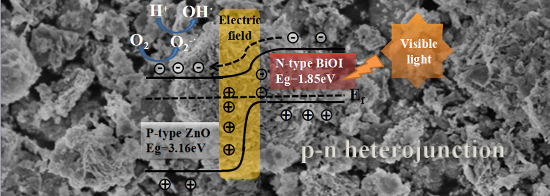
- abundance and sustainability of solar energy. The incredible potential of these materials, which has attracted great enthusiasm from researchers in the past a few decades, renders them strong candidates for a variety of applications that range from photocatalytic water splitting [1][2], organic pollution


Surface-plasmon-enhanced ultraviolet emission of Au-decorated ZnO structures for gas sensing and photocatalytic devices
Beilstein J. Nanotechnol. 2018, 9, 771–779, doi:10.3762/bjnano.9.70
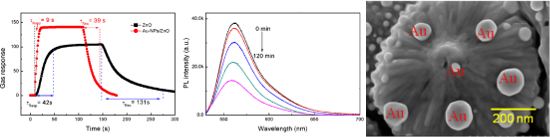
- are expected to serve as a potential photocatalysts with highly effective performance. For instance, plasmonic Au NP/vertically aligned ZnO nanorod structures were proposed for water splitting, solar cells, and environmental remediation [17][18][19]. Ag/ZnO nanohybrid structures were synthesized and

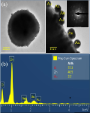


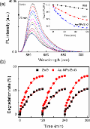

Mechanistic insights into plasmonic photocatalysts in utilizing visible light
Beilstein J. Nanotechnol. 2018, 9, 628–648, doi:10.3762/bjnano.9.59
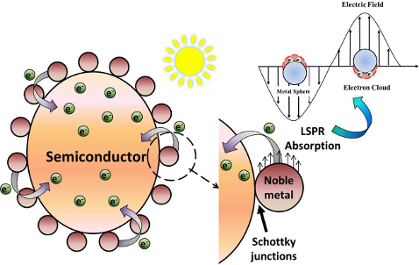
- simulation method, it was claimed that the enhanced photo-electrochemical water splitting performance of Pd@BiVO4 was attributed to the hot-electron injection from Pd NPs upon SPR excitation in the vis–NIR region [112]. Identification of reactive radicals It is quite obvious that photocatalysis is supported


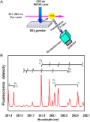



Fabrication and photoactivity of ionic liquid–TiO2 structures for efficient visible-light-induced photocatalytic decomposition of organic pollutants in aqueous phase
Beilstein J. Nanotechnol. 2018, 9, 580–590, doi:10.3762/bjnano.9.54
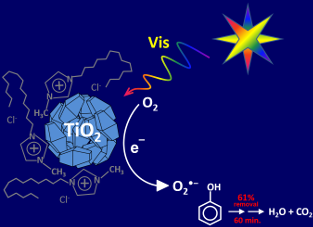
- the IL–TiO2 composites, for example, for photo-electrochemical water splitting [26][27], photo-oxidation of benzyl alcohol [12], phenol [28], degradation of chlorophenol [17][29], reduction of Cr6+ to Cr3+ [30] and the photocatalytic desulfurization of diesel oil [31]. Nevertheless, in most of these




Bombyx mori silk/titania/gold hybrid materials for photocatalytic water splitting: combining renewable raw materials with clean fuels
Beilstein J. Nanotechnol. 2018, 9, 187–204, doi:10.3762/bjnano.9.21
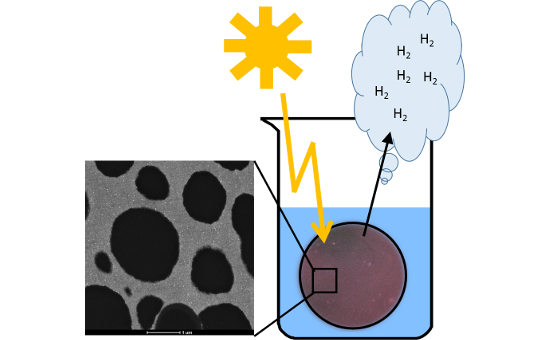
- Giessen, Germany Department of Chemistry and CQ-VR, University of Trás-os-Montes e Alto Douro, Pt-5001-801 Vila Real, Portugal 10.3762/bjnano.9.21 Abstract The synthesis, structure, and photocatalytic water splitting performance of two new titania (TiO2)/gold(Au)/Bombyx mori silk hybrid materials are
- of 5 and 7–18 nm, respectively. Addition of poly(ethylene oxide) to the reaction mixture enables pore size tuning, thus providing access to different materials with different photocatalytic activities. Water splitting experiments using a sunlight simulator and a Xe lamp show that the new hybrid
- materials are effective water splitting catalysts and produce up to 30 mmol of hydrogen per 24 h. Overall the article demonstrates that the combination of a renewable and robust scaffold such as B. mori silk with a photoactive material provides a promising approach to new monolithic photocatalysts that can




Review on optofluidic microreactors for artificial photosynthesis
Beilstein J. Nanotechnol. 2018, 9, 30–41, doi:10.3762/bjnano.9.5
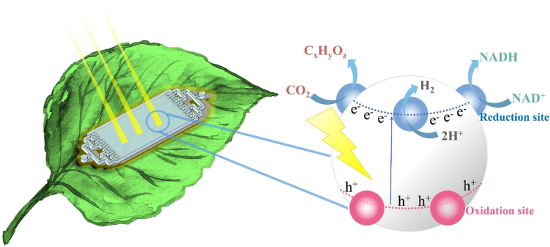
- Cachan, CentraleSupélec, CNRS, Université Paris-Saclay, 61 avenue du Président Wilson, 94235 Cachan, France 10.3762/bjnano.9.5 Abstract Artificial photosynthesis (APS) mimics natural photosynthesis (NPS) to store solar energy in chemical compounds for applications such as water splitting, CO2 fixation
- . Recently, many studies have reported on optofluidic APS systems, but there is still a lack of an in-depth review. This article will start with a brief introduction of the physical mechanisms and will then review recent progresses in water splitting, CO2 fixation and coenzyme regeneration in optofluidic APS
- systems, followed by discussions on pending problems for real applications. Keywords: artificial photosynthesis; carbon dioxide fixation; coenzyme regeneration; microfluidics; optofluidics; water splitting; Review Introduction The emerging energy crisis, the greenhouse effect and food shortage are


CdSe nanorod/TiO2 nanoparticle heterojunctions with enhanced solar- and visible-light photocatalytic activity
Beilstein J. Nanotechnol. 2017, 8, 2741–2752, doi:10.3762/bjnano.8.273
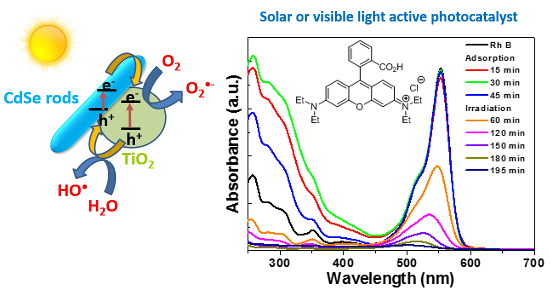
- conversion of solar energy to chemical energy, for example, via water splitting to produce hydrogen, is the topic of numerous current research projects. Titanium dioxide (TiO2) has been widely investigated over the last three decades and has been demonstrated to be of high potential [1][2]. However, TiO2






Enhanced photoelectrochemical water splitting performance using morphology-controlled BiVO4 with W doping
Beilstein J. Nanotechnol. 2017, 8, 2640–2647, doi:10.3762/bjnano.8.264
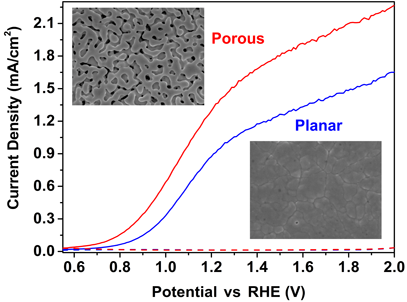
- % increase). Keywords: bismuth vanadate; charge separation; nanostructure; photoelectrochemical water splitting; Introduction Solar hydrogen generation is one of the most promising approaches to create clean energy and to overcome the environmental problems associated with use of conventional fossil fuels
- . Photoelectrochemical (PEC) water splitting generates hydrogen through chemical reactions assisted by photo-generated electrons and holes in semiconductor materials [1][2][3]. An ideal semiconductor for PEC water splitting requires a small bandgap to capture enough solar light, a high conversion efficiency, a good
- durability in aqueous environments, as well as low production cost [4]. Compared with the hydrogen evolution at the semiconductor photocathode, the low efficiency of oxygen evolution at the photoanode poses a great challenge to the water splitting process [5]. As a result, great efforts have been made in


Evaluating the toxicity of TiO2-based nanoparticles to Chinese hamster ovary cells and Escherichia coli: a complementary experimental and computational approach
Beilstein J. Nanotechnol. 2017, 8, 2171–2180, doi:10.3762/bjnano.8.216
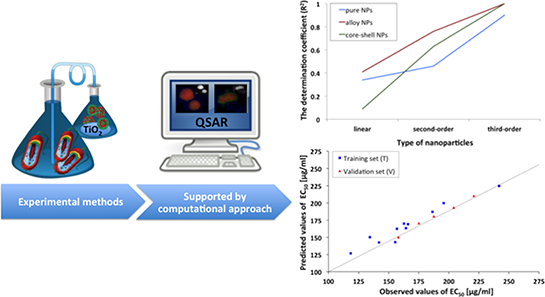
- alters the rate of chemical reactions, when exposed to light (photocatalyst) [1]. TiO2-based NPs have already found wide applications as efficient photocatalysts for sterilization, sanitation, air and water purification systems, hydrogen production by water splitting, and dye-sensitized solar cells [1


Two-dimensional carbon-based nanocomposites for photocatalytic energy generation and environmental remediation applications
Beilstein J. Nanotechnol. 2017, 8, 1571–1600, doi:10.3762/bjnano.8.159
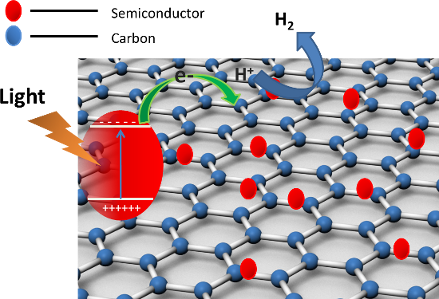
- sustainable source for energy generation and environmental remediation, photocatalytic water splitting and photocatalytic pollutant degradation have recently gained significant importance. Research in this field is aimed at solving the global energy crisis and environmental issues in an ecologically-friendly
- properties, carbon-based nanocomposites have made a substantial contribution towards the generation of clean, renewable and viable forms of energy from light-based water splitting and pollutant removal. This review article provides a comprehensive overview of the recent research progress in the field of
- energy generation and environmental remediation using two-dimensional carbon-based nanocomposites. It begins with a brief introduction to the field, basic principles of photocatalytic water splitting for energy generation and environmental remediation, followed by the properties of carbon-based





