


Search results
Search for "CNTs" in Full Text gives 174 result(s) in Beilstein Journal of Nanotechnology.
Flexible freestanding MoS2-based composite paper for energy conversion and storage
Beilstein J. Nanotechnol. 2019, 10, 1488–1496, doi:10.3762/bjnano.10.147
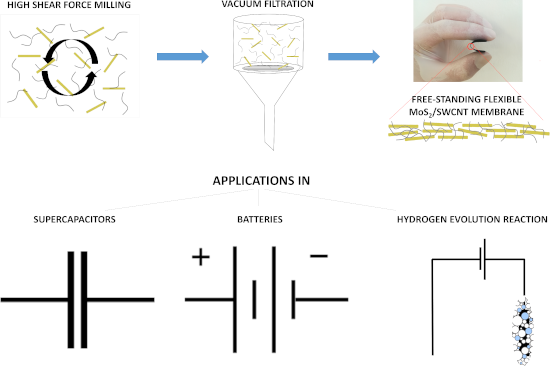
- . Moreover, an appropriate heat management scheme has to be taken into account in real applications as it has been already shown for other nanomaterials [30][31]. Introducing support materials, such as graphene or carbon nanotubes (CNTs) can alleviate these problems and improve the performance of the


Hierarchically structured 3D carbon nanotube electrodes for electrocatalytic applications
Beilstein J. Nanotechnol. 2019, 10, 1475–1487, doi:10.3762/bjnano.10.146
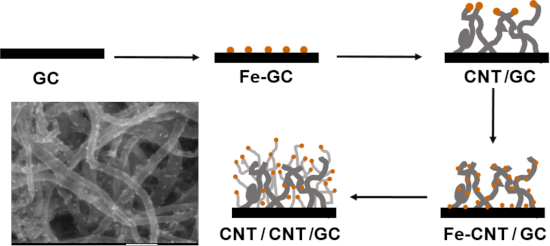
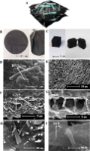
- Pei Wang Katarzyna Kulp Michael Bron Martin-Luther-University Halle-Wittenberg, Faculty of Natural Sciences II, Department of Chemistry, 06120 Halle, Germany 10.3762/bjnano.10.146 Abstract Hierarchically structured 3-dimensional electrodes based on branched carbon nanotubes (CNTs) are prepared on
- a glassy carbon (GC) substrate in a sequence of electrodeposition and chemical vapor deposition (CVD) steps as follows: Primary CNTs are grown over electrodeposited iron by CVD followed by a second Fe deposition and finally the CVD growth of secondary CNTs. The prepared 3-dimensional CNT structures
- (CNT/CNT/GC) exhibit enhanced double-layer capacitance and thus larger surface area compared to CNT/GC. Pt electrodeposition onto both types of electrodes yields a uniform and homogeneous Pt nanoparticle distribution. Each preparation step is followed by scanning electron microscopy, while the CNTs





Magnetic segregation effect in liquid crystals doped with carbon nanotubes
Beilstein J. Nanotechnol. 2019, 10, 1464–1474, doi:10.3762/bjnano.10.145
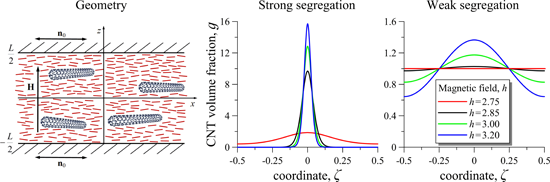
- [1][11][12]. Thus, the idea of controlling the features of composites by adding a small amount of nanoparticles to an LC matrix is of great interest from a physical point of view. Carbon nanotubes (CNTs) [13] are a popular material to be embedded in LCs [9][14][15][16][17]. Due to a large aspect
- ratio the physical properties of this carbon nanomaterial vary greatly in different directions. In this sense, the anisotropic properties of CNTs (for example, thermal and electrical conductivities) are attractive for a wide range of applications, including nanoelectronics and optics [2]. A distinctive
- feature of CNTs is their strong diamagnetism ( ≈ 10−5 to 10−4) [18][19][20][21][22][23]. In the majority of experimental publications [7][16][24][25][26] the planar type of anchoring between the nanotubes and the LC matrix is noted. For CNT suspensions based on nematic liquid crystals (NLCs) with positive


Multicomponent bionanocomposites based on clay nanoarchitectures for electrochemical devices
Beilstein J. Nanotechnol. 2019, 10, 1303–1315, doi:10.3762/bjnano.10.129
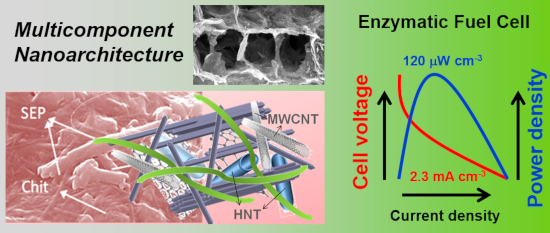
- instance, graphene, CNTs, and buckypapers (10–25 µA·mM−1) [46][66][67], the external surface of functionalised HNTs (5.2 µA·mM−1) [20], a polymeric matrix (5 µA·mM−1) [68] or a chitosan-modified matrix (1.2 µA·mM−1) [69]. The crucial role of HNTs as protective containers for the enzymes was underlined by



Alloyed Pt3M (M = Co, Ni) nanoparticles supported on S- and N-doped carbon nanotubes for the oxygen reduction reaction
Beilstein J. Nanotechnol. 2019, 10, 1251–1269, doi:10.3762/bjnano.10.125
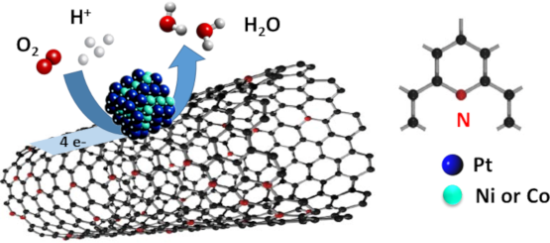
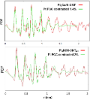
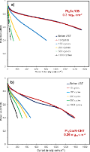
- , 31055 Toulouse Cedex 4, France 10.3762/bjnano.10.125 Abstract Sulfur- (S-CNT) and nitrogen-doped (N-CNT) carbon nanotubes have been produced by catalytic chemical vapor deposition (c-CVD) and were subject to an annealing treatment. These CNTs were used as supports for small (≈2 nm) Pt3M (M = Co or Ni
- support, in combination with ILs, is also important to achieve high Pt dispersion, and functionalized carbons should be preferred, presumably because of their stronger interaction with the IL [28]. Carbon nanotubes (CNTs) are well known for their remarkable chemical and physical properties and appear to
- be an interesting alternative to replace CB in fuel cell applications [29][30]. It has been described that CNTs could be used as resistant material to support nanostructured PtNi hollow particles, but it appears that the structure of the used CNT might be responsible for the large external diameter








Glucose-derived carbon materials with tailored properties as electrocatalysts for the oxygen reduction reaction
Beilstein J. Nanotechnol. 2019, 10, 1089–1102, doi:10.3762/bjnano.10.109
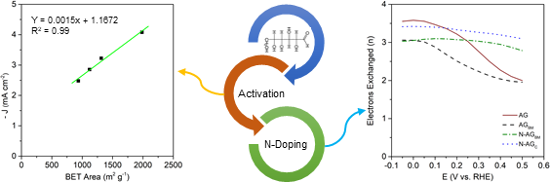
- ], and some studies assume that both functionalities contribute to enhancing the performance of the materials towards ORR [20]. In addition, a recent study with carbon nanotubes (CNTs) reported that an increase of the pyridinic-N/quaternary-N and pyridinic-N/pyrrolic-N ratios increases the
- , depends on the precursors used and the method of synthesis applied. Nitrogen-doped carbon materials have been synthesized by applying different doping methods to different types of materials, such as CNTs [12][23][26], graphene [20][25][27], carbon aerogels [15][28], carbon nanofibers [29], carbon


Fe3O4 nanoparticles as a saturable absorber for giant chirped pulse generation
Beilstein J. Nanotechnol. 2019, 10, 1065–1072, doi:10.3762/bjnano.10.107
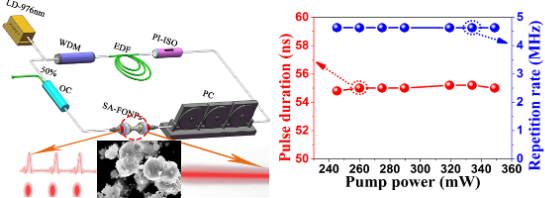
- InGaAs/GaAs-on-GaAs superlattice as a SA to realize 1557 nm, 1.2 ps, transformation-limited pulse generation [9]. Following this, carbon nanotubes (CNTs), graphene, topological insulators (TIs), transition metal disulfides (TMDs) and black phosphorus (BP) were used as SAs to realize passively mode-locked


Direct growth of few-layer graphene on AlN-based resonators for high-sensitivity gravimetric biosensors
Beilstein J. Nanotechnol. 2019, 10, 975–984, doi:10.3762/bjnano.10.98
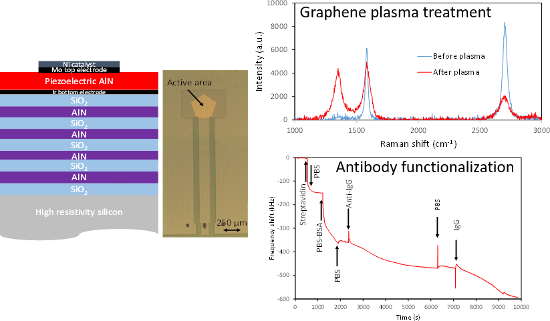
- hydrophobic graphene, which prompted us to investigate the direct non-covalent binding of streptavidin to our bare graphene hydrophobic surfaces. According to [13], streptavidin binds to the sidewalls of carbon nanotubes (CNTs) by means of hydrophobic interactions. It was expected it would bind also to
- graphene, which is comparable to unfolded CNTs. This significantly simplified the functionalization process, since the EDC/NHS incubation of the plasma-treated graphene was omitted. In the present experiment (Figure 7), after the graphene growth, the samples were mounted in the peristaltic pump system and


Synthesis of MnO2–CuO–Fe2O3/CNTs catalysts: low-temperature SCR activity and formation mechanism
Beilstein J. Nanotechnol. 2019, 10, 848–855, doi:10.3762/bjnano.10.85
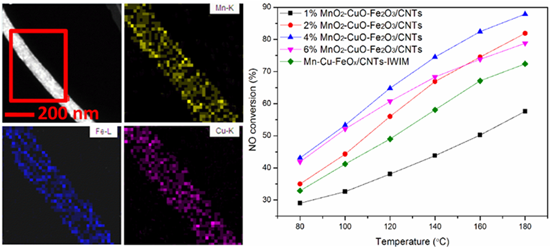
- Coal Salt Resources, Pingdingshan 467000, People′s Republic of China 10.3762/bjnano.10.85 Abstract MnO2–CuO–Fe2O3/CNTs catalysts, as a low-dimensional material, were fabricated by a mild redox strategy and used in denitration reactions. A formation mechanism of the catalysts was proposed. NO
- conversions of 4% MnO2–CuO–Fe2O3/CNTs catalyst of 43.1–87.9% at 80–180 °C were achieved, which was ascribed to the generation of amorphous MnO2, CuO and Fe2O3, and a high surface-oxygen (Os) content. Keywords: amorphous materials; carbon nanotubes; low-dimensional materials; low-temperature catalysis; SCR
- of electrostatic precipitator and desulfurizer, where the flue gas temperature is normally below 200 °C [9]. Therefore, it is of importance to develop a SCR catalyst with high catalytic activity below 200 °C. Carbon nanotubes (CNTs), a low-dimensional material, exhibit a one-dimensional tubular




Capillary force-induced superlattice variation atop a nanometer-wide graphene flake and its moiré origin studied by STM
Beilstein J. Nanotechnol. 2019, 10, 804–810, doi:10.3762/bjnano.10.80
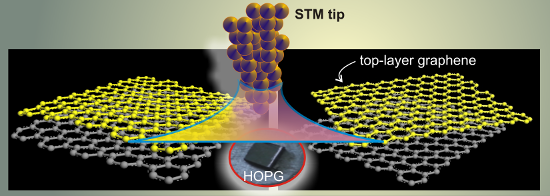
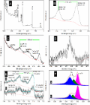
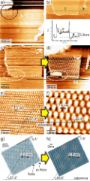
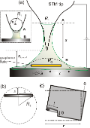
- is calculated in analogy to the energy of a collapsed carbon nanotube [17][30][49], Efold = k·a·l/2r2 where k is the curvature modulus (k = 1.4 eV for CNTs with radii smaller than 2.4 Å), a the arc length which is ≈ b = 15 nm, l the length of the curved region of 72 nm, and r the radius of curvature


Enhancement in thermoelectric properties due to Ag nanoparticles incorporated in Bi2Te3 matrix
Beilstein J. Nanotechnol. 2019, 10, 634–643, doi:10.3762/bjnano.10.63
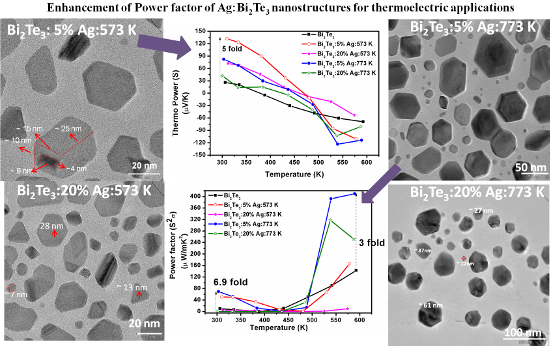
- the uniform dispersion of carbon nanotubes (CNTs) in Bi2Te3 [16]. Another group has also reported an enhancement of the Seebeck coefficient (S) in CNT/Bi2Te3 to 132 µV/K at 423 K [17]. In a recent report, a power factor of 43 µW·cm−1·K−2 for CuI-doped Bi2Te3 has been shown, which is higher than that



Hydrophilicity and carbon chain length effects on the gas sensing properties of chemoresistive, self-assembled monolayer carbon nanotube sensors
Beilstein J. Nanotechnol. 2019, 10, 565–577, doi:10.3762/bjnano.10.58
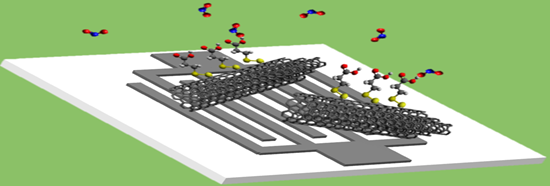
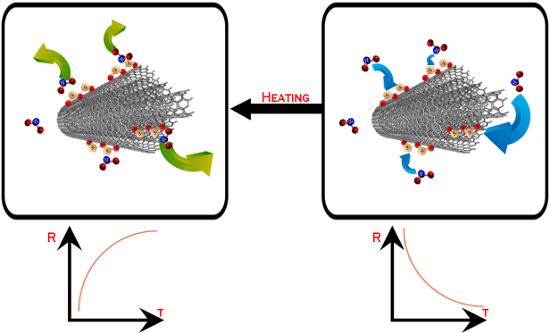
- , pristine carbon nanotubes (CNTs) present some limitations for gas sensing. For example, carbon nanotube gas sensors often suffer from slow recovery, especially when operated at room temperature, which eventually results in baseline and response drift. For that reason, it is usually necessary to heat up the
- gas sensitive nanomaterial to higher temperatures [3] or to irradiate the sensor employing ultraviolet (UV) light, in order to promote surface cleaning. Despite these efforts, sometimes CNTs present irreversible resistance changes due to the chemisorption of gas molecules. In addition, other problems
- such as lack of selectivity, environmental variations (e.g., changes in humidity level) affecting sensor response, or the difficulty to detect gases characterized by low adsorption energies are often encountered [11]. In order to enhance their selectivity and/or their sensitivity, CNTs have been


A porous 3D-RGO@MWCNT hybrid material as Li–S battery cathode
Beilstein J. Nanotechnol. 2019, 10, 514–521, doi:10.3762/bjnano.10.52
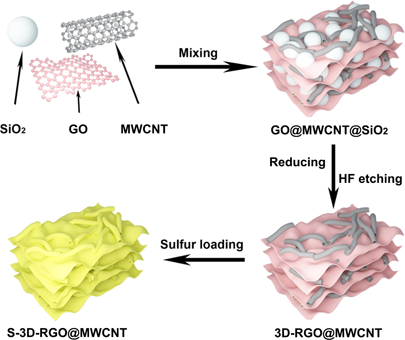
- (3D-RGO), showing a reversible capacity of 790 mAh·g−1 (at 0.2C) after 200 cycles [26]. It has been reported that three-dimensional carbon nanotubes/graphene–sulfur (3DCGS) is an excellent cathode template, revealing a final capacity of 975 mAh·g−1 after 200 cycles [24]. Carbon nanotubes (CNTs) can be



Wet chemistry route for the decoration of carbon nanotubes with iron oxide nanoparticles for gas sensing
Beilstein J. Nanotechnol. 2019, 10, 105–118, doi:10.3762/bjnano.10.10
- (CNTs) are considered to be a very interesting material, especially after being rediscovered by Sumio Iijima in 1991 when he found multiwalled CNTs in carbon soot prepared by arc discharge [1]. During the past years, CNTs have proved to possess extraordinary electrical, mechanical, physical and chemical
- tailoring the selectivity of CNTs towards target gases, one of the simplest consists of decorating the outer wall of CNTs with metal or metal oxide nanoparticles [6][7][8][9]. In some cases, metal or metal oxide nanoparticles show interesting catalytic properties for the decomposition of target molecules
- into more reactive species that, in turn, interact with CNTs. In addition, such nanoparticles shift the Fermi level of CNTs, adsorb target molecules, and help in mediating the charge transfer between adsorbates and CNTs [6][10]. Several metal oxides have been reported as useful for decorating CNTs and




Graphene–graphite hybrid epoxy composites with controllable workability for thermal management
Beilstein J. Nanotechnol. 2019, 10, 95–104, doi:10.3762/bjnano.10.9
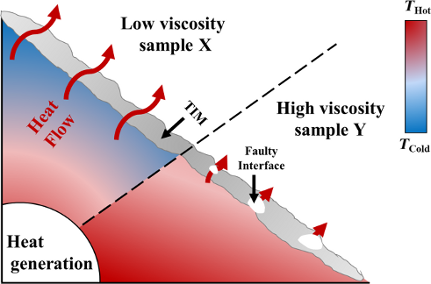
- TC enhancement, although at high loading [14][15]. Some graphitic fillers have theoretical TC values of up to several thousands of W/(m∙K) [16][17], making them natural candidates for use in TIMs. Within the group of graphitic fillers, it seemed likely that carbon nanotubes (CNTs) would be suitable
- graphene, a two-dimensional sheet of sp2-hybridized carbons, with a much lower filler-to-filler resistance than that of the CNTs [11][24][25]. In recent years, extensive studies have been conducted on graphite and graphene nanoplatelets (GNPs, composed of several graphene layers, with thickness of up to



Accurate control of the covalent functionalization of single-walled carbon nanotubes for the electro-enzymatically controlled oxidation of biomolecules
Beilstein J. Nanotechnol. 2018, 9, 2750–2762, doi:10.3762/bjnano.9.257
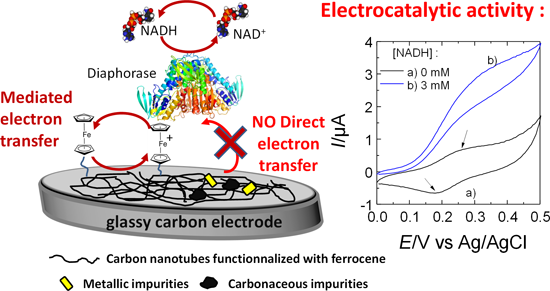
- surface of the CNTs. This system can be applied to biosensing, as exemplified for glucose detection. The well-controlled and well-characterized functionalization of essentially clean SWCNTs enabled us to establish the maximum level of impurity content, below which the f-SWCNT intrinsic electrochemical
- activity is not jeopardized. Keywords: biosensing; carbon nanotubes; covalent functionalization; electrocatalysis; ferrocene; Introduction Carbon nanotubes (CNTs) have been recognized as interesting candidates for developing electrochemical sensors for almost two decades [1][2][3]. They have been used to
- as biosensors: the water solubility and the cleanliness of employed CNTs in order to avoid misinterpreted results. The solubility of CNTs in water, a usual solvent for biosensors, is quite low. The strategies used to increase their water solubility have been either i) to chemically modify them by






Nanocellulose: Recent advances and its prospects in environmental remediation
Beilstein J. Nanotechnol. 2018, 9, 2479–2498, doi:10.3762/bjnano.9.232
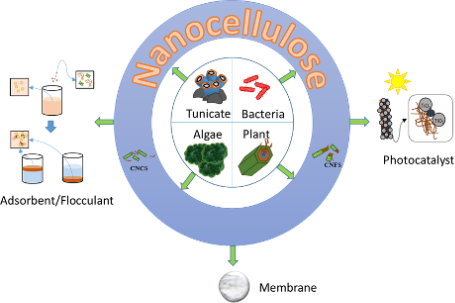
- graphitic carbon nitride [2][3], carbon nanodots [4], and two-dimensional carbon-based nanocomposites [5][6][7] are a few trending nanomaterials that have already found extensive applications in both environmental remediation and energy generation. In the past, carbon nanotubes (CNTs) have received a great
- deal of attention as materials for environmental remediation due to their impressive mechanical properties and superior adsorption capability. However, the need for non-renewable sources such as fossil fuel to produce CNTs remains a challenge. As of late, research progression in environmental science
- continues to push for materials which are renewable, biocompatible, and less toxic as a replacement for CNTs. Given the abundance of plant resources, plant extracts are the most studied category to date for the synthesis of green nanomaterials [8]. Cellulose, one of the most abundant natural polymers, has


Metal-free catalysis based on nitrogen-doped carbon nanomaterials: a photoelectron spectroscopy point of view
Beilstein J. Nanotechnol. 2018, 9, 2015–2031, doi:10.3762/bjnano.9.191
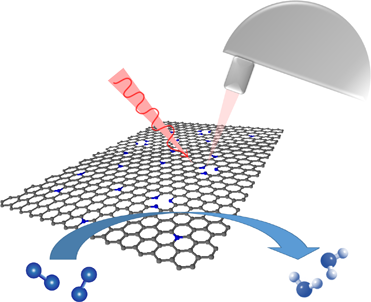
- -free catalyst for the ORR had not been considered feasible [9][10] until two fundamental milestones had risen the interest on carbon as an effective replacement of Pt for catalysis. The first one was the prediction of the remarkable electrical conducting properties of carbon nanotubes (CNTs) in 1993
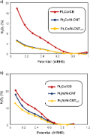
- vCNTs, to randomly oriented N-CNTs, and, in particular, to commercially available platinum-loaded carbon (Vulcan XC-72R), as reported in Figure 1. The electrochemical mechanism for the ORR was the same for aligned and disordered CNTs. The improved electrocatalytic performance of vCNTs was associated
- with a better-defined surface area of the aligned tips at the interface with the electrolyte solution, which facilitates the electrolyte/reactant diffusion. A strong enhancement of the currents was observed when comparing N-CNTs to undoped nanotubes. Furthermore, they demonstrated that the glassy N


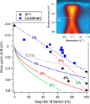


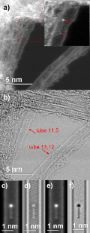
Defect formation in multiwalled carbon nanotubes under low-energy He and Ne ion irradiation
Beilstein J. Nanotechnol. 2018, 9, 1951–1963, doi:10.3762/bjnano.9.186
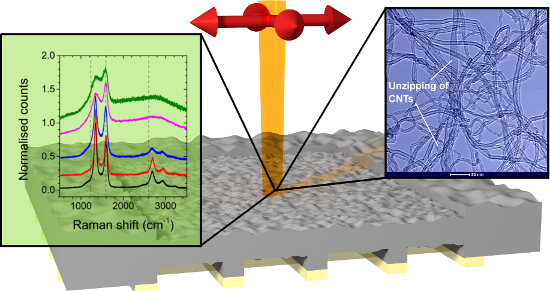
- to differences in stopping power and sputter behaviour. Keywords: carbon nanotubes; helium ion microscope; ion irradiation; Raman; simulations; Introduction Carbon nanotubes (CNTs) have been investigated intensively due to their excellent properties [1]. Modifying and tuning them by electron or ion
- irradiation is part of these studies [2]. Irradiation-induced defects affect the elastic modulus and the tensile strength of CNTs [3]. For example, for multiwalled carbon nanotubes (MWCNTs), the presence of a small number of defects can increase the interlayer shear strength by several orders of magnitude [4
- ]. In general, single-wall carbon nanotubes (SWCNTs) have the tendency to group in bundles. By electron irradiation the different CNTs can be linked by inter-tube bridging, which allows the bending modulus to be increased by a factor 30 [5]. Similar results can be obtained by ion irradiation. Si

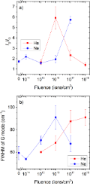


SO2 gas adsorption on carbon nanomaterials: a comparative study
Beilstein J. Nanotechnol. 2018, 9, 1782–1792, doi:10.3762/bjnano.9.169

- conditions), carbon-based adsorbents are particularly interesting for SO2 removal. In fact, activated carbon materials are one of the most widely used sorbents for SO2 recovery [1]. Over the past two decades, a rich family of different carbon nanomaterials such as fullerenes, carbon nanotubes (CNTs), carbon
- –mesopores and are interesting for gas adsorption applications as they can be produced in large quantities with high purity [25][26]. CNTs have a well-defined structure as well and can be envisioned as a seamlessly rolled up graphene sheet. Since in a SWNT, the inside and the outside surfaces are available
- for adsorption, the theoretical surface area is in excess of 2500 m2/g [27]. However, in practice the surface area is much lower as CNTs seldom exist as isolated SWNTs but typically aggregate to form bundles that reduce the available surface area significantly. Depending on the synthesis method, the


Nitrogen-doped carbon nanotubes coated with zinc oxide nanoparticles as sulfur encapsulator for high-performance lithium/sulfur batteries
Beilstein J. Nanotechnol. 2018, 9, 1677–1685, doi:10.3762/bjnano.9.159
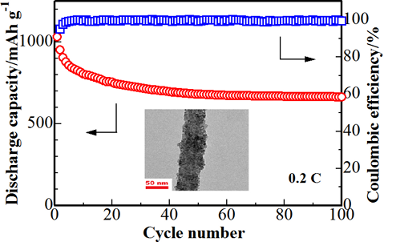
- ” or ”confine” the S atoms in the cathode, and, therefore, reduce any losses of S. As an excellent conductive agent, carbon-based materials, e.g., carbon black, graphene and carbon nanotubes (CNTs), have been widely used in Li/S composite cathode materials [3]. In addition, by doping with N and a


Cr(VI) remediation from aqueous environment through modified-TiO2-mediated photocatalytic reduction
Beilstein J. Nanotechnol. 2018, 9, 1448–1470, doi:10.3762/bjnano.9.137
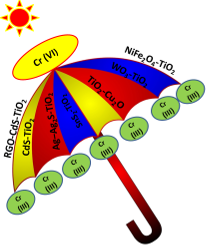
- six sections. The optical and electrochemical characteristics of modified TiO2 photocatalysts are discussed in the first section. In the second section, we have reviewed how carbon-based advanced materials like reduced graphene oxide (RGO), carbon nanotubes (CNTs) and carbon dots (CDs) improve the
- (e.g., MFe2O4) results in a smaller arc radius of the Nyquist plot, as shown in Figure 6, and hence, better charge transport is observed [97]. Modification of TiO2 with carbon-based advanced materials Advanced carbon nanomaterials, such as graphene and its derivatives, carbon nanotubes (CNTs) and
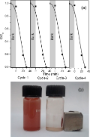
- TiO2 modified with reduced graphene oxides (RGOs), CNTs and CDs. The various preparation methods of modified photocatalysts, conditions for photocatalytic reduction, source of illumination, percentage of Cr(VI) reduction and the superior performance of the composite photocatalysts in comparison with


New 2D graphene hybrid composites as an effective base element of optical nanodevices
Beilstein J. Nanotechnol. 2018, 9, 1321–1327, doi:10.3762/bjnano.9.125
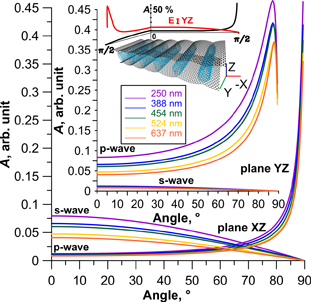
- modelled by two graphene monolayers between which single-walled CNTs with different diameters were regularly arranged at different distances from each other. Spectra of the real and imaginary parts of the diagonal elements of the surface conductivity tensor for four topological models of the hybrid
- little investigated modifications of graphene is a 2D-hybrid composite composed of graphene monolayers and CNTs covalently bonded to them [5][6][7][8]. The hybrid 2D film exhibits high performance as photosensitive element of photodetectors in the range of 100–700 nm. It was found that a single photon
- absorbed by the film induces electron transport of 105 electrons, and the response time amounts to ca. 100 microseconds [9]. It should be noted that modern synthesis technologies for such composites have allowed us to provide “cross-linking” between CNTs and graphene during synthesis without further


The electrical conductivity of CNT/graphene composites: a new method for accelerating transmission function calculations
Beilstein J. Nanotechnol. 2018, 9, 1254–1262, doi:10.3762/bjnano.9.117
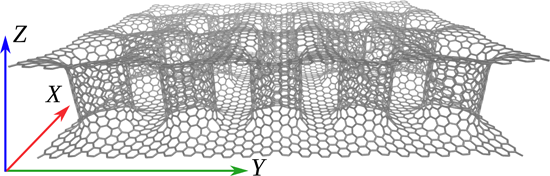
- (CNTs)/graphene. The electrical conductance of different models of this material was calculated in two mutually perpendicular directions. Regularities in resistance values were found. Keywords: carbon composites; electronic properties; interpolation; quantum transport; transmission function
- . The Fermi level is in the interval (−4.88 eV; −4.73 eV), that is, it is shifted downward compared to ideal CNTs of the same diameter (−4.66 eV). Conductance and resistance behave non-monotonically. It can be said that the resistance oscillates around a value of 12 kΩ in the Y-direction for single


Electrostatic force spectroscopy revealing the degree of reduction of individual graphene oxide sheets
Beilstein J. Nanotechnol. 2018, 9, 1146–1155, doi:10.3762/bjnano.9.106
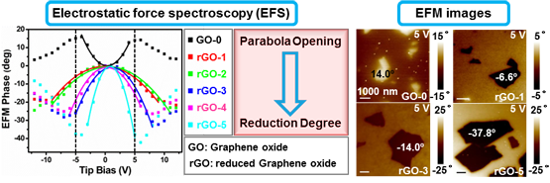
- sheets [23], carbon nanotubes (CNTs) [24] and so on. SPFM [25] and electrostatic force microscopy (EFM) [26] have revealed a step-by-step reduction process in GO sheets. However, when the reduction reactions are completed, it is hard for these methods to identify the small difference between GO sheets





