


Search results
Search for "absorption coefficient" in Full Text gives 114 result(s) in Beilstein Journal of Nanotechnology.
Rapid thermal annealing for high-quality ITO thin films deposited by radio-frequency magnetron sputtering
Beilstein J. Nanotechnol. 2019, 10, 1511–1522, doi:10.3762/bjnano.10.149
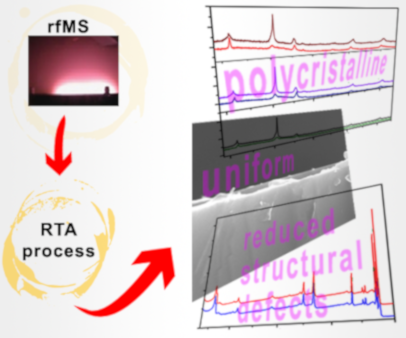
- treated ITO films is essential in assessing the advantages of the RTA procedure. To obtain information on the bandgap width, absorption coefficient, refractive index, extinction coefficient, dielectric permittivity, position of the impurity levels in the bandgap and characteristics of the optical
- (Figure 8) on wavelength is similar to that of the absorption coefficient, according to the relationship [42][45][47]: where α is the absorption coefficient, n is the refractive index and c is the speed of light. According to the Drude theory, depending on the dielectric parameters and concentration of


BiOCl/TiO2/diatomite composites with enhanced visible-light photocatalytic activity for the degradation of rhodamine B
Beilstein J. Nanotechnol. 2019, 10, 1412–1422, doi:10.3762/bjnano.10.139
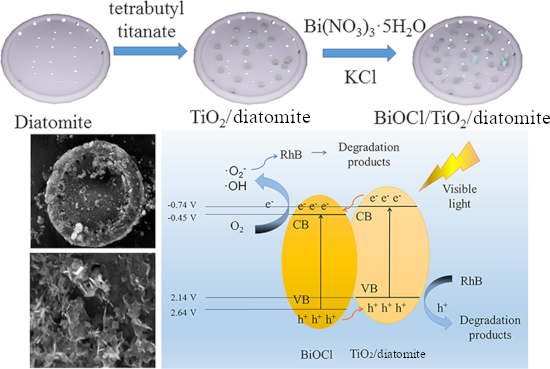
- edges of TiO2/diatomite and BTD show a small red shift compared with BiOCl and TiO2. The band gap energy (Eg) of the samples was calculated by the Kubelka–Munk equation [44]: αhν = A(hν − Eg)n/2, and the absorption coefficient, photon energy, a constant and band gap of the sample are expressed by α, hν


Fe3O4 nanoparticles as a saturable absorber for giant chirped pulse generation
Beilstein J. Nanotechnol. 2019, 10, 1065–1072, doi:10.3762/bjnano.10.107
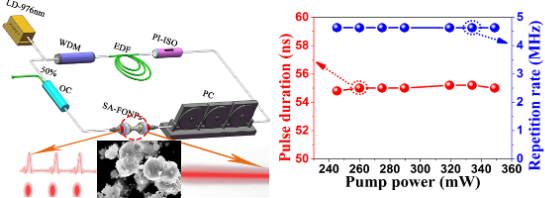
- 0.75 m erbium-doped fiber (EDF) with a 110 dB/m peak absorption coefficient at 1530 nm and a dispersion parameter (D) of −36 ps/nm/km. The EDF has an absorption coefficient of 70 dB/m at 980 nm. The fibers in our cavity are all SMF-28 optical fibers (including the pig-tailed fiber) with a dispersion


Nanoscale optical and structural characterisation of silk
Beilstein J. Nanotechnol. 2019, 10, 922–929, doi:10.3762/bjnano.10.93
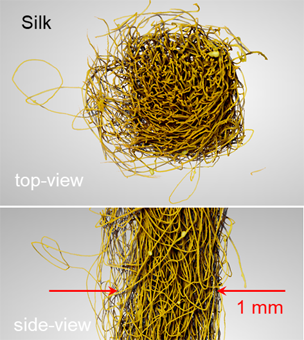
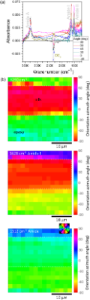
- of 0.61λ/NA ≈ 4.1 μm at the 3000 cm−1 band (λ = 3.33 μm). The absorbance or optical density A = −log(T) spectrum is defined by the absorption coefficient α ≡ 4πκ/λ = 2ωκ/c [cm−1] for the transmitted light intensity IT = I0e−αd = I0 × 10−OD; where d is the thickness of sample, the transmittance T = IT


Synthesis of novel C-doped g-C3N4 nanosheets coupled with CdIn2S4 for enhanced photocatalytic hydrogen evolution
Beilstein J. Nanotechnol. 2019, 10, 912–921, doi:10.3762/bjnano.10.92
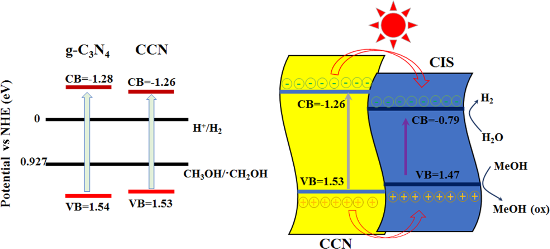
- absorption coefficient, h being Planck’s constant, and v being the frequency. The Eg of g-C3N4, CCN and CdIn2S4 are estimated as 2.82 eV, 2.79 eV and 2.26 eV, respectively. Besides, the position of the valence band is determined by the following equation: EVB = X − Ec − 0.5Eg, where Ec is the energy of free


Towards rare-earth-free white light-emitting diode devices based on the combination of dicyanomethylene and pyranine as organic dyes supported on zinc single-layered hydroxide
Beilstein J. Nanotechnol. 2019, 10, 760–770, doi:10.3762/bjnano.10.75
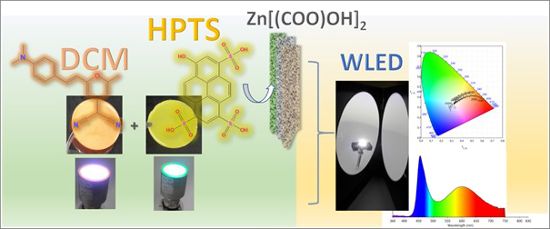
- -sensitivity CCD camera. Photoluminescence excitation (PLE) spectra were obtained by exciting the composite films from 250 to 500 nm with 5 nm increment and measuring their absolute QY. The absolute photoluminescence (PL) QYs were calculated by combining the QY values with the absorption coefficient (also


Commercial polycarbonate track-etched membranes as substrates for low-cost optical sensors
Beilstein J. Nanotechnol. 2019, 10, 677–683, doi:10.3762/bjnano.10.67
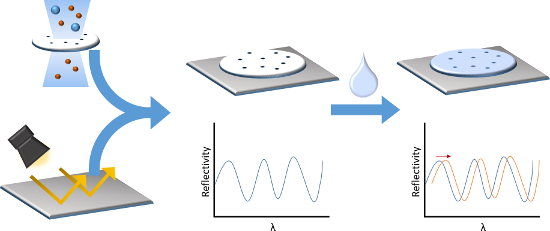
- occur during the sensing event. Second, most solutions contain water and it is well known that its absorption coefficient in the NIR region is high [12]. If we place these aqueous solutions on the PCTE membrane in order to detect the presence of any component in it, part of the incident light will be


Raman study of flash-lamp annealed aqueous Cu2ZnSnS4 nanocrystals
Beilstein J. Nanotechnol. 2019, 10, 222–227, doi:10.3762/bjnano.10.20
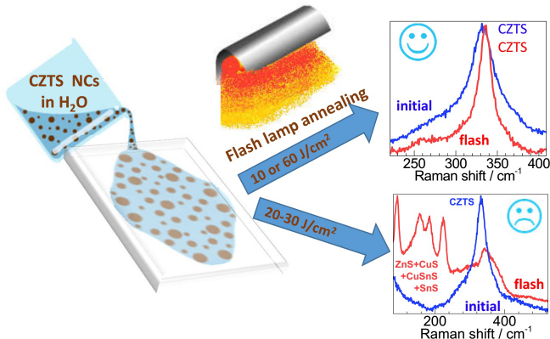
- sulfide Cu2ZnSnS4 (CZTS); CuS; Cu-Sn-S; kesterite; phonon; pulsed light crystallization; Raman spectroscopy; secondary phase; SnS; Introduction Affordable and non-toxic solar energy materials having a high absorption coefficient and a bandgap in the solar illumination range are an ever-growing research


Study of silica-based intrinsically emitting nanoparticles produced by an excimer laser
Beilstein J. Nanotechnol. 2019, 10, 211–221, doi:10.3762/bjnano.10.19
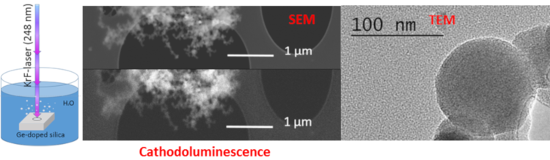
- , induces the generation of other defects and increase of the absorption coefficient in the UV range [23][25][28]. The higher efficiency of energy transfer to the network in Ge-doped silica is also suggested by the data of [29] and by the known sensitivity of this kind of silica to UV irradiation even from



Uniform Sb2S3 optical coatings by chemical spray method
Beilstein J. Nanotechnol. 2019, 10, 198–210, doi:10.3762/bjnano.10.18
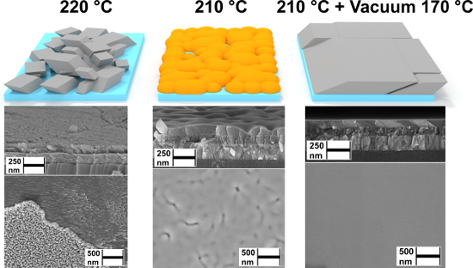
- sulfide (Sb2S3), an environmentally benign material, has been prepared by various deposition methods for use as a solar absorber due to its direct band gap of ≈1.7 eV and high absorption coefficient in the visible light spectrum (1.8 × 105 cm−1 at 450 nm). Rapid, scalable, economically viable and
- chemical bath deposition (CBD) [3][4], spin coating [5], atomic layer deposition (ALD) [6] or chemical spray pyrolysis (CSP) [7] method, has been applied in extremely thin absorber (ETA) solar cells due to its excellent absorption coefficient in the visible light spectrum (1.8 × 105 cm−1 at 450 nm) [1][2
- spraying in air is illustrated in Figure 6. Optical properties of as-deposited and thermally treated Sb2S3 layers The absorption coefficient (α) and band gap (Eg) values of Sb2S3 in both as-deposited and thermally treated glass/ITO/TiO2/Sb2S3 samples were determined using an approximated Sb2S3 layer




Zn/F-doped tin oxide nanoparticles synthesized by laser pyrolysis: structural and optical properties
Beilstein J. Nanotechnol. 2019, 10, 9–21, doi:10.3762/bjnano.10.2
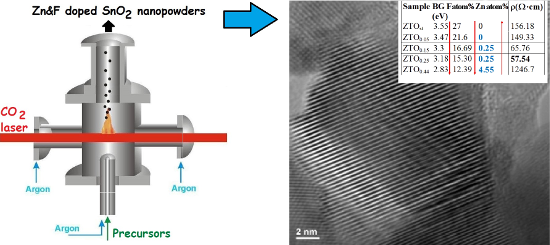
- infrared absorption coefficient of SF6, we had to employ a larger amount of C2H4 to obtain the same laser-induced heating effect. Thus, the C2H4 competes with the Sn(CH3)4 vapors for the limited quantity of available oxidizing agent (O2), resulting in a mixture of SnO2 and SnO phases in the case of the
- bandgap, grain size, oxygen deficiency, surface roughness, and impurity centers [21]. The direct bandgaps of the nanoparticles were determined from the Tauc relation [50][51][52] given by: where α is the absorption coefficient, A is a constant, hν is the photon energy, n is an index that can take



Near-infrared light harvesting of upconverting NaYF4:Yb3+/Er3+-based amorphous silicon solar cells investigated by an optical filter
Beilstein J. Nanotechnol. 2018, 9, 2788–2793, doi:10.3762/bjnano.9.260
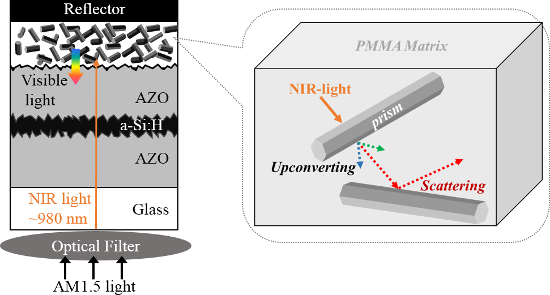
- cells, the hydrogenated amorphous silicon (a-Si:H) thin-film solar cell is one of the most promising candidates due to its high inherent absorption coefficient, short charge-carrier diffusion length and low production cost [1]. Films of a-Si:H with a wide bandgap of ca. 1.75 eV have a high absorption in


Contactless photomagnetoelectric investigations of 2D semiconductors
Beilstein J. Nanotechnol. 2018, 9, 2741–2749, doi:10.3762/bjnano.9.256
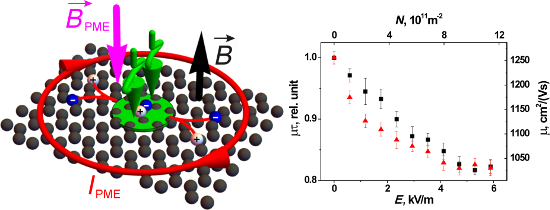
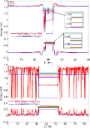
- current (Figure 1) causes the PME magnetic moment where represents a vector of the azimuthal axis, Ja(r) is the sum of azimuthal components of electron and hole current densities, is the position vector, and r is the distance from the center of the light spot. Assuming an absorption coefficient of light

![[Graphic 1]](/bjnano/content/inline/2190-4286-9-256-i2.svg?max-width=637&scale=1.18182) evoked by the PME circulating current in a point-illuminated 2D...
evoked by the PME circulating current in a point-illuminated 2D...

![[Graphic 7]](/bjnano/content/inline/2190-4286-9-256-i8.svg?max-width=637&scale=1.18182) vs the illumination intensity for differe...
vs the illumination intensity for differe...

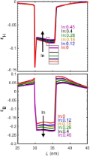
![[Graphic 15]](/bjnano/content/inline/2190-4286-9-256-i16.svg?max-width=637&scale=1.18182) vs the carrier lifetime for different values ...
vs the carrier lifetime for different values ...


Non-agglomerated silicon–organic nanoparticles and their nanocomplexes with oligonucleotides: synthesis and properties
Beilstein J. Nanotechnol. 2018, 9, 2516–2525, doi:10.3762/bjnano.9.234
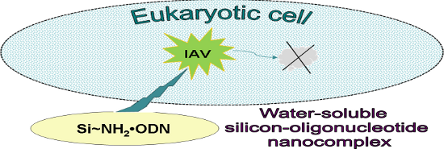
- second fraction (5% CH3CN). The mobility of the product in TLC (Rf ≈ 0.5) differed from that of hydrolyzed FITC (Rf ≈ 0.65). The concentration of Si–NH-Flu (33 µM) was evaluated spectrophotometrically using the molar absorption coefficient for fluorescein (ε495 = 74000 cm−1·M−1). For fluorescence


Thickness-dependent photoelectrochemical properties of a semitransparent Co3O4 photocathode
Beilstein J. Nanotechnol. 2018, 9, 2432–2442, doi:10.3762/bjnano.9.228
- respect to the water redox potential [3][9][10]. The spinel Co3O4 is interesting because of its dual bandgap (1.5 and 2.2 eV), high absorption coefficient, intrinsic p-type doping and chemical stability. It has found application as a light-absorbing entity in all-metal-oxide photovoltaic cells [11][12][13
- samples, which is attributed to its dense and compact film, which causes lower absorption of free carriers than the porous surface. The absorption coefficient (α), which determines the absorption length of the Co3O4 samples was estimated using the relation where d and R are the thickness of the Co3O4
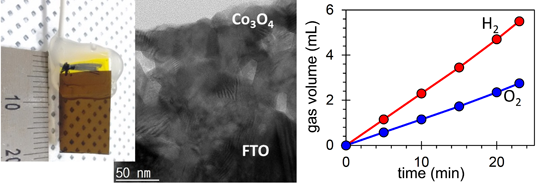
- thermal oxidation of the Co particles. (a) Optical characteristics including the transmittance and absorbance spectra of Co3O4 films. (b) Absorption coefficient (α) as a function of the photon energy (hv). (c) Photograph of a Co3O4 electrode for photoelectrochemical cell studies. (d) Linear sweep



Performance analysis of rigorous coupled-wave analysis and its integration in a coupled modeling approach for optical simulation of complete heterojunction silicon solar cells
Beilstein J. Nanotechnol. 2018, 9, 2315–2329, doi:10.3762/bjnano.9.216
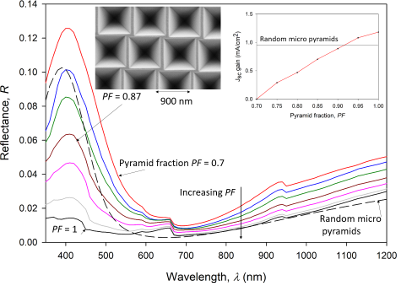
- refraction). The latter is especially important in solar cells where indirect semiconductors such as silicon (Si) are used as an absorber layer, where the absorption coefficient at the photon energy approaching the value of energy bandgap is small. Furthermore, efficient light management is important in


Hierarchical heterostructures of Bi2MoO6 microflowers decorated with Ag2CO3 nanoparticles for efficient visible-light-driven photocatalytic removal of toxic pollutants
Beilstein J. Nanotechnol. 2018, 9, 2297–2305, doi:10.3762/bjnano.9.214
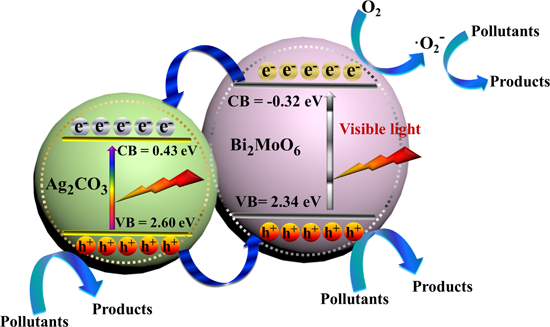
- (hν − Eg)n/2. Where α, h, ν, and A are absorption coefficient, Planck’s constant, the frequency of light, and a constant, respectively. The value of n depends on the type of electronic transition and n is equal to 1 for Bi2MoO6 and Ag2CO3. The Tauc plots of Ag2CO3 and Bi2MoO6 converted from the UV–vis


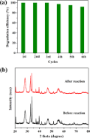


Spin-coated planar Sb2S3 hybrid solar cells approaching 5% efficiency
Beilstein J. Nanotechnol. 2018, 9, 2114–2124, doi:10.3762/bjnano.9.200
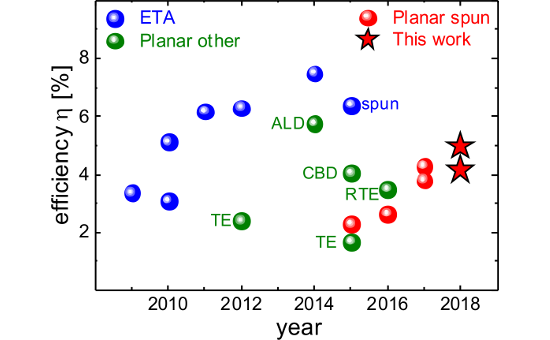
- absorption coefficient of a thin-film is measured over several orders of magnitude [52][53] which cannot be achieved by standard transmission–reflection measurements using an UV–vis photospectrometer. The large dynamic range of PDS makes it a powerful tool for to study the density of states in the sub
- 350 °C is increased drastically. The same holds true for the 400 °C sample. Due to the macroscopic holes in the film described earlier, the incoming light is still transmitted and not fully absorbed even at high energies which inhibits a proper analysis of the absorption coefficient. Therefore the 400
- absorption coefficient of the Sb-BDC sample crystallized at 265 °C shown in Figure 3g is almost identical to that of the Sb-TU sample crystallized at the same temperature shown in Figure 3c and drawn again in Figure 3g for direct comparison. However, the defect absorption of Sb2S3 from the Sb-BDC route


Multimodal noncontact atomic force microscopy and Kelvin probe force microscopy investigations of organolead tribromide perovskite single crystals
Beilstein J. Nanotechnol. 2018, 9, 1695–1704, doi:10.3762/bjnano.9.161
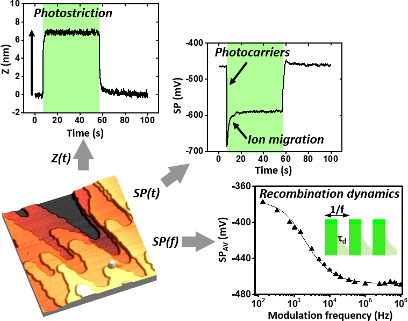
- , including a direct band gap, high absorption coefficient, large and balanced carrier mobility, high diffusion length, long carrier lifetime and high photoluminescence quantum yield. Within a few years of their discovery, these materials were successfully used to develop photovoltaic cells [2] with power


Cr(VI) remediation from aqueous environment through modified-TiO2-mediated photocatalytic reduction
Beilstein J. Nanotechnol. 2018, 9, 1448–1470, doi:10.3762/bjnano.9.137
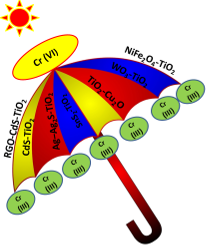
- semiconductor having band gap energy of 2.17 eV. It possesses a high absorption coefficient over the whole visible region, and hence, is used as a suitable solar energy converter [160]. Moreover, it is nontoxic and highly abundant in the earth’s crust [163]. Abdullah and co-investigators deposited p-type Cu2O


New 2D graphene hybrid composites as an effective base element of optical nanodevices
Beilstein J. Nanotechnol. 2018, 9, 1321–1327, doi:10.3762/bjnano.9.125
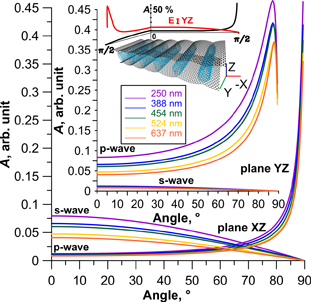
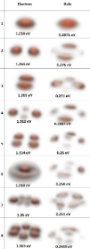
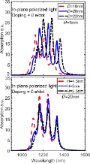
- nanocomposite have been obtained. The absorption coefficient for p-polarized and s-polarized radiation was calculated for different topological models of the hybrid nanocomposite. It was found that the characteristic peaks with high intensity appear in the UV region at wavelengths from 150 to 350 nm (related to
- graphene) and in the optical range from 380 to 740 nm irrespective of the diameter of the tubes and the distance between them. For waves corresponding to the most intense peaks, the absorption coefficient as a function of the angle of incidence was calculated. It was shown that the optical properties of
- the hybrid nanocomposite were approximately equal for both metallic and semiconductor nanotubes. Keywords: absorption coefficient; 2D CNT–graphene hybrid nanocomposite; optical conductivity; optical nanodevices; topological models; Findings The applicability of graphene hybrid nanocomposites in the


Theoretical study of strain-dependent optical absorption in a doped self-assembled InAs/InGaAs/GaAs/AlGaAs quantum dot
Beilstein J. Nanotechnol. 2018, 9, 1075–1084, doi:10.3762/bjnano.9.99
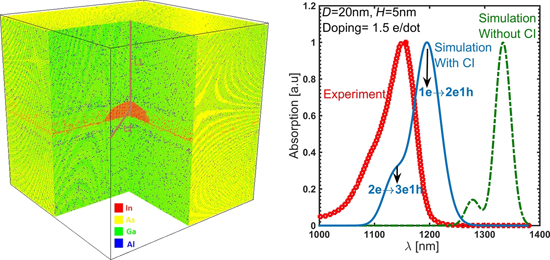
- nanostructures, such as quantum wells, that are insensitive to normally incident light [2]. The absorption coefficient α(λ) of quantum dots is an important parameter that needs to be precisely designed for the proper operation of these devices. An accurate model for the absorption coefficient α(λ) is therefore
- (sp3d5s*_SO) [10]. The absorption coefficient is calculated by employing Fermi’s golden rule. In the following sections the simulated system and the numerical tools employed in simulations are described, then the theoretical aspects of the problem and optimization of the strain model are discussed. Lastly
- absorption coefficient α, Fermi’s golden rule has been used to calculate the absorption coefficient [32][33], where ndots is the number of quantum dots per unit volume, ω is the photon angular frequency, Ei and Ef are initial and final energies of the transition, Fi and Ff are occupation probability of the




Optical orientation of nematic liquid crystal droplets via photoisomerization of an azodendrimer dopant
Beilstein J. Nanotechnol. 2018, 9, 870–879, doi:10.3762/bjnano.9.81
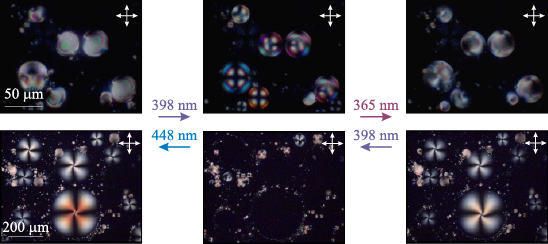
- reduction of the trans isomer order parameter, Strans. The obtained data allow one to estimate the trans isomer order parameter and the ratio of isomers under varying LED irradiation. First, the cis isomer absorption coefficient should be determined. It is convenient to use the spectra after LED
- Xcis = 0.74 at λmax = 398 nm, while the absorption coefficient at λ = 365 nm was found to be αcis = 6 cm−1. For the G5-doped NLC, we have found Xcis = 0.93 at λmax = 365 nm, Xcis = 0.81 at λmax = 398 nm, and αcis = 10 cm−1 at λ = 365 nm. Then, we obtain the dependence of the trans isomer order
- , Strans, [47] as where is the average absorption coefficient of the trans isomers. If the unpolarized light beam falls normally on the planarly oriented NLC film, the absorption coefficient equals Without light irradiation, there are only trans isomers. Therefore the absorption spectrum of trans isomers


Mechanistic insights into plasmonic photocatalysts in utilizing visible light
Beilstein J. Nanotechnol. 2018, 9, 628–648, doi:10.3762/bjnano.9.59
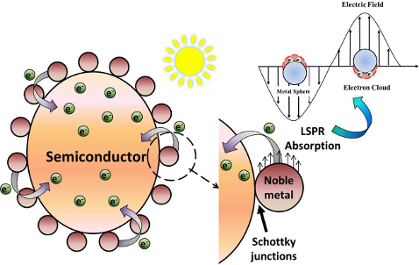
- . Direct optical absorption The direct detection of H2O2 in solution by measuring UV spectra is difficult due to the weak molar absorption coefficient of H2O2 (0.01 M−1 cm−1) at 360 nm, which gradually increases up to 13 M−1 cm−1 at the wavelength of 260 nm [115]. Meanwhile, the optical absorption in the





Facile synthesis of ZnFe2O4 photocatalysts for decolourization of organic dyes under solar irradiation
Beilstein J. Nanotechnol. 2018, 9, 436–446, doi:10.3762/bjnano.9.42
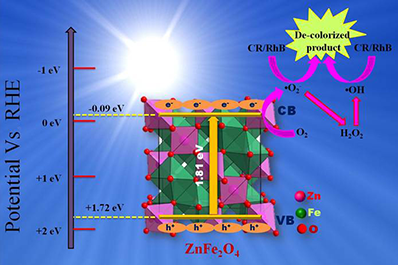
- temperature the absorption of the materials shifted towards higher wavelengths. The band-gap energy of ZFO-500 has been calculated with the help of Tauc plots using Equation 1 [30]: where α, h, ν, Eg, and A are absorption coefficient, Plancks constant, frequency of light, band-gap energy and a proportionality





